 Stanza / Audio guide
Stanza · Audio guide
Taj MahalAudio guide
A place to remember. A story to take with you.
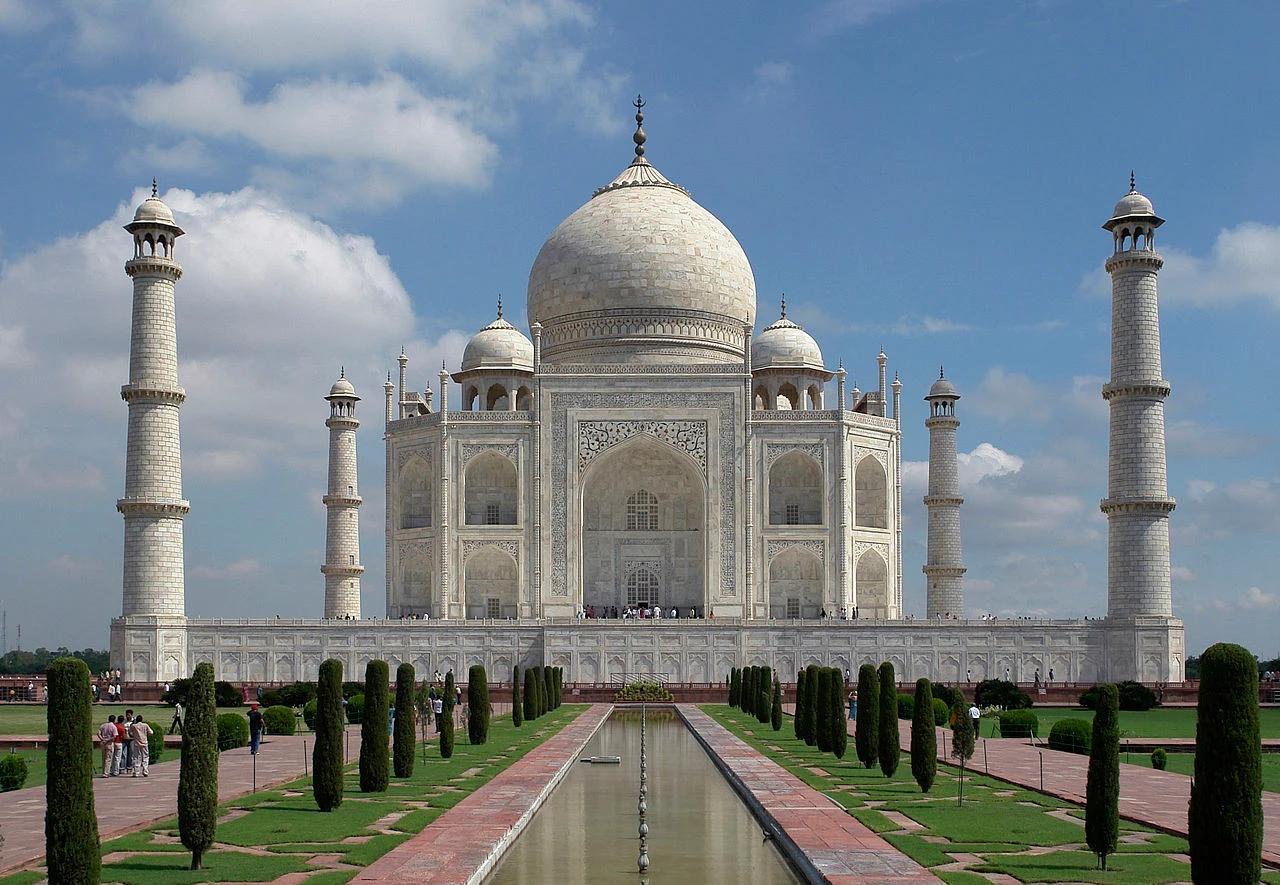
The Taj Mahal is an iconic white marble mausoleum located in Agra, India. Commissioned in 1632 by the Mughal emperor Shah Jahan, it houses the tomb of his wife Mumtaz Mahal and is a UNESCO World Heritage site.
Download Stanza, then search for “Taj Mahal”.
About the tour
One guide. Your kind of visit.
The Taj Mahal is an iconic white marble mausoleum located in Agra, India. Commissioned in 1632 by the Mughal emperor Shah Jahan, it houses the tomb of his wife Mumtaz Mahal and is a UNESCO World Heritage site.
Ready when you are.
- 01Get the free Stanza app.
iOS & Android
- 02Find your guide.
“Taj Mahal”
- 03Download before you go.
Works offline
Audio guide / 22 narrated stops
Inside the guide
Get to know a few of the stories before you go. Open a stop to read more.
01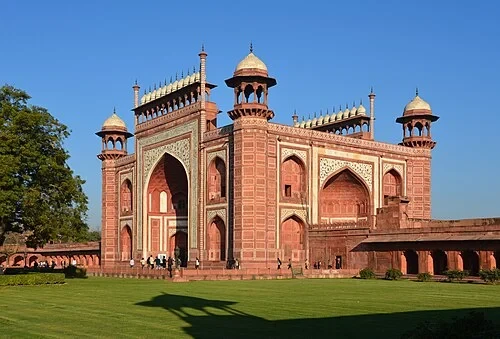 The Great Gate (Darwaza-i-rauza)The Great Gate
Welcome to the Taj Mahal. Your journey begins at the Great Gate, or Darwaza-i-rauza. This massive red sandstone structure serves as the primary entrance to the inner complex, acting as a symbolic transition between the chaotic, bustling marketplace of the outside world and the serene, spiritual paradise surrounding the tomb. In Mughal architecture, the entrance gate is often a destination in its own right, and this one is no exception. Notice the contrasting white marble accents that trace the geometry of its arches and alcoves. Along the top of the entrance, you can see eleven small domes known as guldastas. These decorative elements are perfectly mirrored on the opposite side of the gate, maintaining the rigorous bilateral symmetry that is a hallmark of the entire site. The sheer scale of the building is intended to humble the traveler, preparing them for the beauty that lies within. As you move toward the central arch, the red stone gives way to a dark interior, setting the stage for one of the most famous architectural reveals in history.
Photo: Clément Bardot · CC BY-SA 4.0
02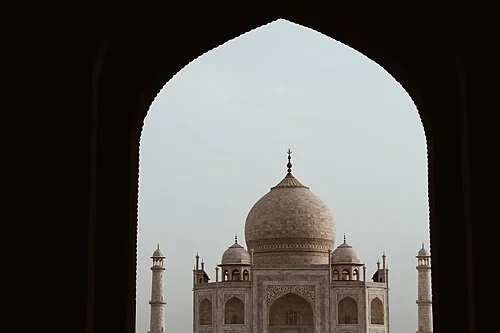 The Great Gate (Darwaza-i-rauza)The First Reveal
As you move through the shadows of the Great Gate, look ahead toward the central arch. The architects used a specific vantage point here to create a psychological effect known as the 'framed view.' Through the dark, cool interior of the gateway, the bright white mausoleum appears perfectly centered and ethereal against the sky. This specific design choice makes the tomb seem like a vision or a painting rather than a physical building. The contrast between the dark tunnel of the gate and the blindingly bright white marble beyond heightens the emotional impact of the first sighting. This reveal marks the official start of a visitor's spiritual journey toward the tomb. As the mausoleum appears to grow larger and clearer with every step forward, the sense of entering a separate, sacred realm becomes palpable. Every dimension and angle was calculated so that the tomb remains the absolute focus, appearing to hover at the end of the garden path. This deliberate manipulation of light and shadow is a key element of Mughal spatial planning.
Photo: Megchhi · CC BY-SA 4.0
03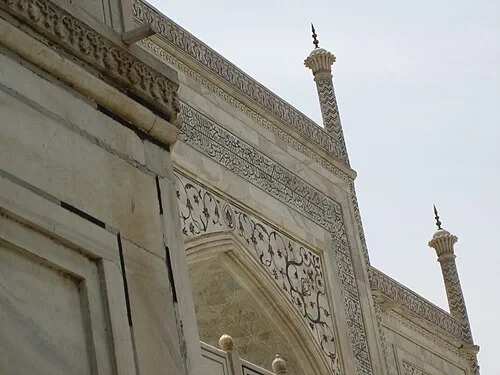 The Great Gate (Darwaza-i-rauza)The Gateway Calligraphy
The white marble frames of the Great Gate are decorated with intricate black marble calligraphy inlaid directly into the stone. These inscriptions are more than mere decoration; they are sacred verses from the Quran. Specifically, these panels feature Surah Al-Fajr, a chapter that concludes with a direct invitation for the righteous soul to enter Paradise in peace. The calligrapher responsible for this work was Amanat Khan, whose signature is visible at the end of the inscription. He was a master of the Thuluth script, which is known for its elegant, flowing lines and complex vertical characters. By placing these specific verses at the entrance, the builders intended for every visitor to feel as though they were being welcomed into a terrestrial version of Jannah, or heaven. The black stone used for the letters is expertly cut and fitted into the white marble base, a technique that ensures the text remains sharp and legible against the building's surface. This integration of scripture and architecture is a defining feature of Islamic monument design, turning the building itself into a medium for the holy word.
Listen in the apppchandra191 · CC BY-SA 3.0
04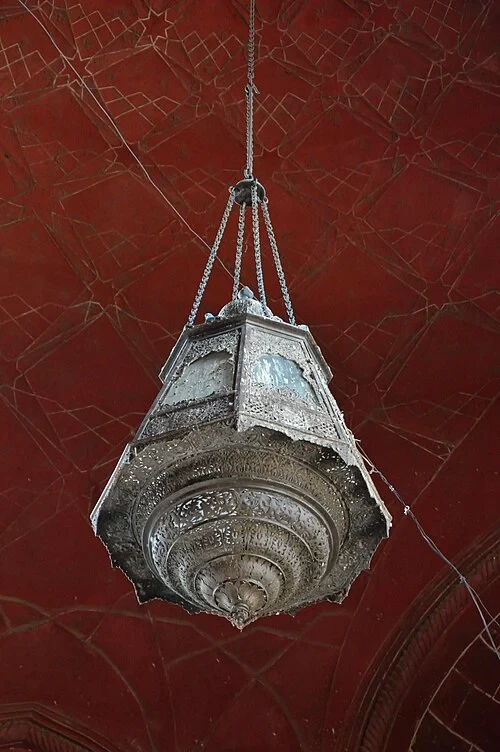 The Great Gate (Darwaza-i-rauza)The Lord Curzon Lamp
Hanging within the central chamber of the Great Gate is a large bronze lamp, a feature that might seem older than it actually is. This piece was a gift from Lord Curzon, the British Viceroy of India, in 1906. During the 19th century, the original lamp was stolen, leaving the vaulted chamber in darkness. When Curzon began a large-scale project to restore the site's fading grandeur, he decided to commission a replacement. He didn't choose a local design but instead modeled this lamp after one he had seen in the mosque of Sultan Hassan in Cairo. It was crafted by artisans in Cairo and Agra to bridge the various styles of the Islamic world. The lamp represents the British era of restoration and preservation at the Taj Mahal, highlighting Curzon's personal obsession with protecting India’s architectural heritage. It remains a functional artifact, casting light on the intricate ceiling patterns above. Its presence serves as a reminder of how international interest and 20th-century interventions have helped maintain the site for the millions who visit today.
Listen in the appBiswarup Ganguly · CC BY 3.0
05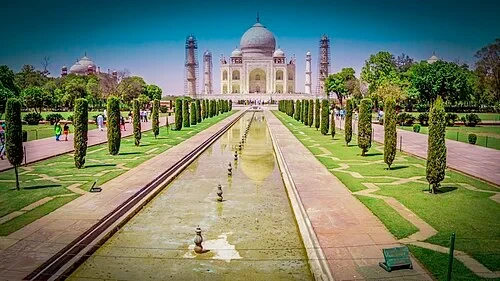 The Charbagh (Paradise Garden)The Paradise Garden
The expansive area before the mausoleum is designed as a Charbagh, a traditional Persian-style garden divided into four main parts. This layout isn't just for aesthetics; it is a direct representation of Jannah, the Islamic concept of Paradise. Covering 42 acres, the site is split by a central reflecting pool and cross-axial paths that divide the greenery into quadrants. According to the Quran, Paradise is a garden of bliss through which four rivers flow. These are the rivers of water, milk, wine, and honey, symbolized here by the narrow water channels that extend in four directions. The symmetry of the garden is absolute, mirroring the perfection of the afterlife. Every tree, path, and flowerbed was originally placed to enhance this sense of order and abundance. Historically, the quadrants would have contained hundreds of varieties of plants, but the structure of the paths remains the dominant feature today. By placing the mausoleum at the far end of the garden rather than in the center, the architects created a long, processional approach that emphasizes the building’s role as the final destination of the soul.
Listen in the appRavi Permi · CC BY-SA 4.0
06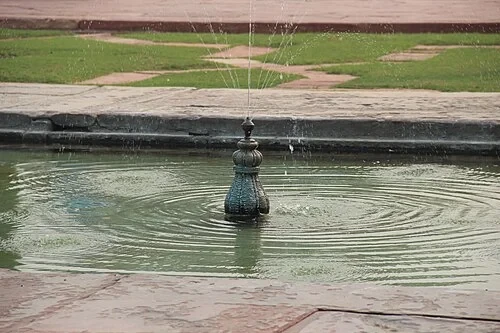 The Charbagh (Paradise Garden)The Copper Fountains
The water channels running through the center of the garden are more than just reflective surfaces; they contain a sophisticated engineering system designed nearly four centuries ago. These fountains operate using a gravity-fed method that ensures uniform water pressure along the entire length of the reflecting pool. Beneath the surface of the channel, there is a large copper vessel located under each fountain pipe. As water fills the main line, it fills each vessel simultaneously, which creates equal pressure across all the fountains so they all reach the same height at the same time. This prevented the water from spraying unevenly as it moved further from the source. In the 17th century, the massive amount of water needed to power this system was pulled directly from the Yamuna River. Teams of oxen and other animals were used to haul water up using a series of pulleys, which then moved the water into massive storage tanks before it was released into the underground pipes. This complex system reflects the high level of technical skill Mughal engineers possessed, combining artistic beauty with functional mechanics.
Listen in the appGary Todd from Xinzheng, China · CC0
07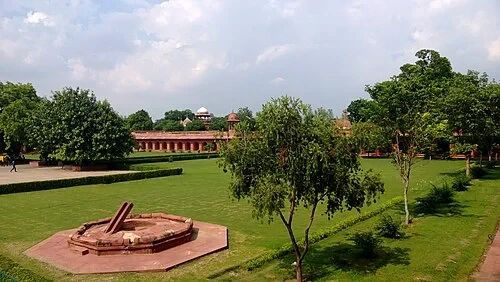 The Charbagh (Paradise Garden)The British Lawns
The landscape you see today is significantly different from how it appeared during the reign of Shah Jahan. The original Mughal gardens were dense and lush, filled with fruit trees such as pomegranates, citrus, and apples, alongside thousands of fragrant roses and colorful flowerbeds. These plants were chosen for their sensory qualities—their scent, fruit, and vibrant colors—to reinforce the idea of a garden of plenty. However, by the late 19th century, the gardens had become overgrown and fell into disrepair. When the British took over the management of the site, they decided to overhaul the landscaping. Influenced by the formal garden styles of London’s public parks, they cleared away the dense orchards and replaced them with the flat, open lawns seen today. While this changed the original character of the space, it had the unintended benefit of opening up the view of the mausoleum from the front gate. These vast green carpets highlight the building's white marble, but they represent a distinctly European colonial layer on this otherwise deeply Persian and Indian architectural site.
Listen in the appPhoto: Shridharshah25 · CC BY-SA 3.0
08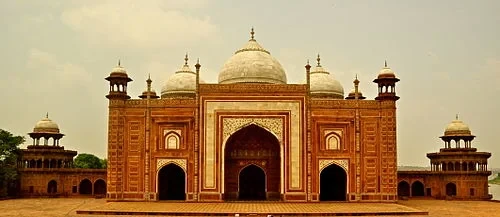 The Mosque (Western Side)The Red Sandstone Mosque
Standing on the western edge of the main marble platform is an elegant structure built of red sandstone. This is the mosque, an essential component of the Taj Mahal complex. While the central tomb is the most famous part of the site, the mosque ensures the area remains a place of active religious practice. It was constructed using red sandstone to provide a sharp color contrast with the white marble of the main mausoleum, a common aesthetic choice in Mughal architecture. To serve its primary function, the building is oriented to face west, toward the holy city of Mecca, so that worshippers can pray in the correct direction. On the opposite side of the tomb, there is an identical building that was constructed purely for symmetry, but this western structure is the only one designated for prayer. Its three domes and large central arch are hallmarks of 17th-century mosque design. Even today, the mosque continues to serve the local community for Friday prayers, serving as a reminder that the Taj Mahal is not merely a monument to the past, but a living sacred space.
Listen in the appAniruddh · CC BY-SA 3.0
09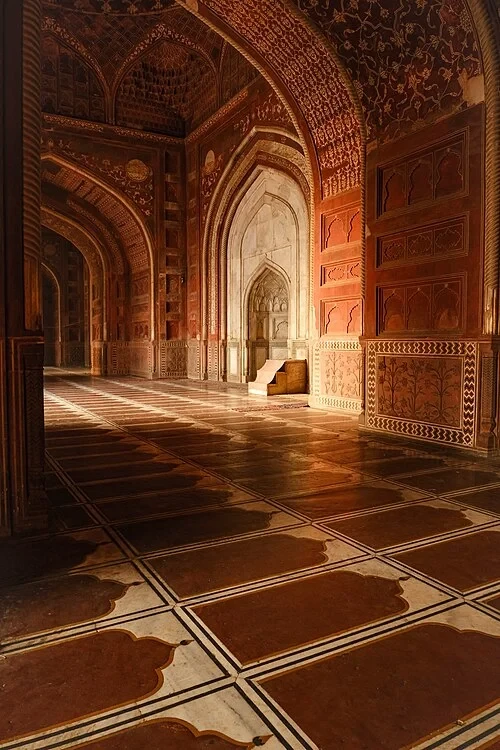 The Mosque (Western Side)The Mosque Interior
Stepping into the interior of the red sandstone mosque reveals a quiet, focused space for worship. The architecture here is centered around the mihrab, the semi-circular niche in the wall that indicates the direction of Mecca. One of the most interesting details is found beneath your feet. The floor is made of black marble and is incised with the outlines of 569 individual prayer mats. Each rectangular border is meticulously carved into the stone, ensuring that every member of the congregation has a designated, orderly space to stand and pray. This creates a sense of geometric precision that echoes the organization of the wider complex. The walls and vaulted ceilings are decorated with intricate stonework and floral motifs, but the overall atmosphere is more somber and reflective than the ornate exterior of the main tomb. The use of black marble for the prayer mat outlines provides a visual guide that has remained unchanged for centuries. This designated flooring was a practical solution for large gatherings, allowing hundreds of people to align themselves perfectly for their daily rituals without the need for temporary rugs.
Listen in the appPhoto: Abhinav152013 · CC BY-SA 4.0
10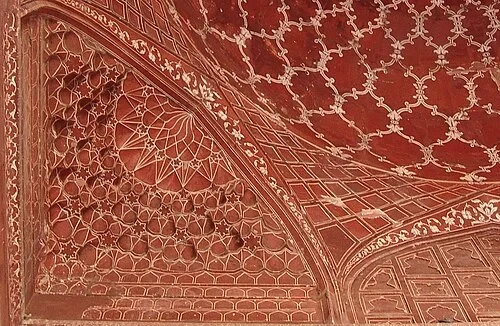 The Mosque (Western Side)Incised Wall Patterns
Notice the detailed patterns decorating the arches and walls within the mosque. These intricate designs were created using an incised technique, where the patterns were carved directly into the red sandstone and then filled with white paint or plaster to make them stand out. You will find that these decorations consist entirely of complex geometric shapes and flowing floral motifs. In Islamic art, the depiction of human or animal figures is generally avoided in religious spaces to prevent any form of idolatry. Instead, artists turned to mathematics and nature to express spiritual concepts. The repeating geometric patterns, which can theoretically extend forever in any direction, are intended to represent the infinite and eternal nature of God. The floral designs, meanwhile, allude back to the theme of the paradise garden. These patterns are not just decorative; they are a form of visual prayer. By focusing on symmetry and precision, the artisans created a space that encourages meditation and contemplation. The repetition of these motifs across the arches creates a rhythmic visual harmony that guides the eye through the sacred architecture of the hall.
Listen in the appPhoto: Nemonoman · Public domain
Taj Mahal
Frequently asked questions
How much does the guide cost?
Free app download. Listed guide price: $2.99. Guide price shown in the app. Audio guide only. Venue admission is separate.
Can I listen without internet?
Yes. Download the guide’s audio, images, and maps in the app before your visit. Your downloaded content is then available offline.
Can I listen in my language?
Stanza supports 15 languages. Check the app for the languages available for this guide.
Do I need to follow a schedule?
No. This is a self-guided experience. Choose your stops, pause whenever you like, and return to a story at your own pace.
At your own pace
Explore Taj Mahal.
Download Stanza, then search for “Taj Mahal”.
Free app download · Guide price shown in the app
Keep exploring
Nearby audio guides
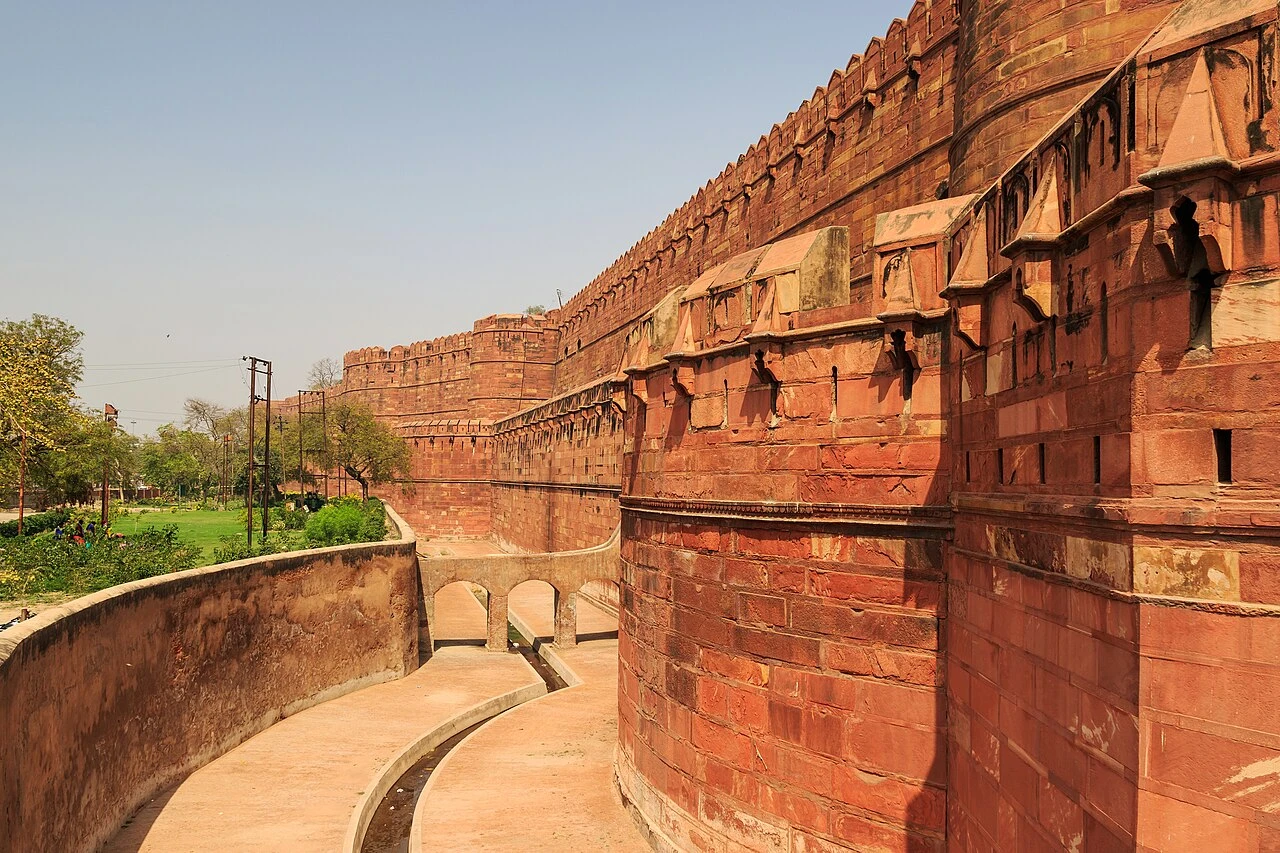
Agra
Agra Fort
Content & sources
Photo: A.Savin · FAL
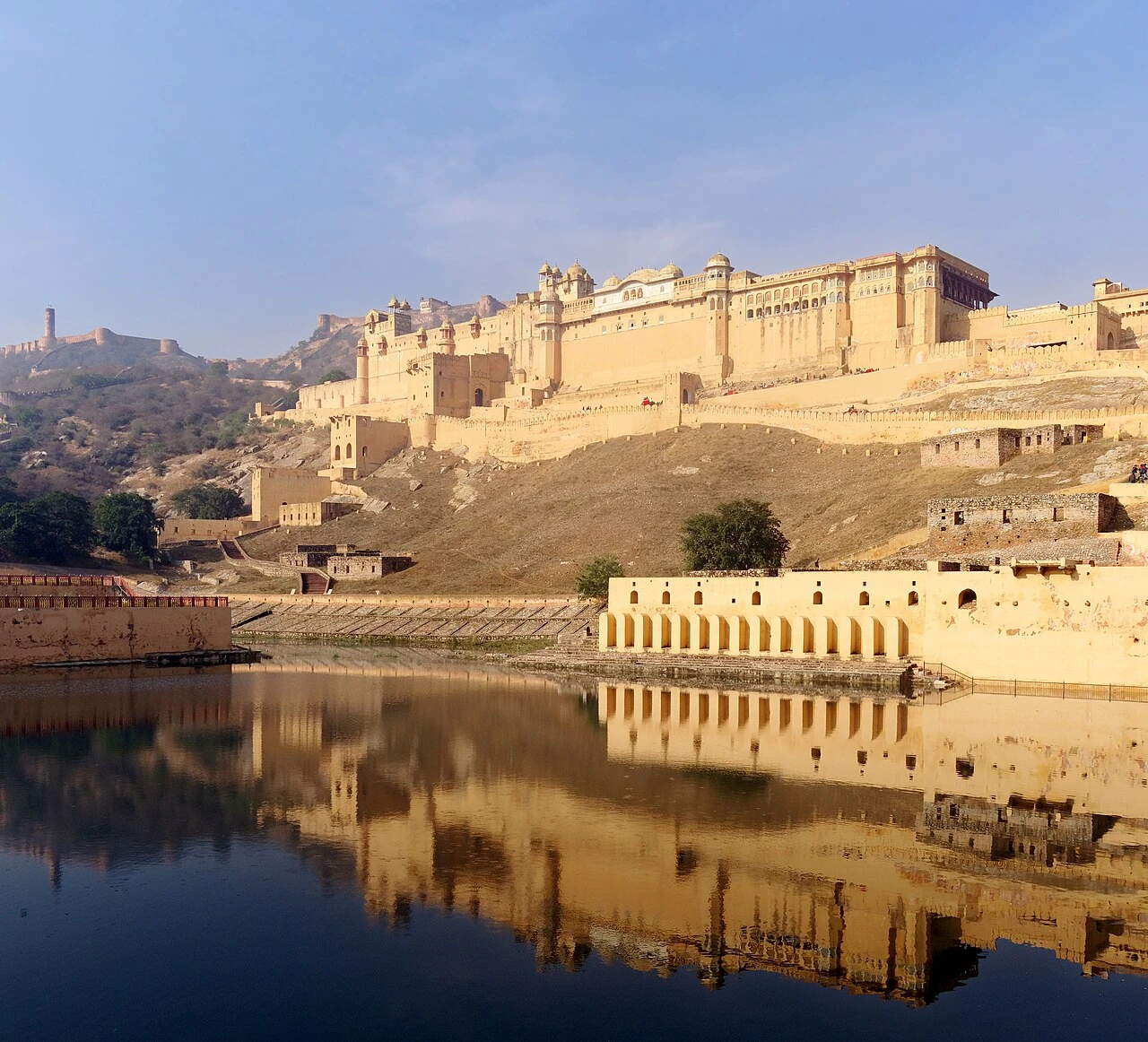
Jaipur Municipal Corporation
Amber Fort
Content & sources
Jakub Hałun · CC BY-SA 4.0
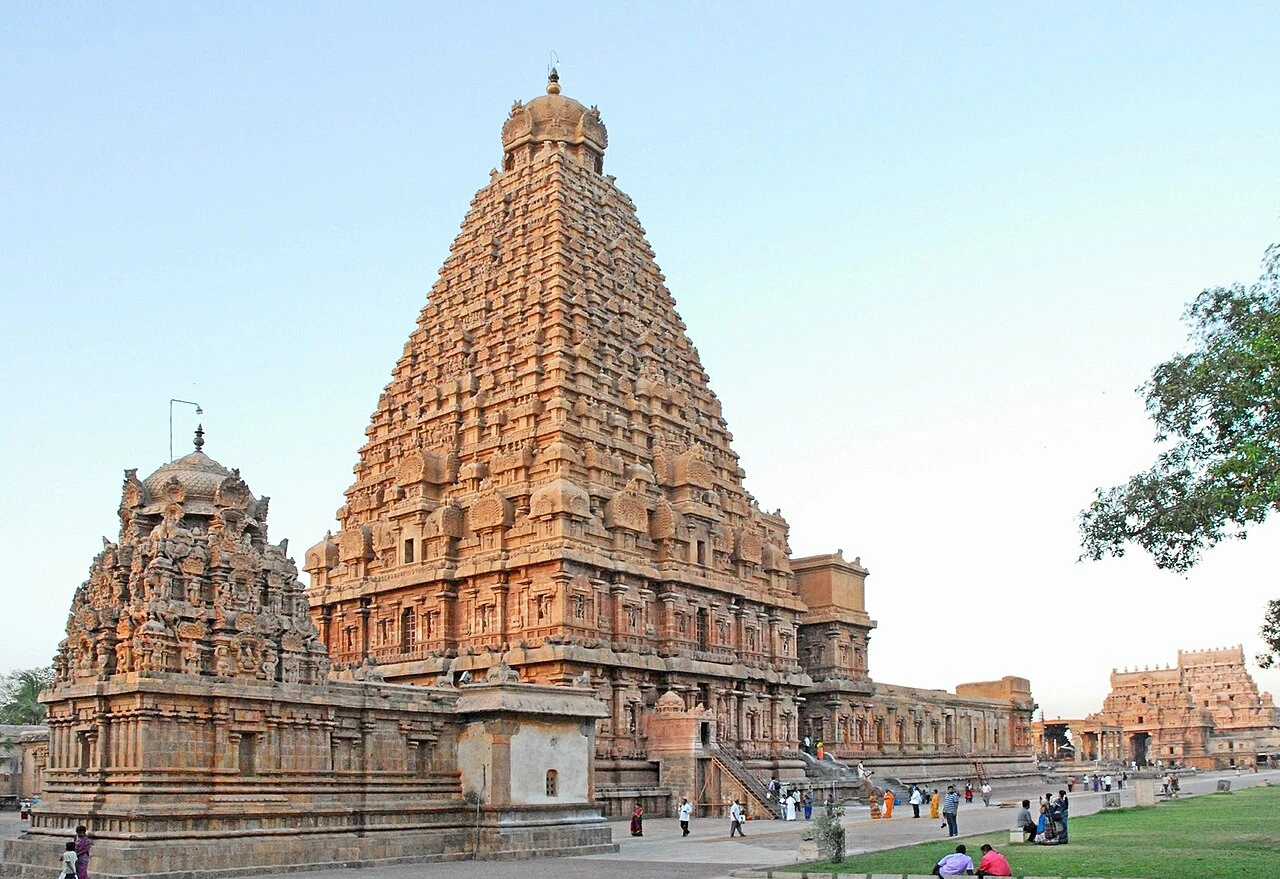
Thanjavur
Brihadisvara Temple
Content & sources
Jean-Pierre Dalbéra from Paris, France · CC BY 2.0
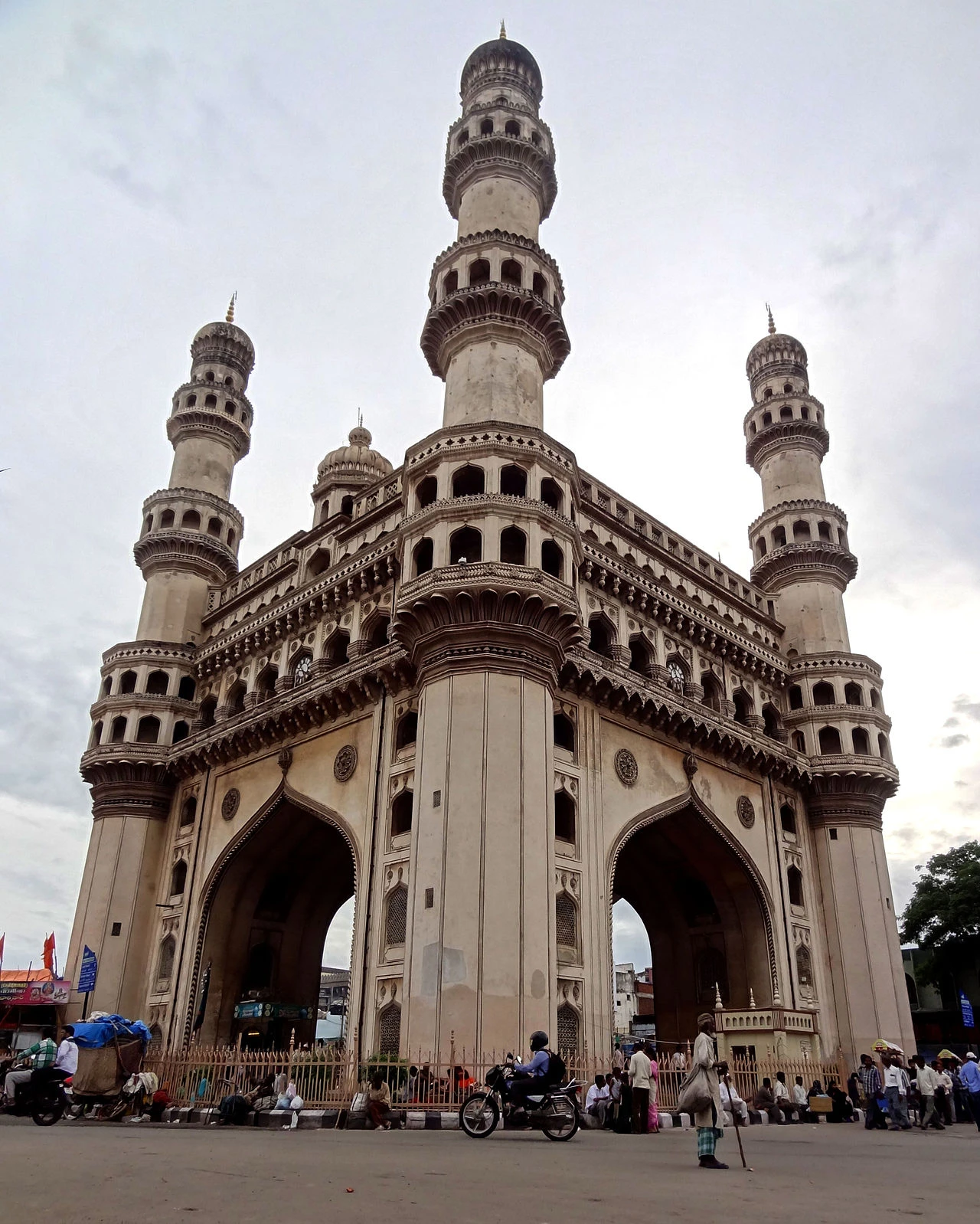
Hyderabad
Charminar
Content & sources
Gopikrishna Narla · CC BY-SA 3.0