Languages
15Amber Fort Audio Guide
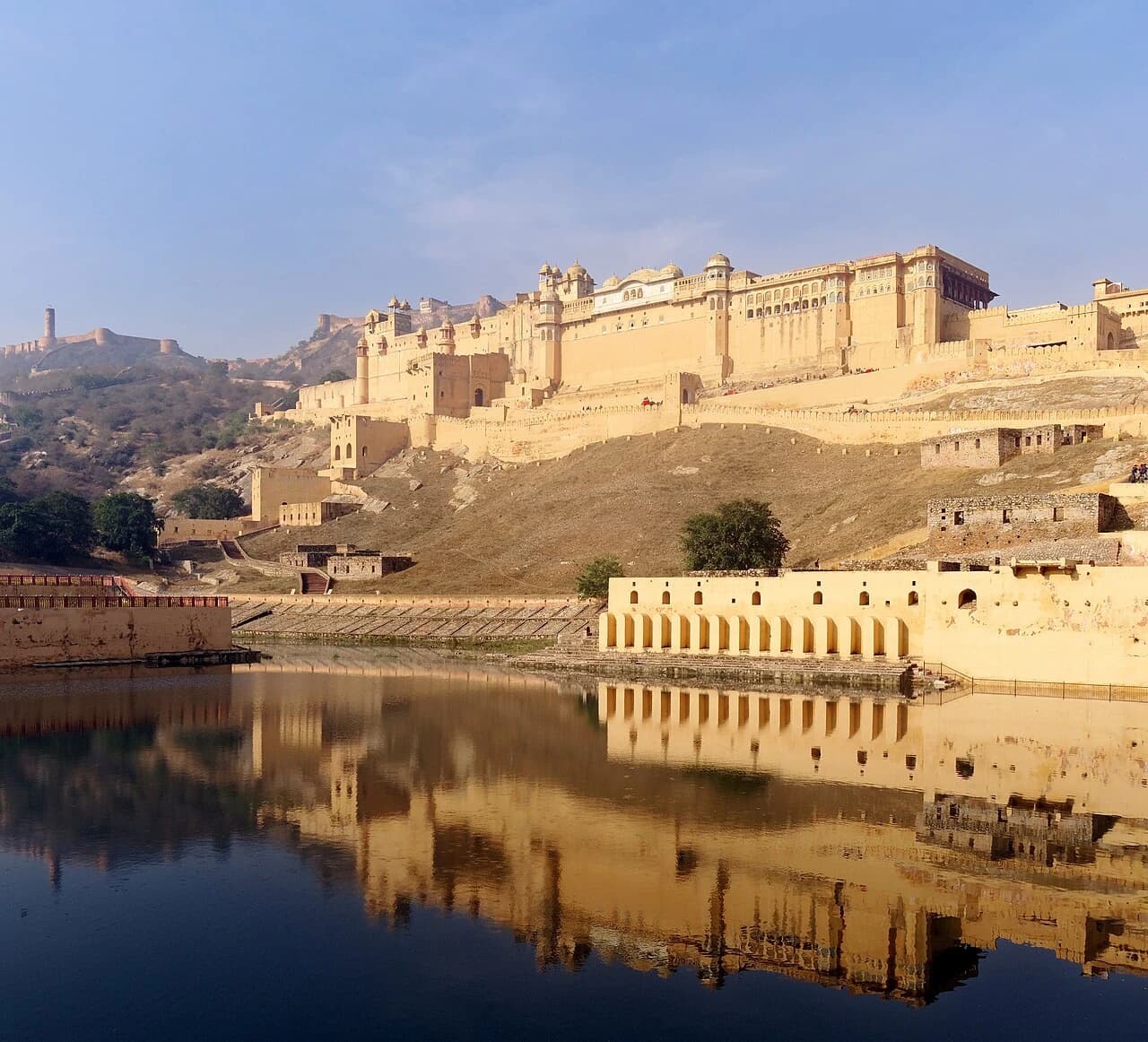
Amber Fort is a landmark in Jaipur Municipal Corporation, India. Explore it with Stanza's GPS-triggered offline audio guide — available in 15 languages.
Quick Facts
30
Stops
15
Languages
100%
Offline
📍 Jaipur Municipal Corporation, India · 26.9859°N, 75.8507°E
About Amber Fort
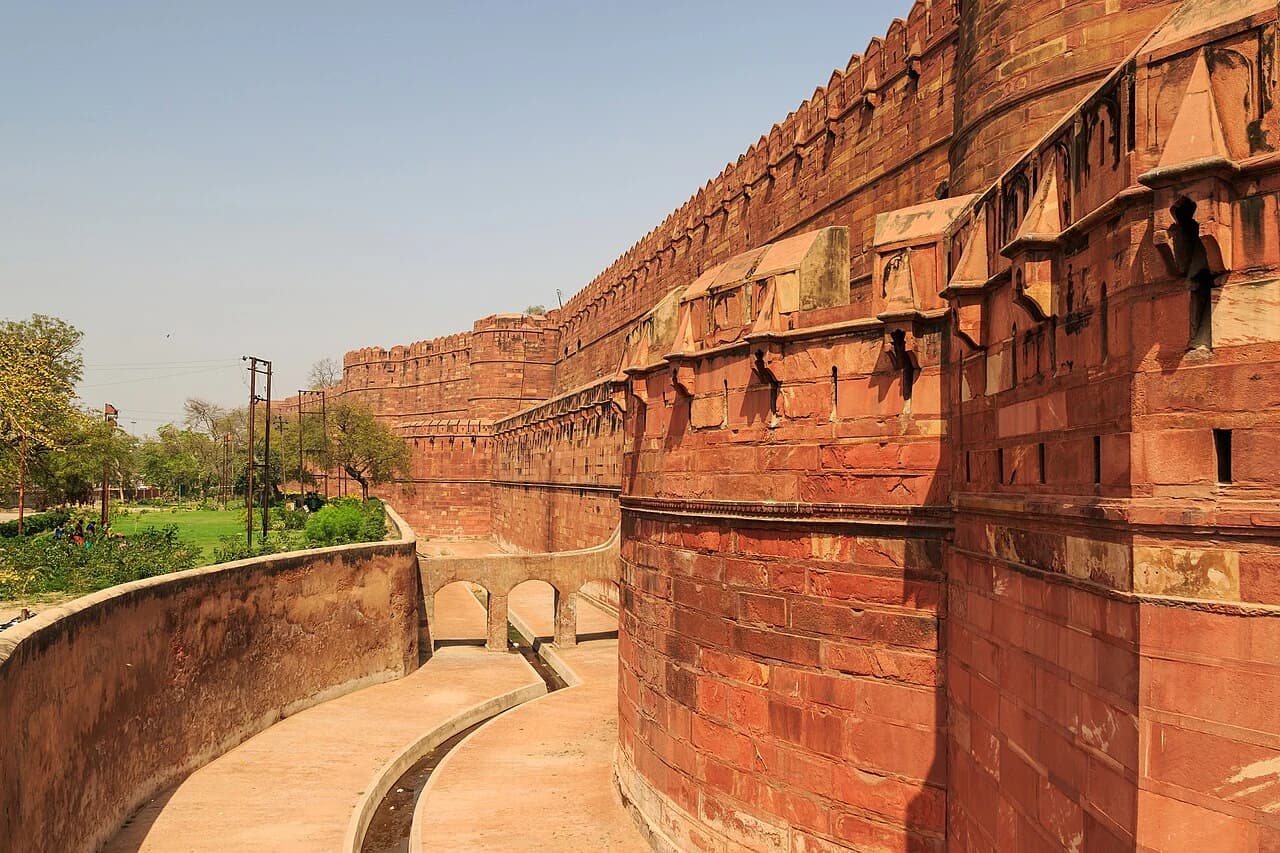
Amber Fort is a historic fort and palace complex located near Jaipur, Rajasthan, India. Built with red sandstone and marble, it is known for its artistic Hindu style elements.
Amber Fort is also known as Fort of Amer, Ambar Palace, Amer Palace, Amber Palace on Hill, Amber, and 7 other names in various languages.
This self-guided audio tour features 30 narrated stops organized across 7 sections. As a fortress, Amber Fort offers a unique cultural experience in the heart of Jaipur Municipal Corporation, India.
The Stanza audio guide is available in 15 languages and works entirely offline — download the complete tour including audio narration, maps, and images before your visit. As you walk through Amber Fort, GPS-triggered narration plays automatically at each point of interest.
Last updated:
What you will hear
Suraj Pol: The Sun Gate
The main ceremonial entrance where the Maharaja and his armies entered Jaleb Chowk.
Defensive Cannons
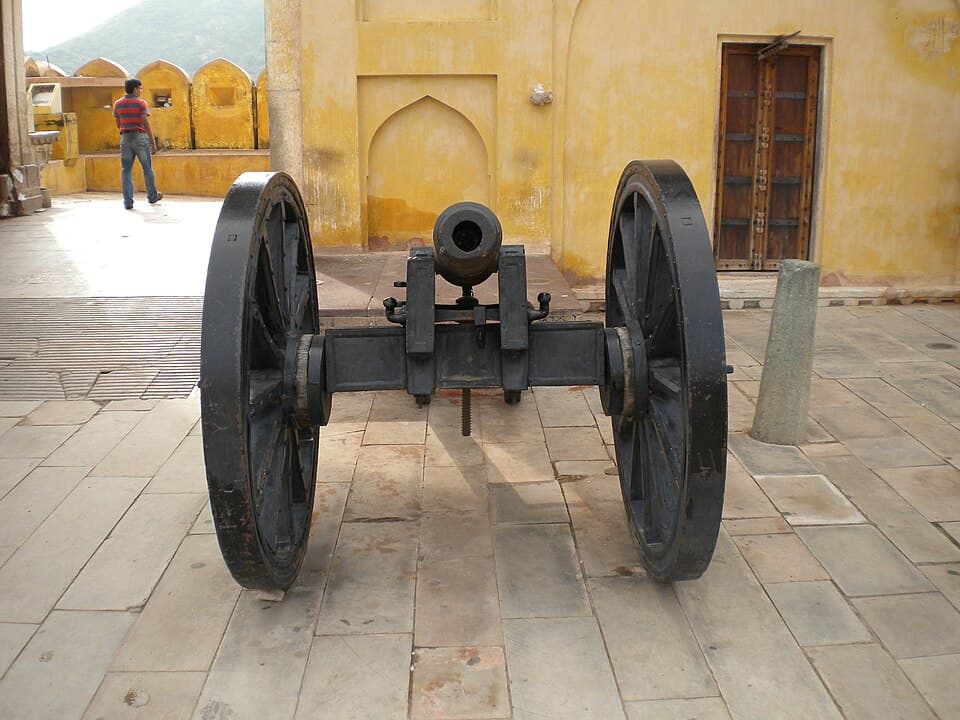
Amidst the delicate carvings and sprawling gardens of the palace, these iron cannons stand as a stark reminder of Amber’s primary role as a functional fortress. Mounted on heavy wooden wheels, these pieces of artillery were strategically placed to guard the main entry points and ramparts. Despite the ornate beauty that characterizes the interior of the complex, the Rajput rulers were constantly prepared for conflict. These weapons were essential for defending the kingdom against potential sieges and raids from rival powers who sought to control this strategic mountain pass. During the peak of the fort’s military use, the air here would have been thick with the smell of gunpowder rather than the scent of flowers. The thick stone walls were designed to withstand the recoil of these very cannons and to protect the defenders stationed behind them. Notice the sturdy construction of the carriages, designed to be moved quickly to different vantage points along the walls. While Amber eventually became more of a ceremonial site when the capital moved to Jaipur, these cannons were maintained as symbols of military might. They serve as a vital link to the era of the warrior-kings, where architectural beauty and defensive capability had to exist in perfect, sometimes brutal, harmony.
The Sila Devi Temple
The spiritual heart of the fort, housing the idol of the goddess Kali brought from Bengal.
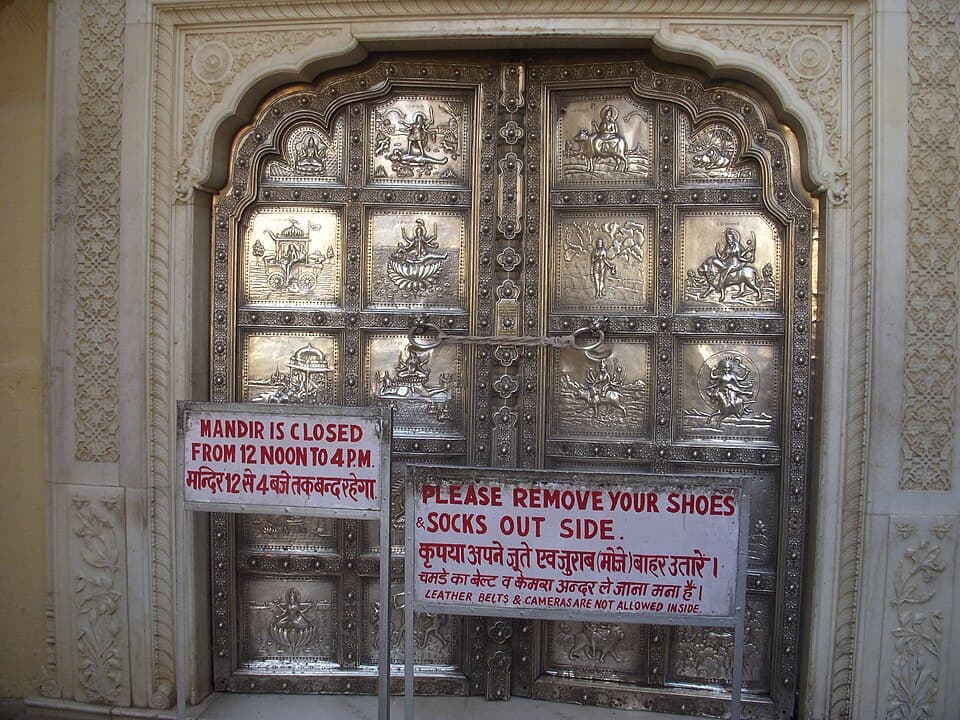
The Sila Devi Temple
The Sila Devi Temple is the most significant religious site within Amber Fort, steeped in a legend that connects the Rajput kings to the far-off lands of Bengal. Tradition holds that in 1604, Raja Man Singh I suffered a defeat in battle and sought divine intervention. He had a vision of the Goddess Kali, who instructed him to retrieve a stone slab that was submerged in the sea near Jessore. Following the vision, the Raja recovered the stone and brought it back to Amber, where he had the idol of Sila Devi carved from that single, sacred block. Sila Devi is a form of the goddess Kali, and her arrival at the fort was seen as a turning point for the dynasty’s fortunes. For centuries, the royal family has come here to seek the goddess's protection before going into battle or beginning new ventures. The temple's interior is a place of intense spiritual energy, where the air is often filled with the sound of bells and the chanting of priests. Even after the capital was moved to Jaipur, the Maharajas continued to visit Amber specifically to worship at this shrine. It remains a living site of pilgrimage, embodying the deep-rooted belief that the success of the state was inextricably linked to the favor of the divine.
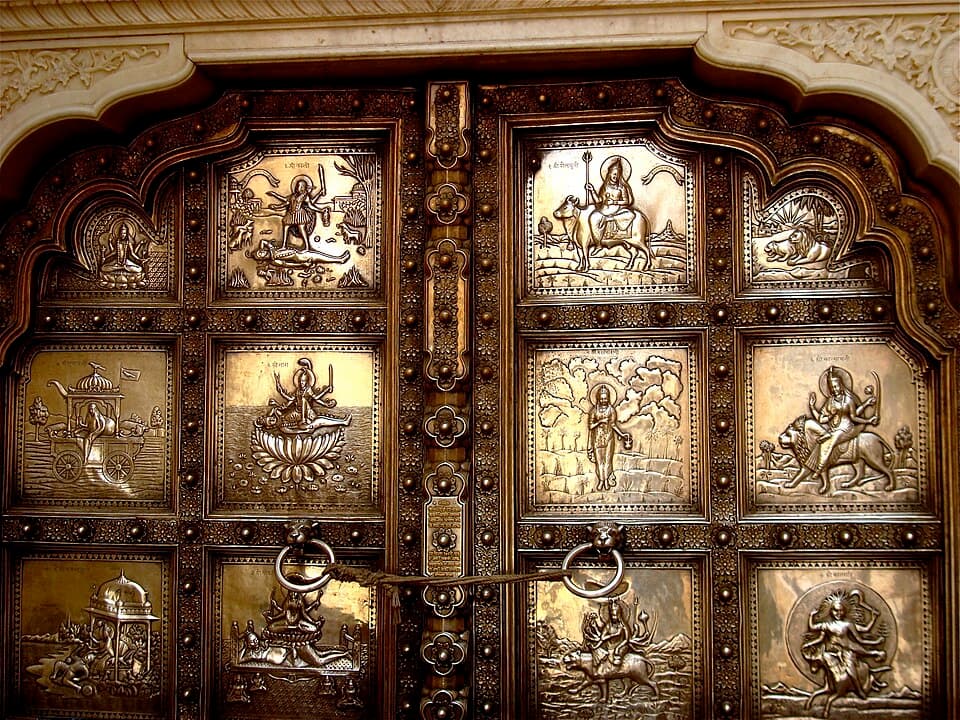
Silver Gates of Sila Devi
Standing before the entrance to the inner sanctum, you are met by a spectacular example of Rajput craftsmanship: the silver-embossed gates of the Sila Devi Temple. These doors are covered in intricate relief work that tells a story of deep religious devotion. If you look closely at the panels, you can see detailed depictions of the Goddess Durga, to whom the temple is dedicated. Alongside her are representations of the ten incarnations, or 'avatars,' of the god Vishnu, a central theme in Hindu mythology representing the preservation of cosmic order. The use of such a vast amount of silver was not merely for decoration; it was a grand gesture of wealth and piety. The silver for these doors was a gift to the temple, reflecting the immense riches the Rajput rulers accumulated through their strategic alliances and military successes. The shine of the metal against the surrounding stone creates a focal point that draws the eye and signifies the importance of the treasures held within. These gates do more than just provide security; they serve as a visual hymn to the deities that the royal family believed guided their fates and protected their city. The level of detail achieved in the metalwork demonstrates the incredible skill of the artisans who served the Jaipur court.
Diwan-i-Aam: The Hall of Public Audience
The political center of the fort where the Raja met his subjects and officials.
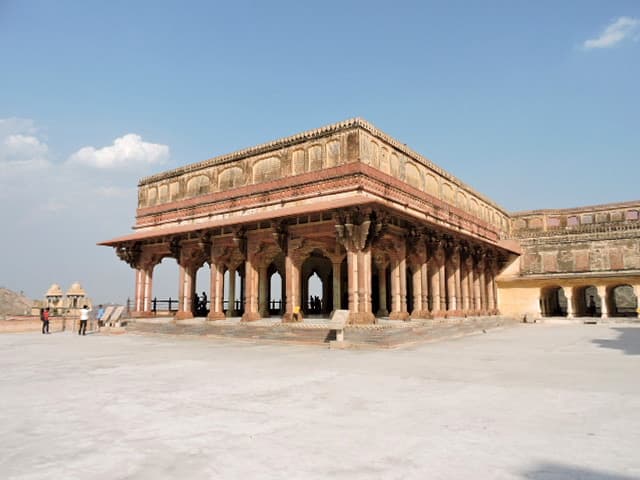
Hall of Public Audience
This grand pavilion is the Diwan-i-Aam, or the Hall of Public Audience. This was the political center of the fort, where the Maharaja performed his duties as a leader and a judge. It was here that he would meet with his subjects to hear their petitions, settle legal disputes, and receive reports from his officials. The design of the hall is intentionally open, symbolizing the transparency of the Raja's justice and allowing as many people as possible to witness the proceedings. Notice the raised platform at one end of the hall. This was where the royal throne was placed, ensuring the Maharaja remained visible and elevated above the assembly. The hall is characterized by its double row of columns, which support a heavy roof designed to provide shade from the intense Rajasthani sun. In this space, the rigid hierarchies of the court were on full display, with officials and courtiers arranged according to their rank. The Diwan-i-Aam was not just a building; it was a theater of power where the Maharaja reinforced his authority and fulfilled his social contract with the people of his kingdom. It stands as a bridge between the private world of the palace and the public life of the town of Amer.
Aram Bagh and the Magic Flower
The private Mughal-style garden and a unique optical illusion in marble.
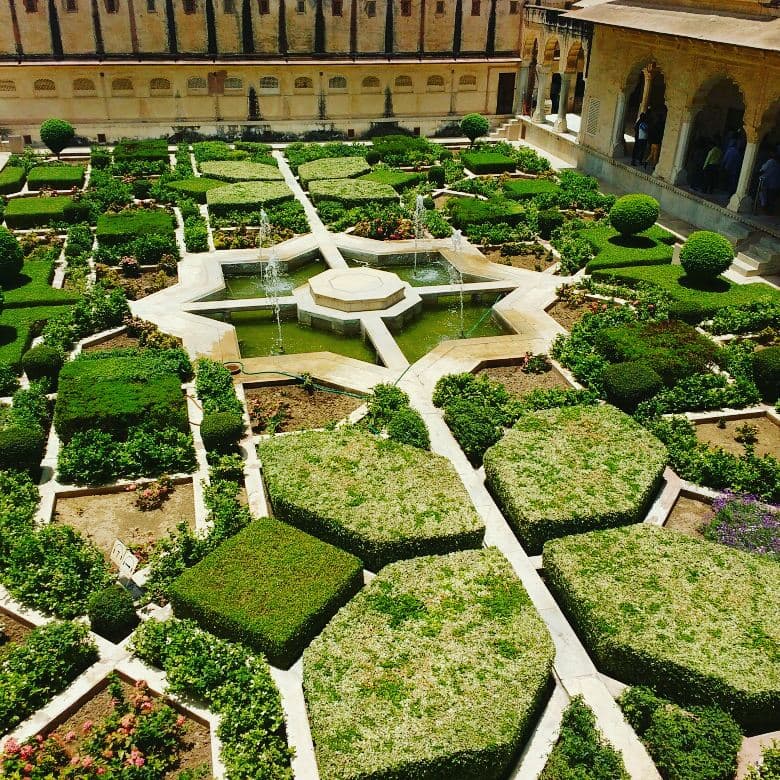
The Aram Bagh
The Aram Bagh, or 'Garden of Rest,' is a classic example of the 'Charbagh' layout, a style deeply rooted in Persian tradition. The garden is divided into four symmetrical quadrants by intersecting water channels, creating a structured and harmonious landscape. During the scorching Rajasthani summers, this was not just a place for aesthetic enjoyment; it was a critical part of the palace's natural cooling system. The presence of lush greenery and moving water helped to lower the ambient temperature through evaporation, providing a psychological and physical respite from the sun's glare. The water channels were designed to flow gently, creating a soothing sound that added to the tranquil atmosphere. This private 'Hall of Pleasure' garden was a sanctuary for the Maharaja, where the rigid geometry of the planting beds mirrored the order of the kingdom itself. It was a space designed for contemplation and quiet conversation, where the elements of nature were harnessed to create a microclimate of comfort and luxury amidst the rugged hills of the Aravalli range.
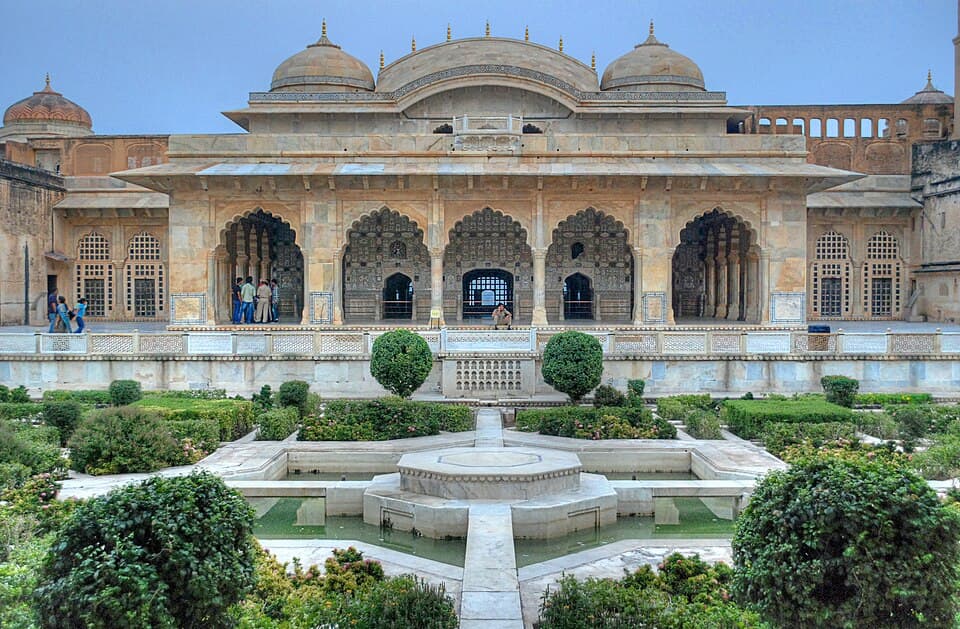
View from the Palace Garden
Standing here in the garden and looking back toward the Sheesh Mahal, you can appreciate the meticulous planning that went into this courtyard. There is a perfect symmetry at play, where the lines of the star-shaped planting beds align with the scalloped arches and doorways of the surrounding buildings. This visual harmony was a hallmark of high Rajput and Mughal design, intended to convey a sense of balance and divine order. This particular courtyard was the most private and luxurious section of the entire fort. Unlike the vast public areas you visited earlier, this space was strictly reserved for the Maharaja and his most esteemed guests. Every detail, from the intricate carvings on the pillars to the precisely maintained hedges, was meant to impress upon those visitors the refinement and absolute power of the ruler. It served as a secluded stage for high-level diplomacy and intimate royal gatherings, where the beauty of the surroundings provided a backdrop for the most significant decisions of the state.
Sukh Niwas: The Hall of Pleasure
A royal summer retreat featuring an early form of natural air conditioning.
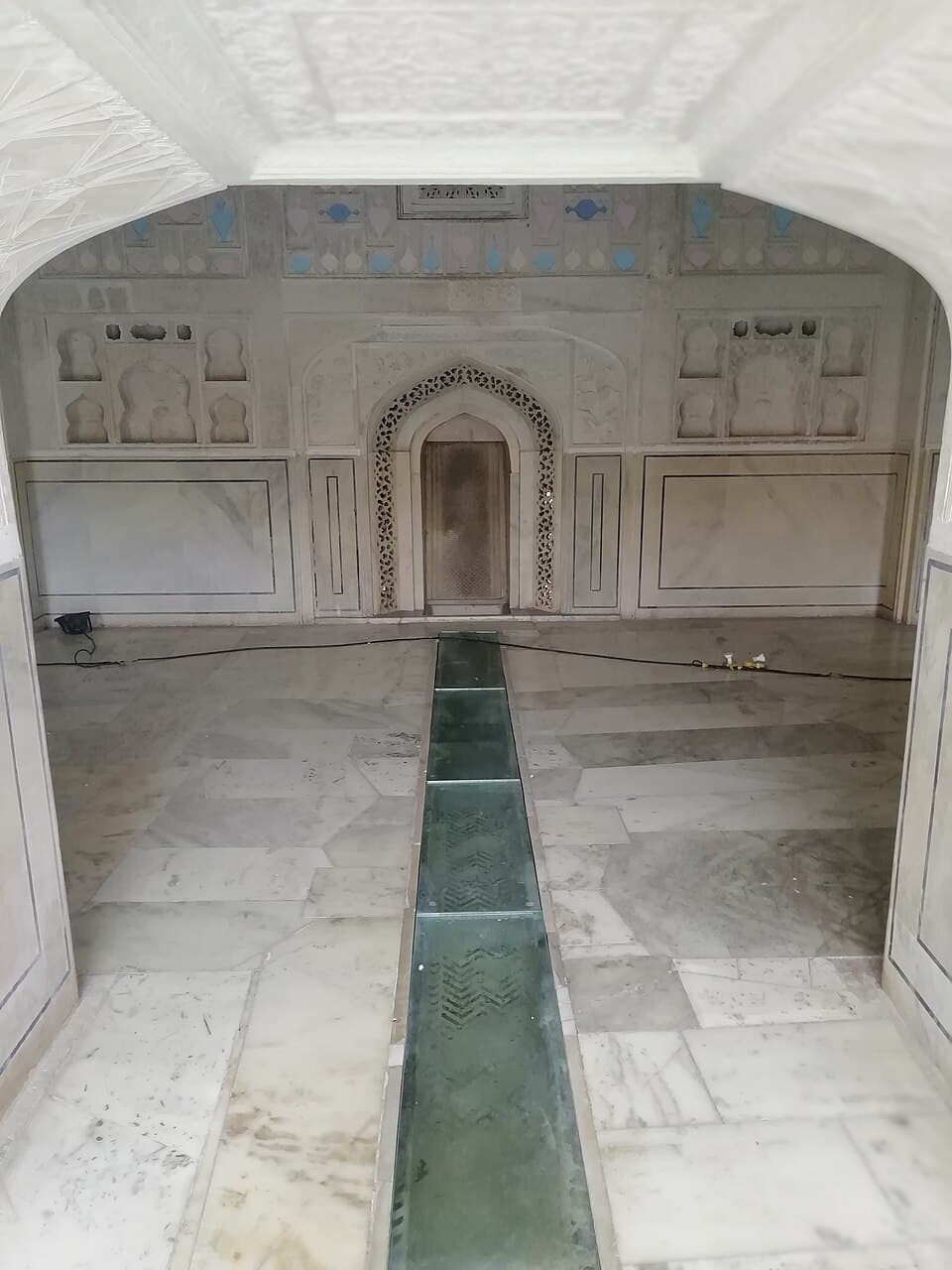
Ancient Air Conditioning
Running through the center of the Sukh Niwas is a shallow marble channel embedded in the floor. This was the heart of a sophisticated ancient air conditioning system. Water was pumped up from Maota Lake far below using a series of pulleys and wheels, eventually making its way to this very room. As the water flowed through this channel, it would evaporate, naturally cooling the air immediately above it. Because the palace was built to catch the mountain breezes, that cool air was then carried throughout the room, significantly lowering the temperature. To enhance the effect, the water would sometimes flow over a textured marble slope, creating a gentle rippling sound and increasing the surface area for evaporation. It is a remarkable example of how pre-industrial societies used their understanding of physics and local geography to solve environmental challenges. This system allowed the royal family to live in comfort within a desert climate, proving that luxury in Amber Fort was as much about clever engineering as it was about gold and jewels.
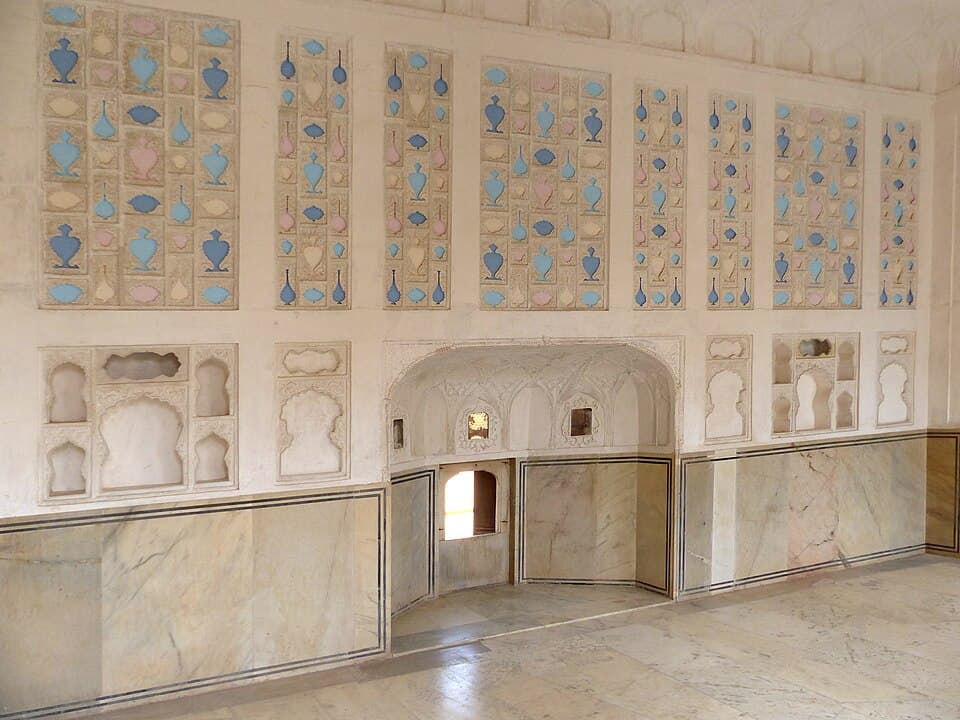
The Hall of Pleasure
The Sukh Niwas, which translates to 'Hall of Pleasure,' was the Maharaja's primary retreat for relaxation. One of the first things you might notice are the beautiful, heavy doors. These were crafted from sandalwood and feature intricate inlays of ivory, filling the room with a subtle, earthy fragrance that added to the sense of calm. This chamber was renowned throughout the palace for being remarkably cool, even when the temperatures outside were at their most extreme. It was here that the Maharaja would spend his afternoons, away from the administrative burdens of the public halls. The thick stone walls and the orientation of the room were carefully planned to avoid direct sunlight, while the interior decor focused on creating a serene, uncluttered environment. It represents the private side of royal life—a space where luxury wasn't just about display, but about providing a genuine sanctuary for the mind and body. The craftsmanship of the doors alone tells a story of the incredible resources and artistic talent available to the Rajput court.
The Secret Escape Tunnel
A subterranean passage designed to allow the royal family to flee to Jaigarh Fort during a siege.
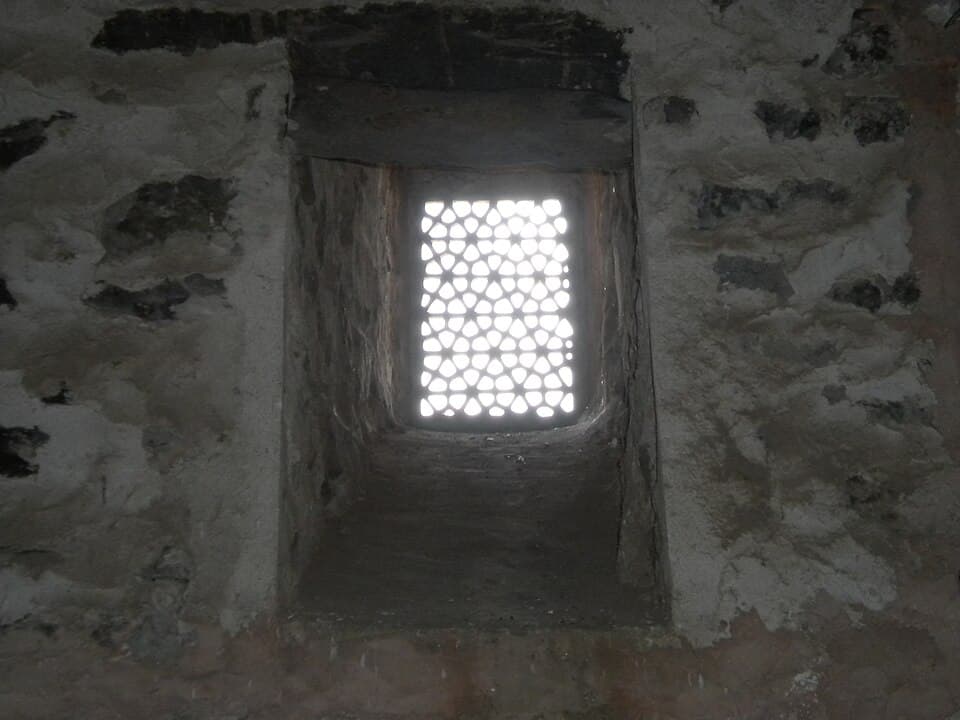
Ventilation in the Dark
As you move through the dark passage of the escape tunnel, you will occasionally see small latticed windows carved into the thick stone walls. These windows were critical for making the long subterranean journey bearable. They allowed for natural air circulation, preventing the tunnel from becoming stifling, and provided just enough light for the royal party to find their way without needing dozens of torches that might consume precious oxygen. However, their design was governed by strict defensive requirements. Each window is carved with a tight, geometric lattice pattern—a style known as 'jali.' This ensured that the openings were far too small for any intruder to squeeze through. Furthermore, the exterior placement was often disguised by the rugged terrain of the hillside, making them almost invisible from the outside. These small features are a testament to the meticulous planning of the fort's architects, who balanced basic human needs for light and air with the absolute necessity of maintaining a secure and secret exit from the palace.
The Lower Gardens and Exit
Reflecting on the fort's majesty from the Dalaram and Ram Bagh gardens before departure.
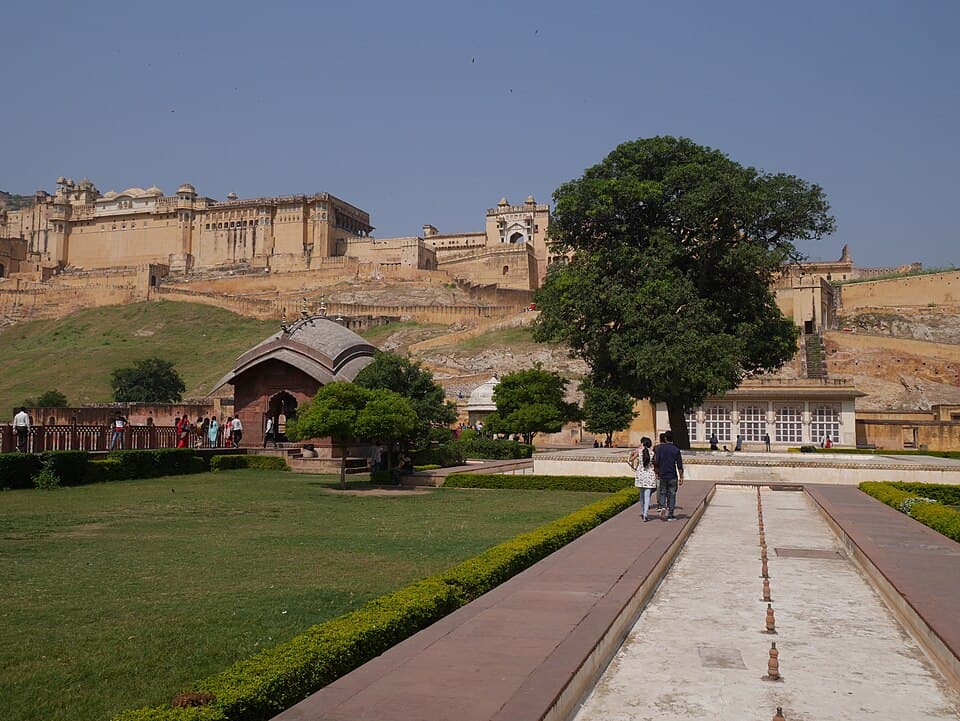
The Dilaram Garden
The Dilaram Bagh, or 'Garden of Heart's Ease,' is situated at a lower level near the banks of the lake. It was named after a legendary courtier and served a very specific social function. For centuries, this was the first point of rest for guests and dignitaries arriving at Amber after their long journeys through the Rajasthani desert. Before being granted an audience at the palace above, visitors could relax in the shade of the trees and enjoy the cool breeze coming off the water. The garden’s layout follows a traditional pattern, with pathways and flowerbeds designed to soothe the senses. It offered a moment of transition from the dusty road to the refined atmosphere of the royal court. Today, it remains a popular spot for reflection, offering a beautiful perspective on the towering ramparts of the fort. It stands as a reminder of the Rajput tradition of hospitality, where even the approach to the king was marked by beauty and the provision of comfort for the traveler.
Want to hear the rest?
Download the Stanza app to unlock all 30 stops and full GPS-guided navigation.
Frequently Asked Questions
How long does the Amber Fort audio tour take?
The Amber Fort audio guide includes 30 narrated stops. Most visitors spend 45 minutes to 1.5 hours exploring the complete tour, though you can listen at your own pace and skip or revisit any stop.
Is the Amber Fort audio guide available in my language?
Stanza supports 15 languages: English, Spanish, French, German, Italian, Portuguese, Russian, Japanese, Chinese, Korean, Arabic, Hindi, Polish, Dutch, Hebrew. Check the guide in the app to confirm the languages currently available for this tour.
Can I use the audio guide offline at Amber Fort?
Yes! Download the complete Amber Fort tour — including all audio, maps, and images — before your visit. The Stanza app works completely offline, so you don't need WiFi or mobile data at the venue.
How much does the Amber Fort audio guide cost?
The Stanza app is free to download. The current listed price for the Amber Fort audio guide is $2.99; app-store region and currency may affect the final price.
How do I use the Stanza audio guide at Amber Fort?
Download the free Stanza app, search for "Amber Fort", and download the tour. When you arrive at the venue, the app uses GPS to detect your location and automatically plays the relevant narration as you move between points of interest — completely hands-free.
What makes the Stanza audio guide different from other Amber Fort tours?
Stanza offers GPS-triggered narration that plays automatically as you walk through Amber Fort — no need to manually select stops. The tour is available in 15 languages, works fully offline, and includes 30 expertly narrated stops with images and historical context.
What other audio guides are available near Amber Fort?
Stanza offers multiple audio guides in Jaipur Municipal Corporation, India and nearby areas. After downloading the app, browse the map to discover all available tours near Amber Fort. Each guide can be downloaded for offline use.