Stanza · Audio guide
Gateway of IndiaAudio guide
A place to remember. A story to take with you.
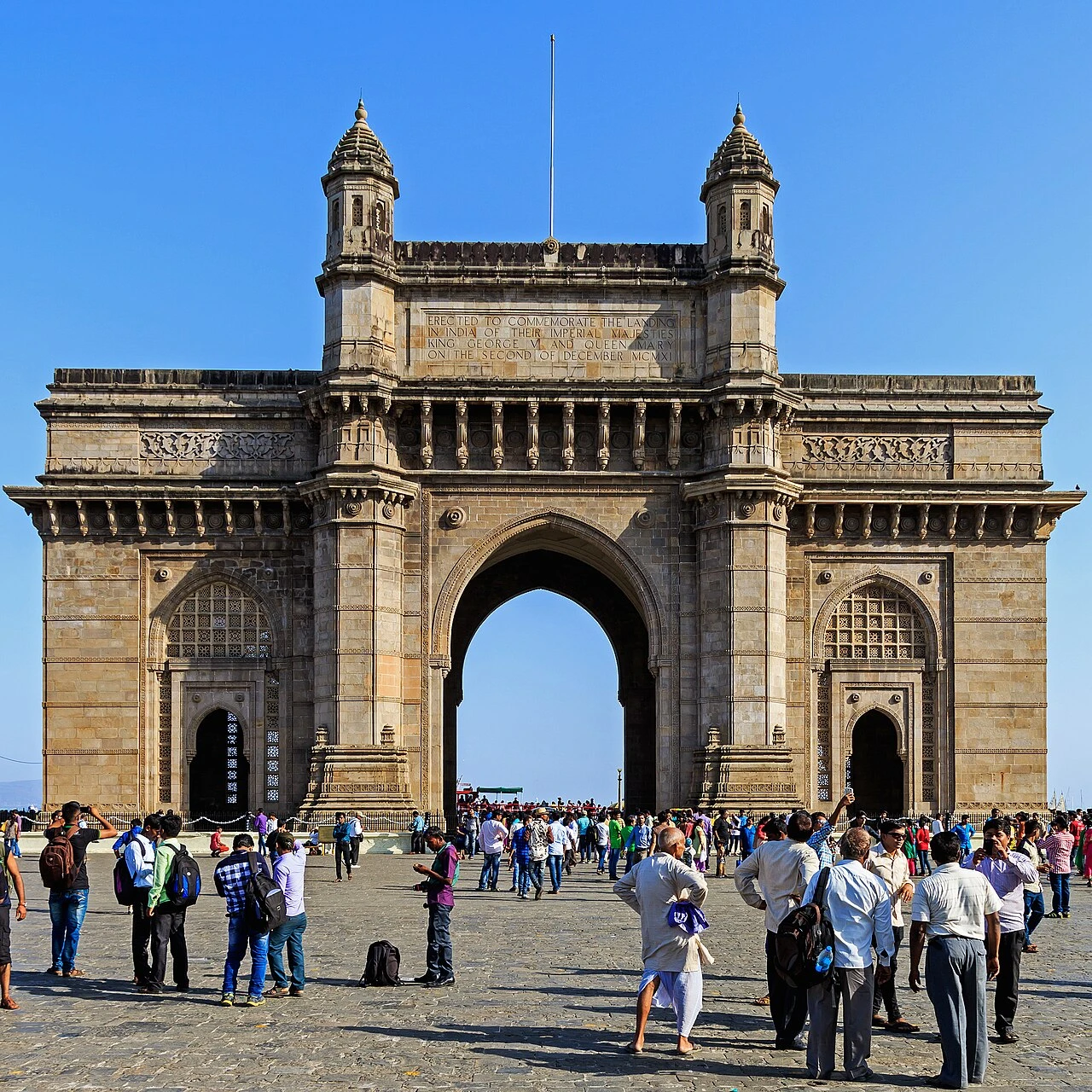
The Gateway of India is a triumphal arch monument located in Mumbai, India. It was built to commemorate the landing of King George V and Queen Mary at Apollo Bunder during their 1911 visit.
Download Stanza, then search for “Gateway of India”.
About the tour
One guide. Your kind of visit.
The Gateway of India is a triumphal arch monument located in Mumbai, India. It was built to commemorate the landing of King George V and Queen Mary at Apollo Bunder during their 1911 visit.
Ready when you are.
- 01Get the free Stanza app.
iOS & Android
- 02Find your guide.
“Gateway of India”
- 03Download before you go.
Works offline
Audio guide / 10 narrated stops
Inside the guide
Get to know a few of the stories before you go. Open a stop to read more.
01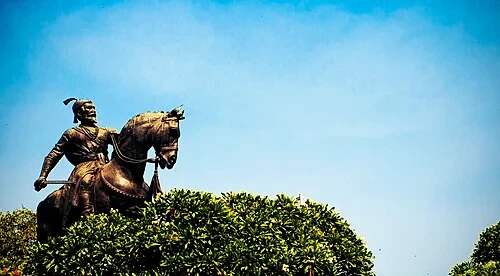 The Arrival Plaza and National HeroesShivaji Equestrian Statue
Welcome to the Gateway of India. We begin our tour at the edge of the plaza, facing a massive equestrian statue. This figure represents Chhatrapati Shivaji Maharaj, the legendary 17th-century Maratha warrior-king who is a foundational hero in Indian history. His placement here is deeply intentional. Notice how he sits on his horse, turned toward the sea, facing the Gateway itself. This positioning symbolizes the reclamation of Indian land and spirit from centuries of colonial rule. Shivaji was renowned for his military genius and his dedication to Swarajya, or self-rule, making him the perfect figure to stand as a guardian here. While the Gateway was built to welcome British royalty, Shivaji’s presence serves as a powerful counter-narrative. It marks the transition from the British Raj to a modern, independent India. As you look at the statue, consider the dialogue between this local hero and the colonial arch behind him. This plaza, once a stage for imperial pageantry, has been fundamentally transformed into a space of national pride, overseen by the man who first dreamed of a sovereign Indian state.
Aadi Singh · CC BY-SA 3.0
02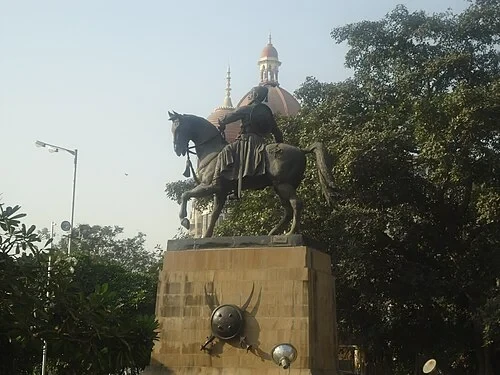 The Arrival Plaza and National HeroesThe Maratha Shield
Directing your attention to the lower portion of the Shivaji monument, look at the stone pedestal supporting the equestrian figure. Here, you can see a large, circular shield and crossed tulwar swords carved into the surface. These are not merely decorative elements; they represent the traditional weaponry of the Maratha warriors who once dominated this region. The tulwar is a distinctive curved saber, known for its effectiveness in the lightning-fast guerrilla tactics Shivaji pioneered. This monument was unveiled in 1961, several years after India achieved independence. Its late arrival to the plaza was a deliberate act of cultural reassertion. By placing these symbols of Maratha strength at the foot of the Gateway, the site’s identity was solidified as a monument to Indian pride rather than just a royal colonial entrance point. The shield and swords remind us that while the arch was built to celebrate an arriving monarch, the ground it stands upon has its own deep history of resistance and sovereignty. The weapons serve as a silent anchor, grounding the grand imperial architecture in the local heritage of the Maharashtra state.
Prashant Nadar · CC BY-SA 3.0
03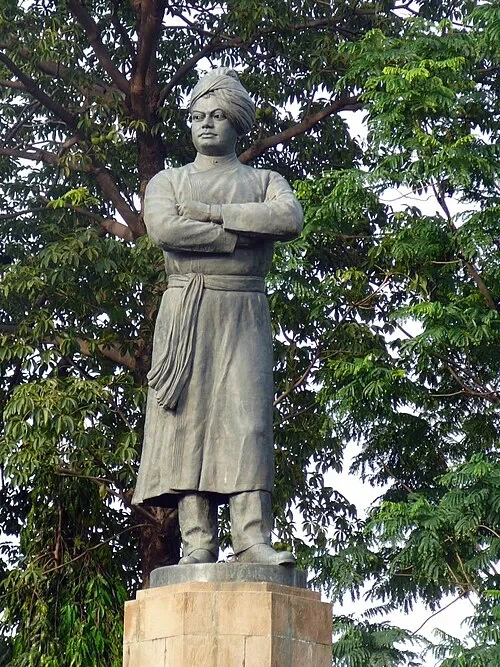 The Arrival Plaza and National HeroesSwami Vivekananda Statue
Moving across the plaza, we encounter the standing figure of the monk Swami Vivekananda. Dressed in traditional robes and a turban, he stands with an air of quiet determination. Vivekananda was a pivotal spiritual leader who gained international fame after his historic speech at the 1893 Parliament of the World's Religions in Chicago. His presence here adds a vital layer of intellectual and spiritual strength to the plaza's narrative. While the statue of Shivaji nearby represents military and political power, Vivekananda represents the cultural and philosophical depth of the nation. At the end of the 19th century, he traveled extensively, urging Indians to take pride in their heritage while engaging with the modern world. Having his statue in this prominent location suggests that India's national identity is built on both the strength of its warriors and the wisdom of its sages. He gazes out with a vision of a rejuvenated India, one that contributes its ancient spiritual insights to the global community. His inclusion in this public space ensures that the story of the Gateway is not just about rulers and empires, but also about the enduring ideas that define the Indian character.
Listen in the appAppaiah · CC BY-SA 2.0
04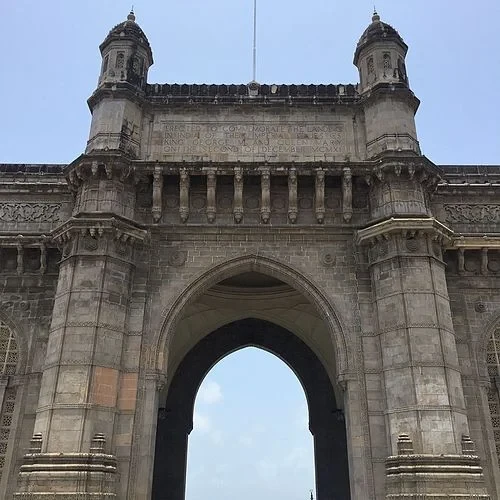 The Main Arch and Royal HistoryThe Indo-Saracenic Facade
The Gateway of India is an architectural triumph designed by the Scottish architect George Wittet. Rising approximately 26 meters, or roughly 85 feet, the arch is built in the Indo-Saracenic style. This was a deliberate attempt by colonial architects to create a visual bridge between East and West. Look closely at the structure, and you will see how British monumentalism is blended with elements inspired by 16th-century Gujarati patterns and grand Mughal domes. The yellow basalt stone, quarried locally, gives the monument its warm, honey-colored hue. Although the foundation stone was laid in 1913, the structure was not completed until 1924. This long delay was caused by the massive land reclamation projects required to create the plaza and the disruptions of World War I. The facade we see today is a masterpiece of symmetry and detail. It was intended to be the first sight for travelers arriving in Bombay by ship, providing an appropriately grand entrance to the First City of India. Each archway and turret reflects a complex history, where imperial ambitions were articulated through the very architectural language of the land they sought to rule.
Listen in the appPhoto: Ajaykumar0197 · CC BY-SA 4.0
05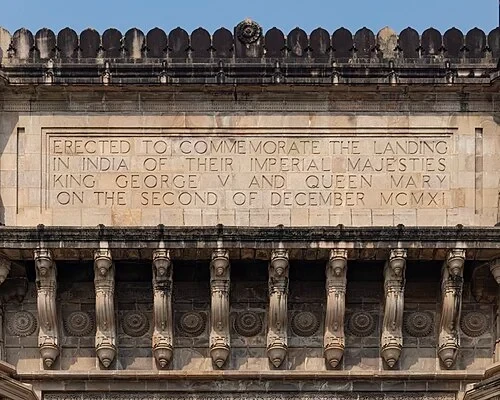 The Main Arch and Royal HistoryThe Royal Inscription
Look up toward the top of the central arch to find the English inscription carved into the stone. It commemorates the landing of King George V and Queen Mary on December 2, 1911. This was a monumental occasion, marking the first time a reigning British monarch visited India. However, there is a fascinating story behind this permanent memorial. When the royal couple actually arrived at this spot in 1911, the stone Gateway you see today did not exist. Instead, they were greeted by a temporary cardboard coronation arch made of plaster and painted wood. This mockup was constructed to provide a sense of grandeur while the permanent design was still being debated and funded. The inscription here serves as a lasting record of that imperial arrival, even though the physical structure wasn't completed for another thirteen years. It lists the names of the monarchs in all-caps, emphasizing the formal, state-sanctioned nature of the visit. While it looks like a timeless part of the arch, it is a reminder of the staged pageantry that defined colonial rule, where temporary sets were eventually replaced by the enduring basalt we see today.
Listen in the appiMahesh · CC BY-SA 4.0
06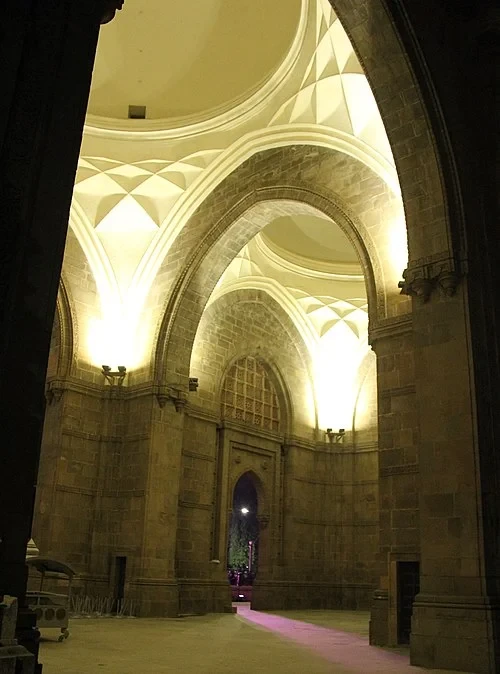 Indo-Saracenic MasteryThe Central Dome
Entering the space beneath the main arch, look up to see the interior of the central dome. It spans 15 meters, or about 49 feet, in diameter. The intricate ribbing and geometric patterns you see are not just for show; they reflect traditional Indian vaulting techniques that allow for massive, open interior spaces without the need for heavy supporting columns. This engineering feat creates a sense of airy lightness despite the heavy basalt construction. On either side of this central hall are large reception rooms. In the heyday of the British Raj, these spaces were designed to accommodate up to 600 people each. They served as the setting for official welcomes, where incoming Viceroys and foreign dignitaries would be formally received upon their arrival in India. The acoustics here are remarkable, designed to carry the sound of military bands and official proclamations. The height of the dome also assists with cooling, as the rising warm air escapes through vents, keeping the central passage relatively comfortable even in the intense Mumbai heat. It is a space designed for the theater of empire, where every angle was calculated to impress those stepping off the boats.
Listen in the appPhoto: AKS.9955 · CC BY-SA 4.0
07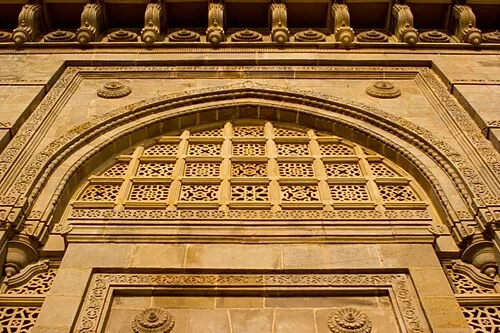 Indo-Saracenic MasteryIntricate Jali Screens
Throughout the archways and side chambers, you will notice beautiful perforated stone latticework. These are known as 'jali' screens, a classic element of Gujarati and Islamic architecture. Architect George Wittet incorporated these into the Gateway’s design as a primary example of the 'Indo' in Indo-Saracenic. Beyond their aesthetic beauty, these screens serve a vital functional purpose. They allow the sea breeze to pass through the structure, providing natural ventilation while blocking the direct, harsh glare of the sun. As the sun moves across the sky, the jalis create shifting patterns of light and shadow on the floors and walls, a dynamic decorative effect that changes throughout the day. The level of detail in the stone carving is extraordinary, mimicking the delicacy of lace or woodwork in solid basalt. By using these local architectural motifs, Wittet acknowledged the deep artistic traditions of Western India. The jali screens represent a moment of cultural dialogue, where a colonial monument adopted the vernacular language of the region to create a building that feels rooted in its environment rather than just being imposed upon it.
Listen in the appPhoto: Victorgrigas · CC BY-SA 3.0
08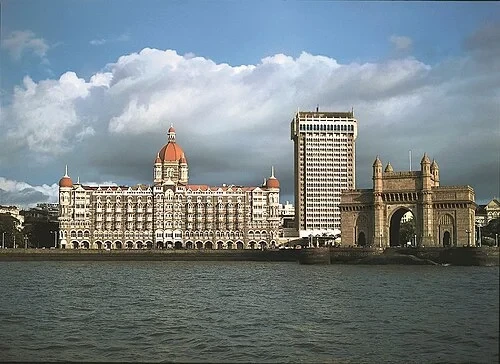 The Waterfront and the Taj PalaceThe Taj Mahal Palace
Turn around and look across the plaza, away from the sea. Dominating the view is the grand Taj Mahal Palace hotel. Its iconic red domes provide a striking contrast to the pale yellow basalt of the Gateway. While the Gateway was a British project, the hotel was built by the Indian industrialist Jamsetji Tata and opened its doors in 1903, predating the Gateway itself. The hotel has been at the center of Mumbai's social and political life for over a century. However, it also holds a more somber significance in recent memory. In November 2008, it was one of the primary targets of a series of devastating terrorist attacks. For several days, the eyes of the world were on this plaza as the building burned. In the aftermath, the hotel and this square transformed into a place of national mourning and, eventually, a powerful symbol of Mumbai's resilience. The hotel was meticulously restored, and today it stands as a testament to the city's ability to endure and thrive. This plaza is no longer just a colonial landing site; it is a space where the city’s heart was tested and where its spirit proved unbreakable.
Listen in the appPhoto: Faij Ahamad · CC BY-SA 4.0
09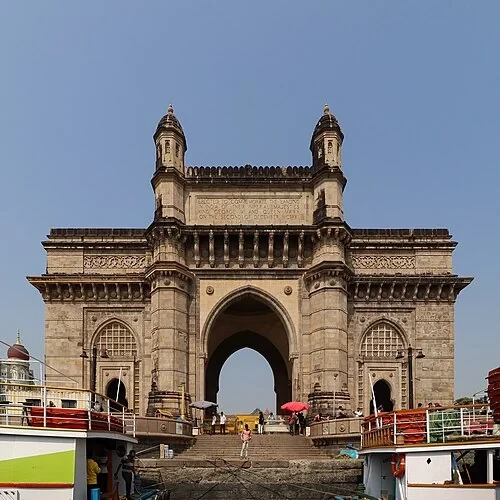 The Waterfront and the Taj PalaceThe Steps of Departure
Walk toward the rear of the monument, where the stone steps lead down into the Arabian Sea. While the Gateway was designed to welcome the British into India, these steps are famous for marking their final exit. On February 28, 1948, several months after India achieved independence, the last British troops—the First Battalion of the Somerset Light Infantry—passed through this arch for the last time. To the sounds of 'Auld Lang Syne,' they marched down these very steps and onto the ships that would take them home. This event marked the symbolic end of nearly two centuries of British rule. The Gateway that was meant to be a grand arrival door for the Empire had effectively become its exit door. As you stand here looking at the water, try to imagine the scene: the rows of soldiers in their pith helmets, the crowds watching from the plaza, and the finality of that moment. Today, these steps are used by people boarding ferries, but their historical weight remains. They represent the closing of one chapter and the beginning of another, where a colony finally became a sovereign nation.
Listen in the appiMahesh · CC BY-SA 4.0
10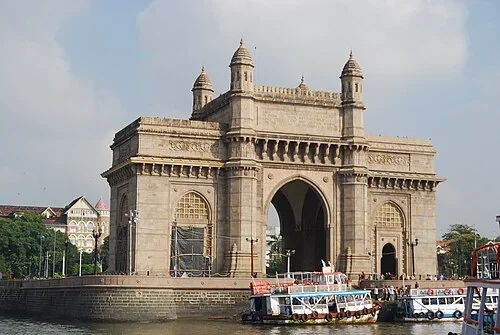 The Steps of DepartureThe Taj Mahal of Mumbai
We conclude our tour with a wider view of the monument often called the 'Taj Mahal of Mumbai.' It is a nickname that reflects its status as the city's most recognizable landmark. Over the decades, the Gateway has evolved from a formal, colonial reception hall into a bustling public hub. Today, instead of royal yachts, you see colorful ferries carrying locals and tourists to the Elephanta Caves or across the harbor to Alibaug. The plaza is constantly alive with the movement of photographers, street food vendors, and families enjoying the sea breeze. As you finish your visit, take a moment to look at the stone one last time. The local yellow basalt has a unique quality; it changes color depending on the light. In the soft morning air, it appears as a pale honey hue, but as the sun begins to set over the Arabian Sea, the stone seems to soak up the light, turning a deep, rich gold. This enduring structure, which has witnessed the arrival of kings and the departure of empires, remains the symbolic front door to India’s most dynamic city, standing firm against the tides of history.
Listen in the appTing Chen · CC BY-SA 2.0
Gateway of India
Frequently asked questions
How much does the guide cost?
Free app download. Listed guide price: $0.99. Guide price shown in the app. Audio guide only. Venue admission is separate.
Can I listen without internet?
Yes. Download the guide’s audio, images, and maps in the app before your visit. Your downloaded content is then available offline.
Can I listen in my language?
Stanza supports 15 languages. Check the app for the languages available for this guide.
Do I need to follow a schedule?
No. This is a self-guided experience. Choose your stops, pause whenever you like, and return to a story at your own pace.
At your own pace
Explore Gateway of India.
Download Stanza, then search for “Gateway of India”.
Free app download · Guide price shown in the app
Keep exploring
Nearby audio guides
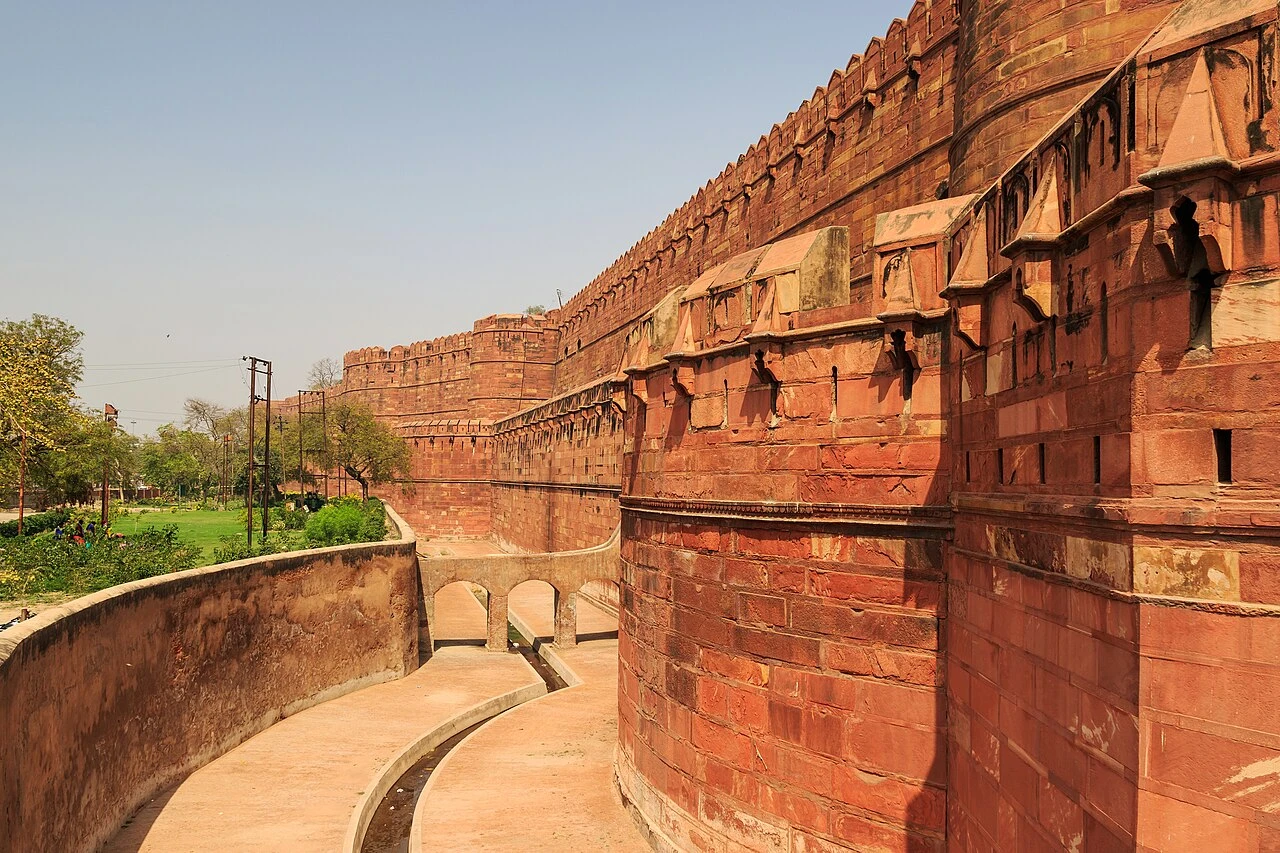
Agra
Agra Fort
Content & sources
Photo: A.Savin · FAL
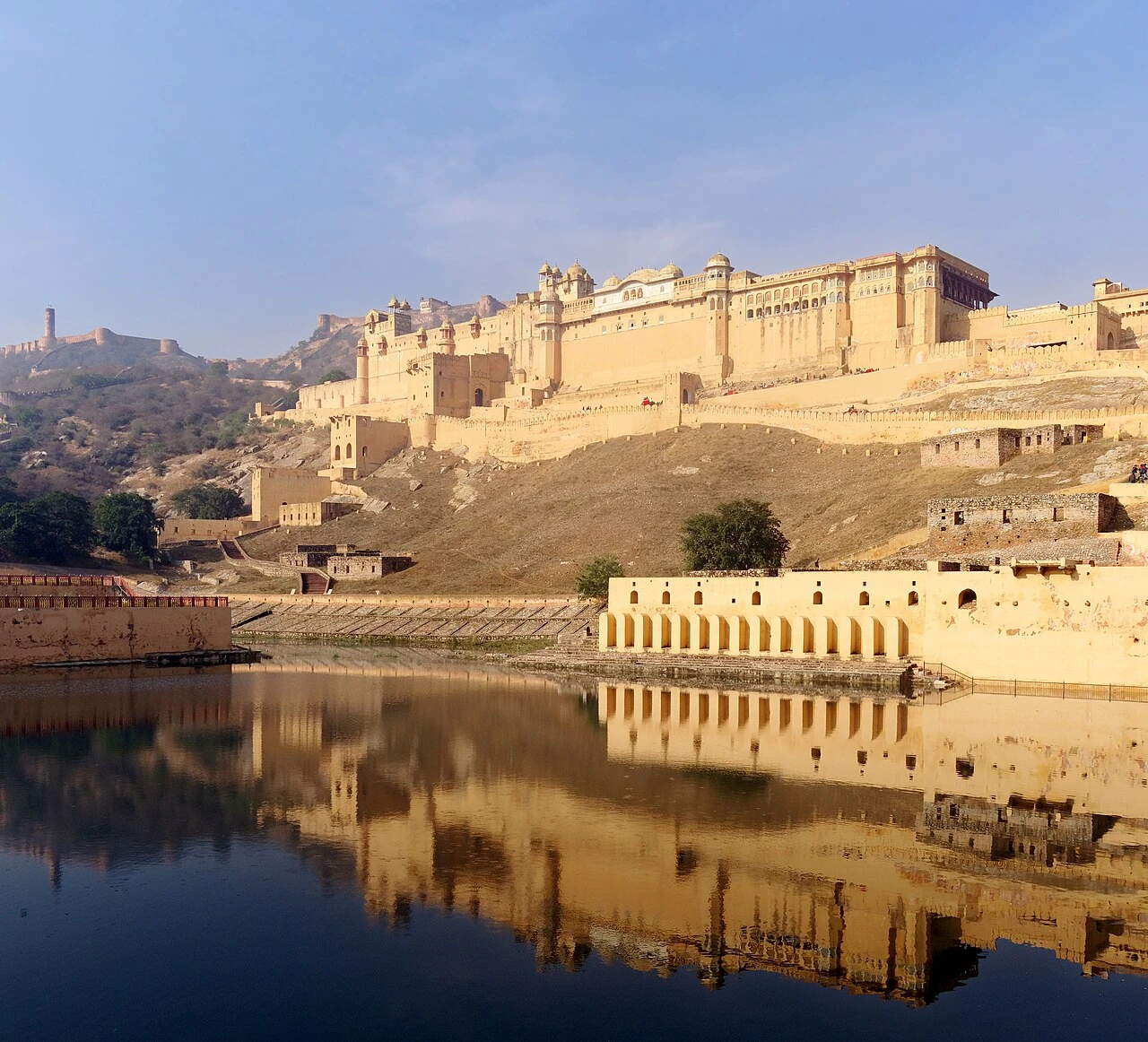
Jaipur Municipal Corporation
Amber Fort
Content & sources
Jakub Hałun · CC BY-SA 4.0
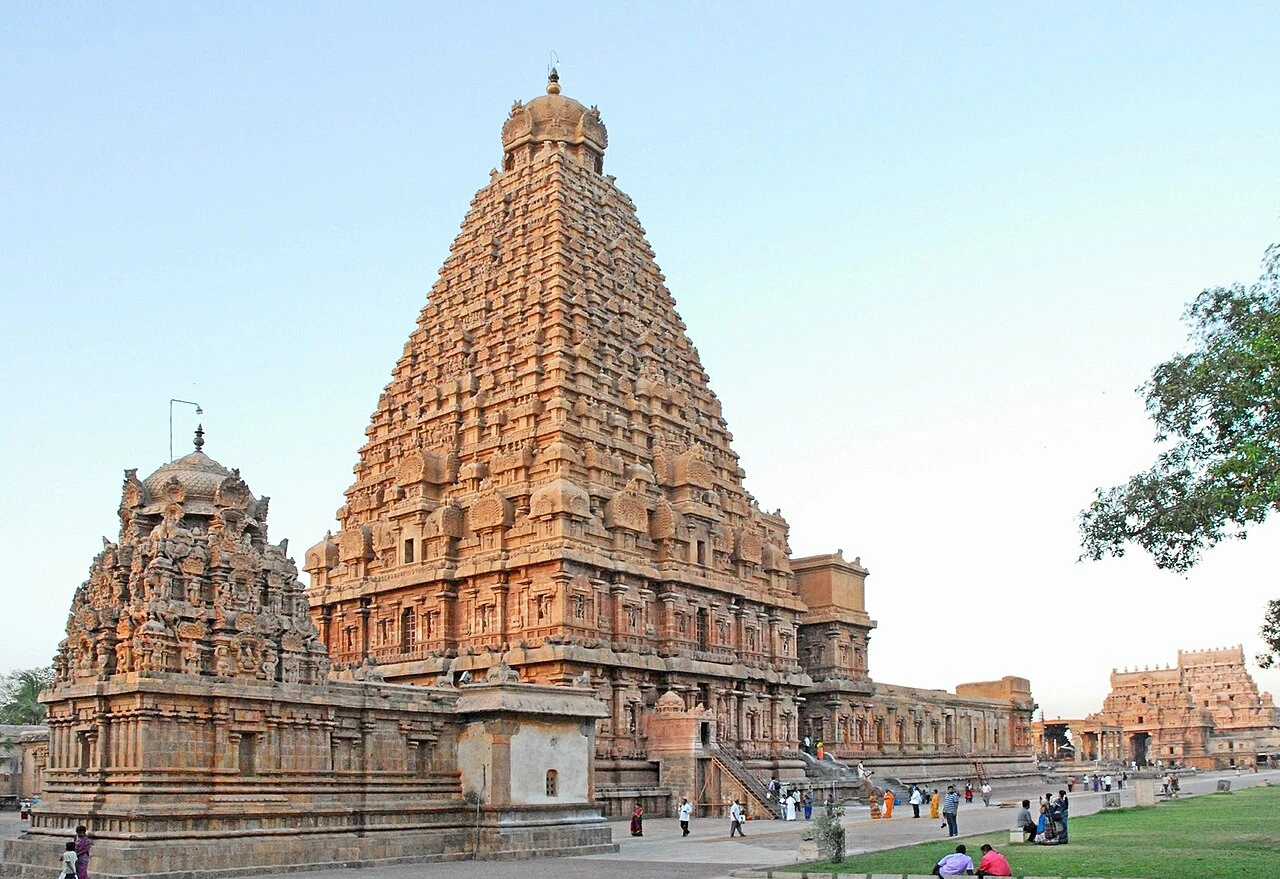
Thanjavur
Brihadisvara Temple
Content & sources
Jean-Pierre Dalbéra from Paris, France · CC BY 2.0
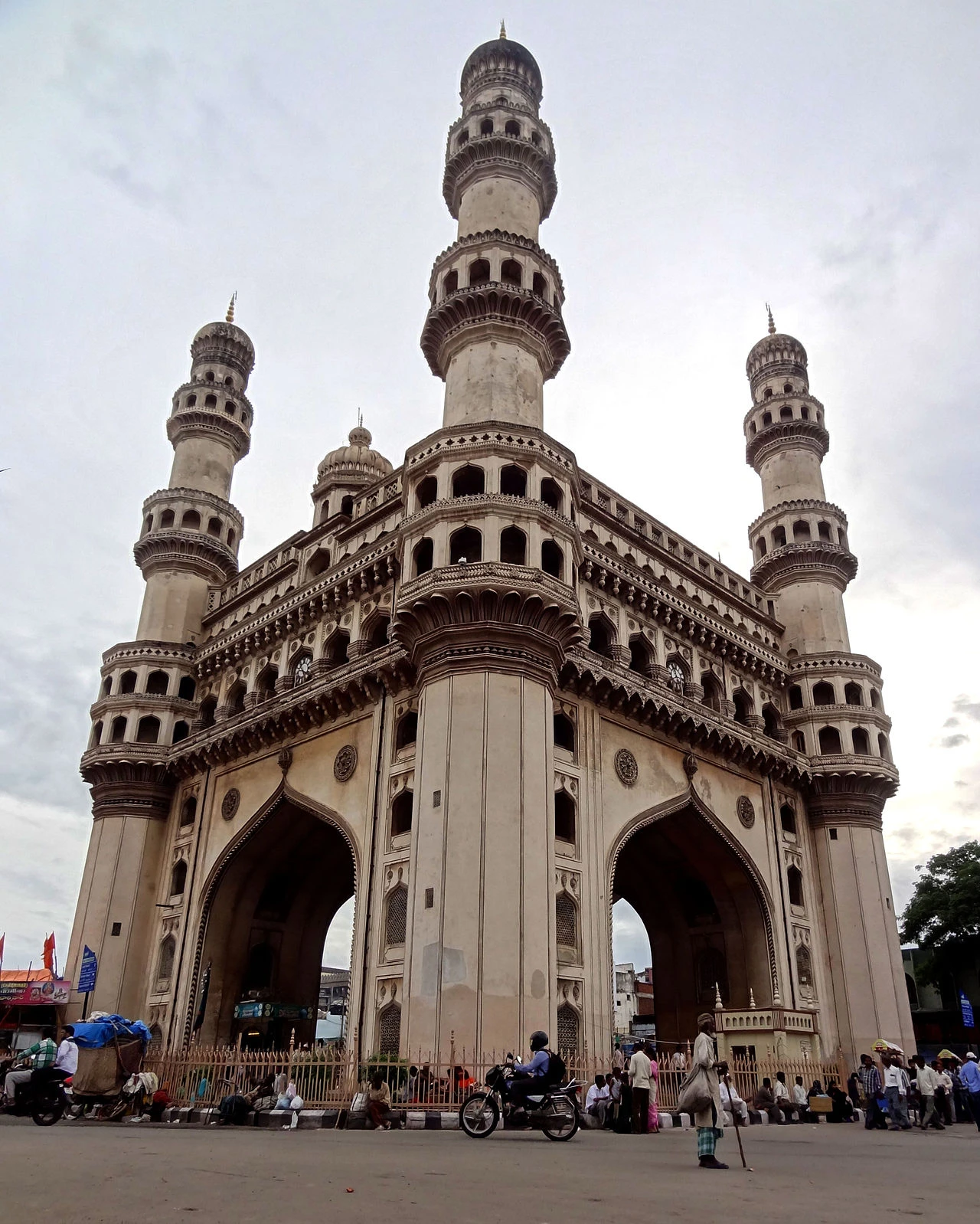
Hyderabad
Charminar
Content & sources
Gopikrishna Narla · CC BY-SA 3.0