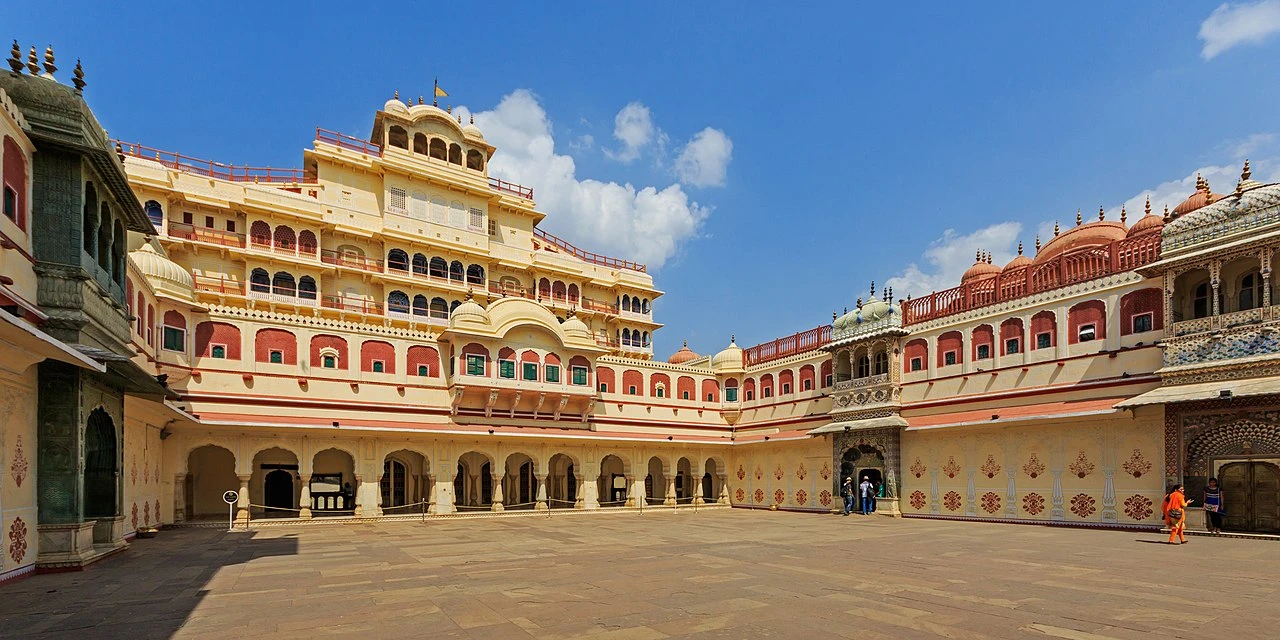
Stanza · Audio guide
City PalaceAudio guide
A place to remember. A story to take with you.
The City Palace is a historic royal palace complex located in Jaipur, India. It houses a series of courtyards, gardens, and buildings, including several museums that showcase art, textiles, and royal artifacts.
Download Stanza, then search for “City Palace”.
About the tour
One guide. Your kind of visit.
The City Palace is a historic royal palace complex located in Jaipur, India. It houses a series of courtyards, gardens, and buildings, including several museums that showcase art, textiles, and royal artifacts.
Ready when you are.
- 01Get the free Stanza app.
iOS & Android
- 02Find your guide.
“City Palace”
- 03Download before you go.
Works offline
Audio guide / 24 narrated stops
Inside the guide
Get to know a few of the stories before you go. Open a stop to read more.
01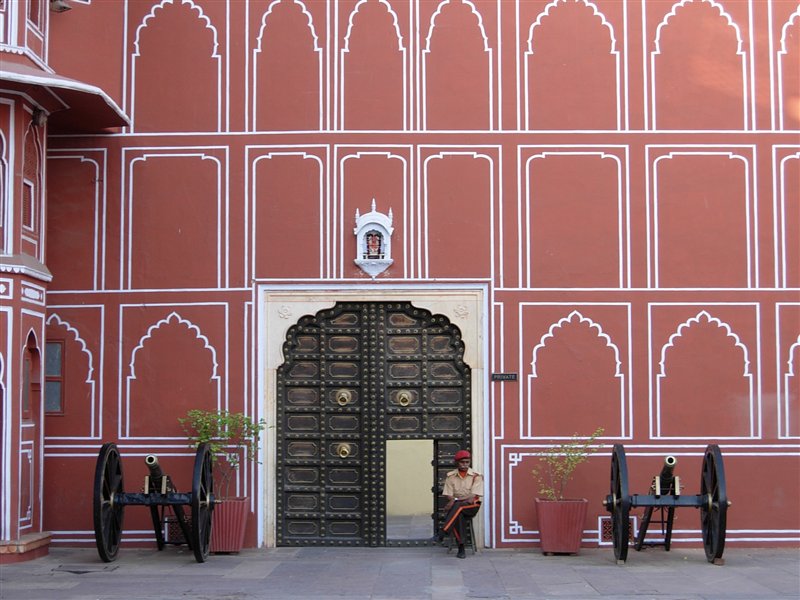 Virendra Pol and the Pink CityVirendra Pol Entrance
Welcome to the heart of Jaipur, the City Palace. As you stand before the Virendra Pol entrance, you are greeted by the distinctive terracotta pink walls that have become synonymous with this city. This wasn't always the case, however. In 1876, the entire city underwent a dramatic transformation to welcome the Prince of Wales. In a grand gesture of hospitality, the Maharaja ordered the city painted pink, a color traditionally associated with welcome. Looking at the architectural grandeur around you, it is important to understand the legacy of the men who built it. You will often see the title 'Sawai' associated with the Maharajas of Jaipur. This title, meaning 'one and a quarter,' was famously bestowed upon Jai Singh II by the Mughal Emperor Aurangzeb. The Emperor was so impressed by the young ruler's sharp wit and superior intelligence compared to his peers that he declared him to be 'a quarter more' than any other man. This title became a hereditary honor, signifying a lineage that prided itself on being exceptional. As you pass through this gate, imagine the centuries of visitors who have been welcomed into this pink sanctuary, a space designed to reflect the wit, wisdom, and warmth of the Rajput kings.
Fernando Nunes from Cacau · CC BY-SA 2.0
02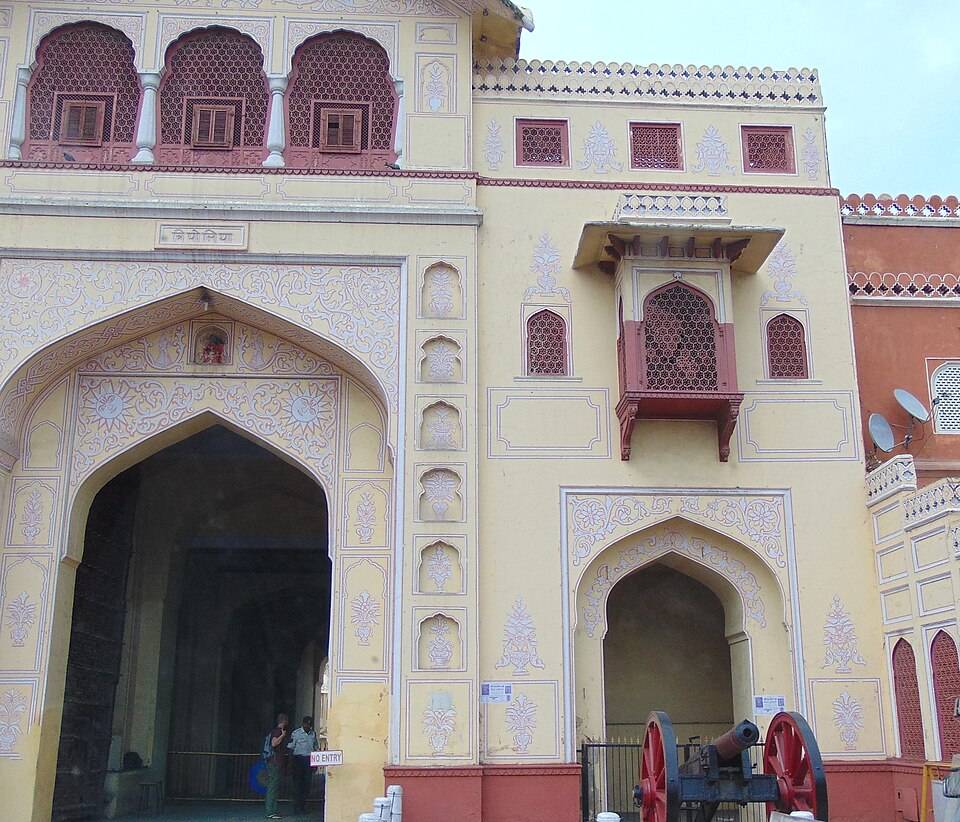 Virendra Pol and the Pink CityThe Tripolia Gate
The imposing three-arched structure you see here is the Tripolia Gate. Constructed in 1732, its name literally translates to 'three gates.' Historically, this was the primary entrance reserved strictly for the Maharajas and their royal processions. Even today, the central arch remains a symbol of exclusive royal authority, separating the bustling main thoroughfares of the city from the tranquil sanctuary of the palace grounds. Notice how the facade here contrasts with the terracotta pink seen elsewhere. This gate features a vibrant yellow hue, which helps it stand out as a significant landmark in the palace complex. The architectural style reflects the transition from defensive fortifications to ceremonial beauty. While the walls are thick and sturdy, the delicate arched openings and decorative upper levels speak to a period of relative peace and cultural flourishing. As you observe the gate, imagine the grand processions of elephants and soldiers that once passed through these arches, marking the beginning of state ceremonies or the return of a victorious ruler. It remains a powerful reminder of the boundary between the public world and the private, sacred space of the Jaipur royalty.
Photo: Nabanita Sinha · CC BY-SA 4.0
03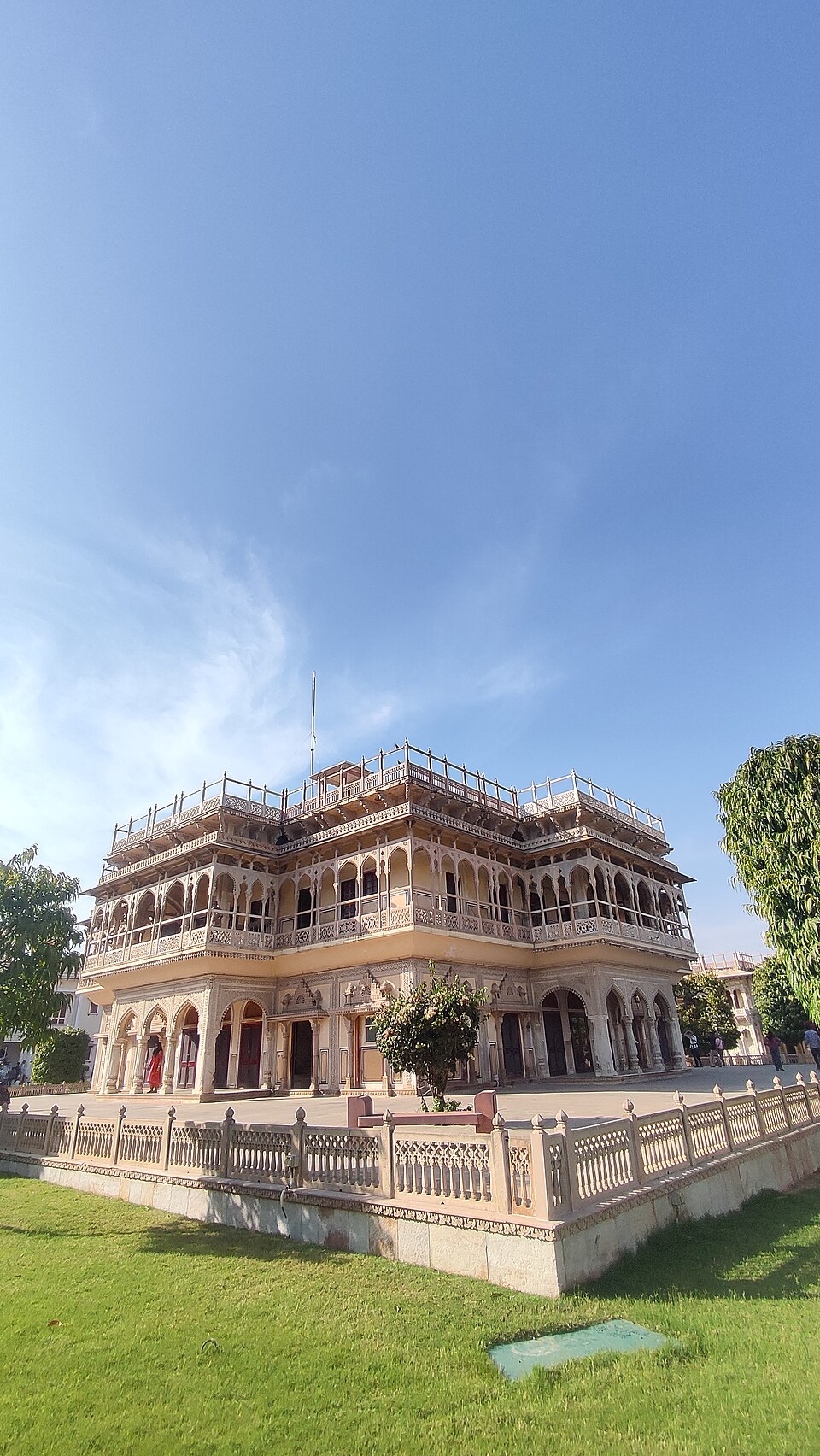 Mubarak Mahal: The Welcome PalaceMubarak Mahal
You are looking at the Mubarak Mahal, which translates to the 'Welcome Palace.' Built in the late 19th century under the reign of Maharaja Madho Singh II, this structure was specifically designed to serve as a reception center for visiting foreign guests. Its function as a guest house necessitated a design that would feel both grand and sophisticated to an international audience. The building is a masterclass in architectural fusion. During the British Raj, it was highly fashionable to blend diverse styles, and here you can see a seamless integration of Islamic, Rajput, and even European influences. Notice the delicate hanging balconies and the multi-lobed arches that are classic hallmarks of Mughal and Rajput design, paired with a sense of verticality and structural layout that hints at European colonial influences. The exterior is covered in intricate carvings that give the heavy stone a light, airy feel. Today, the palace no longer hosts overnight guests but instead serves as a museum, protecting the rich cultural heritage of the Jaipur court. It stands as a testament to a period of history where Rajasthan was opening its doors to the wider world, blending its own deep traditions with the emerging global styles of the era.
Listen in the appPhoto: Iloveplantsforever · CC0
04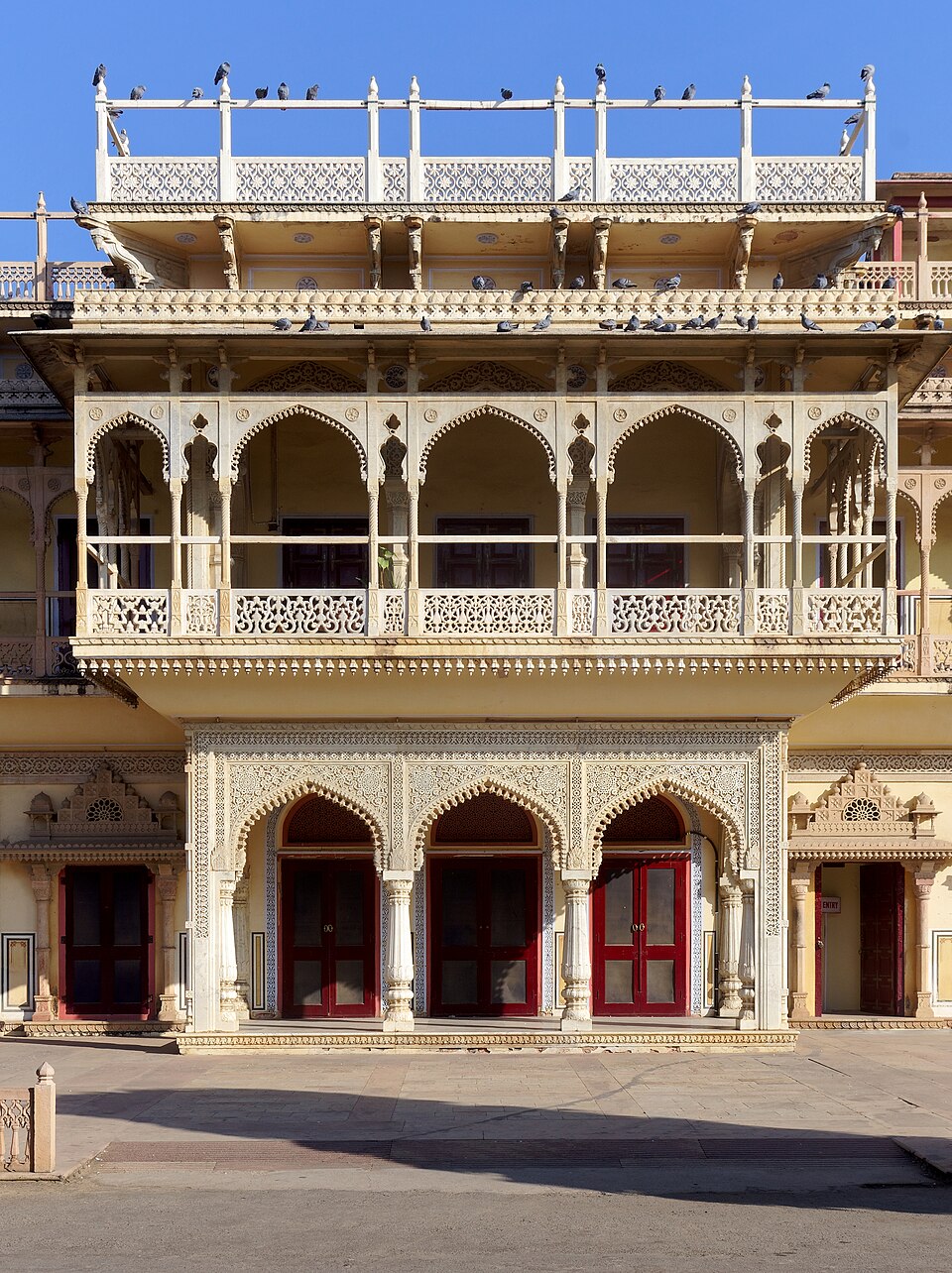 Mubarak Mahal: The Welcome PalaceTextile Gallery Facade
The facade of this building is one of the most remarkable examples of craftsmanship in the entire City Palace complex. Take a moment to look closely at the white marble work. The carvings are so fine and detailed that they are often compared to delicate lace or the art of decoupage. This level of precision requires immense skill, as artisans transformed hard stone into something that appears soft, intricate, and almost weightless. Beyond this beautiful exterior lies the royal textile museum, a space dedicated to the incredible sartorial history of the Jaipur court. Inside, you would find rare pashmina shawls, hand-embroidered silks, and block-printed garments that reflect the city's status as a center for textile excellence. However, the most famous items in the collection belong to Maharaja Madho Singh I. He was a man of legendary proportions, standing approximately seven feet tall and measuring four feet wide. His massive robes and tunics are on display, offering a tangible sense of his imposing physical presence. The building itself acts as a fitting 'jewelry box' for these treasures, where the beauty of the exterior architecture perfectly matches the high-quality artistry of the historical garments protected within its walls.
Listen in the appJakub HaЕ‚un · CC BY-SA 4.0
05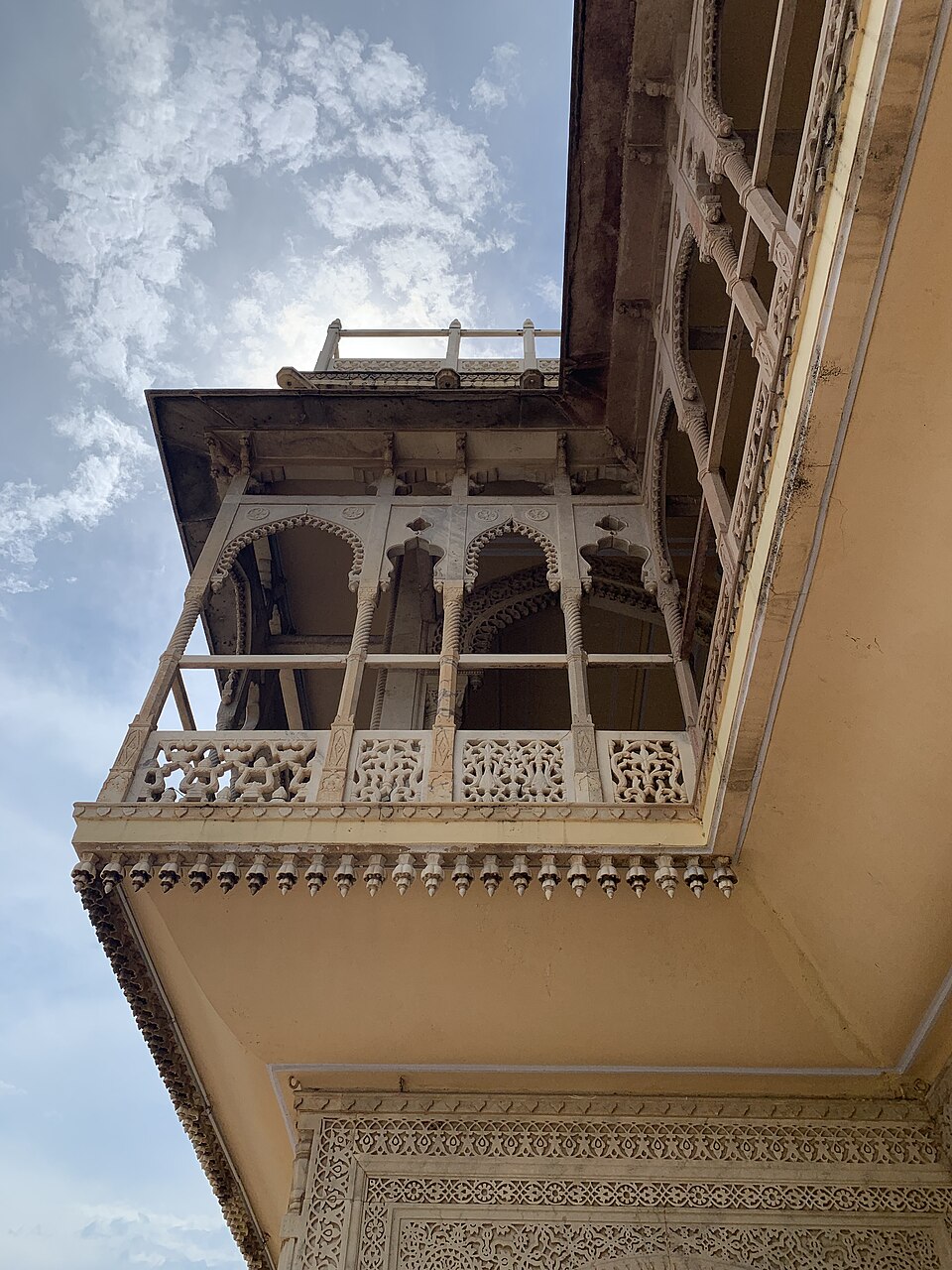 Mubarak Mahal: The Welcome PalaceThe Hanging Balconies
As you look toward the upper levels of the palace structures, your eye is likely drawn to the elegant projecting balconies, known as jharokhas. These are not merely decorative features; they played a vital social role in the history of the Rajput court. In accordance with the tradition of 'purdah,' royal women were expected to remain shielded from the eyes of the public. These jharokhas allowed the queens and princesses to observe court activities, festivals, and processions in the courtyards below while remaining entirely unseen themselves. Observe the architectural detail of these balconies. They are supported by heavy stone brackets, often carved with floral or geometric motifs that provide both structural stability and visual beauty. The symmetry of the arches and the delicate latticework screens—known as jaali—were designed to let in light and breeze while maintaining privacy. The geometric precision here is a hallmark of Rajput architecture, showing how utility and beauty were perfectly balanced. Looking up at them now, you can imagine the silent observations made from behind those screens, as generations of royal women participated in the life of the palace through these stone windows to the world.
Listen in the appPhoto: Chainwit. · CC BY-SA 4.0
06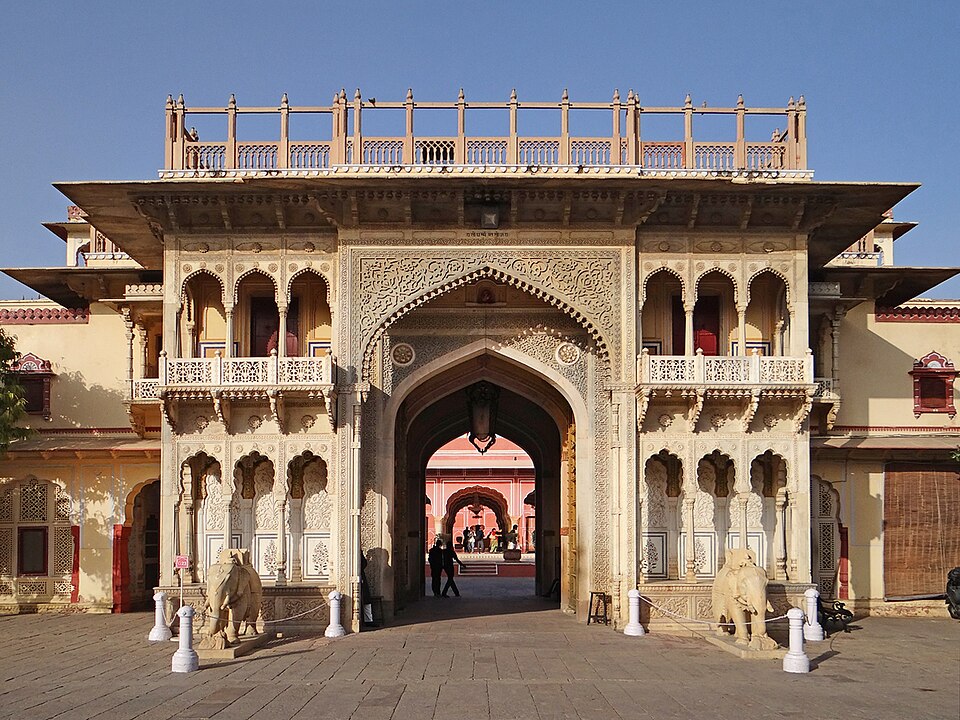 Rajendra Pol: The Lion GateRajendra Pol
This grand structure is the Rajendra Pol, a ceremonial gateway that marks the transition into the inner courtyards of the palace. It was constructed in the early 20th century to commemorate a joyous occasion: the birth of the young prince who would become Maharaja Man Singh II. As a relatively more recent addition to the complex, it reflects the continued vitality and pride of the royal family during the modern era. The scale of the gateway is intentionally grand, designed to impress anyone who approaches the inner sanctum of the royalty. It is flanked by guard chambers and topped with decorative pavilions that echo the style of the older buildings nearby. One of its most striking features is how it functions as a frame for the view beyond; as you look through its central arch, you catch glimpses of the vibrant pink structures and the open pavilions of the inner courtyard. This careful framing is a common technique in Indian palace design, creating a sense of anticipation and theater as you move from one space to the next. The gate serves as a threshold, moving the visitor away from the more public reception areas and into the heart of the royal residence.
Listen in the appJean-Pierre DalbГ©ra from Paris, France · CC BY 2.0
07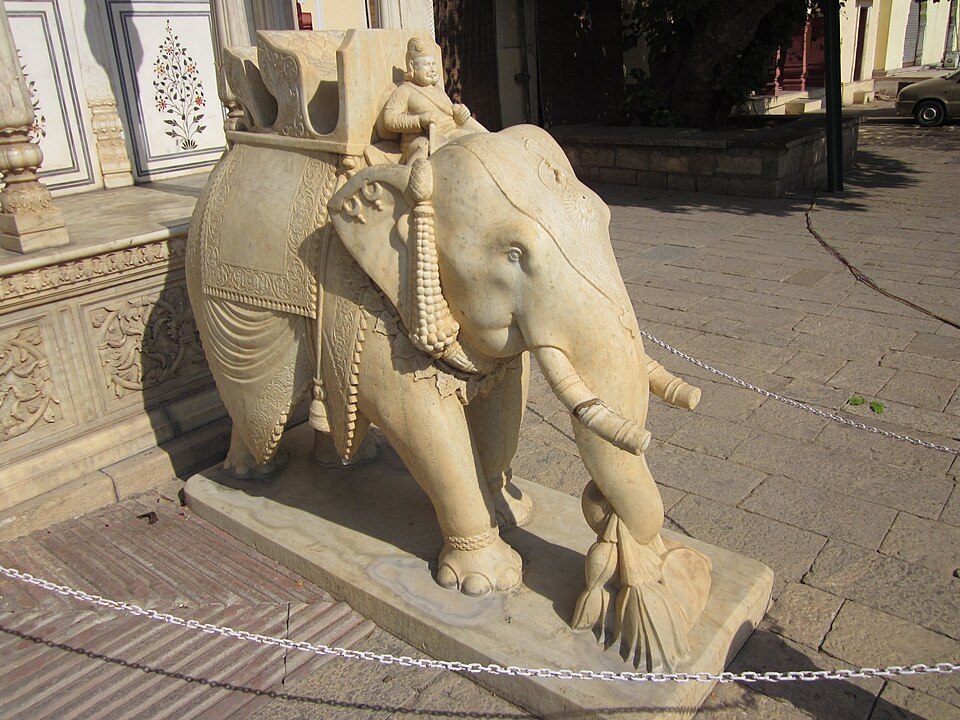 Rajendra Pol: The Lion GateThe Marble Elephants
Flanking the entrance of the Rajendra Pol are two magnificent, life-sized elephants. Each of these figures was expertly carved from a single, massive block of white marble. In Rajput culture, the elephant is a potent symbol of strength, dignity, and good fortune. They were the preferred mount of kings during battle and state processions, and their presence here signifies the power and auspiciousness of the palace they guard. If you look closely at the sculptures, you will see an incredible level of detail. Notice the 'howdah' on the elephant's back—this is the ornate seating used by the Maharajas. The artisans have even captured the texture of the decorative blankets and the intricate floral patterns along the animal's trunk and head. These details were meant to mimic the actual adornments used during royal festivals, where live elephants would be painted and draped in expensive fabrics. Unlike the weathered stone of some older monuments, these marble guardians retain a smooth, pristine quality that highlights the purity of the stone. They stand in eternal attendance, welcoming guests today just as they have for decades, embodying the spirit of the royal house of Jaipur.
Listen in the apppradeep kumar chatte… · CC BY 3.0
08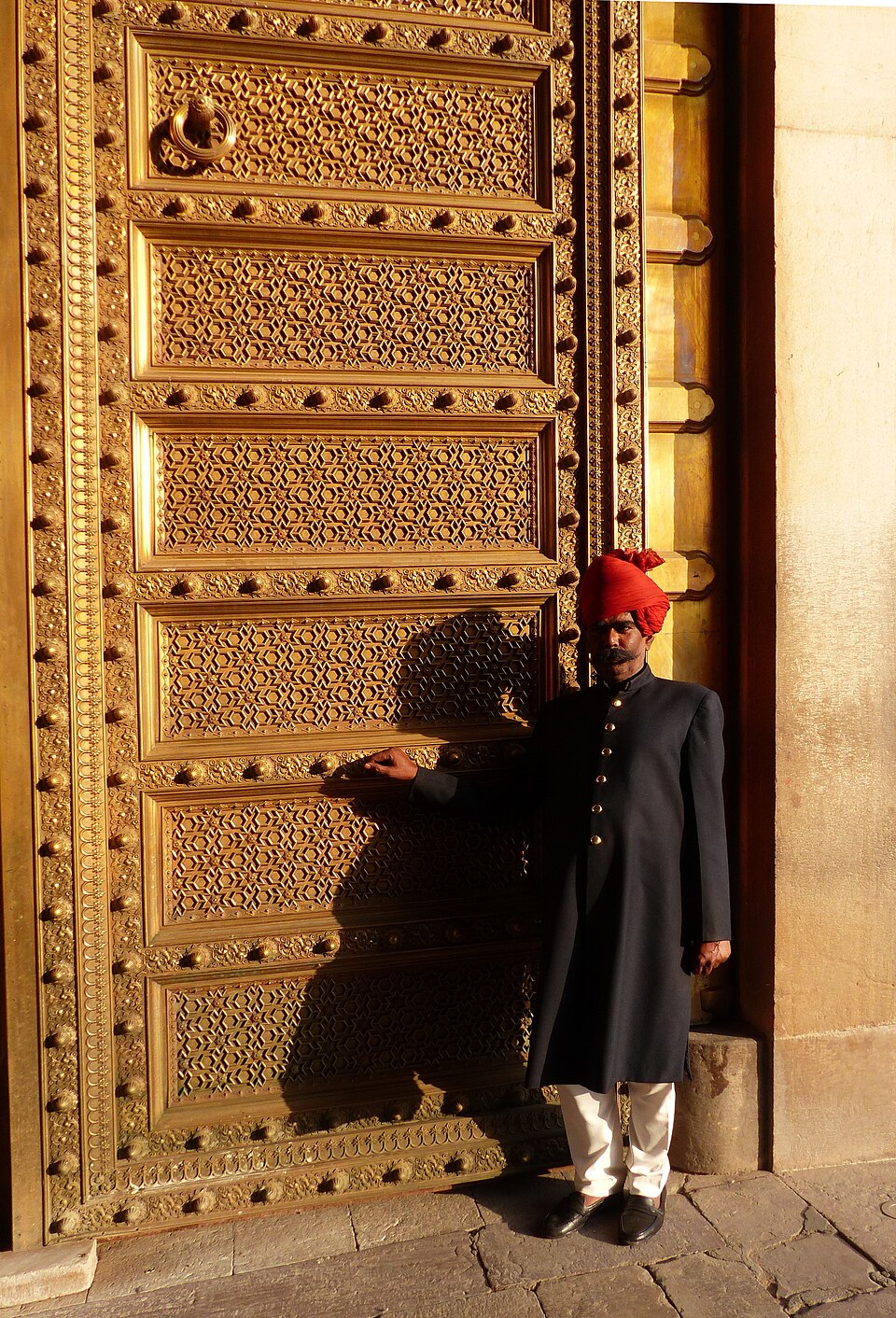 Rajendra Pol: The Lion GateThe Brass Doors
Standing at the Rajendra Pol, take a moment to examine the heavy doors. They are covered in brass, a metal chosen for its durability and its golden, impressive appearance. The surface is a canvas of intricate geometric metalwork, with repeating patterns that reflect the Islamic influence on Rajput decorative arts. This level of ornamentation turned a functional barrier into a piece of fine art. You will notice large, prominent brass knobs protruding from the surface of the doors. While they look decorative today, they originally served a much more practical and defensive purpose. In the era of traditional warfare, heavy doors were often the target of war elephants trained to ram their way through entrances. These sharp metal knobs were designed to prevent an elephant from being able to put its head or forehead directly against the wood, effectively protecting the gate from being breached. Today, the doors remain guarded not by elephants, but by royal sentries dressed in traditional long coats and striking red turbans. These guards are part of the palace’s living history, maintaining the traditions of the court and providing a sense of continuity that stretches back through the centuries.
Listen in the appWolfgang Sauber · CC BY-SA 4.0
09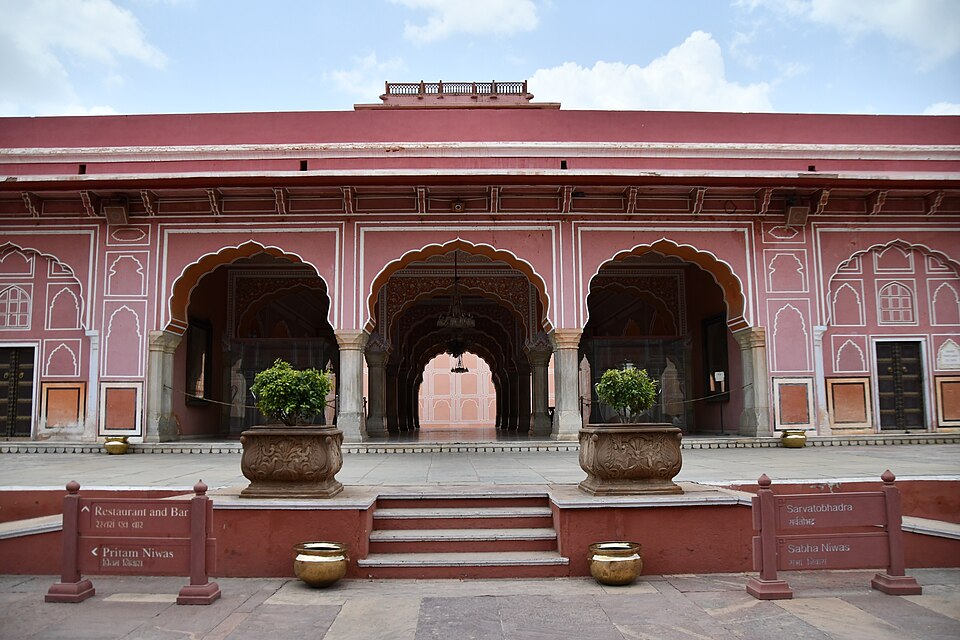 Sarvato Bhadra and the Giant Silver UrnsThe Private Audience Hall
This open-air pavilion, painted in the city's signature pink, is known as the Sarvato Bhadra. The name translates to 'auspicious on all sides,' a fitting title for what is essentially the ritual heart of the City Palace. Unlike other halls meant for public spectacle, this was a more private space where the Maharaja would meet with his inner circle of advisors and perform sacred rites. Even today, it remains deeply significant; it is the traditional site for the coronation of the Maharajas of Jaipur. The architecture here is governed by the principles of Vidyadhar Bhattacharya, the Bengali architect who designed the city of Jaipur. He utilized ancient urban planning and architectural codes that focused on alignment, flow, and cosmic harmony. You can see this in the pavilion’s perfect symmetry and its open, airy design which allows for natural ventilation and a connection to the surrounding courtyard. The massive marble pillars support a roof decorated with fine floral murals, creating a space that feels both grounded and ethereal. As the site for major religious festivals and royal ceremonies, the Sarvato Bhadra has witnessed the most important transitions in the history of the Jaipur monarchy, standing as a silent witness to the city's enduring heritage.
Listen in the appPhoto: Darshanavenugopal · CC BY-SA 4.0
10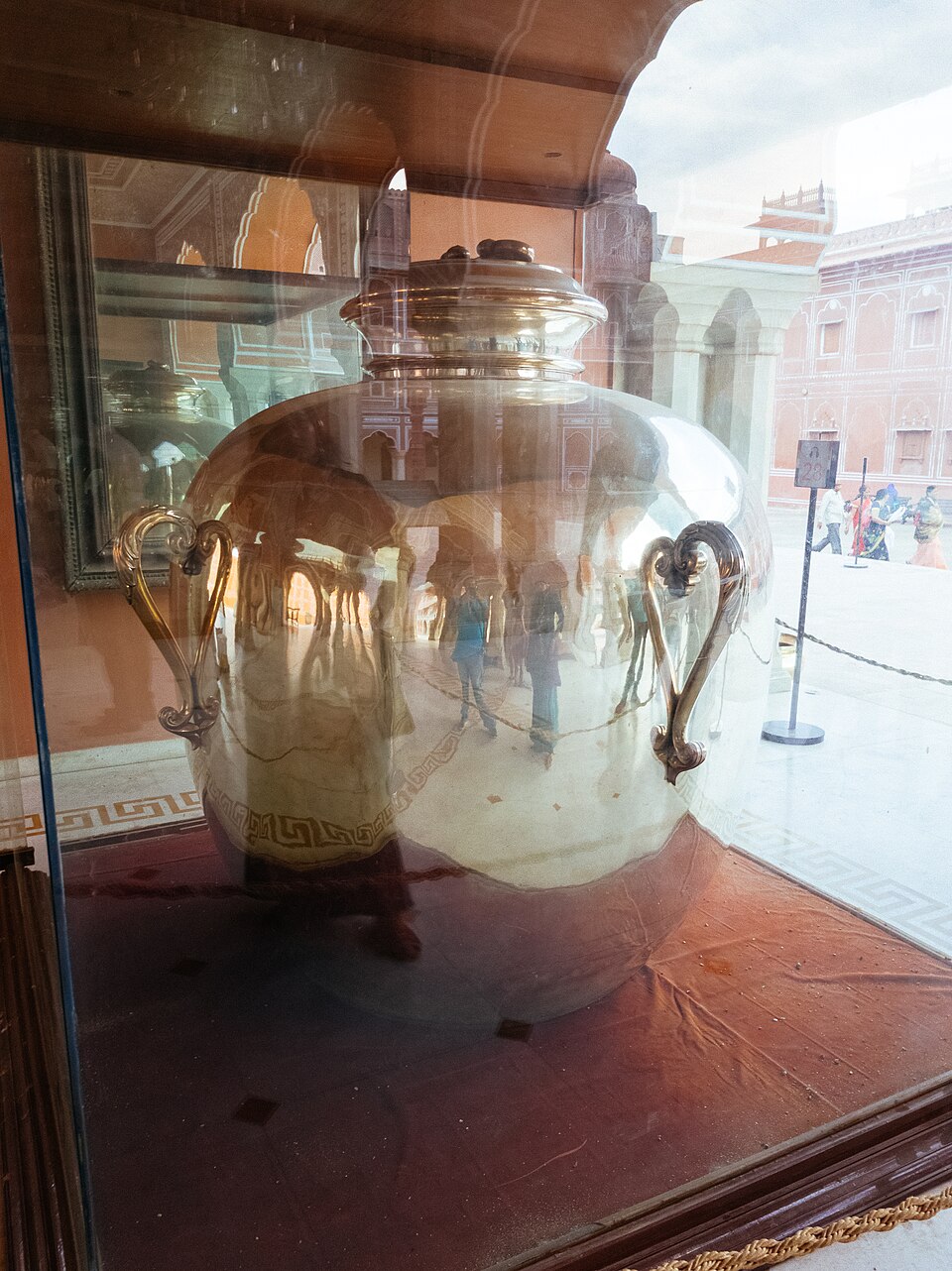 Sarvato Bhadra and the Giant Silver UrnsThe Maharaja’s Holy Water Urn
Among the most fascinating objects in the palace is this enormous silver vessel, which holds a unique place in history. It was commissioned by Maharaja Madho Singh II for a very specific purpose. In 1902, the Maharaja was invited to London to attend the coronation of King Edward VII. As a devout Hindu, he was deeply concerned about maintaining his religious purity, or 'caste,' while traveling overseas. Traditional beliefs held that crossing the 'black water' of the ocean could be spiritually polluting, and drinking foreign water was out of the question. To solve this dilemma, the Maharaja commissioned two of these massive urns to be filled with holy water from the Ganges River. They were taken aboard his specially chartered ship so that he would have a constant supply of pure water for drinking and ritual bathing throughout his months-long journey. This act was more than just a logistical feat; it was a powerful statement of his devotion and his commitment to his cultural identity even while performing his duties on the world stage. Today, these urns represent a bridge between the ancient traditions of India and the global diplomacy of the early 20th century, capturing a moment when a king went to extraordinary lengths to carry a piece of his homeland with him.
Listen in the appAshwin Kumar from Bangalore, India · CC BY-SA 2.0
City Palace
Frequently asked questions
How much does the guide cost?
Free app download. Listed guide price: $0.99. Guide price shown in the app. Audio guide only. Venue admission is separate.
Can I listen without internet?
Yes. Download the guide’s audio, images, and maps in the app before your visit. Your downloaded content is then available offline.
Can I listen in my language?
Stanza supports 15 languages. Check the app for the languages available for this guide.
Do I need to follow a schedule?
No. This is a self-guided experience. Choose your stops, pause whenever you like, and return to a story at your own pace.
At your own pace
Explore City Palace.
Download Stanza, then search for “City Palace”.
Free app download · Guide price shown in the app
Keep exploring
Nearby audio guides
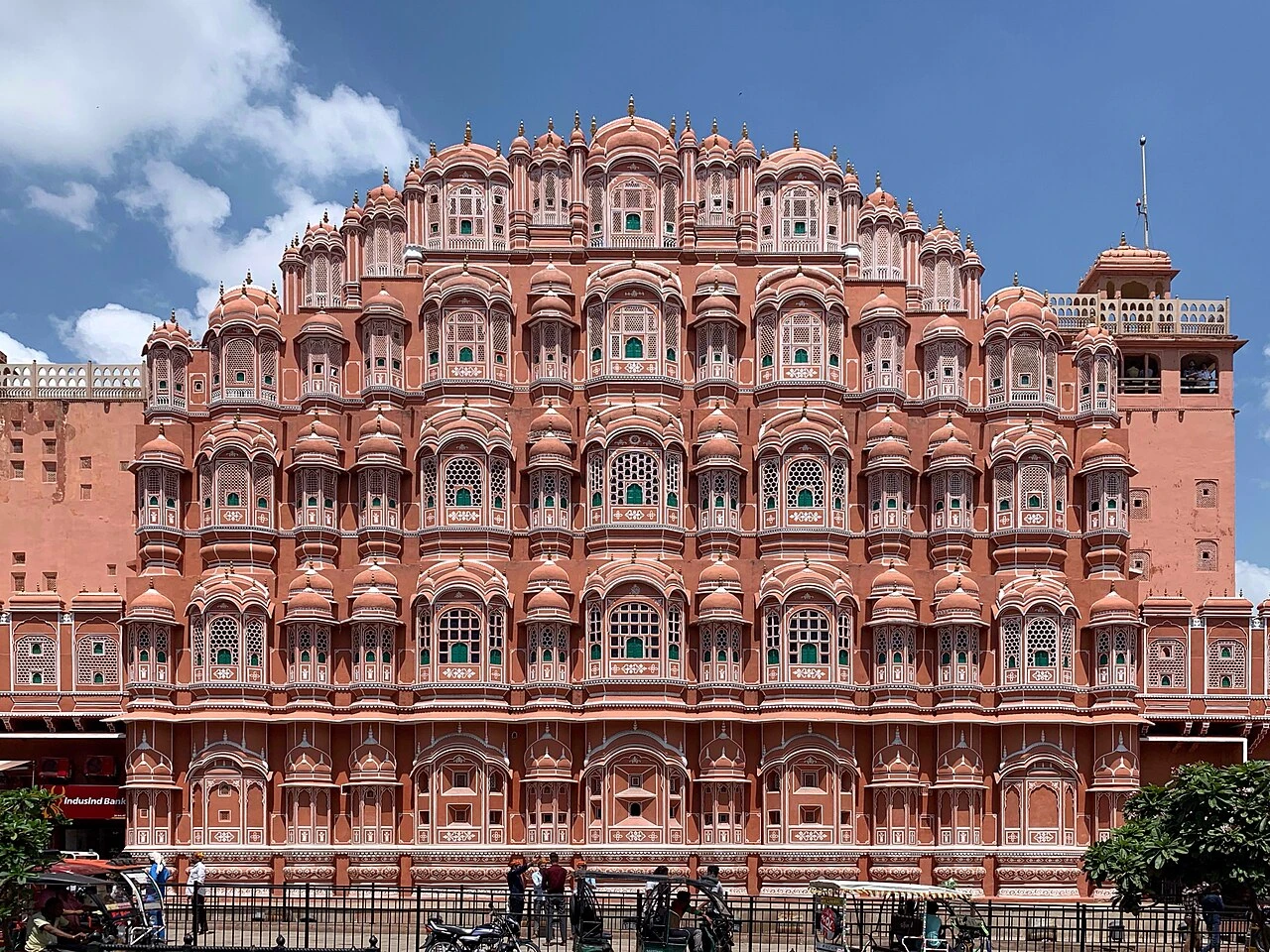
Jaipur
Hawa Mahal
Content & sources
Photo: Chainwit. · CC BY-SA 4.0
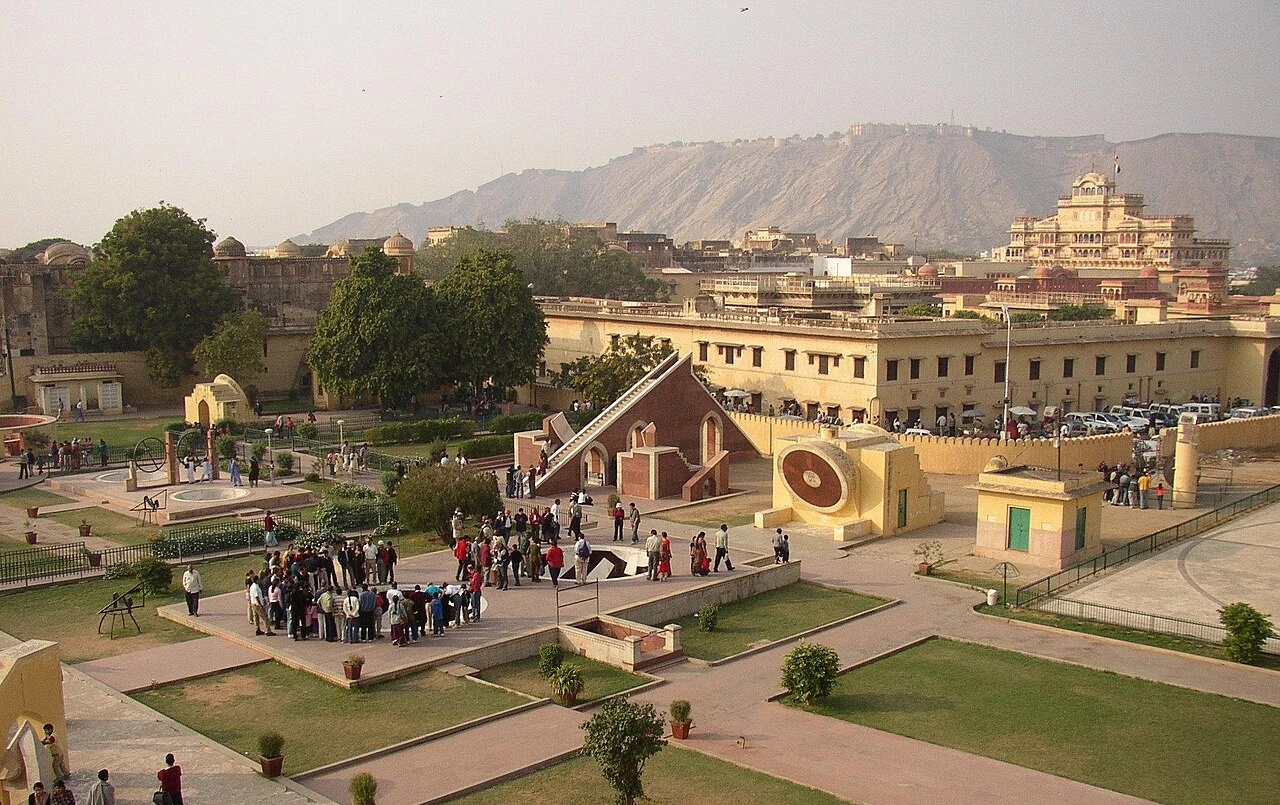
Jaipur
Jantar Mantar, Jaipur
Content & sources
Photo: Knowledge Seeker · Public domain
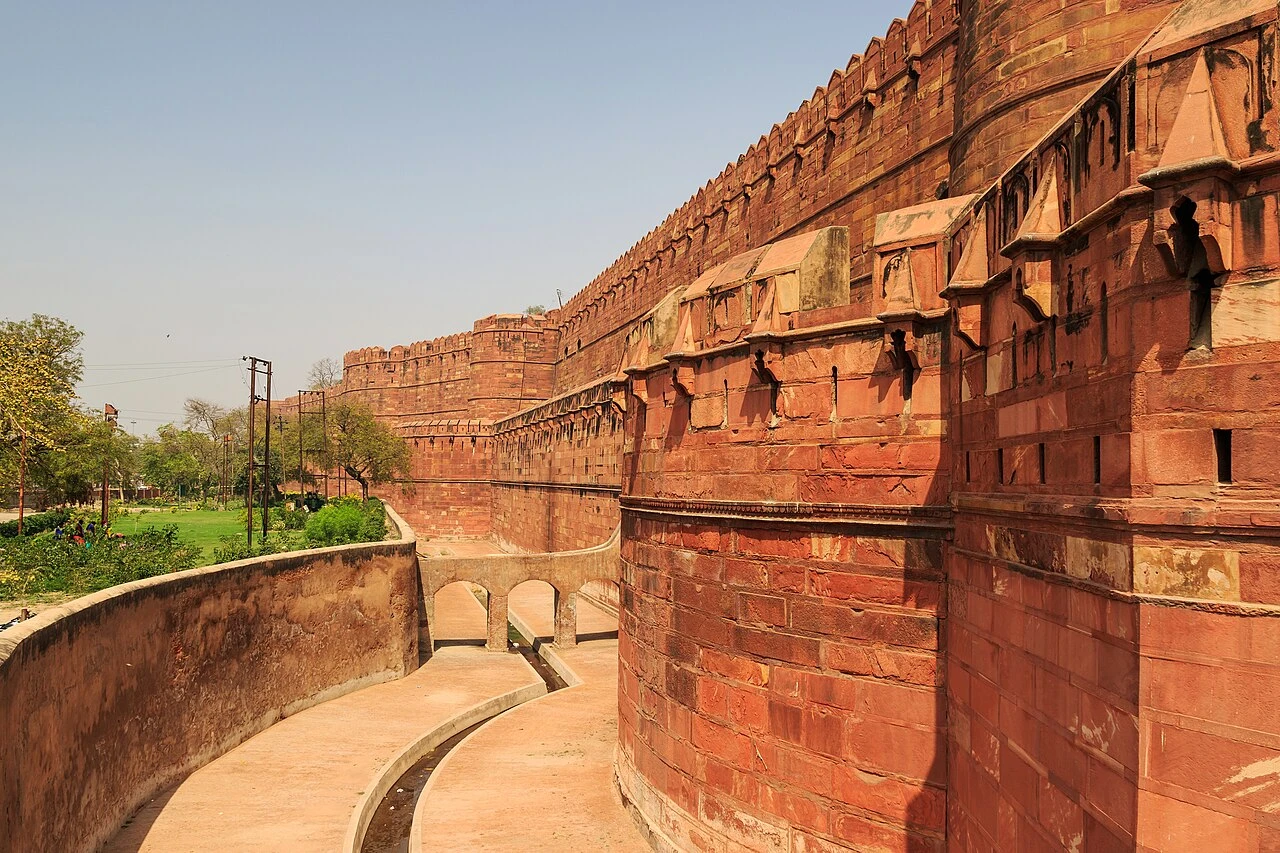
Agra
Agra Fort
Content & sources
Photo: A.Savin · FAL
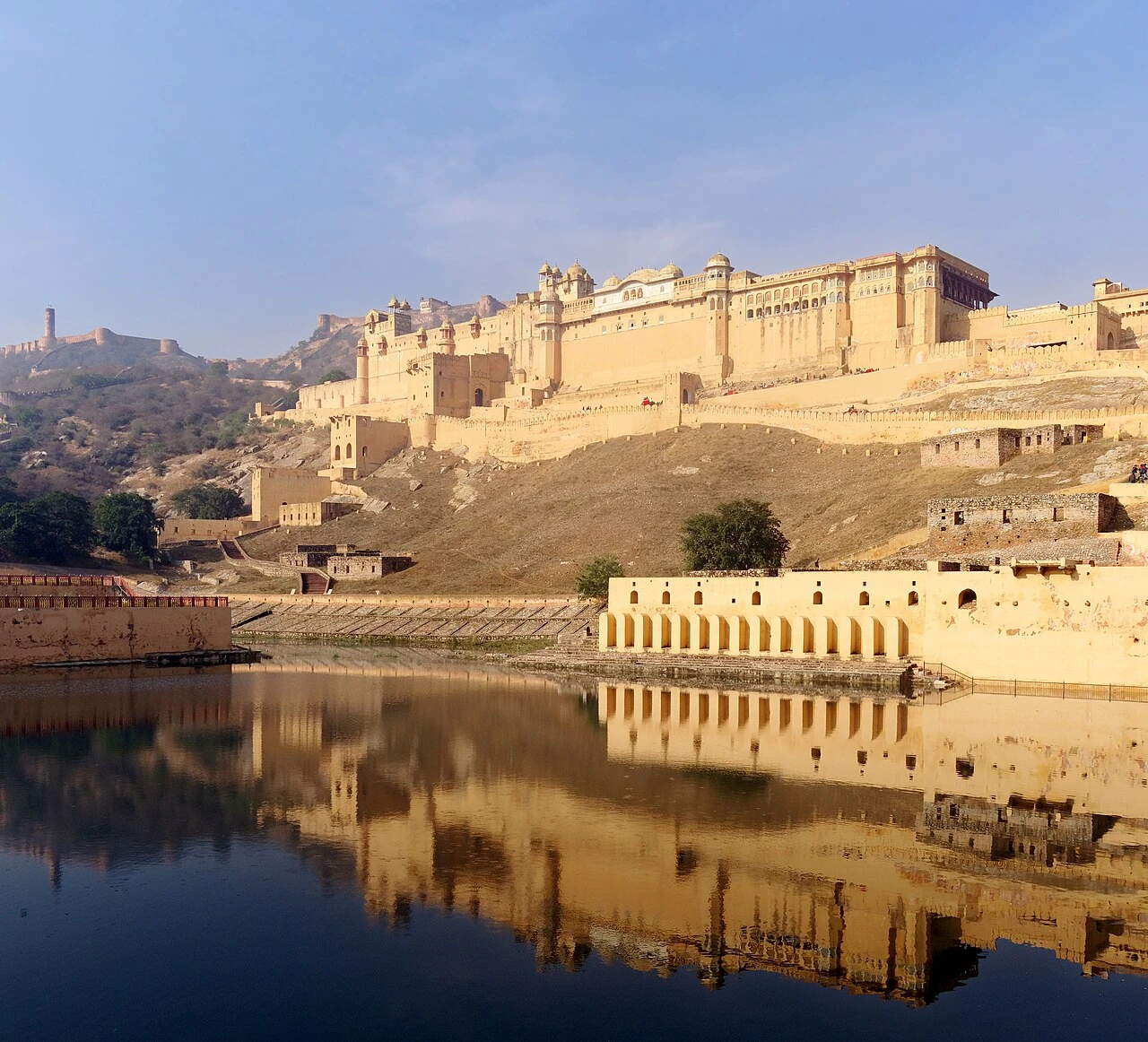
Jaipur Municipal Corporation
Amber Fort
Content & sources
Jakub Hałun · CC BY-SA 4.0