Stanza · Audio guide
Jantar Mantar, JaipurAudio guide
A place to remember. A story to take with you.
Jantar Mantar is a collection of nineteen architectural astronomical instruments built by the Rajput king Sawai Jai Singh II. It is a UNESCO World Heritage site and represents the height of observational…
Download Stanza, then search for “Jantar Mantar, Jaipur”.
About the tour
One guide. Your kind of visit.
Jantar Mantar is a collection of nineteen architectural astronomical instruments built by the Rajput king Sawai Jai Singh II. It is a UNESCO World Heritage site and represents the height of observational astronomy in the 18th century.
Ready when you are.
- 01Get the free Stanza app.
iOS & Android
- 02Find your guide.
“Jantar Mantar, Jaipur”
- 03Download before you go.
Works offline
Audio guide / 26 narrated stops
Inside the guide
Get to know a few of the stories before you go. Open a stop to read more.
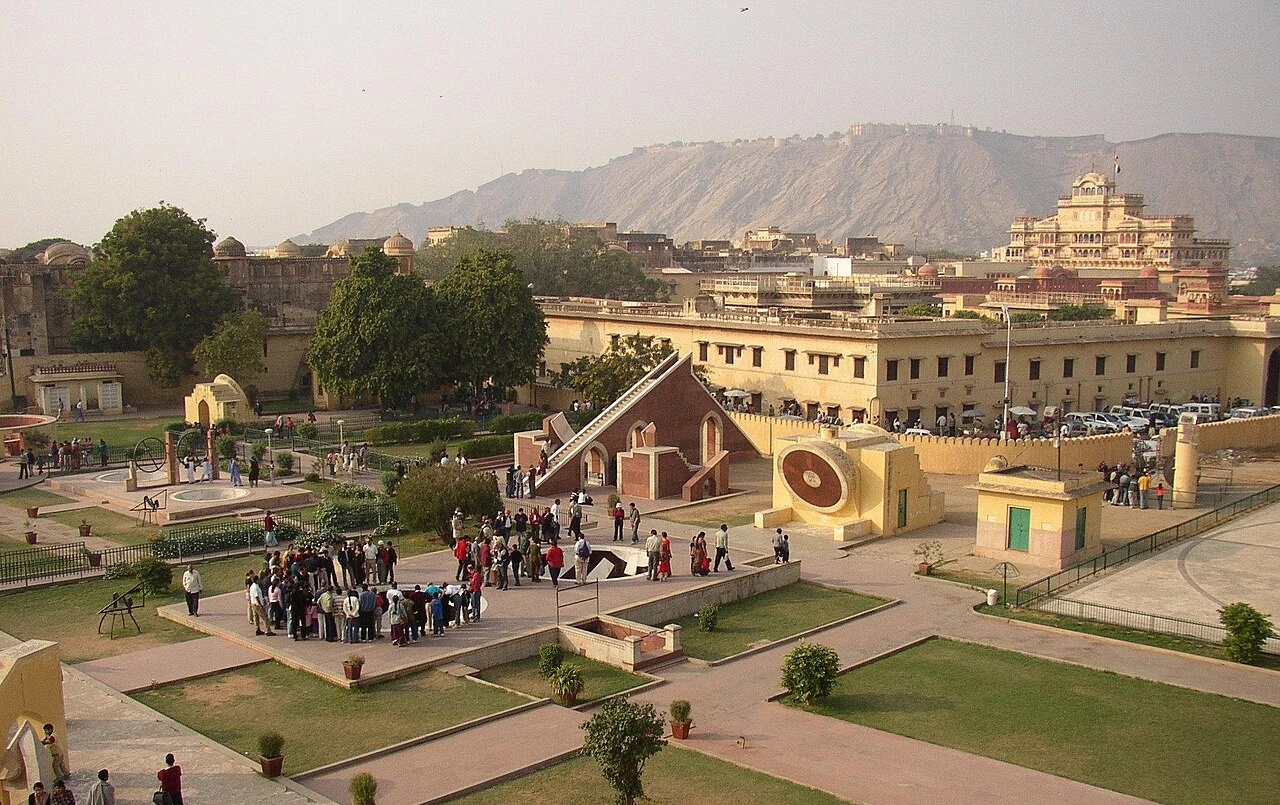
01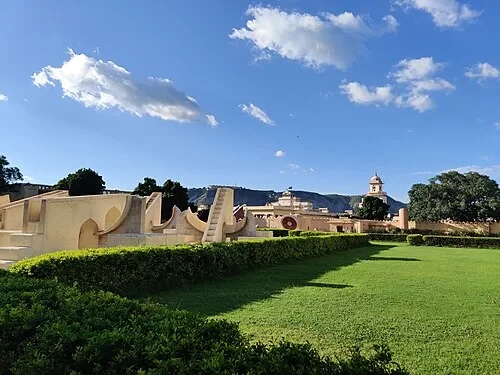 Arrival at the Stone ObservatoryThe Astronomical Courtyard
Welcome to a world where massive stone structures function as high-precision scientific tools. This 1.86-hectare courtyard was constructed between 1728 and 1734 by Maharaja Sawai Jai Singh II, a ruler whose passion for astronomy was driven by a need for better data. He realized the existing astronomical tables were inaccurate, making it difficult to predict celestial events or even determine the correct time. To solve this, he commissioned the construction of this open-air laboratory. Recognized as a UNESCO World Heritage Site in 2010, the complex houses 19 distinct stone instruments designed to measure time, predict eclipses, and track stars with incredible precision. As you walk through this scientific playground, you will see masonry structures that seem more like abstract art than scientific equipment. Each one was built using local stones and marble to withstand the elements while providing stable, reliable measurements for researchers centuries ago. Orient yourself to this landscape of geometric forms, which represent the pinnacle of astronomical knowledge in the early 18th century, designed to bring the order of the stars down to Earth.
Photo: Anilesek · CC BY-SA 4.0
02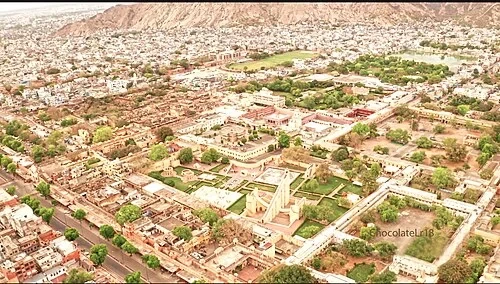 Arrival at the Stone ObservatoryThe Royal View
The relationship between this scientific center and the seat of power is visible from an elevated perspective. The Jantar Mantar sits directly adjacent to the City Palace, highlighting how central science was to the administration of Maharaja Sawai Jai Singh II. This observatory was a core component of his vision for Jaipur, which was the first planned city in India. Instead of growing organically, the city was laid out on a grid based on classical Indian architecture and astronomical principles. Beyond the courtyard walls, the rugged Aravalli Hills frame the skyline. The Nahargarh Fort is perched on the ridge, providing a defensive backdrop to this center of enlightenment. This positioning ensured that while astronomers were busy mapping the heavens, the city was guarded against earthly threats. The collection of tan and cream-colored structures below forms a mathematical landscape that mirrors the order Jai Singh sought for his new capital. The orientation of the instruments and the city itself suggests a deep connection between the terrestrial and the celestial, a hallmark of the city’s early 18th-century layout.
Photo: ChocolateLr18 · CC BY-SA 4.0
03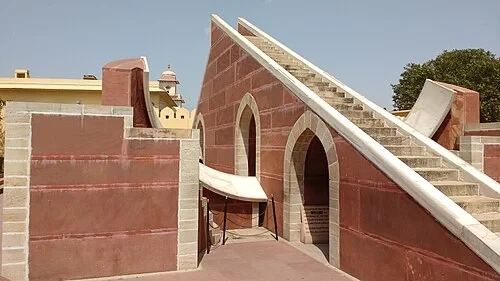 Laghu Samrat Yantra: The Small SundialThe Small Sundial
The Laghu Samrat Yantra is often referred to as the 'Small Emperor' because it served as a functional training model for the much larger version nearby. While it might appear modest compared to the giant structures in the courtyard, this instrument is a high-precision sundial that can track local time with remarkable accuracy. It is constructed from a combination of red sandstone for the structural base and white marble for the measuring scales. The triangular central wall, known as a gnomon, casts a sharp shadow that moves across the curved scales on either side. By observing where the shadow falls on the marble markings, astronomers could determine the time of day relative to the movement of the sun. This tool allowed for the testing of design principles before scaling up to the massive proportions seen elsewhere in the complex. The use of marble was critical, as it provided a smooth, stable surface for the fine graduation marks necessary for precise reading. It remains a fully functional device, demonstrating the foundational principles of 18th-century horology and shadow-based measurement using simple, local materials.
Listen in the appPhoto: Shibnaths2 · CC BY-SA 4.0
04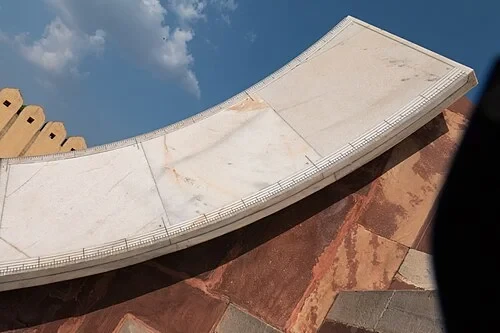 Laghu Samrat Yantra: The Small SundialMarble Time Scales
Detailed examination of the curved quadrants reveals the intricate work on the marble scales. These surfaces were carefully smoothed and inscribed with fine lines that allow for the measurement of time in minutes and hours. The shadow is cast by the edge of the large triangular gnomon, which stands as the central feature of the instrument. As the sun moves across the sky, this shadow sweeps across the marble surface. A visual contrast exists between the bright, white marble of the scales and the rougher, earth-toned stone used for the structural body. The marble provides a high-contrast background, making the edge of the shadow easier to see and read. Each marking on this scale was calculated based on the latitude of Jaipur and the tilt of the Earth's axis. These are not merely decorative carvings; they represent a sophisticated system of measurement that allowed astronomers to divide the day into precise intervals. The preservation of these lines today allows for an understanding of exactly how an 18th-century observer would have tracked the sun's transit with consistent accuracy using only sunlight.
Listen in the appPhoto: Daniel VILLAFRUELA · CC BY-SA 3.0
05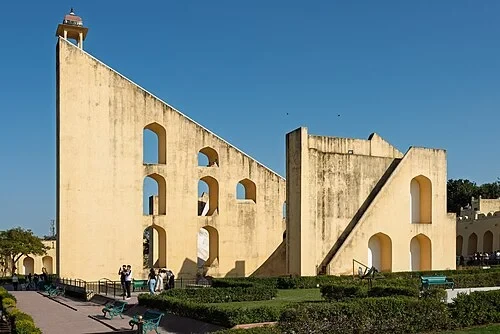 Vrihat Samrat Yantra: The Giant of TimeThe Giant Sundial
The Vrihat Samrat Yantra is the undisputed centerpiece of the Jantar Mantar, standing as the largest stone sundial in the world at a height of 27 meters. This immense scale was a purely functional requirement for extreme accuracy. In the world of astronomical measurement, the larger the scale, the finer the intervals that can be measured. Because of its height and the length of its curved quadrants, this instrument can tell the time with an accuracy of approximately two seconds. This level of precision was revolutionary for the early 18th century, outperforming many mechanical clocks of the era. The structure consists of a massive central triangular gnomon with a staircase running up its center, flanked by two large curved quadrants. These quadrants represent the celestial equator. As the sun traverses the sky, its shadow moves across these arcs. The sheer mass of the structure ensures it remains stable and unaffected by the minor shifts that might disturb smaller instruments. It stands as a pinnacle of Jai Singh's scientific achievements, where architecture and geometry were pushed to their physical limits to capture the sun’s transit.
Listen in the appMustang Joe · CC0
06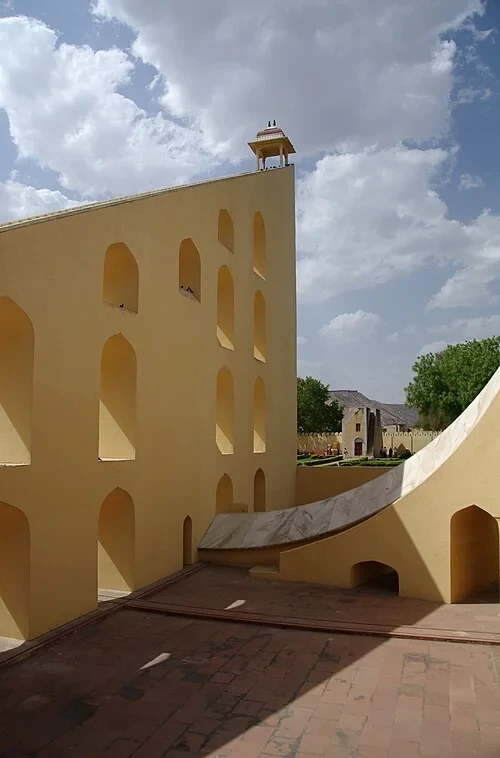 Vrihat Samrat Yantra: The Giant of TimeThe Shadow Caster
The massive central wall is the gnomon of the giant sundial. This structure is a feat of precision engineering; its slanted top edge, or hypotenuse, is set at an angle of 27 degrees, which matches the latitude of Jaipur. This alignment makes it exactly parallel to the Earth's axis, ensuring it points directly toward the North Pole. Because of the instrument's enormous size, the shadow it casts is remarkably dynamic. During the day, the shadow moves at a visible speed of about four meters per hour across the marble quadrants on either side. At the very top of this wall sits a small cupola, or 'chhatri.' While it provides a decorative finish to the structure, it also served a practical purpose. From this elevated position, observers would make weather forecasts, predicting the arrival of the monsoon by watching the horizon for clouds and wind patterns. This combination of astronomical measurement and meteorological observation was essential for the agricultural planning and safety of the kingdom during the 1700s, turning the sun’s shadow into a tool for both timekeeping and survival.
Listen in the appJean-Marc Astesana from Voisins le Bretonneux, France · CC BY-SA 2.0
07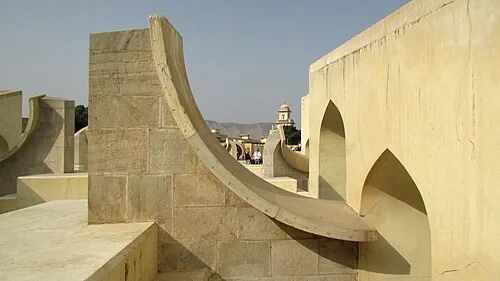 Vrihat Samrat Yantra: The Giant of TimePrecision in Seconds
The curved quadrants at the base of the giant sundial reveal a surprising level of detail. The white marble surface is covered in hundreds of fine graduation marks. These divisions are not uniform; they are meticulously calculated to represent hours, minutes, and even two-second intervals. This is where the true scientific work happened. For the astronomers of Jai Singh's court, these were not just monuments to be admired from afar; they were active laboratories for tracking the sun’s daily transit. The observer would wait for the sharp edge of the gnomon's shadow to cross a specific line on these marble arcs. By recording these moments over many months, they could refine their understanding of the solar cycle and local time. The use of stone for these scales was intentional. While metal instruments of the time were often portable, they were prone to bending or expanding in the sun. These stone quadrants provided a massive, unmoving reference point that stayed consistent year after year. Each line was hand-carved to translate the cosmic movement of the sun into a readable, human-scale measurement of time, accessible to anyone watching the shadows shift.
Listen in the appPhoto: Swapnil.Karambelkar · CC BY-SA 4.0
08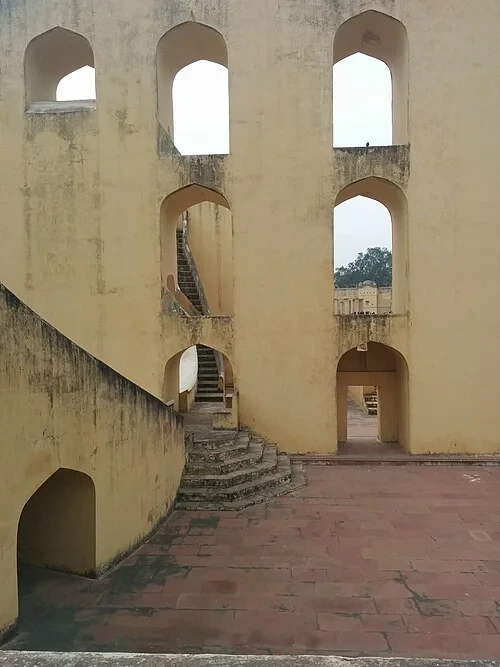 Shastansh Yantra: The Chamber of PrecisionInstrument Architecture
The structural engineering of these massive tools is as impressive as the calculations they perform. Deep arches and internal staircases within the masonry provided the necessary stability and strength to support the heavy marble scales and massive gnomons. Maharaja Jai Singh II made a deliberate choice to use stone and marble instead of the brass or iron commonly used in smaller astronomical instruments of the time. The reason was the intense Rajasthani climate. In the desert heat, metal expands and contracts significantly throughout the day. For a tool designed to measure time with two-second accuracy, even a few millimeters of warping would ruin the results. Stone, however, is much more thermally stable. By building these instruments on such a massive scale and using heavy masonry, Jai Singh created a set of tools that were virtually immune to the expansion and contraction caused by the sun. This architectural approach allowed the observatory to remain functional for decades without losing its calibration. It turned these structures into permanent, immovable scientific records that could withstand the passage of time and the harshness of the local environment.
Listen in the appAleksandr Zykov from Russia · CC BY-SA 2.0
09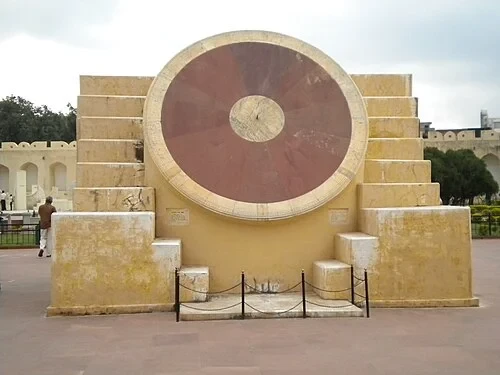 Nadivalaya Yantra: The Equinoctial DialsThe Equinoctial Dials
The Nadivalaya Yantra consists of two prominent circular dials, one facing north and the other facing south. These two structures represent the two hemispheres of the Earth. Their design is a direct reflection of the changing seasons. Because the sun’s path shifts throughout the year, for six months—from the spring equinox to the autumnal equinox—the northern dial is lit by the sun, allowing for measurements. For the other six months of the year, the sun moves south of the celestial equator, and the northern dial falls into shadow, meaning the southern dial must be used instead. This instrument was essential for determining the exact moment the sun crossed the celestial equator, marking the beginning of spring or autumn. To use it, an observer would look at the shadow cast by a central peg onto the inscribed marble face. This simple yet effective design allowed the astronomers to keep track of the sun’s declination throughout the year. It demonstrates how these 18th-century scientists used fixed stone faces to map a moving sky, showing a sophisticated understanding of the Earth’s seasonal relationship with the sun.
Listen in the appPhoto: Vssun · CC BY-SA 3.0
10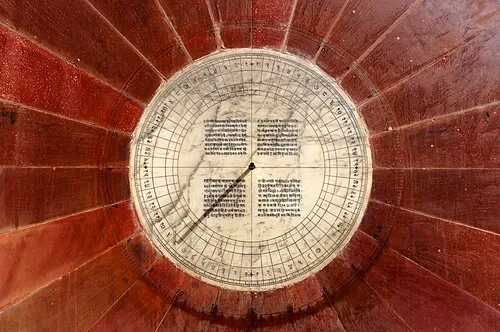 Nadivalaya Yantra: The Equinoctial DialsCelestial Inscriptions
The center of the equinoctial dial is covered in detailed inscriptions. These are Sanskrit characters and numerals, which served as the primary language for scientific and mathematical communication in 18th-century India. Every curve and line was precisely placed to aid in astronomical calculations. In the very center of the dial, a slender iron peg casts a long, thin shadow onto the marble surface. The point where this shadow touches the grid allows for a reading of the sun's position. There is a striking visual contrast here between the deep red sandstone used for the outer frame and the bright, white inscribed marble center. This was a common design feature across the Jantar Mantar, ensuring that the critical data-entry points were always high-contrast and easy to read. These inscriptions were used to calculate the sun's altitude and the length of the day. For an observer standing here 300 years ago, these marks were a living worksheet, where the movement of light across stone provided the raw data for mapping the universe. Each numeral was hand-carved into the marble to ensure the measurements remained legible for centuries.
Listen in the appJakub Hałun · CC BY-SA 4.0
Jantar Mantar, Jaipur
Frequently asked questions
How much does the guide cost?
Free app download. Listed guide price: $3.99. Guide price shown in the app. Audio guide only. Venue admission is separate.
Can I listen without internet?
Yes. Download the guide’s audio, images, and maps in the app before your visit. Your downloaded content is then available offline.
Can I listen in my language?
Stanza supports 15 languages. Check the app for the languages available for this guide.
Do I need to follow a schedule?
No. This is a self-guided experience. Choose your stops, pause whenever you like, and return to a story at your own pace.
At your own pace
Explore Jantar Mantar, Jaipur.
Download Stanza, then search for “Jantar Mantar, Jaipur”.
Free app download · Guide price shown in the app
Keep exploring
Nearby audio guides
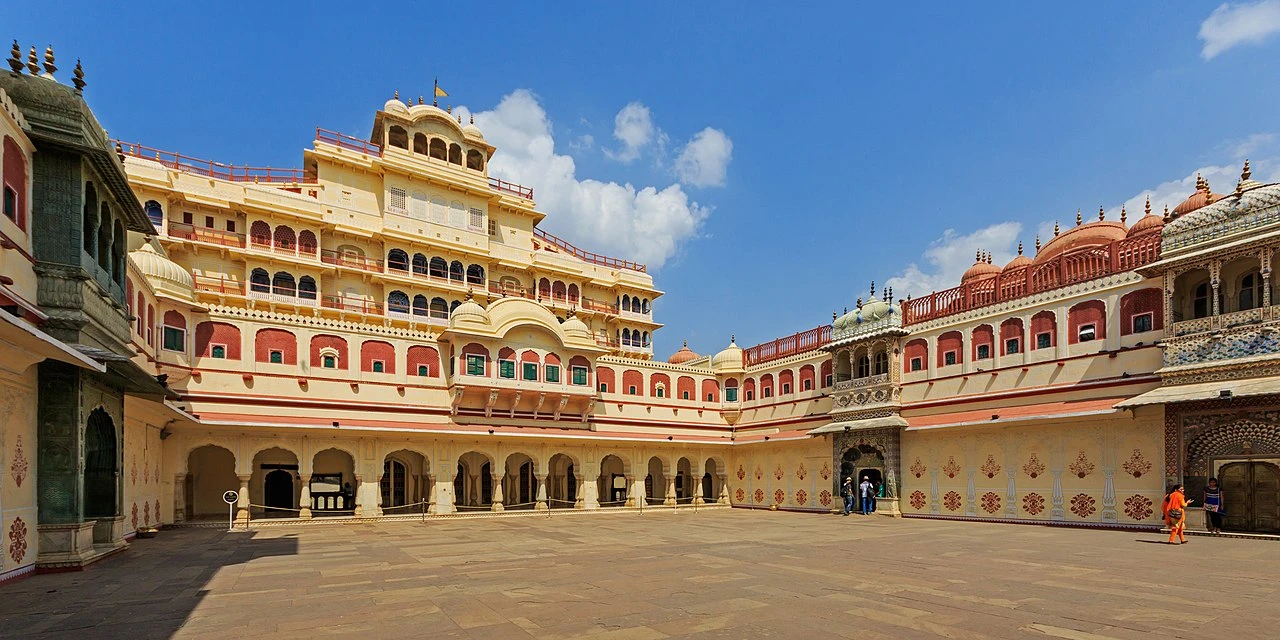
Jaipur
City Palace
Content & sources
Photo: A.Savin · FAL
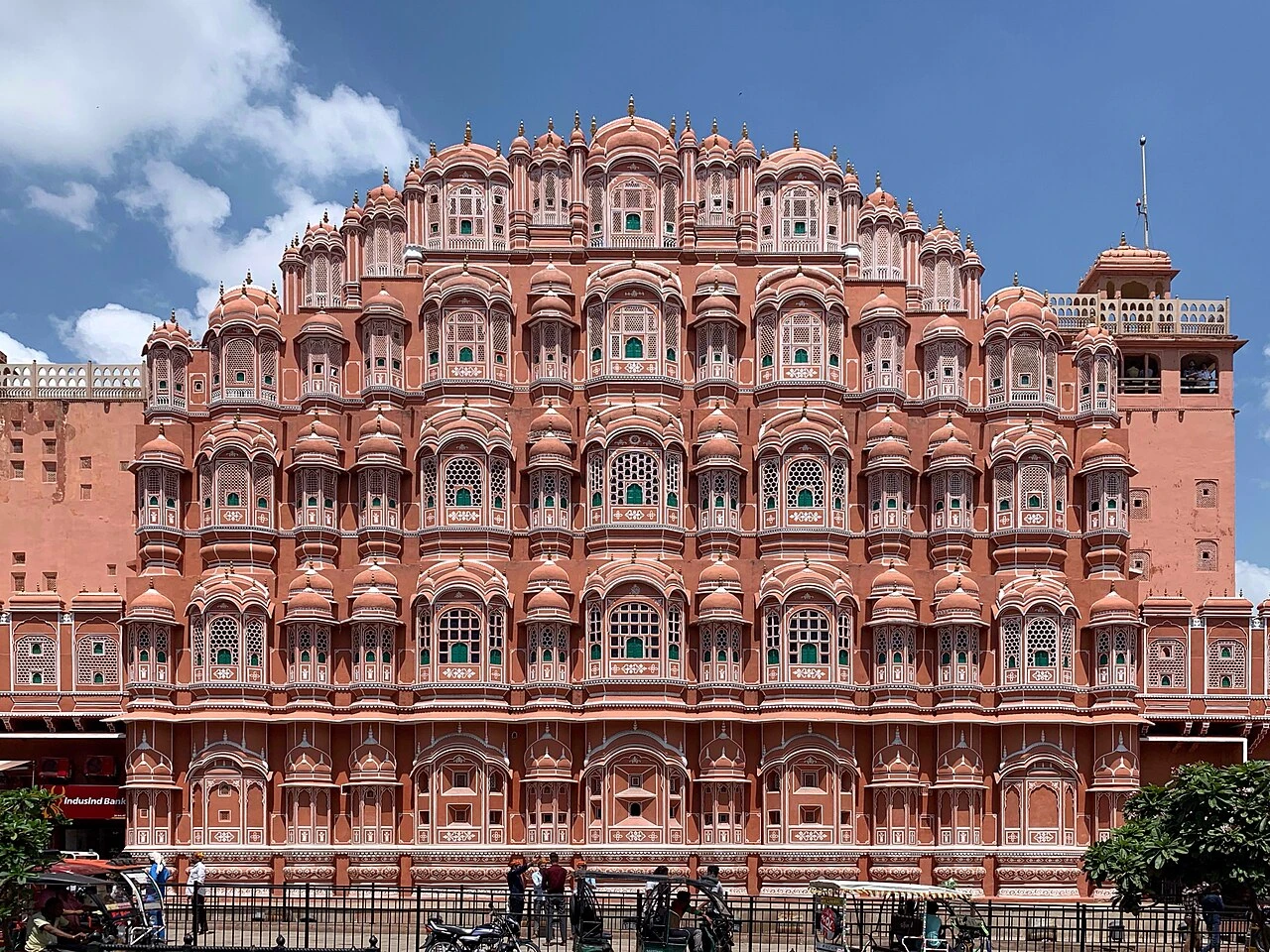
Jaipur
Hawa Mahal
Content & sources
Photo: Chainwit. · CC BY-SA 4.0
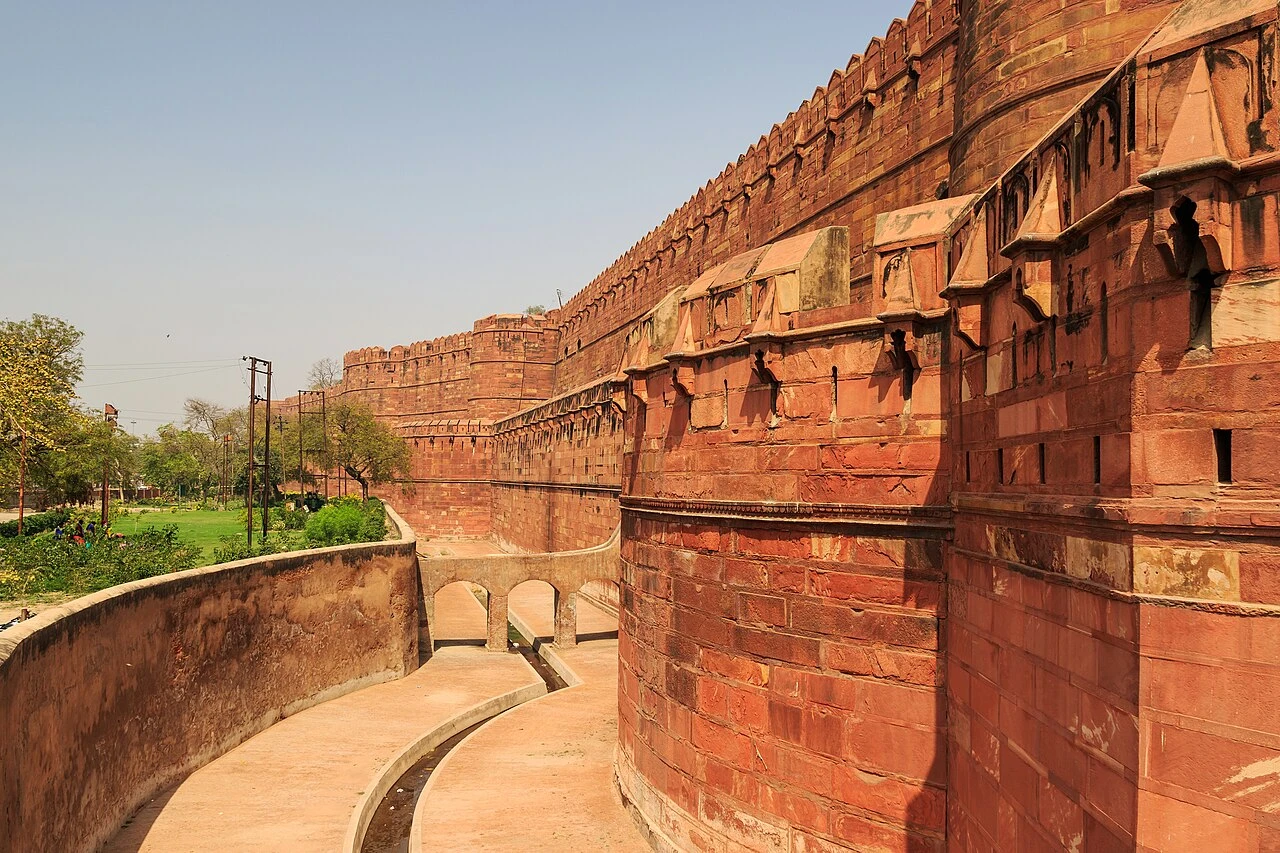
Agra
Agra Fort
Content & sources
Photo: A.Savin · FAL
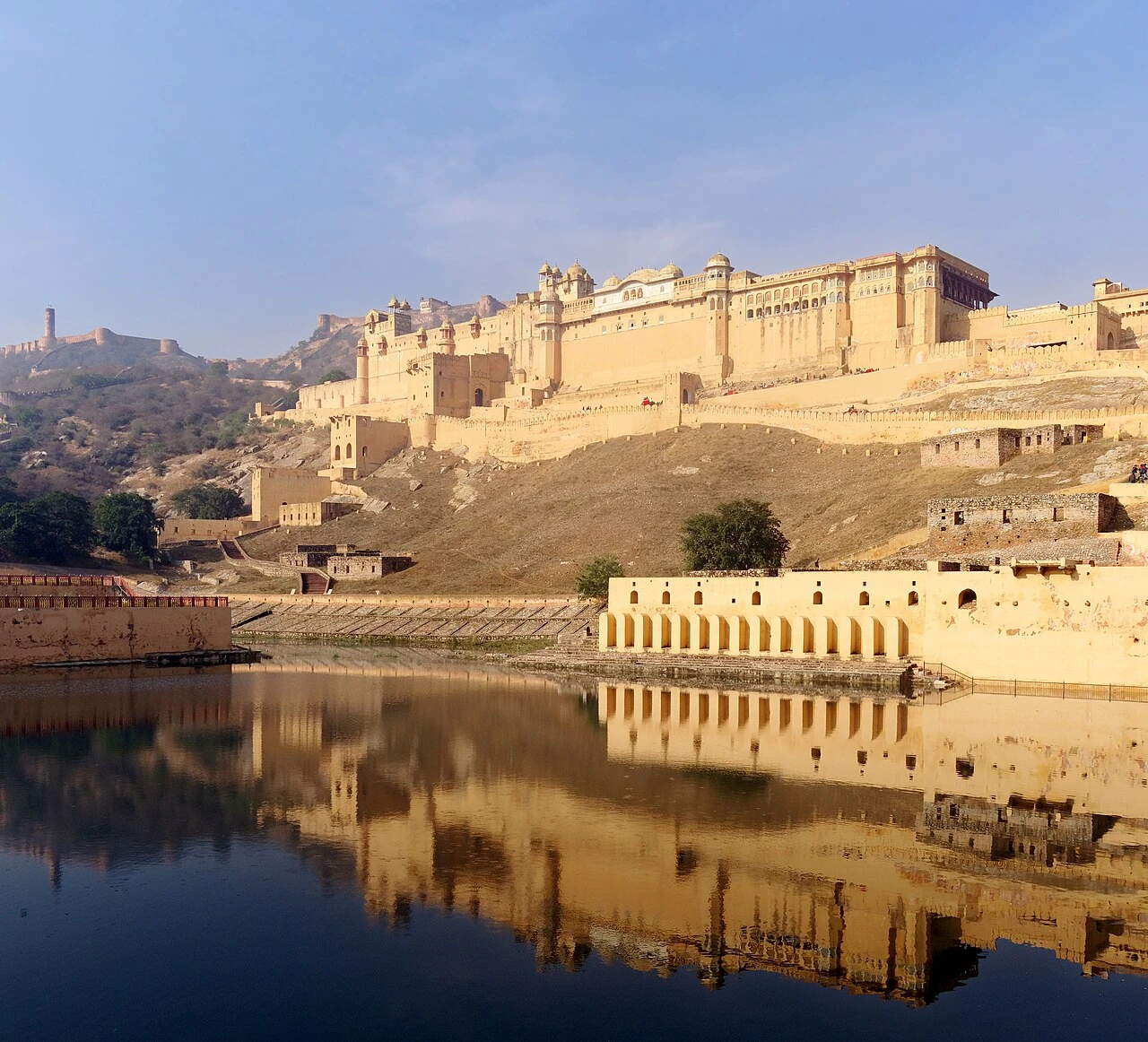
Jaipur Municipal Corporation
Amber Fort
Content & sources
Jakub Hałun · CC BY-SA 4.0