Stanza · Audio guide
Pura Ulun Danu BratanAudio guide
A place to remember. A story to take with you.
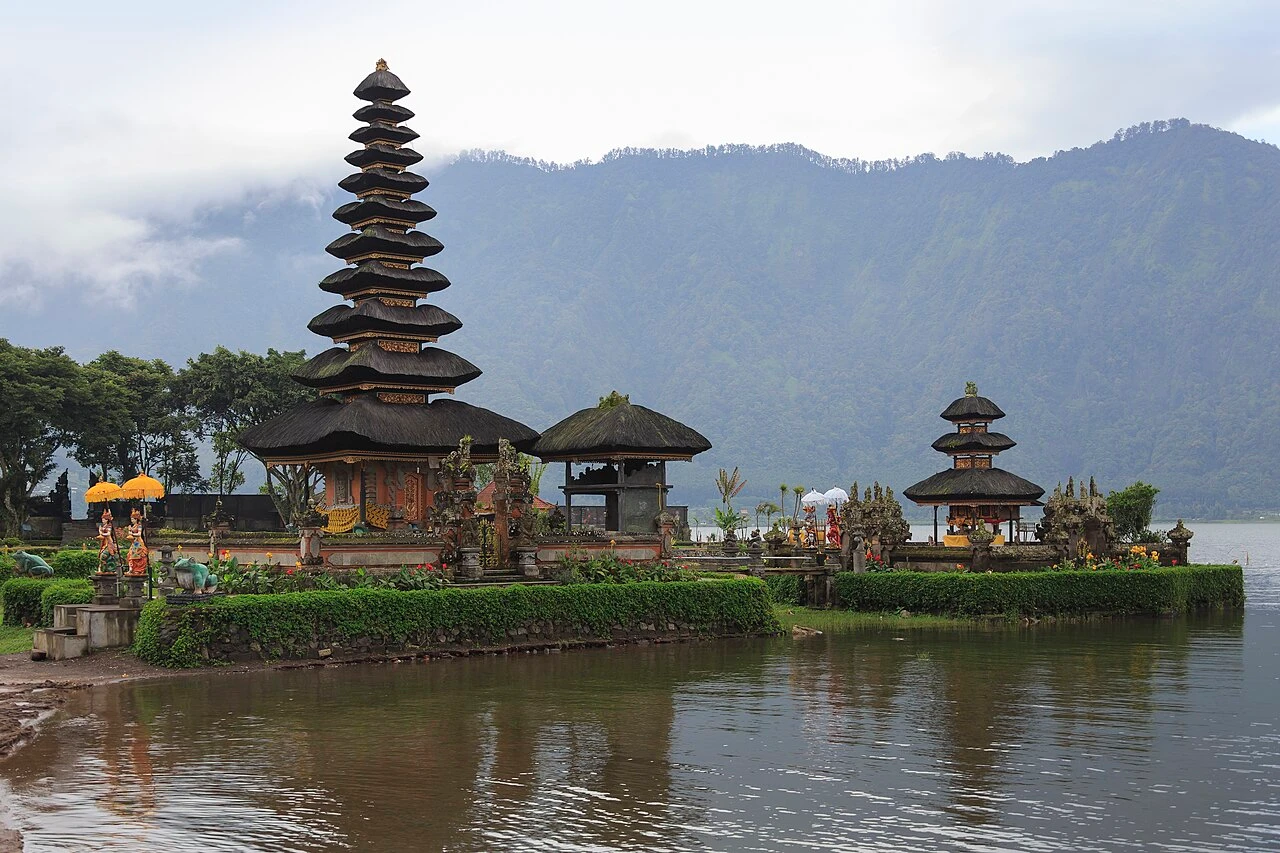
Pura Ulun Danu Bratan is a major Balinese Hindu temple complex located on the shores of Lake Bratan in the mountains near Bedugul. It is a significant water temple dedicated to Dewi Danu, the goddess of lakes…
Download Stanza, then search for “Pura Ulun Danu Bratan”.
About the tour
One guide. Your kind of visit.
Pura Ulun Danu Bratan is a major Balinese Hindu temple complex located on the shores of Lake Bratan in the mountains near Bedugul. It is a significant water temple dedicated to Dewi Danu, the goddess of lakes and rivers.
Ready when you are.
- 01Get the free Stanza app.
iOS & Android
- 02Find your guide.
“Pura Ulun Danu Bratan”
- 03Download before you go.
Works offline
Audio guide / 12 narrated stops
Inside the guide
Get to know a few of the stories before you go. Open a stop to read more.
01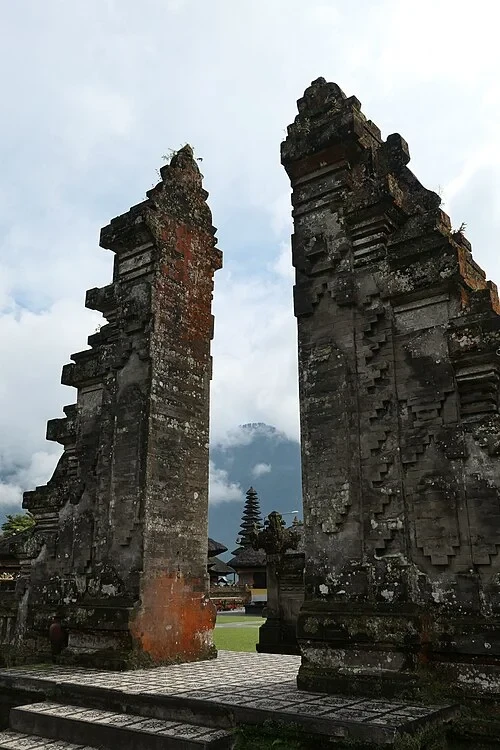 The Main Entrance Gate (Candi Bentar)The Outer Split Gate
Welcome to one of Bali's most revered water temples, established in 1633 along the shores of Lake Bratan. The entrance features a Candi Bentar, a traditional split gateway resembling a mountain split cleanly into two halves. This architectural form marks the threshold between the outer, secular world and the sacred inner zones of the temple. When viewed directly from the front, the two symmetrical stone pillars align perfectly. This intentional spacing frames the volcanic peaks of the Bedugul region in the distance, integrating the natural mountain landscape into the spiritual geography of the complex. Historically, the temple serves a dual purpose, acting as both a place of worship for the water goddess Dewi Danu and a central point in the island's agricultural network. The dark, weathered stone of the gate absorbs the cool mountain mist, creating a quiet atmosphere for arriving visitors.
Photo: Anandajoti · CC BY-SA 4.0
02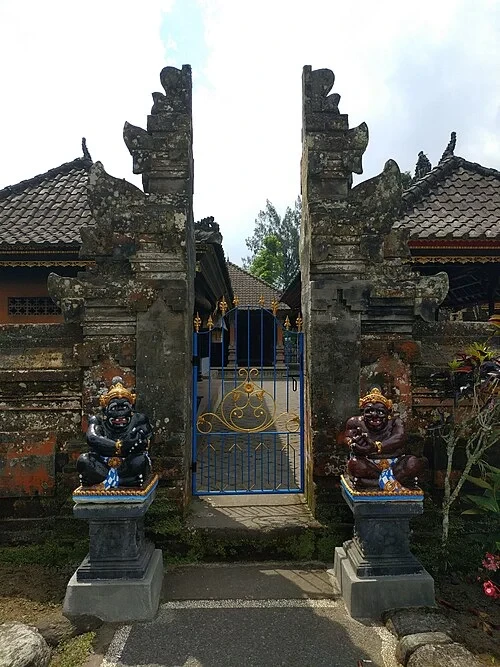 The Main Entrance Gate (Candi Bentar)The Guardian Gate
Flanking the gateway are two seated guardian statues known as Dvarapala. These heavily textured stone figures play a vital role in Balinese cosmology by warding off negative energies and malevolent influences before they can cross into the middle courtyard. Carved with expressive, wide-eyed faces, exposed teeth, and defensive postures, they present an imposing barrier to any spiritual disharmony. Close inspection reveals detailed traditional garments and jewelry etched into the stone, which have acquired a layer of green moss and lichen over years of exposure to the humid mountain air. Worshipers often drape colorful checkered fabric around the waists of these guardians and place fresh offerings at their bases, maintaining an active relationship with these spiritual protectors. Their presence ensures that the inner courtyards remain pure spaces dedicated solely to prayer, contemplation, and community ceremonies.
Sasha India · CC BY 2.0
03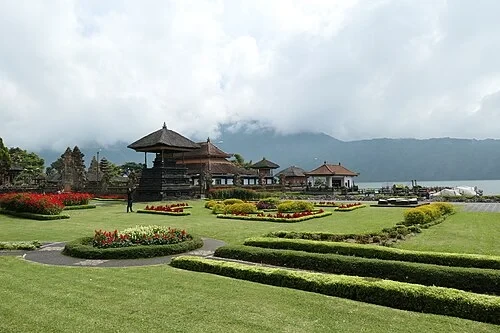 The Outer and Middle CourtyardsThe Temple Gardens
Manicured lawns and carefully planned flower beds spread across the outer zone of the temple complex. In Balinese temple design, these landscaped areas serve a specific psychological purpose, providing a peaceful buffer zone that allows visitors to transition from the busy secular world to a state of quiet contemplation. Situated in the Bedugul highlands at an elevation of approximately 1,200 meters above sea level, the gardens benefit from a cool, moist microclimate. This high-altitude weather pattern brings regular rainfall and mist, keeping the grass and foliage green throughout the entire year. Paths wind through the greenery, offering different vantage points of the lake and the structures. By introducing natural beauty before visitors reach the inner shrines, the gardens prepare the mind for the spiritual environment of the inner courtyards, where the actual religious ceremonies take place.
Listen in the appPhoto: Anandajoti · CC BY-SA 4.0
04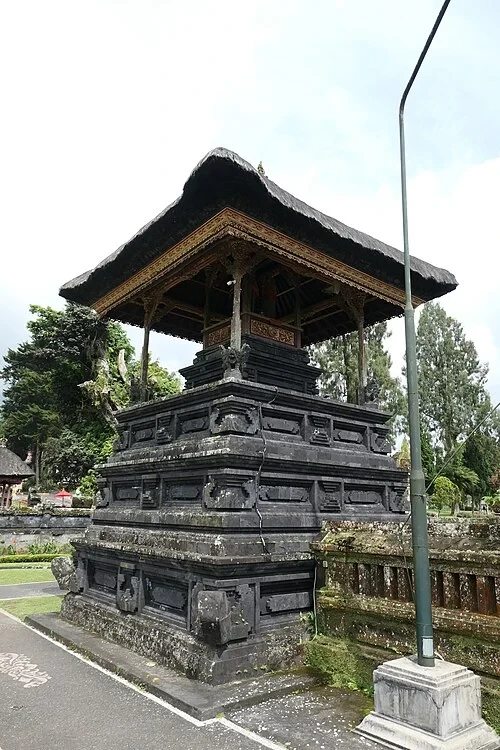 The Outer and Middle CourtyardsThe Kulkul Tower
Rising above the courtyard is a tall, tiered stone structure known as a Kulkul tower. This architectural feature serves as the communication hub for the temple and the surrounding village. Suspended inside the open wooden pavilion at the top of the tower is a hollowed-out wooden slit-drum. Priests and temple guardians strike this drum rhythmically to signal the commencement of religious ceremonies, announce sudden emergencies, or call community members together for assembly. The tower's design features a stark contrast between its heavy, dark stone foundation and the lightweight, thatched wooden pavilion that shelters the drum. This thatched roof is crafted from durable black palm fiber, designed to withstand the heavy rains of the Bedugul highlands. The rhythmic beats of the Kulkul can travel great distances across the water of Lake Bratan, coordinating the daily life and spiritual practices of the entire lake community.
Listen in the appPhoto: Anandajoti · CC BY-SA 4.0
05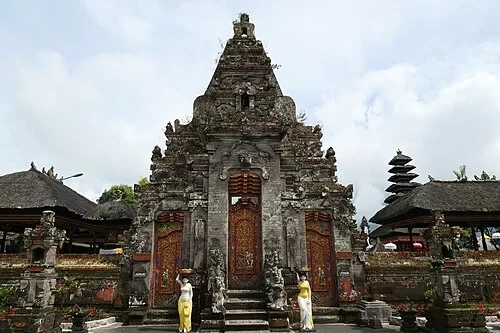 The Inner Courtyard (Pura Penataran Agung)The Ornate Inner Gate
Standing before the inner courtyard is the Kori Agung, an imposing, fully enclosed gateway that controls access to the most sacred zone of the temple. The central wooden door is covered in intricate relief carvings highlighted with gold leaf, depicting traditional motifs and mythological figures. In accordance with sacred tradition, this central entrance remains closed during daily operations, opening only during major annual festivals to allow the passage of holy relics, priests, and elaborate ritual offerings. For regular access, smaller, plain side doors flank the main structure. Guarding the steps leading up to the threshold are stone statues of female offering-bearers, their hands perpetually held in gestures of service and devotion. The physical effort required to ascend the stone steps and pass through these narrow entryways reinforces the transition into a space reserved for the highest level of worship.
Listen in the appPhoto: Anandajoti · CC BY-SA 4.0
06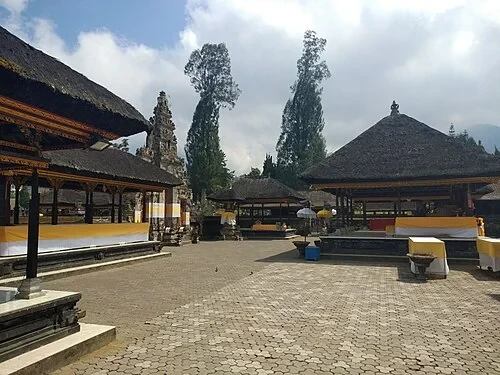 The Inner Courtyard (Pura Penataran Agung)The Sacred Pavilions
Open-sided wooden pavilions, known as bale, are arranged throughout the inner temple courtyards. These functional structures provide shelter from the high-altitude rain and sun while allowing air to flow freely. During major festivals, priests and community members gather under these roofs to prepare elaborate offerings of fruit, flowers, and rice. The wooden support pillars of these pavilions are wrapped in white and yellow fabrics. This color choice carries deep theological significance in Balinese Hinduism: white symbolizes purity and is associated with the god Shiva, while yellow represents prosperity, divine wisdom, and the water goddess Dewi Danu. Wrapping the pillars in these cloths consecrates the physical structure, transforming a practical workspace into a sacred venue. The simplicity of the open platforms encourages communal cooperation, ensuring that the physical labor of preparing for ceremonies remains an inclusive, shared experience for the local community.
Listen in the appSasha India · CC BY 2.0
07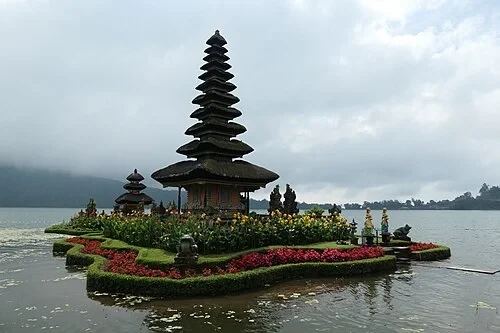 The Floating Meru ShrinesThe Eleven-Tiered Shrine
Reaching toward the sky is the eleven-tiered Meru shrine, the tallest and most prominent structure within the entire complex. This towering pagoda is dedicated to the Hindu deity Shiva and his consort, the goddess Parvathi. The roofs are thatched using ijuk, a coarse, dark fiber harvested from the sugar palm tree, known for its exceptional durability against damp mountain weather. In Balinese religious architecture, Meru shrines must always feature an odd number of tiers, with eleven representing the highest honor reserved for the most powerful deities. Each progressively smaller roof level represents a tier in the cosmic hierarchy of the gods, mirroring the layers of the sacred Mount Meru of Hindu mythology. The dark, organic texture of the thatched roofs contrasts with the stone base, creating a vertical silhouette that dominates the lakeside landscape and serves as a visual focal point for pilgrims arriving from across Bali.
Listen in the appPhoto: Anandajoti · CC BY-SA 4.0
08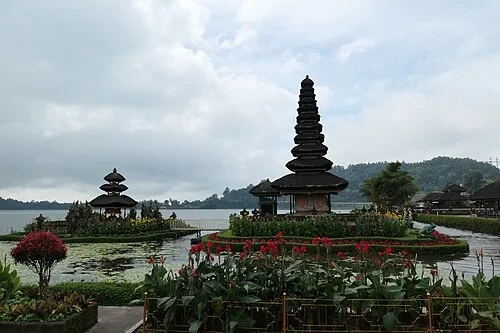 The Floating Meru ShrinesThe Floating Shrines
Rising waters of Lake Bratan create a famous visual illusion, making the temple structures appear to float directly on the surface of the lake. Next to the tall eleven-tiered Meru shrine stands a smaller, three-tiered structure. This three-tiered shrine is dedicated directly to Dewi Danu, the revered goddess of lakes, rivers, and fresh water. Because Lake Bratan is a critical freshwater source for central Bali, this smaller shrine holds immense practical and spiritual importance for the island's population. Pilgrims travel from agricultural communities across Bali to pay their respects here, seeking blessings for fertile soil and abundant harvests. The juxtaposition of the massive eleven-tiered tower and the smaller three-tiered water shrine represents the balance between the universal Hindu cosmos and the local, immediate concerns of water and life, both anchored in the clear volcanic waters of the caldera.
Listen in the appPhoto: Anandajoti · CC BY-SA 4.0
09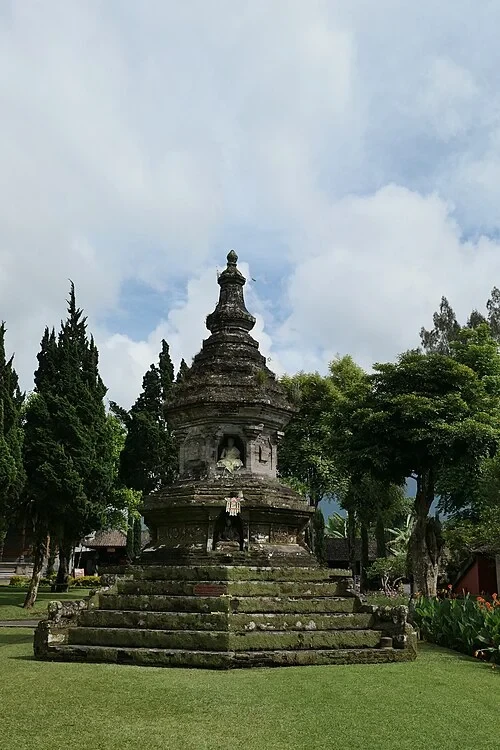 The Buddhist StupaThe Buddhist Stupa
Standing on the grassy lawns outside the main Hindu courtyards is a stone Buddhist stupa. This structure highlights the historical syncretism of Bali, where Hinduism and Buddhism have historically coexisted, intermingled, and influenced one another for centuries. The stupa features a characteristic bell-like silhouette rising from a layered, square stone base, reminiscent of the classical Buddhist architecture found in Java. Rather than competing with the surrounding Hindu shrines, the stupa is integrated harmoniously into the broader sacred geography of the lake. Its presence reflects a traditional Balinese philosophy of spiritual tolerance and unity, showing that different paths of worship can share the same sacred soil. The dark stone of the stupa is often decorated with simple yellow fabrics, marking it as an active site of veneration where visitors of multiple faiths come to pay respect and seek quiet contemplation.
Listen in the appPhoto: Anandajoti · CC BY-SA 4.0
10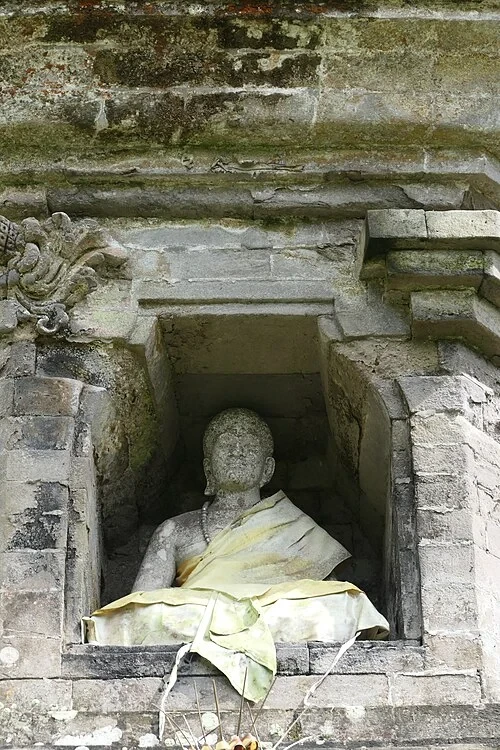 The Buddhist StupaThe Niche Buddha Statue
Seated inside the arched niche of the stone stupa is a weathered statue of a meditating Buddha. Sitting in the lotus position with hands folded in a gesture of meditation, the figure shows the passage of time through its mossy, rain-worn stone surface. A yellow cloth sash is draped over one shoulder, a common sign of respect and consecration in Balinese religious spaces. Despite being a Buddhist figure situated on the grounds of a primarily Hindu temple complex, the statue receives the same devotion as any Hindu deity. Local worshipers regularly place small, handmade palm-leaf baskets filled with colorful flowers, incense, and rice at the statue's base. This practice demonstrates the deep-seated syncretism of Balinese spiritual life, where boundaries between religious traditions are fluid and unified by shared devotion. The quiet, weathered face of the Buddha remains a focal point of peaceful contemplation for all who pass by.
Listen in the appPhoto: Anandajoti · CC BY-SA 4.0
Pura Ulun Danu Bratan
Frequently asked questions
How much does the guide cost?
Free app download. Listed guide price: $3.99. Guide price shown in the app. Audio guide only. Venue admission is separate.
Can I listen without internet?
Yes. Download the guide’s audio, images, and maps in the app before your visit. Your downloaded content is then available offline.
Can I listen in my language?
Stanza supports 15 languages. Check the app for the languages available for this guide.
Do I need to follow a schedule?
No. This is a self-guided experience. Choose your stops, pause whenever you like, and return to a story at your own pace.
At your own pace
Explore Pura Ulun Danu Bratan.
Download Stanza, then search for “Pura Ulun Danu Bratan”.
Free app download · Guide price shown in the app
Keep exploring
Nearby audio guides
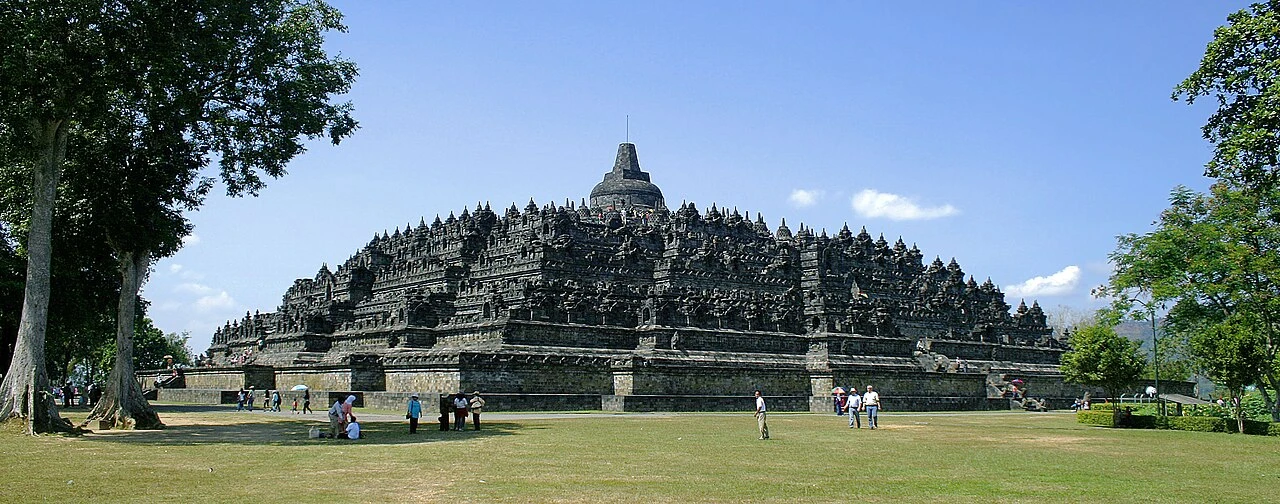
Desa Borobudur
Candi Borobudur
Content & sources
Gunawan Kartapranata · CC BY-SA 3.0
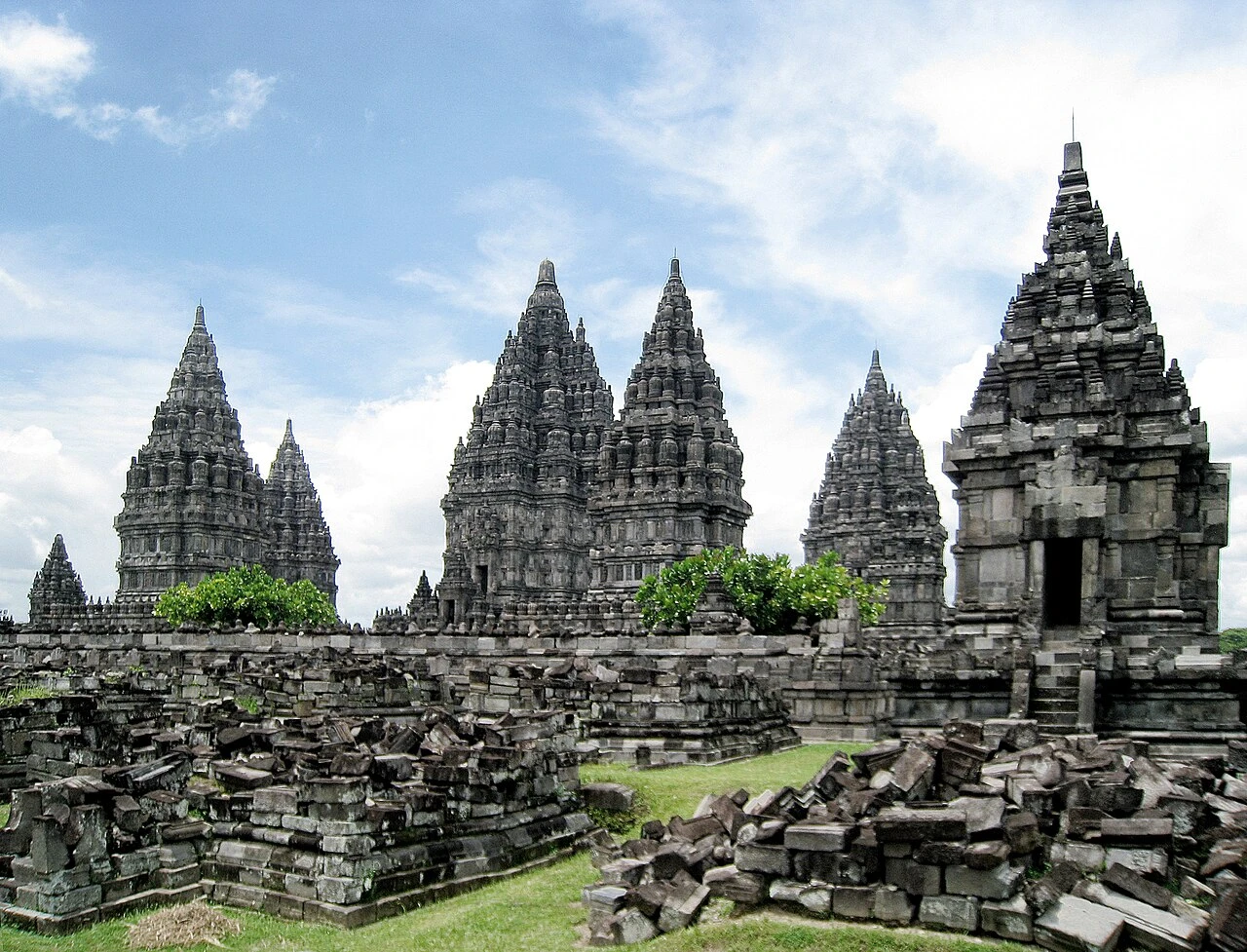
Bokoharjo
Prambanan Temple
Content & sources
Gunawan Kartapranata · CC BY-SA 3.0