Languages
15Prambanan Temple Audio Guide
Prambanan Temple is a landmark in Bokoharjo, Indonesia. Explore it with Stanza's GPS-triggered offline audio guide — available in 15 languages.
Quick Facts
17
Stops
15
Languages
100%
Offline
📍 Bokoharjo, Indonesia · -7.7520°N, 110.4912°E
About Prambanan Temple
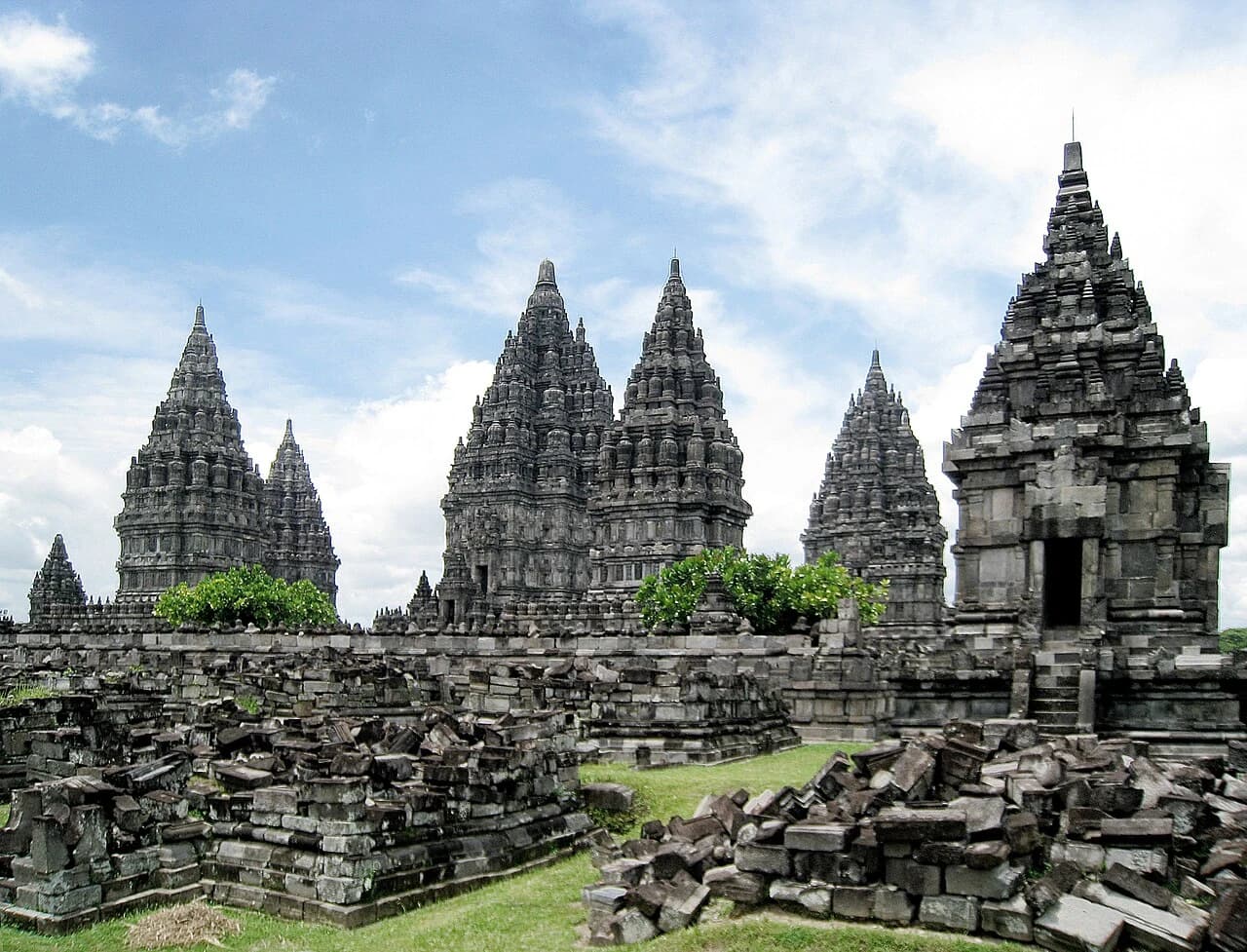
Prambanan Temple is a 9th-century Hindu temple compound located in the Special Region of Yogyakarta, Indonesia. It is the largest Hindu temple site in Indonesia and a UNESCO World Heritage site.
This self-guided audio tour features 17 narrated stops organized across 9 sections. As a temple, Prambanan Temple offers a unique cultural experience in the heart of Bokoharjo, Indonesia.
The Stanza audio guide is available in 15 languages and works entirely offline — download the complete tour including audio narration, maps, and images before your visit. As you walk through Prambanan Temple, GPS-triggered narration plays automatically at each point of interest.
Last updated:
What you will hear
Gateway to the Inner Sanctum
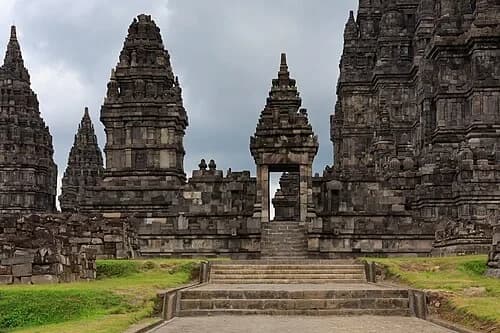
The transition to the Svarloka (realm of gods) via the elevated square platform and stone gateways.
Gateway to the Gods
The climb up these steep, narrow stone steps represents a significant transition in the temple's spiritual geography. You are moving from the middle realm into the inner sanctum, known as the Svarloka. In the 9th century, a pilgrim’s journey was a physical and spiritual ascent. Reaching this elevated square platform was not a privilege granted to everyone; historical tradition suggests that only priests and royalty would have been allowed to perform the highest rituals here. The narrowness of the stairs forces a slow, deliberate pace, encouraging a sense of focus as one approaches the dwelling place of the gods. Standing on this high terrace, the perspective of the surrounding complex changes, placing the visitor above the rows of smaller shrines and closer to the heavens. The masonry here shows the precision of ancient engineers who constructed these platforms to support the massive weight of the stone towers above. This elevated space served as the stage for the kingdom's most important ceremonies, where the earthly and divine realms were believed to meet.
The Shiva Temple - Mount Meru in Stone
Focuses on the signature architectural element: the 47-meter tall central tower designed to mimic the holy Mount Meru.
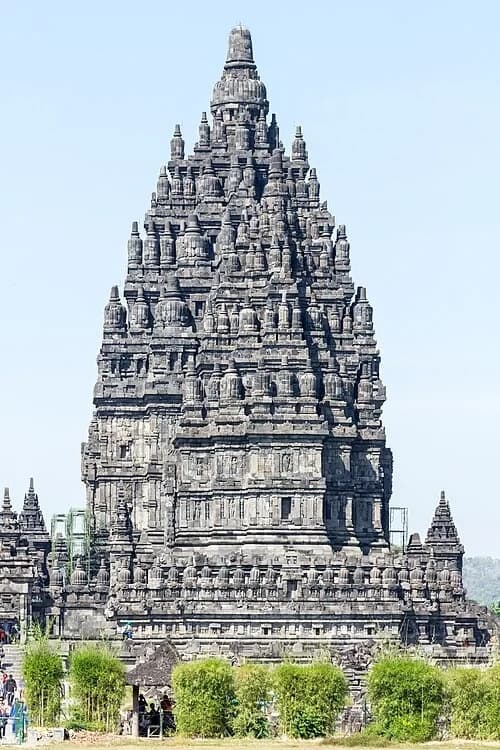
Temple of Shiva
The massive central structure is the Temple of Shiva, the tallest and most prominent tower in the entire complex. Construction on this site began around the year 850, credited primarily to King Rakai Pikatan of the Mataram Dynasty. To build this architectural marvel, ancient craftsmen used hundreds of thousands of blocks of dark, volcanic andesite stone, fitted together with incredible precision. The design follows the classic Hindu architectural style known as 'shikhara,' which means 'mountain peak.' This mountain-like tower is intended to symbolize the abode of the gods, specifically the sacred peaks where Shiva resides. As you look at the exterior, notice the verticality and the many small decorative pinnacles that lead the eye upward. Every level of the temple is adorned with intricate carvings that tell stories from the heavens and the earth. The massive stone base provides the foundation for this soaring verticality, which has survived centuries of tropical weather and volcanic activity. It remains one of the most significant examples of classical Hindu architecture in Southeast Asia.
Chambers of the Sage and the Son
Consolidates the South and West chambers of the Shiva temple, featuring Agastya (the divine teacher) and Ganesha.
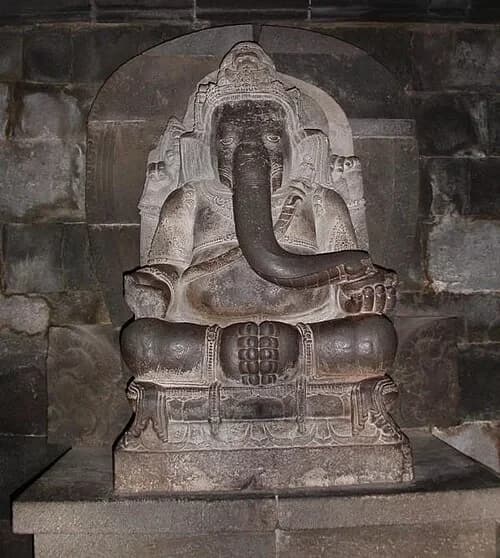
Ganesha the Obstacle Remover
In the western chamber of the Shiva temple, you will find the figure of Ganesha, the elephant-headed son of Shiva and Parvati. He is one of the most recognizable and beloved deities in the Hindu pantheon. Ganesha is shown in a characteristic sitting pose, with his legs tucked and his trunk reaching into a bowl of sweets. This bowl represents the rewards of spiritual knowledge and wisdom. In Hindu practice, Ganesha is the 'Lord of Beginnings' and the 'Remover of Obstacles.' Because of this, worshippers often pray to him first before any other deity or before starting a new venture, seeking to clear the path for success. The carving shows a sturdy, powerful figure with large ears to hear all prayers and a heavy belly representing his prosperity. Despite being carved from the same dark volcanic stone as the temple itself, the statue has a distinct presence that draws people into the small, dim chamber. His placement in the western side of the temple follows strict traditional layouts for Hindu sanctuary structures.
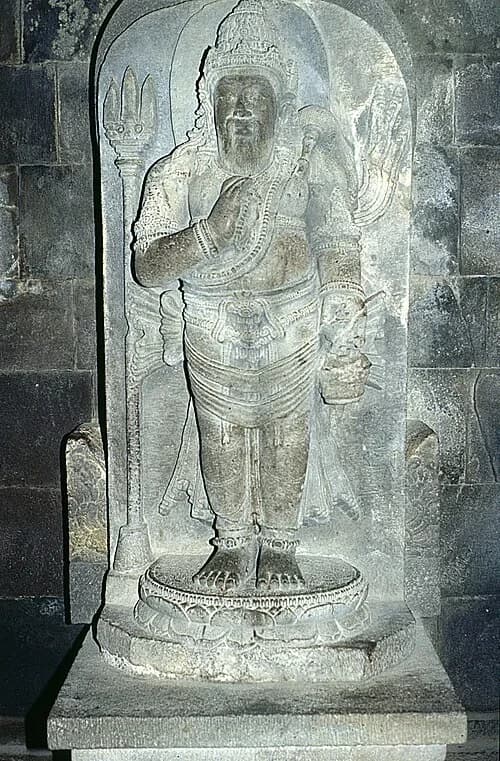
The Divine Teacher
Tucked away in the southern chamber is the statue of Agastya, a revered sage and the primary teacher of the gods. He represents a specific aspect of Shiva: the ultimate ascetic and instructor of divine knowledge. You can easily identify him by his unique physical features, which differ from the more youthful gods. Agastya is portrayed as an older man with a long, flowing beard and a prominent belly, suggesting his age and wisdom. In his hand, he holds a water jar, known as a 'kamandalu,' which is a traditional accessory for Hindu hermits and sages. This figure is particularly important in Javanese Hinduism, as Agastya was believed to have brought Vedic culture and divine wisdom to the southern regions. His calm expression and relaxed posture emphasize his role as a source of peace and learning. The statue is placed here to remind visitors that the spiritual path requires not just devotion, but also the study of sacred truths under the guidance of a master teacher.
The Legend of Rara Jonggrang
The North chamber (Must-See) containing the Durga statue, central to the local folklore of the 'Slender Virgin'.
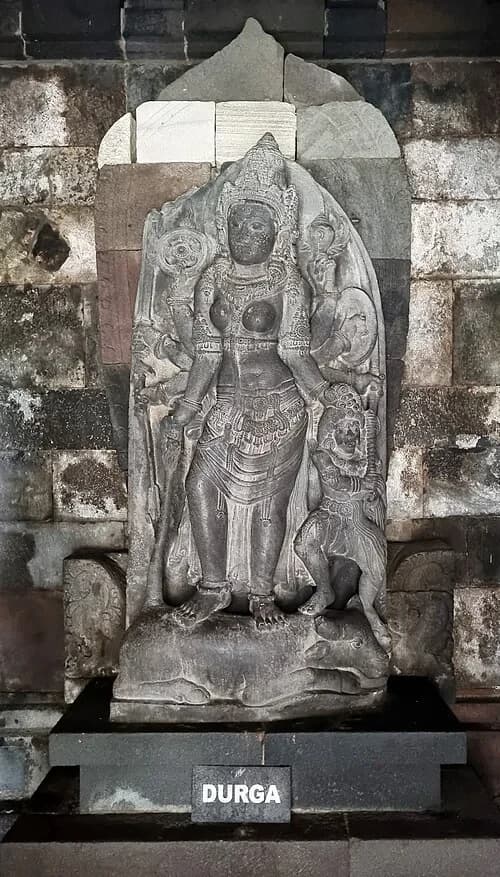
The Slender Virgin
The northern chamber contains the most famous figure at Prambanan, a statue that gave the temple its local name: Candi Rara Jonggrang. A popular legend tells of a princess named Rara Jonggrang who was cursed into stone by a spurned suitor after she tried to trick him into failing a task. However, the figure you see is actually the Hindu goddess Durga. She is shown in her powerful eight-armed form, in the act of slaying Mahishasura, a demon that had taken the form of a buffalo. If you look at the base of the statue, you can see the defeated buffalo beneath her feet. Durga's victory represents the triumph of good over evil and the power of divine energy. Despite the violent subject matter, her face remains serene and graceful, which likely inspired the local legend of the beautiful princess. Visitors often leave offerings here, and the statue is a major point of interest for those exploring the mythological side of the temple complex.
The Ramayana Relief Gallery
The Must-See narrative carvings along the inner walls of the Shiva temple, depicting the epic story of Rama and Sita.
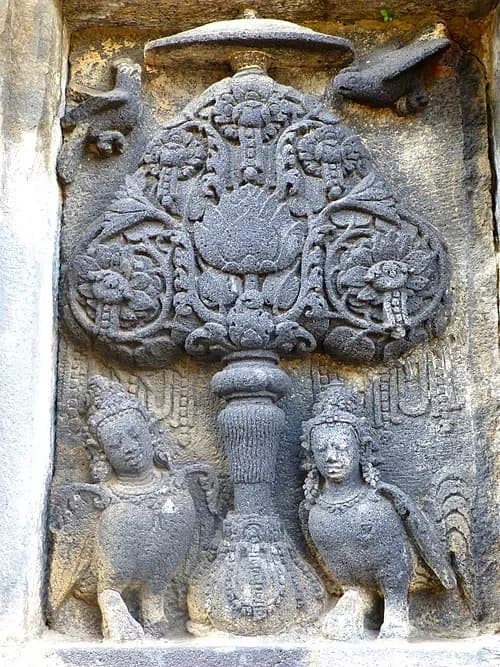
The Ramayana Bas-Reliefs
As you walk through the inner gallery, the walls come alive with a series of narrative bas-reliefs. These panels tell the story of the Ramayana, one of the greatest epics of Indian literature, which follows the adventures of Prince Rama and his wife Sita. The carvings are celebrated for their incredible detail and the skill of the 9th-century artisans who created them. Look for the recurring imagery of the 'Kalpataru,' or the divine wishing tree, often flanked by 'Kinnaras'—mythical creatures that are half-human and half-bird. These panels provide a window into the daily life, clothing, and environment of ancient Java, as the artists often set the scenes in a landscape that reflected their own surroundings. The story begins on the outer wall of the Shiva temple and continues onto the Brahma temple, guiding visitors through a visual journey of devotion, conflict, and eventual triumph. The depth of the carving creates a play of light and shadow that changes throughout the day, emphasizing the three-dimensional quality of the stone figures.
The Brahma Temple - The Creator
The southern 33-meter tower dedicated to Brahma, the first of the Trimurti.
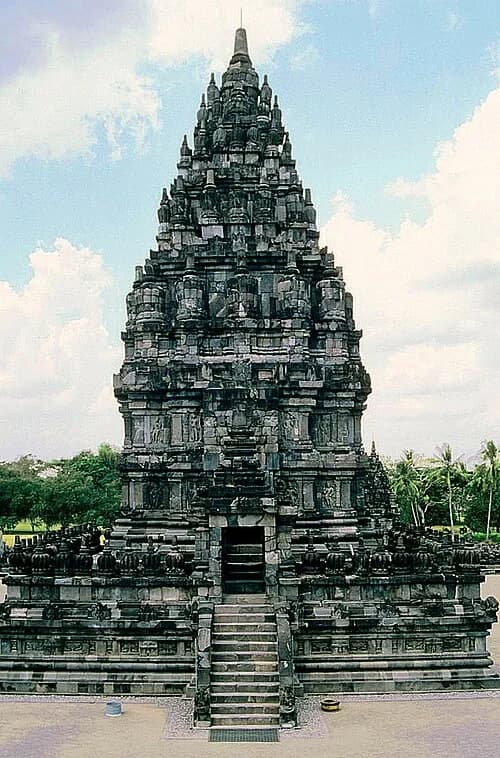
The Temple of Brahma
On the southern side of the central complex stands the temple dedicated to Brahma, the third member of the Hindu Trinity. This tower, reaching thirty-three meters in height, is the counterpart to the Vishnu temple on the opposite side. Brahma is honored here as the Creator, the deity who initiates each new cycle of time and existence. Inside the sanctum, the statue of Brahma traditionally features four faces, allowing him to look in all four cardinal directions simultaneously—a symbol of his all-encompassing awareness and creative power. The exterior architecture mirrors the other great towers, with its jagged, mountain-like silhouette and multiple tiers of detailed stone carvings. These tiers represent the different levels of the heavens in Hindu cosmology. Together with the temples of Shiva and Vishnu, this structure completes the physical manifestation of the Trimurti at Prambanan. The temple serves as a reminder of the origins of the universe and the creative forces that brought the world into being before the other gods took up their roles as preservers and transformers.
Shrines of the Divine Vehicles
Consolidates the three Vahana shrines facing the main gods, dedicated to Nandi (bull), Garuda (kite), and Hamsa (swan).
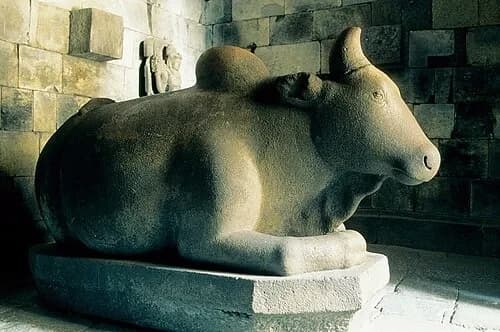
Nandi the Sacred Bull
Directly in front of the Temple of Shiva is a smaller building known as a 'Vahana' shrine, which houses a large statue of a reclining bull named Nandi. In Hindu mythology, every god has a divine vehicle, and Nandi is the loyal companion and mount of Shiva. He is depicted here in a calm, resting position, always facing his master’s main temple to show his eternal devotion. This shrine is one of three 'Vahana' buildings in the central courtyard. The other two were originally dedicated to the Hamsa, or swan, which is the vehicle for Brahma, and the Garuda, a divine kite or bird-like creature for Vishnu. Together, these shrines and their statues complete the celestial entourage of the three great gods. Nandi's presence is essential to the temple's layout, as he acts as the guardian of the entrance to Shiva's dwelling. The smooth, solid form of the bull contrasts with the intricate carvings found on the larger temples, focusing the viewer’s attention on his peaceful and protective role.
Restoration and the 2006 Earthquake
Highlights the impact of the 2006 earthquake and the ongoing 'anastylosis' method of stone reassembly.
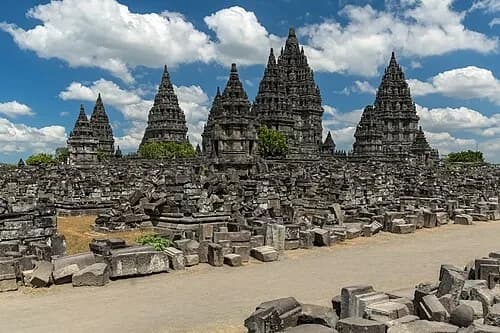
The 2006 Earthquake
Prambanan sits in a region of high volcanic and seismic activity, making it constantly vulnerable to the earth’s movements. In 2006, a major earthquake struck the area, causing significant damage to many of the structures you see today. Some towers partially collapsed, and many stone blocks were shaken loose. You will notice large piles of stone scattered throughout the site, many with numbers painted on their sides. These are part of a massive restoration effort using a technique called 'anastylosis.' In this process, engineers and archaeologists must carefully identify and document every fallen piece, finding its exact original location before it can be put back. It is a slow, puzzle-like task that requires immense patience and precision. The goal is to rebuild the temples using as many original materials as possible, ensuring the architectural integrity of the site is maintained. These piles of stone are not just debris; they are the disassembled parts of a grand history, waiting to be returned to their rightful places in the skyline.
Sunset over the Opak River
A reflective conclusion discussing the mysterious abandonment and the massive river diversion project.
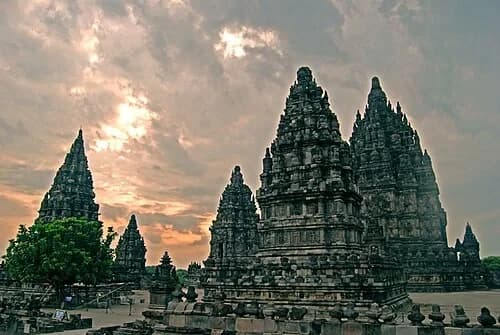
The Mysterious Abandonment
The silence that eventually fell over Prambanan remains one of history’s great mysteries. Around 950 CE, the Mataram Kingdom abruptly abandoned this grand complex. Historians often point to a catastrophic eruption of Mount Merapi, the active volcano visible on the horizon, as a likely cause for this sudden departure. Thick layers of volcanic ash and seismic activity would have made life in the valley untenable for the royal court and the thousands required to maintain the site. Alternatively, some scholars suggest a strategic political shift, as the center of power moved toward East Java to secure better maritime trade routes. Whatever the cause, the temples were left to the elements for centuries, eventually becoming overgrown and partially buried. One remarkable engineering feat from the temple's construction era ensured these foundations survived the long neglect. The builders originally undertook a massive project to divert the Opak River, which once flowed directly through the temple grounds. By redirecting the river’s path, they prevented the water from eroding the soil beneath the massive stone towers. This ancient hydrological work protected the structural integrity of the site for over a thousand years until its modern rediscovery.
Want to hear the rest?
Download the Stanza app to unlock all 17 stops and full GPS-guided navigation.
Frequently Asked Questions
How long does the Prambanan Temple audio tour take?
The Prambanan Temple audio guide includes 17 narrated stops. Most visitors spend 45 minutes to 1.5 hours exploring the complete tour, though you can listen at your own pace and skip or revisit any stop.
Is the Prambanan Temple audio guide available in my language?
Stanza supports 15 languages: English, Spanish, French, German, Italian, Portuguese, Russian, Japanese, Chinese, Korean, Arabic, Hindi, Polish, Dutch, Hebrew. Check the guide in the app to confirm the languages currently available for this tour.
Can I use the audio guide offline at Prambanan Temple?
Yes! Download the complete Prambanan Temple tour — including all audio, maps, and images — before your visit. The Stanza app works completely offline, so you don't need WiFi or mobile data at the venue.
How much does the Prambanan Temple audio guide cost?
The Stanza app is free to download. The current listed price for the Prambanan Temple audio guide is $2.99; app-store region and currency may affect the final price.
How do I use the Stanza audio guide at Prambanan Temple?
Download the free Stanza app, search for "Prambanan Temple", and download the tour. When you arrive at the venue, the app uses GPS to detect your location and automatically plays the relevant narration as you move between points of interest — completely hands-free.
What makes the Stanza audio guide different from other Prambanan Temple tours?
Stanza offers GPS-triggered narration that plays automatically as you walk through Prambanan Temple — no need to manually select stops. The tour is available in 15 languages, works fully offline, and includes 17 expertly narrated stops with images and historical context.
What other audio guides are available near Prambanan Temple?
Stanza offers multiple audio guides in Bokoharjo, Indonesia and nearby areas. After downloading the app, browse the map to discover all available tours near Prambanan Temple. Each guide can be downloaded for offline use.