Stanza · Audio guide
Tel Be'er Sheva Audio Guide
A place to remember. A story to take with you.
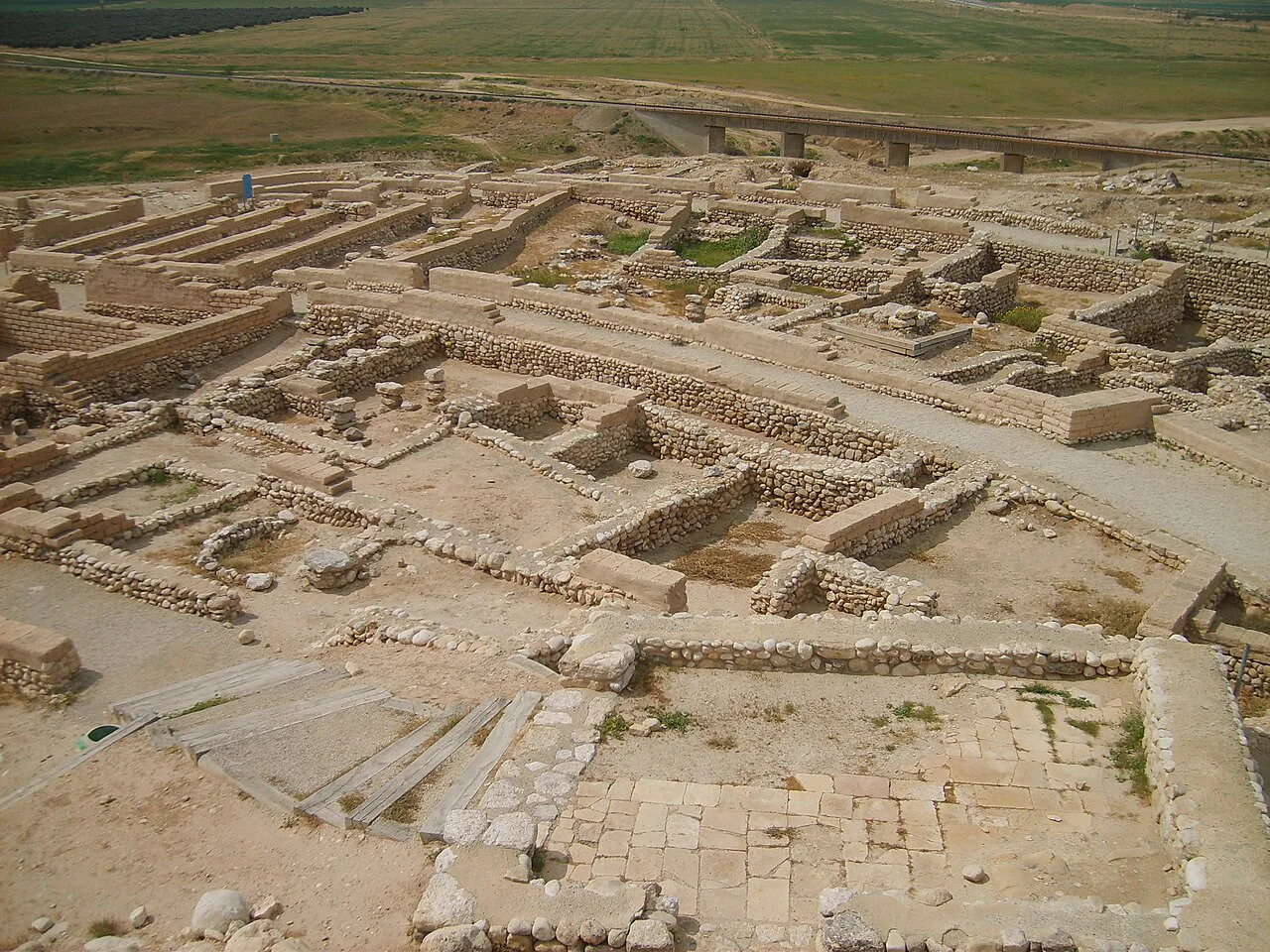
Tel Be'er Sheva is an archaeological site in the Southern District of Israel. It is believed to be the site of the ancient biblical town of Beer-sheba.
Download Stanza, then search for “Tel Be'er Sheva”.
About the tour
One guide. Your kind of visit.
Tel Be'er Sheva is an archaeological site in the Southern District of Israel. It is believed to be the site of the ancient biblical town of Beer-sheba.
Ready when you are.
- 01Get the free Stanza app.
iOS & Android
- 02Find your guide.
“Tel Be'er Sheva”
- 03Download before you go.
Works offline
Audio guide / 10 narrated stops
Inside the guide
Get to know a few of the stories before you go. Open a stop to read more.
01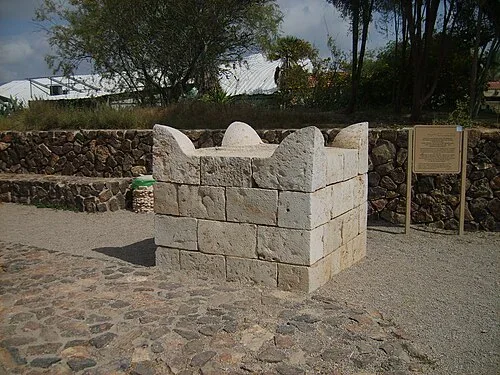 Visitor Center and the Reconstructed Horned Altar
The Horned Altar Replica
Welcome to Tel Be'er Sheva, a hill east of modern Beersheba that preserves a planned Iron Age city of the Kingdom of Judah. Over the coming stops, its gate, streets, walls, storehouses and water works tell how a desert frontier town was built and ruled. The four-horned block of pale stone at the park entrance is a replica of one of the site's most celebrated finds. It is a sacrificial altar, the first horned altar ever unearthed in Israel. The Bible describes altars with a horn at each corner, from the rules of sacrifice in Exodus to the moment Adonijah fled to grasp the altar's horns in the First Book of Kings. The original now stands in the Israel Museum, carved from dressed stone blocks. What makes the discovery remarkable is how it was found. The altar was not standing when the excavators reached it. It had been dismantled, and its stones were built into a later wall. Professor Yohanan Aharoni, who directed the excavation, read that as evidence of King Hezekiah's reform in the eighth century BCE. Hezekiah centralized worship in Jerusalem, and local altars elsewhere were put out of use.
Photo: Gugganij · CC BY-SA 3.0
02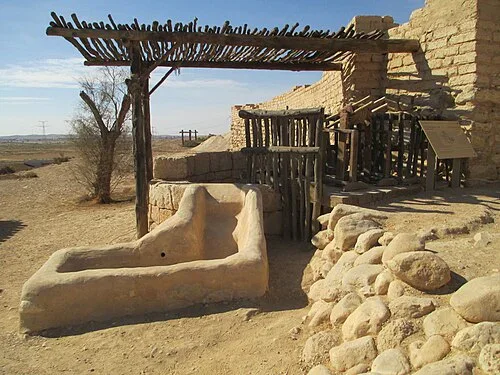 The Deep Patriarchal Well
The Ancient Well and Water Trough
Be'er Sheva means, in Hebrew, the well of the oath. Be'er is a well, and sheva means an oath, or the number seven. Genesis ties that name to a story set at this place. Abraham's well was seized by the men of Abimelech, king of Gerar, and the quarrel ended in a covenant between the two men, sealed with seven ewes. The place took its name from that oath, the Well of the Oath. Isaac's servants dug a well here too, and Abraham is said to have planted a tamarisk tree at Beer-sheba. No one can show that these stories describe this exact shaft. They are the biblical narrative bound to the place, not something the digging has proved. The well itself is solid engineering. It plunges sixty-nine meters to reach water, and its lower part was cut into limestone rock. A stone trough and a wooden shade structure belong to the well, the way livestock were watered at desert wells like this one.
Dr. Avishai Teicher · CC BY 2.5
03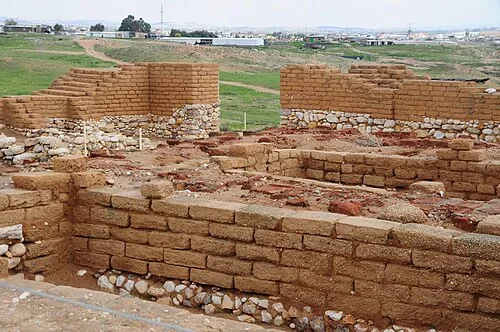 The Four-Room City Gate System
The Four-Room City Gate
Ancient towns poured their public life through their gates, and this one was built for it. The gateway is a four-room gate, a central passage flanked by chambers on either side. Its foundations are of stone, carrying walls of mudbrick above. What rises now is a modern reconstruction raised over the excavated remains, so the upper levels show an idea of the original rather than the original fabric. In Iron Age towns across the region, chambers like these held benches and served as the town's marketplace, courtroom and meeting place. Deals were struck, disputes judged and news exchanged at the entrance to the town. Passing through this gateway meant leaving the desert road behind and entering the ordered space of a Judahite administrative town.
Listen in the appSarah Murray from South Bend, IN, USA · CC BY-SA 2.0
04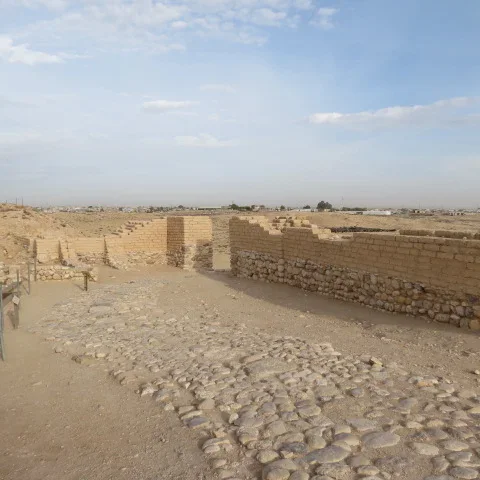 The Peripheral Street and Casemate Wall
The Stone-Paved Ring Street
The street inside the gate is paved with rounded stones, set by hand across the full width of the road. This is a town laid out as one design from the start, and the whole settlement follows a ring street that loops inside the walls. Under some of these streets run drains that carried rainwater out of the city. A winter storm, in other words, did not turn the lanes to mud. Paving and drainage together show everyday engineering, not the accidents of a village that grew as it pleased. The street led to the main town square at the gate, the route its residents and visitors took every day.
Listen in the appPhoto: Hoshvilim · CC BY-SA 4.0
05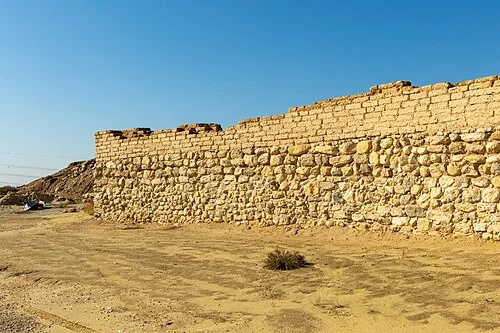 The Peripheral Street and Casemate Wall
The Casemate Wall
The wall around the town is a casemate wall, two thin walls braced by cross-walls to form a line of long narrow chambers. Private houses were built into those chambers. That one detail changes the picture of the town. The people who lived here were themselves directly responsible for its defense, and the whole settlement had a military and administrative character. Archaeologists estimate that about 350 people lived inside the walls. The best preserved layout belongs to the late eighth century BCE, when the city was destroyed in a great fire. That destruction is connected, possibly, with the campaign of the Assyrian king Sennacherib in 701 BCE.
Listen in the appOren Rozen · CC BY-SA 4.0
06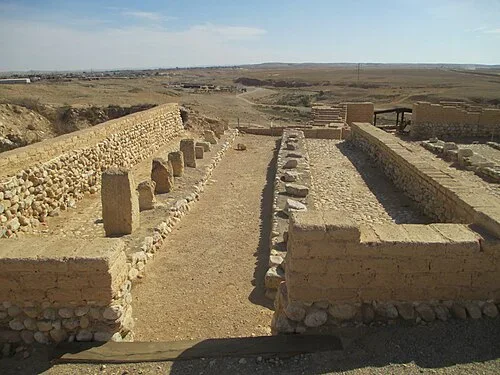 The Royal Storehouse Complex
The Royal Storehouses
Long divided buildings with rows of stone pillars stand at the center of the excavation. These are storehouses, several large tripartite buildings that together cover around six hundred square meters. They were planned and raised by the government of the Judahite kingdom, not by a village. Buildings of this type held grain and other state reserves, though exactly what filled these rooms is a matter of inference. On a desert frontier, that storage meant food for a garrison and for the townspeople. It also meant a royal presence at the southern edge of the kingdom. Beer-sheba was a planned administrative hub, one of the places where the state's order reached its desert frontier.
Listen in the appDr. Avishai Teicher · CC BY 2.5
07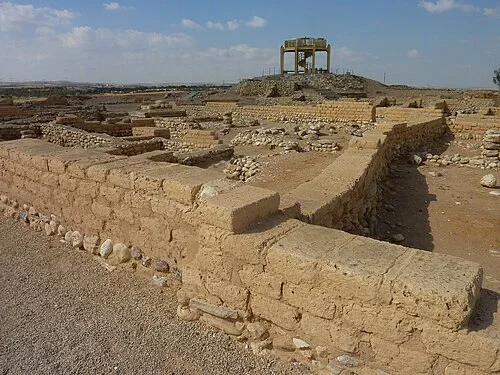 Observation Tower and Desert Horizon
Observation Tower over the Beersheba Valley
From the high ground, the whole Beersheba valley opens out, and that view is exactly why armies wanted this low hill. In October 1917 it carried an Ottoman defensive position, about nine hundred soldiers with machine guns. They overlooked the approaches to the town of Beersheba. On the thirty-first of the month, New Zealand mounted riflemen attacked in the morning hours. When they ran into difficulties, Australian mounted troops joined the assault at midday. By about three in the afternoon the tell was taken. Its fall opened the way for the famous mounted charge on the town, which was captured by the end of that same day. Some researchers now question whether taking the tell was truly a prerequisite for the main attack, so the traditional sequence is not beyond debate.
Listen in the appDYKT Mohigan · CC BY 2.0
08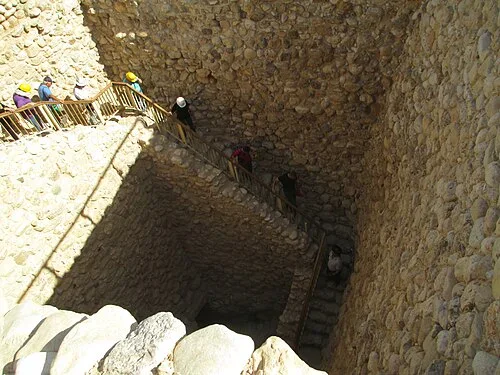 The Subterranean Water Cistern System
The Stairway into the Water System
The way into the town's water system goes down a long stone stairway, and the stairs themselves are part of the story. The original entrance was a staircase built inside a shaft, reached from within the city walls. The visitor route today follows that same descent. The steps are steep and uneven, because the ancient builders were not designing for comfort. This part of the site was the focus of renewed excavations between 1993 and 1995, directed by Professor Ze'ev Herzog, which completed the uncovering of the water system. In 2003 the system was opened to the public.
Listen in the appDr. Avishai Teicher · CC BY 2.5
09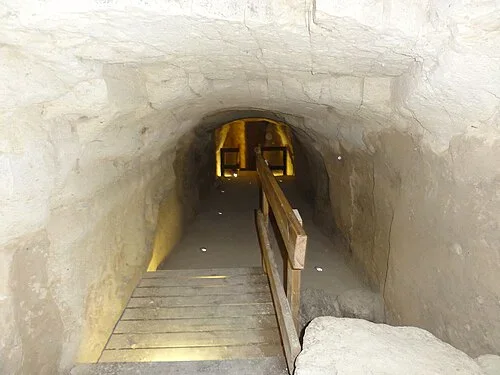 The Subterranean Water Cistern System
Inside the Rock-Cut Reservoir
Deep underground, the water system ends in a large reservoir hewn out of soft chalk rock, cut in the Iron Age. The water arrived with the seasons. A dam on the Hebron stream gathered the winter floodwaters, and a covered channel fed them down into the reservoir. Brief desert floods thus became a stored supply that could last through the dry months. The town held two water systems with two purposes. The well outside the wall served ordinary days, when flocks and travelers could drink in the open. This internal reservoir was for the worst case, a siege, when the population could hold out behind the walls without reaching the well at all. The system kept serving long after the Iron Age city itself.
Listen in the appDYKT Mohigan · CC BY 2.0
10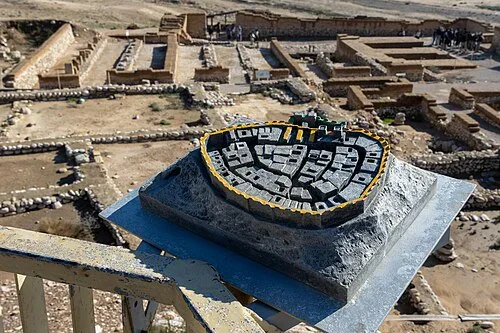 Topographical Site Model and Exit Path
The Site Model and the Planned City
The tactile model on the summit lays the whole city out at a glance, an oval of walls with the ring street looping inside. Administrative structures and dwellings belonged to one system, something rare among the towns of the ancient Near East, most of which grew organically. A town of a few hundred people carried a kingdom's order, its worship, water, supply and defense, to the edge of the desert. In 2005 that ambition gained modern recognition, when Tel Be'er Sheva was inscribed as a UNESCO World Heritage Site, officially part of Biblical Tells, Megiddo, Hazor and Beer Sheba. Of Israel's more than two hundred tells, Beersheba was cited as among the most representative, a city with biblical connections preserved in the ground. Small, planned and fortified, it shows what a Judahite frontier town could be.
Listen in the appOren Rozen · CC BY-SA 4.0
Tel Be'er Sheva
Frequently asked questions
How much does the guide cost?
Free app download. Listed guide price: $0.99. Guide price shown in the app. Audio guide only. Venue admission is separate.
Can I listen without internet?
Yes. Download the guide’s audio, images, and maps in the app before your visit. Your downloaded content is then available offline.
Can I listen in my language?
This audio guide is available in 15 languages, including English.
Do I need to follow a schedule?
No. This is a self-guided experience. Choose your stops, pause whenever you like, and return to a story at your own pace.
At your own pace
Explore Tel Be'er Sheva.
Download Stanza, then search for “Tel Be'er Sheva”.
Free app download · Guide price shown in the app
Keep exploring
Nearby audio guides
Arad · 27 km
Tel Arad
Content & sources
Photo: Hanay · Public domain
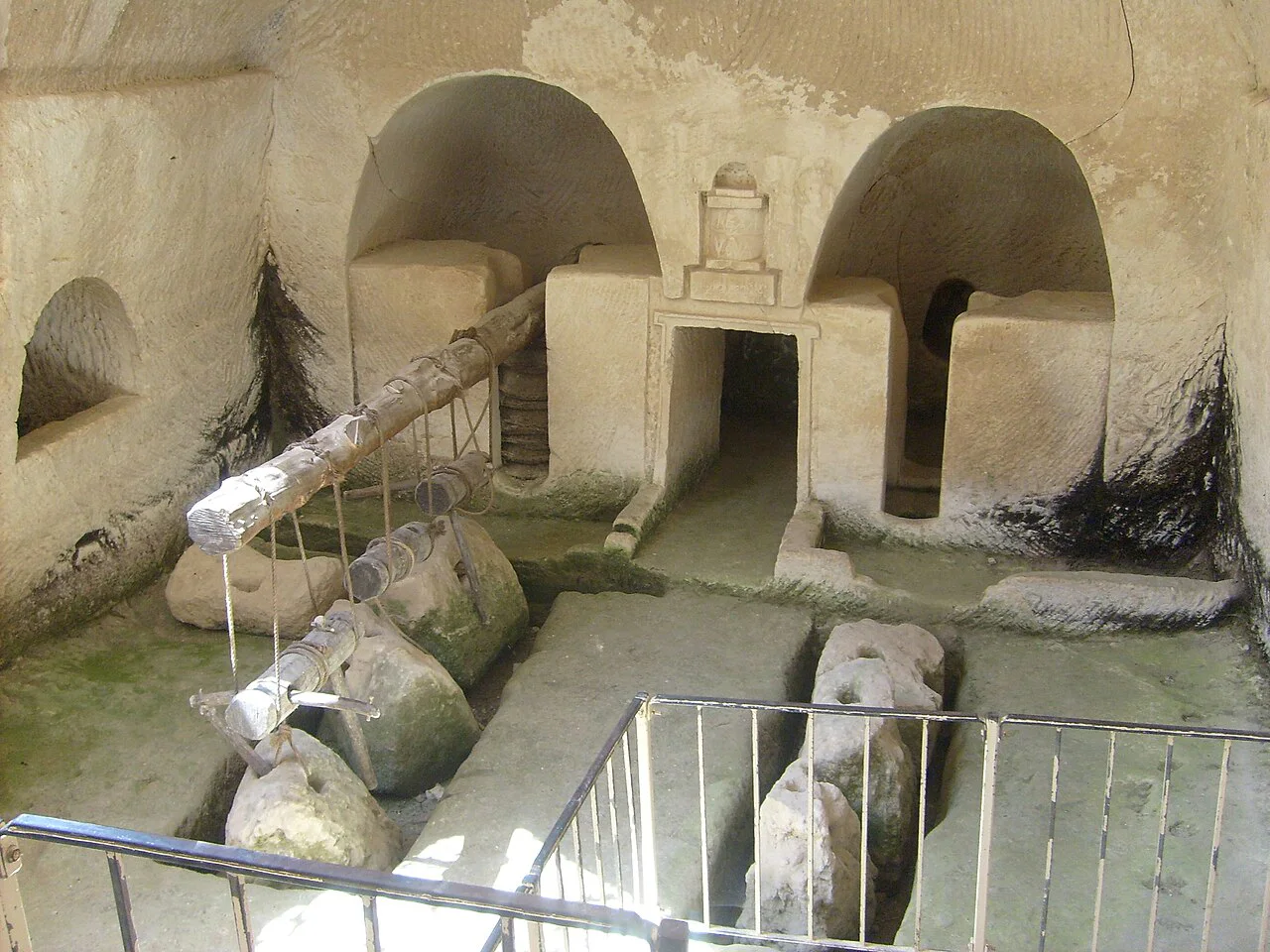
Yoav Regional Council · 39 km
Maresha
Content & sources
Chai · CC BY-SA 3.0
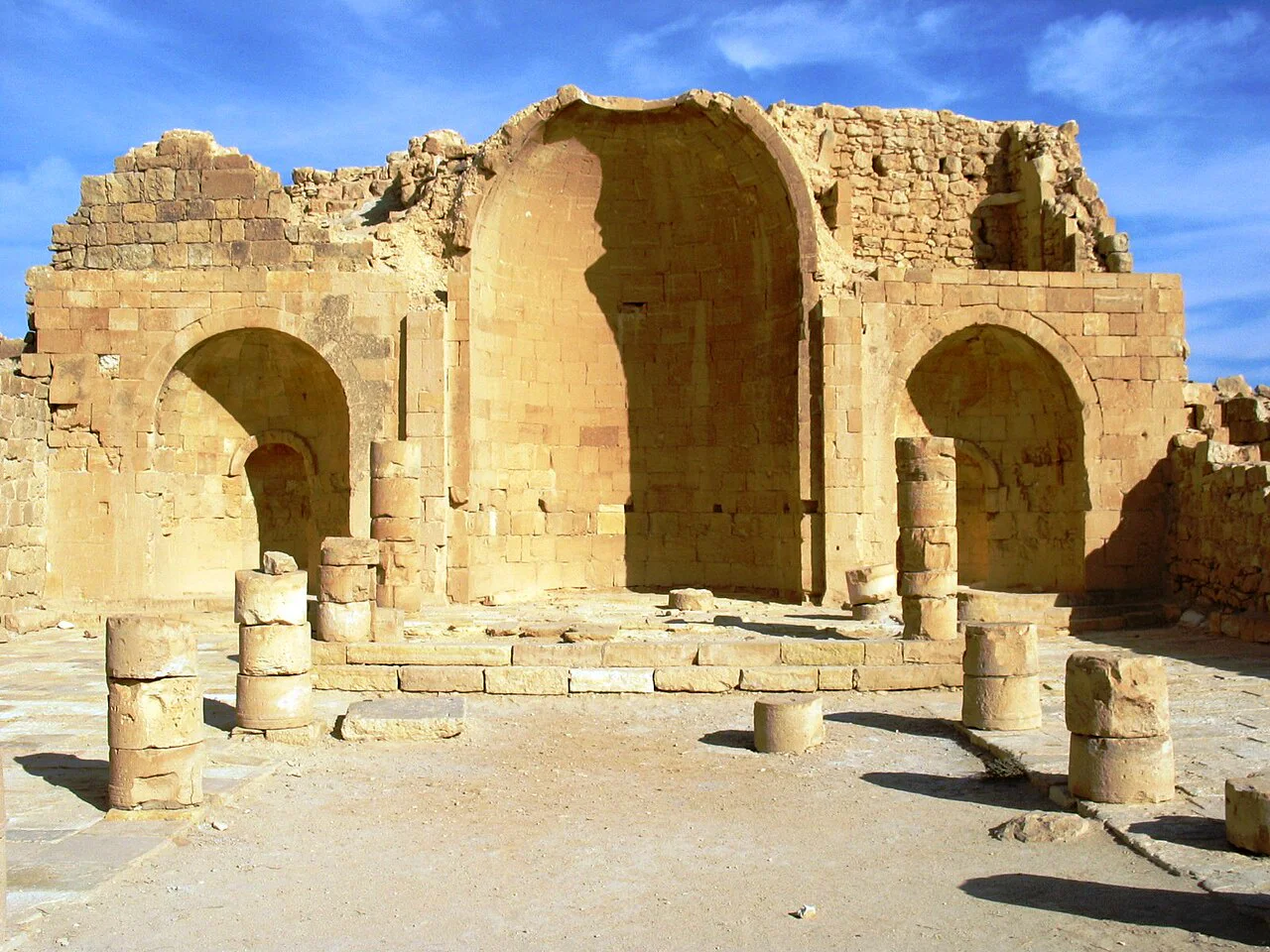
Ramat Negev Regional Council · 45 km
Shivta
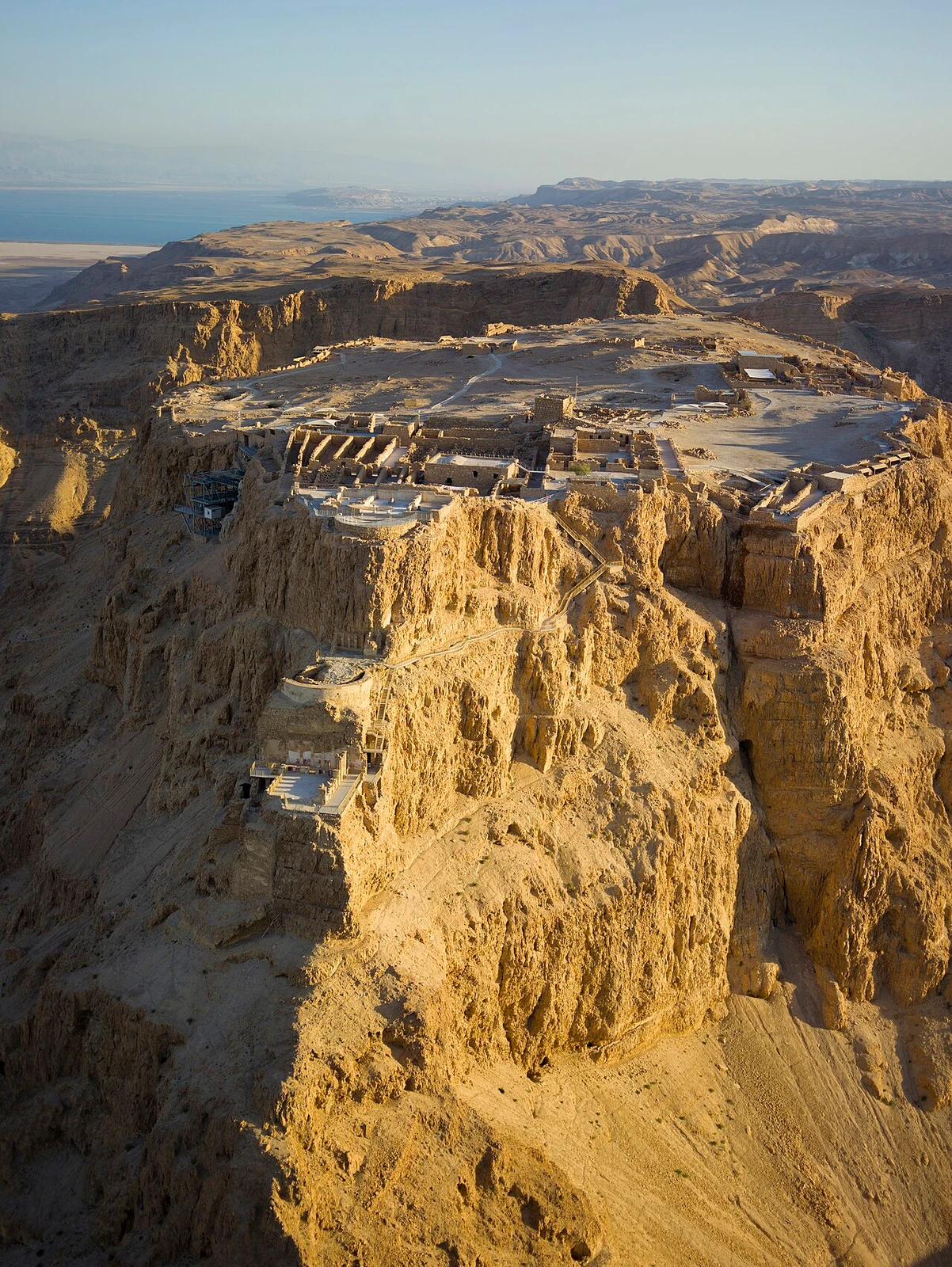
Masada · 49 km
Masada
Content & sources
Photo: Godot13 · CC BY-SA 4.0