Stanza · Audio guide
Maresha Audio Guide
A place to remember. A story to take with you.
Maresha is an Iron Age city and archaeological site located in the Shephelah region of Israel. It is significant for its history as a Judahite city that later became Idumaean and Hellenised under the name…
Download Stanza, then search for “Maresha”.
About the tour
One guide. Your kind of visit.
Maresha is an Iron Age city and archaeological site located in the Shephelah region of Israel. It is significant for its history as a Judahite city that later became Idumaean and Hellenised under the name Marissa.
Ready when you are.
- 01Get the free Stanza app.
iOS & Android
- 02Find your guide.
“Maresha”
- 03Download before you go.
Works offline
Audio guide / 17 narrated stops
Inside the guide
Get to know a few of the stories before you go. Open a stop to read more.
01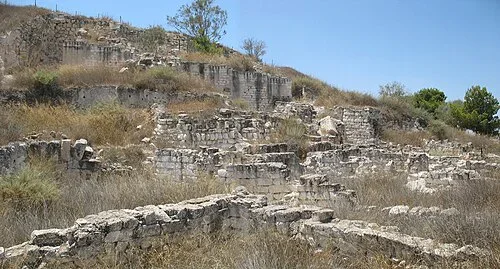 Tel Maresha Summit and Upper City Panorama
Tel Maresha: City on the Tell
Welcome to Tel Maresha, a hill of broken walls rising out of the green foothills of the Judaean Mountains. Maresha began life as a town of the tribe of Judah, listed in the Book of Joshua as part of its inheritance. The Book of Chronicles counts it among the fifteen cities King Rehoboam fortified, and sets a battle against an invading Ethiopian army here. That first city fell with Judah itself, when Nebuchadnezzar the Babylonian took the kingdom in 586 BCE and sent its people into exile. Edomites moving west then made Maresha their own, and it grew into a major Idumean city. The tell stands about four hundred metres above sea level, watching over the Shephelah. Its fortified summit covers roughly six acres, and the lower city sprawls across many times that. A tradition on the sixth-century Madaba Map marks this place as the town whence came Micah the Prophet. People come today for what lies underneath: the soft chalk around the hill is honeycombed with caves, and the caves of Maresha and Beit Guvrin are recognised by UNESCO as a World Heritage Site.
ביב · CC BY-SA 4.0
02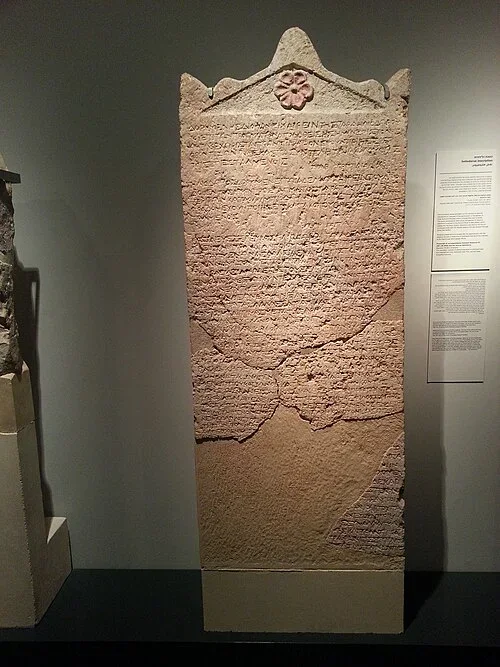 Tel Maresha Summit and Upper City Panorama
The Heliodorus Stele
Twenty-three lines of Greek, cut into a slab of stone: one of the most important ancient inscriptions ever found in this land. It is a royal proclamation from the year 178 BCE, issued by King Seleucus the Fourth. He ruled the Greek-speaking empire that inherited Alexander the Great's conquests here. In the inscription the king announces to his deputy, Heliodorus, the appointment of an official over the temples of Coele-Syria and Phoenicia. That province included the land of Judea. The stone matters far beyond Maresha because it independently records events told in the Second Book of Maccabees, in the years just before the Maccabean Revolt broke out. Those are the events Jews commemorate each Hanukkah. A decree about temple administration, carved for a king, ended up buried in the ground of an Idumean city.
Yael Y · CC BY-SA 3.0
03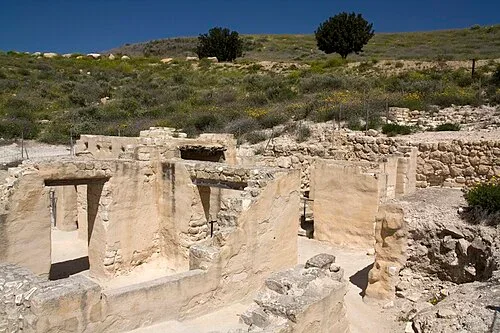 Hellenistic Residential Quarter and Subterranean Staircase
The Lower City Houses
These low stone walls belonged to private homes in Maresha's lower city. After Alexander the Great conquered the region in 332 BCE, retired Greek soldiers settled among the inhabitants, as custom allowed, and the city changed for good. It burst beyond the old fortified mound, spreading across the slopes below. First it served as an administrative centre under the Ptolemies, and from 200 BCE under their rivals, the Seleucids. The people were a blend: Idumeans at the core, living alongside Greeks, Sidonians and Nabataeans, at home in both Greek and Aramaic. Commerce was regulated, and one small find proves it. A lead weight carries a Greek inscription naming the agoranomos, the market inspector, for the year 170 of the Seleucid calendar, which is 143 or 142 BCE. It names two men: Antipater, son of Heliodorus, and Aristodamus, son of Ariston. The same year, Simon Thassi of the Hasmoneans took power in Judea.
Listen in the appisraeltourism · CC BY 2.0
04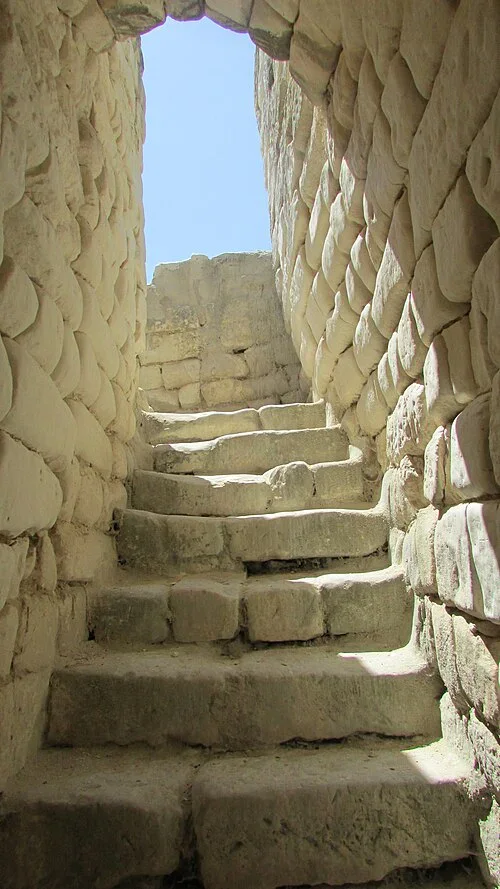 Hellenistic Residential Quarter and Subterranean Staircase
Stairway Beneath the Villa
A staircase of worn chalk blocks climbs between two rough stone walls, opening to the sky at the top. It runs beneath a partially reconstructed villa, and it explains the cleverest thing about Maresha. The bedrock here is soft chalk, easy to cut. So residents quarried it directly beneath their own homes. Every block they hauled out went up to build the walls of the house above. The hollow left behind became the cellar, and later rooms were carved deeper. Descent into the underground complexes was from inside private residences, down stairways like this one. Each household made its own piece of the hidden city, one room at a time.
Listen in the appPhoto: יעקב · CC BY-SA 4.0
05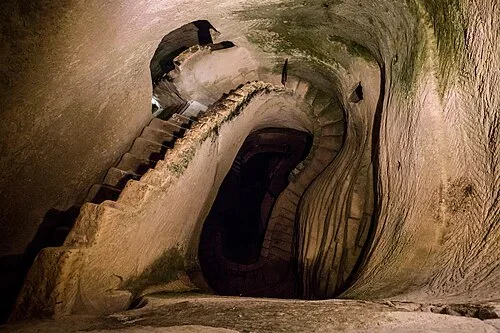 Subterranean Labyrinth and Maze Cave
The Underground Labyrinth
Under the lower city lies a second city of its own. Archaeologists have counted about 160 separate subterranean complexes, cut into the soft chalk. Together they hold an estimated 2,500 rock-cut rooms and chambers. Some individual systems contain sixty or seventy rooms of different sizes. The definition of a complex is that you can crawl from room to room without ever coming up for air. The chambers served every need: quarries, cisterns, tombs, animal mangers, olive presses and dovecots. Many of the caves are linked by an underground maze of passageways. Decades of excavation have explored this world, from Amos Kloner's long campaigns onward. Even so, less than ten percent of the caves around Tel Maresha have been excavated.
Listen in the appPhoto: Tomere · CC BY-SA 4.0
06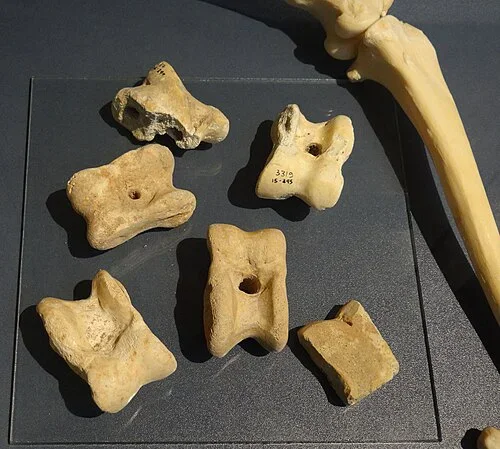 Subterranean Labyrinth and Maze Cave
Knucklebones and Divination
In 2022, diggers in the caves turned up a large number of knucklebones. These are the small ankle bones of animals, shaped a little like irregular dice. Some were drilled through and used as gaming pieces, for games of knucklebones played across a floor or a table. Others served a very different purpose: astragalomancy, contacting the gods by casting the bones and reading the result. The ones that bear writing carry their marks in Greek. One small pile of bones, two uses: an evening's entertainment, and a question put to heaven.
Listen in the appPhoto: Hanay · CC BY-SA 3.0
07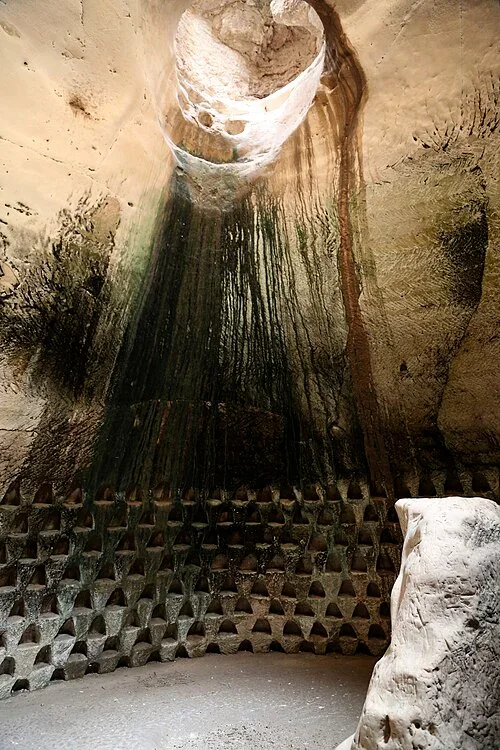 Es-Suk Columbarium Cave (Dovecote)
The Es-Suk Columbarium
Light pours down through a great carved opening in the roof of this cave, into a vast cross-shaped chamber. This is a columbarium, a dovecote, and on an industrial scale. Raising pigeons here served three purposes. Their meat went to the table. Live birds were supplied for sacrifice in religious ritual. And above all, their droppings made rich fertilizer for the surrounding fields, feeding the agriculture that the city lived on. A cavern like this did not happen by accident. The shape, the skylight cut from above, the sheer size: this was planned monumental infrastructure, built for the farm economy of Idumea.
Listen in the appPhoto: Marwan hamad · CC BY-SA 4.0
08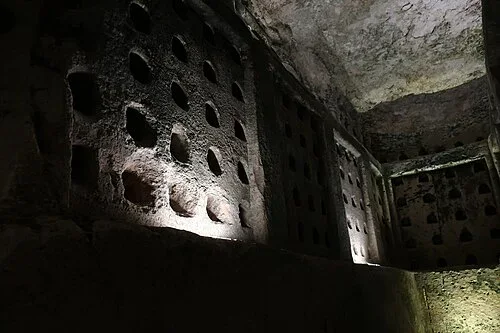 Es-Suk Columbarium Cave (Dovecote)
Niches for the Doves
The dim walls of these caves are drilled with row upon row of dark, rounded openings. Each one is a nesting niche, a slot where a pigeon could settle and raise its young. Maresha has 85 distinct columbarium installations, and together they hold tens of thousands of individual niches. That puts these dovecots among the largest known from the ancient Mediterranean. Imagine the work: cutting every niche by hand into chalk, then keeping tens of thousands of birds fed and nesting. Here it is the wall itself that speaks, one carved hollow at a time.
Listen in the appPhoto: Davidbena · CC BY-SA 4.0
09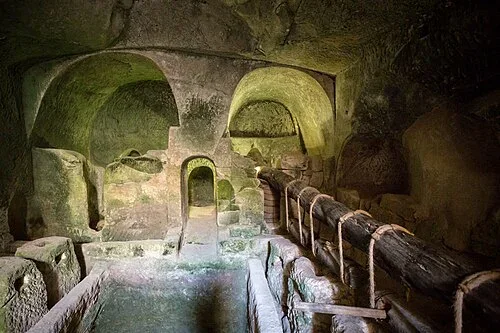 Subterranean Olive Oil Press Complex
The Olive Oil Industry Underground
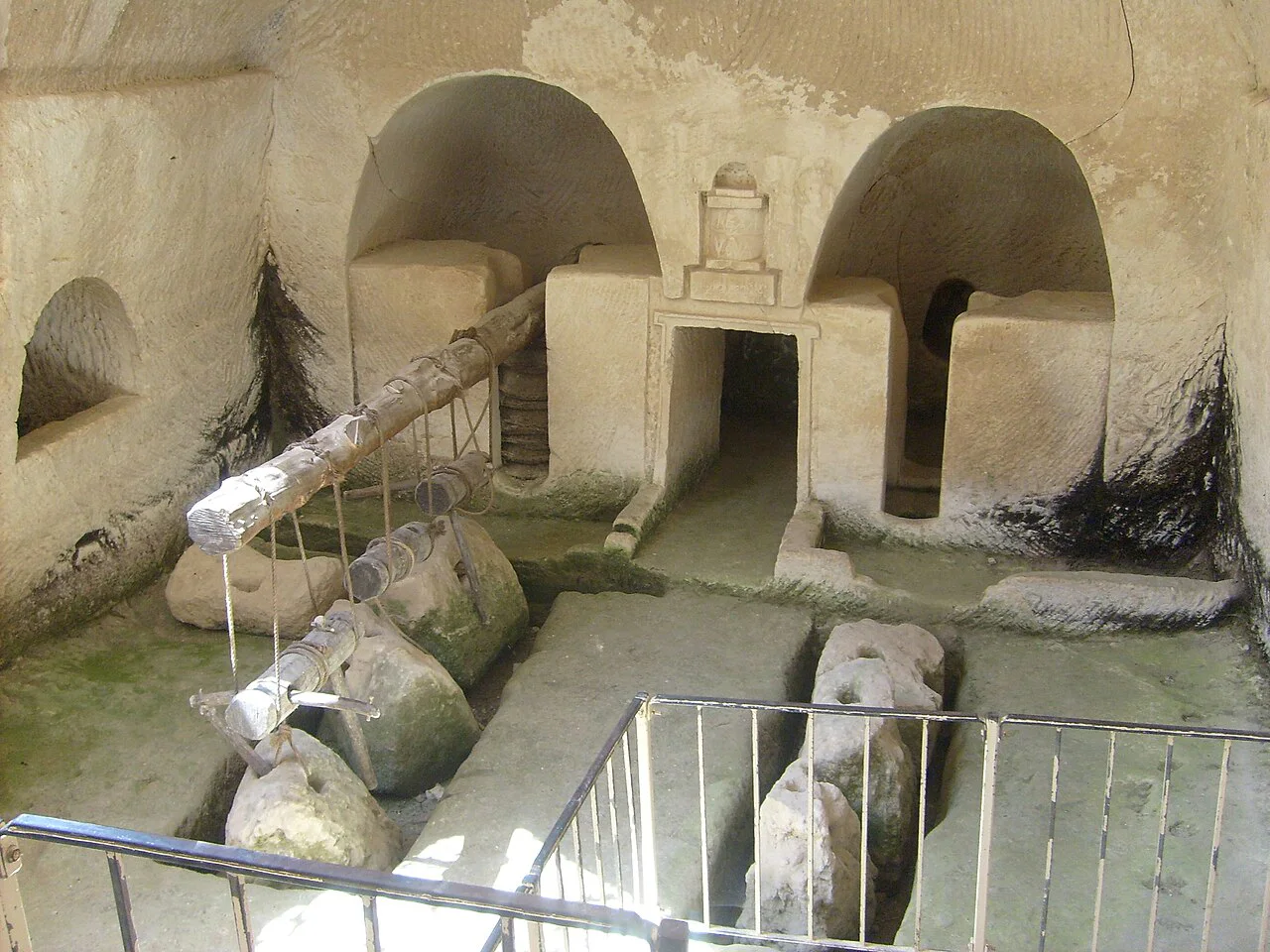
Olive oil was one of the mainstays of Maresha's economy. Archaeologists have catalogued 22 underground olive-oil pressing installations in the city's caves, each a heavy stone workshop cut into the rock. Together they supported a major export industry in the Hellenistic city, sending oil out to markets beyond the hills. The work happened underground for two practical reasons. The temperature down here stays steady, which suits both the oil and the workers. And the space was already there: the same household cellars hollowed out beneath the homes served the presses too. This vaulted chamber, with its crushing basin and press bed still in place, shows the scale one installation could reach. This crop was processed not in the sunlight above, but in the chalk beneath it.
Listen in the appPhoto: Tomere · CC BY-SA 4.0
10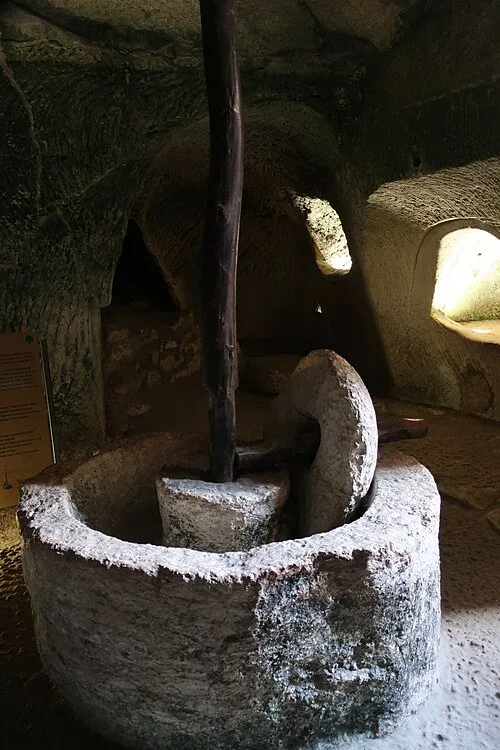 Subterranean Olive Oil Press Complex
The Crushing Basin and Beam Press
Olives went into that round stone basin first, and a heavy millstone, turned by hand or animal, crushed them into a rough paste. The paste then went to the press bed, where weights and a long wooden lever beam squeezed out the oil. The beam worked like a giant lever, its far end loaded with stone weights so the pressure built slowly and held. Stone basins, press beds, weights and the anchors for the beam all survive in the presses cut into Maresha's caves. The timber itself has long since rotted away, so the wooden beam here is a modern reconstruction, set in place to show how the machine once stood.
Listen in the appPhoto: Davidbena · CC BY-SA 4.0
- 11
Cisterns of the Chalk City
Why a city in the dry foothills dug some two hundred bell-shaped cisterns to catch the winter rain.
- 12
A Private Bath Cave
A small rock-cut tub, tucked into a cave beneath a house, hints at private comfort underground.
- 13
The Apollophanes Tomb
One Greek inscription turns the whole multicultural city into a single family you can name.
- 14
Frescoes of Beasts and Names
A painted frieze of animals and a discovery in 1902 that finally fixed which ruin this was.
- 15
Cerberus at the Threshold
A three-headed hound painted by the tomb's threshold, and chalk walls that later visitors wrote on.
- 16
The Musicians' Fresco
Painted performers with pipes and strings bring the sound of Hellenistic music onto a tomb wall.
- 17
Tomb of the Musicians: What Maresha Leaves Us
The city's violent end, told inside the second Sidonian tomb, and what its chalk kept for us.
Maresha
Frequently asked questions
How much does the guide cost?
Free app download. Listed guide price: $1.99. Guide price shown in the app. Audio guide only. Venue admission is separate.
Can I listen without internet?
Yes. Download the guide’s audio, images, and maps in the app before your visit. Your downloaded content is then available offline.
Can I listen in my language?
This audio guide is available in 15 languages, including English.
Do I need to follow a schedule?
No. This is a self-guided experience. Choose your stops, pause whenever you like, and return to a story at your own pace.
At your own pace
Explore Maresha.
Download Stanza, then search for “Maresha”.
Free app download · Guide price shown in the app
Keep exploring
Nearby audio guides
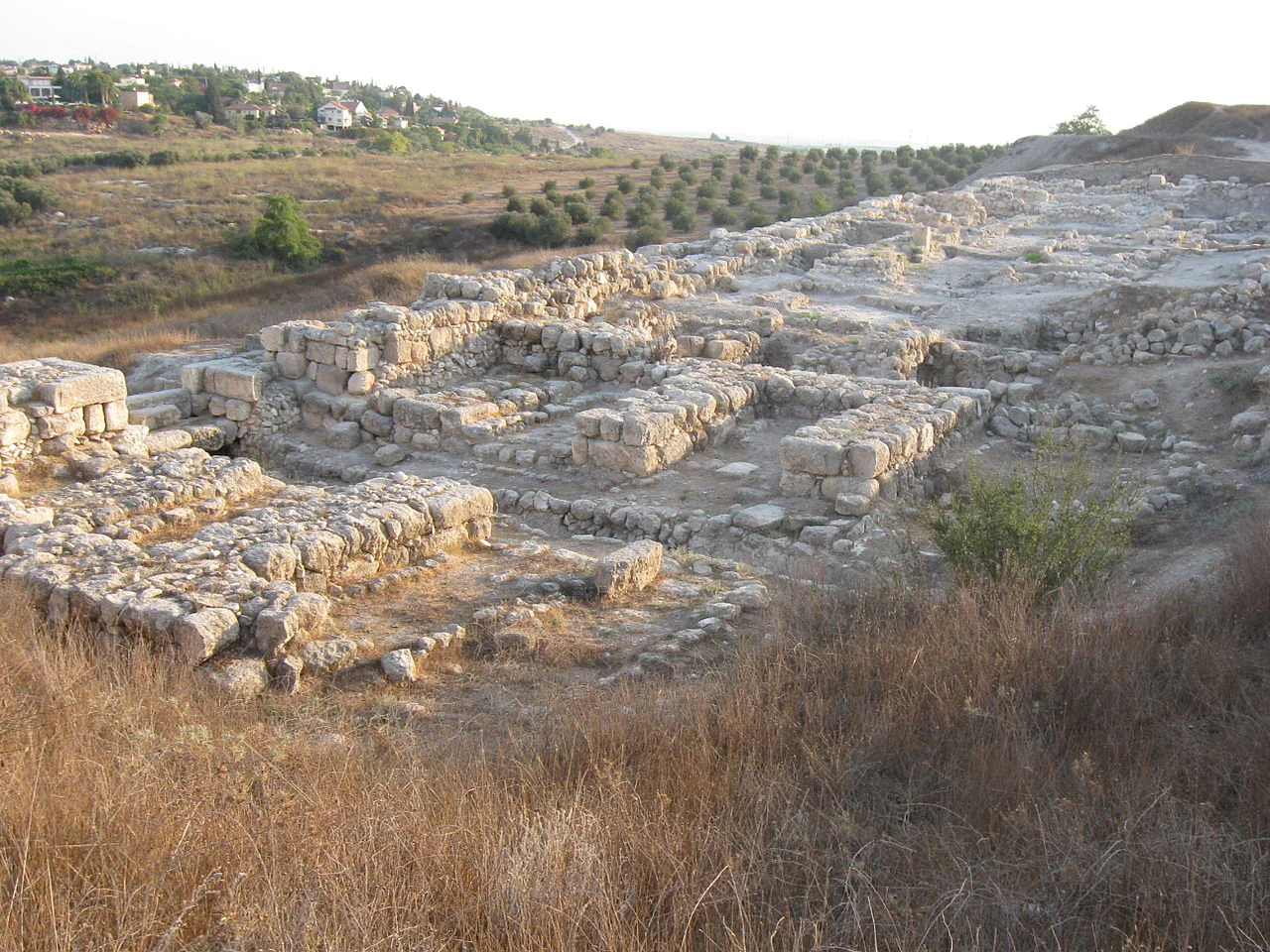
Jerusalem · 30 km
Gezer
Content & sources
Photo: Ori~ · Attribution
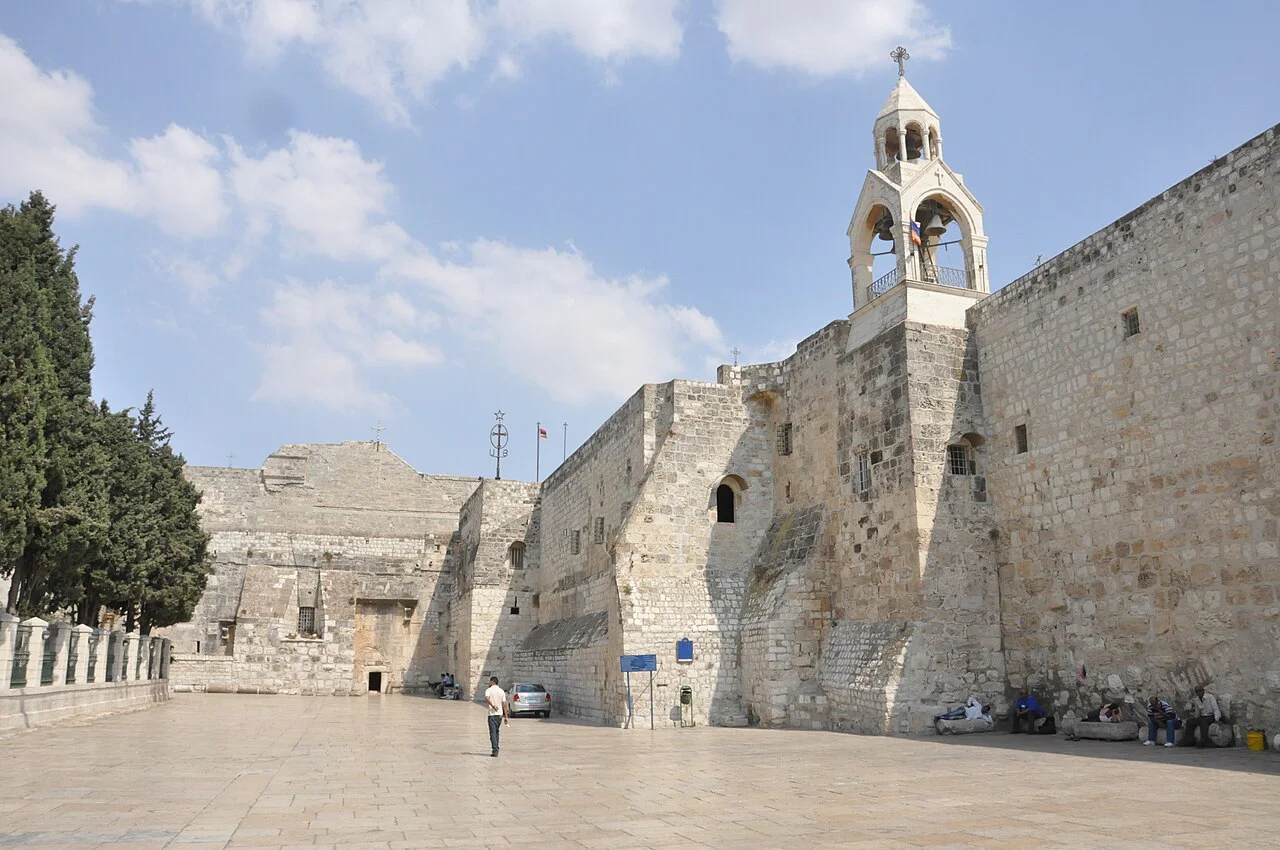
Bethlehem · 32 km
Church of the Nativity
Content & sources
Neil Ward · CC BY 2.0
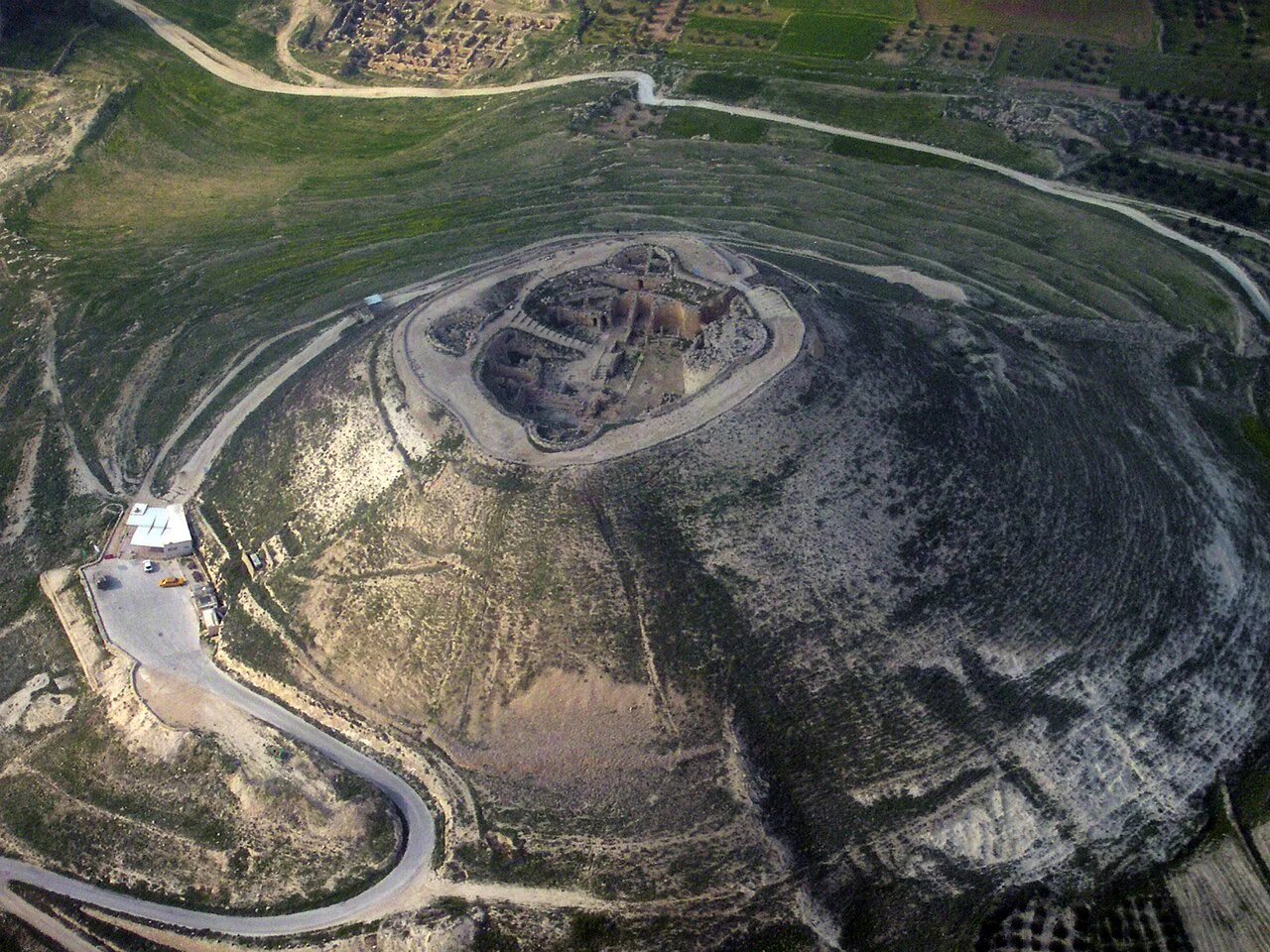
Bethlehem · 33 km
Herodium
Content & sources
Asaf T. · Public domain
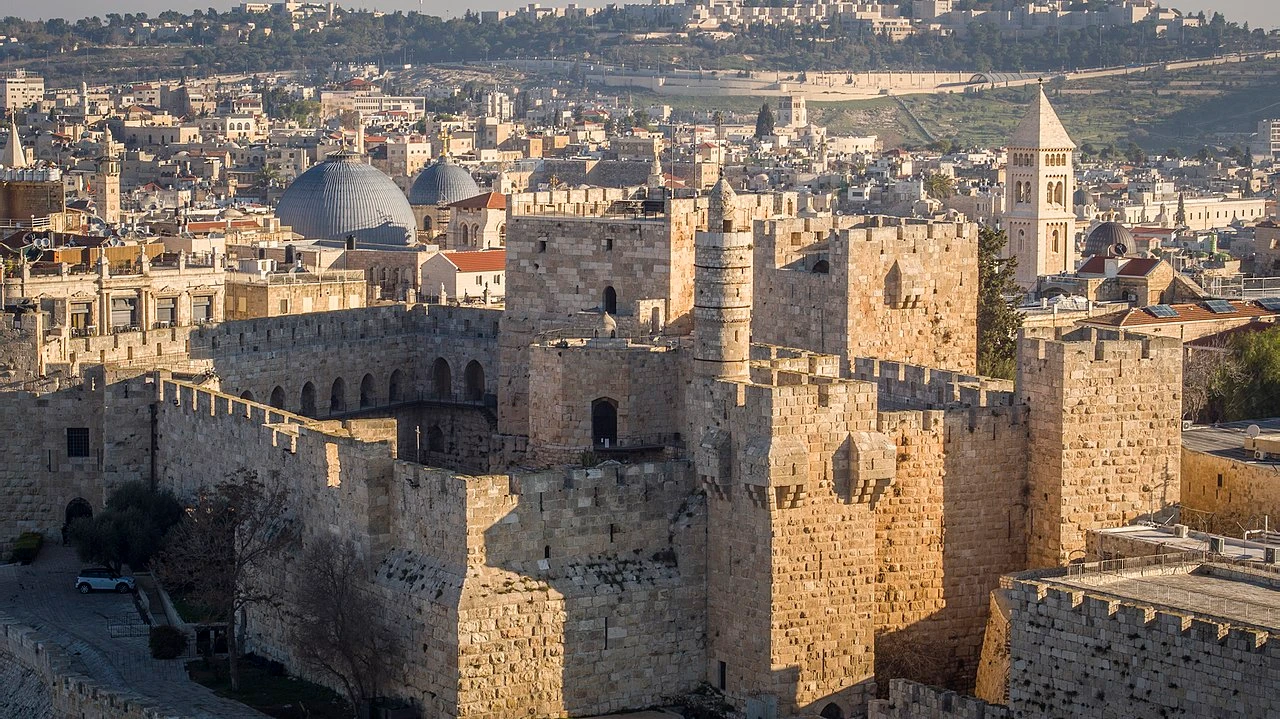
Jerusalem · 37 km
Tower of David
Content & sources
Photo: אורי אלוני · CC BY-SA 4.0