Stanza · Audio guide
Church of the Nativity Audio Guide
A place to remember. A story to take with you.
The Church of the Nativity is a basilica located in Bethlehem. It is the oldest major church in the Holy Land and marks the birthplace of Jesus.
Download Stanza, then search for “Church of the Nativity”.
About the tour
One guide. Your kind of visit.
The Church of the Nativity is a basilica located in Bethlehem. It is the oldest major church in the Holy Land and marks the birthplace of Jesus.
Ready when you are.
- 01Get the free Stanza app.
iOS & Android
- 02Find your guide.
“Church of the Nativity”
- 03Download before you go.
Works offline
Audio guide / 10 narrated stops
Inside the guide
Get to know a few of the stories before you go. Open a stop to read more.
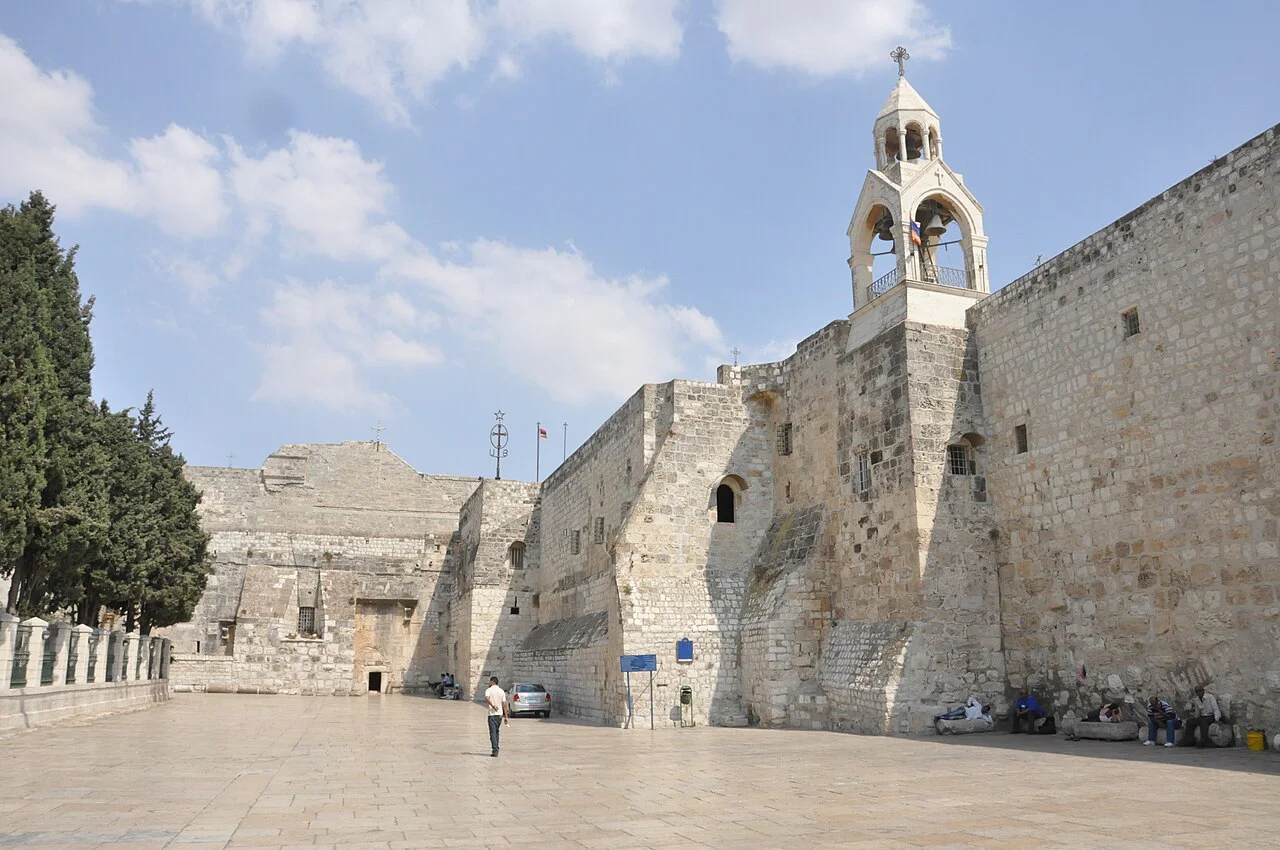
01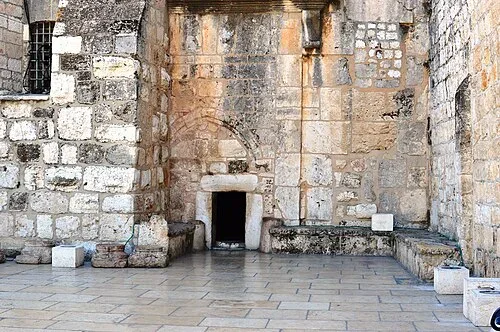 The Door of Humility and Western Facade
The Door of Humility and the Western Facade
Welcome to the Church of the Nativity in Bethlehem, built over the cave where Christians believe Jesus was born. Its front is a plain, fortress-like wall of pale limestone, patched and repaired across many centuries. The entrance is the strangest part. After the Ottoman conquest of 1516, the grand doorway was walled up and reduced to a low opening, so that riders on horseback could not ride straight into the nave. Everyone who enters has to bow, which is why it is called the Door of Humility. The building has been threatened in other ways, too. In 614 a Persian army swept through Palestine and took Jerusalem, destroying churches as it came. Legend says the commander Shahrbaraz stopped here, because the mosaic above the entrance showed the Three Magi in the dress of Persian priests. He ordered the building spared, or so the story goes. In 2012 this complex became the first Palestinian site on UNESCO's World Heritage list, approved by a close vote after an emergency procedure. For its first seven years on the list it also carried a place on the danger list, because rainwater was leaking into the ancient roof.
Larry Koester · CC BY 2.0
02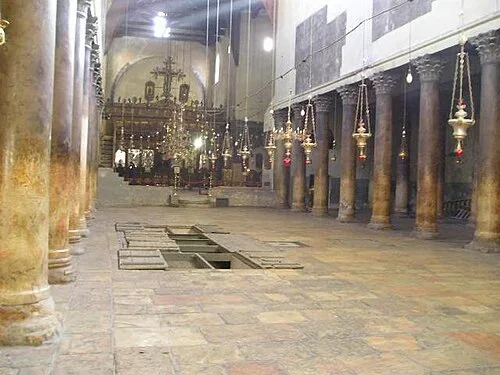 The Main Nave and Painted Colonnades
The Main Nave of the Justinianic Basilica
The hall inside is essentially the church that the Byzantine emperor Justinian built. An earlier basilica on this spot had burned down, and after that destruction Justinian raised this one, finished around the year 565. It follows the old Roman basilica plan: a tall central nave, flanked not by one aisle on each side but by two, so the whole building runs five aisles wide. Forty-four columns divide the nave from the aisles, most of them cut from red limestone and polished by centuries of hands. Overhead, the roof is dark timber, and the wooden beams set into the walls have been dated by their tree rings to between 545 and 665. The building has barely changed since. Repairs and additions came later, especially under the Crusaders, but the bones of the hall are his. It has never stopped being used in hard times, either. In April 2002, during the Second Intifada, dozens of Palestinian fighters took refuge inside, and the church endured a siege of thirty-nine days. Christian authorities inside gave them food, water and shelter, and the ancient walls absorbed one more crisis. In the floor, wooden trapdoors lie open, showing something far older underneath.
Photo: Abraham · CC BY-SA 3.0
03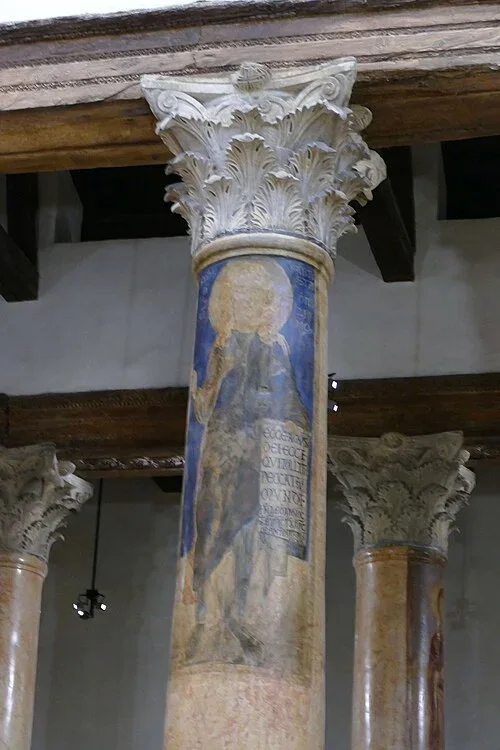 The Main Nave and Painted Colonnades
A Painted Column of the Crusaders
Those red limestone columns carry a surprise. Look at the carved Corinthian capital of one, and just below it a painted figure of a saint, robed in blue and gold against the stone. When the First Crusade took Jerusalem in 1099, its Latin conquerors set about redecorating this church. They commissioned images of saints for the colonnades of the nave, and private donors paid for many of them, leaving dedicatory inscriptions and even portraits of themselves beside the figures. What is striking is who the saints are. There is Catald, an Irish monk of the seventh century. There is Canute the Fourth, king of Denmark, and Olaf the Second, king of Norway. Saints from the far edge of Christian Europe, painted on columns in Bethlehem. They are evidence of how far pilgrims travelled to stand in this nave, and how the donors wanted their own homelands represented in the church of the Nativity. Many of these paintings have faded or vanished, but on some columns the medieval figures are still there, quietly holding up the roof.
Listen in the appPhoto: Bukvoed · CC BY 4.0
04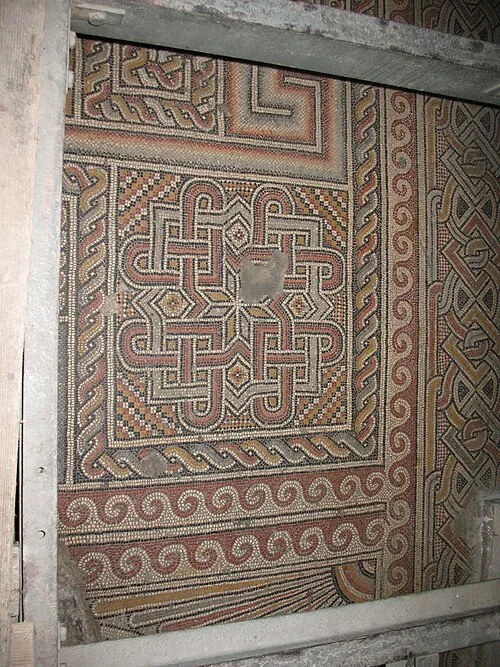 The Constantinian Mosaic Floors
The Constantinian Mosaic Floor
The story of this place begins with an empress. Helena, mother of Constantine the Great, visited Bethlehem in 325 or 326, and identified the cave as the birthplace. Constantine ordered a basilica built on the spot, and Bishop Makarios of Jerusalem supervised the work. It went up fast. A pilgrim from Bordeaux walked through in the year 333 and found the church already in use, and it was formally dedicated on the last day of May 339. That first basilica did not survive. It was probably destroyed by fire during the Samaritan revolts of the sixth century, possibly in 529. But part of it is still here. The nave floor today is covered with flagstones, and a trapdoor opens onto the original pavement below. The mosaic is dense geometric work: interlaced knots, spirals, and scrolling borders in warm reds, browns and creams, laid stone by stone in the fourth century. It was uncovered again in 1934, and it is a rare surviving part of Constantine's church. Everything above it has been rebuilt at least once. The floor beneath is the original.
Listen in the appJames Emery from Douglasville, United States · CC BY 2.0
05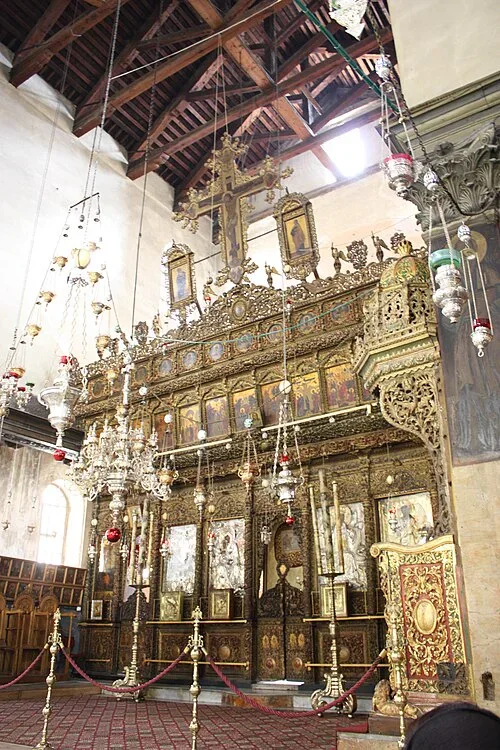 The Gilded Iconostasis and Chancel
The Gilded Iconostasis and the Shared Church
At the east end the nave stops abruptly at an elevated chancel, raised above the hall and reached through three doors. That separation is ancient, designed to keep the liturgical east end apart from the crowd. Across it stands the iconostasis, a tall screen gilded and crowded with icons, hung with lamps, and crowned by a great cross. It announces which community holds the upper church: the Greek Orthodox Patriarchate maintains the basilica. But no single church owns this place. Three communities share it, the Greek Orthodox, the Armenian Apostolic, and the Franciscans on behalf of the Catholics, with lesser rights held by Copts, Ethiopians and Syriacs as well. Their property rights, their times of worship, even who may clean which patch of floor, are all fixed by the Status Quo. That is a set of understandings legally sealed by an Ottoman decree in 1852, and it is still in force. The rules are taken seriously. Monk trainees have come to blows over the division of cleaning duties and the quiet respect owed to each other's prayers, and police have sometimes been called to restore order. Every lamp, every rug and every minute of the day has an owner.
Listen in the appWknight94 talk · CC BY-SA 3.0
06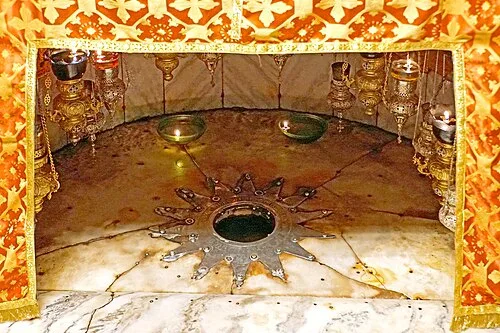 The Grotto of the Nativity and the Sacred Manger
The Silver Star of the Nativity
Below the high altar, the church descends into the Grotto of the Nativity, the cave itself. In its eastern niche stands the Altar of the Nativity, and beneath it, set flat into the marble floor, a silver star with fourteen points. Around it runs the Latin inscription: Here Jesus Christ was born to the Virgin Mary, with the year 1717, when Catholics first installed it. The fourteen points echo the genealogy of Jesus in Matthew's Gospel, three sets of fourteen generations stretching from Abraham to Christ. Through the centre of the star runs a circular hole, and through it the rock of the cave can be touched. Fifteen silver lamps surround it, six belonging to the Greek Orthodox, four to the Catholics, five to the Armenians. The star has its own drama. In October 1847 it vanished, removed, it is alleged, by Greek monks who resented a Catholic item marking the spot. The dispute over who held authority in the Holy Places escalated. Napoleon the Third pressed the Ottoman Sultan to favour France, Russia objected, and the quarrel fed the diplomacy that helped ignite the Crimean War. The Sultan had a replacement star made, set in place in 1853. Some historians say the stolen star helped cause the war; others say the war grew out of wider European rivalries, and the star was only a spark among many.
Listen in the appDennis G. Jarvis · CC BY-SA 2.0
07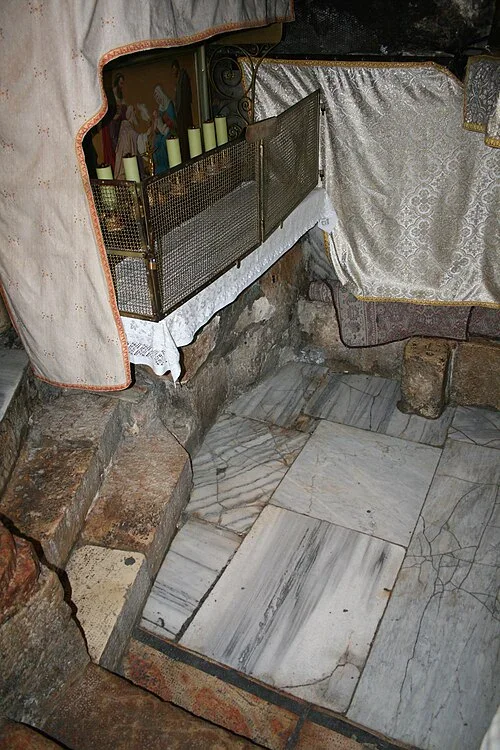 The Grotto of the Nativity and the Sacred Manger
The Manger of the Grotto
Opposite the altar niche, in the Catholic part of the cave, lies the Grotto of the Manger. This marks the traditional spot where Mary laid the newborn child in the manger, the detail Luke's Gospel records: no room at the inn, and the child placed in a feeding trough. Directly across from it stands the Altar of the Magi, marking the visitors who came bearing gifts. The space is low and close, its walls of living rock draped in hangings, with a marble shelf set against the stone. This little cave is the reason the whole complex above it exists. Christians have venerated it since long before Constantine built the first basilica, and worship here has never stopped. That makes the grotto the oldest site continuously used for Christian worship anywhere. At the far end of the grotto, a door in Franciscan care opens into a passageway. It leads through to the underground chapels of the Church of Saint Catherine next door, and that is the way this tour now goes.
Listen in the appDiego Delso · CC BY-SA 3.0
08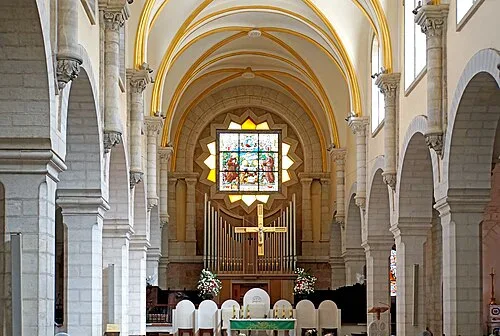 The Church of Saint Catherine and Franciscan Cloister
The Church of Saint Catherine
Through the passage from the grotto, the mood changes completely. The Church of Saint Catherine is a nineteenth-century Franciscan church, pale and airy, with slender columns, ribbed vaults washed in cream and gold, and a rose window glowing above the altar. It is a deliberate contrast to the dark, heavy Byzantine basilica next door. This is where the world's most watched Christmas service happens. On Christmas Eve, the Latin Patriarch of Jerusalem is welcomed near Rachel's Tomb at the edge of the city, then makes his way with a parade of youth organizations to Manger Square. Crowds gather there hours in advance, singing carols and waiting. The patriarch enters Saint Catherine's and celebrates Midnight Mass, which is broadcast around the globe. Afterwards he carries a figurine of the Christ Child into the old basilica and down to the grotto, and places it on the silver star. The old rules still govern the service. Certain customs of the Mass predate the reforms of the Second Vatican Council, but they must be kept, because the Status Quo fixed them by decree in 1852. And Bethlehem actually keeps Christmas three times, on three different dates, for the different communities that worship here.
Listen in the appDennis G. Jarvis · CC BY-SA 2.0
09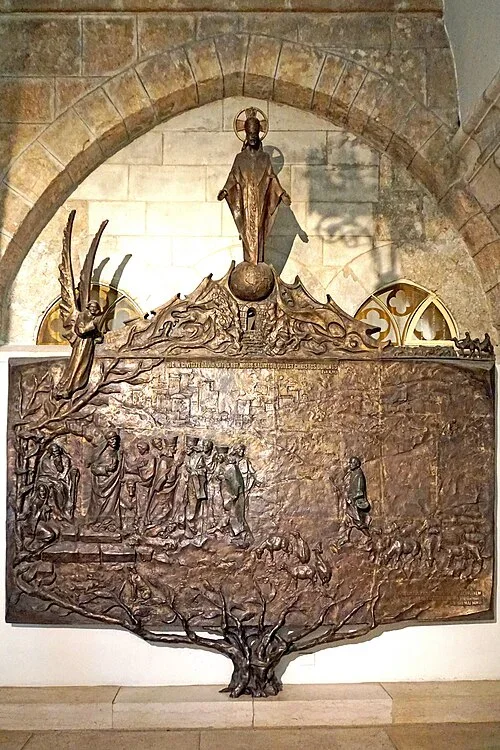 The Church of Saint Catherine and Franciscan Cloister
The Tree of Jesse
Along the passage the pilgrims follow to the grotto hangs a work of modern art in very old company. It is the Tree of Jesse, a bronze bas-relief by the Polish artist Czeslaw Dzwigaj, nearly four metres tall. The tree is an olive tree, its branches carrying the genealogy of Jesus from Abraham down through Joseph, with figures and scenes from the Old Testament worked into the metal. Crowning the whole composition, a figure of Christ the King stands with arms open wide, blessing the earth. Pope Benedict the Sixteenth brought it as a gift during his visit to the Holy Land in 2009, and it was installed here in the Church of Saint Catherine. The subject is an old one in Christian art, the family tree of Christ foretold as the shoot from the stem of Jesse. But the setting is what makes it. A twenty-first-century bronze stands on the route pilgrims have walked for sixteen centuries, adding one more layer to a church that has never stopped receiving them.
Listen in the appDennis G. Jarvis · CC BY-SA 2.0
10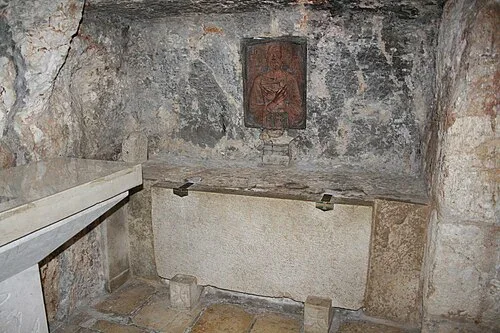 Saint Jerome's Cave and Underground Chapels
Saint Jerome's Cave
The caves continue beneath Saint Catherine's, and one of them holds the tour's last story. In the late fourth century, the scholar Saint Jerome came to Bethlehem and settled in these rock-hewn cells, living and working here for thirty years. His task was enormous: translating the Bible into Latin from its original languages. The result was the Vulgate, which became the standard Bible of the Western Church and held that position for centuries. The Chapel of Saint Jerome marks the cell where tradition says he worked, and the surrounding caves hold more chapels. One commemorates Saint Joseph and the angel's command to flee to Egypt. Another is the Chapel of the Holy Innocents, remembering the children killed by Herod. Tradition also places Jerome's tomb down here, alongside those of his companions, though history does not firmly sustain it. What is certain is the continuity. From the cave of the birthplace, through the basilicas raised above it, to the cell where the Latin Bible took shape, this ground has been lived in, prayed over and argued about without a break. Few places on earth can say the same.
Listen in the appDiego Delso · CC BY-SA 3.0
Church of the Nativity
Frequently asked questions
How much does the guide cost?
Free app download. Listed guide price: $0.99. Guide price shown in the app. Audio guide only. Venue admission is separate.
Can I listen without internet?
Yes. Download the guide’s audio, images, and maps in the app before your visit. Your downloaded content is then available offline.
Can I listen in my language?
This audio guide is available in 15 languages, including English.
Do I need to follow a schedule?
No. This is a self-guided experience. Choose your stops, pause whenever you like, and return to a story at your own pace.
At your own pace
Explore Church of the Nativity.
Download Stanza, then search for “Church of the Nativity”.
Free app download · Guide price shown in the app
Keep exploring
Nearby audio guides
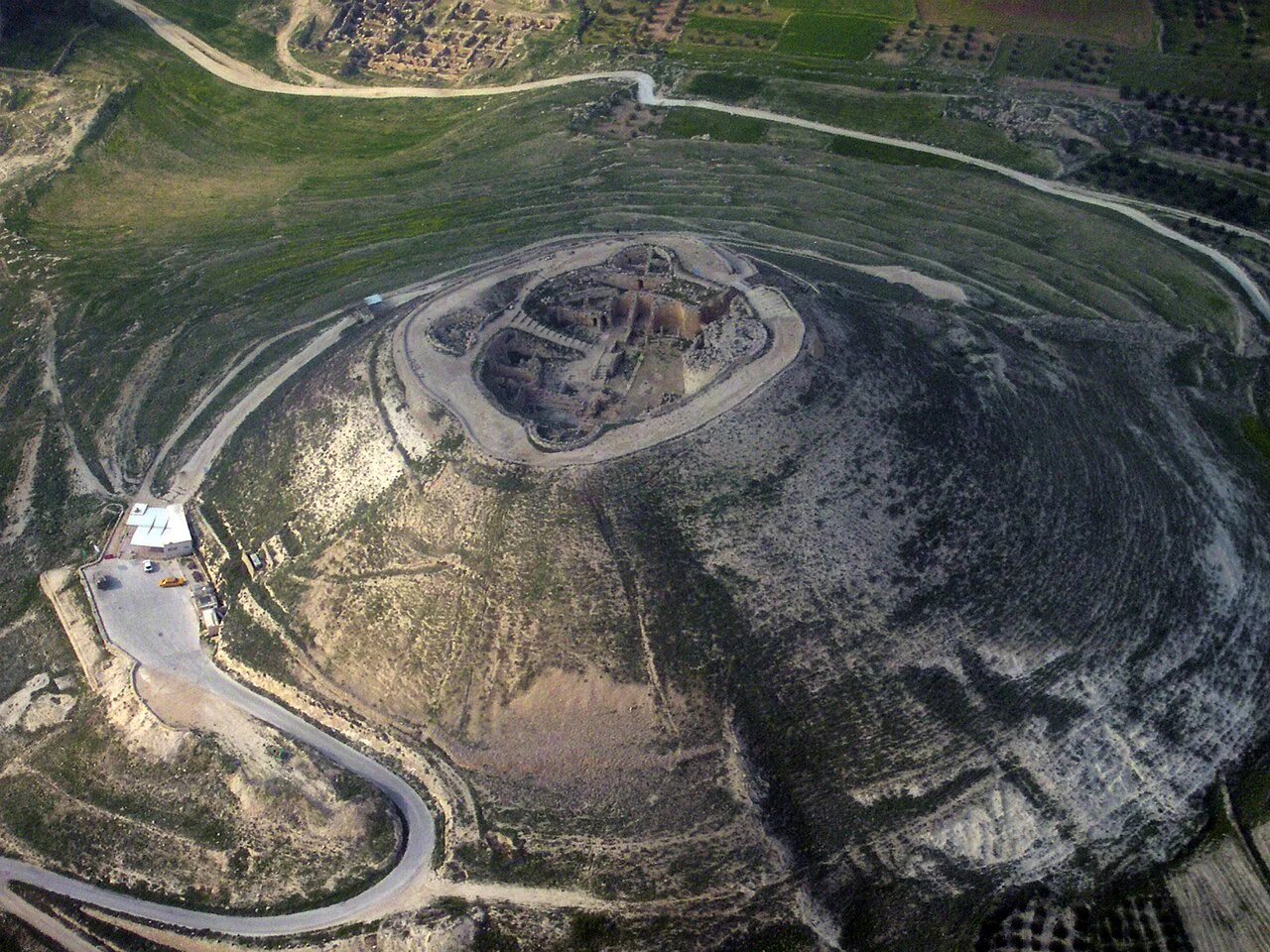
Bethlehem · 5 km
Herodium
Content & sources
Asaf T. · Public domain
Jerusalem · 8 km
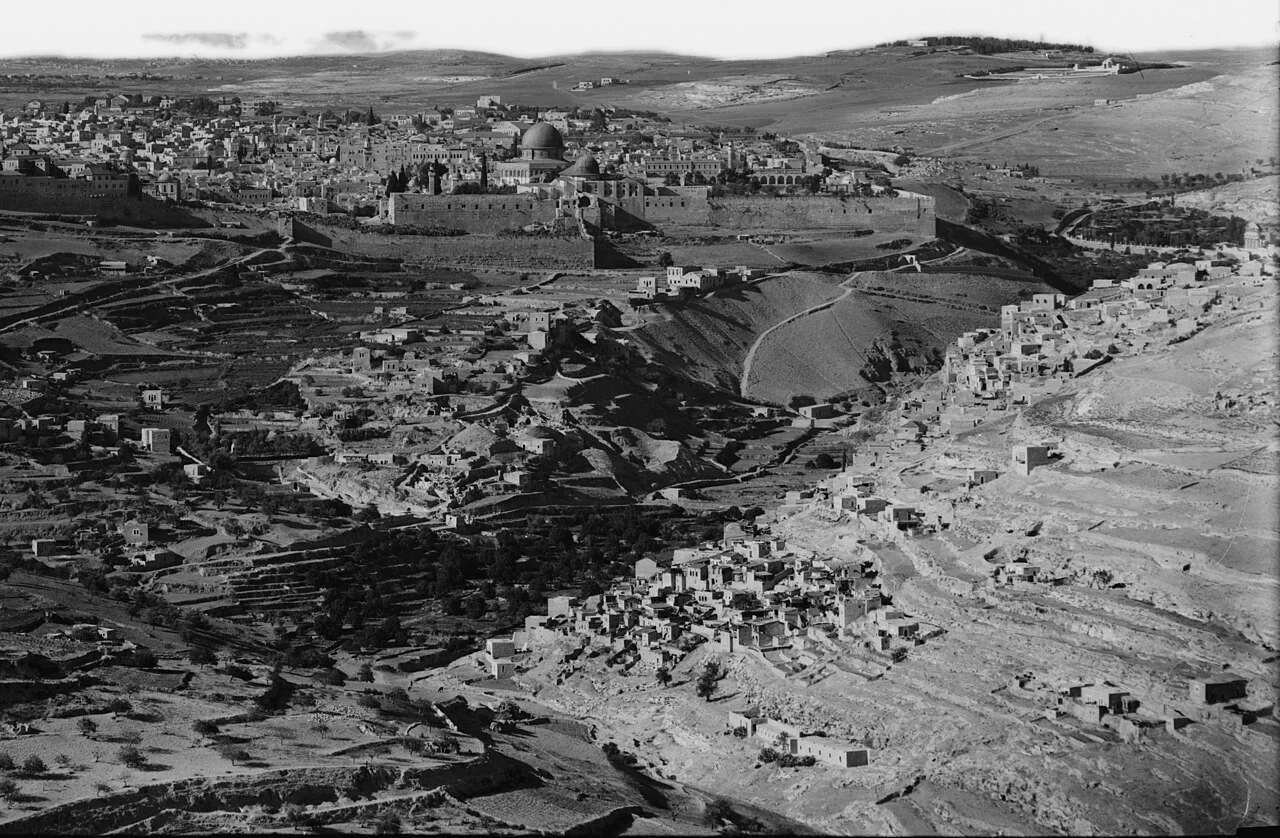
City of David
Content & sources
Matson Collection · Public domain
Jerusalem · 8 km
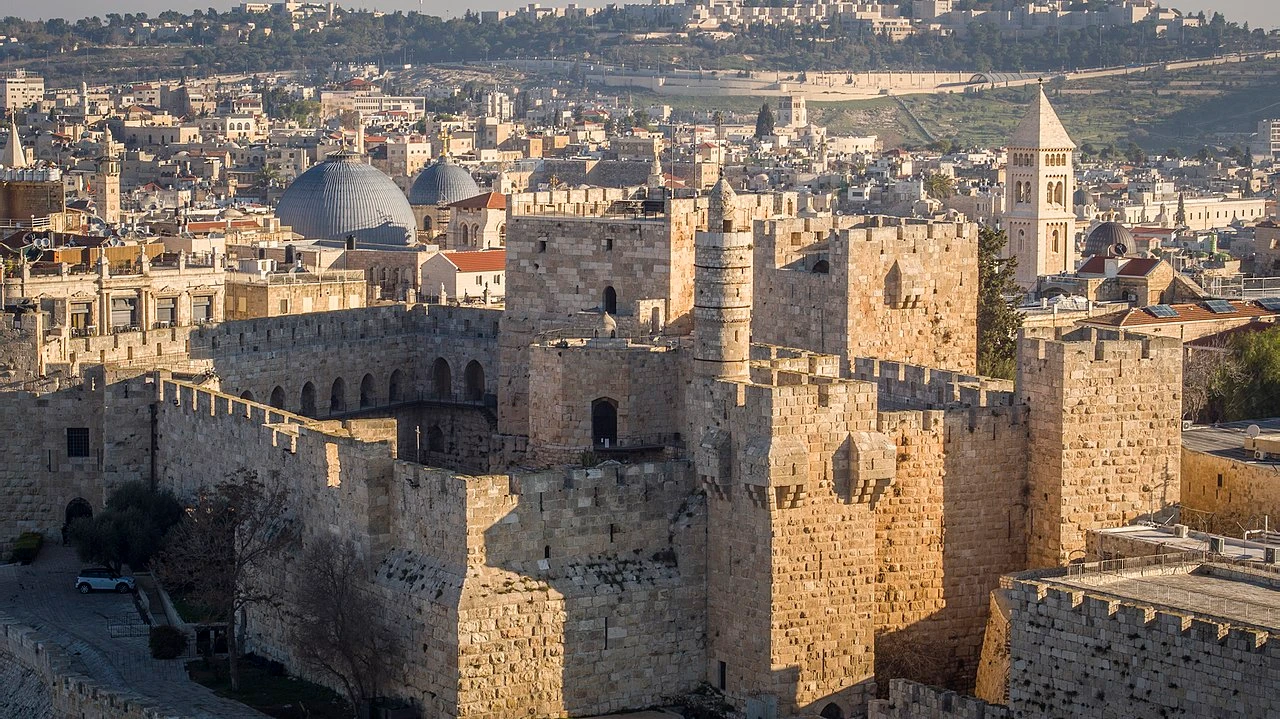
Tower of David
Content & sources
Photo: אורי אלוני · CC BY-SA 4.0
Jerusalem · 8 km
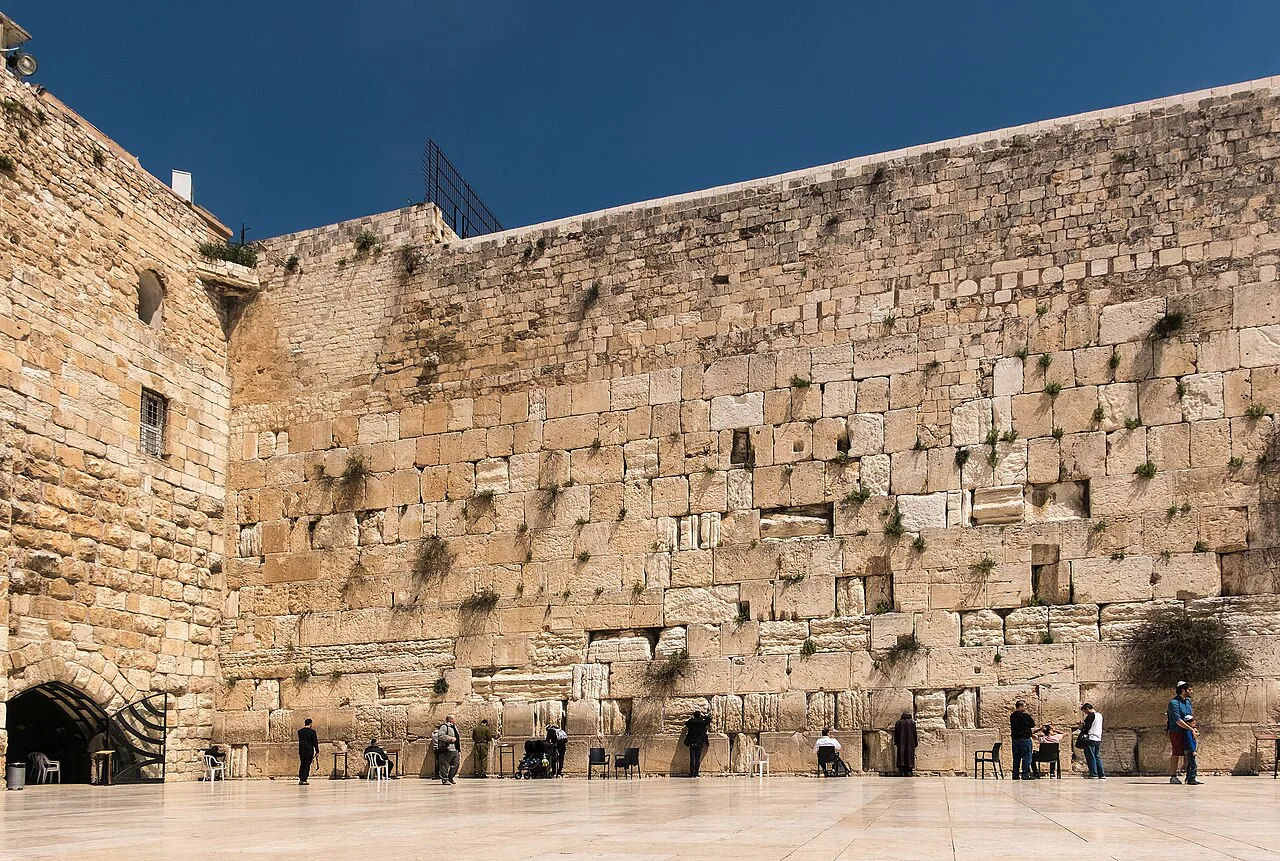
Western Wall
Content & sources
Photo: Ralf Roletschek · GFDL 1.2