Stanza · Audio guide
City of David Audio Guide
A place to remember. A story to take with you.
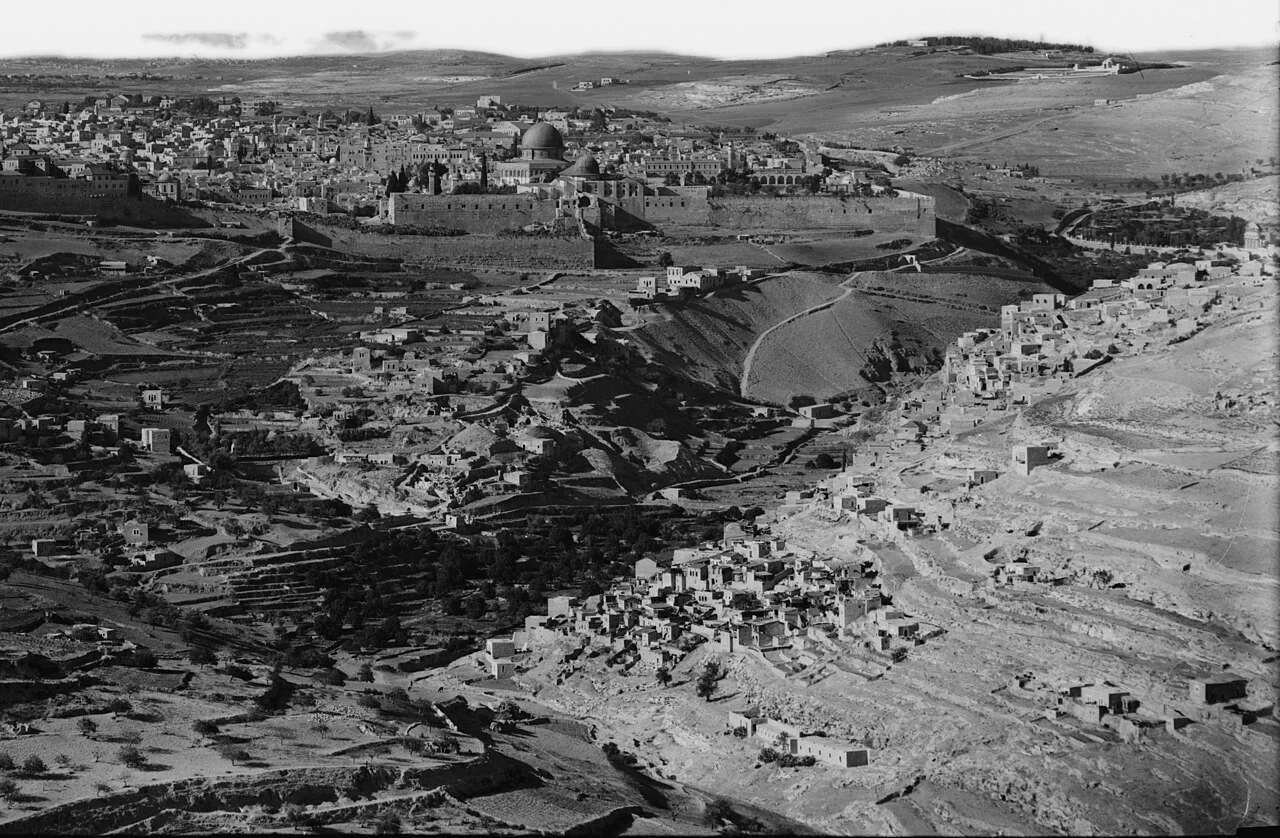
The City of David is an archaeological site located in Jerusalem. It is considered by most scholars to be the original settlement core of Jerusalem during the Bronze and Iron Ages.
Download Stanza, then search for “City of David”.
About the tour
One guide. Your kind of visit.
The City of David is an archaeological site located in Jerusalem. It is considered by most scholars to be the original settlement core of Jerusalem during the Bronze and Iron Ages.
Ready when you are.
- 01Get the free Stanza app.
iOS & Android
- 02Find your guide.
“City of David”
- 03Download before you go.
Works offline
Audio guide / 37 narrated stops
Inside the guide
Get to know a few of the stories before you go. Open a stop to read more.
01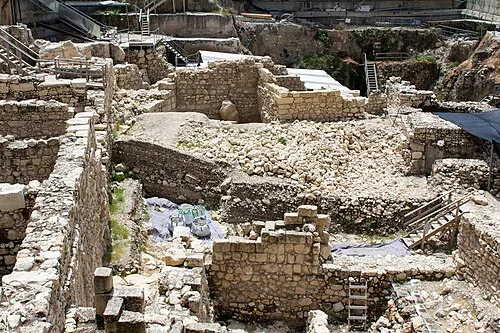 Givati Parking Lot Excavations
Givati Parking Lot Dig
Ancient Jerusalem did not begin where the Temple Mount stands. It began on this narrow ridge just south of it, where the Gihon Spring, the main dependable water source nearby, rises out of the rock. That spring is the reason a city grew here at all, and people lived on the ridge from the Bronze Age until the Romans destroyed Jerusalem in the year 70. The Hebrew Bible calls it the City of David, the royal core of the Kingdom of Judah. The trenches here belong to the Givati Parking Lot dig, an excavation that is still actively underway. Its layers run from Hasmonean buildings to Roman villas, period stacked upon period. The other stops pick up the main threads one by one: the spring itself at Gihon Spring, the argument over King David at the Large Stone Structure, Hezekiah's tunnel, and the pilgrims on their stepped road.
Oren Rozen · CC BY-SA 4.0
02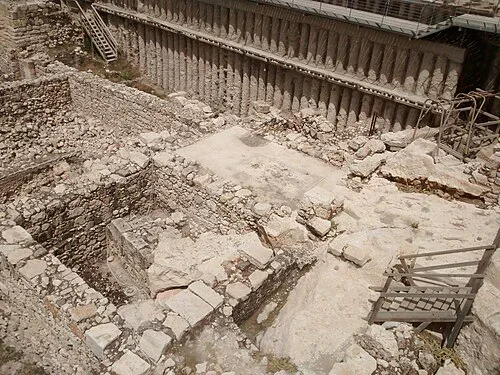 Givati Parking Lot Excavations
The Great Bedrock Moat
Cut into the bedrock beneath this dig lies a defensive ditch of extraordinary size. It runs at least seventy metres long. It spans thirty metres from side to side. And it drops nine metres down through solid rock. The moat separates the southeastern ridge, the old city itself, from the Ophel and the Temple Mount to the north. Excavators identified it here in 2023, and a segment Kathleen Kenyon found in the 1960s further east is now counted as part of the same work. Nobody can say when it was hewn, but it was already in place by about 900 BCE. Some researchers connect it, cautiously, with a verse in the Book of Kings that mentions a gap in the walls of David's city. That reading remains a suggestion, not a settled fact. The ditch shaped Jerusalem's northern edge for centuries, until the late Hellenistic period, when building work finally filled it in.
TaBaZzz · CC BY-SA 4.0
03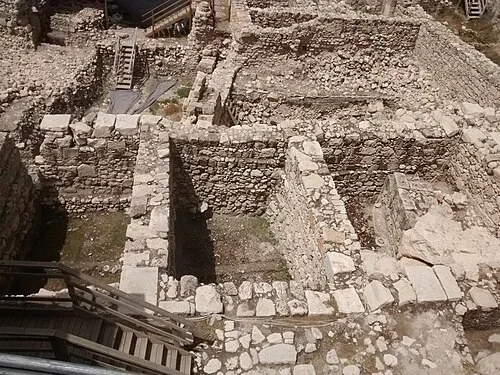 Givati Parking Lot Excavations
Reading a Live Excavation
An active dig looks less like a treasure hunt than like careful bookkeeping. The stone walls are left standing in narrow strips, called baulks, so that the layers can be read in their proper order. Shade netting and simple ladders protect both the workers and the exposed remains. Each jumble of rooms belongs to a different era, stacked one on top of another, and the excavators' task is to decide where one period ends and the next begins. The site is divided into labelled sections, Area A, Area B and onward. Patience like this has paid off here before: work in this parking lot area brought up a hoard of 264 gold coins from the time of Emperor Heraclius, in the seventh century.
Listen in the appTaBaZzz · CC BY-SA 4.0
04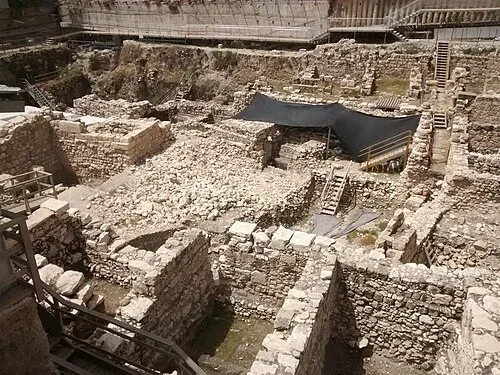 Givati Parking Lot Excavations
Queen Helena's Palace
Long after the biblical kings, this ground kept being rebuilt, layer upon layer. In 2007, excavators working here uncovered the remains of a grand residence from the Roman period. They attribute the building to Queen Helena of Adiabene. That identification is the excavators' own reading of the remains, not a fact carved in stone, and scholars continue to weigh it. What the discovery shows beyond doubt is continuity. Century after century, people of means kept choosing this ridge for their finest buildings, long after the kings of Judah were gone.
Listen in the appTaBaZzz · CC BY-SA 4.0
05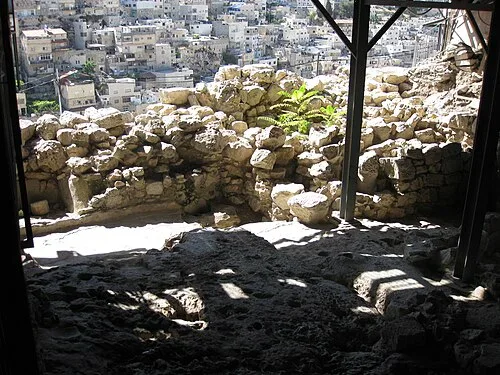 Large Stone Structure (King David's Palace)
The Large Stone Structure
In 2005 the archaeologist Eilat Mazar dug here and uncovered the foundations of a monumental public building, which she named the Large Stone Structure. She dated it to the tenth century BCE, the era the Bible assigns to King David. If she is right, Jerusalem at that time already had buildings worthy of a centralized kingdom's capital. Israel Finkelstein of Tel Aviv University argues the opposite: that the structure is, for the most part, much later, from the Hasmonean period. Those two positions have framed the argument ever since, and new finds from the dig keep feeding it. The debate is live, and it is not settled.
Listen in the appPhoto: Deror avi · CC BY-SA 3.0
06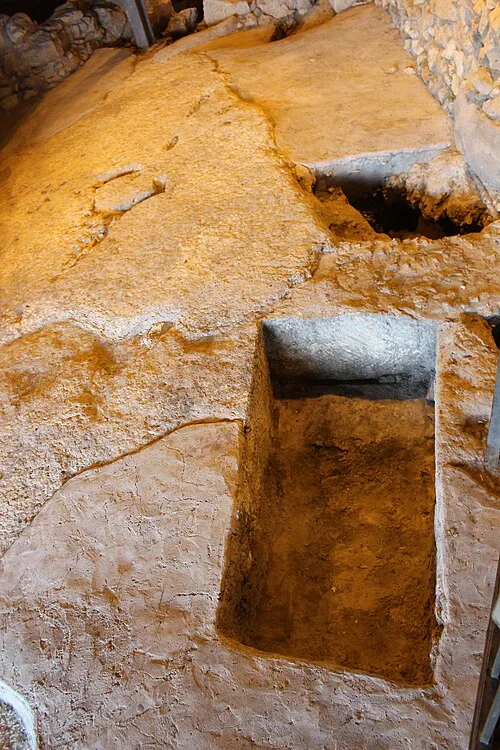 Large Stone Structure (King David's Palace)
Inside the Evidence
The case for an early date rests on what came out of the ground inside the Large Stone Structure. Among the finds are two Phoenician-style ivory inlays, once attached to iron objects; comparable pieces from a Phoenician tomb at Achziv suggest they may have decorated a sword handle. Imported luxury goods of this kind point toward the tenth century BCE. There are also round, carinated bowls with red slip and hand burnishing, fine tableware that speaks of a sophisticated urban way of life. A bone from the structure was radiocarbon dated by Elisabetta Boaretto at the Weizmann Institute, giving a probable range between 1050 and 780 BCE. A large piece of a delicate black-on-red jug belongs to a type dated to the second half of the tenth century.
Listen in the appDeror_avi · CC BY-SA 3.0
07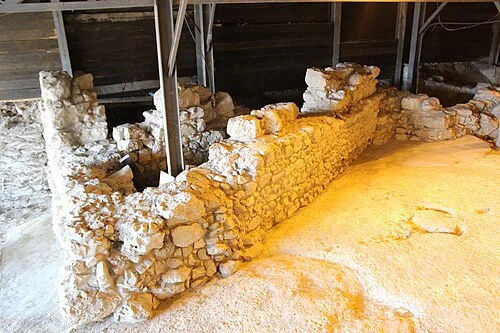 Large Stone Structure (King David's Palace)
Walls Under the Shelter
Large Stone Structure is a modern label, not an ancient name. Eilat Mazar coined it for these massive foundations of a public building. The walls are preserved where they were found, under a protective shelter, so the stonework can be studied in place. Close by rises the other half of the ancient acropolis complex, the Stepped Stone Structure, which has a story of its own.
Listen in the appDeror_avi · CC BY-SA 3.0
08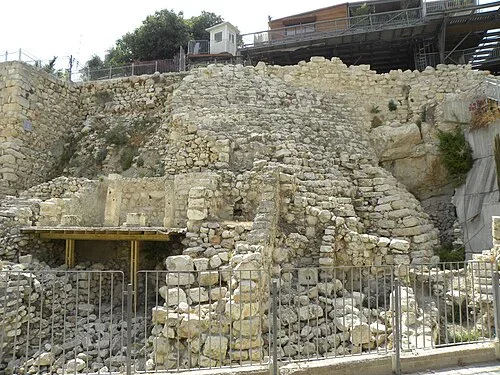 Stepped Stone Structure
The Stepped Stone Structure
Rising up the slope of the ridge stands one of the largest Iron Age structures known in Jerusalem: a curved glacis of stone, stepped like a staircase, built to support the major buildings above and to reinforce the old citadel at its crest. Its scale alone is startling. When it was built, and by whom, is contested. Some scholars would connect it with the era the Bible assigns to David; others place it later, and the question is genuinely open. Doron Ben-Ami argued in 2014, from his own excavations at Givati, that no tenth-century city wall had come to light there, suggesting the settlement of that time was not fortified at all. Later Iron Age dwellings were built directly against the rampart, and their remains still cling to the stonework.
Listen in the appIan Scott · CC BY-SA 2.0
09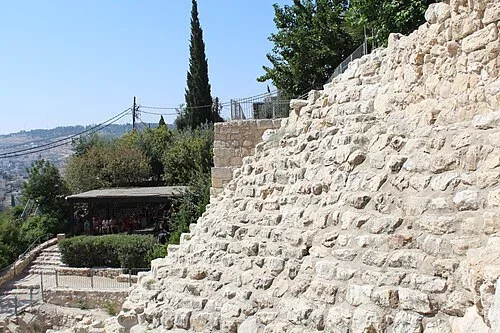 Stepped Stone Structure
The Glacis Up Close
From the path, the stepped stonework towers over everything: a steep, curving wall of boulders climbing the whole slope. The stepped face is what gives the structure its name. However old it turns out to be, it still dominates the ridge exactly as its builders intended, a mass of stone holding the high ground.
Listen in the appDeror_avi · CC BY-SA 3.0
10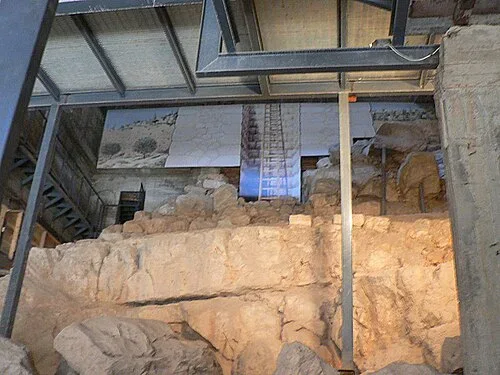 Descent to Warren's Shaft
In 1867 the Palestine Exploration Fund sent a British engineer named Charles Warren to Jerusalem. Excavating south of the Temple Mount, he uncovered a massive fortification, and then, deeper down, a vertical shaft descending from a slanted tunnel toward an apparent water source. The shaft still bears his name. Warren believed it was the city's ancient water supply, reaching back to the biblical city of David. That reading has since been proven wrong: the shaft is a natural feature, not man-made, and the city's inhabitants in the tenth century BCE apparently did not know of it. The Bible tells of David's capture of Jebus twice, in Samuel and in Chronicles, and the two versions differ in their details. Early explorers identified this shaft as the tzinnor, the water channel up which Joab climbed to take the city for David. Whether the Bible can be trusted for that period is a debate scholars still hold.
Listen in the appMathKnight at Hebrew Wikipedia · CC BY-SA 2.5
- 11
The Vertical Shaft
A dark natural chimney in the rock, shaped by water rather than human hands.
- 12
The Slanted Tunnel
The slanted rock-cut passage down to the shaft, and the honest uncertainty about what it was ever for.
- 13
A Water Jar in the Rock
A lone clay jar in the lamplit rock chamber, evoking the act of drawing water in the dark.
- 14
The Silwan Necropolis
Across the Kidron Valley, the cliff tombs of Jerusalem's ancient elite — including the monolith folk-legend calls the Tomb of Pharaoh's Daughter.
- 15
Tombs in the Cliff Face
Where ancient tomb openings and village houses share the same cliff face in Silwan.
- 16
Gihon Spring
Why a city grew on this narrow ridge at all: the Gihon, Jerusalem's pulsing spring.
- 17
The Spring Tower
The massive wall and towers raised over Jerusalem's main spring, from the Middle Bronze Age onward.
- 18
The Canaanite Tunnel
The Canaanite Siloam Channel, a Bronze Age water system centuries older than Hezekiah's Tunnel.
- 19
Walking the Dry Channel
Inside a hand-cut Bronze Age channel: low, winding and lit in patches.
- 20
How the Channel Carried Water
How the channel's shaped floor kept spring water moving along the hillside by gravity.
- 21
Exit of the Canaanite Tunnel
Where the dry channel meets daylight on the Kidron side of the ridge.
- 22
The Acra Fortress
The Acra, Antiochus Epiphanes' fortress built to subdue Jerusalem — and the long hunt for where it stood.
- 23
The Acra Remains at Givati
The walls at the Givati excavation that excavators identify with the Acra fortress.
- 24
Hezekiah's Tunnel
Facing the Assyrians in 701 BCE, Hezekiah hid Jerusalem's spring and carved a 533-metre tunnel.
- 25
Wading the Tunnel
Wading boots-deep through a working ancient water tunnel, flashlight in hand.
- 26
Cut Through the Rock
Reading the tool-work in the tunnel walls: a bore carved entirely by hand.
- 27
The Siloam Inscription
The ancient inscription that records the moment two teams of stonecutters met in the middle of the rock.
- 28
Pool of Siloam
Two pools, one name: the Byzantine reservoir at the tunnel's exit and the Second Temple pool found only recently.
- 29
The Pilgrims' Pool
Where festival crowds purified themselves in spring water before climbing to the Temple.
- 30
Ain Silwan
The spring's water still reaches the village, and the village's name still remembers Siloam.
- 31
The Channel in the Village
The same spring water, still flowing past the houses of Silwan today.
- 32
The Stepped Pilgrim Road
The monumental stepped street Pontius Pilate built for pilgrims climbing from Siloam to the Temple.
- 33
Walking the Original Pavement
The worn original paving stones of the pilgrims' road, and the great drain hidden beneath them.
- 34
The Ancient Drainage Tunnel
The great drain beneath the pilgrim road, and the city's last defenders in the year 70.
- 35
Inside the Drain
A sewer built on a startling scale, cut tall enough to walk through upright.
- 36
A City Recovered
Treasure hunters, a scandal, and the archaeologist who first named this ridge the City of David.
- 37
The Ridge and Its Valleys
Why this narrow ridge was so easy to defend, and where its weakness lay.
City of David
Frequently asked questions
How much does the guide cost?
Free app download. Listed guide price: $3.99. Guide price shown in the app. Audio guide only. Venue admission is separate.
Can I listen without internet?
Yes. Download the guide’s audio, images, and maps in the app before your visit. Your downloaded content is then available offline.
Can I listen in my language?
This audio guide is available in 15 languages, including English.
Do I need to follow a schedule?
No. This is a self-guided experience. Choose your stops, pause whenever you like, and return to a story at your own pace.
At your own pace
Explore City of David.
Download Stanza, then search for “City of David”.
Free app download · Guide price shown in the app
Keep exploring
Nearby audio guides
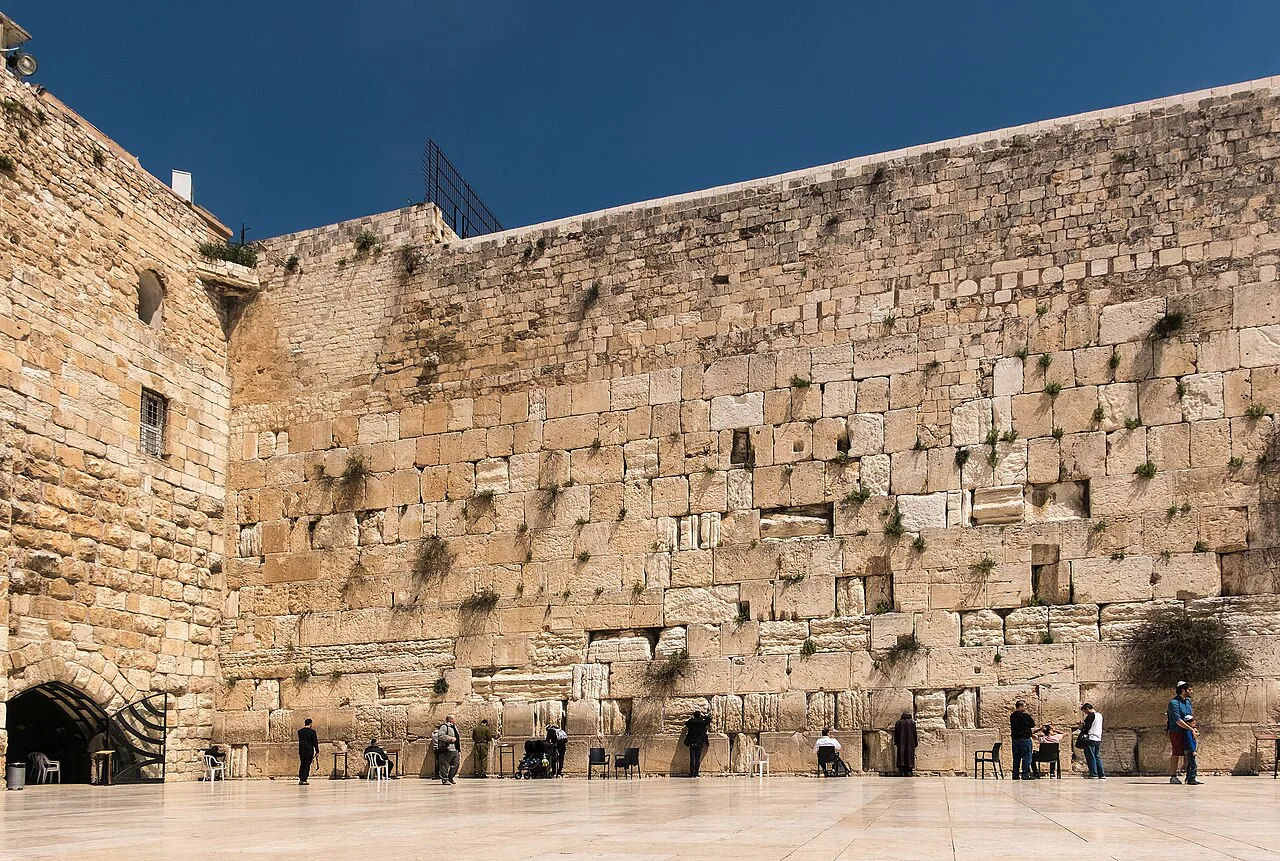
Jerusalem · 1 km
Western Wall
Content & sources
Photo: Ralf Roletschek · GFDL 1.2
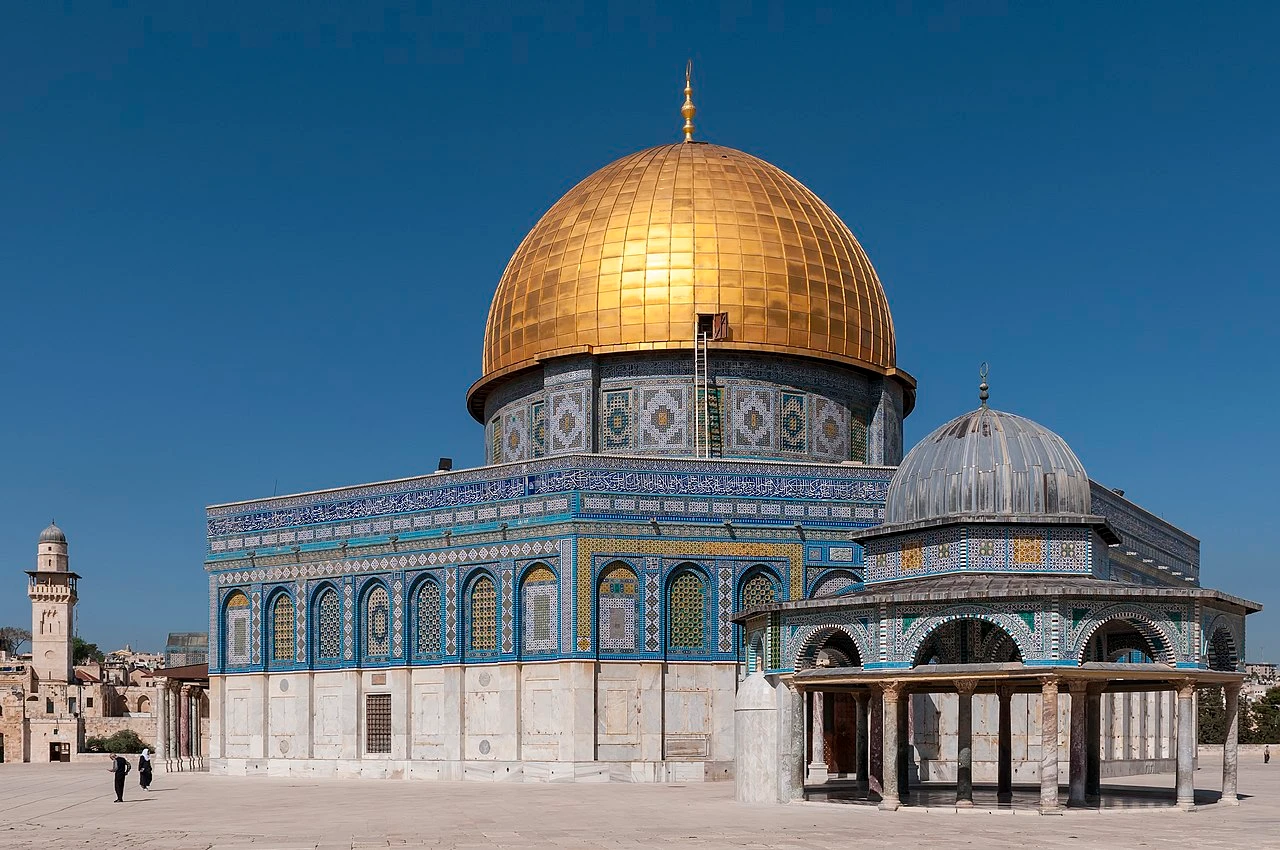
Jerusalem · 1 km
Dome of the Rock
Content & sources
Photo: Ralf Roletschek · GFDL 1.2
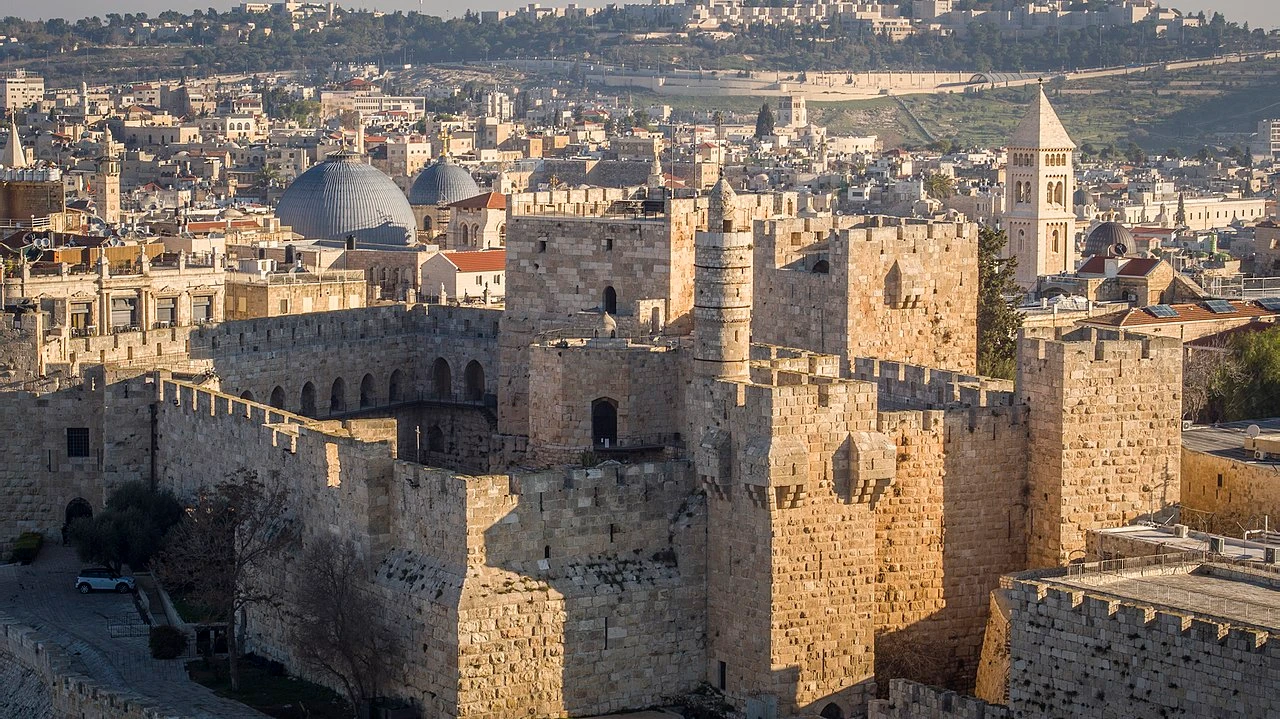
Jerusalem · 1 km
Tower of David
Content & sources
Photo: אורי אלוני · CC BY-SA 4.0
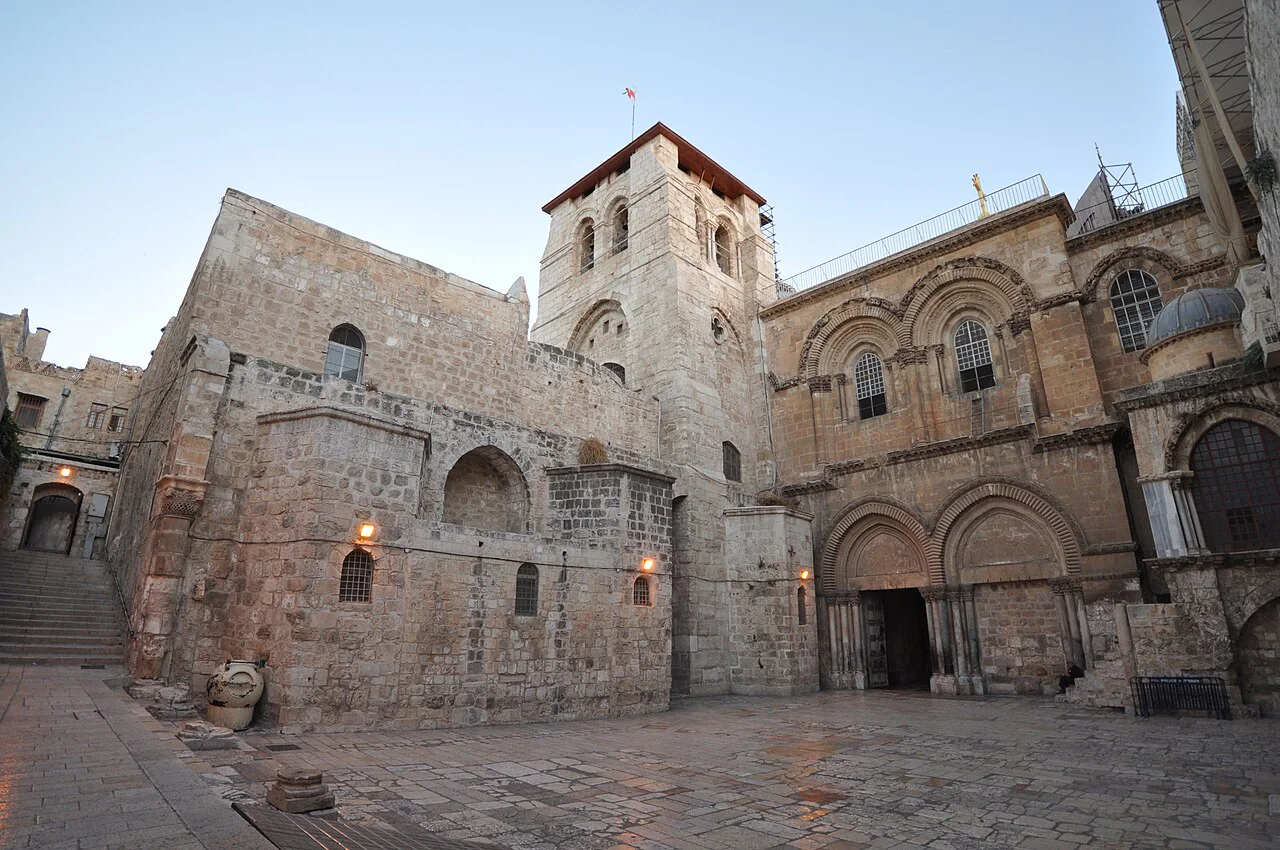
Jerusalem · 1 km
Church of the Holy Sepulchre
Content & sources
https://www.flickr.com/photos/jlascar/ · CC BY 2.0