Stanza · Audio guide
Western Wall Audio Guide
A place to remember. A story to take with you.
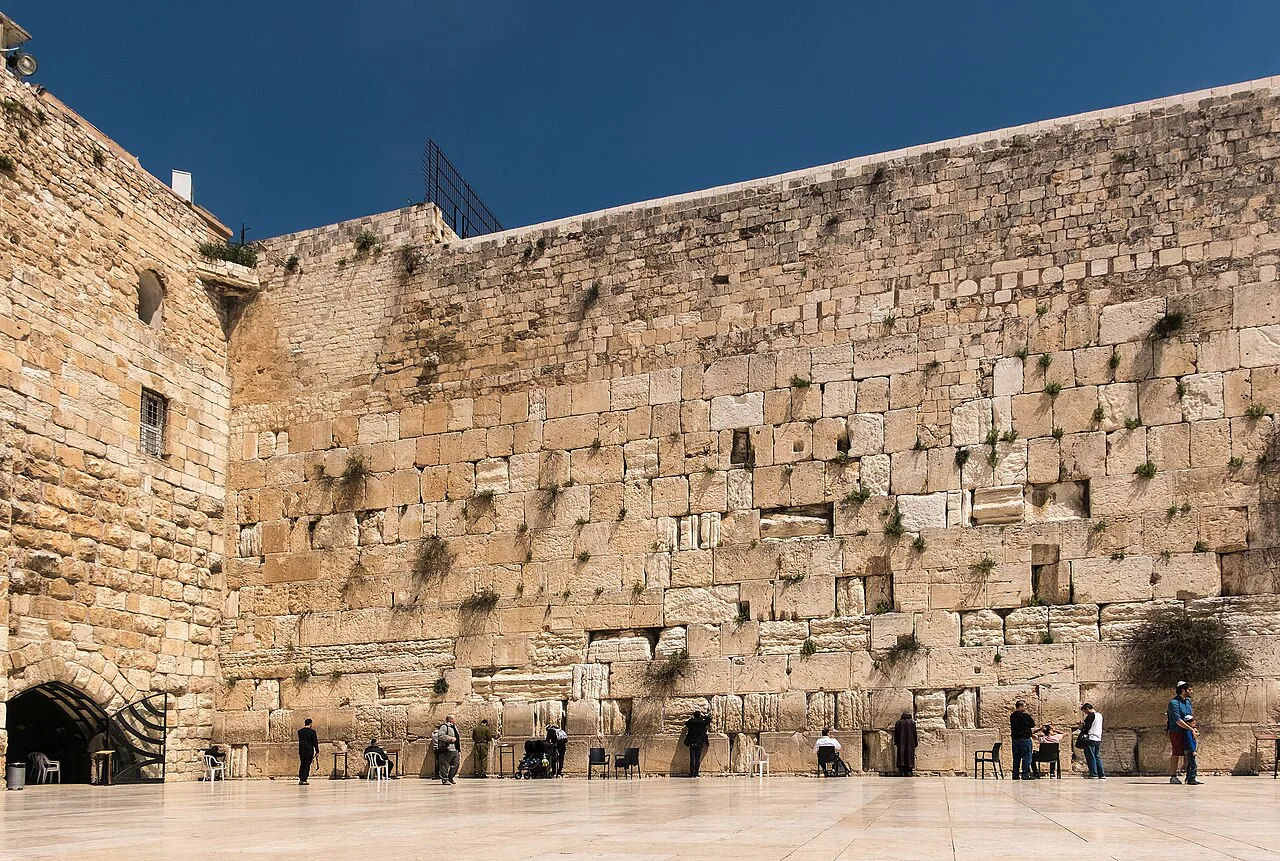
The Western Wall is an ancient retaining wall of the Temple Mount in Jerusalem. It is a holy site of Judaism and a significant location for Jewish prayer.
Download Stanza, then search for “Western Wall”.
About the tour
One guide. Your kind of visit.
The Western Wall is an ancient retaining wall of the Temple Mount in Jerusalem. It is a holy site of Judaism and a significant location for Jewish prayer.
Ready when you are.
- 01Get the free Stanza app.
iOS & Android
- 02Find your guide.
“Western Wall”
- 03Download before you go.
Works offline
Audio guide / 13 narrated stops
Inside the guide
Get to know a few of the stories before you go. Open a stop to read more.
01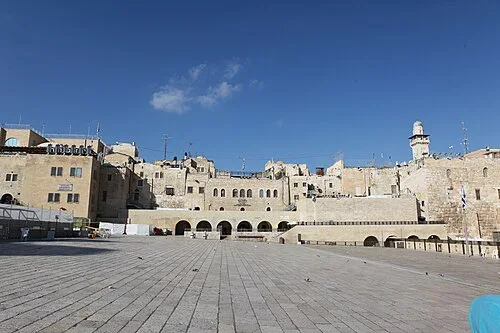 The Western Wall Plaza & The Lost Moroccan Quarter
The Western Wall Plaza
Welcome to the Western Wall, in Jerusalem's Old City. This tour follows one long wall from its open plaza to its buried stones. What appears here is not a temple ruin. It is a retaining wall, the western flank of a vast platform built to carry the Temple of Jerusalem. Around 19 BCE, Herod the Great doubled the size of the Temple Mount, and this wall held up the new edge of his platform. The exposed prayer section runs 57 metres. The whole wall stretches 488 metres, though most of it now hides behind the Old City's buildings. Jews venerate the wall as the sole remnant of the Holy Temple, and the closest accessible spot to the sacred mount itself. Since 1967 the open square in front has served as the setting for daily worship. Bar mitzvah celebrations fill it, and newly full-fledged soldiers are sworn into the Israel Defense Forces here. On the fast of Tisha B'Av, which mourns the destruction of the Temple, tens of thousands gather at the stones. Crowds also gather on Jerusalem Day, Israel's commemoration of taking the Old City in 1967. The plaza can hold more than 400,000 people. How that open square came to exist is the next part of the story.
StateofIsrael · CC BY-SA 2.0
02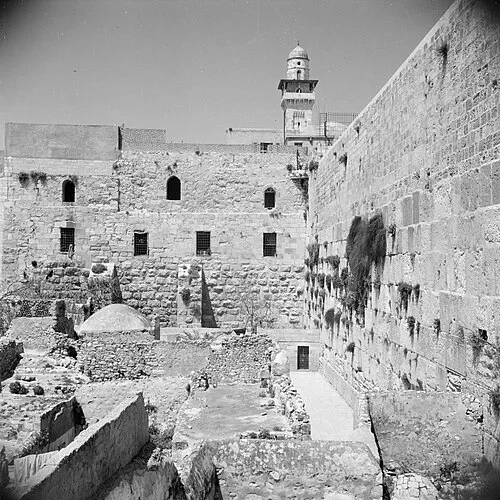 The Western Wall Plaza & The Lost Moroccan Quarter
The Lost Moroccan Quarter
For centuries, the way to the wall ran through the Moroccan Quarter, a labyrinth of narrow alleyways pressed close against the stones. In May 1840 a firman issued by Ibrahim Pasha forbade the Jews to pave the passageway in front of the wall. It cautioned them against raising their voices and displaying their books there. Visits were permitted, as of old. In June 1967, forty-eight hours after the wall was captured, the military demolished the entire quarter without an explicit government order. It had stood just four metres from the wall. The Sheikh Eid Mosque, built on the site of one of Jerusalem's earliest Islamic schools, came down with the houses. One hundred and six Arab families were ordered from their homes at night. Together they counted some six hundred and fifty people. When they refused to leave, the bulldozers worked with people still inside, killing one person and injuring others. Later, the pavement before the wall was dug down two and a half metres, exposing two more courses of the great stones.
Willem van de Poll · CC0
03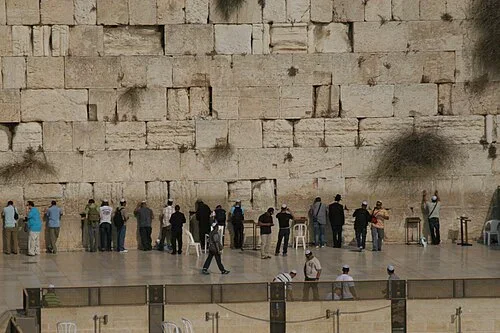 The Main Open-Air Prayer Area
The Open-Air Prayer Section
Up close, the wall rises in enormous courses of stone, and this exposed stretch is the part set aside for prayer. For centuries Jews have gathered here to give thanks to God or to pray for divine mercy. The gatherings carry the weight of history. When news of the Normandy landings arrived on June 6, 1944, thousands came to pray for the success of the Allied forces. Half a century later, fifty thousand people gathered to pray for the safe return of Nachshon Wachsman, a soldier who had been kidnapped. The wall has also been a flashpoint. On the Day of Atonement in 1928, British police removed by force the screen that separated men and women at prayer, beating worshippers who tried to stop them. The dispute helped set off the riots of 1929, in which more than two hundred Jews and Arabs were killed. In 1930, an international commission confirmed that the right of Jewish prayer here stood as part of the Status Quo. The low divider running through the plaza today separates the men's and women's sections.
Listen in the appJulien Menichini from Paris, France · CC BY 2.0
04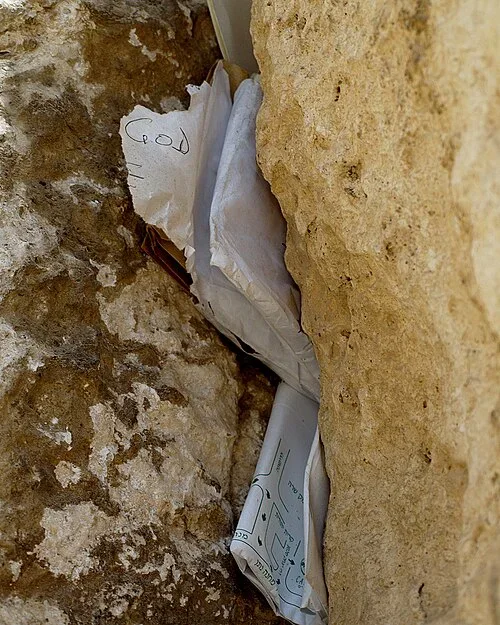 The Main Open-Air Prayer Area
Prayer Notes in the Crevices
Wedged between the stones are folded slips of paper, written prayers pushed into the crevices by hand. The earliest known account of the custom comes from the eighteenth century. The sage Chaim ibn Attar wrote an amulet for a petitioner and told him to place it inside the wall. He died in 1743. Today more than a million notes are tucked into the wall every year. Several organisations accept notes by e-mail and see that they reach the stones. It has also become customary for visiting dignitaries to leave one.
Listen in the appPhoto: David Shankbone · CC BY 3.0
05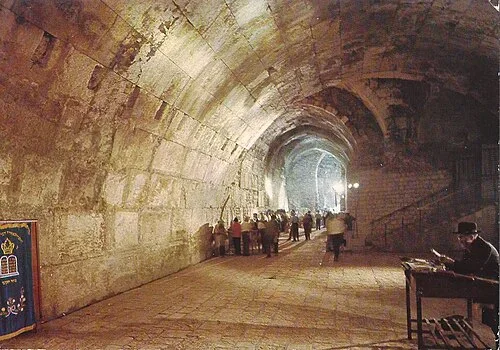 Wilson's Arch Indoor Prayer Hall
Wilson's Arch Prayer Hall
To the left of the open prayer section, worship continues under cover, beneath the ancient vaulted structure known as Wilson's Arch. The hall was renovated from 2005 under Shmuel Rabinovitch, the Rabbi of the Wall, to open more room for visitors and prayer. The restored men's section holds a Torah ark built for over a hundred scrolls, kept by scribes in a room of their own. A women's section overlooks the men's area, letting women take part in services held under the Arch for the first time. On July 25, 2010, the hall received a sanctuary lamp, the ner tamid, the first eternal light ever installed at the Western Wall. It burns olive oil, as is the custom in synagogues, recalling the menorah of the Temple and the fire that burned continuously on its altar, placed here in the closest spot to those ancient flames.
Listen in the appPhoto: Yael5544 · CC BY-SA 4.0
06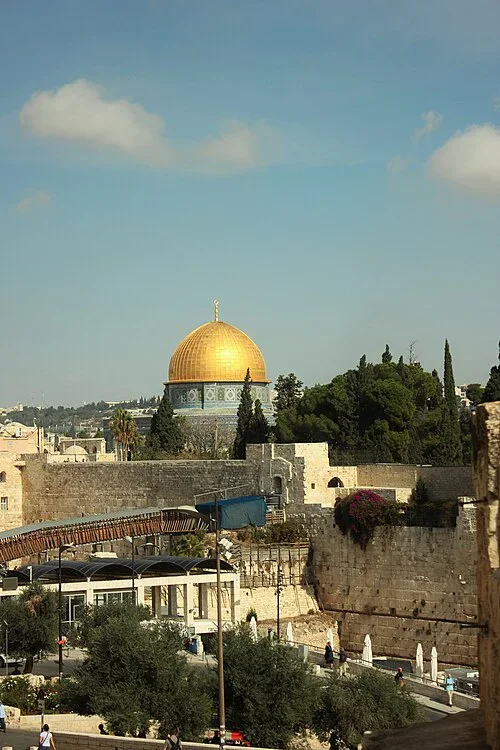 Mughrabi Ascent & Al-Buraq Mosque
The Wall and Al-Haram al-Sharif
The wall is not only a Jewish site. Its whole length forms the western border of al-Haram al-Sharif, the Noble Sanctuary, the compound that holds the Al-Aqsa Mosque. Above the wall's line, the golden Dome of the Rock rises over the sanctuary, and a footbridge leads up toward the compound gate. Under Muslim rule the wall was treated as an integral part of the Haram, and as waqf property belonging to the Moroccan Quarter. Yet a right of Jewish prayer and pilgrimage long existed alongside it, as part of the Status Quo regulations that govern the site. Both claims rest on the same stones.
Listen in the appPhoto: Beko · CC BY-SA 4.0
07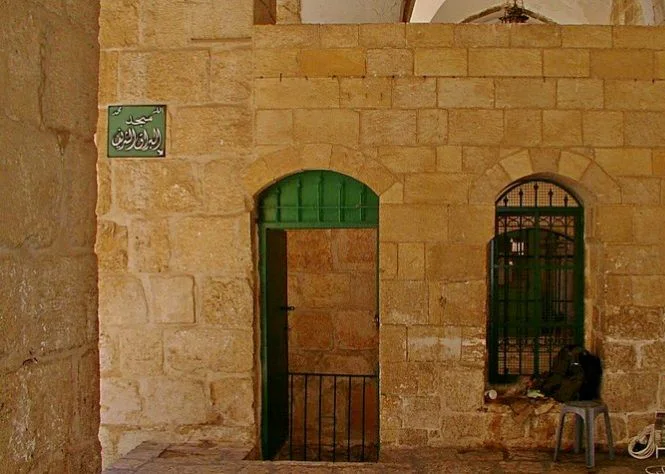 Mughrabi Ascent & Al-Buraq Mosque
Al-Buraq Mosque and Barclay's Gate
Just inside the sanctuary wall, above the southern end of the plaza, is a small mosque named al-Buraq, reached from within the Haram rather than from here. Islamic tradition holds that the Prophet Muhammad tied his winged steed Buraq here during the Night Journey that brought him to Jerusalem, before he ascended to heaven. The first likely mention of this particular spot comes from the fourteenth century. A manuscript by Ibrahim b. Ishaq al-Ansari, known as Ibn Furkah, who died in 1328, refers to Bab al-Nabi, the Gate of the Prophet, the old name of Barclay's Gate below the Maghrebi Gate. Its editor, the scholar Charles D. Matthews, noted that other statements in the same work might point instead to the Double Gate in the southern wall. The mosque stands above an ancient passageway that once emerged through that long-sealed gate, whose huge lintel can still be made out in the wall.
Listen in the appPhoto: Heshbi · CC BY-SA 4.0
08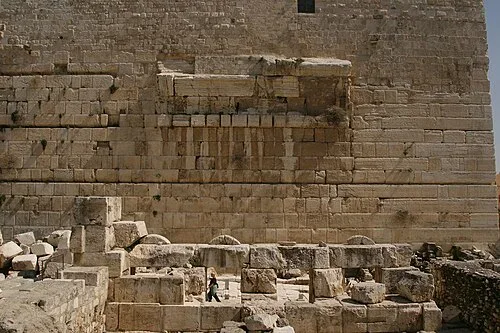 Robinson's Arch & The Archaeological Park
Robinson's Arch and the Ancient Street
Farther south, the wall changes character, and fallen stones lie where the ancient street once ran. At this end, Robinson's Arch together with a row of vaults once supported stairs ascending from the street to the Temple Mount, a monumental entrance for the crowds who came to worship. Then came the turning point in the wall's story. In 70 CE, during the First Jewish–Roman War, the Romans destroyed Herod's Temple along with the rest of Jerusalem. The arch survived only as this stump, projecting from the wall above the excavated remnants of the pavement.
Listen in the appBrian Jeffery Beggerly from S'pore (Singapore), Singapore · CC BY 2.0
09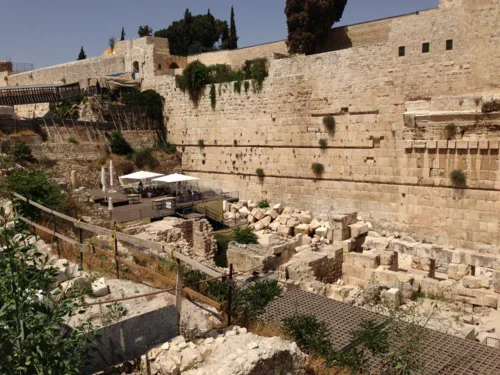 Robinson's Arch & The Archaeological Park
The Egalitarian Prayer Platform
Beside the arch ruins, a flat platform serves a different kind of prayer. Because this area falls under neither the Rabbi of the Wall nor the Ministry of Religious Affairs, it opened in 2004 to groups whose worship would not be approved at the main sections: Reform and Conservative services, and the Women of the Wall. The path here was contested. Women, among them Anat Hoffman, were repeatedly arrested for praying in ways the law disallowed. In April 2013, Natan Sharansky of the Jewish Agency proposed developing the area for worship not based on the Orthodox interpretation of Jewish tradition. That same month, a judge ruled that Women of the Wall gatherings should not be deemed a disturbance of the public order. A platform was added in 2013 to enlarge the prayer space.
Listen in the appPhoto: NearTheZoo · CC BY-SA 3.0
10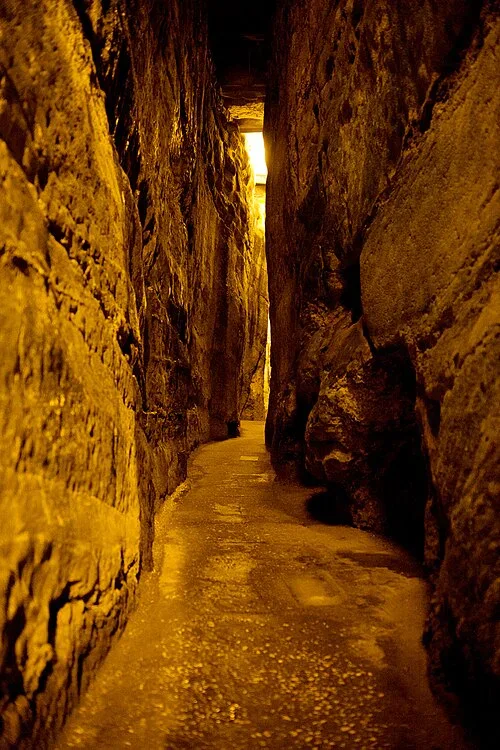 The Subterranean Western Wall Tunnels
Into the Western Wall Tunnels
The famous prayer section is only a short stretch of something far larger. The tunnels follow its northern continuation, underground, along the buried face of the stones. Of the wall's forty-five stone courses, seventeen lie below the modern street. The tunnels can be visited only on a booked guided tour. The excavations were headed from 1986 to 2007 by Dan Bahat, formerly district archaeologist of Jerusalem. He later lamented what the site had become, saying that out of a national monument, it had turned into a synagogue.
Listen in the appisraeltourism · CC BY-SA 2.0
- 11
Herodian Masonry and the Western Stone
Herodian masonry without mortar, the 300-tonne Western Stone, and the coins that show Herod never finished his wall.
- 12
The Struthion Pool
The Struthion Pool, the water-filled cistern that ends the underground passage along the Wall.
- 13
The Little Western Wall
The Little Western Wall: the least-altered stones, nearest of all to the ancient Holy of Holies, and a quiet close to the journey.
Western Wall
Frequently asked questions
How much does the guide cost?
Free app download. Listed guide price: $1.99. Guide price shown in the app. Audio guide only. Venue admission is separate.
Can I listen without internet?
Yes. Download the guide’s audio, images, and maps in the app before your visit. Your downloaded content is then available offline.
Can I listen in my language?
This audio guide is available in 15 languages, including English.
Do I need to follow a schedule?
No. This is a self-guided experience. Choose your stops, pause whenever you like, and return to a story at your own pace.
At your own pace
Explore Western Wall.
Download Stanza, then search for “Western Wall”.
Free app download · Guide price shown in the app
Keep exploring
Nearby audio guides
Jerusalem · 1 km
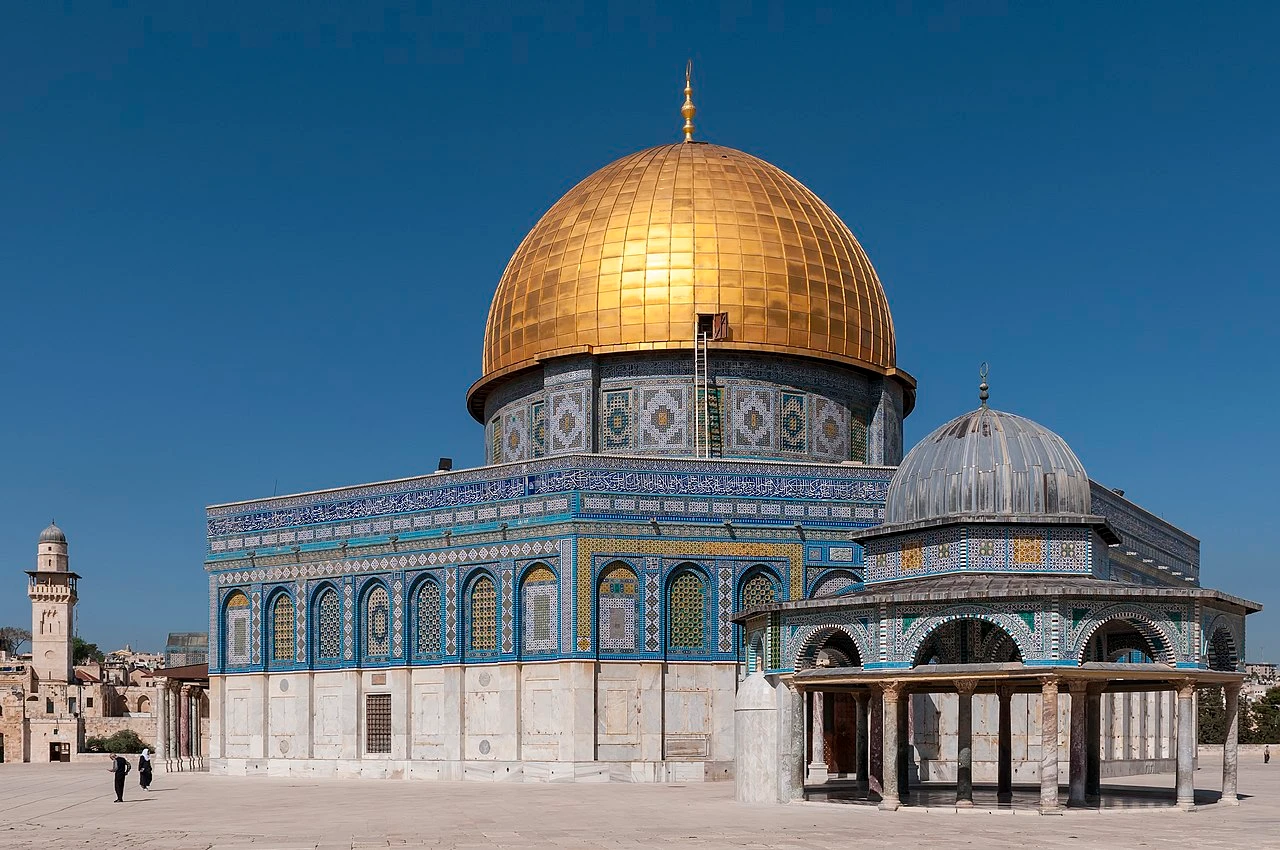
Dome of the Rock
Content & sources
Photo: Ralf Roletschek · GFDL 1.2
Jerusalem · 1 km
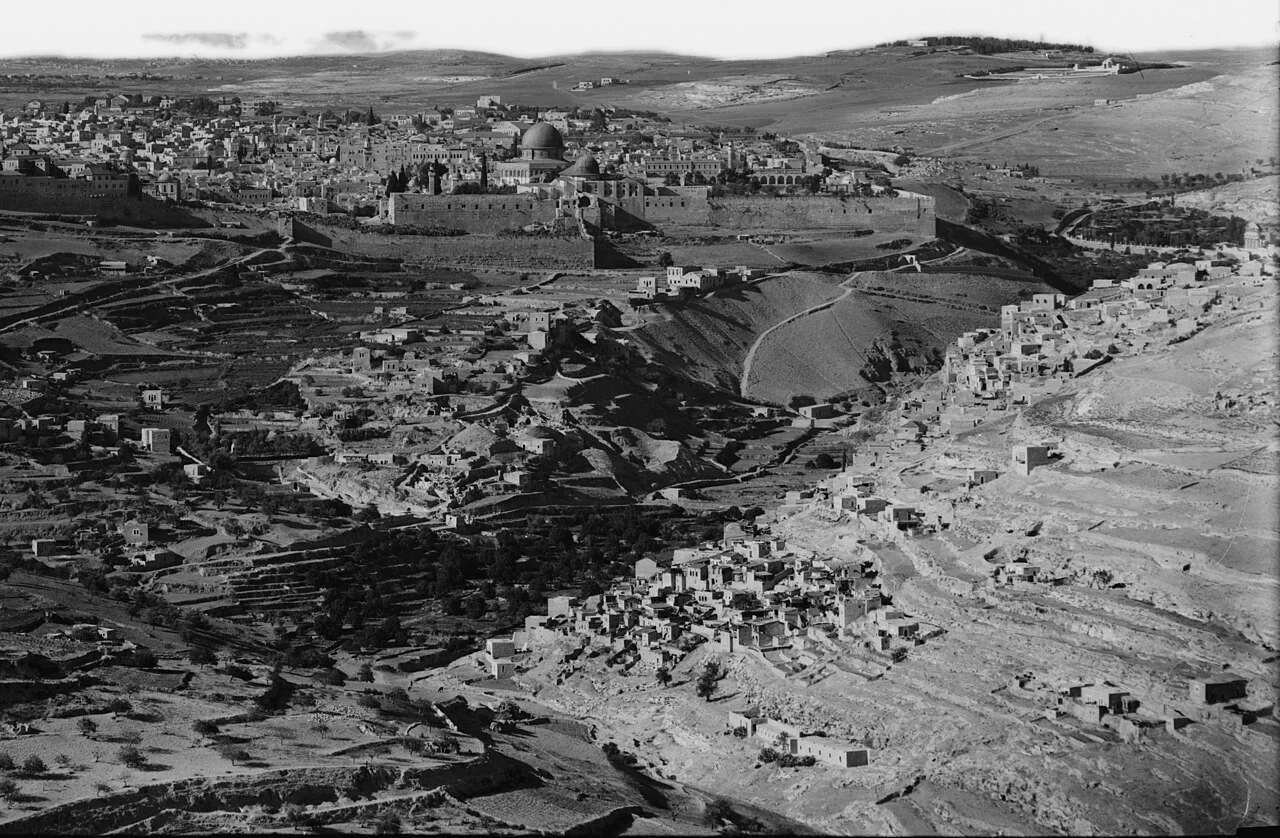
City of David
Content & sources
Matson Collection · Public domain
Jerusalem · 1 km
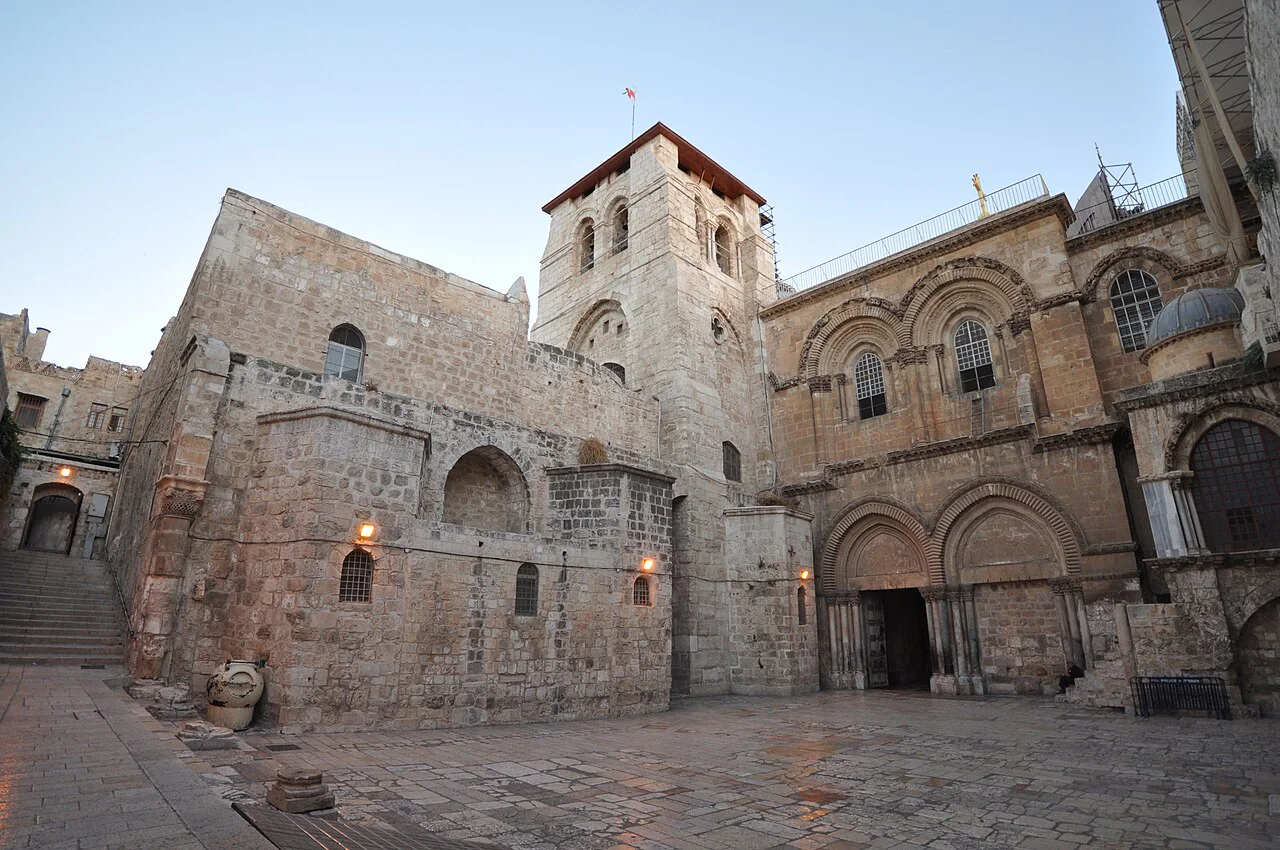
Church of the Holy Sepulchre
Content & sources
https://www.flickr.com/photos/jlascar/ · CC BY 2.0
Jerusalem · 1 km
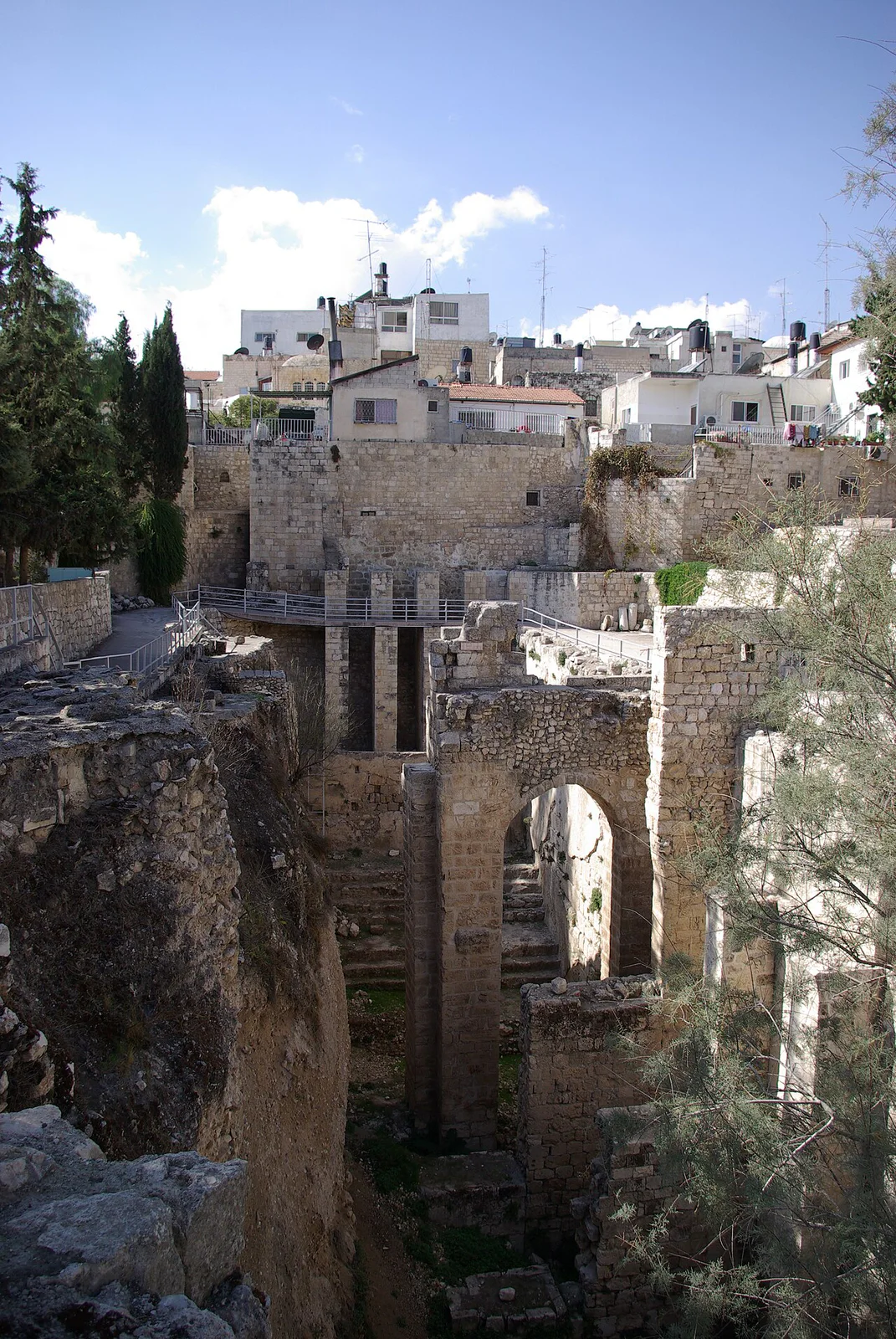
Pool of Bethesda
Content & sources
Photo: Berthold Werner · Public domain