Stanza · Audio guide
Pool of Bethesda Audio Guide
A place to remember. A story to take with you.
The Pool of Bethesda is a reservoir in Jerusalem that is mentioned in the New Testament as the site where Jesus healed a paralyzed man. The site was excavated in the late 19th century and is located near the…
Download Stanza, then search for “Pool of Bethesda”.
About the tour
One guide. Your kind of visit.
The Pool of Bethesda is a reservoir in Jerusalem that is mentioned in the New Testament as the site where Jesus healed a paralyzed man. The site was excavated in the late 19th century and is located near the Church of St. Anne.
Ready when you are.
- 01Get the free Stanza app.
iOS & Android
- 02Find your guide.
“Pool of Bethesda”
- 03Download before you go.
Works offline
Audio guide / 10 narrated stops
Inside the guide
Get to know a few of the stories before you go. Open a stop to read more.
01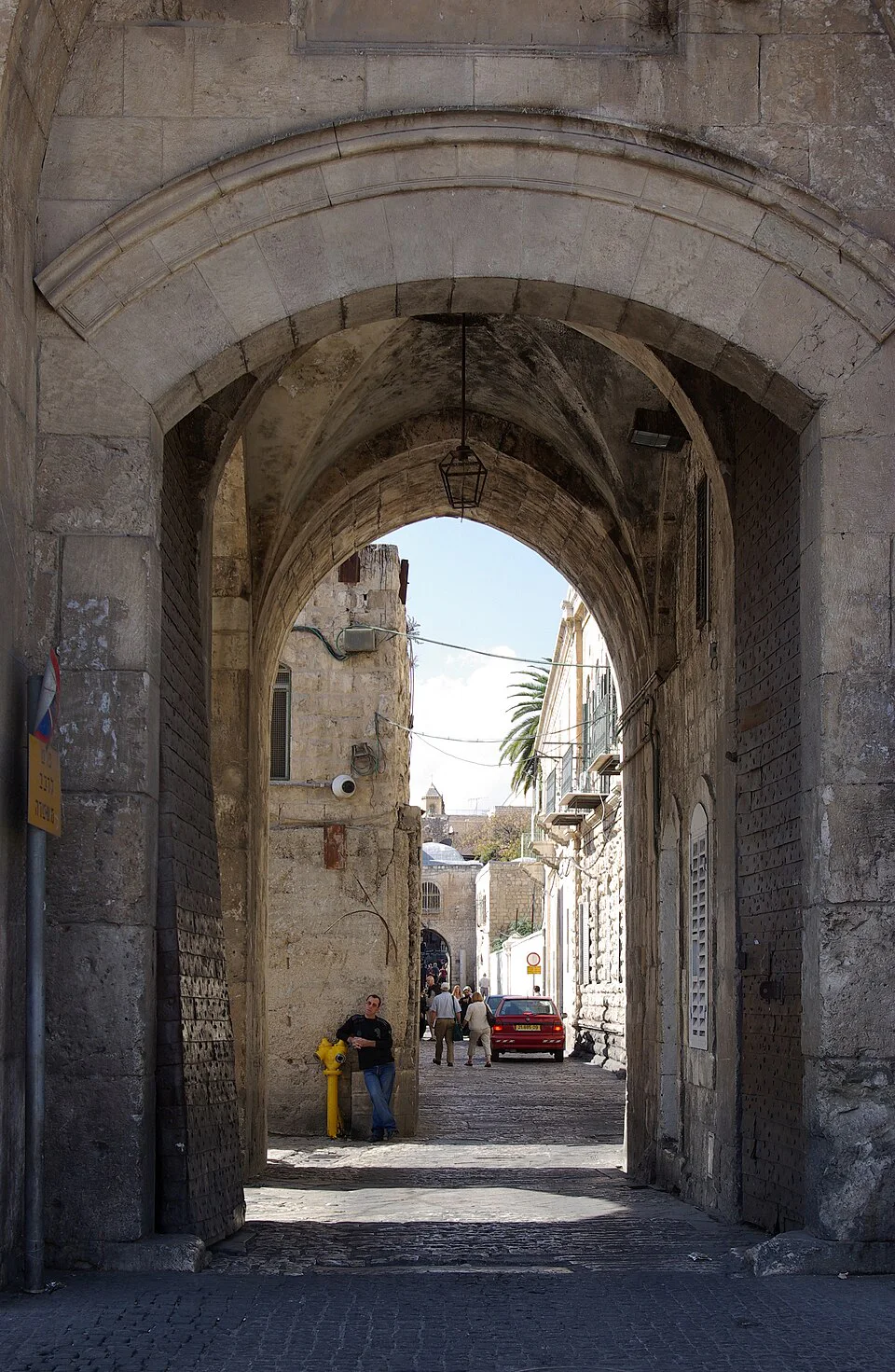 St. Anne Complex Garden Entrance
Lions' Gate and the Road to Bethesda
Welcome to the Pool of Bethesda, in the Muslim Quarter of Jerusalem's Old City. The way in runs through the great arched gateway now called the Lions' Gate, or St. Stephen's Gate, and into a quiet garden courtyard kept by the White Fathers. This was an ancient water site that became a place of healing and pilgrimage, and it lay buried until digs began in the late nineteenth century. John's Gospel places the pool near the Sheep Gate, and tradition has long connected that gate with this corner of the city. That Gospel link is the reason pilgrims have come looking for Bethesda here, generation after generation.
Photo: Berthold Werner · Public domain
02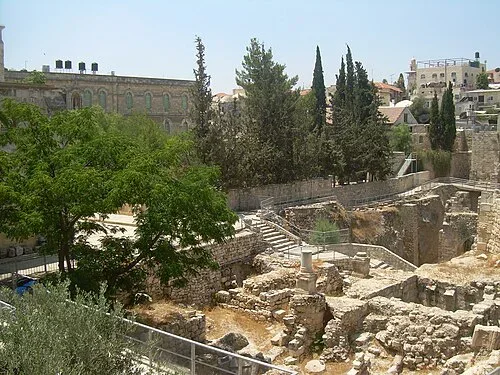 St. Anne Complex Garden Entrance
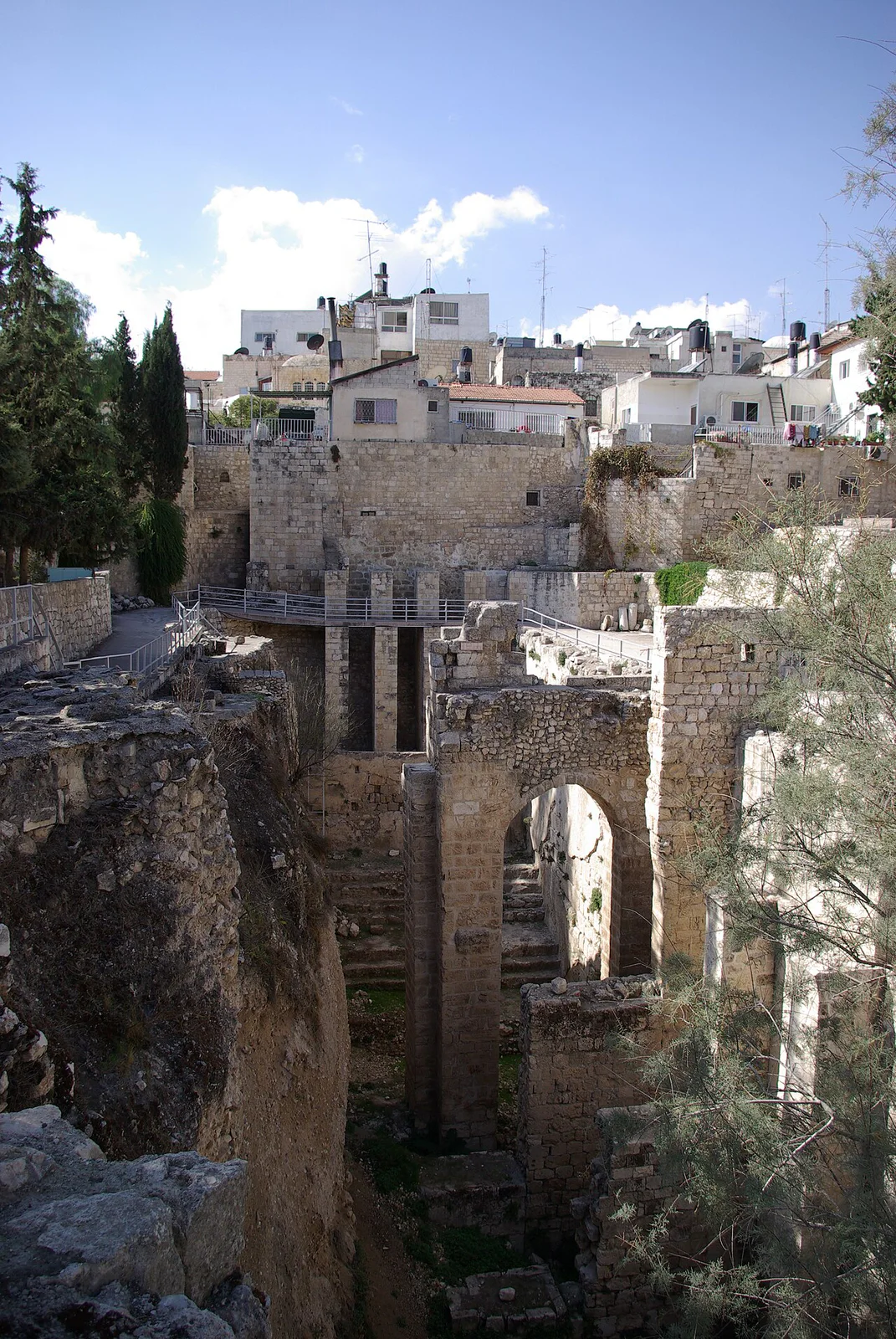
The Garden Over the Hidden Pools
For a long time, nobody knew where Bethesda actually was. Until the nineteenth century there was no archaeological evidence for the pool at all, and commentators proposed rival sites. Some pointed to the so-called Fountain of the Virgin in the Kidron Valley. Others preferred a pool near the mouth of that valley, south of St. Stephen's Gate. Then, in nineteenth-century digs, Conrad Schick discovered a large tank about thirty metres northwest of St. Anne's Church, and argued it was the lost pool. The decisive work came in 1964, when excavation uncovered the Byzantine and Crusader churches, Hadrian's temple, small healing pools, the second large pool, and the dam between them. The diggers also found that the Byzantine church had been built in the very heart of the Roman temple, with the healing pools inside it.
Nemo · CC BY-SA 3.0
03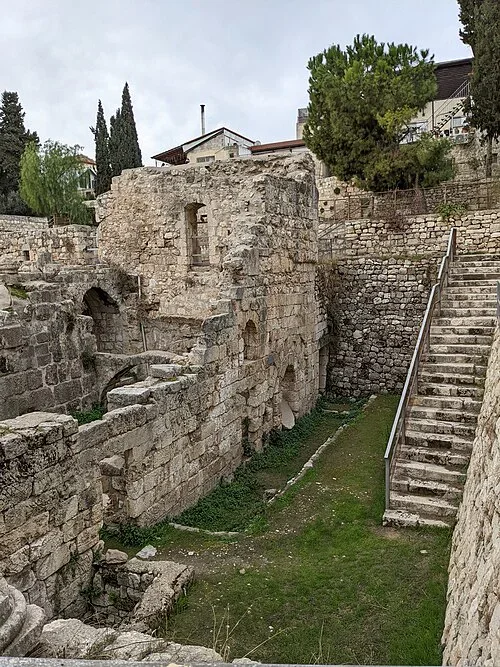 Overview of the Northern Pool Basin
The Northern Pool and Five Porticoes
Two enormous pools lie side by side here, and together they explain why scholars accepted this as the Gospel site. The northern pool measures about fifty-three by forty metres. South of the dividing dam sits a second pool, roughly forty-seven by fifty-two metres. John's Gospel calls Bethesda a bathing pool surrounded by five covered porticoes. Four colonnades ran around the pools, and a fifth stood along the dam between them, which is how the odd number five is accounted for. The name itself comes from Hebrew or Aramaic: Beth hesda, meaning house of mercy, or house of grace. Old manuscripts of the Gospel give other spellings, such as Beth-zatha. The name may have seemed fitting: the place was seen as one of disgrace, because of the invalids who gathered here, and of grace, because of the healing they hoped for.
Listen in the appPhoto: Aaadir · CC0
04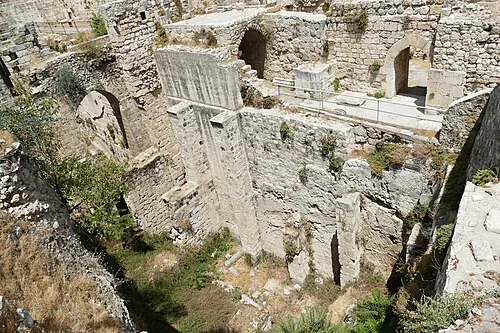 Central Dam and the Miracle of Healing
The Central Dam and the Upper Pool
The story of this place begins with a dam. In the eighth century BC, builders threw a barrier across the short Beth Zeta Valley to hold back rainwater, creating a reservoir. The dam was about six metres wide. A sluice-gate in it let workers control the water level, and a rock-cut channel carried a steady stream from the reservoir into the city. The reservoir became known as the Upper Pool. That massive wall of masonry dividing the two pools today is the direct descendant of that first barrier. Much later, when Hadrian rebuilt Jerusalem as Aelia Capitolina, a roadway ran along the top of the dam.
Listen in the appPhoto: Bukvoed · CC BY 4.0
05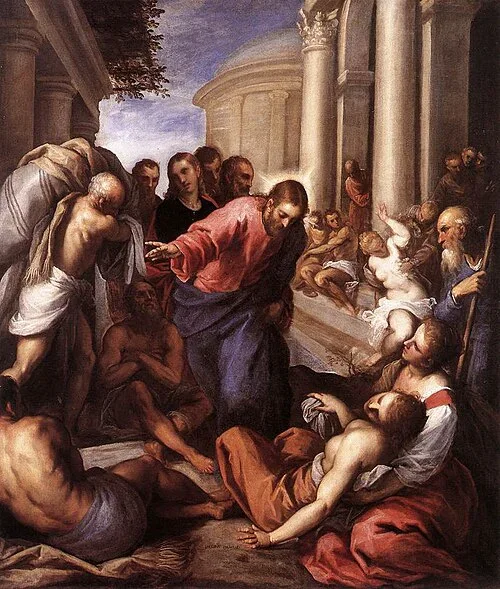 Central Dam and the Miracle of Healing
Healing the Paralytic at Bethesda
The painter Palma il Giovane put this scene on a single canvas, which is now in the Molinari Pradelli collection at Castenaso, near Bologna in Italy. According to John's Gospel, Jesus came to this pool on a Sabbath, when the five porticoes were crowded with people who were ill, waiting by the water. Among them lay a man who had been bedridden for thirty-eight years. He could not make his own way into the pool, and no one would carry him. Jesus asked if he wanted to be well, then healed him with a command: take up your mat and walk. The man did. Carrying a mat on the Sabbath broke religious custom, and that act prompted a protest. The Gospel's description of a pool ringed with porticoes full of the infirm plausibly fits the excavated layout here.
Listen in the appPalma il Giovane · Public domain
06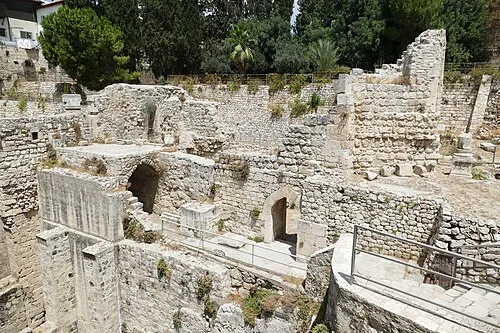 Southern Pool and Byzantine Support Arches
The Southern Pool and the Church over the Water
A popular legend says this pool was where sheep were washed before sacrifice. The southern basin tells a different story. It is about thirteen metres deep, far too deep for washing sheep, and it served as a water reservoir instead. A wide stone staircase, roughly thirty-five metres across, led down into the water. In the fifth century, builders threw colossal support arches across the whole basin, and on them they raised the Church of the Probatike, the Church of the Sheep. It was first dedicated to the healing of the paralytic, and from the sixth century it became associated with the Virgin Mary. The pilgrim Theodosius wrote, around 530, that next to the Sheep-pool stands the church of my Lady Mary. Who built it is uncertain: Empress Eudocia is one suggestion, though Bishop Juvenal of Jerusalem seems the more likely candidate. The church was badly damaged when the Persians took Jerusalem in 614, restored afterwards, and finally destroyed in the early eleventh century.
Listen in the appPhoto: Bukvoed · CC BY 4.0
07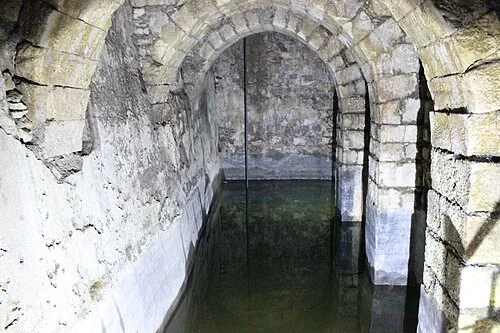 Southern Pool and Byzantine Support Arches
Water for the City
The vaulted chamber here still holds water, and it shows how the system worked. These pools were infrastructure, not decoration. Scholars still debate one question about their use: whether they may also have served as a mikveh, a Jewish ritual bathing pool, alongside their role as a water supply. For a long time these pools stood outside the city walls. That changed in the mid first century AD, when Herod Agrippa expanded Jerusalem's walls and brought the baths inside the city.
Listen in the appcreisor · CC BY-SA 2.0
08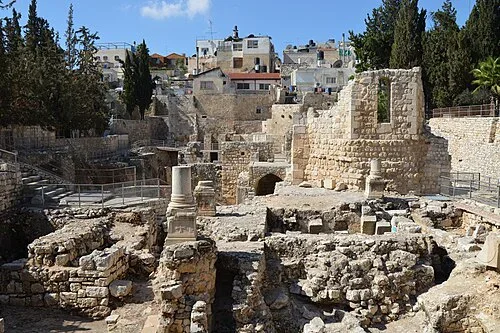 Roman Asclepieion and Crusader Ruins
Hadrian's Healing Temple
When Hadrian rebuilt Jerusalem as Aelia Capitolina, he expanded this site into a large temple of Asclepius and Serapis, gods of healing. Cure, in that world, often meant bathing and immersion, so the medicinal baths fitted the cult perfectly. Excavation has recovered votive offerings apparently left by grateful patients. There is earlier context here too: Jerome Murphy-O'Connor argues that at least one of the small baths east of the pools was already sacred to Fortuna, the goddess of fortune, and founded by the Roman garrison of the nearby Antonia Fortress. A pagan shrine outside the walls was one thing; inside them, it might have offended the city's Jewish residents.
Listen in the appPhoto: Bukvoed · CC BY 4.0
09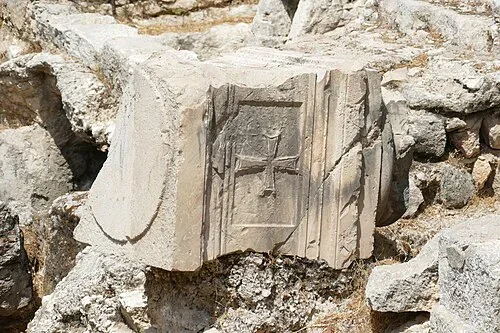 Roman Asclepieion and Crusader Ruins
A Cross Among the Ruins
A weathered stone block carved with a cross lies among the ruins here, a find from the churches that once stood on this ground. After the Crusader conquest of Jerusalem in 1099, a small church rose on the dam itself, among the Byzantine ruins, known as the Church of the Paralytic or the Moustier, meaning the Monastery. A larger church followed nearby, completed in 1138. It was built over a grotto honoured since the fifth or sixth century as the birthplace of Mary, and it took the name of her mother, Saint Anne. Saladin took Jerusalem in 1187, and the buildings became a Shafi'i school of Islamic law. After that they slowly collapsed into ruin, and the site ended up used as a waste dump.
Listen in the appPhoto: Bukvoed · CC BY 4.0
10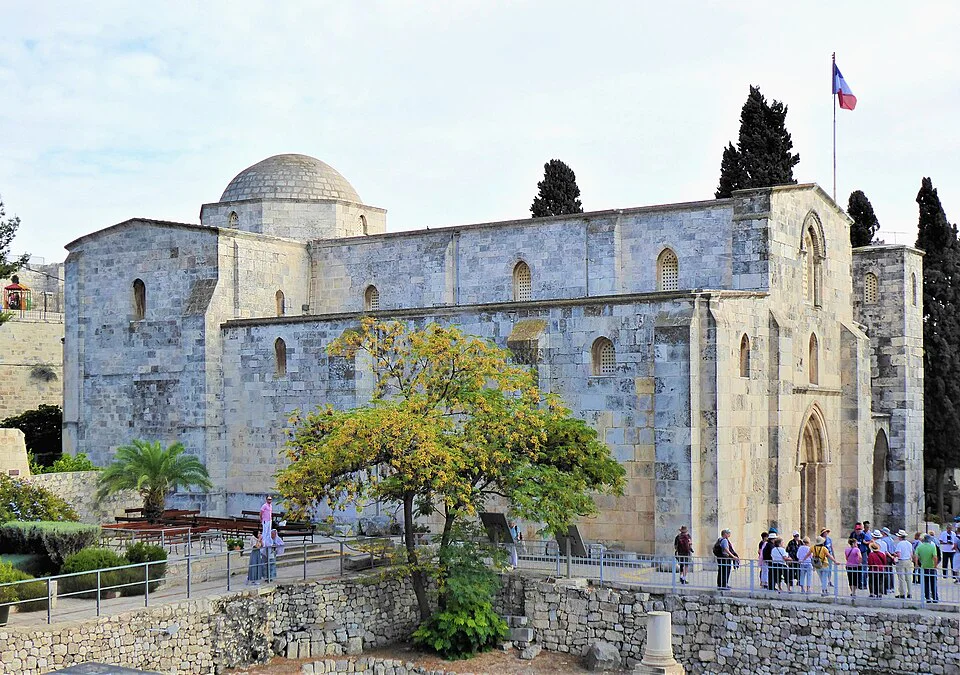 Church of Saint Anne Interior
Church of Saint Anne
The Church of Saint Anne is the building that survived everything. It is a classic Crusader basilica: a nave and two aisles ending in three parallel apses, built in the twelfth century in early Romanesque style, combined with older local Christian traditions. A dome over the crossing adds a Byzantine touch. Inside, steps in the right aisle descend to a Roman-period crypt honoured as the birthplace of Mary. The church's modern rescue began in 1856, when the Ottoman Sultan Abdülmecid I presented the whole complex, church and pool site together, to Napoleon III of France. France restored and rededicated the church, placing it in the care of the White Fathers, and left the rest of the ruins untouched. Two thousand years of water, healing and devotion lie stacked in this one valley.
Listen in the appChris06 · CC BY-SA 4.0
Pool of Bethesda
Frequently asked questions
How much does the guide cost?
Free app download. Listed guide price: $0.99. Guide price shown in the app. Audio guide only. Venue admission is separate.
Can I listen without internet?
Yes. Download the guide’s audio, images, and maps in the app before your visit. Your downloaded content is then available offline.
Can I listen in my language?
This audio guide is available in 15 languages, including English.
Do I need to follow a schedule?
No. This is a self-guided experience. Choose your stops, pause whenever you like, and return to a story at your own pace.
At your own pace
Explore Pool of Bethesda.
Download Stanza, then search for “Pool of Bethesda”.
Free app download · Guide price shown in the app
Keep exploring
Nearby audio guides
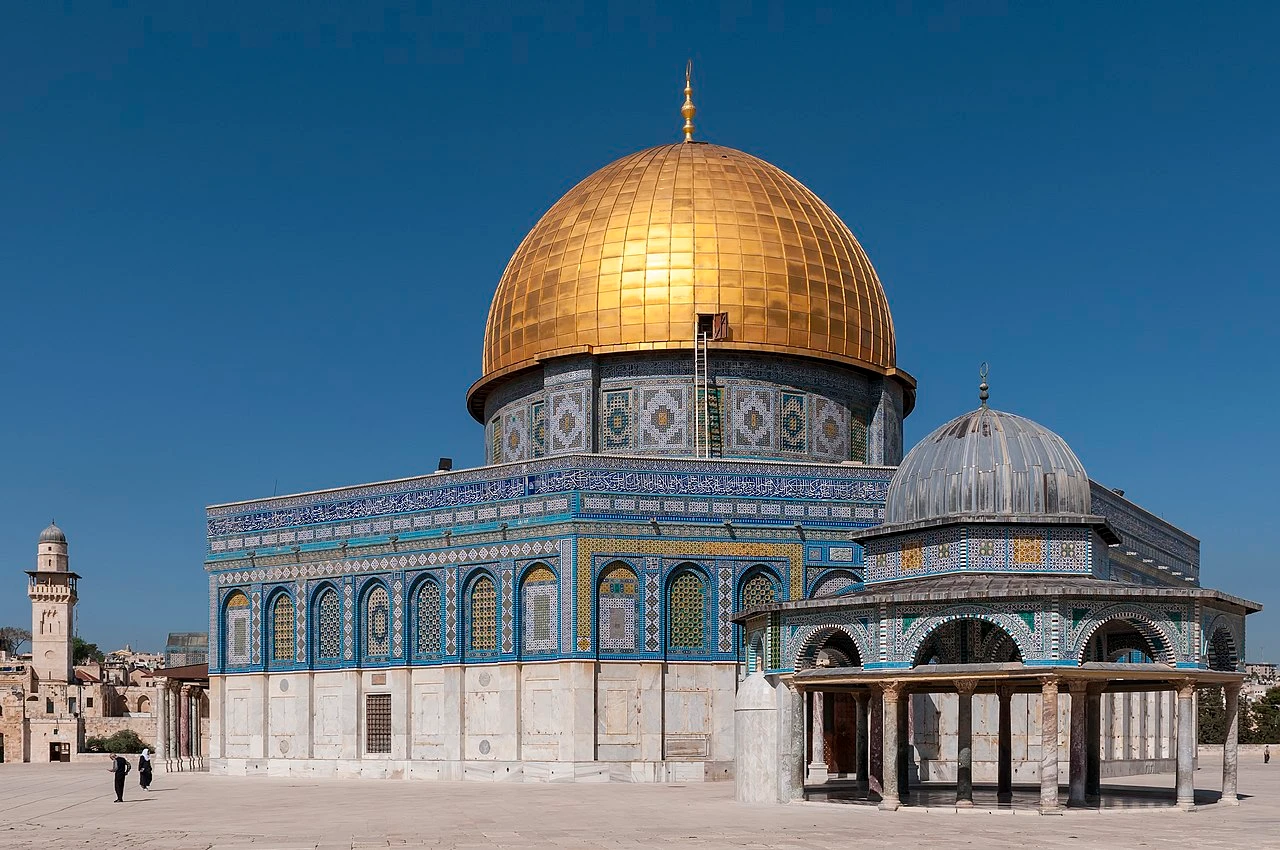
Jerusalem · 1 km
Dome of the Rock
Content & sources
Photo: Ralf Roletschek · GFDL 1.2
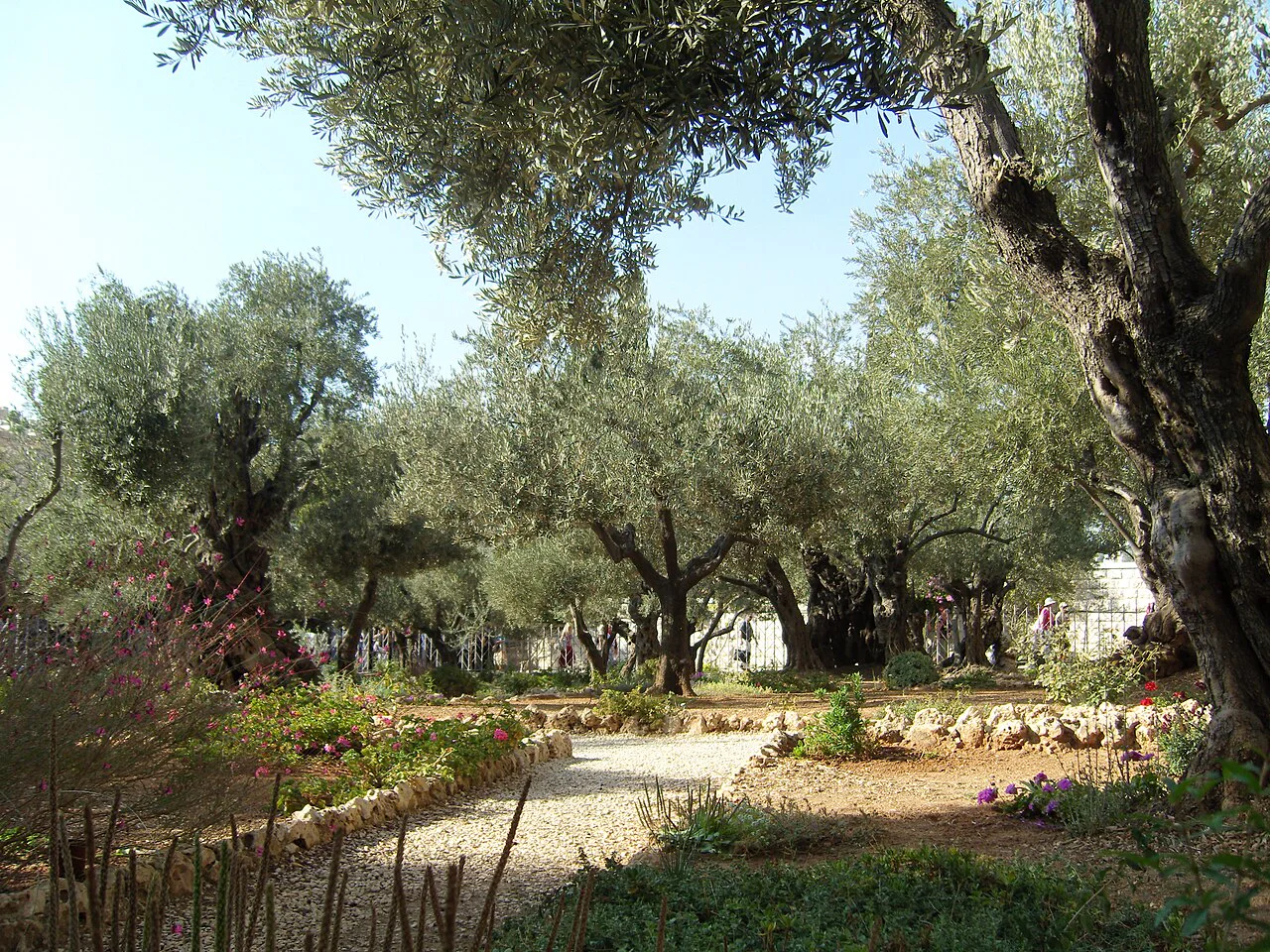
Jerusalem · 1 km
Gethsemane
Content & sources
Photo: Mewasul · CC BY-SA 3.0
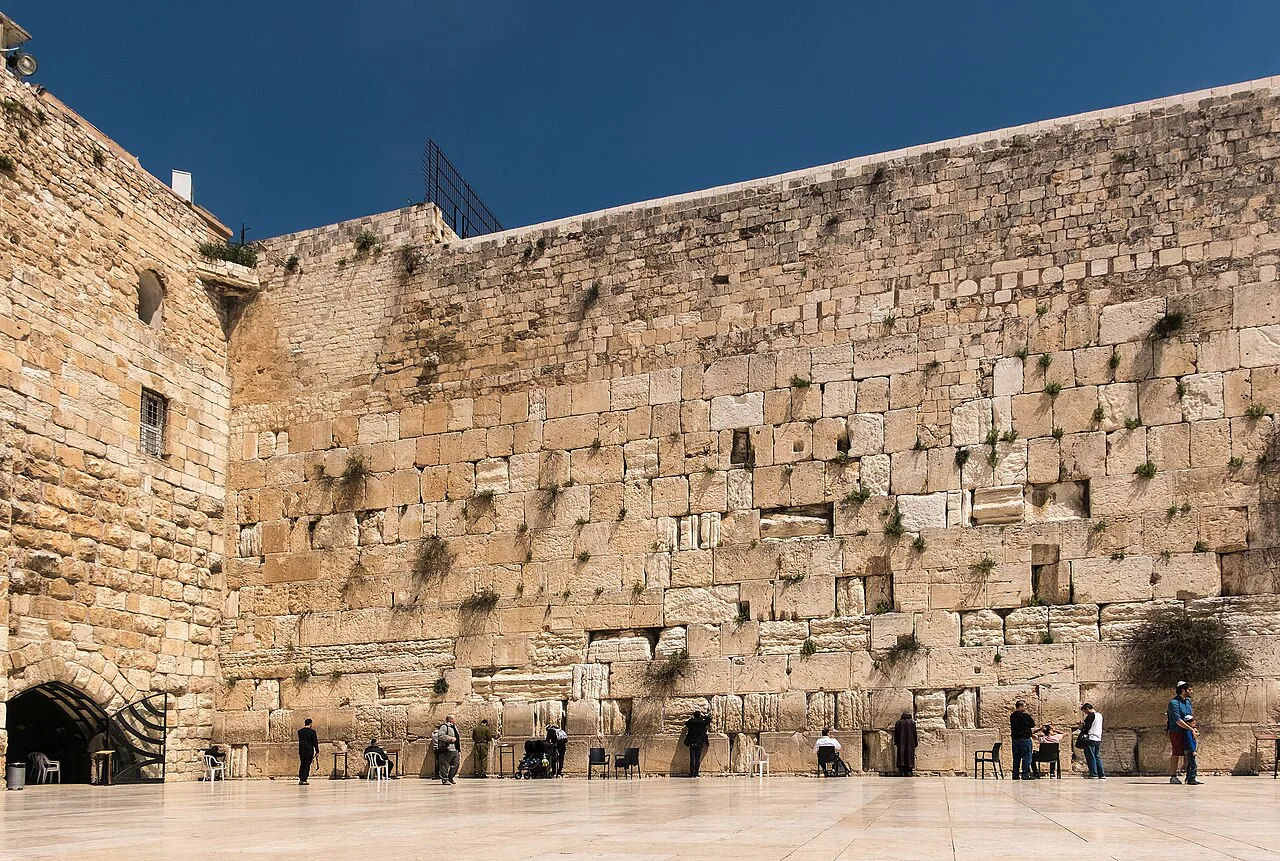
Jerusalem · 1 km
Western Wall
Content & sources
Photo: Ralf Roletschek · GFDL 1.2
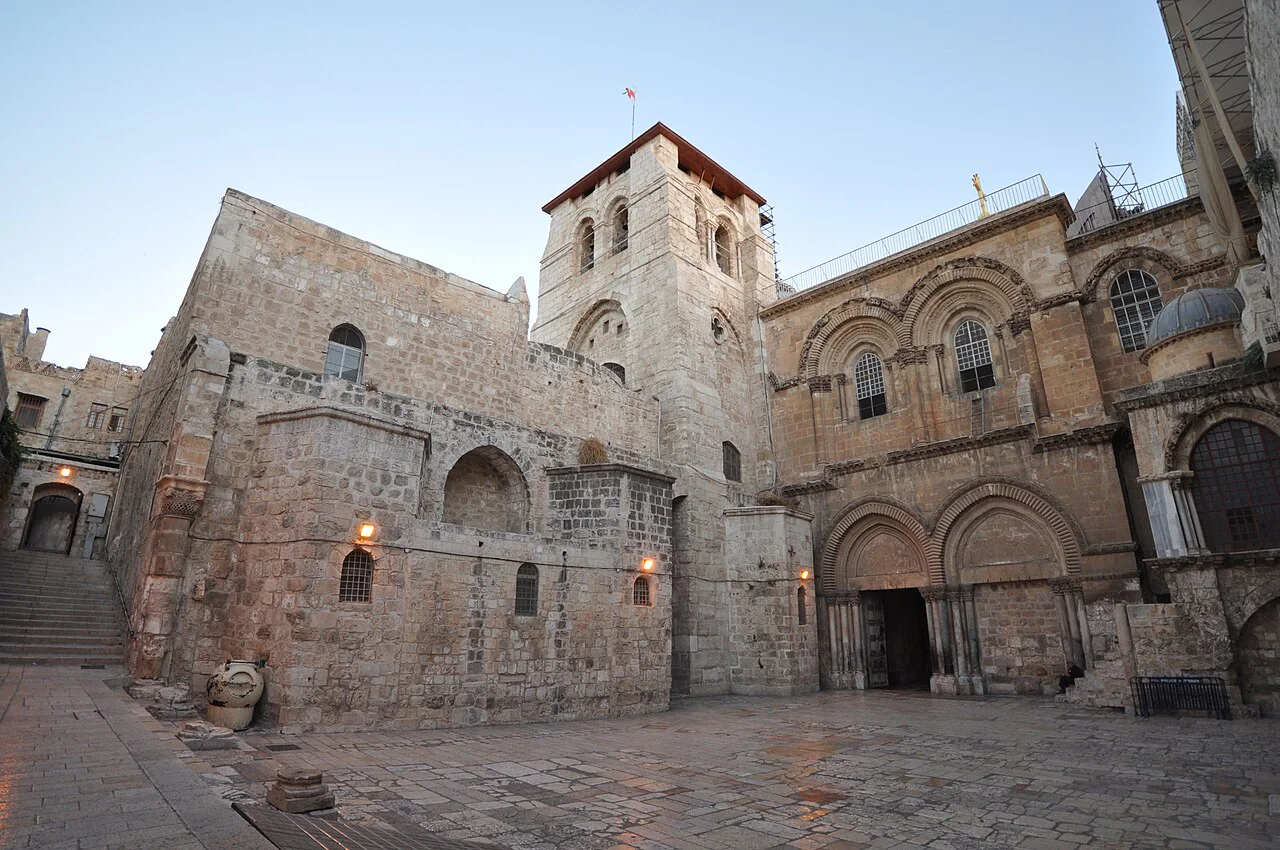
Jerusalem · 1 km
Church of the Holy Sepulchre
Content & sources
https://www.flickr.com/photos/jlascar/ · CC BY 2.0