Stanza · Audio guide
Gethsemane Audio Guide
A place to remember. A story to take with you.
Gethsemane is a garden at the foot of the Mount of Olives in Jerusalem. It is the site where Jesus Christ underwent the Agony in the Garden and was arrested before his crucifixion.
Download Stanza, then search for “Gethsemane”.
About the tour
One guide. Your kind of visit.
Gethsemane is a garden at the foot of the Mount of Olives in Jerusalem. It is the site where Jesus Christ underwent the Agony in the Garden and was arrested before his crucifixion.
Ready when you are.
- 01Get the free Stanza app.
iOS & Android
- 02Find your guide.
“Gethsemane”
- 03Download before you go.
Works offline
Audio guide / 9 narrated stops
Inside the guide
Get to know a few of the stories before you go. Open a stop to read more.
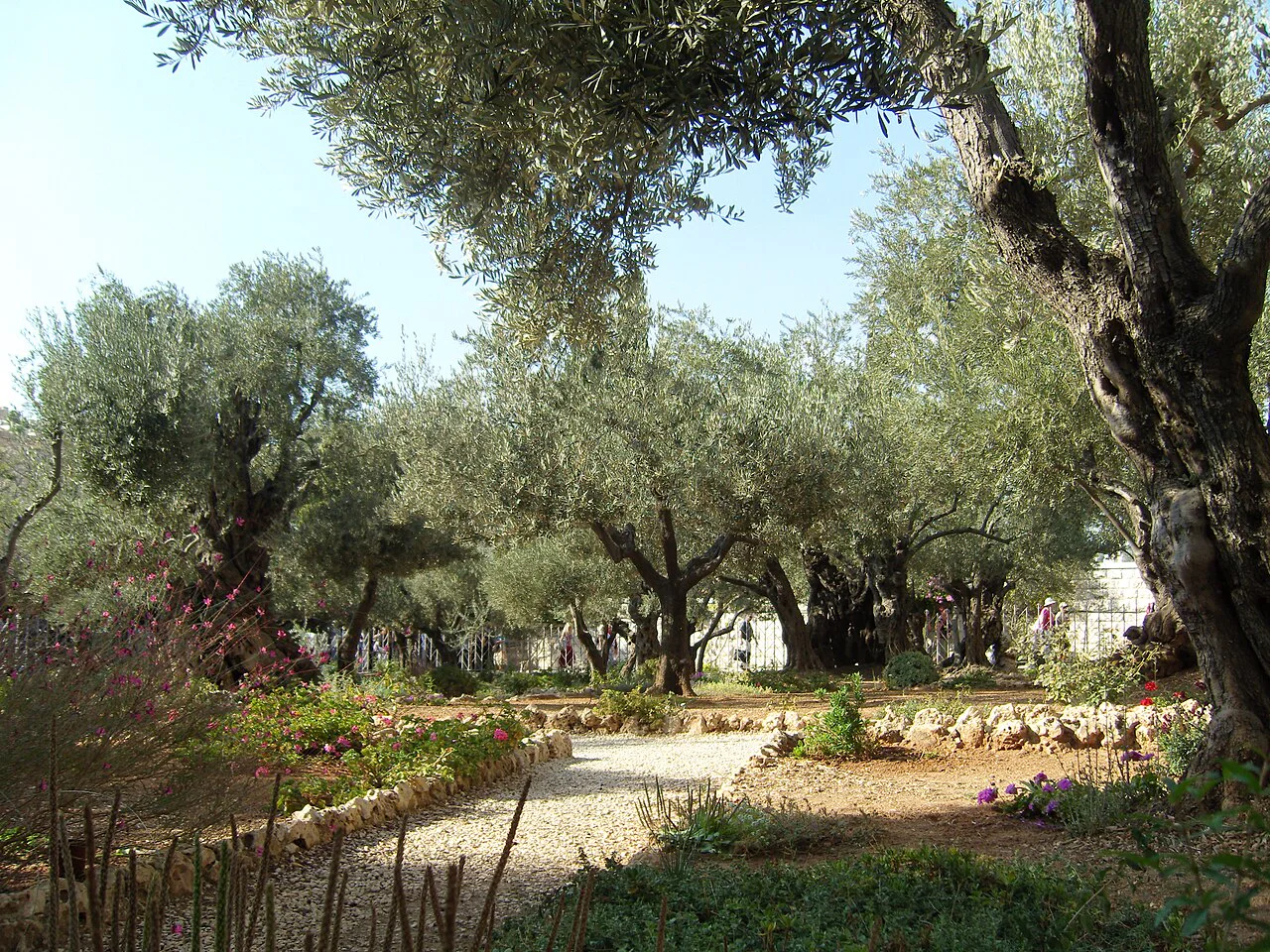
01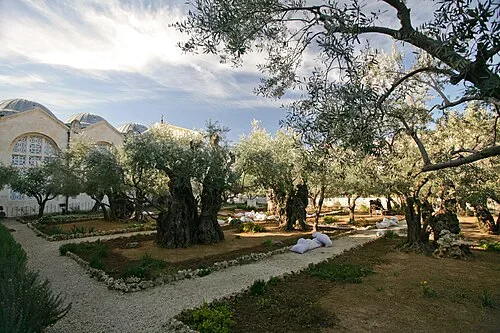 Garden of Gethsemane and the Ancient Olive Grove
The Walled Garden of Gethsemane
Welcome to Gethsemane, a walled garden of ancient olive trees at the foot of the Mount of Olives in Jerusalem. This tour follows the garden, the basilica beside it, and the cave below, tracing one night remembered here above all others. According to the four Gospels, Jesus prayed here in anguish and was arrested on the night before his crucifixion. The garden holds a place of great resonance in Christianity, and pilgrims have climbed this slope for centuries. The Franciscans own it to this day. They received it in 1681 as a gift from three Croatian knights of the Holy Order of Jerusalem, named Paul, Antun and James. A plaque by the garden entrance still records their donation. One honest note belongs here. Several small olive groves stand side by side on church property at the foot of the mount, and each one is identified with biblical Gethsemane. Modern scholarship agrees that the exact location of the gospel garden is unknown.
Svetlana Makarova · CC BY-SA 2.0
02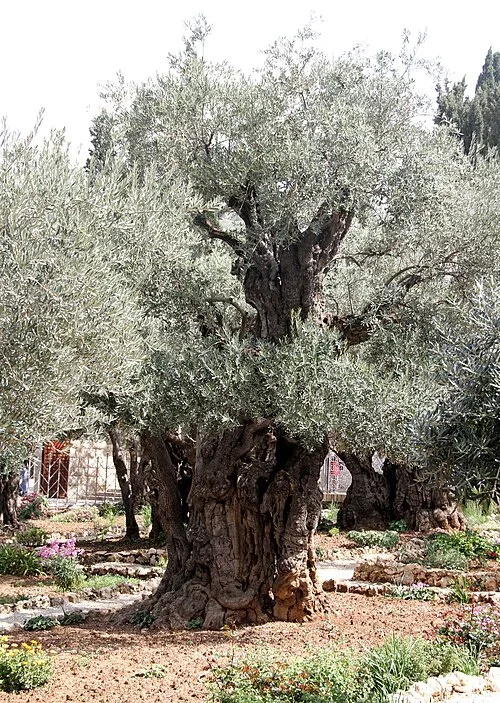 Garden of Gethsemane and the Ancient Olive Grove
An Ancient Olive Tree
Eight ancient olive trees grow inside these walls, and their trunks are extraordinary: massive, gnarled, and hollow at the center. In 2012 the Italian National Research Council studied them. Carbon dating of wood from the older parts of one trunk reached back to AD 1092. The other two trees tested dated to the later twelfth century. That makes the three of them among the oldest olive trees known to science. DNA tests added a strange detail: all three grew from the same parent plant. The researchers think they may be sprouts that rose again from the roots of a single older tree. Olive trees do that. Cut one down, and it can grow back from its roots. So the science cannot settle a beloved question. The tests cannot prove, or disprove, that these are the very trees that sheltered Jesus. The trunks are hollow, their oldest wood is gone, and five of the eight trees could not be dated at all. Legend goes further than the laboratories. Popular tradition holds that these are Christ's own immortal trees, alive since his night in this garden.
Photo: Gerd Eichmann · CC BY-SA 4.0
03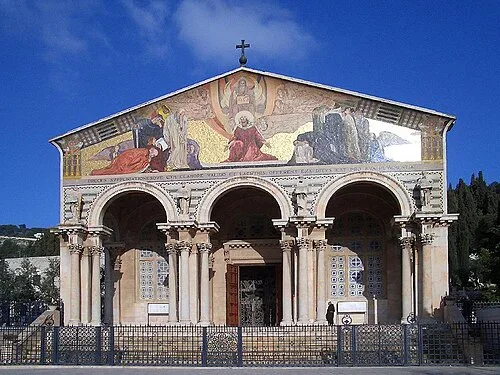 Church of All Nations: The Facade of the Agony
Church of All Nations: Facade and Pediment Mosaic
The Church of All Nations rises at the garden's edge, and its facade announces everything the building holds inside. High on the pediment, gold mosaic shows Christ in his agony, attended by angels, with figures gathered around him below. An Italian architect, Antonio Barluzzi, designed the church, and it was completed in 1924. It is also called the Basilica of the Agony, a name that points to the rock venerated at its heart. The building crowns a long succession of sanctuaries. For some fifteen hundred years, earlier churches and shrines stood on this spot before Barluzzi's basilica rose among the olives. Three open arches rest on carved columns, and a single cross crowns the roofline.
Listen in the appKarsten Müller, User Etc. gamma on de.wikipedia · Public domain
04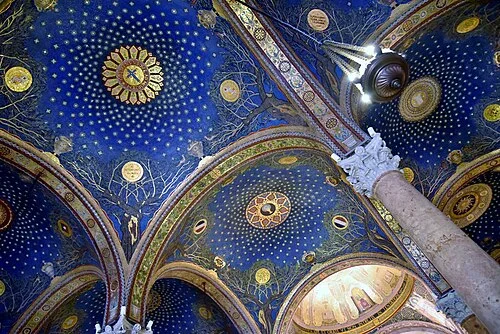 Interior of the Basilica and Domes of All Nations
Starry Domes of the Basilica
Inside, the basilica keeps the night. The vaulted ceilings glow deep blue, scattered with golden stars and round mosaic medallions. Light falls low and somber through the windows, where purple-tinted alabaster dims the sun to a twilight glow. The effect is deliberate. The design was meant to hold the atmosphere of the night the Gospels remember on this slope, so that even at noon the church feels like evening under the olives. Carved capitals and pale stone columns rise toward the starred vaults. Whatever the hour outside, the interior stays in darkness, and the darkness is the point.
Listen in the appPhoto: Bahnfrend · CC BY-SA 4.0
05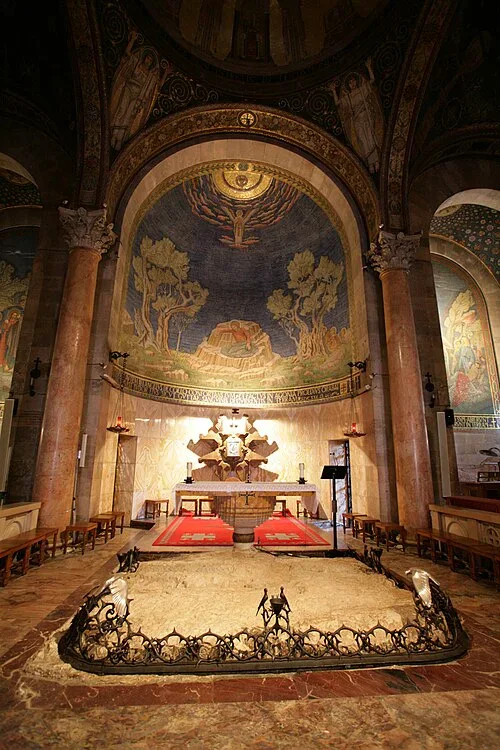 The Rock of the Agony
The Apse Mosaic and the Agony
Above the altar, the apse mosaic gathers the whole story into one image. Christ kneels in prayer among olive trees, robed in red, while his disciples sleep nearby under a dark sky. The Gospels tell what happened on the night before his execution. Jesus came to this place with his disciples, as he customarily did, and withdrew to pray. According to Luke, his anguish was so deep that his sweat fell to the ground like great drops of blood. He asked his closest followers to keep watch with him, and they could not stay awake. The mosaic holds that moment at the very center of the church, directly above the altar, so that every prayer here is offered beneath it.
Listen in the appSvetlana Grechkina · CC BY-SA 2.0
06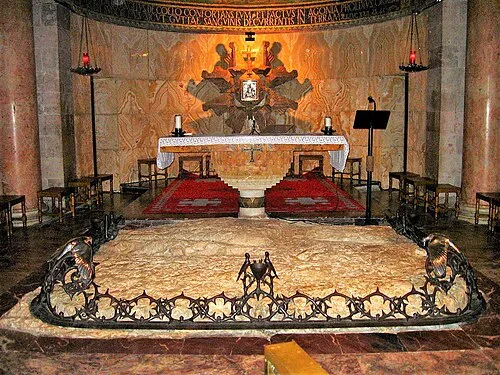 The Rock of the Agony
A rough block of limestone lies before the altar, enclosed by a low wrought-iron railing. The railing curls into thorns, a crown of thorns forged in iron for this stone. Tradition holds that Jesus endured his agony upon this bedrock, and pilgrims have knelt here for generations. The ground beneath holds older layers still. In December 2020, archaeologists of the Israel Antiquities Authority announced the remains of a Byzantine church about fifteen hundred years old. Deeper still lay the foundations of a Jewish ritual bath, a mikveh, from the Second Temple period. Greek inscriptions from the church floor ask God to accept the offering of his servants and grant them remission of sins. Amit Re'em, the authority's Jerusalem district head, called the mikveh the first archaeological evidence at a site where Christians have made pilgrimage for centuries.
Listen in the appadriatikus · CC BY-SA 3.0
07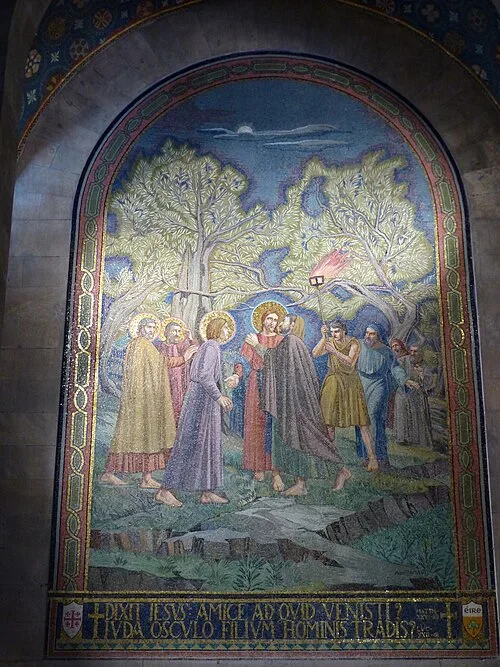 Mosaic of the Betrayal: The Kiss of Judas
Mosaic of the Kiss of Judas
On a side wall, set within a stone arch, a mosaic shows the night's second act. Judas Iscariot steps forward and kisses Jesus, the signal by which he identifies him to the armed men closing in through the trees. The scene is set at night, under a deep blue sky, with a torch burning among the figures. Below the image runs a Latin line, Jesus's own question to Judas: Friend, why have you come? The Gospels explain how the betrayer knew where to search. Judas knew the place, so he needed only to lead the soldiers and temple guards there. A kiss, the ordinary sign of greeting and respect, became the sign of betrayal. In the mosaic the two faces meet at the center, and the prayer told at the apse mosaic ends here, with armed men in the garden.
Listen in the appPhoto: Benjamín Núñez González · CC BY-SA 4.0
08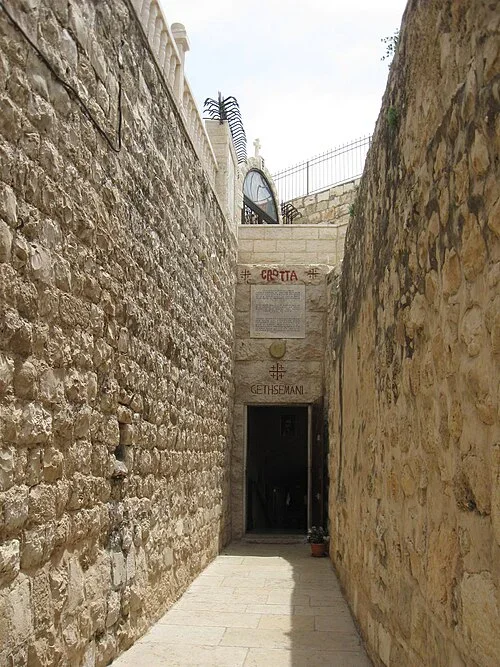 The Grotto of Gethsemane (Cave of Betrayal)
Entrance to the Grotto of Gethsemane
A narrow stone passage, walled high on both sides, leads down to a doorway cut into the bedrock. Over the door, the ancient name is written out: Gethsemani. The word comes from Hebrew and Aramaic and means oil press, and that plain meaning explains this whole landscape. Matthew and Mark call the place an estate; John calls it a garden. In 1956 the Franciscan archaeologist Virgilio Corbo excavated at the grotto and found the answer in the cave itself. In the late Second Temple period, this site worked as an agricultural facility producing olive oil. Olives were crushed and pressed here, close to the groves that gave the place its name. That is why an olive grove stood on this slope at all, and why the Gospels could call it the oil press. Local tradition also connects this cave with the night of the betrayal.
Listen in the appPhoto: Ori~ · Attribution
09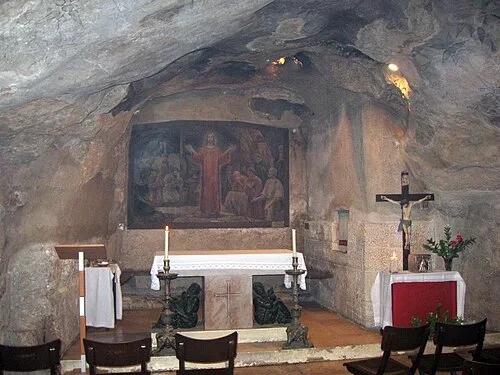 The Grotto of Gethsemane (Cave of Betrayal)
Inside the Grotto Chapel
The chapel inside the cave is bare rock, with a simple altar and a crucifix set against the stone. People have come to pray on this slope for a very long time. Eusebius of Caesarea, writing in the early fourth century, noted that the faithful were accustomed to go to Gethsemane to pray. In the year 333, an anonymous traveler from Bordeaux described the site as well. His itinerary is the earliest surviving description left by a Christian traveler in the Holy Land. The cave itself began as an ordinary oil press, common stone serving a common trade. Then, century by century, it became a place of prayer. From an oil press to a basilica to this quiet chapel, Gethsemane has kept a single purpose longer than any other: people coming here to pray.
Listen in the appPhoto: Ori~ · Attribution
Gethsemane
Frequently asked questions
How much does the guide cost?
Free app download. Listed guide price: $0.99. Guide price shown in the app. Audio guide only. Venue admission is separate.
Can I listen without internet?
Yes. Download the guide’s audio, images, and maps in the app before your visit. Your downloaded content is then available offline.
Can I listen in my language?
This audio guide is available in 15 languages, including English.
Do I need to follow a schedule?
No. This is a self-guided experience. Choose your stops, pause whenever you like, and return to a story at your own pace.
At your own pace
Explore Gethsemane.
Download Stanza, then search for “Gethsemane”.
Free app download · Guide price shown in the app
Keep exploring
Nearby audio guides
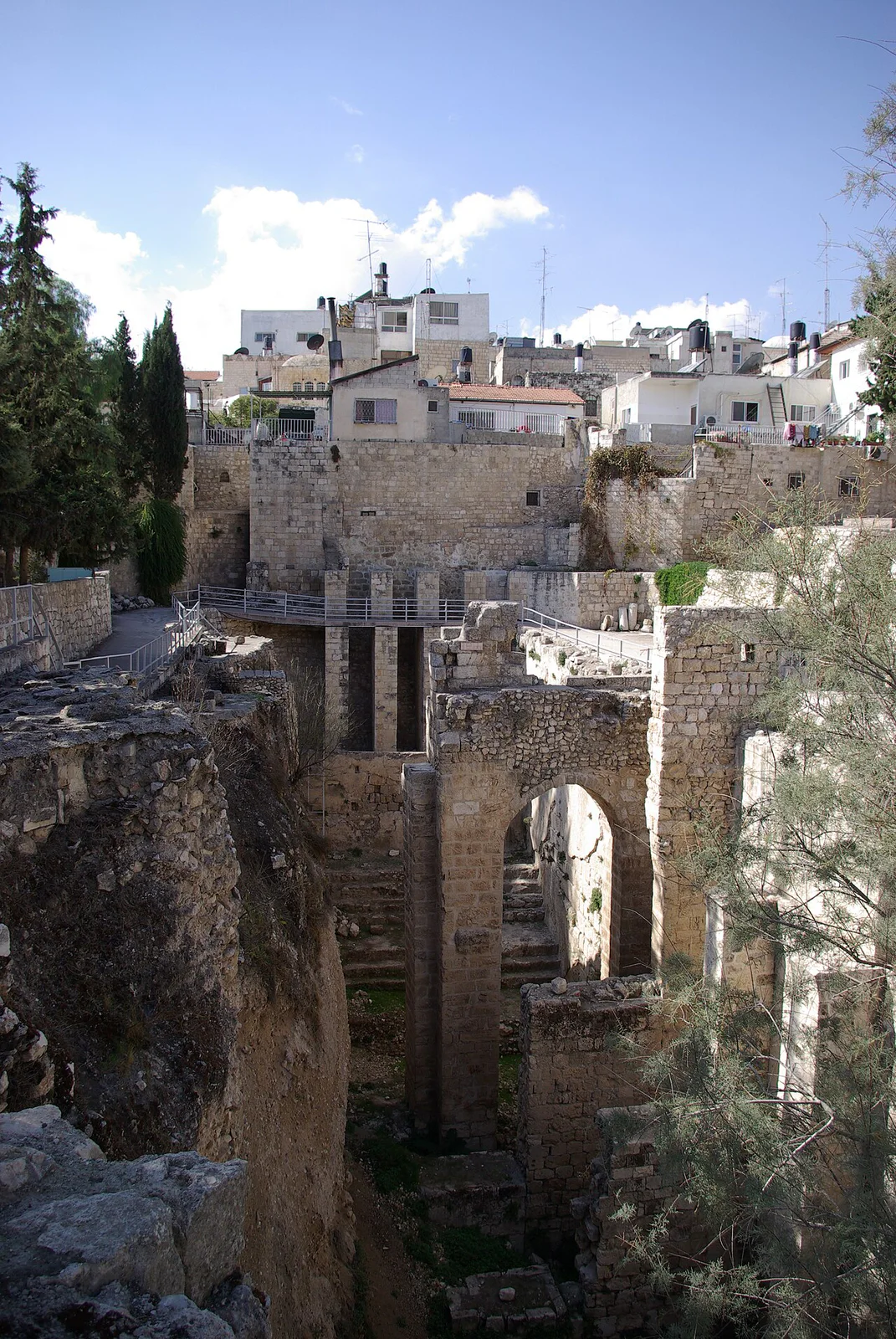
Jerusalem · 1 km
Pool of Bethesda
Content & sources
Photo: Berthold Werner · Public domain
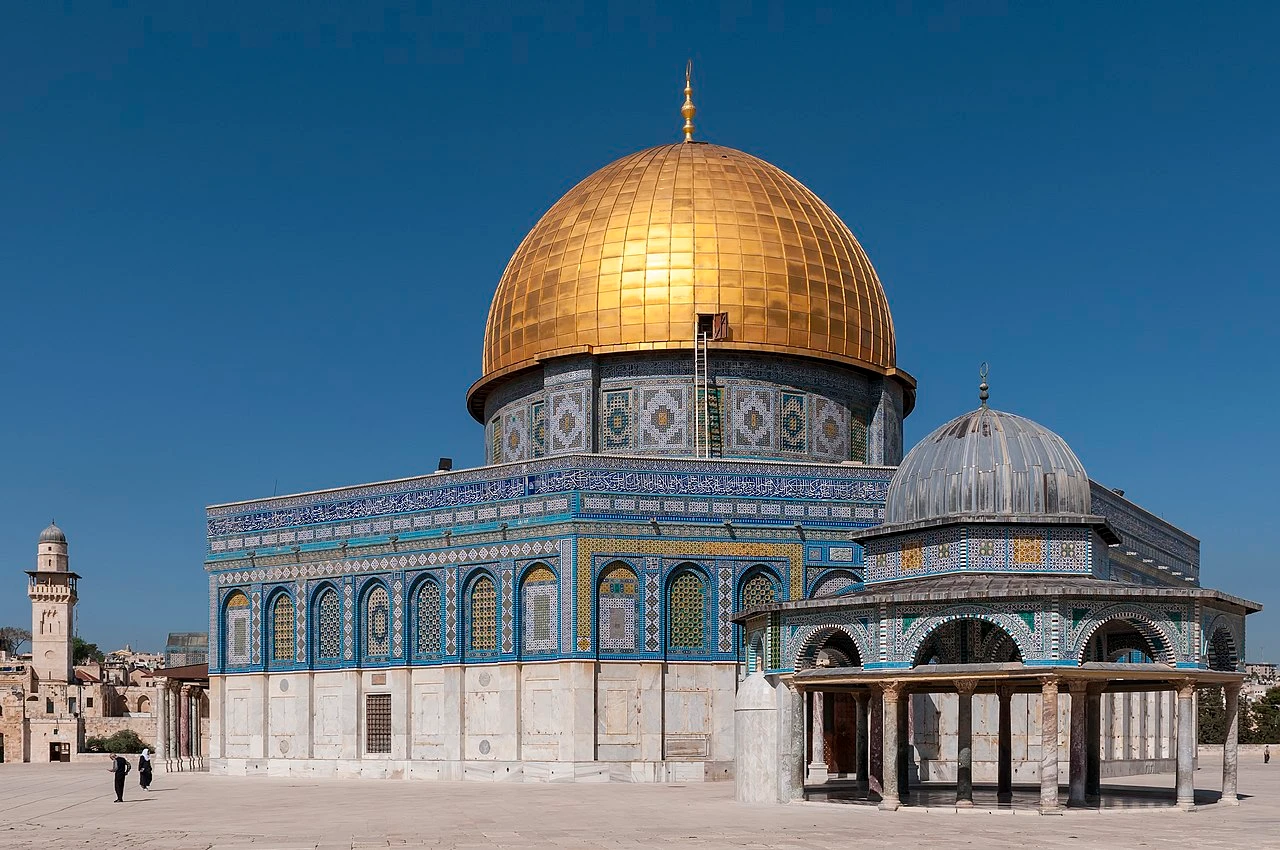
Jerusalem · 1 km
Dome of the Rock
Content & sources
Photo: Ralf Roletschek · GFDL 1.2
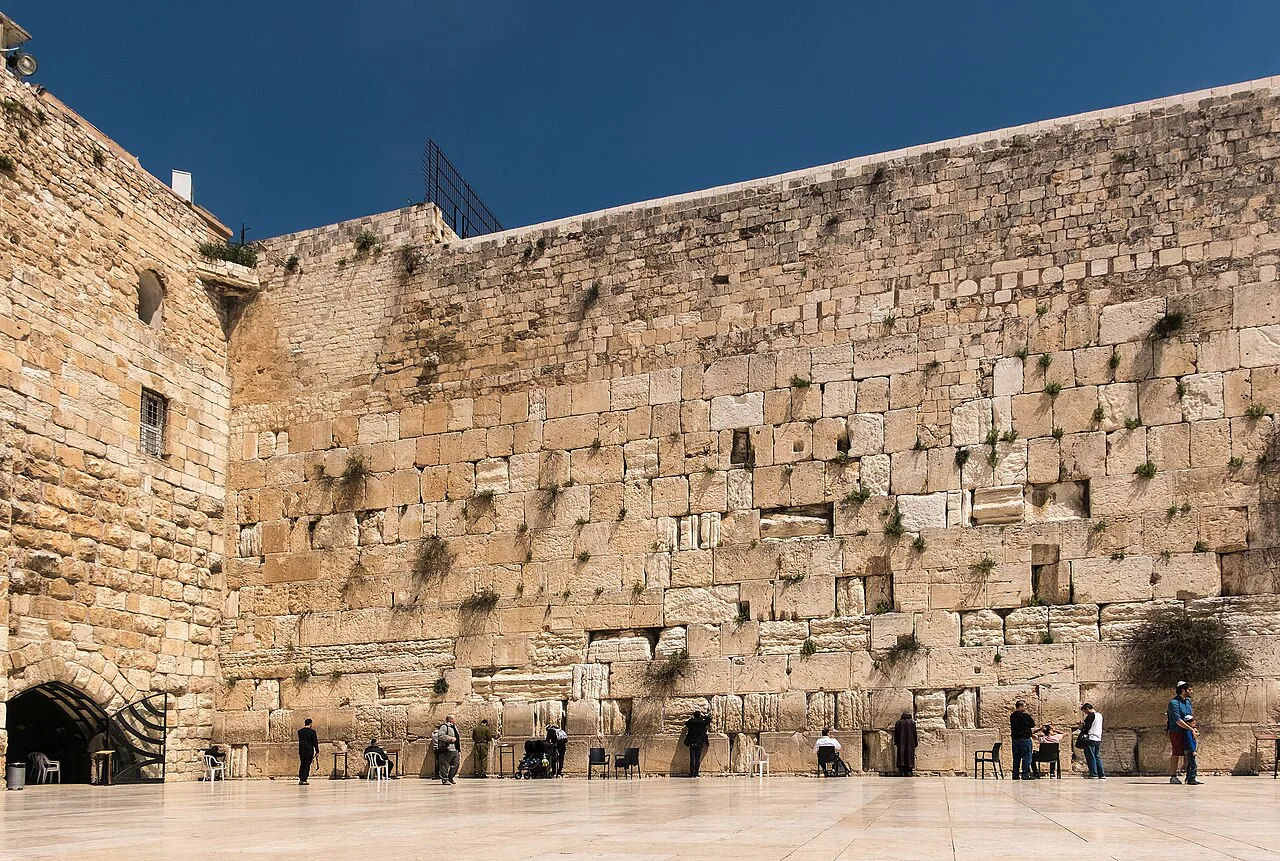
Jerusalem · 1 km
Western Wall
Content & sources
Photo: Ralf Roletschek · GFDL 1.2
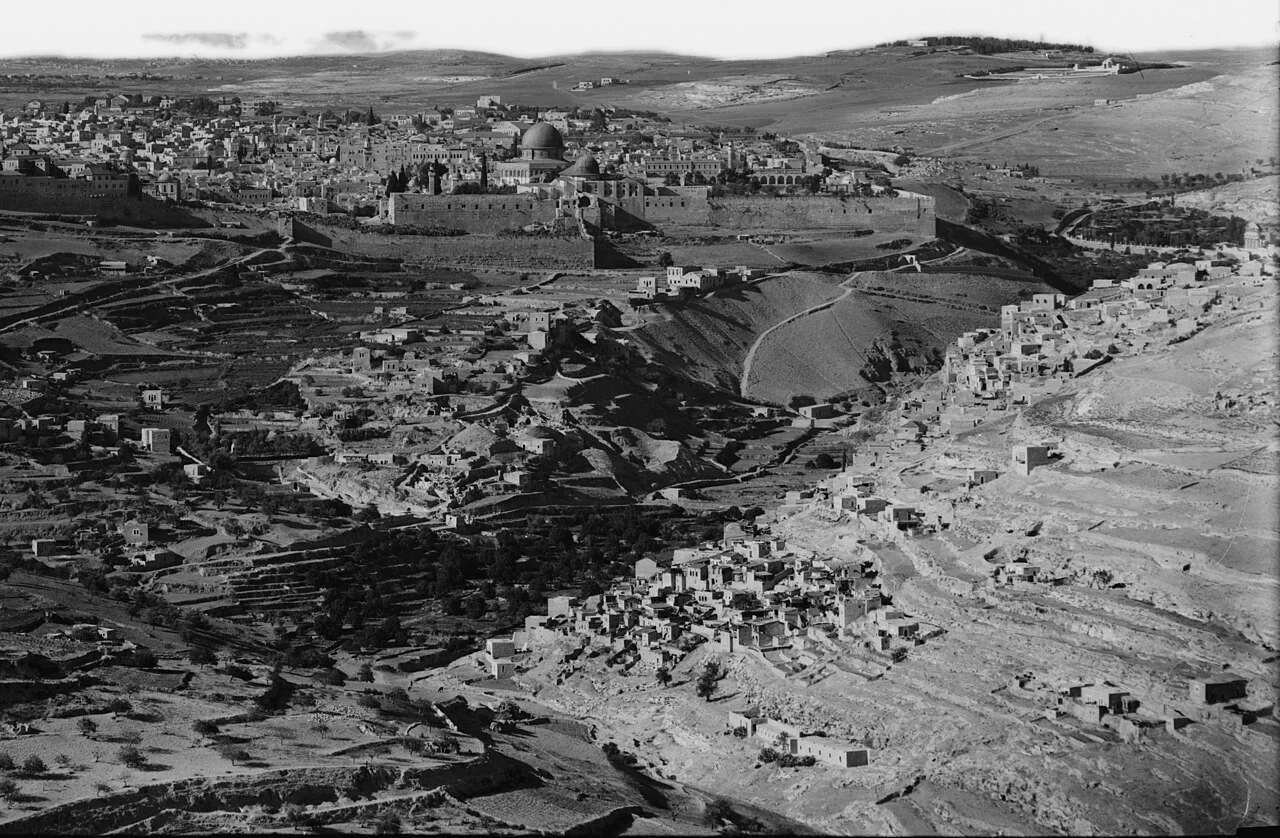
Jerusalem · 1 km
City of David
Content & sources
Matson Collection · Public domain