Stanza · Audio guide
Palazzo Madama e Casaforte degli Acaja Audio Guide
A place to remember. A story to take with you.
Palazzo Madama is a palace located in Turin, Piedmont. It served as the first Senate of the Kingdom of Italy and is named after two queens of the House of Savoy.
Download Stanza, then search for “Palazzo Madama e Casaforte degli Acaja”.
About the tour
One guide. Your kind of visit.
Palazzo Madama is a palace located in Turin, Piedmont. It served as the first Senate of the Kingdom of Italy and is named after two queens of the House of Savoy.
Ready when you are.
- 01Get the free Stanza app.
iOS & Android
- 02Find your guide.
“Palazzo Madama e Casaforte degli Acaja”
- 03Download before you go.
Works offline
Audio guide / 16 narrated stops
Inside the guide
Get to know a few of the stories before you go. Open a stop to read more.
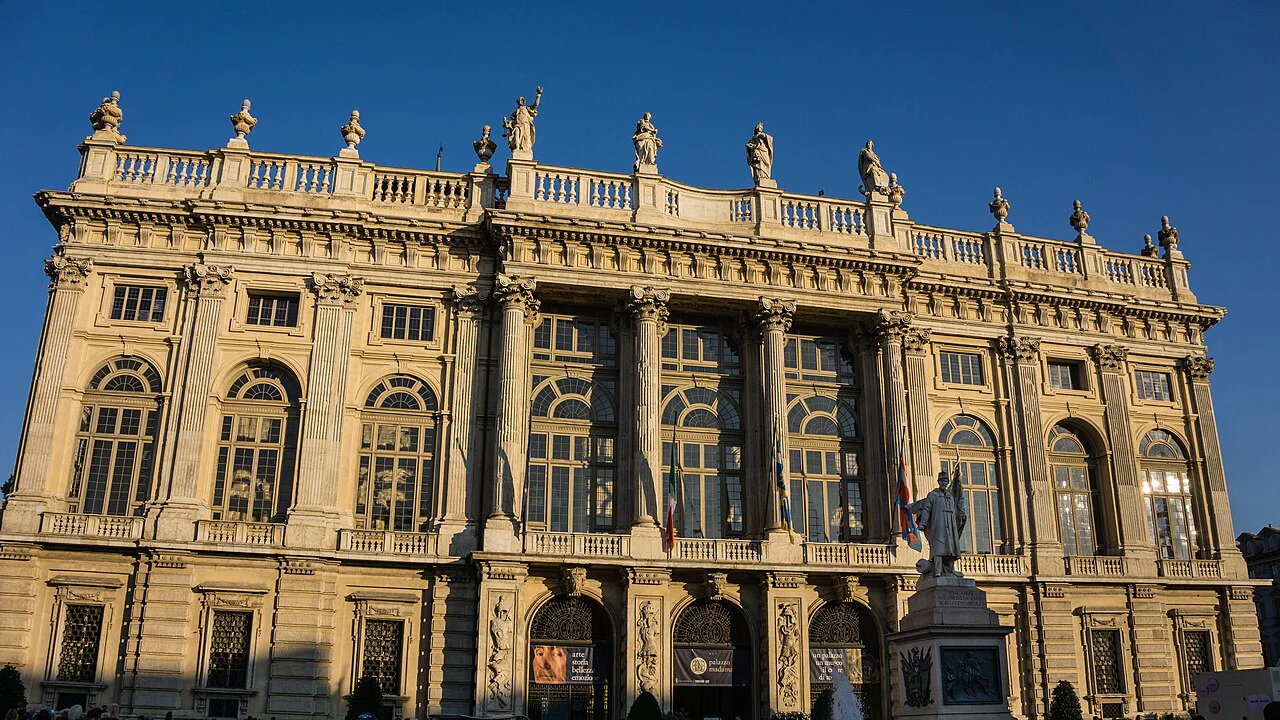
01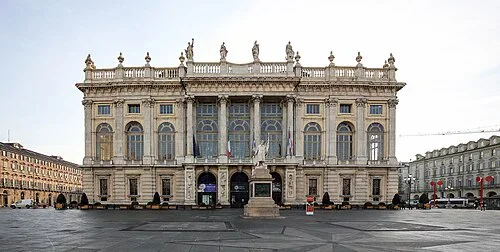 Piazza Castello and the Juvarra Facade
The Juvarra Facade in Piazza Castello
Welcome to Palazzo Madama, in the heart of Turin. The white stone frontage filling Piazza Castello is the work of Filippo Juvarra, the court architect. In 1716 the widowed duchess known as Madama Reale asked him to design a new Baroque palace in white stone. He drew something magnificent, but the works halted in 1721, after only the front section was finished. What stands here is the preamble to a palace that was never built. The facade is a screen a single bay deep, masking the old castle behind it. From the square it is all Baroque order: colossal pilasters, arch-headed windows, and a balustrade crowned with marble statues. The rear of the building tells another story, a brick fortress with round towers. Two faces of one palace, turned toward two different ages of Turin. In 1997 UNESCO placed it on the World Heritage list, along with thirteen other residences of the House of Savoy.
Listen in the appPhoto: Cristian Buda · CC BY-SA 4.0
02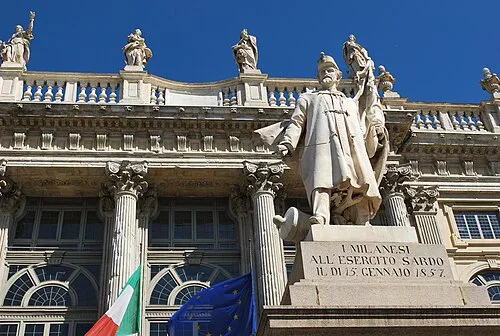 Piazza Castello and the Juvarra Facade
Monument to the Sardinian Soldier
The stone soldier at the foot of the facade carries a pointed message. Carved into his base are the words: I Milanesi all'esercito sardo. The Milanese to the Sardinian army. Milanese exiles erected the monument on 15 January 1857, at the very moment Emperor Franz Joseph was riding in triumph through their occupied city. Putting it here, in the capital of Savoy, was a deliberate act of defiance, and an early echo of the movement that would one day unite Italy. The square filled again in a very different mood in the twentieth century. On 6 May 1949, after the Superga air disaster, the bodies of the Grande Torino football team lay in state inside the palace. When the cortege came out, about half a million people filled Piazza Castello to give the players a last farewell.
Photo: Anerica2017 · CC BY-SA 4.0
03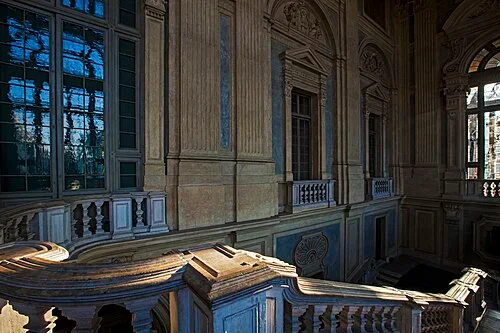 Ground Floor Vestibule and Grand Monumental Staircase
Juvarra's Grand Staircase
Inside, Juvarra kept his promises in marble. The grand staircase rises from the street vestibule as a double flight, splitting and climbing toward the piano nobile, the noble floor where the court lived. Four central columns carry the vault above it, so the ascent feels held up by something almost architectural in scale. Light pours in from the windowed sides and washes over the stone. This was design with a purpose. Anyone climbing these steps in the seventeen-twenties was meant to feel the occasion build: from the noise of the square, through the cool of the vestibule, up toward gilded rooms and the presence of the regent. Staircases like this were the theatre entrances of their age, and this is one of the great Baroque examples in Europe.
Listen in the appPhoto: FRABUS · CC BY-SA 3.0
04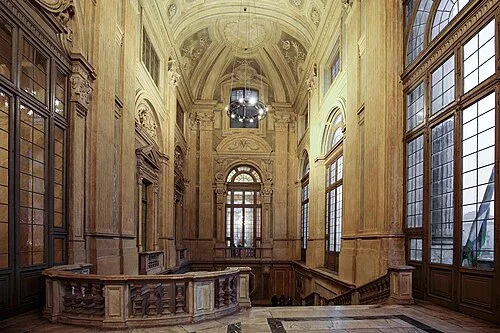 Ground Floor Vestibule and Grand Monumental Staircase
The Marble Staircase Vestibule
The tall windows flooding this stairwell with light were never just for brightness. They turned the palace into a theatre facing the square. During the great Baroque festivities, the crowd gathered in Piazza Castello could watch the celebrations inside, framed by these glass-fronted walls. The building performed to the city, and the city had a front-row seat. The House of Savoy had long used the palace for exactly this kind of public spectacle. From 1578 onward, on important weddings and solemn feasts, the dynasty displayed the Holy Shroud from Palazzo Madama to the gathered city. The relic was the most precious thing the family owned, and the palace was its stage. A fortress once built for defence had learned to face outward.
Listen in the appPhoto: Cristian Buda · CC BY-SA 4.0
05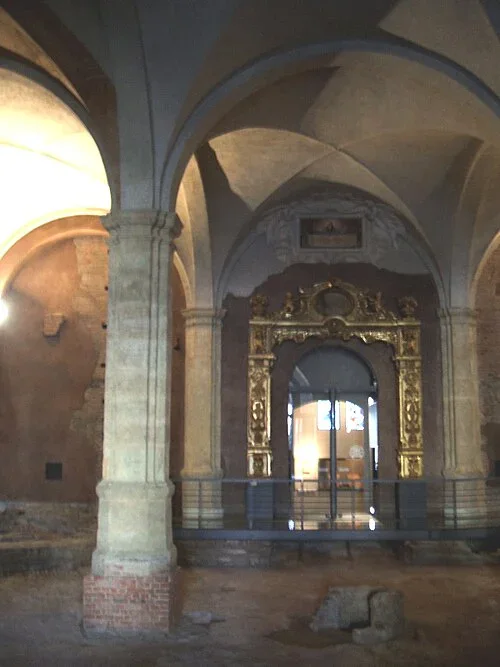 Subterranean Roman Gate and Medieval Archaeological Zone
The Roman Gate Excavations
Beneath the palace, the building's oldest story lies in the ground. In the late first century BC, a gate in the Roman walls of Augusta Taurinorum stood on this spot. Augusta Taurinorum was the ancient name of Turin. From this gate the decumanus maximus, the colony's main east-west street, set out toward the river Po. This was the city's eastern entrance, the side facing the water, and it had to be defended with care. In the excavated Roman level, stone piers still stand on their brick footings. Two of the towers above, though restored over the centuries, go back to this original nucleus. Even the gate's name is a puzzle. Some historians call it the Porta Praetoria, others the Porta Decumana. The stones remember the gate better than the texts do.
Listen in the appGeorgius LXXXIX · CC BY 3.0
06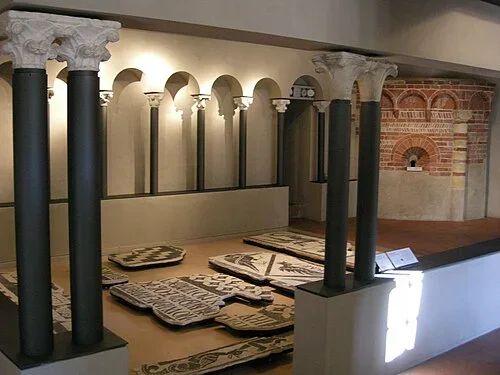 Subterranean Roman Gate and Medieval Archaeological Zone
The Medieval Lapidary
When the Western Roman Empire fell, the gate did not fall with it. It was turned into a fortified stronghold in the defences of the city, holding its place in the old Roman wall. It kept working as a passage, too. By the ninth century a second gate on this site is recorded under the name Fibellona, a word whose origin nobody has been able to pin down. The carved capitals, columns and mosaic floor fragments gathered in this room are the material trace of those centuries between antiquity and the castle. A lapidary, as a room like this is called, is a storehouse of carved stone, and these pieces were brought together from the city's medieval past. Together with the Roman footings outside, they let one building hold two thousand years of Turin in a single floor.
Listen in the appPhoto: Sailko · CC BY-SA 3.0
07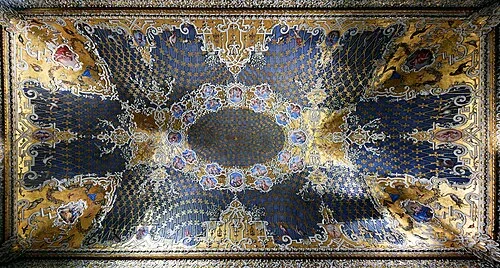 First Floor Piano Nobile and Guidobono Staterooms
Ceiling of the Four Seasons Hall
The regent wanted her first-floor apartments to feel light, playful and sumptuous, and for that she brought in Domenico Guidobono. He became the undisputed protagonist of the palace's first-floor decorations, painting the halls still known as the Guidobono rooms: the Madama Reale's Chamber, the Chinese Cabinet and the Southern Veranda. This is the ceiling of the Four Seasons Hall, and it shows what that meant in practice. Gold and colour weave together into patterns that never quite sit still, with flowers, figures and ornament dissolving into one another. Nothing is heavy, nothing is stern; the style leans toward the arcadian, a painted world of ease rather than power. It is decoration meant to be lived under, day after day, by a court that read ceilings the way we read walls. Guidobono's work here is among the finest of its kind in Piedmont.
Listen in the appPhoto: Paris Orlando · CC BY-SA 4.0
08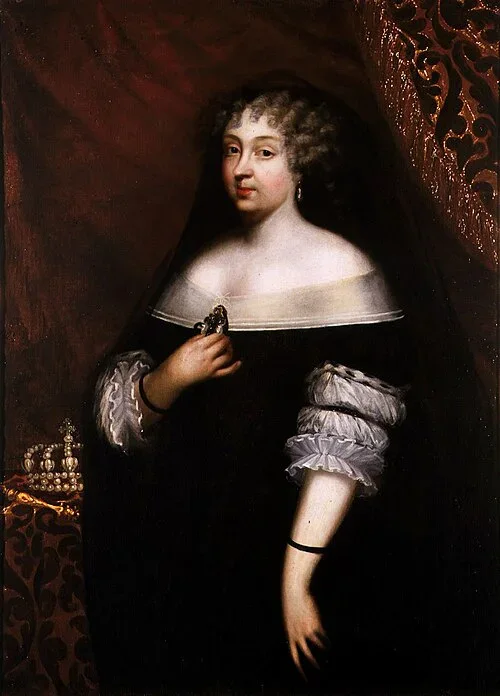 First Floor Piano Nobile and Guidobono Staterooms
Portrait of Marie Jeanne Baptiste of Savoy
Laurent Dufour painted this portrait in the 1670s, and he painted her as a widow: black dress, white collar, a veil over her greying hair, a crown resting on the table beside her. She is Marie Jeanne Baptiste of Savoy-Nemours, the second of the two French-born women who ruled Savoy as regents from this palace. She lived here from 1666, and from 1675 she ruled as regent for her young son Vittorio Amedeo the Second. Her presence fixed the building's nickname for good. Madama, the Italian word for Madame, became part of its very name: Palazzo Madama. She filled the palace with artists and wanted it remade as a sumptuous royal residence. She lived here until 1724, the last of the Madame Reali.
Listen in the appLaurent Dufour · Public domain
09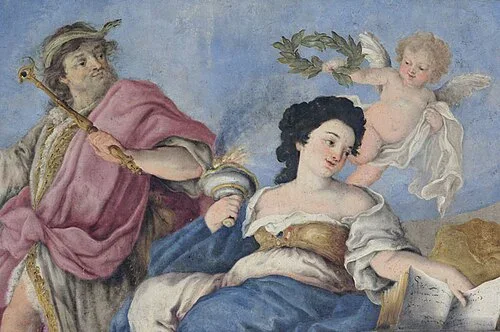 First Floor Piano Nobile and Guidobono Staterooms
Triumph of Virtue of Madama Reale
A woman sits enthroned in blue and gold, smiling, while a winged child lowers a laurel wreath toward her head. Beside her a man in a rose-pink cloak holds a staff of office. The fresco is called the Triumph of Virtue of Madama Reale, and Domenico Guidobono painted it. Which of the palace's two regents it shows, the title leaves open. But the story of royal women ruling from this building begins with Christine of France, daughter of Henri the Fourth. In 1637 she was regent for the child duke Charles Emmanuel the Second, and she chose the old fortress as her home, away from the heavy air of the court. She had the courtyard covered over, and that roof still rises one storey above the rest of the building. The inner apartments were modernised for her. Paintings like this show how a regent's rule was celebrated in paint: virtue enthroned, and crowned.
Listen in the appDomenico Guidobono · Public domain
10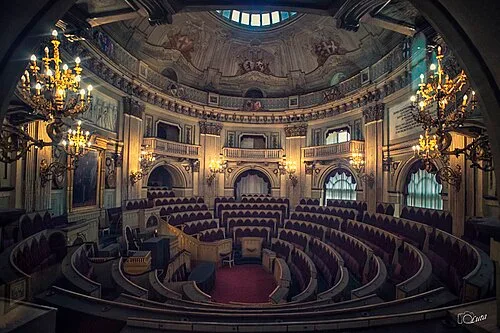 Subalpine Senate Chamber
The Subalpine Senate Chamber
In 1848 this palace became a parliament. The Subalpine Senate, the assembly of the Kingdom of Sardinia, met here for the first time on 8 May 1848, while King Charles Albert was away at war with Austria. The hall is a wide semicircle, with desks rising in tiers and a royal tribune for the king. From these seats the politics of Italian unification were worked out, and Camillo Cavour stood at the centre of it. A painting of the grand staircase catches the atmosphere of those years: in 1853 King Vittorio Emanuele the Second came down the steps with Cavour, the ministers and the court, after opening a new legislature. In 1861 the Kingdom of Italy was proclaimed, and this room became the first Senate of the new state. The last sitting was held on 9 December 1864. After that, the capital itself moved on.
Listen in the appPhoto: Lucio Taranto · CC BY-SA 4.0
- 11
Senate Hall Ceiling
A coffered ceiling of Savoy heraldry, raised again after the hall was demolished in 1927.
- 12
Portrait by Antonello da Messina
A Renaissance portrait of rare calm, and the story of how the palace became a museum.
- 13
Casket of Cardinal Guala Bicchieri
An enamelled casket tied to a cardinal of the early thirteenth century, and the depth of the museum's medieval goldwork.
- 14
The Medieval Castle Rear
The bare brick castle at the back, built by a cadet branch of Savoy and reused by dukes, guests and a French government.
- 15
A Corner Tower of the Casaforte
Medieval brick around Roman stone, and the little observatory cupola that once crowned the roof.
- 16
The Medieval Moat Garden
Medieval plants replanted in the old moat, and the poet who called the palace the house of the centuries.
Palazzo Madama e Casaforte degli Acaja
Frequently asked questions
How much does the guide cost?
Free app download. Listed guide price: $0.99. Guide price shown in the app. Audio guide only. Venue admission is separate.
Can I listen without internet?
Yes. Download the guide’s audio, images, and maps in the app before your visit. Your downloaded content is then available offline.
Can I listen in my language?
This audio guide is available in 15 languages, including English.
Do I need to follow a schedule?
No. This is a self-guided experience. Choose your stops, pause whenever you like, and return to a story at your own pace.
At your own pace
Explore Palazzo Madama e Casaforte degli Acaja.
Download Stanza, then search for “Palazzo Madama e Casaforte degli Acaja”.
Free app download · Guide price shown in the app
Keep exploring
Nearby audio guides
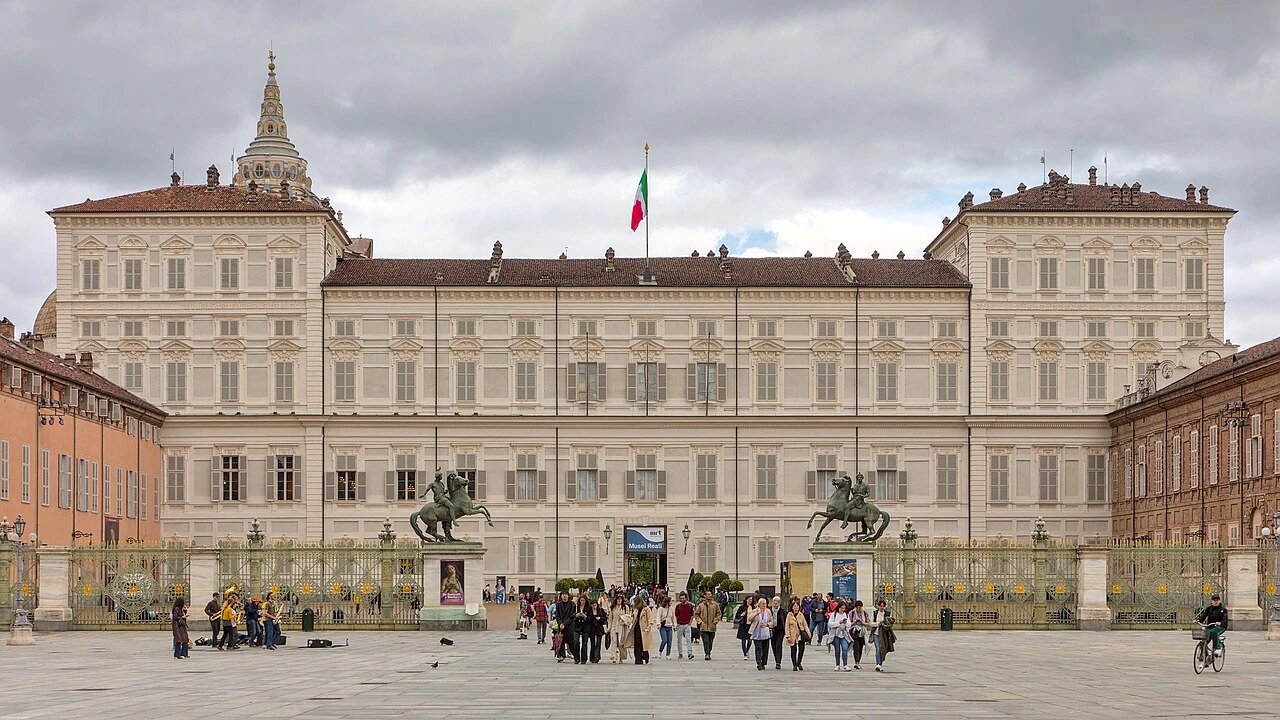
Turin · 1 km
Royal Palace of Turin
Content & sources
Benjamin Smith · CC BY-SA 4.0
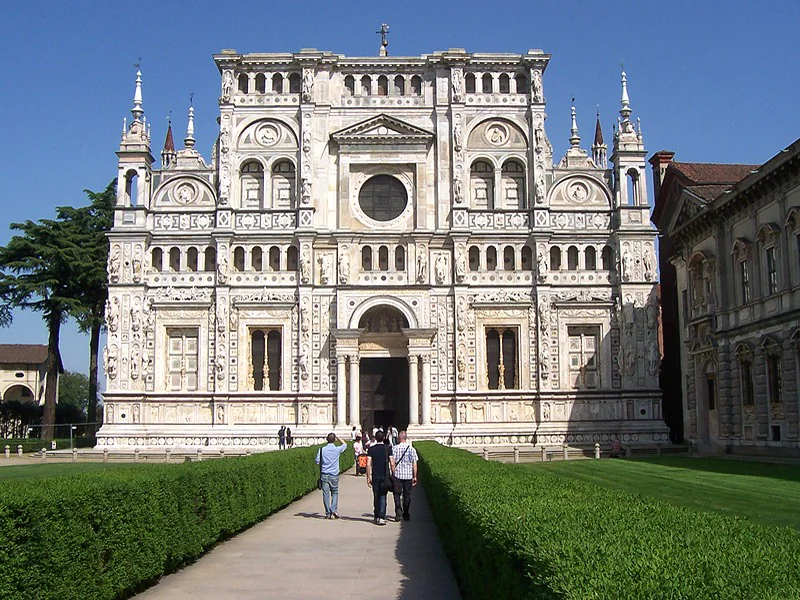
Certosa di Pavia · 117 km
Certosa di Pavia
Content & sources
Photo: Geobia · CC BY-SA 3.0
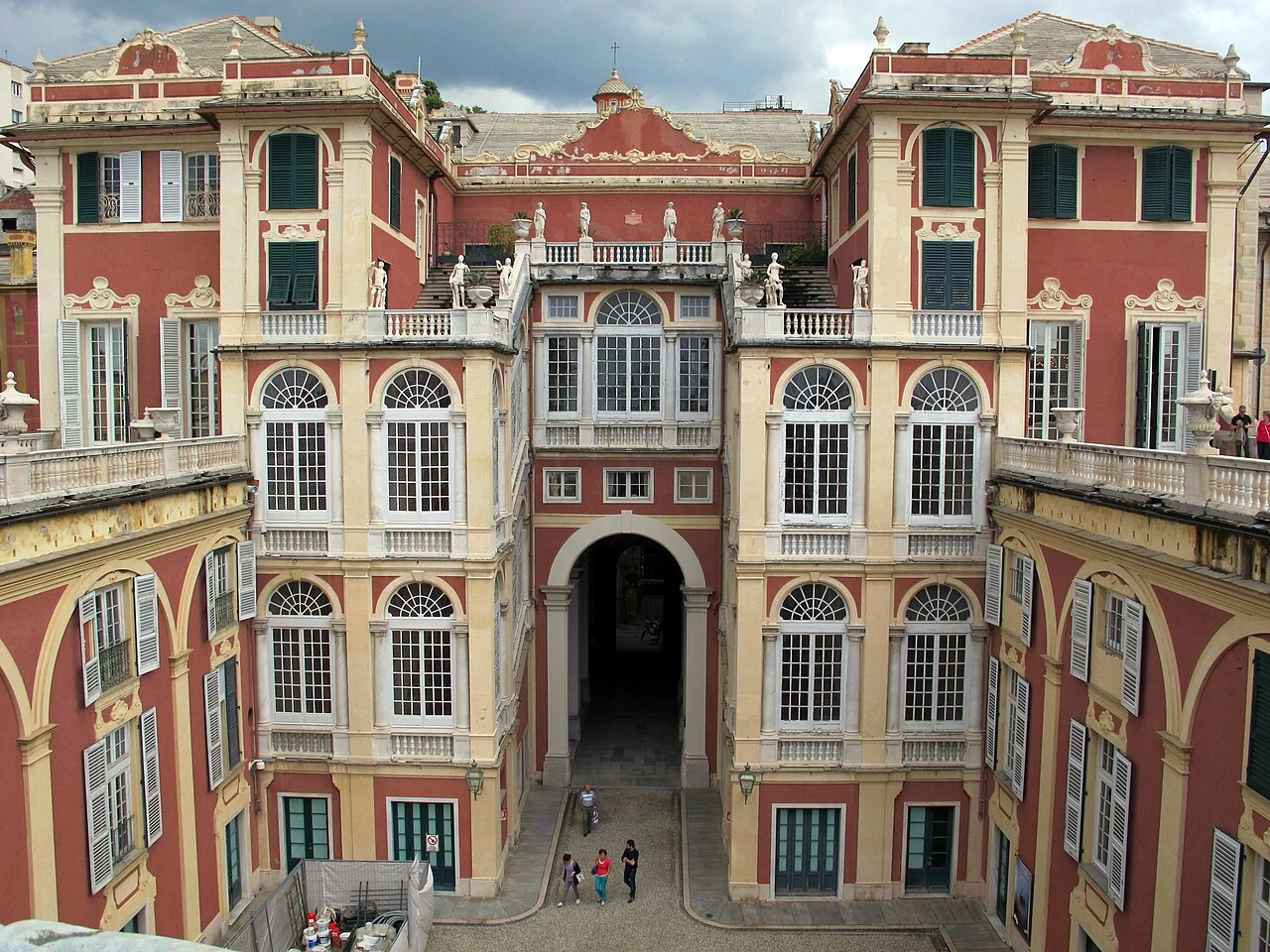
Genoa · 122 km
Palazzo Reale di Genova
Content & sources
Photo: Sailko · CC BY 3.0
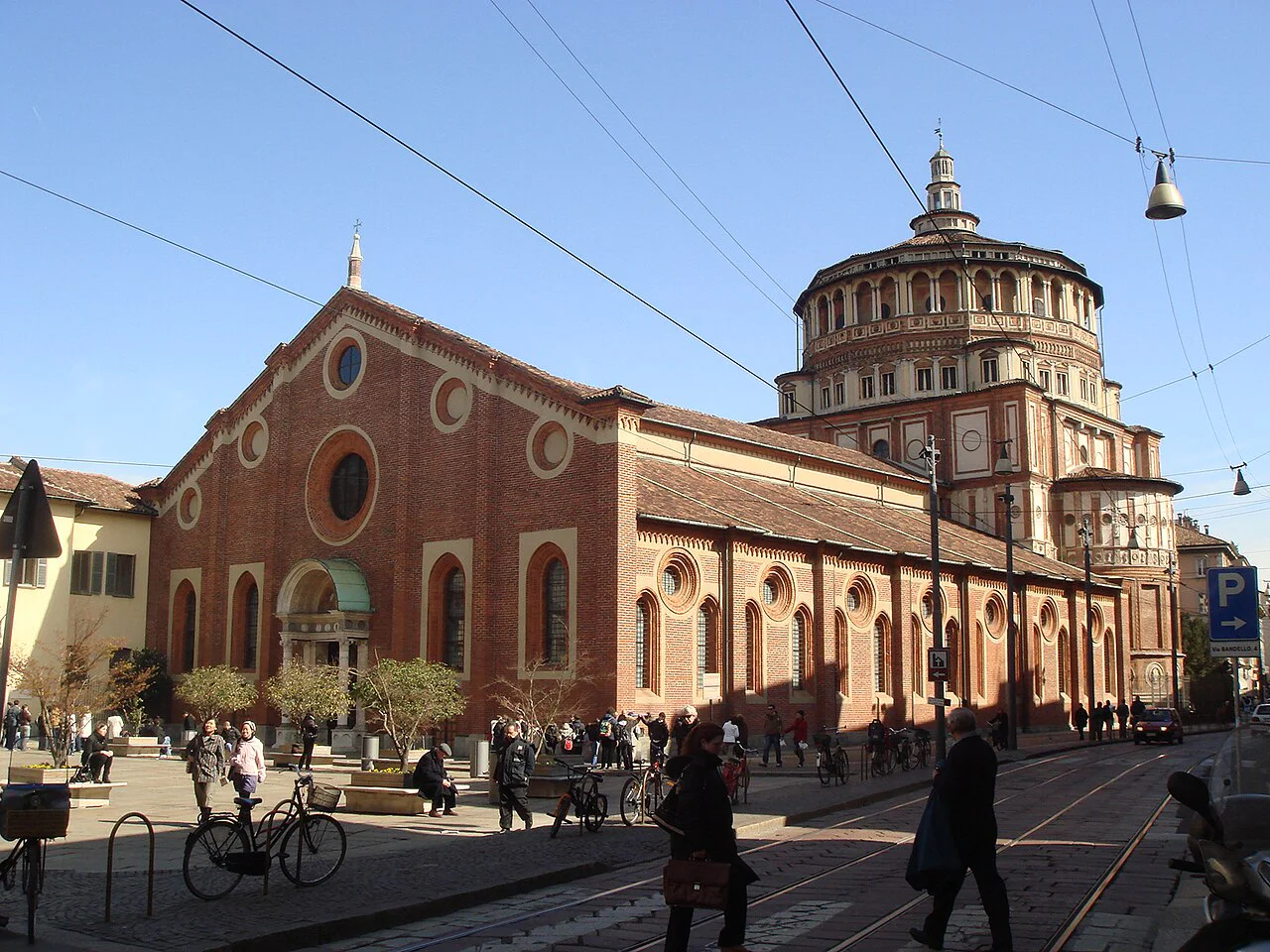
Milan · 124 km
Chiesa di Santa Maria delle Grazie
Content & sources
Giovanni Dall'Orto · Attribution