Stanza · Audio guide
Chiesa di Santa Maria delle Grazie Audio Guide
A place to remember. A story to take with you.
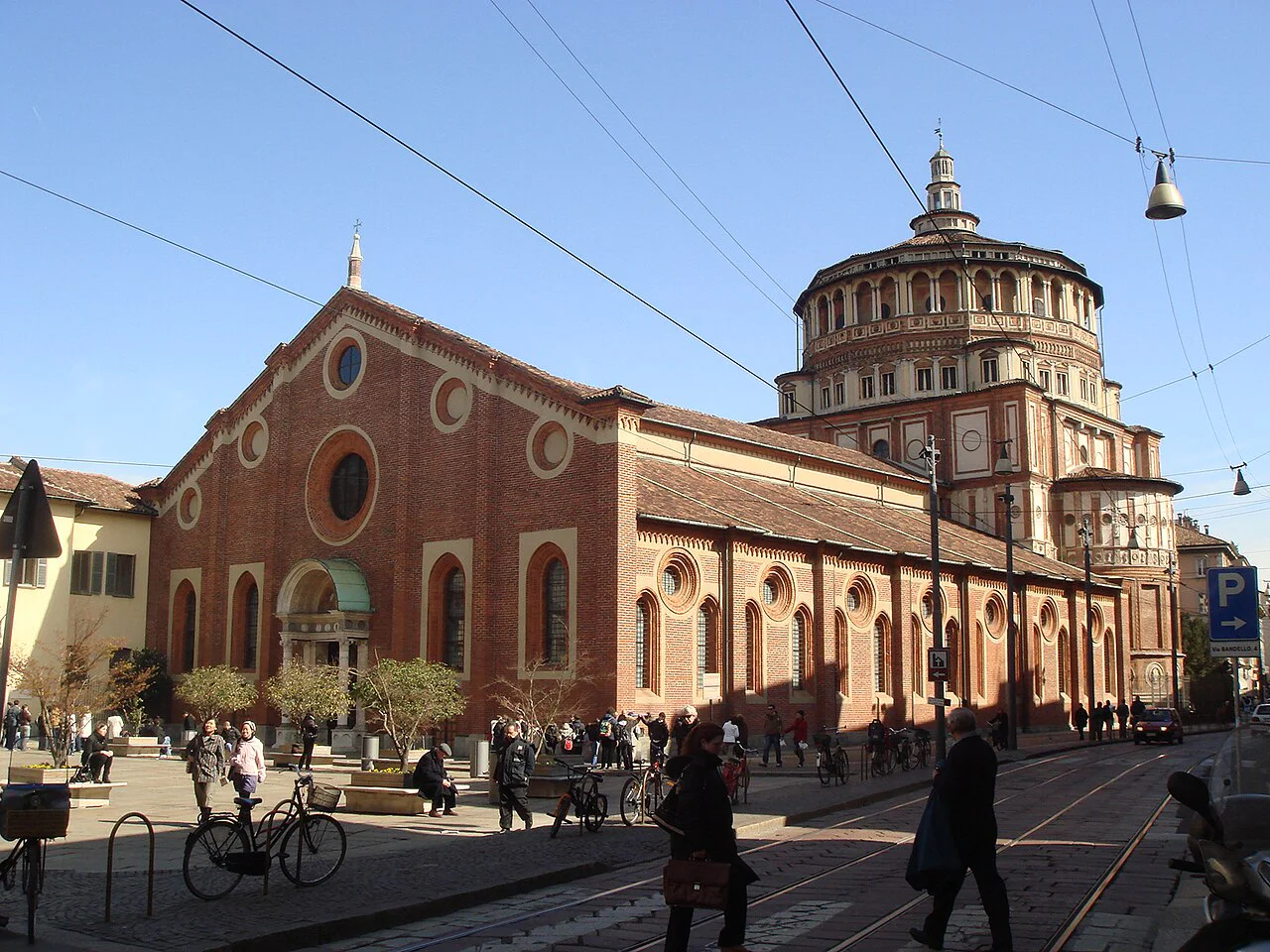
Santa Maria delle Grazie is a church and Dominican convent in Milan that is a UNESCO World Heritage Site. The convent contains the mural of The Last Supper by Leonardo da Vinci in its refectory.
Download Stanza, then search for “Chiesa di Santa Maria delle Grazie”.
About the tour
One guide. Your kind of visit.
Santa Maria delle Grazie is a church and Dominican convent in Milan that is a UNESCO World Heritage Site. The convent contains the mural of The Last Supper by Leonardo da Vinci in its refectory.
Ready when you are.
- 01Get the free Stanza app.
iOS & Android
- 02Find your guide.
“Chiesa di Santa Maria delle Grazie”
- 03Download before you go.
Works offline
Audio guide / 14 narrated stops
Inside the guide
Get to know a few of the stories before you go. Open a stop to read more.
01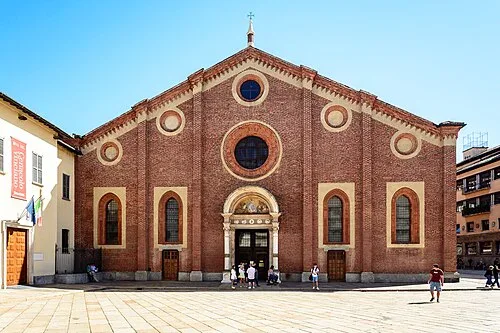 Piazza Santa Maria delle Grazie and the Renaissance Portal
The Piazza and Facade of Santa Maria delle Grazie
Welcome to Santa Maria delle Grazie, Holy Mary of Grace, a Dominican church and convent in Milan. Its story begins with a small chapel dedicated to St Mary of the Graces, a place of quiet devotion to the Virgin. In 1460 the Dominicans received a gift of land here from Count Gaspare Vimercati, a commander serving the Sforza family. On that land stood the little chapel, and beside it a building that housed the count's soldiers. Duke Francesco Sforza ordered a convent and church raised on the spot, and the first stone was laid in September 1463. The man in charge was Guiniforte Solari, then the most sought-after architect in Milan and chief engineer of the cathedral. The convent was finished by 1469; the whole complex took until 1497. What began as a friars' foundation grew into a showcase for Milan's ruling family, and into the home of Leonardo da Vinci's Last Supper in the convent refectory. The white marble doorway set into the brick facade is the first sign of that change, and it comes next.
dconvertini · CC BY-SA 2.0
02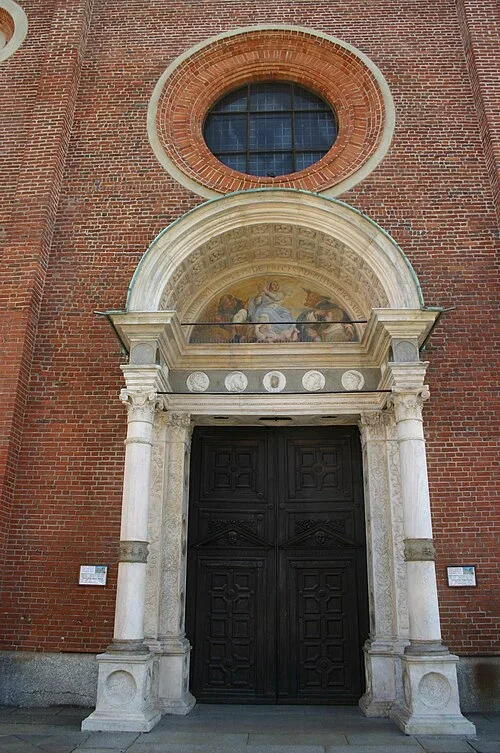 Piazza Santa Maria delle Grazie and the Renaissance Portal
Ludovico il Moro's Marble Portal
Set into the plain red brick, the main doorway is a band of white marble. Slender columns on cubic pedestals carry a tall entablature ringed with roundels of profiled figures, and above them a lunette with a coffered vault. The lunette fresco, painted by Michelangelo Bellotti, is a later, eighteenth-century addition. This portal was the first intervention paid for by Ludovico il Moro, the Sforza duke who took over patronage of the complex. Its classical grace and clean geometry stand out sharply against the sober brick around it. On the left-hand pillar, beside the candelabra decoration, sits a small carved emblem: a little broom, the scopetta. It was Ludovico's personal device, his signature in stone. The broom tells you that this friars' church was becoming a ducal statement, and the duke had much bigger plans inside.
Giovanni Dall'Orto · Attribution
03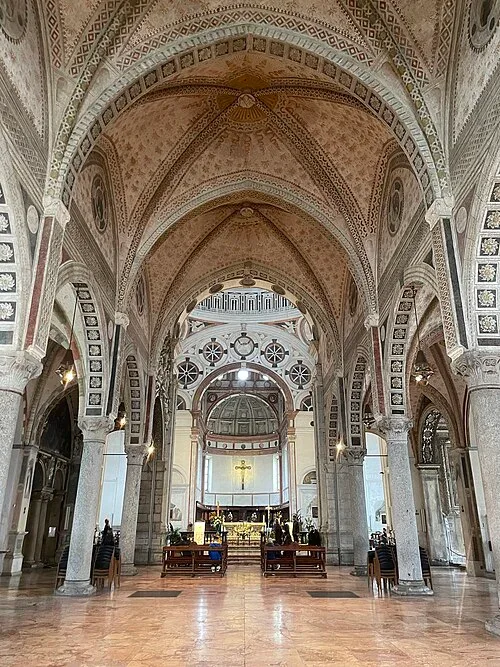 Solari's Gothic Nave
Guiniforte Solari built this nave in the Lombard Gothic manner, and everything about it is low, sturdy and shadowed. Groin vaults stretch overhead in gentle curves, carried on pointed arches and thick columns of granite. The capitals and borders carry painted garlands of flowers, soft colour against the dark stone. Solari designed the space for the friars' liturgy, the daily round of singing and prayer that structured convent life. The light is deliberately subdued, the aisles falling into penumbra on either side. His Gothic church took years to finish, and for a time it was the whole church. Then the bright space at the far end arrived, and changed everything about how this interior feels.
Listen in the appPhoto: Julian.Schindler · CC0
04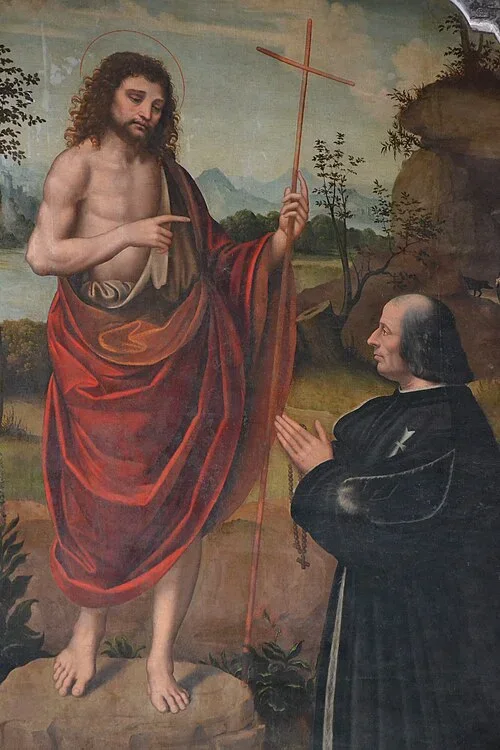 Solari's Gothic Nave
St John the Baptist and a Donor, by Marco d'Oggiono
St John the Baptist stands pointing to heaven, one hand raised, the other holding a slender cross. Kneeling beside him is an unknown man in a black robe, hands folded in prayer. He is the donor, the person who paid for the painting, shown forever in the saint's company. The panel is the work of Marco d'Oggiono, a pupil of Leonardo, painted in the early sixteenth century. It was not made for this chapel; it came from the Old Sacristy and now hangs in the seventh on the right. Its buyer belonged to the Order of the Knights of Malta, though his name is lost. Paintings like this are the visible trace of a system. Fourteen chapels line the aisles, seven on each side, bought and decorated by Milanese families. Their endowments paid for altars, frescoes and burial rights, and helped furnish the whole church.
Listen in the appCarlo Dell'Orto · CC BY-SA 3.0
05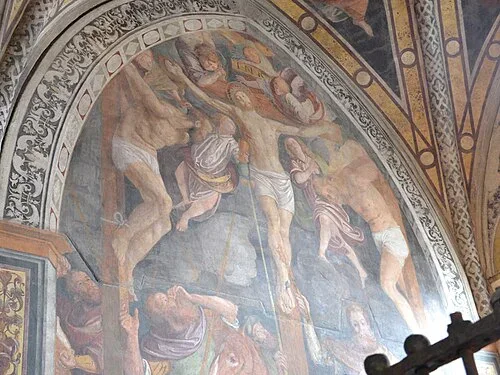 The Chapel of Santa Corona
 and Gaudenzio Ferrari's Crucifixion
The fourth chapel on the right belonged to the Confraternity of Santa Corona, the Holy Crown, founded in 1494 by Stefano da Seregno. Its members kept a relic here: a single thorn from the crown placed on Christ's head. The chapel also served as their burial place for the confraternity's rectors. In 1539 the congregation hired the most celebrated painter in Milan, Gaudenzio Ferrari, to fresco the entire space. His Crucifixion fills the arch, with Christ at the centre and the two thieves beside him, crowded with mourners and soldiers. The writer Lomazzo ranked Ferrari second only to Michelangelo, and above Leonardo himself. For the altarpiece the confraternity went to Titian, whose Crowning with Thorns arrived in 1543. French troops looted it in 1797, and it now hangs in the Louvre, in the room of the Mona Lisa. The altarpiece here today is a later Deposition from the Cross, painted in 1616.
Listen in the appCarlo Dell'Orto · CC BY-SA 3.0
06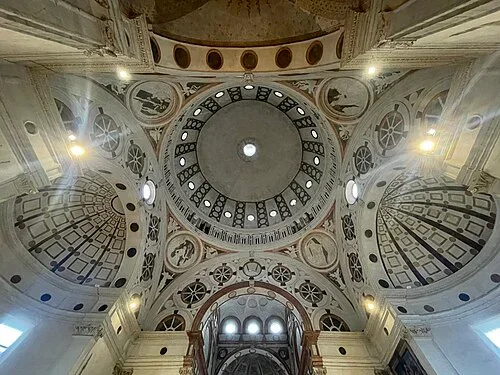 Bramante's Monumental Crossing Tribune
Bramante's Crossing and Dome
The dark nave suddenly opens into a flood of light, and the architecture changes language. This crossing and its dome were built from 1492 to 1497 for Ludovico il Moro, and the geometry is exact. The sides of the cubic crossing, and the diameter of the dome above, are precisely double the width of the central nave. The dome itself is a perfect hemisphere, resting on the bright cube below. The design has long been given to Donato Bramante, then the duke's architect. His name is inscribed on a piece of marble delivered to the church vaults in 1494, though some scholars doubt he worked here at all. Documents also mention Giovanni Antonio Amadeo, and recent studies suggest Bramante drew up the project but left Amadeo to direct the actual building. Whoever held the compass, the result was one of the best-known achievements of the Renaissance in Lombardy.
Listen in the appPhoto: Julian.Schindler · CC0
07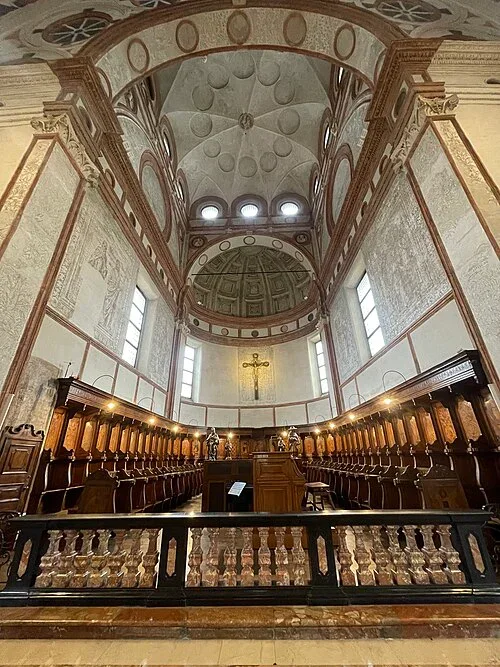 Bramante's Monumental Crossing Tribune
The Tribune Choir and the Tomb of Beatrice d'Este
Behind the crossing lies the choir, where the friars still sing the daily office from long rows of wooden stalls. Ludovico il Moro had this whole tribune built as a monument, and the reason is entangled with love and dynastic pride. In 1492, fresh from his splendid marriage to Beatrice d'Este, he tore down the choir Solari had just finished and started again; the archbishop blessed the first stone that March. Whether he meant the space as the Sforza burial place from the start is unclear, or whether the idea matured only in 1497. That year Beatrice died at just twenty-two, after a difficult and premature childbirth. She was buried with great honours in this choir, under a white marble monument by Cristoforo Solari, with both dukes reclining life-sized on its lid. After Ludovico's fall, and in obedience to the Council of Trent, the monument was taken apart and sold in 1564. Only the lid survived intact, and it sits today in the Certosa of Pavia.
Listen in the appPhoto: Julian.Schindler · CC0
08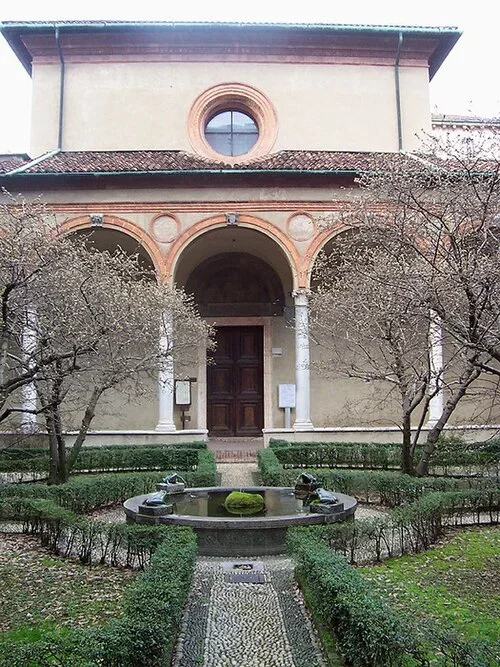 The Cloister of the Frogs
This quiet courtyard is the Cloister of the Frogs, a small Renaissance gem traditionally given to Bramante, though no document proves his hand. Terracotta arcades rest on slender marble columns, and a stone pool sits at the centre of the lawn. Around its rim crouch little sculpted frogs, and they gave the cloister its name. The friars kept a garden here, clipped hedges and beds laid out in patterns, a place of silence in the middle of the city. On the night of 15 August 1943, bombs fell on the church and convent, and incendiary devices struck this courtyard. The friars themselves hurried out and beat out the flames before they could spread. The cloister survived that night largely intact, and the frogs still keep their post around the water.
Listen in the appPhoto: MarkusMark · CC BY-SA 3.0
09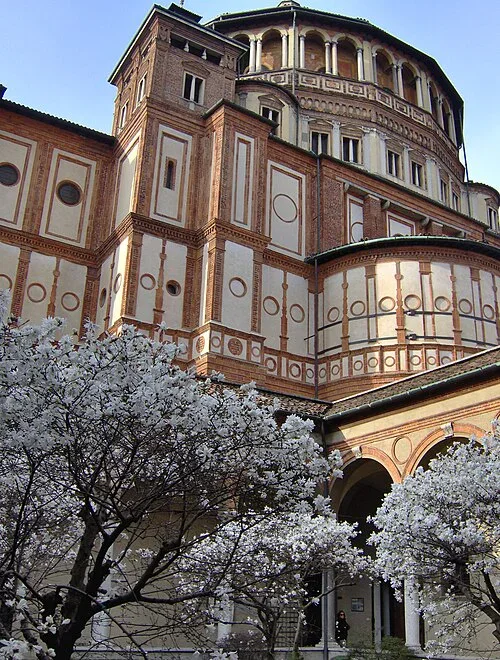 The Cloister of the Frogs
The Tiburio and Dome from the Cloister
From the convent's own garden, the tribune shows its full exterior face. The dome hides inside a tall drum called the tiburio, a sixteen-sided polygon ringed by a gallery of arched two-light windows. Above it rises the hemispherical dome itself, plain and calm against the sky. The walls are built of terracotta, granite and Angera stone, set off against white. The faint play of light and shadow gives the walls a subtle shimmer. The loggetta with its little columns and arches reaches back to older Lombard traditions, to paleo-Christian and Romanesque models. Even this decoration carries a dispute: many give its design to Bramante himself, while for the painting of it, the name of Bernardo Zenale and other minor hands has been proposed.
Listen in the appPhoto: Pe-Jo · CC BY 3.0
10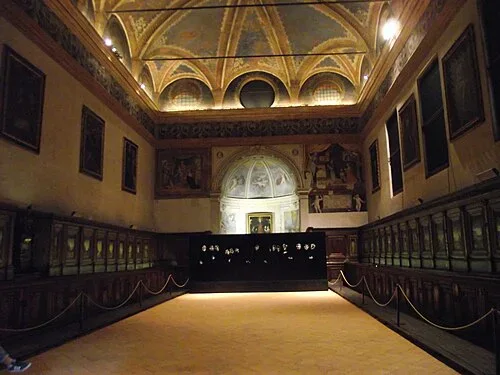 The Old Sacristy
Off the cloister opens the Old Sacristy, a vast rectangular hall built in the last decade of the fifteenth century, alongside the tribune's reconstruction. Tradition assigns the design to Bramante, again without documentary proof. Above the entrance, Bramantino painted the Madonna between St James and St Louis of France. That French king is the clue to the date: his presence places the lunette in the years of French domination, between 1499 and 1512. The vault is covered with frescoes that some attribute to Leonardo, because of a motif of intertwined knots, the Knot of Vinci, which also appears in his work at the Castello Sforzesco. Below runs a classical frieze of dragons and shells. Around the walls stand tall wooden cabinets, their doors painted at the start of the sixteenth century with scenes from the Old and New Testaments. The fourteen doors on the right, in Bramantino's manner, show the New Testament stories. Today the hall serves the Dominicans as a cultural centre, hosting conferences and concerts.
Listen in the appPhoto: Parsifall · CC BY-SA 4.0
- 11
Leonardo's Last Supper
Leonardo's Last Supper: the experimental technique that nearly destroyed it, and the night it survived.
- 12
The Lunettes above the Last Supper
The duke's coat of arms in fruit garlands, hanging over the friars' silent dinners.
- 13
Montorfano's Crucifixion
The other wall of the refectory: Montorfano's Crucifixion, signed and dated at the foot of the cross.
- 14
The Lost Sforza Portraits
Leonardo's portraits of the ducal family, painted in the corners and now almost gone.
Chiesa di Santa Maria delle Grazie
Frequently asked questions
How much does the guide cost?
Free app download. Listed guide price: $0.99. Guide price shown in the app. Audio guide only. Venue admission is separate.
Can I listen without internet?
Yes. Download the guide’s audio, images, and maps in the app before your visit. Your downloaded content is then available offline.
Can I listen in my language?
This audio guide is available in 15 languages, including English.
Do I need to follow a schedule?
No. This is a self-guided experience. Choose your stops, pause whenever you like, and return to a story at your own pace.
At your own pace
Explore Chiesa di Santa Maria delle Grazie.
Download Stanza, then search for “Chiesa di Santa Maria delle Grazie”.
Free app download · Guide price shown in the app
Keep exploring
Nearby audio guides
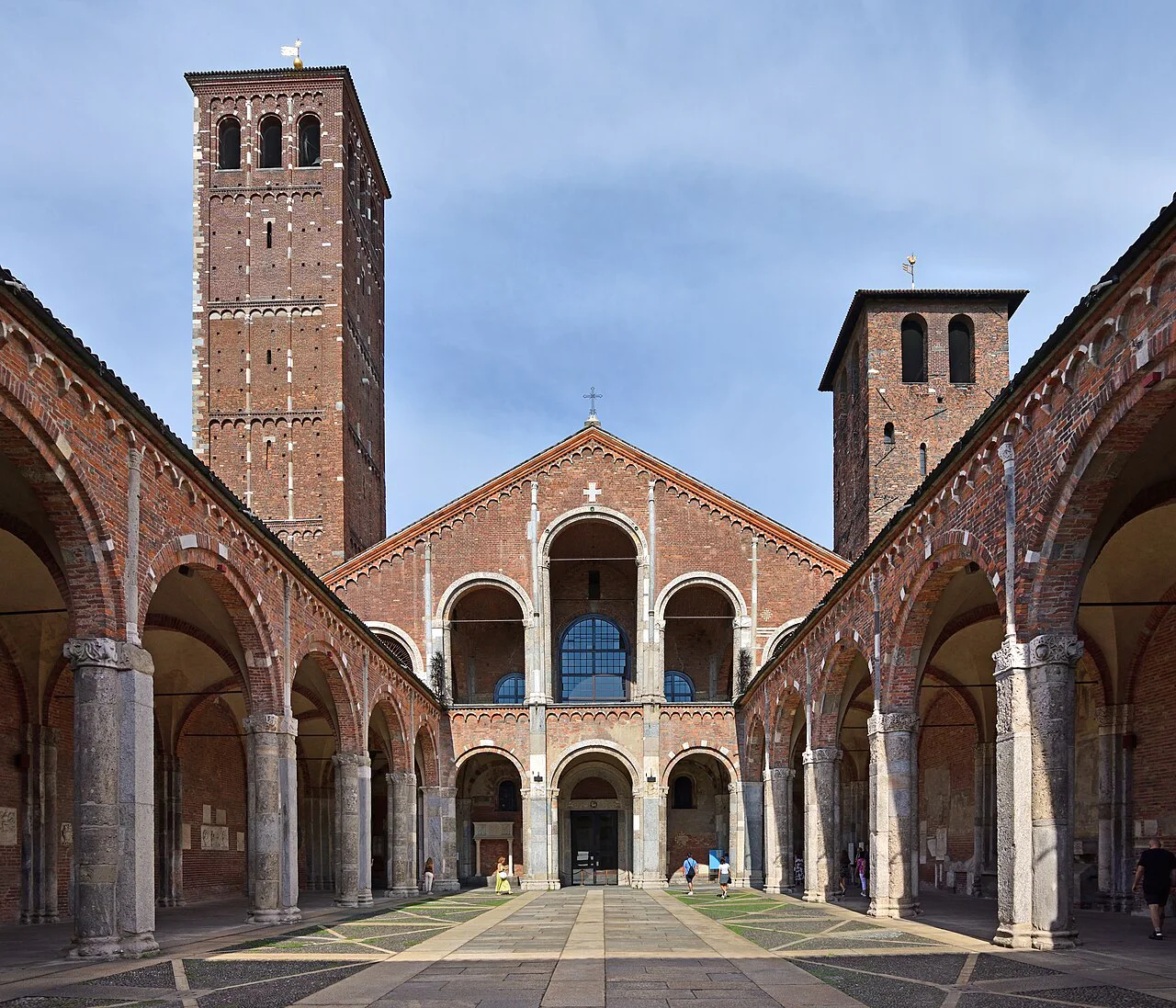
Milan · 1 km
Basilica di Sant'Ambrogio
Content & sources
Photo: Ludvig14 · CC BY-SA 4.0
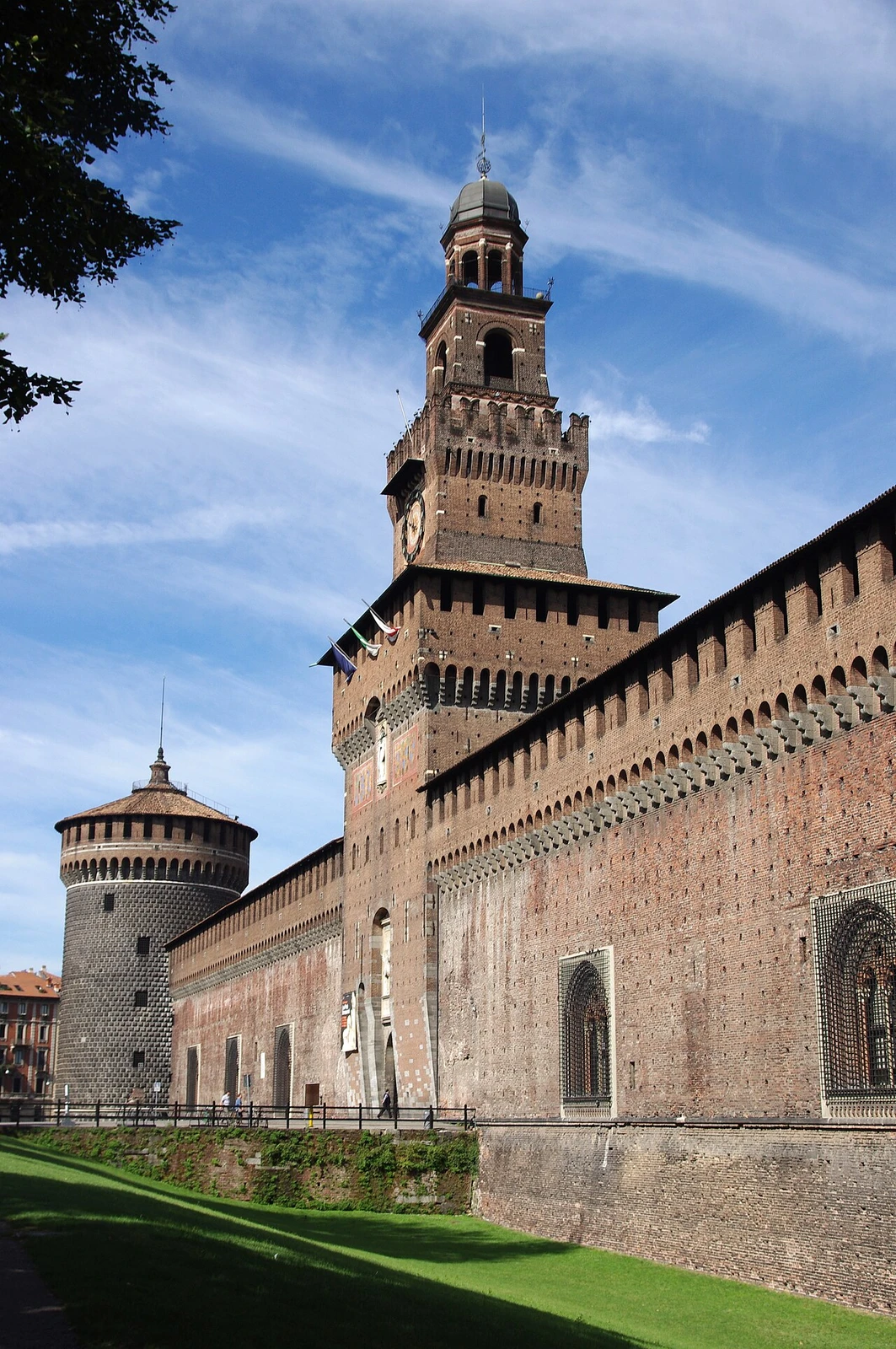
Milan · 1 km
Castello Sforzesco
Content & sources
Jakub Hałun · CC BY-SA 4.0
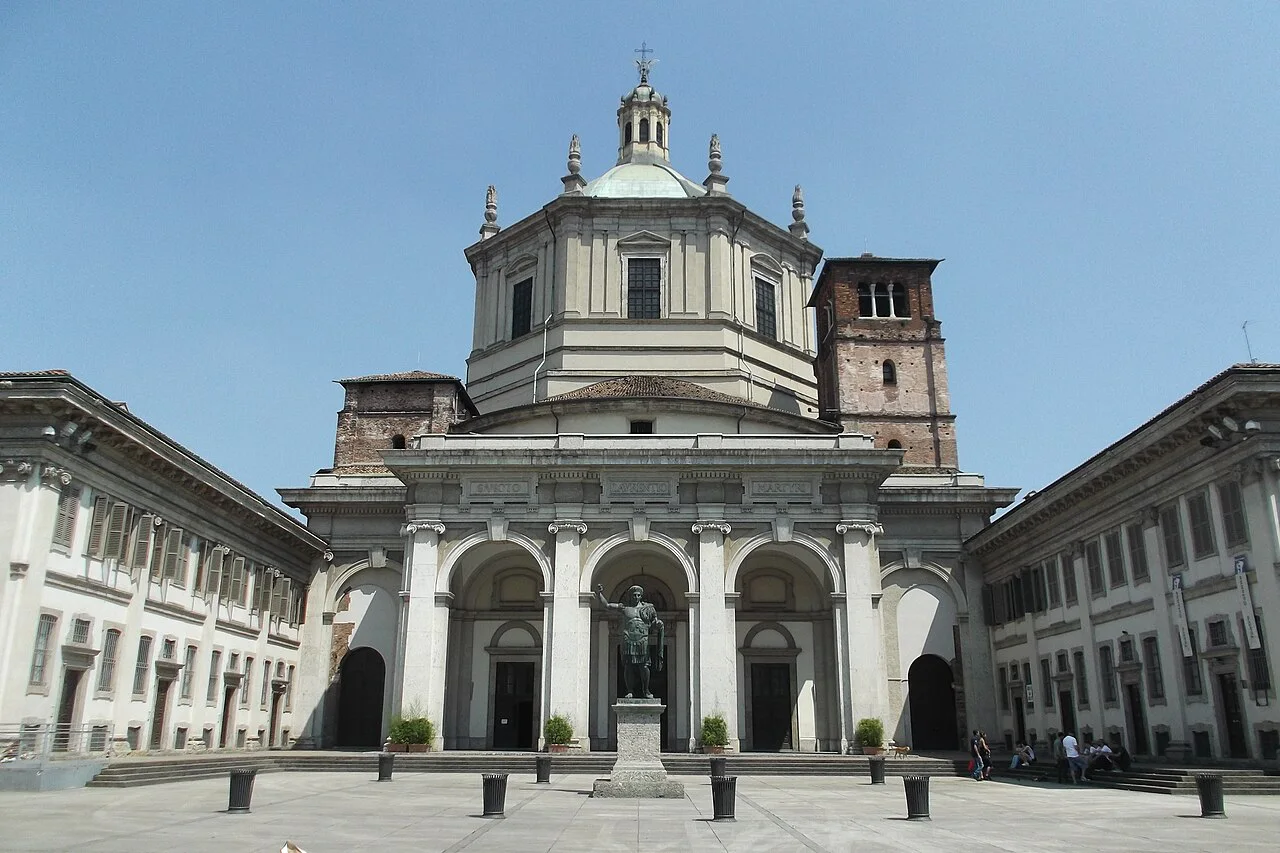
Milan · 1 km
Basilica di San Lorenzo
Content & sources
Photo: Blackcat · CC BY-SA 3.0 it
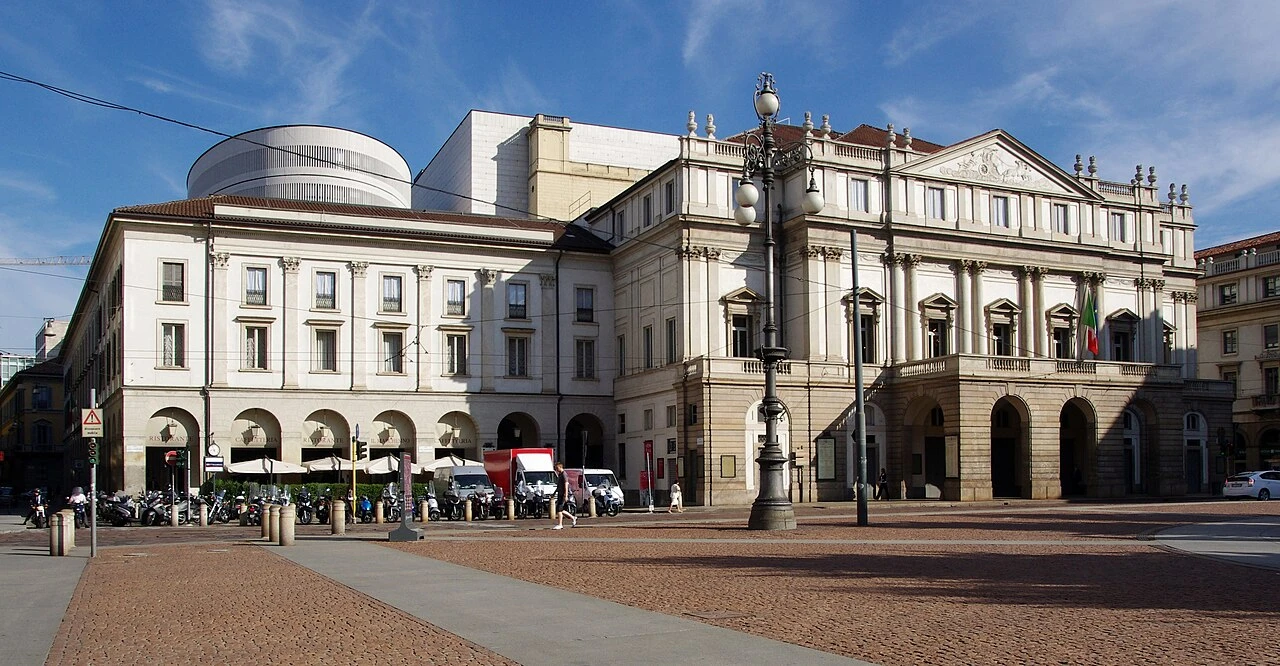
Milan · 1 km
La Scala
Content & sources
Jakub Hałun · CC BY-SA 4.0