Stanza · Audio guide
Basilica di San Lorenzo Audio Guide
A place to remember. A story to take with you.
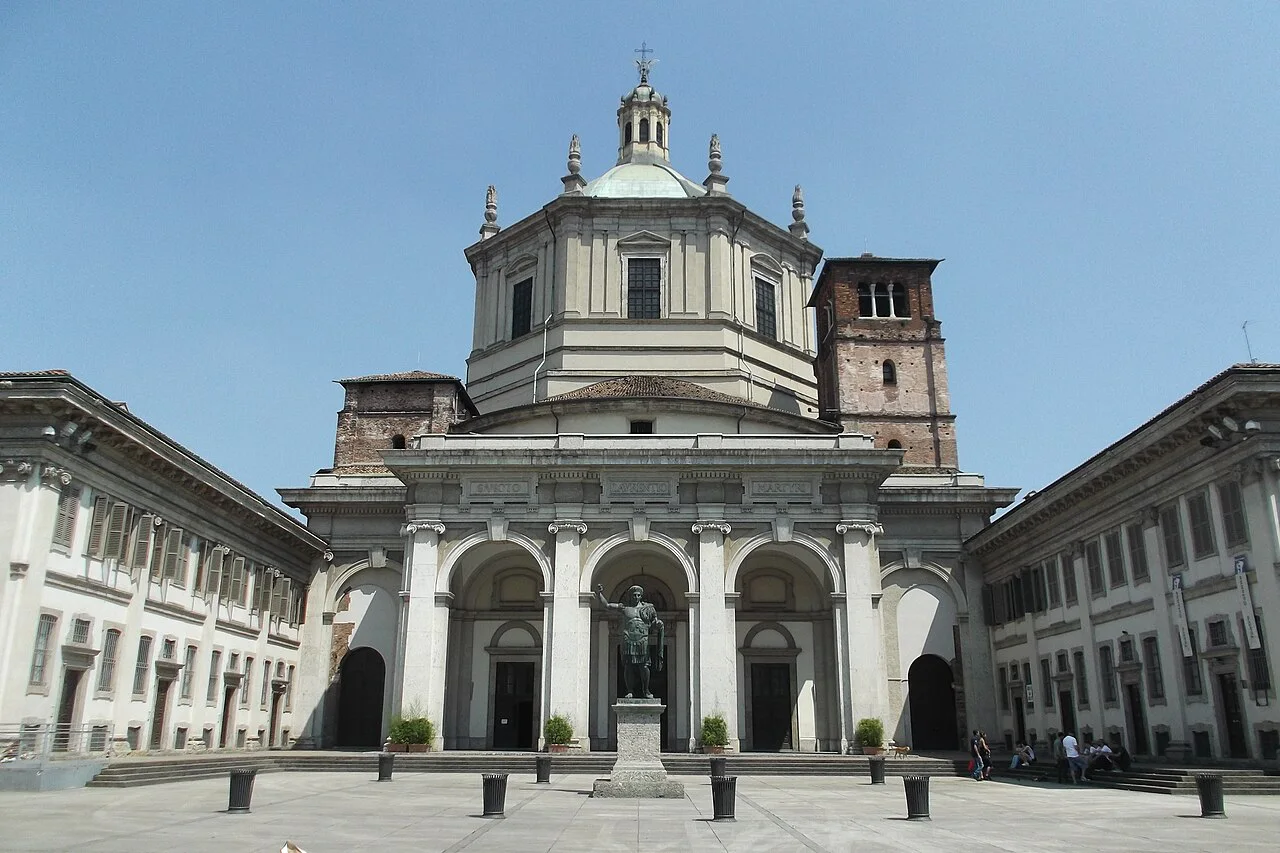
The Basilica of San Lorenzo Maggiore is a Roman Catholic church in Milan, Northern Italy. It is one of the oldest churches in the city and is noted for its daring architectural originality.
Download Stanza, then search for “Basilica di San Lorenzo”.
About the tour
One guide. Your kind of visit.
The Basilica of San Lorenzo Maggiore is a Roman Catholic church in Milan, Northern Italy. It is one of the oldest churches in the city and is noted for its daring architectural originality.
Ready when you are.
- 01Get the free Stanza app.
iOS & Android
- 02Find your guide.
“Basilica di San Lorenzo”
- 03Download before you go.
Works offline
Audio guide / 11 narrated stops
Inside the guide
Get to know a few of the stories before you go. Open a stop to read more.
01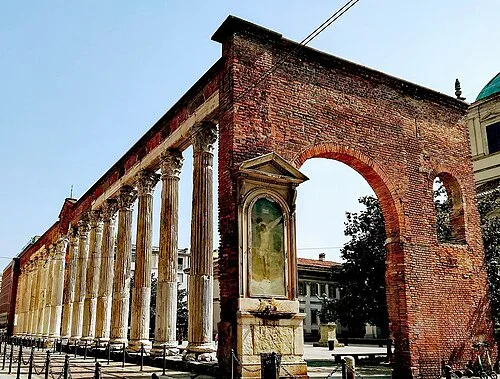 The Roman Colonnade and Sagrato
Colonne di San Lorenzo
The Basilica of San Lorenzo is one of the oldest churches in Milan. It was originally built in Roman times, not far from the imperial palace, and it has been rebuilt several times since. It is still an active Roman Catholic church, and it follows the Ambrosian rite, Milan's own form of worship. The row of columns is older than the church it stands beside. The columns date from the third century. Accounts differ on where they stood before: in the large baths built by the emperor Maximian, or in a nearby Roman temple. They were moved to this spot when the basilica was finished. Beside them, a brick arch frames a small niche with a panel inside. For the whole of the Middle Ages, the basilica remained a symbol of Rome's legacy in Milan.
Photo: Flavmi · CC BY-SA 3.0
02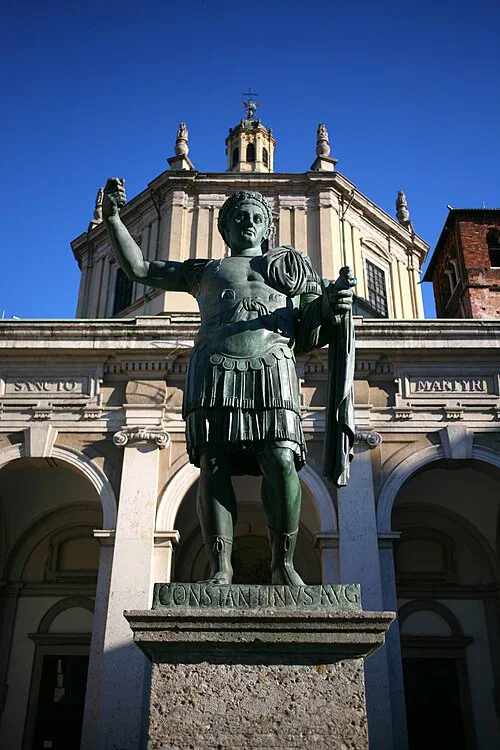 The Roman Colonnade and Sagrato
Statue of Constantine I on the Courtyard
Until 1934, houses had sprung up across this courtyard, beside the basilica. That year they were pulled down, and the courtyard was opened as a public square. Later, a bronze statue of Constantine the Great was set up on the square. It copies a late antiquity original kept in Rome, in the church of Saint John Lateran. The figure raises one arm high, and it wears armour and a short pleated skirt. The base is inscribed CONSTANTINVS AVG. Behind the statue stands a vestibule built in 1894 by the engineer and architect Cesare Nava. Its arches are made of a cement that looks like stone. The statue is said to recall the Edict of Milan, the decree of 313 that allowed Christians freedom to worship.
Photo: Paolobon140 · CC BY-SA 4.0
03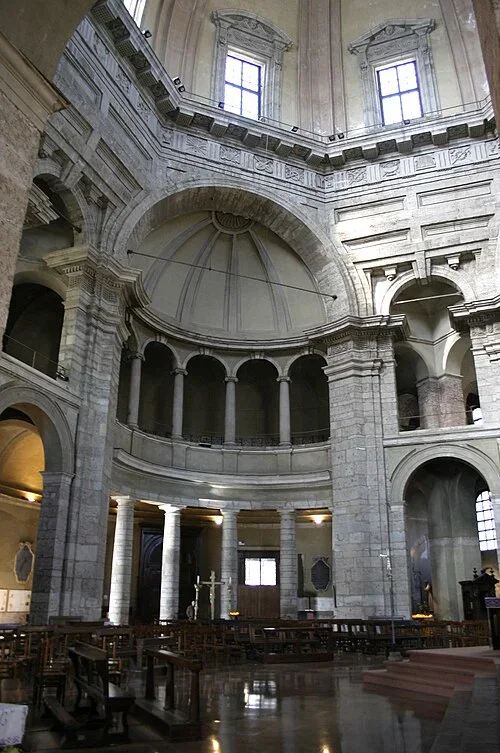 Central Tetraconch Hall and Dome
Central Hall and Tetraconch Plan
The basilica was planned around one central point, a design called centrally planned. Its core is a square hall. Four curved recesses open from its sides, framed by columns and topped with half-domes. A walkway runs around the hall, and its upper level was later used as a women's gallery. The building was constructed between the late fourth and early fifth centuries, though the exact date is uncertain. When it was built, it was the largest centrally planned building in the West. Later, after Emperor Barbarossa destroyed the other ancient Roman structures, humanists admired this church. They saw it as an example of classical design. Architects such as Bramante and Leonardo studied it.
Listen in the appPhoto: G.dallorto · Attribution
04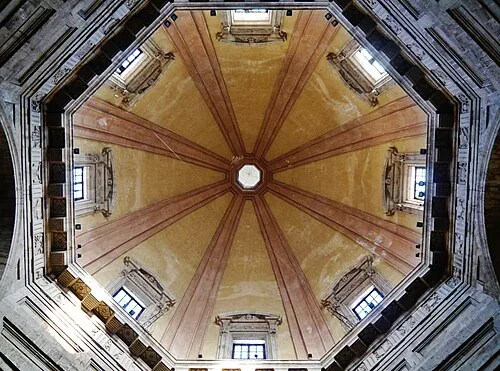 Central Tetraconch Hall and Dome
Octagonal Dome and Tiburio
The church's first dome is lost, and little is known about it. In June 1573, the dome collapsed again, suddenly, during a service. Fortunately, there were no casualties. Archbishop Carlo Borromeo wanted the rebuilding to begin at once. After consulting his favourite architect, Pellegrino Tibaldi, he gave the work to Martino Bassi. Bassi rebuilt the dome to suit the taste of his day. He used an octagonal tiburio, a tower-like structure over the centre of the church, in the local Lombard style. Ribs fan out from the edges toward a small opening at the centre, with windows set between them. The rebuilding went through many changes, and it was only completed in 1619.
Listen in the appPhoto: Zairon · CC BY-SA 4.0
05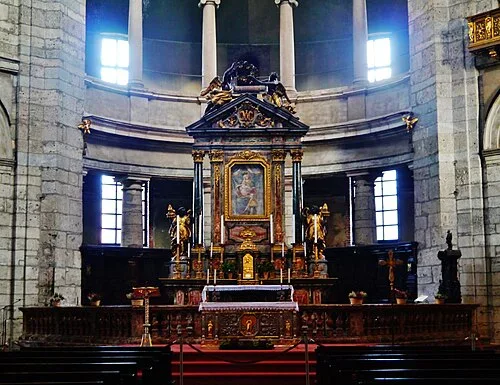 The Sanctuary and High Altar
High Altar
In the 1580s, a sick woman was reportedly cured in front of a painting of the Madonna del Latte. The painting was then on show in the Piazza della Vetra, while the dome was being rebuilt. People said Carlo Borromeo had foretold the cure. Donations rose after it, and the rebuilding moved faster. In 1626, when all the building projects were finished, the painting was moved to the high altar. Gilded columns frame the altar, and the painting remains there to this day.
Listen in the appPhoto: Zairon · CC BY-SA 4.0
06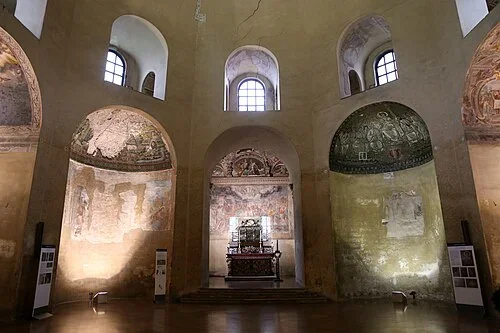 Cappella di Sant'Aquilino and Ancient Substructure
Cappella di Sant'Aquilino
The octagonal chapel may originally have been an imperial Roman mausoleum. Tradition credits its foundation to Galla Placidia, and so it became known as the Chapel of the Queen. Perhaps around the turn of the sixth century, when Roman imperial power in Italy had faded, it was dedicated to Saint Genesius, a martyr. Much later, an archbishop of the Borromeo family had it rededicated to Saint Aquilino. The saint is remembered as a martyr of Milan, though some link him with Cologne. His relics were placed inside, and two side chapels were added. The altar stands in a deep recess, where the only trace of the seventeenth-century decoration remains. A fresco on the wall behind the altar shows the rediscovery of the saint's body.
Listen in the appPhoto: Sailko · CC BY 3.0
07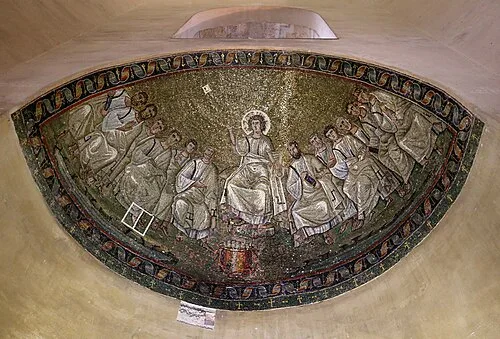 Cappella di Sant'Aquilino and Ancient Substructure
Mosaic of Christ among the Apostles (Traditio Legis)
Christ sits enthroned against a gold background, with his apostles grouped on either side of him. The scene is usually called Traditio Legis, a Latin phrase meaning handing over the law. Most often it is read as Christ the Lawgiver, though some see Christ the Teacher instead. The figures wear pale robes, and a patterned border frames the scene. The scene fills a half-moon shaped panel. The mosaic is usually dated to the late fourth century.
Listen in the appPhoto: Sailko · CC BY 3.0
08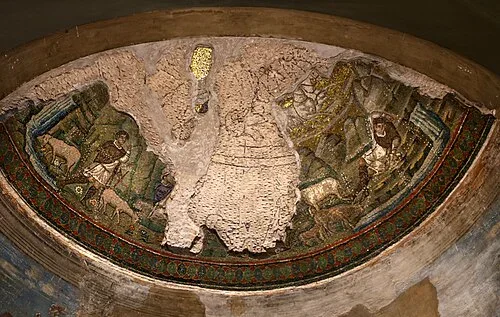 Cappella di Sant'Aquilino and Ancient Substructure
Mosaic Fragment of Elijah's Chariot
Surviving pieces suggest that this scene shows the prophet Elijah, and one fragment may come from a fiery chariot. In the Bible, Elijah is carried up to heaven in a chariot of fire. Only parts of the border, some figures and a little landscape remain. Pale patches now fill the places where the mosaic has gone.
Listen in the appPhoto: Sailko · CC BY 3.0
09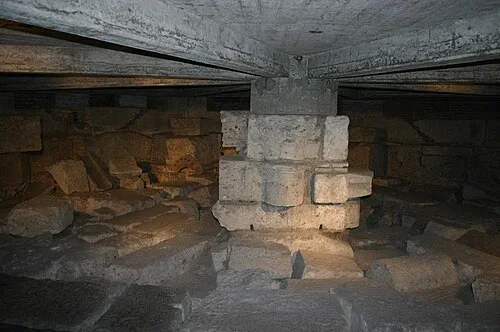 Cappella di Sant'Aquilino and Ancient Substructure
Subterranean Roman Foundations
The church stands on an artificial hill, which its builders raised for it. Perhaps they did this to avoid the unstable, marshy ground nearby. The hill rose not far from the city walls, beside the Via Ticinensis, the main road into Milan. Some of the stone used in building came from an amphitheatre not far away. Huge cut stones lie across the floor of this underground space, and a squared pier of blocks rises among them. In the Middle Ages, the church was seen as the highest place in Milan, so it came to stand for the Mount of Olives. On Palm Sunday, the bishop blessed the palms and led a procession from the church to the Basilica of Santa Tecla, a church that no longer stands.
Listen in the appPhoto: G.dallorto · Attribution
10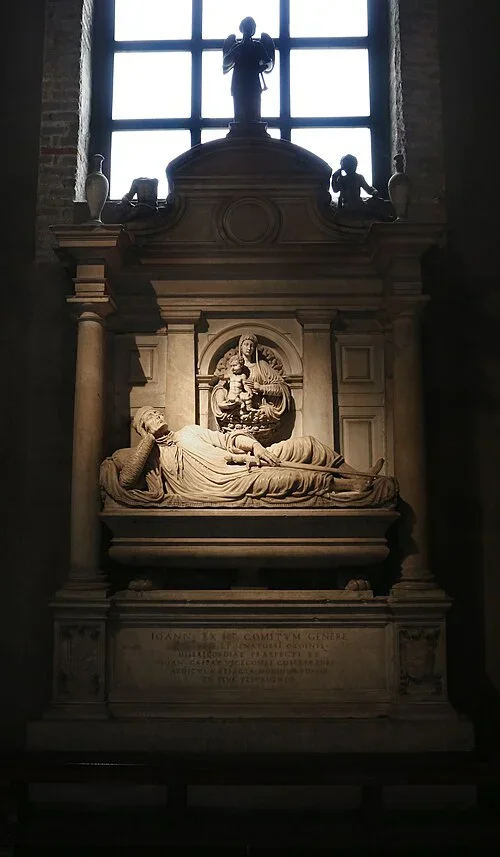 Cappella di Sant'Ippolito
Monument to Giovanni Del Conte
Giovanni Del Conte lies on this tomb in patrician dress, carved as a reclining figure. The monument is attributed to Marco d'Agrate and Vincenzo da Seregno. The chapel is known as the Del Conte chapel, after the noble family given its patronage. Patronage meant the family looked after the chapel. The chapel also housed this monument. The chapel is dedicated to Saint Hippolytus, and its plan is a Greek cross, though from outside it looks octagonal. Its corner columns are of ancient African marble, with Corinthian capitals. Above the reclining figure, a medallion shows the Madonna and Child. A Latin inscription runs across the base.
Listen in the appPhoto: Sailko · CC BY 3.0
- 11
Rear Exterior and Parco delle Basiliche
Behind the apses, a park covers ground that was once a channel, then a place of public executions.
Basilica di San Lorenzo
Frequently asked questions
How much does the guide cost?
Free app download. Listed guide price: $0.99. Guide price shown in the app. Audio guide only. Venue admission is separate.
Can I listen without internet?
Yes. Download the guide’s audio, images, and maps in the app before your visit. Your downloaded content is then available offline.
Can I listen in my language?
This audio guide is available in 15 languages, including English.
Do I need to follow a schedule?
No. This is a self-guided experience. Choose your stops, pause whenever you like, and return to a story at your own pace.
At your own pace
Explore Basilica di San Lorenzo.
Download Stanza, then search for “Basilica di San Lorenzo”.
Free app download · Guide price shown in the app
Keep exploring
Nearby audio guides
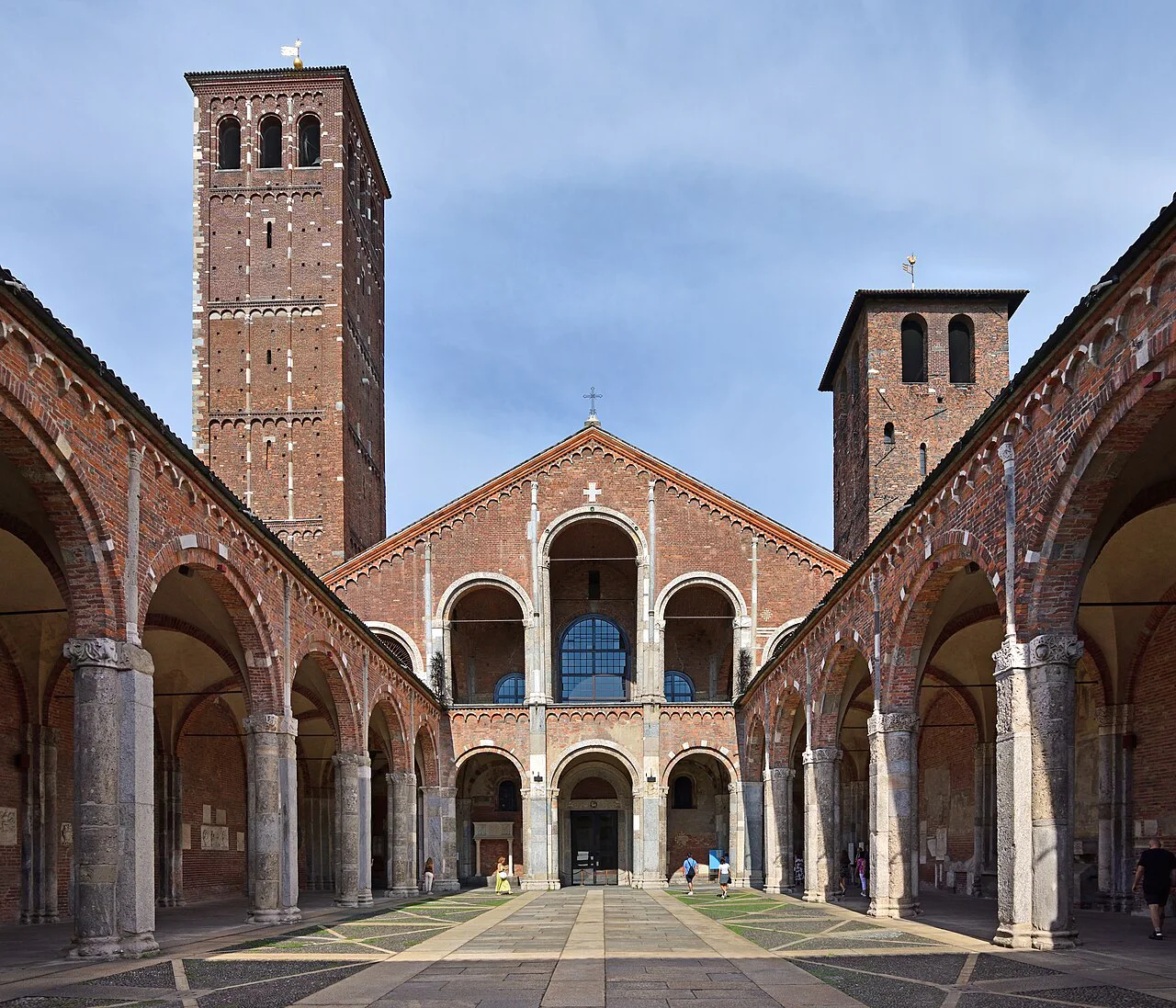
Milan · 1 km
Basilica di Sant'Ambrogio
Content & sources
Photo: Ludvig14 · CC BY-SA 4.0
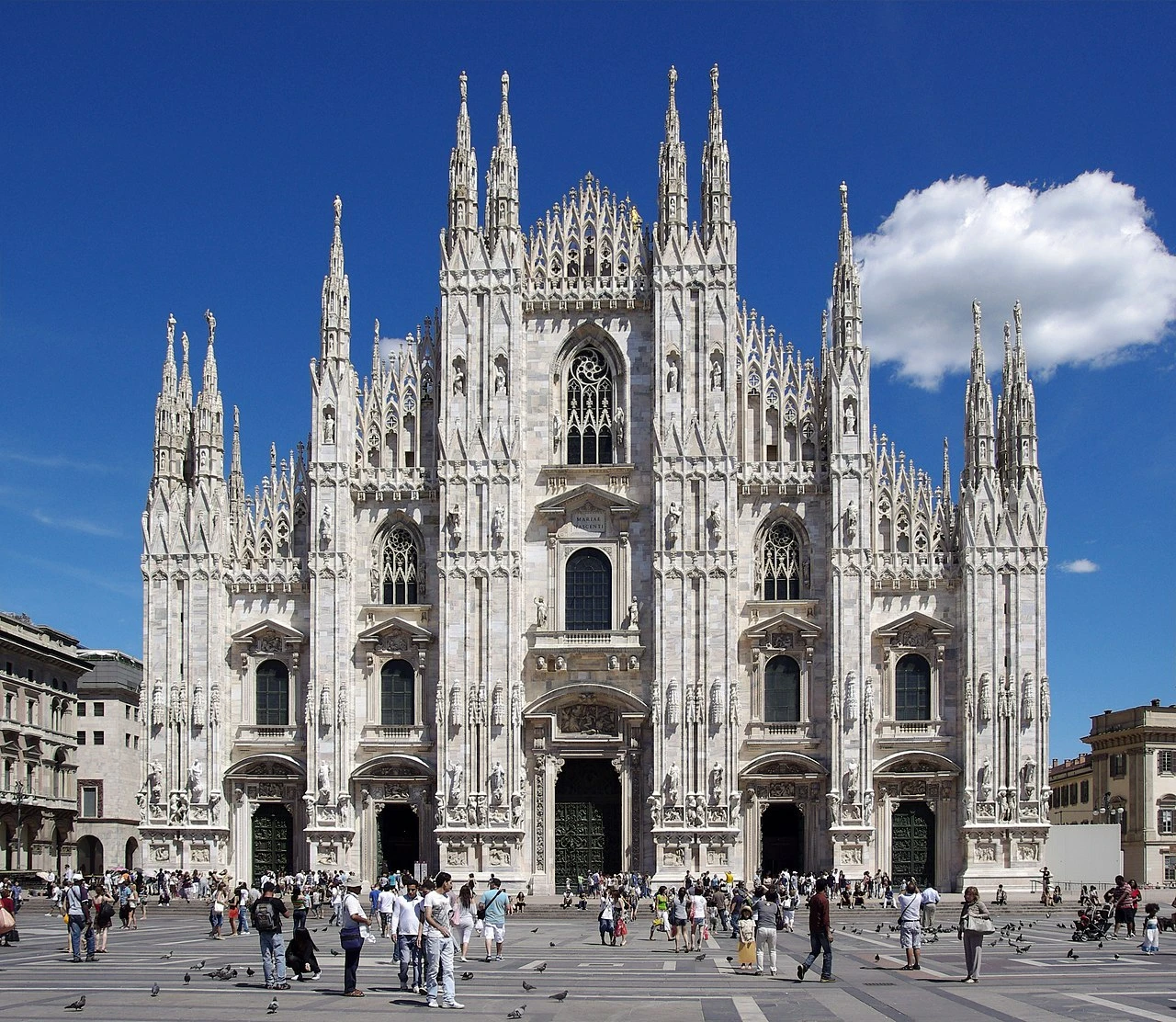
Milan · 1 km
Milan Cathedral
Content & sources
Jakub Hałun · CC BY-SA 4.0
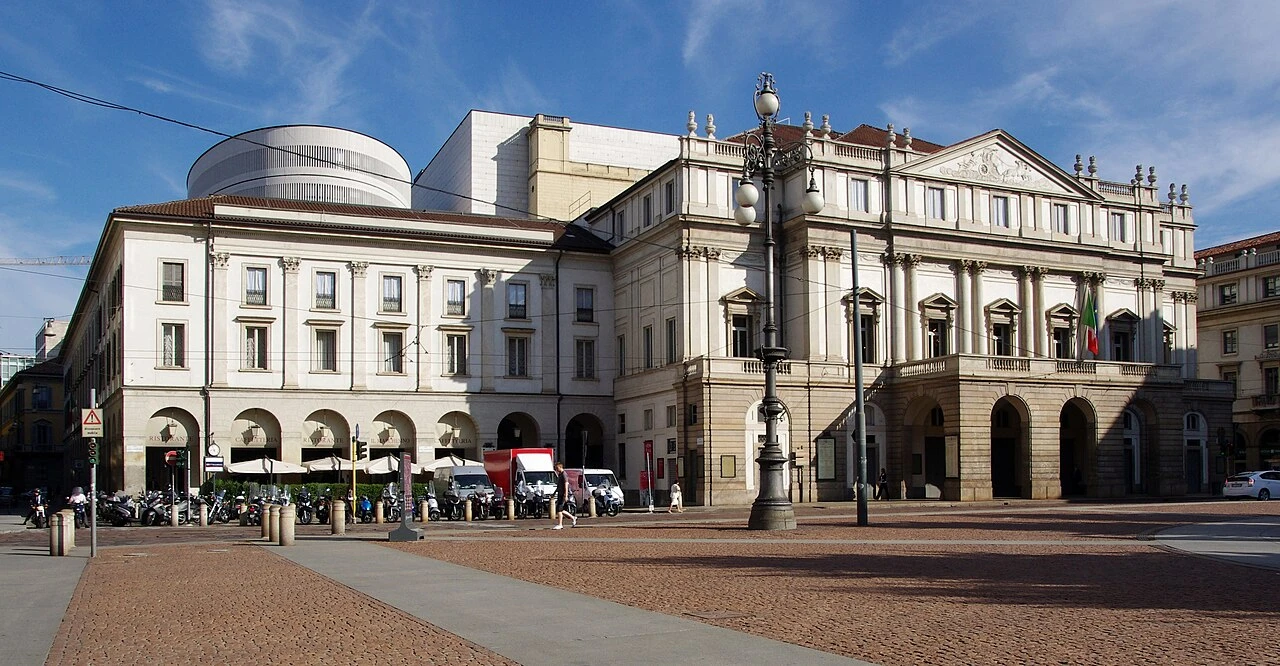
Milan · 1 km
La Scala
Content & sources
Jakub Hałun · CC BY-SA 4.0
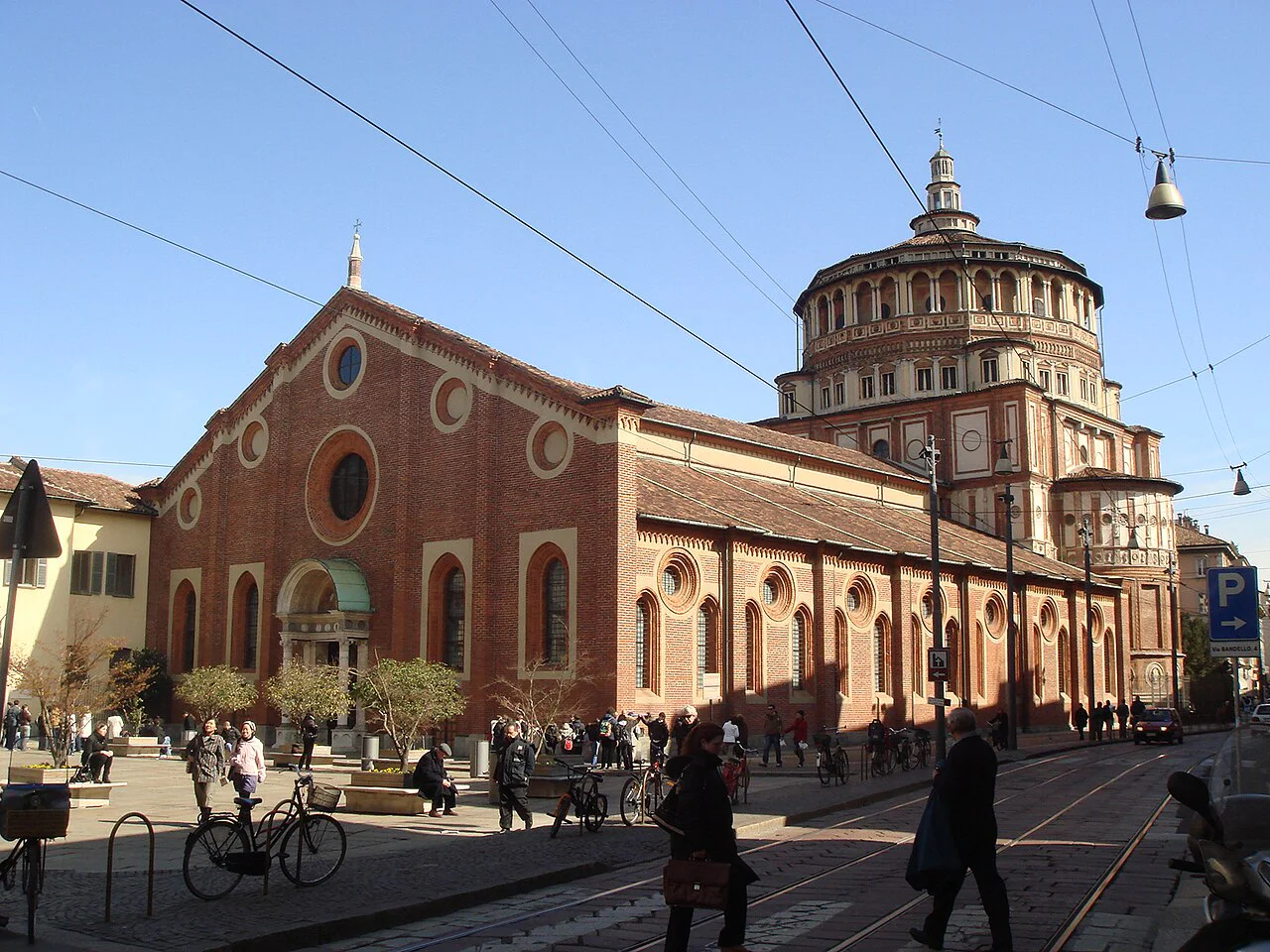
Milan · 1 km
Chiesa di Santa Maria delle Grazie
Content & sources
Giovanni Dall'Orto · Attribution