Stanza · Audio guide
Duomo di MilanoAudio guide
A place to remember. A story to take with you.
Milan Cathedral is a magnificent Gothic cathedral church located in Milan, Italy. It is the seat of the Archbishop of Milan and a significant landmark renowned for its intricate architecture.
Download Stanza, then search for “Duomo di Milano”.
About the tour
One guide. Your kind of visit.
Milan Cathedral is a magnificent Gothic cathedral church located in Milan, Italy. It is the seat of the Archbishop of Milan and a significant landmark renowned for its intricate architecture.
Ready when you are.
- 01Get the free Stanza app.
iOS & Android
- 02Find your guide.
“Duomo di Milano”
- 03Download before you go.
Works offline
Audio guide / 29 narrated stops
Inside the guide
Get to know a few of the stories before you go. Open a stop to read more.
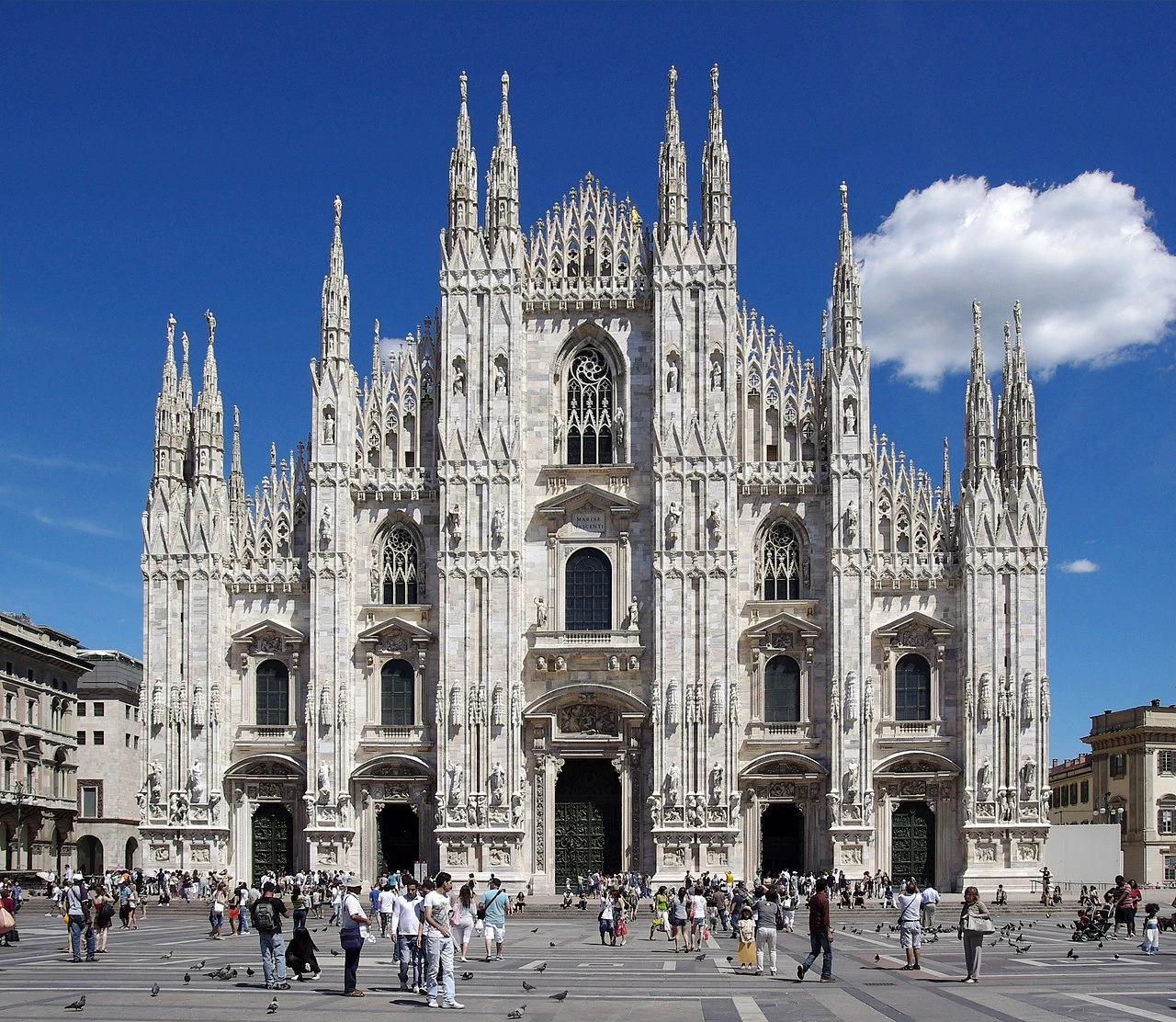
01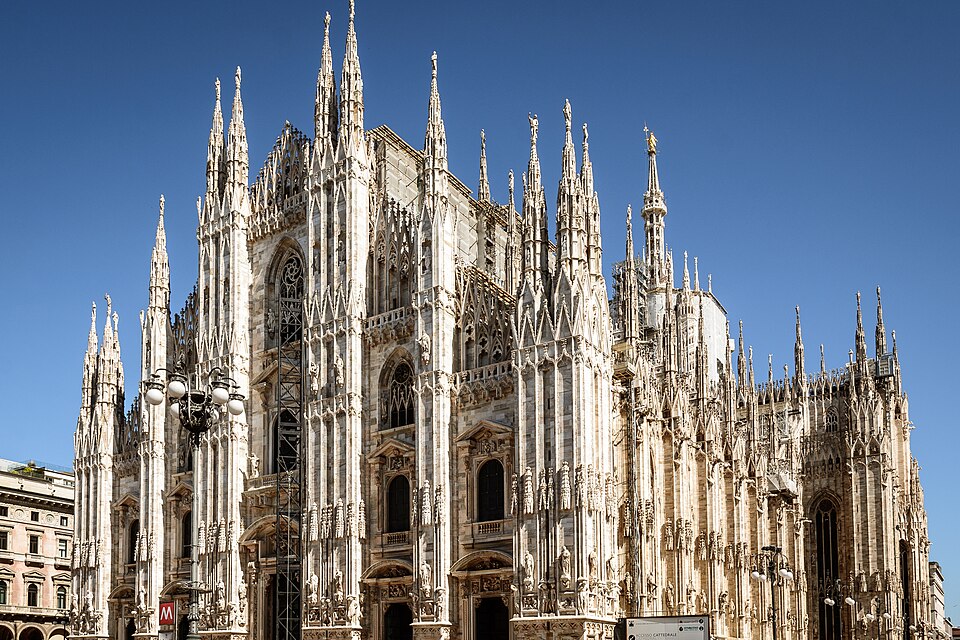 Piazza del Duomo and the Grand FacadeThe Marble Mountain
Welcome to one of the most iconic landmarks in the world. As you stand before this staggering structure, its sheer scale is almost overwhelming. This is the Duomo di Milano, the largest cathedral in Italy and the sixth largest globally. What truly sets it apart from other Gothic cathedrals is the material from which it is carved: the unique pinkish-white Candoglia marble. Unlike the brick commonly used in Italian construction of that era, the Duomo is built from this specific stone, which gives it its luminous, ethereal appearance. In 1387, Duke Gian Galeazzo Visconti granted the Veneranda Fabbrica del Duomo—the organization responsible for the cathedral's construction—tax-free use of the quarries in Candoglia. This was a revolutionary decree at the time, ensuring a steady supply of high-quality material without the burden of heavy taxation. This tradition is not merely a historical footnote; it continues to this very day. The quarries still exclusively provide the marble needed for the ongoing, meticulous restoration work required to maintain the cathedral's thousands of intricate details against the elements.
dconvertini · CC BY-SA 2.0
02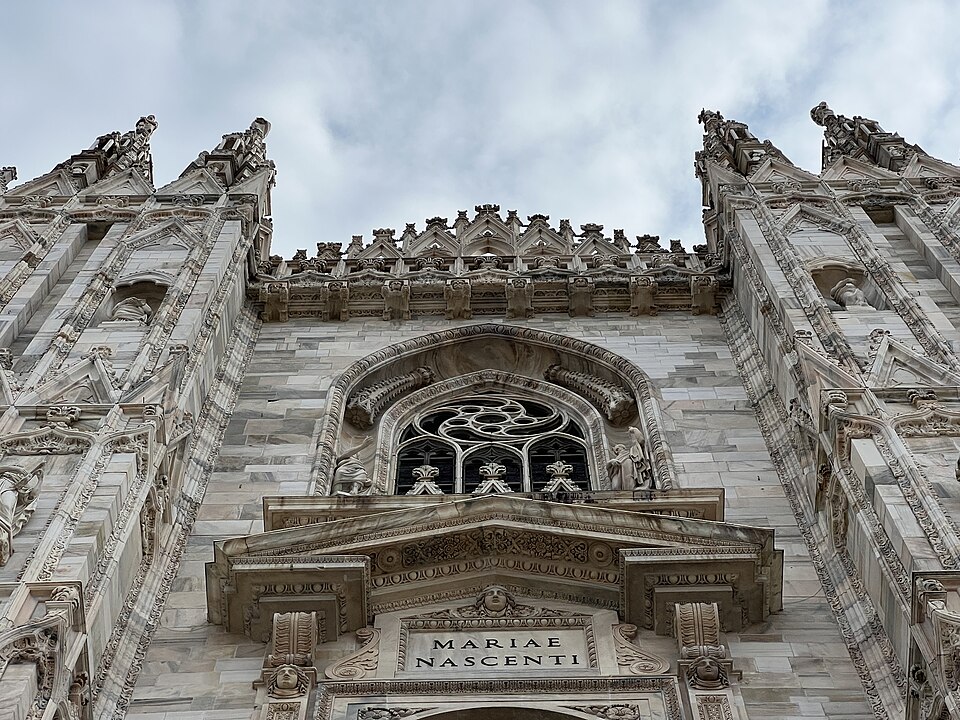 Piazza del Duomo and the Grand FacadeNapoleon’s Facade
For centuries, the front of the cathedral remained a patchwork of unfinished ideas and temporary structures. This stagnation ended abruptly in 1805 with the arrival of Napoleon Bonaparte. Preparing to be crowned King of Italy inside the cathedral, Napoleon issued an ultimatum: the facade had to be finished in time for the ceremony. He promised that the French treasury would cover the astronomical costs of the project. Spurred by this imperial decree and the promise of funding, workers completed the main elements of the facade in just seven years—a lightning pace compared to the nearly five centuries of prior labor. While history tells us that the French treasury never fully reimbursed the city of Milan for the work, Napoleon’s intervention was the catalyst the project needed. It finally gave the cathedral the cohesive, grand entrance we see today, blending various architectural styles into a singular, imposing front that serves as a gateway to the city's spiritual heart.
Photo: Chabe01 · CC BY-SA 4.0
03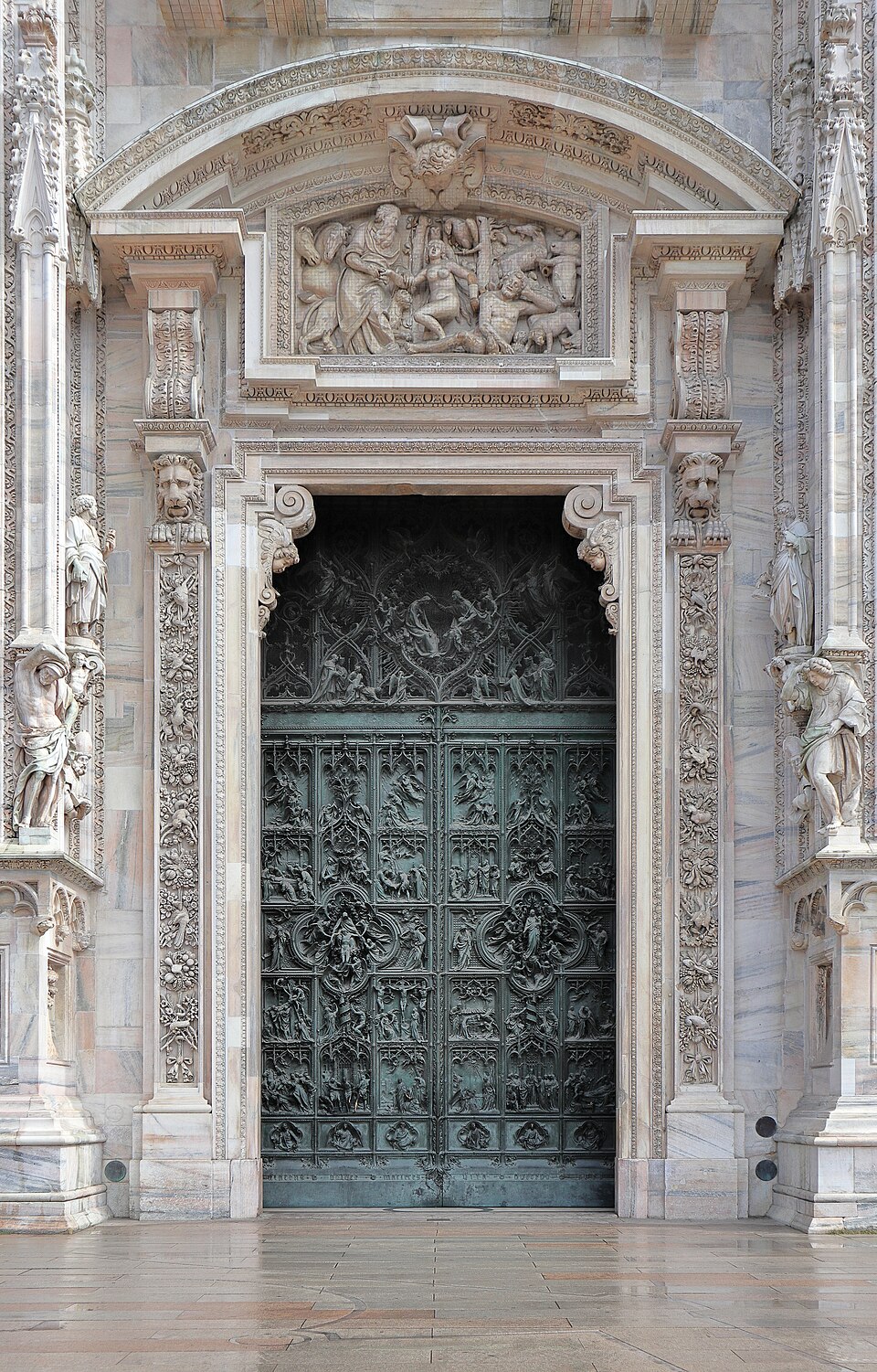 Piazza del Duomo and the Grand FacadeThe Bronze Portals
The massive central portal serves as a symbolic conclusion to one of history's longest construction projects. While the cathedral's foundation was laid in the 14th century, this final bronze door was only inaugurated in 1965. Its installation officially marked the cathedral as complete after an astounding 579 years of continuous labor. As you look closely at the heavy panels, you can see intricate relief carvings that tell stories from the life of the Virgin Mary. Each scene is rendered with remarkable depth and detail, capturing moments of joy, sorrow, and devotion. This specific focus reflects the cathedral's dedication to Santa Maria Nascente. The doors are more than just functional entrances; they are a narrative in metal, inviting pilgrims and visitors to reflect on sacred history before they even step inside. The weight and texture of the work provide a stark, grounded contrast to the airy marble spires that rise above, anchoring the cathedral’s spiritual aspirations in tangible craftsmanship.
Listen in the appPhoto: Terragio67 · CC BY-SA 4.0
04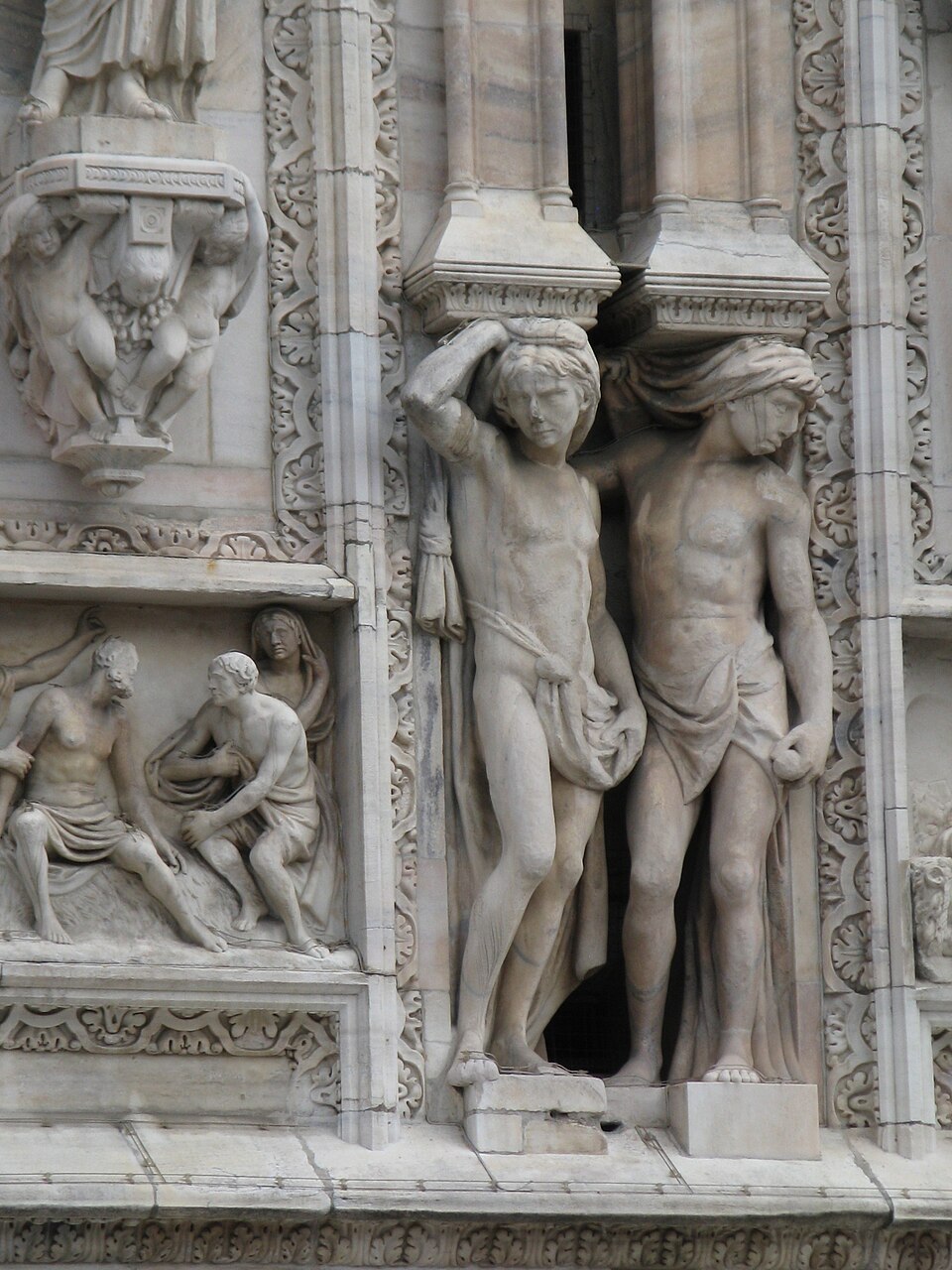 Piazza del Duomo and the Grand FacadeA Crowd in Stone
One of the most striking features of the Duomo is the staggering density of its ornamentation. The cathedral is home to a literal crowd in stone, featuring approximately 3,400 statues. To give you a sense of the distribution, roughly 2,300 of these figures are located on the exterior alone. They peer down from every corner, niche, and pinnacle, creating a vibrant, silent community that watches over the city. Among these countless sculptures, pay particular attention to the 'Atlantes' figures. These are sculptures of strong men positioned beneath the cornices, appearing to physically strain under the immense weight of the marble structures above them. Named after the Greek titan Atlas, who was condemned to hold up the heavens, these figures serve a dual purpose: they provide a sense of grounded, human effort within the grand architectural scheme, and they demonstrate the incredible skill of the artisans who transformed hard stone into expressions of dynamic physical exertion. The sheer variety of poses and expressions among these figures means that no two views of the cathedral are ever quite the same.
Listen in the appYair Haklai · CC BY-SA 4.0
05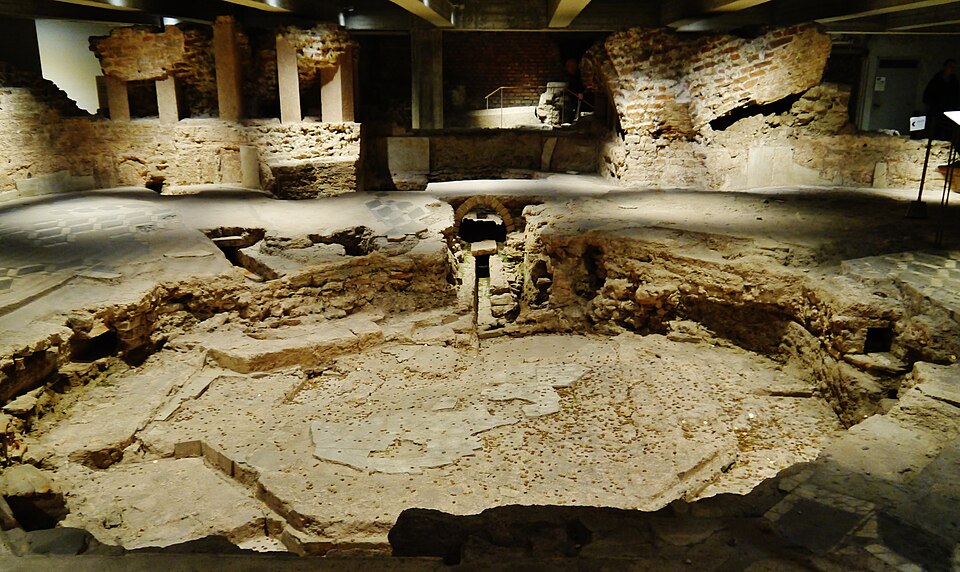 The Archaeological AreaThe Ancient Foundations
Beneath the grand marble floors of the current cathedral lies a hidden layer of history. The archaeological area here reveals the remains of the 4th-century Baptistery of San Giovanni alle Fonti. Long before the first stone of the Duomo was even a blueprint, this site was a focal point of early Christian life in Milan. These foundations offer a tangible link to the late Roman era, showing us that the sacred significance of this ground spans nearly two thousand years. As you explore the excavated brickwork and stone walls, you are looking at the footprint of the city's religious heritage. It is a humbling experience to realize that the soaring Gothic arches above you are supported by the silent, sturdy remains of a much older world. This underground space provides a profound perspective on the continuity of faith and architecture in Milan, reminding us that even the most grand cathedrals are built upon the legacies of those who came before. The preserved masonry allows us to imagine the smaller, yet equally significant, structures that once served the community here.
Listen in the appPhoto: Chabe01 · CC BY-SA 4.0
06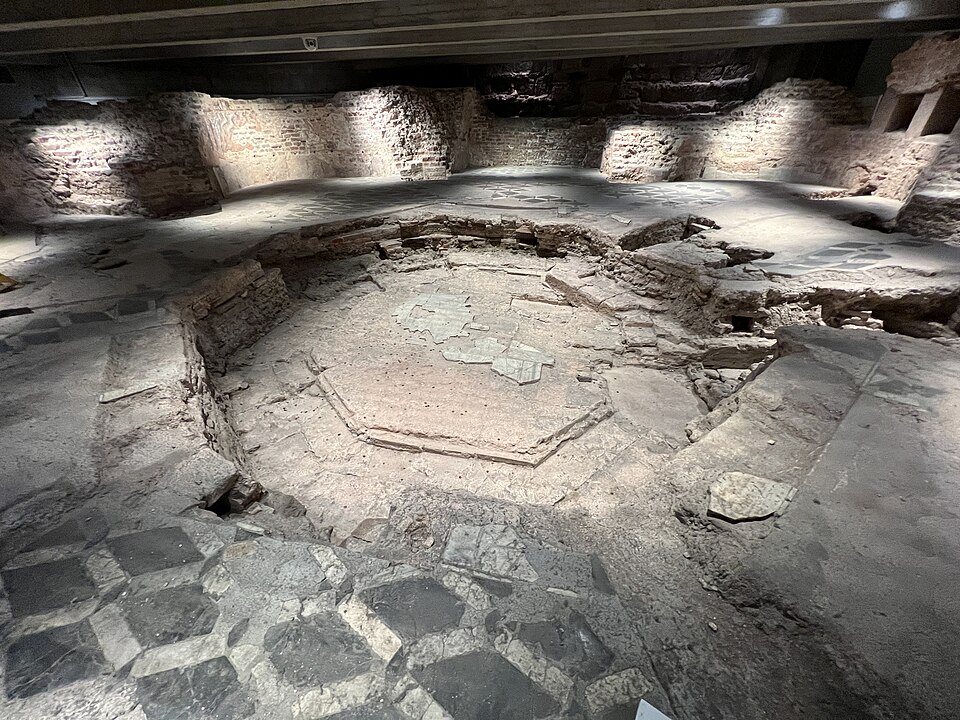 The Archaeological AreaThe Octagonal Font
Within the ancient ruins of the baptistery, you will notice a large, octagonal depression. This is the remains of the baptismal font, and its shape is deeply symbolic, likely representing the 'eighth day' of creation—the resurrection and eternal life. However, its historical significance is even more profound than its geometry. Tradition holds that it was at this very spot, in late 387 AD, that Saint Ambrose, the Bishop of Milan, baptized Saint Augustine. Augustine would go on to become one of the most influential theologians and philosophers in Western history, and his conversion here in Milan was a turning point for the Christian world. Standing here allows you to connect with a specific moment in time that shaped the course of Western thought. The proximity of this simple, ancient font to the monumental high altar above illustrates the evolution of the church from its early, foundational ceremonies to the grand liturgical spectacles of the present day. It is a place of profound quiet that anchors the entire cathedral in its early Christian origins.
Listen in the appPhoto: Chabe01 · CC BY-SA 4.0
07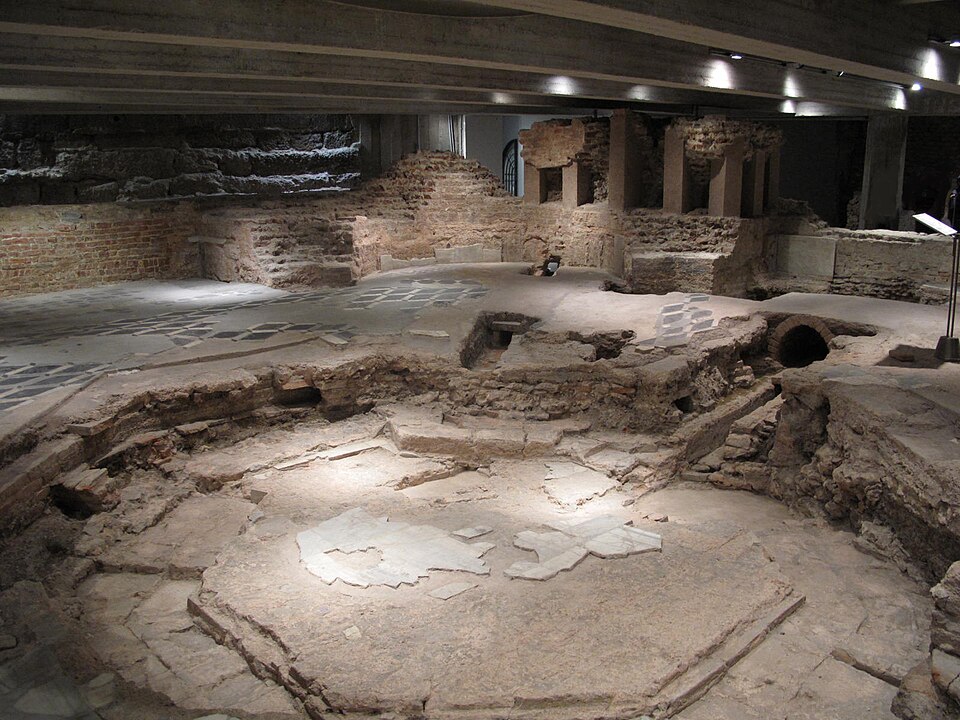 The Archaeological AreaSacred Geometry
The ruins surrounding the baptismal font are rich with detail if you know where to look. Notice the remaining fragments of mosaic flooring, with their geometric patterns and muted tones. These delicate remnants, along with the sturdy brickwork of the walls, were hidden from view for centuries, buried beneath the rising floor of the medieval cathedral. They were only rediscovered and carefully unearthed during major excavations in the 1960s. Their preservation offers a rare glimpse into the aesthetic and structural preferences of early Christian Milan. These stones and tiles represent the very roots of the city's spiritual identity. By examining these fragments, we can appreciate the continuity of this site as a place of worship and gathering. The rediscovered mosaic designs reflect a time when the early church was just beginning to establish its visual language, a language that would eventually blossom into the complex, multi-layered symbolism of the Gothic masterpiece that now stands over these ancient, sacred floors. The brickwork itself shows the craftsmanship of a time when the city was a key capital of the Roman Empire.
Listen in the appPhoto: A ntv · CC BY-SA 3.0
08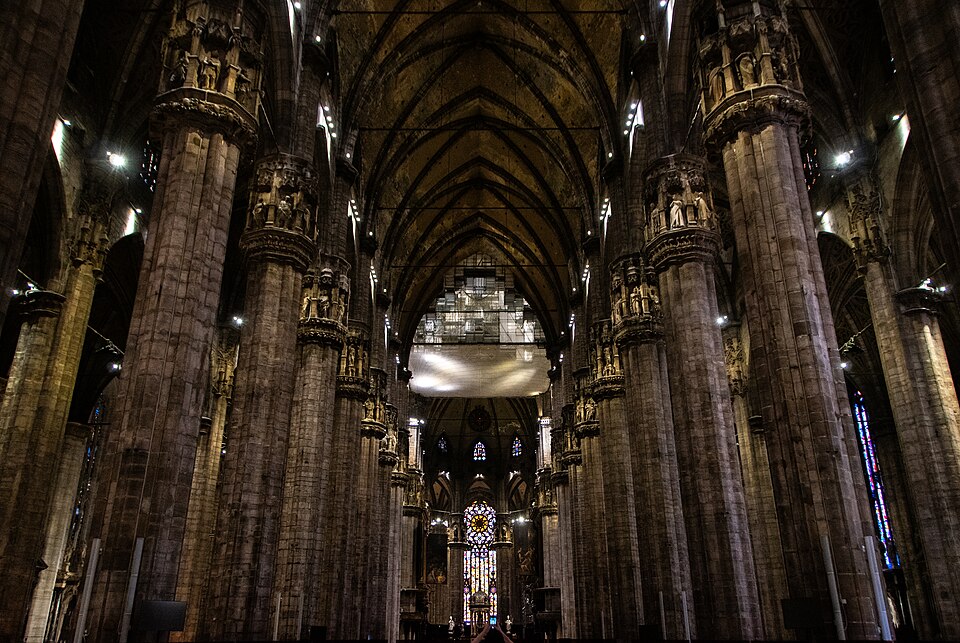 The Nave and the Solar MeridianThe Forest of Pillars
As you enter the main body of the cathedral, the nave, the change in atmosphere is immediate. The space opens up into a vast interior covering 11,700 square meters, large enough to accommodate a staggering 40,000 people. The most dominant feature is what many describe as a forest-like sensation created by the pillars. There are 52 of these massive supports in total, a number chosen with deliberate symbolism to represent the 52 weeks of the year. This architectural choice transforms the interior into a structural calendar, anchoring the divine space in the rhythm of human time. The sheer girth and height of these pillars create a rhythmic, vertical energy that draws your eyes upward toward the vaulted ceiling. This sense of verticality is a hallmark of Gothic design, intended to make visitors feel small in the face of the infinite. Walking between these columns, you can almost imagine you are moving through an ancient, petrified grove, where the light filters through the stained glass like sunbeams through a canopy of leaves. Each pillar stands as a testament to the immense engineering feat required to support the weight of the marble roof.
Listen in the appPhoto: Julian Lupyan · CC0
09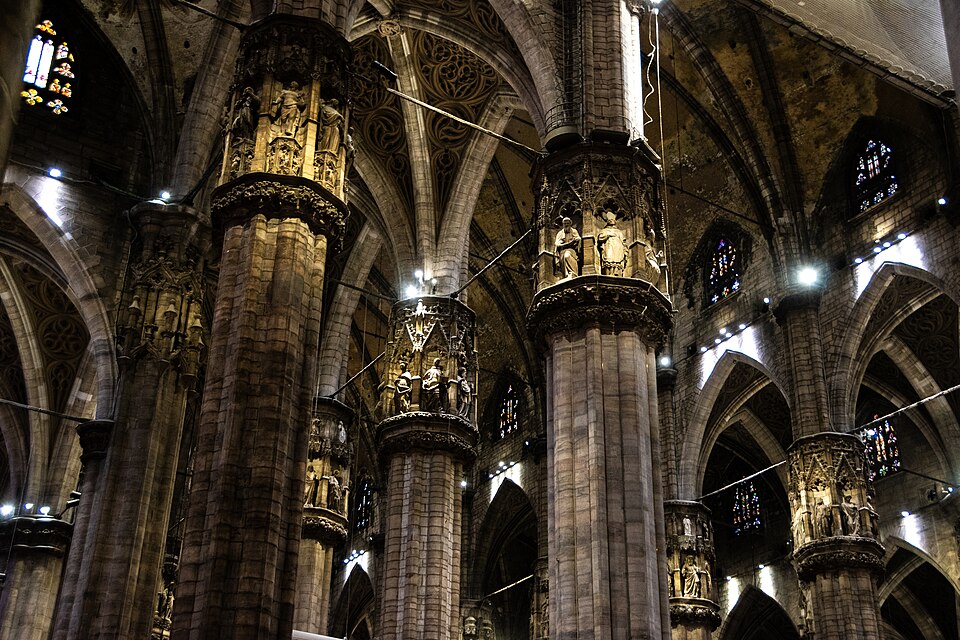 The Nave and the Solar MeridianThe Statue Capitals
While the pillars themselves are impressive for their scale, their tops, or capitals, feature a design that is almost unique to the Duomo di Milano. In most Gothic cathedrals, column capitals are decorated with foliage or abstract geometric patterns. Here, however, you will find intricate niches built directly into the capitals, each housing a figure of a saint. These silent guardians look down upon the congregation from their high perches, adding to the cathedral's immense population of 1,100 interior statues. This unusual architectural choice serves to humanize the massive structural elements, integrating the stories of the saints into the very fabric of the pillars that support the roof. It creates a sense that the entire building is animated by the presence of the holy figures it honors, turning every support beam and structural junction into an opportunity for artistic and spiritual expression. As you move through the nave, notice how each capital is unique, offering a different set of figures to discover, which draws the eye upward and reinforces the verticality of the Gothic space.
Listen in the appPhoto: Julian Lupyan · CC0
10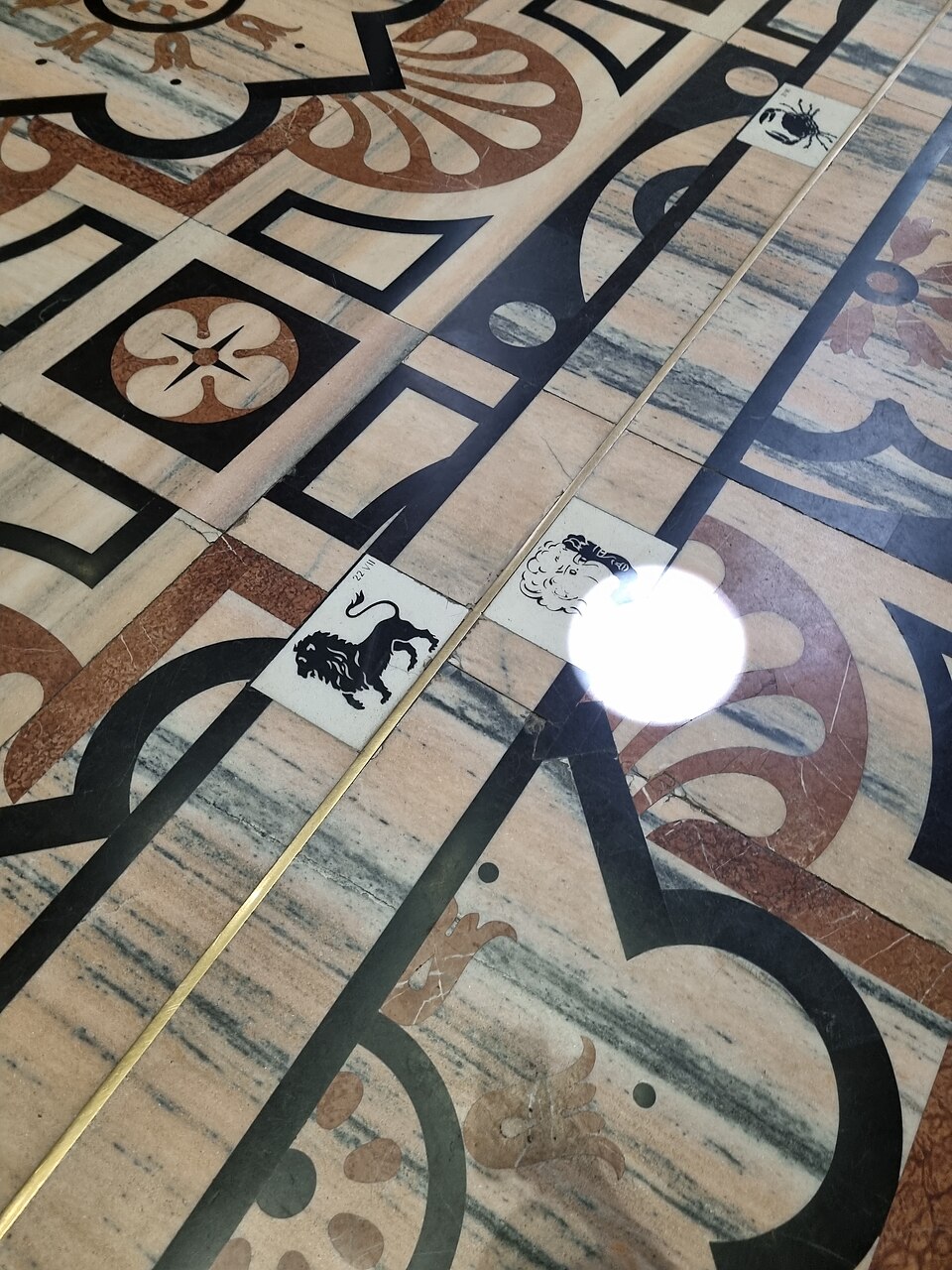 The Nave and the Solar MeridianThe Solar Meridian
Near the entrance, look down to find a long, thin brass strip running across the floor. This is much more than a decorative element; it is a massive and historically significant solar meridian, or sundial. Its operation is ingeniously simple yet precise. High above in the southern roof of the cathedral, there is a small, carefully placed hole. Every day at solar noon, a beam of sunlight passes through this hole and strikes the brass line on the floor. Depending on the time of year and the sun's position in the sky, the beam will land on a different point along the strip. To make the date clear, the line is punctuated by marble tiles featuring the signs of the zodiac. For example, during the summer solstice, the light will hit the tile for Cancer, while in the winter, it rests on Capricorn. This meridian was used for generations to regulate the city's clocks, serving as a vital link between the celestial movements of the heavens and the daily lives of the citizens below. It reflects a time when cathedrals were centers of both spiritual and scientific knowledge.
Listen in the appPhoto: Alaexis · CC BY-SA 4.0
Duomo di Milano
Frequently asked questions
How much does the guide cost?
Free app download. Listed guide price: $2.99. Guide price shown in the app. Audio guide only. Venue admission is separate.
Can I listen without internet?
Yes. Download the guide’s audio, images, and maps in the app before your visit. Your downloaded content is then available offline.
Can I listen in my language?
Stanza supports 15 languages. Check the app for the languages available for this guide.
Do I need to follow a schedule?
No. This is a self-guided experience. Choose your stops, pause whenever you like, and return to a story at your own pace.
At your own pace
Explore Duomo di Milano.
Download Stanza, then search for “Duomo di Milano”.
Free app download · Guide price shown in the app
Keep exploring
Nearby audio guides
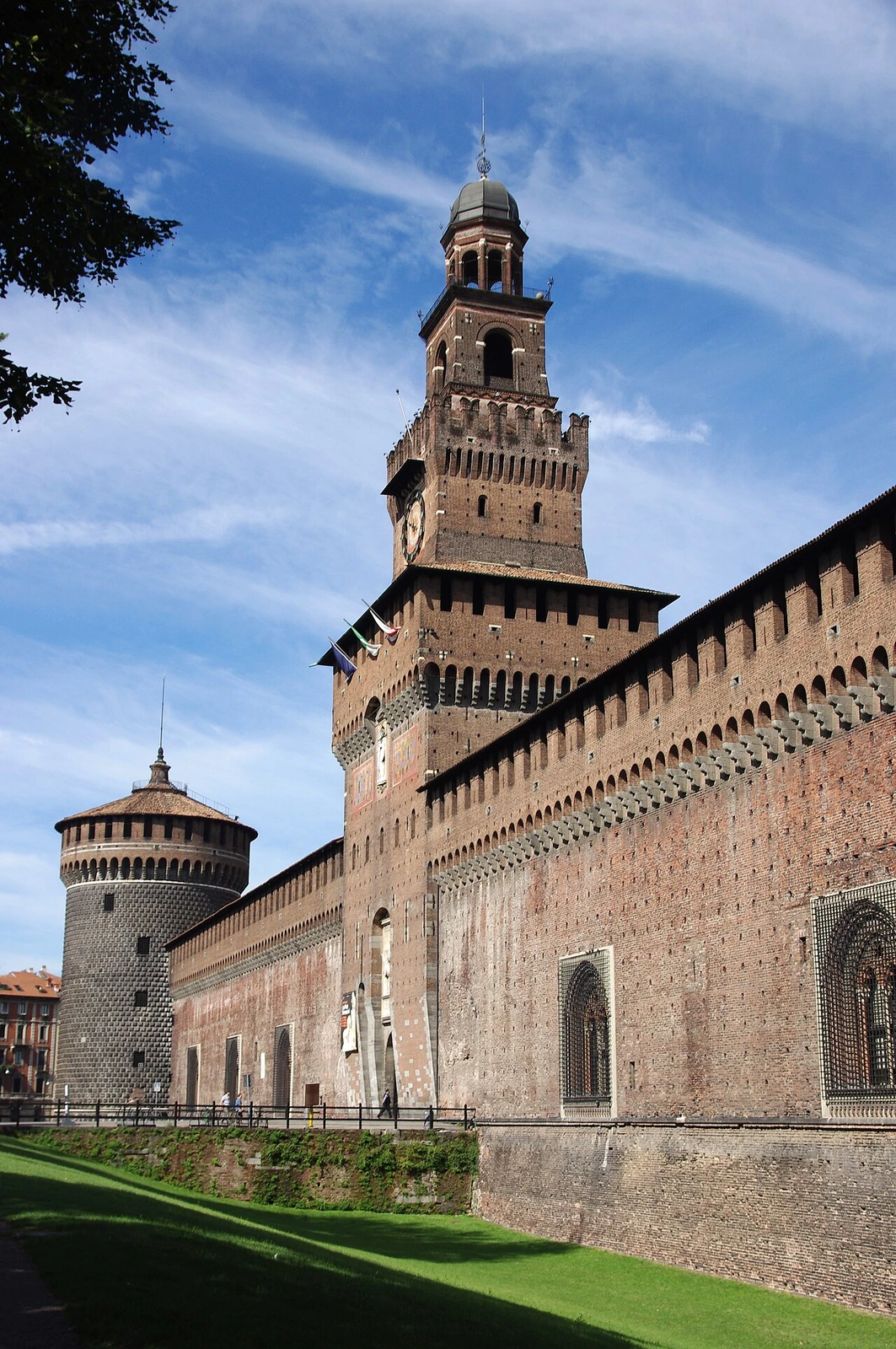
Milan
Castello Sforzesco
Content & sources
Jakub Hałun · CC BY-SA 4.0
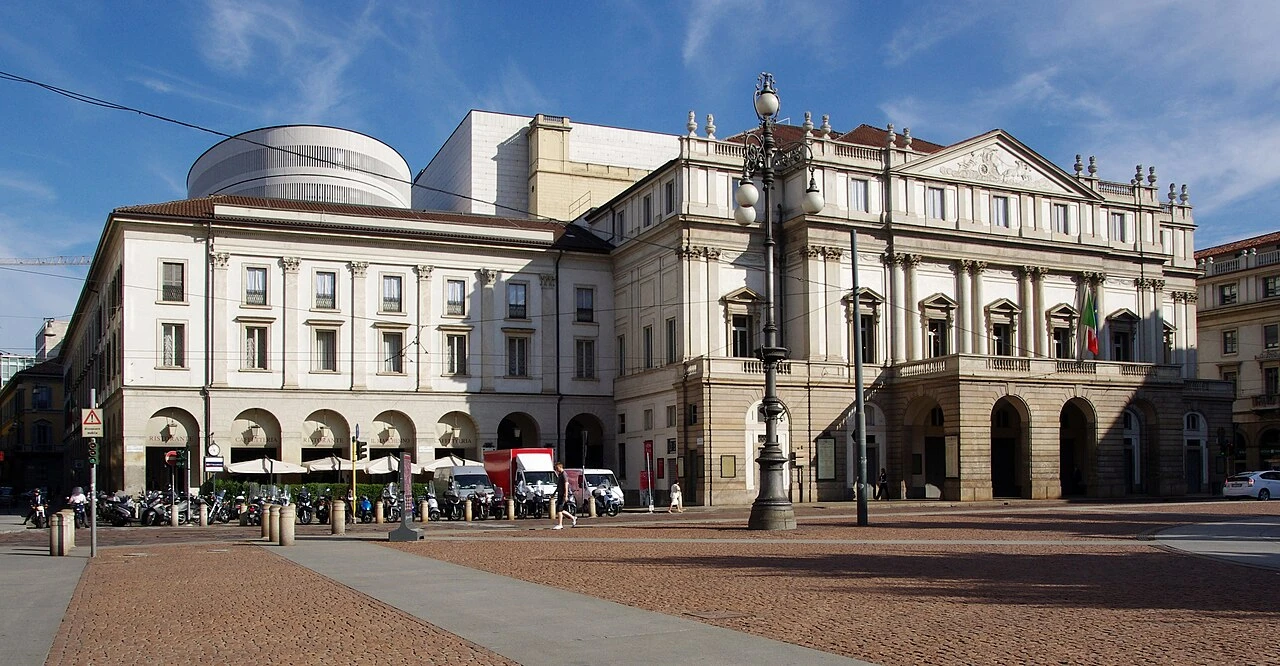
Milan
Teatro alla Scala
Content & sources
Jakub Hałun · CC BY-SA 4.0
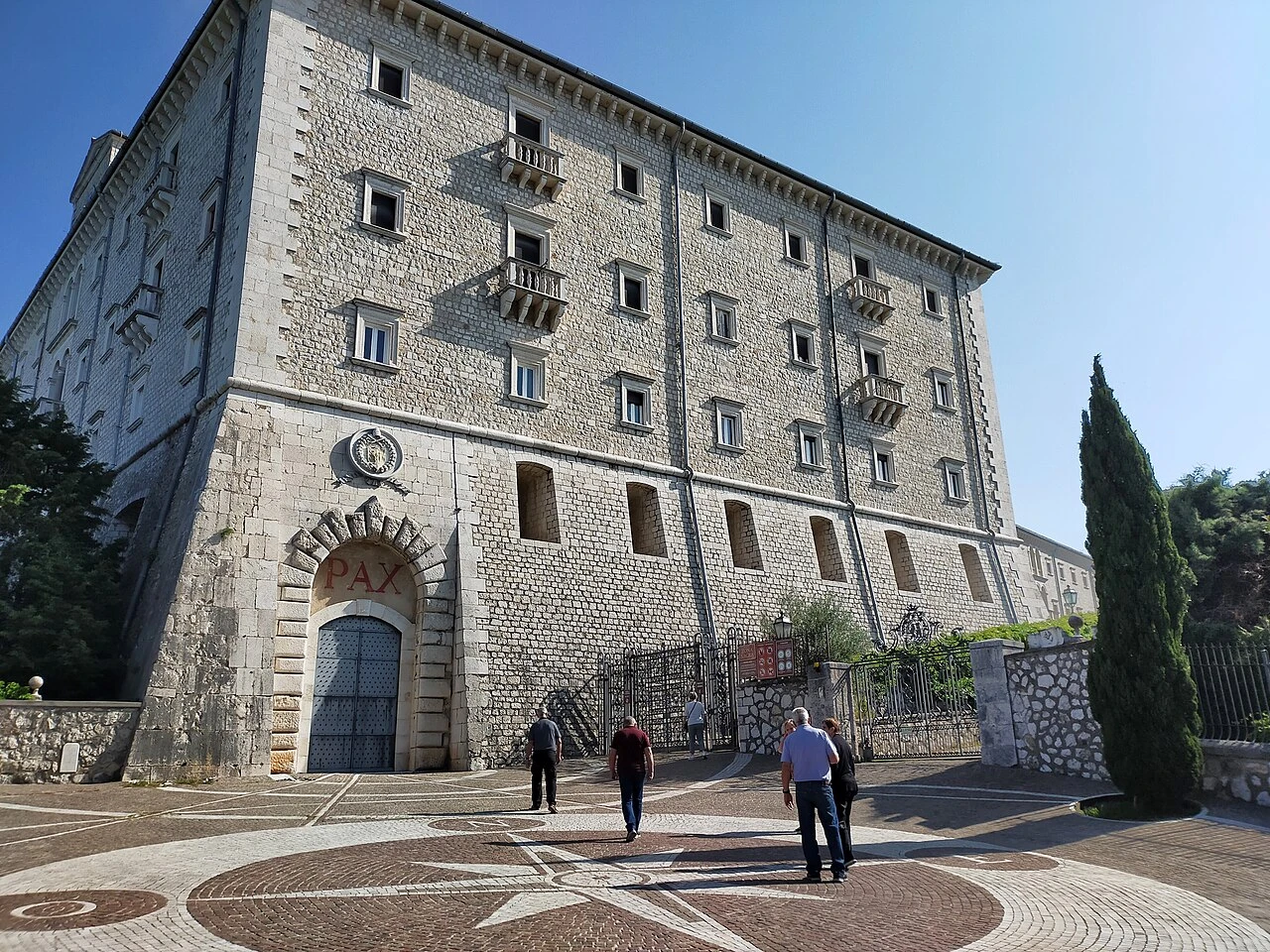
Cassino
Abbey of Monte Cassino
Content & sources
Photo: Marica Massaro · CC BY-SA 4.0
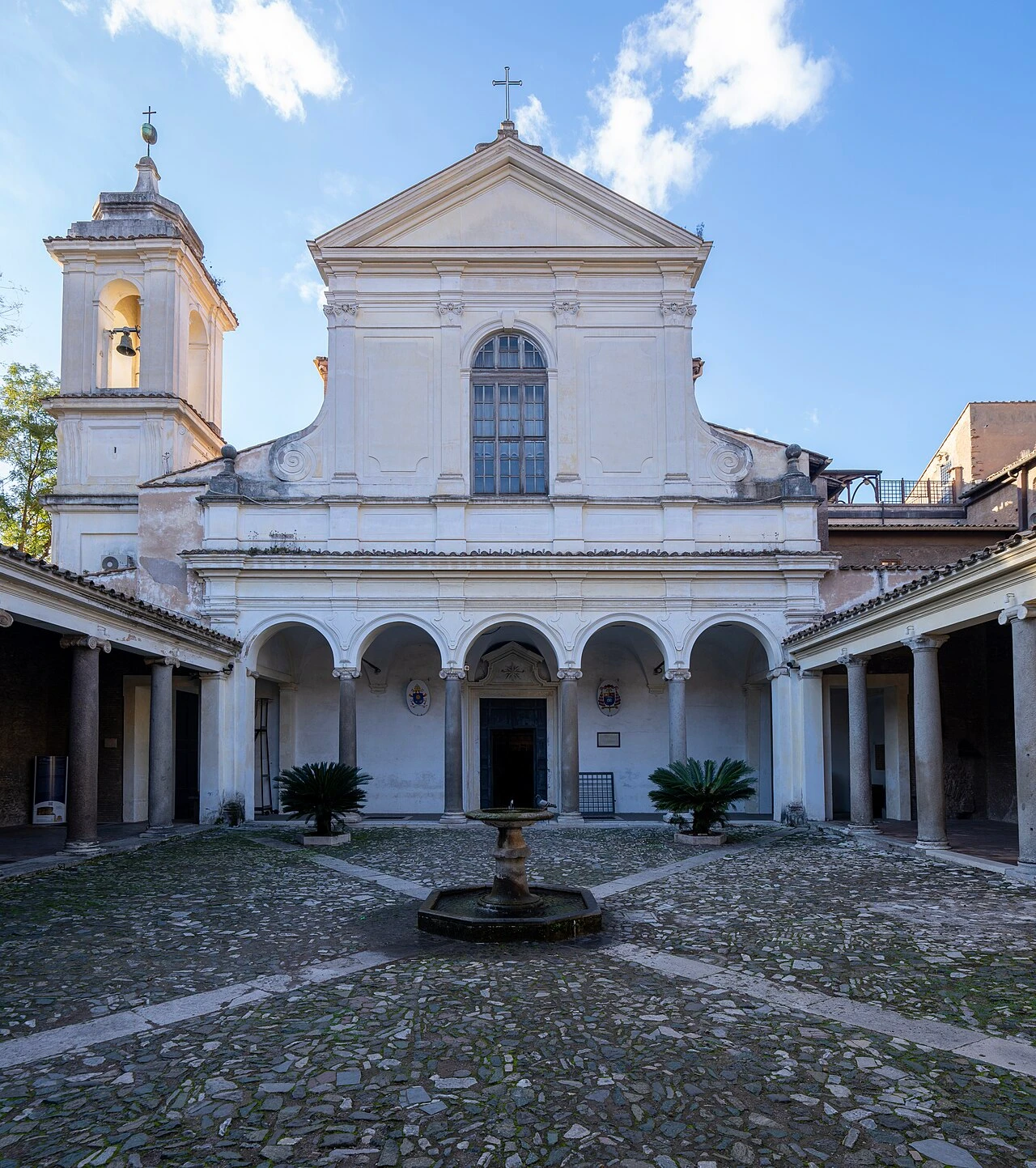
Rome
Basilica di San Clemente
Content & sources
Photo: Labicanense · CC BY-SA 4.0