Languages
15Basilica di San Francesco Audio Guide
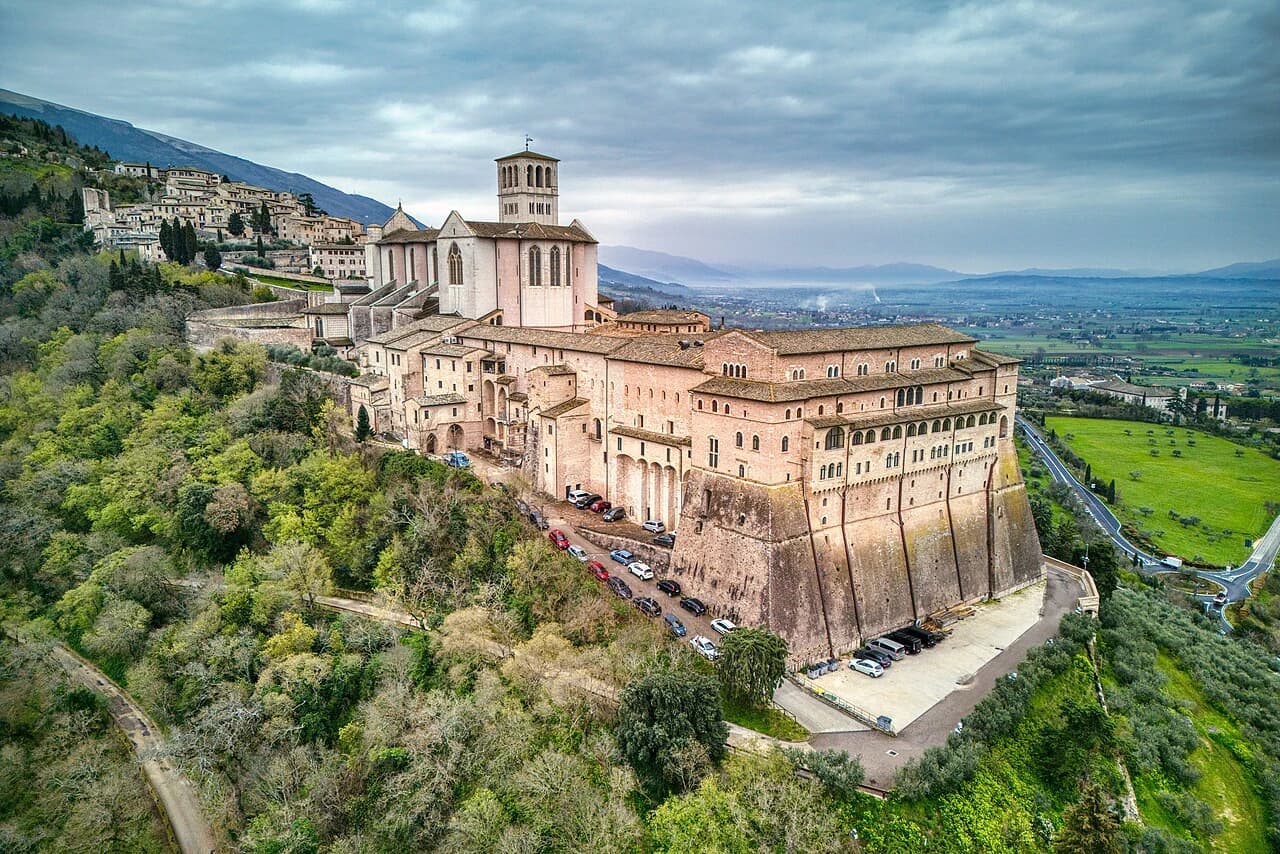
Basilica di San Francesco is a landmark in Assisi, Italy. Explore it with Stanza's GPS-triggered offline audio guide — available in 15 languages.
Quick Facts
22
Stops
15
Languages
100%
Offline
📍 Assisi, Italy · 43.0748°N, 12.6058°E
About Basilica di San Francesco
A prominent Catholic basilica in Assisi, Italy, it is the burial place of Saint Francis and a UNESCO World Heritage site. The complex is renowned for its significant early Renaissance frescoes by artists like Giotto and Cimabue.
Basilica di San Francesco is also known as Convento di San Francesco, Basilica di Assisi, Basilica di San Francesco d'Assisi, Patriarcale Basilica di San Francesco, and 4 other names in various languages.
This self-guided audio tour features 22 narrated stops organized across 6 sections, including The Atmospheric Lower Church Nave, The Saint Martin Chapel, The Crypt: Tomb of Saint Francis, The Upper Church: Giotto's Narrative Cycle, The Ghostly Frescoes of Cimabue, The Upper Plaza and Main Facade. As a church, Basilica di San Francesco offers a unique cultural experience in the heart of Assisi, Italy.
The Stanza audio guide is available in 15 languages and works entirely offline — download the complete tour including audio narration, maps, and images before your visit. As you walk through Basilica di San Francesco, GPS-triggered narration plays automatically at each point of interest.
Last updated:
What you will hear
The Atmospheric Lower Church Nave
Focusing on the somber, Romanesque architecture and the 'Biblia Pauperum' concept.
Lower Church Nave
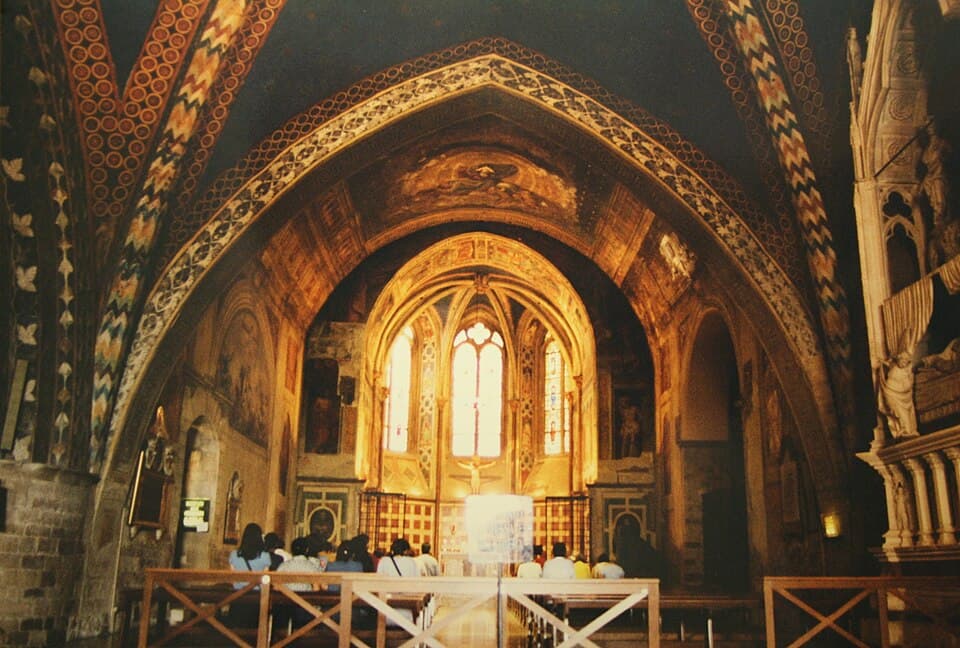
Entering the nave of the Lower Church, the atmosphere shifts dramatically from the open plaza outside. The air feels cooler, and the space is defined by a somber, heavy Romanesque style. This architectural choice was intentional, creating an environment suitable for a crypt and a place of quiet prayer. Notice the massive, low-set cylindrical pillars that line the nave. These are not merely decorative; they are essential structural elements designed to support the immense weight of the Upper Church directly above us. In an era when most people could not read, the walls here served as a "Biblia Pauperum," or "Bible for the Poor." Every surface was covered in vibrant frescoes that depicted biblical stories and the life of Saint Francis, allowing even the illiterate to understand the teachings of the faith through visual storytelling. While some of the pigments have faded over the centuries, the sheer density of the imagery still conveys the didactic purpose of the space. The low, vaulted ceilings and thick walls create a sense of being underground, drawing the focus inward toward the spiritual heart of the basilica located beneath the high altar.
The Saint Martin Chapel
Highlighting the Simone Martini frescoes, a masterpiece of Sienese art within the Lower Church.
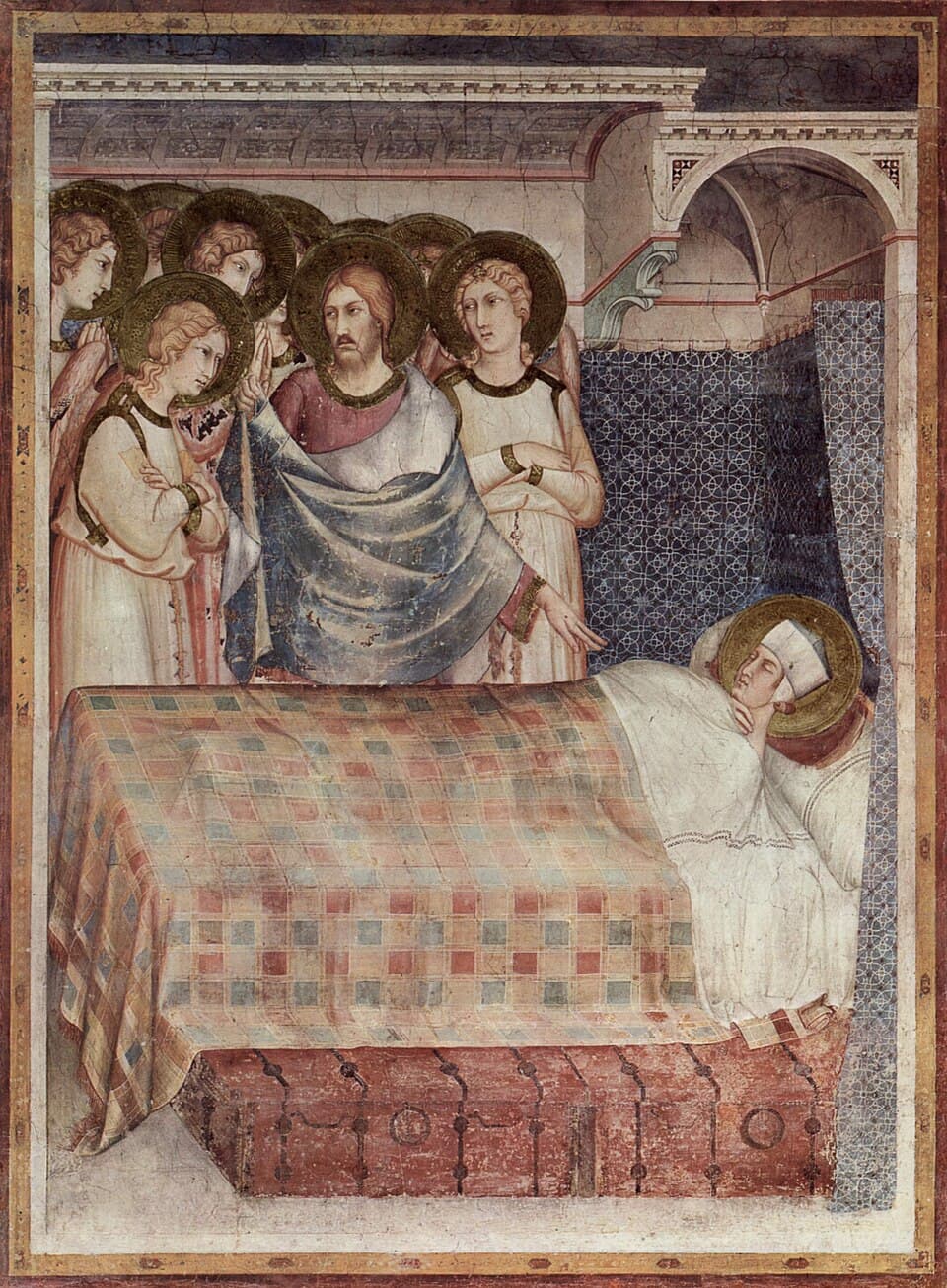
The Death of Saint Martin
This panel depicts the final moments of Saint Martin's life on Earth. He is shown lying on a bed, surrounded by his grieving companions and fellow clergy. The artist, Simone Martini, demonstrates a remarkably sophisticated handle on architectural perspective for the time, which you can see in the rendering of the room and the vaulted ceiling above the scene. This creates a sense of real, three-dimensional space that was quite revolutionary for the 14th century. Look closely at the faces of the figures gathered around the bed. Their expressions are filled with emotion, capturing a range of sorrow and prayerful devotion, yet they maintain a certain refined dignity that is a hallmark of the Sienese school. The scene is quiet and reverent, focusing on the transition from the physical world to the spiritual. Notice the details of the room, from the patterned fabrics to the architectural arches, which provide a realistic setting for this sacred event. The composition directs your attention toward the peaceful figure of the saint, who remains the calm center of the surrounding grief. This fresco beautifully balances technical skill with deep emotional resonance, marking it as a highlight of the chapel’s narrative cycle.
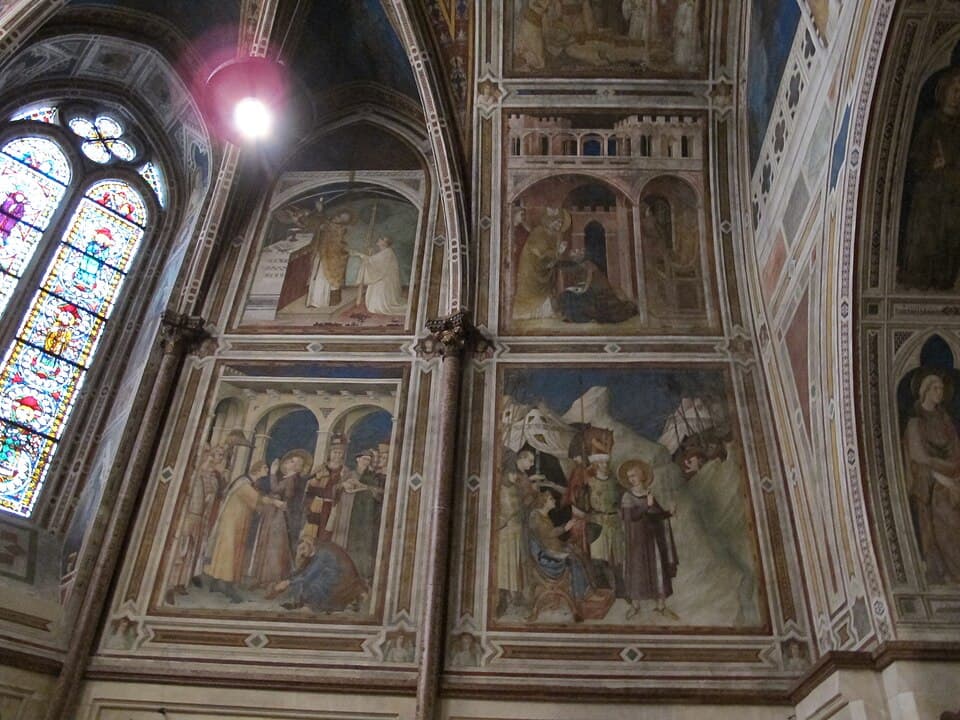
Saint Martin's Chapel
The Chapel of Saint Martin is widely considered a jewel of the Sienese school of painting. As you look around the space, you will see a brilliant display of color and the extensive use of gold leaf, which creates a shimmering, celestial effect when caught by the light. These frescoes were painted to tell the story of Saint Martin of Tours. Martin was originally a Roman soldier, but his life took a radical turn when he converted to Christianity and eventually became a bishop and a saint. The Sienese style is particularly evident in the elegance of the figures and the meticulous attention to detail in the costumes and backgrounds. Unlike the more rugged style seen in some other parts of the basilica, the work here is refined and courtly. This chapel offers a glimpse into the high level of artistry that was sought after to decorate the various side chapels of the Lower Church. The narrative cycle follows Martin from his days in the military to his later life as a holy man, emphasizing his virtues of charity and devotion. It serves as a beautiful counterpart to the stories of Saint Francis found elsewhere in the building.
The Crypt: Tomb of Saint Francis
The spiritual heart of the complex where the saint's remains were hidden for centuries.
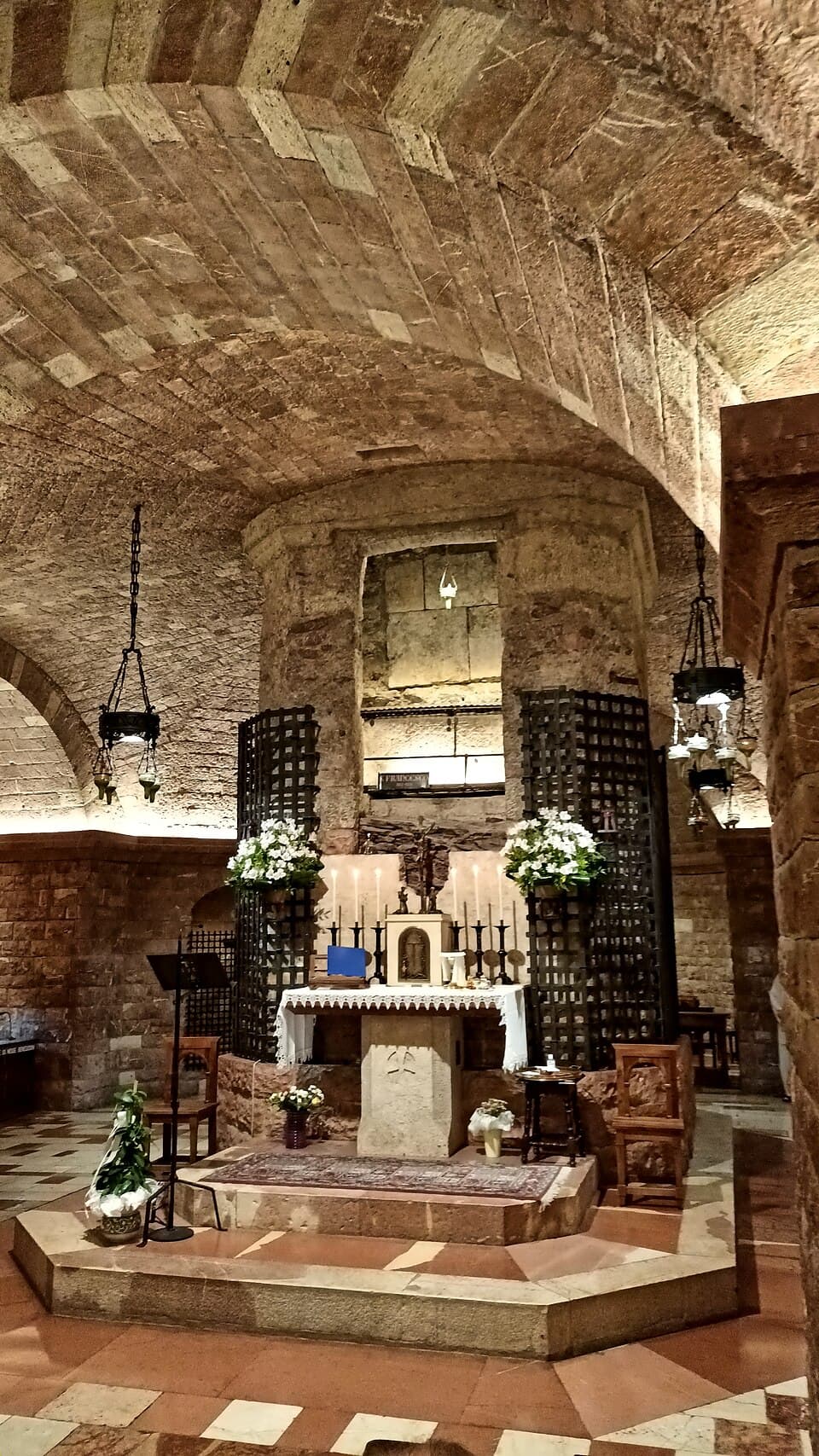
The Crypt Altar
The atmosphere in this subterranean crypt is one of profound silence and humility, reflecting the life of the man buried here. At the center, you can see the simple stone sarcophagus that contains the remains of Saint Francis. Notice the heavy iron ties that bind the stone; these were original features intended to secure the coffin and prevent its opening during the centuries it remained hidden. The plainness of the tomb is a powerful testament to Francis’s commitment to poverty, contrasting with the elaborate art found in the levels above. Francis is not alone in this sacred space. In the corners of the crypt, you will find the burial sites of his four most devoted companions: Brother Leo, Brother Rufus, Brother Angelus, and Brother Masseo. These men were with Francis from the early days of his mission and remained by his side throughout his life. By placing them here, the designers of the crypt emphasized the communal nature of the early Franciscan movement. The low, heavy arches and the natural stone of the hillside provide a somber, meditative setting for visitors to reflect on the legacy of the "Little Poor Man" of Assisi.
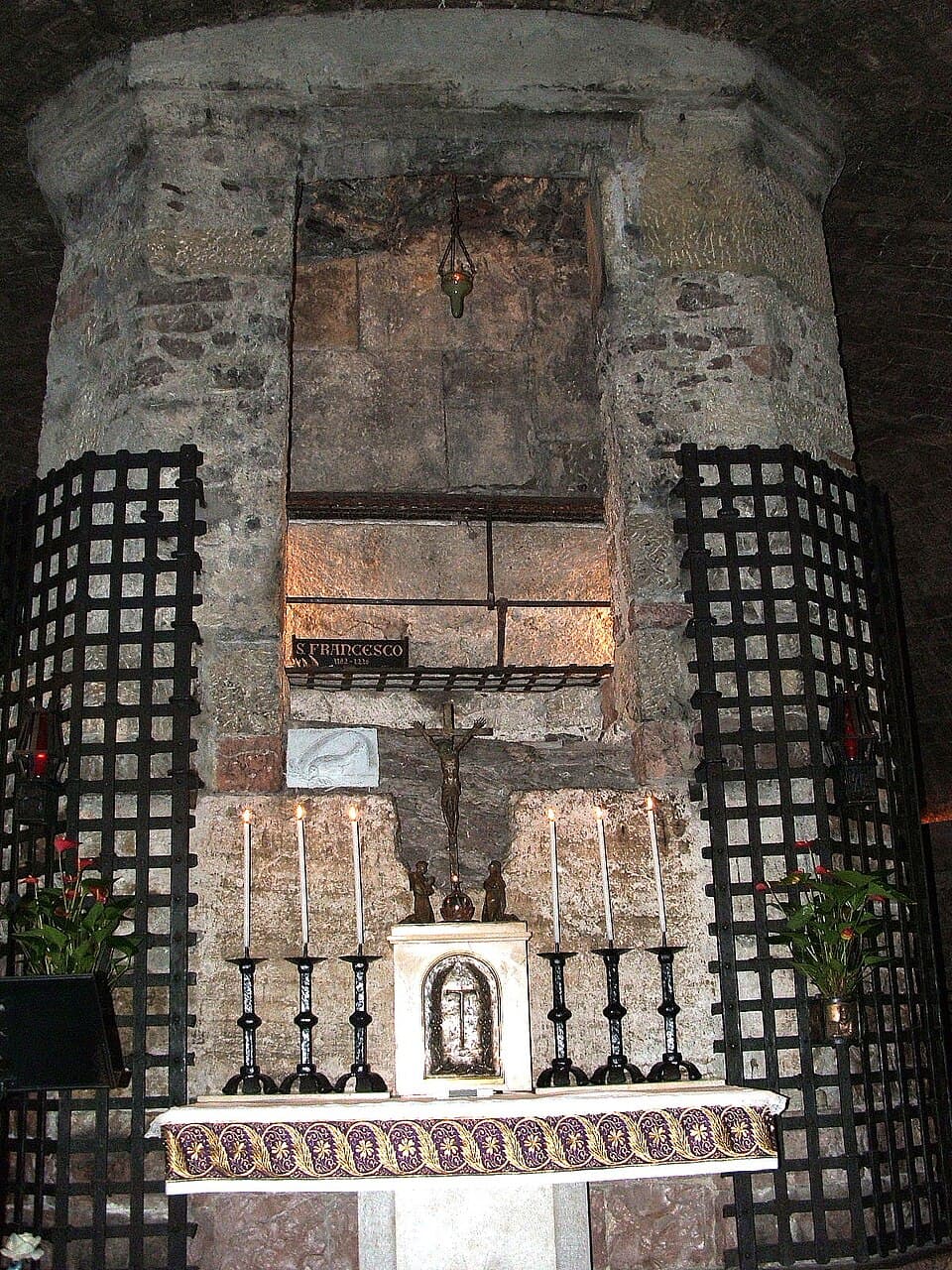
Tomb of Saint Francis
You are looking at the area surrounding the spiritual epicenter of the entire complex: the tomb of Saint Francis. The history of this specific spot is filled with mystery and devotion. After Francis died, Brother Elias, who was in charge of building the basilica, went to extreme lengths to protect the saint's body. At a time when the theft of holy relics was a common and profitable occurrence, Elias hid the sarcophagus so effectively deep within the rock of the hillside that its exact location was eventually forgotten. For centuries, pilgrims prayed above this general area, knowing the saint was here but unable to see his resting place. It was not until 1818 that the tomb was finally rediscovered. After an intense 52-day excavation that involved tunneling through the solid stone beneath the altar, workers finally reached the hidden chamber containing the iron-bound stone coffin. This discovery was a monumental event for the Franciscan Order and the town of Assisi. Today, the crypt is a place of profound silence and pilgrimage, where the remains of the man who preached poverty and peace are finally accessible to the world.
The Upper Church: Giotto's Narrative Cycle
The artistic climax: the 28 frescoes that revolutionized Western art.
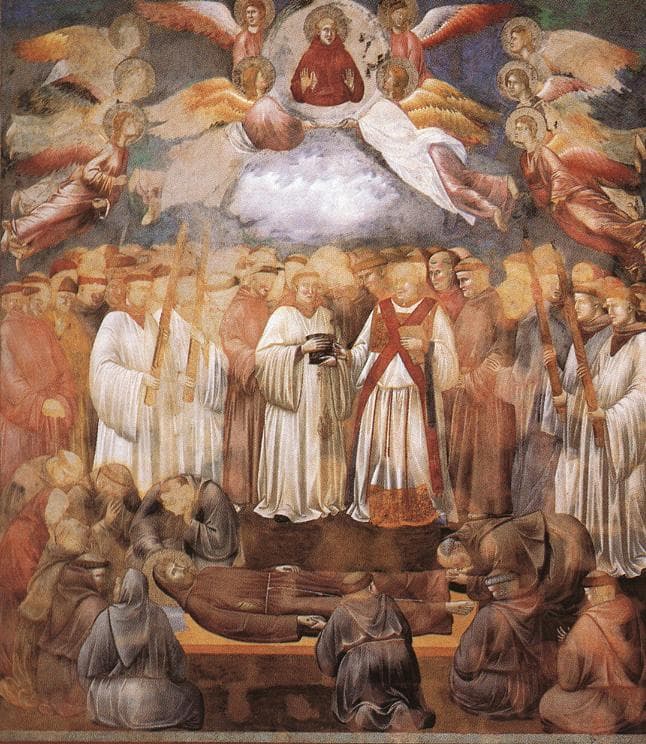
Death and Ascension
This panel, depicting the death of Saint Francis, represents a monumental shift in the history of art. Before this period, figures in religious paintings were often flat and symbolic, serving as types rather than individuals. Here, however, notice the profound shift toward human psychology. Look closely at the faces of the friars gathered around the saint’s body. They are not merely performing a ritual; they are expressing a range of deeply personal reactions. Some are slumped in despair, others weep openly, and some look on with quiet, somber contemplation. Each friar is rendered as a distinct man with his own physical features and emotional response. This focus on realistic, individualized human emotion marks what many historians call the birth of modern Western painting. By grounding the divine narrative in the reality of human suffering, the artist makes the spiritual event relatable to every observer. The scene also shows the ascension of Francis's soul, carried by angels, bridging the earthly grief with celestial glory. This breakthrough in portraying the internal life of subjects would eventually lead to the Renaissance, making this fresco a cornerstone of artistic evolution.
The Ghostly Frescoes of Cimabue
Exploring the transept of the Upper Church and the haunting effects of time and nature on Cimabue's work.
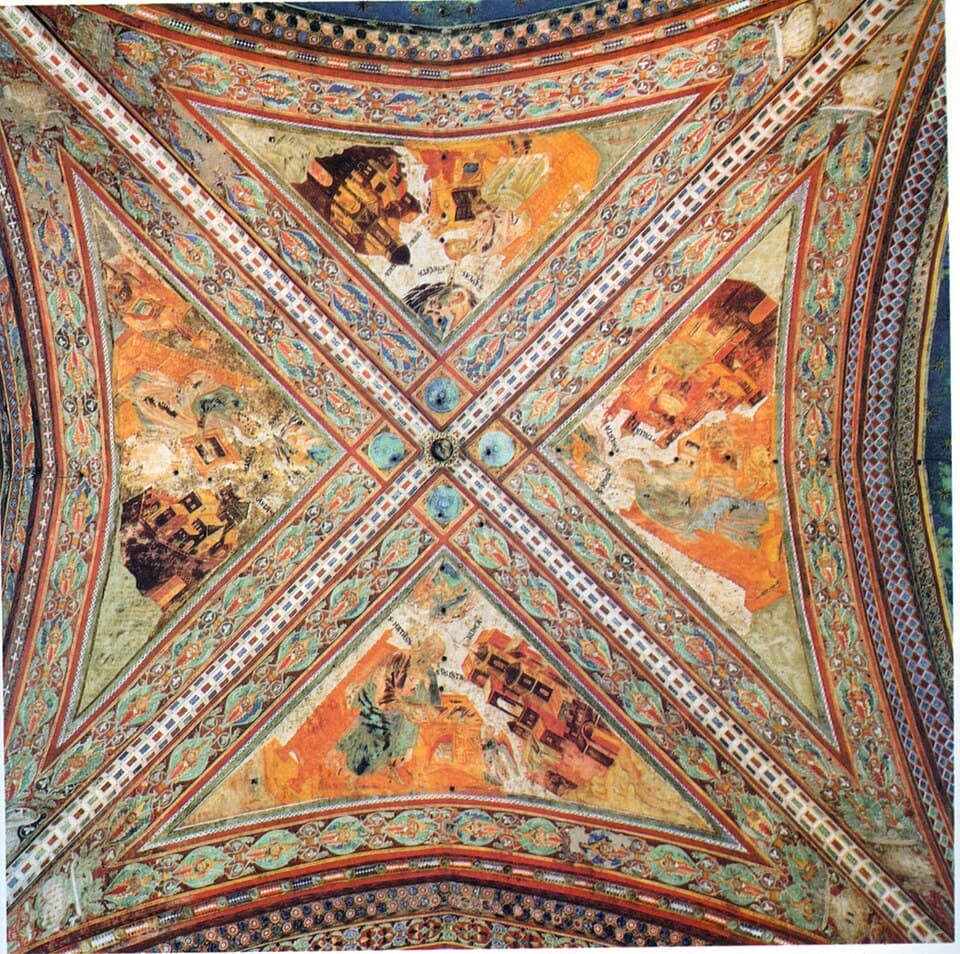
The Evangelist Vault
High above in this vault, we see the work of Cimabue, one of the most significant figures in late medieval art and the teacher of the famous Giotto. These four triangular compartments depict the Evangelists—Matthew, Mark, Luke, and John—each accompanied by their symbolic attributes and seated at writing desks. While Cimabue’s style retains the formal, gold-heavy influence of the Byzantine tradition, you can see him pushing the boundaries of what was then possible. Notice the architectural details behind each figure. Cimabue was attempting to depict large-scale cities and complex structures, an ambitious move away from the flat, featureless backgrounds of earlier centuries. The furniture and the way the figures occupy space suggest an early exploration of three-dimensional depth, even if it feels slightly archaic to modern eyes. Each panel represents a different part of the world where the Gospels were spread: Italy, Judea, Greece, and Asia. This vault serves as a crucial link in the chain of art history, showing us the transitional moment when the rigid formality of the Middle Ages began to give way to the more naturalistic observations that would eventually define the Italian Renaissance.
The Upper Plaza and Main Facade
Concluding the tour at the main exterior facade, highlighting the Rose Window and the 'Hill of Paradise' context.
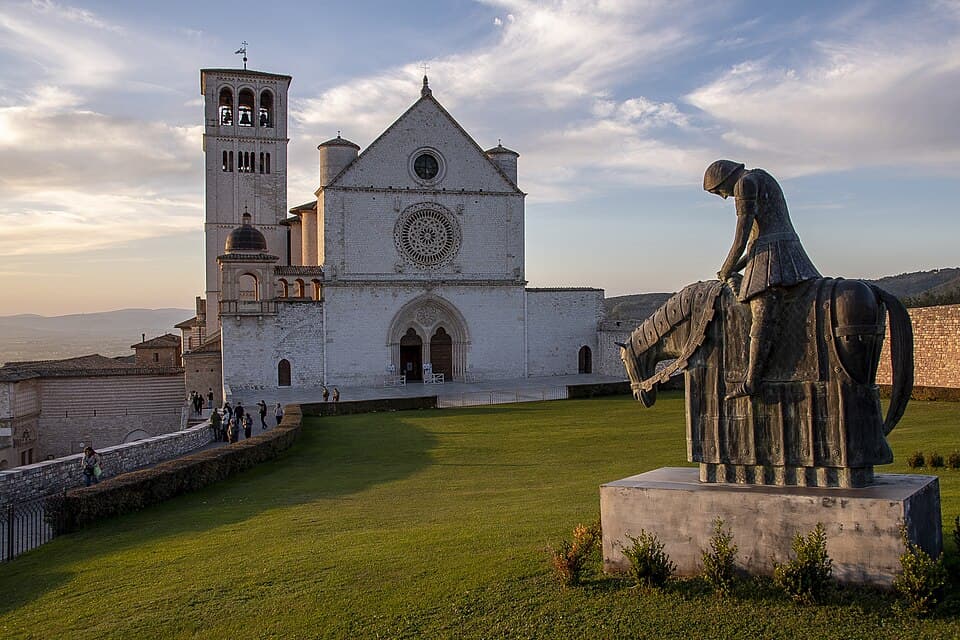
Statue of the Weary Knight
We conclude our tour at this evocative statue. It depicts Francis not as a saintly figure in robes, but as a young soldier on horseback, returning home. Notice the posture: both the man and the horse are deeply slumped, conveying a profound sense of exhaustion and disillusionment. This captures a pivotal moment in the life of the man who would become Saint Francis. Before his religious conversion, Francis was an ambitious young man who sought fame and glory through military conquest. However, after falling ill and experiencing visions during a military campaign, he realized that the life of a soldier was not his true path. He returned to Assisi, weary and defeated in the eyes of the world, but awakened to a new spiritual purpose. This statue represents the "death of the knight" and the "birth of the saint." It is a reminder that his journey began not with a grand miracle, but with a humble admission of failure and a decision to change his life completely. As you look out over the valley one last time, consider the legacy of the man who traded his armor for a simple tunic, transforming this hillside into a global symbol of peace and brotherhood.
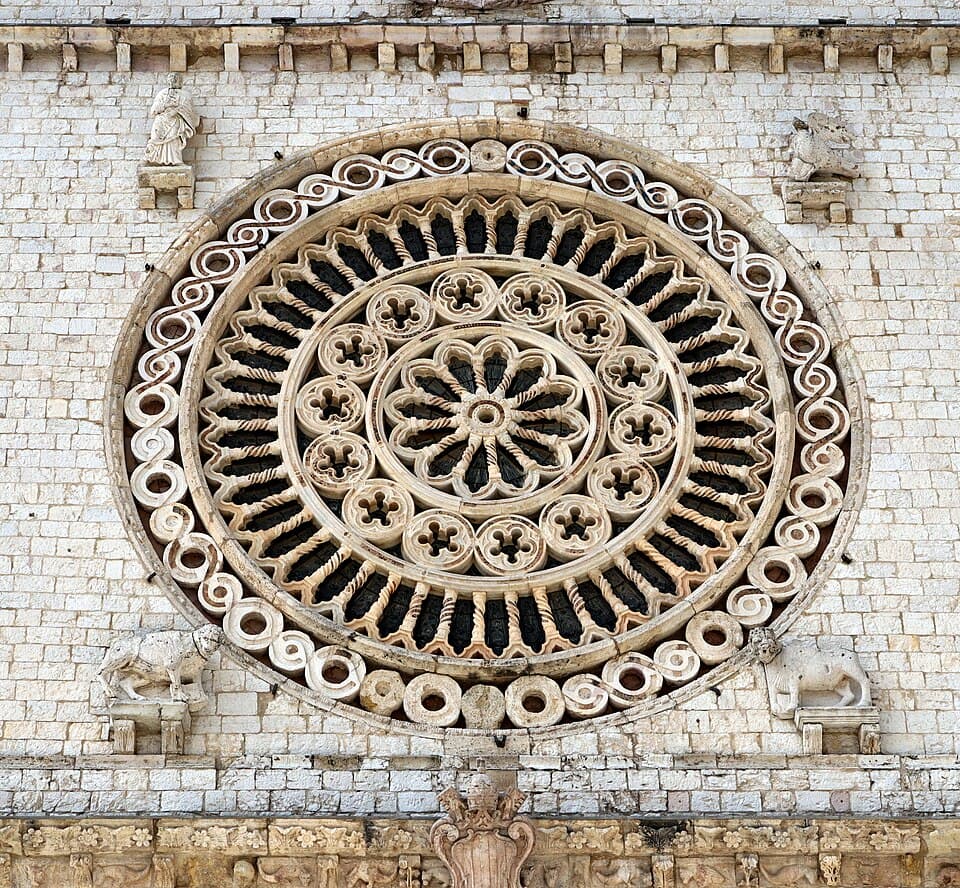
The Rose Window
Central to the facade is the magnificent rose window, a masterpiece of stonework that filters the afternoon sun into the nave. It is designed as a great wheel with multiple layers of intricate carvings. At the very center is a small opening surrounded by circular patterns that radiate outward like petals, creating a sense of celestial light and order. This central "eye" is surrounded by four carved figures known as the Tetramorph, representing the four Evangelists who authored the Gospels. Each occupies a corner around the circular frame. You can identify them by their traditional symbols: the winged man or Angel for Matthew, the winged Lion for Mark, the winged Ox for Luke, and the Eagle for John. These figures seem to stand guard over the window, symbolizing the spreading of the biblical message to the four corners of the world. The decorative bands around the window feature interlacing patterns and small floral motifs, showcasing the high level of craftsmanship achieved by medieval stonemasons. Rather than just a source of light, the rose window acts as a complex theological diagram, inviting the faithful to contemplate the divine through the harmony and symmetry of its design.
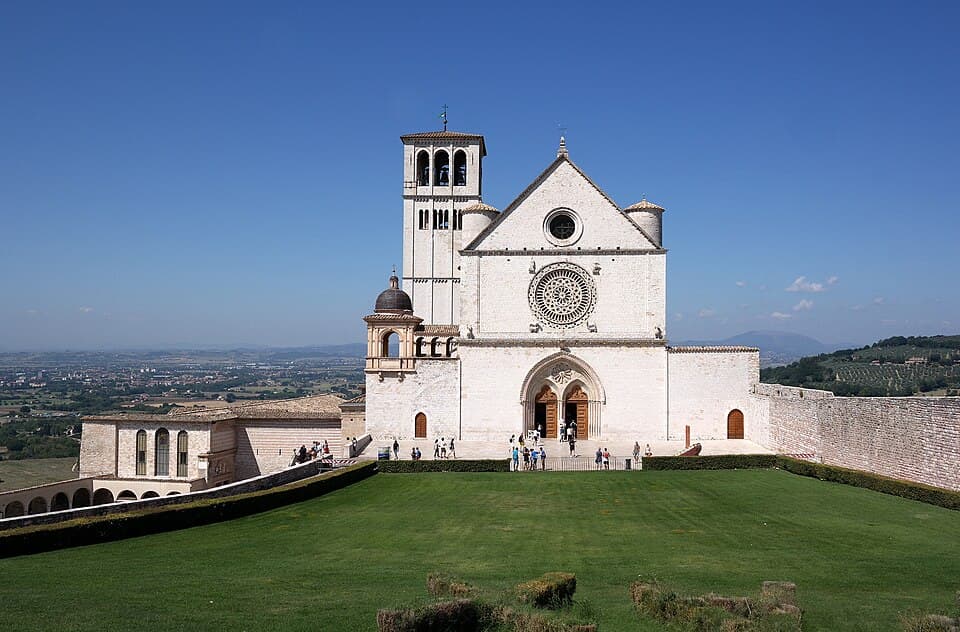
The Upper Facade
Standing here on the Upper Plaza, the facade of the Basilica offers a clear view of the transition between architectural eras. The lower portion, with its rounded arches and solid stone construction, reflects the Romanesque style of the early 13th century. As your eyes move upward, the lines become more vertical and elegant, signaling the arrival of the Gothic influence. This "Double Church" structure required immense engineering skill to support the weight of the two superimposed sanctuaries. To your side stands the massive Romanesque bell tower. It houses seven bells, the most famous of which is known as "Francesca." This colossal bell weighs approximately 2.8 metric tonnes and rings out across the valley on special occasions. From this elevated vantage point, you can also see why the site was renamed the "Hill of Paradise." The commanding view of the Umbrian valley stretching out below provided the perfect backdrop for the Saint who saw the divine in all of nature. The wide-open space of the plaza was designed to accommodate the vast crowds of pilgrims who have journeyed here for nearly eight centuries, making it a place of gathering as much as a place of prayer.
Want to hear the rest?
Download the Stanza app to unlock all 22 stops and full GPS-guided navigation.
Frequently Asked Questions
How long does the Basilica di San Francesco audio tour take?
The Basilica di San Francesco audio guide includes 22 narrated stops. Most visitors spend 45 minutes to 1.5 hours exploring the complete tour, though you can listen at your own pace and skip or revisit any stop.
Is the Basilica di San Francesco audio guide available in my language?
Stanza supports 15 languages: English, Spanish, French, German, Italian, Portuguese, Russian, Japanese, Chinese, Korean, Arabic, Hindi, Polish, Dutch, Hebrew. Check the guide in the app to confirm the languages currently available for this tour.
Can I use the audio guide offline at Basilica di San Francesco?
Yes! Download the complete Basilica di San Francesco tour — including all audio, maps, and images — before your visit. The Stanza app works completely offline, so you don't need WiFi or mobile data at the venue.
How much does the Basilica di San Francesco audio guide cost?
The Stanza app is free to download. The current listed price for the Basilica di San Francesco audio guide is $1.99; app-store region and currency may affect the final price.
How do I use the Stanza audio guide at Basilica di San Francesco?
Download the free Stanza app, search for "Basilica di San Francesco", and download the tour. When you arrive at the venue, the app uses GPS to detect your location and automatically plays the relevant narration as you move between points of interest — completely hands-free.
What makes the Stanza audio guide different from other Basilica di San Francesco tours?
Stanza offers GPS-triggered narration that plays automatically as you walk through Basilica di San Francesco — no need to manually select stops. The tour is available in 15 languages, works fully offline, and includes 22 expertly narrated stops with images and historical context.
What other audio guides are available near Basilica di San Francesco?
Stanza offers multiple audio guides in Assisi, Italy and nearby areas. After downloading the app, browse the map to discover all available tours near Basilica di San Francesco. Each guide can be downloaded for offline use.