Languages
15Basilica di San Clemente Audio Guide
Basilica di San Clemente is a landmark in Rome, Italy. Explore it with Stanza's GPS-triggered offline audio guide — available in 15 languages.
Quick Facts
25
Stops
15
Languages
100%
Offline
📍 Rome, Italy · 41.8894°N, 12.4975°E
About Basilica di San Clemente
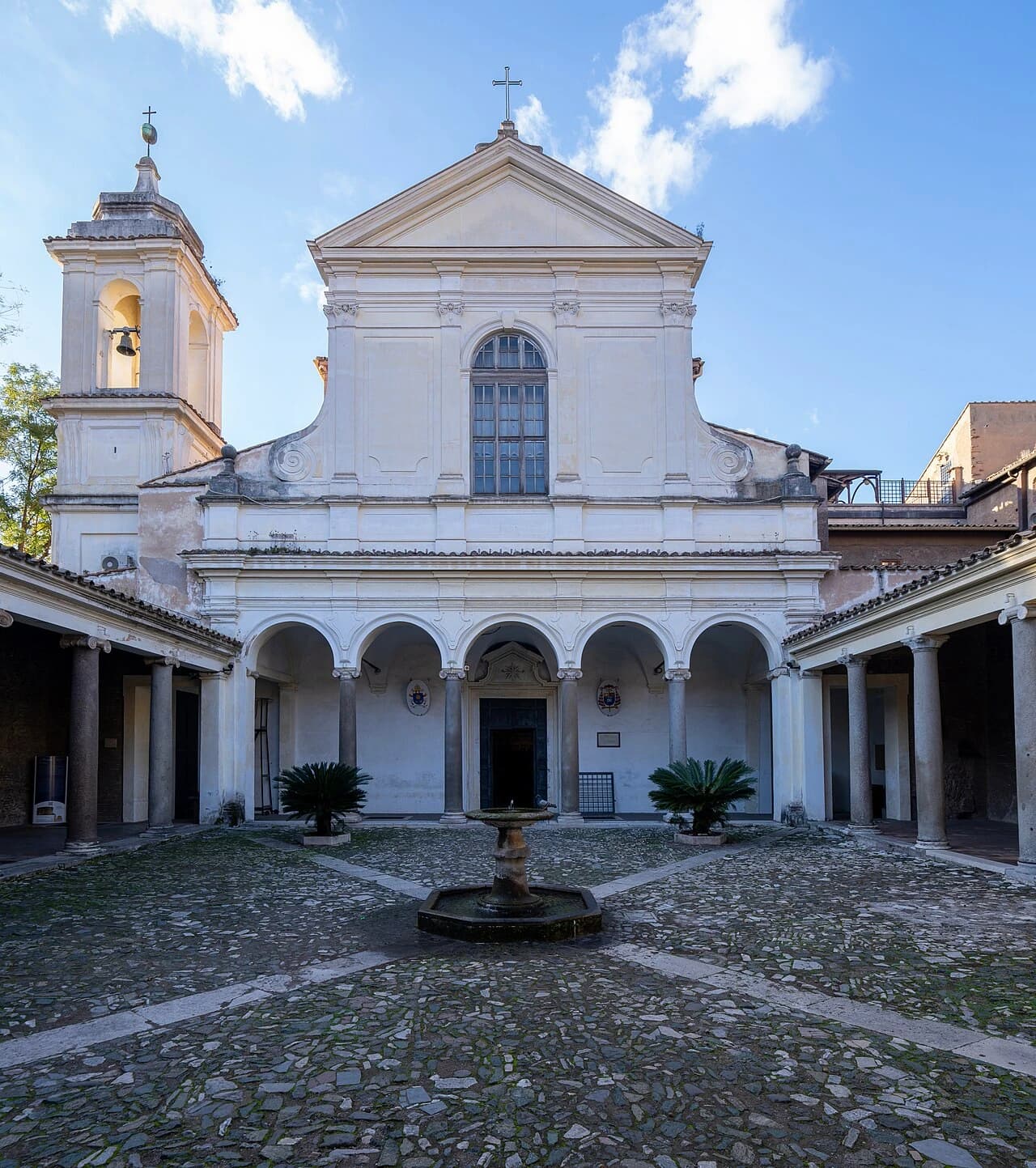
A minor Roman Catholic basilica located in Rome, known for its intricate mosaics and archaeological layers preserving ancient Roman structures.
Basilica di San Clemente is also known as San Clemente, San Clemente, Rome, basilica di San Clemente in Laterano, basilica di San Clemente al Laterano.
This self-guided audio tour features 25 narrated stops organized across 7 sections. As a basilica, Basilica di San Clemente offers a unique cultural experience in the heart of Rome, Italy.
The Stanza audio guide is available in 15 languages and works entirely offline — download the complete tour including audio narration, maps, and images before your visit. As you walk through Basilica di San Clemente, GPS-triggered narration plays automatically at each point of interest.
Last updated:
What you will hear
The Schola Cantorum and Choir
This stop highlights the unique liturgical layout of the upper church, featuring the marble enclosure used by the choir.
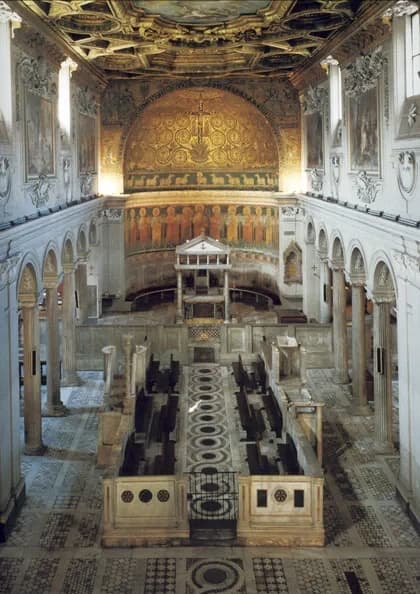
View of the Liturgical Heart
From this vantage point, you can see the traditional layout characteristic of an early Christian basilica. The 12th-century builders did not simply build a new church; they meticulously followed the footprint of the older 4th-century structure buried below. This practice of 'vertical archaeology' was born from necessity. Over the centuries, ground levels in Rome rose significantly due to floods, fires, and the accumulation of debris. Additionally, the older church had suffered structural damage during the Norman sack of Rome. To create a stable foundation for this new building, the medieval architects filled the lower church with earth and rubble, essentially using the old walls as a platform. Because they preserved the original floor plan, the central nave, aisles, and apse of this upper level sit exactly where their predecessors did nearly eight centuries earlier. This alignment ensures that as you move through the space today, you are tracing the same liturgical paths used by Roman Christians in the late imperial age, even though you are standing several meters higher in the air.
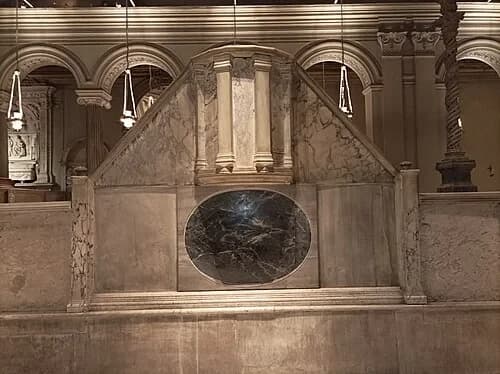
The Marble Ambo
This elevated marble platform is known as an 'ambo,' or a pulpit, and it was used primarily for the reading of the Gospel. Next to it stands a striking spiraling column intended to hold the large Easter candle. The craftsmanship displayed in the marble inlay work is remarkable, echoing the geometric style of the floor. In an era before modern sound systems, every element of this setup had a practical liturgical function. The height of the ambo ensured that the speaker could be seen and heard by the entire congregation, while the decorative elements added a sense of solemnity to the readings. The spiraling column, often adorned with mosaics, served as a prominent visual anchor during the Easter season, representing the light of the resurrection. These structures were central to the 'liturgy of the word,' turning the act of reading into a grand public ceremony. The use of fine marble and detailed ornamentation reflected the importance of the texts being delivered. By positioning these elements in the middle of the church, the architects ensured that the message remained physically and spiritually at the center of the community’s experience.
The Triumph of the Cross: Apse Mosaic
The spiritual heart of the upper basilica is the 12th-century mosaic, one of Rome's greatest medieval masterpieces.
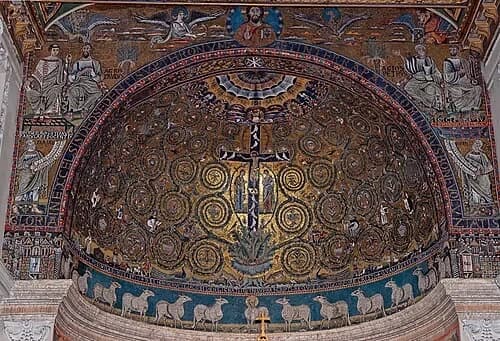
Triumph of the Cross Mosaic
The spiritual heart of this basilica is the magnificent 12th-century mosaic in the apse, known as the 'Triumph of the Cross.' It is a masterpiece of medieval symbolism, depicting the Crucifixion not just as a historical event, but as the 'Tree of Life.' The brilliant golden background represents the divine light of heaven, providing a radiant backdrop for the scene. From the base of the central cross, sprawling acanthus vines emerge, twisting and spiraling outward to fill the entire space. These vines represent the Church growing to reach every corner of the world. If you look closely within the greenery, you will find figures of everyday 12th-century life nestled amongst the leaves. You can spot farmers tending to their land, various animals roaming, and even doctors at work. This inclusion suggests that all aspects of human existence are part of the divine creation. The mosaic combines grand theological concepts with the intimate details of the world familiar to the people of the time, creating a vision of a world revitalized and unified through the central image of the cross.
The Chapel of Saint Catherine
Located near the entrance, this chapel contains a vital Renaissance fresco cycle by Masolino da Panicale.
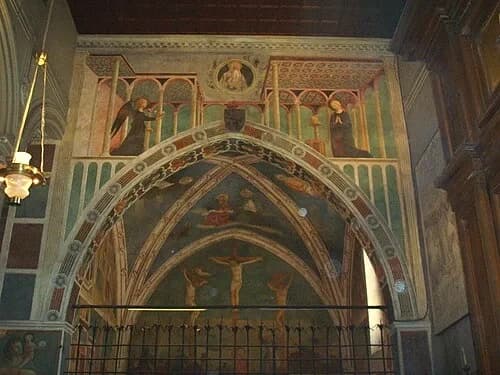
Chapel of Saint Catherine
The Chapel of Saint Catherine contains one of the most significant fresco cycles in Rome. Painted during the early 15th century, these works represent the transition from the flat, stylized traditions of the Middle Ages to the more realistic and human-centered approach of the Renaissance. The cycle is attributed to the artist Masolino da Panicale, though many historians believe a young Masaccio may have assisted him here. Masaccio was a pioneer in the use of linear perspective and the realistic treatment of light and shadow, and hints of that innovative style can be seen throughout the chapel. The scenes tell the stories of Saint Catherine and Saint Ambrose, using architectural backgrounds to create a sense of three-dimensional space that was groundbreaking at the time. By moving away from purely symbolic representations, these artists began to depict human figures with weight and volume, placed within settings that felt tangible to the viewer. This chapel serves as a vital bridge in art history, showing how painters in Rome began to embrace the new ideas of depth and human emotion that would soon define the height of the Renaissance.
Descent to the 4th-Century Lower Basilica
Visitors now descend a flight of stairs to reach the level of the original early Christian church, abandoned in the 11th century.

The 1099 Papal Election
The lower basilica was not just a place of daily worship; it was also the setting for major historical events involving the highest levels of the Church. In the year 1099, this underground sanctuary served as the site for a papal election. It was here that Cardinal Rainerius was chosen to become Pope Paschal II. The fact that an election of such importance took place in this building, even after the damaging Norman sack of 1084, is a testament to the enduring significance and prestige of San Clemente in the Roman religious landscape. At that time, the lower church was likely beginning to show signs of the wear and structural issues that would eventually lead to its being filled in and replaced. However, its association with the early Christian martyrs and its central location made it a fitting place for the College of Cardinals to gather. Paschal II would go on to lead the church during a period of significant reform and conflict. Knowing this election occurred here adds a layer of political and institutional history to these ancient walls, marking a moment when the fate of the papacy was decided deep beneath the Roman soil.
The Legend of Sisinnius and Early Italian
This world-famous fresco captures a miraculous moment and contains some of the earliest written vernacular Italian.
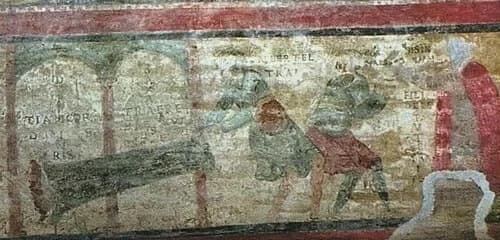
Saint Clement and Sisinnius Inscription
This world-famous fresco from the 11th century is a highlight of the lower basilica for both its artistic and linguistic value. It depicts a story from the life of Saint Clement involving a pagan nobleman named Sisinnius. In the scene, Sisinnius is trying to arrest the saint, but he is suddenly struck with blindness by divine intervention. Because they cannot see, Sisinnius and his men end up pulling a heavy stone column with ropes, mistakenly believing they have captured Clement. The saint stands nearby, untouched and miraculous. What makes this fresco truly unique is the inclusion of text that resembles modern comic book 'speech bubbles.' These inscriptions represent one of the earliest surviving examples of written vernacular Italian, the language spoken by the common people, rather than formal Latin. You can see the words written near the figures, capturing the frustration and commands of Sisinnius as he yells at his servants. This rare find provides a direct link to the birth of the Italian language, captured in a moment of both religious legend and everyday human drama on a church wall nearly a thousand years ago.
The Tomb of Saint Cyril
The lower basilica houses the resting place of Saint Cyril, co-patron of Europe and creator of the Slavic alphabet.
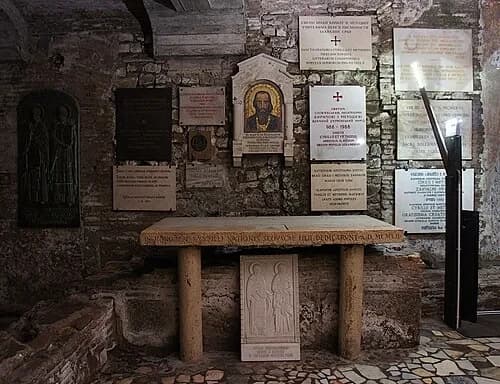
Tomb of Saint Cyril
In this corner of the lower basilica, you are standing before the shrine of Saint Cyril. Along with his brother Methodius, Cyril was a 9th-century missionary to the Slavic people. Their most enduring legacy was the creation of the Glagolitic alphabet, which allowed for the translation of religious texts into the Slavic tongue. Cyril died in Rome in 869 and was buried here in San Clemente, a church he held in high regard. Notice the many marble plaques and inscriptions surrounding the shrine. These have been left by various Slavic nations, including Bulgaria, Macedonia, and Slovakia, in a centuries-long tradition of gratitude. The languages on these plaques reflect the vast reach of Cyril's work. Because of his immense cultural and religious impact, Pope John Paul II named him a co-patron of Europe in 1980. The shrine remains a major site of international pilgrimage, particularly on his feast day. It is a place where the ancient history of the church intersects with modern national identities. The simple stone altar and the collection of modern tributes create a space that feels distinct from the medieval frescoes nearby, serving as a living link between Rome and Eastern Europe.
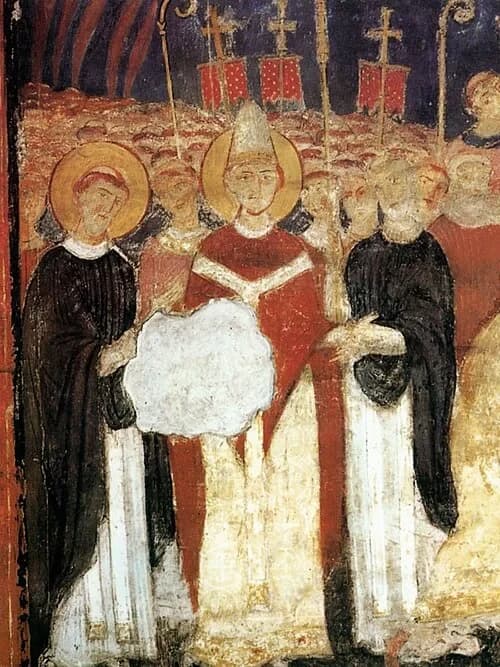
Relics of Saint Cyril
http://www.wikidata.org/.well-known/genid/015e14ff0a94ef7932aad4a4f51f5478 · 1100 · fresco
This large fresco depicts the solemn procession that occurred when the relics of Saint Cyril were brought to the basilica. In the center, you can see the Pope, flanked by clergy and Roman citizens, as they receive the saint's body. The scene is filled with a sense of dignity and communal mourning. It captures a pivotal moment in the 9th-century history of the site, marking the arrival of one of its most important residents. The figures are dressed in the formal attire of the early medieval period, providing historians with valuable information about the clothing and liturgical vestments of the time. The banners and crosses held high by the procession suggest the grandeur of the event. This fresco highlights San Clemente’s historical role as a significant pilgrimage destination. For centuries, pilgrims traveled to Rome specifically to venerate these relics, believing in their power to heal and protect. The placement of this artwork in the lower basilica served to remind visitors of the church's prestige and its connection to the great missionaries of the East. The faded colors and weathered surface of the wall only add to the sense of antiquity, as if the procession is still moving through the shadows of the underground church.
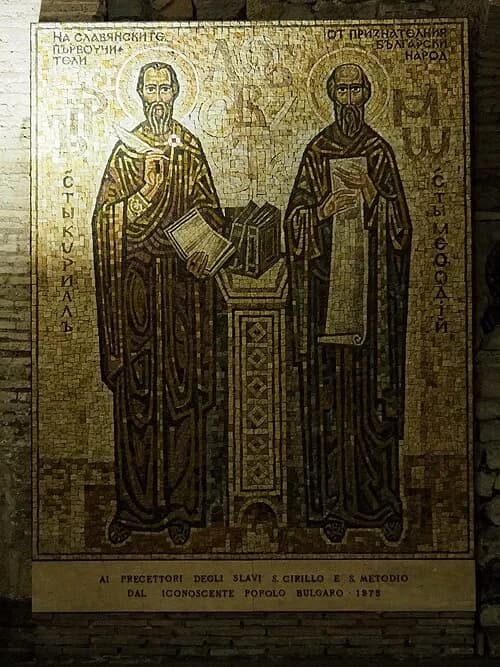
A Modern Tribute to Saint Cyril
This striking mosaic is a relatively modern addition to the ancient site, donated by the Bulgarian people in 1975. It depicts the brothers Saint Cyril and Saint Methodius holding the Glagolitic alphabet they created. The use of gold leaf and vibrant colors contrasts with the older, more muted frescoes in the lower basilica, serving as a bridge between the ancient past and the modern day. Cyril and Methodius are often called the 'Apostles to the Slavs.' Their work didn't just spread religion; it provided the foundation for Slavic literature and literacy. The inscription at the bottom, written in both Italian and Bulgarian, expresses the gratitude of the Bulgarian nation for their 'First Teachers.' This mosaic is a testament to the continued relevance of San Clemente as a living place of worship. It shows that the site is not just an archaeological museum, but a spiritual home for people from many different cultures. Visitors from Slavic countries often stop here to pray or pay their respects, continuing a tradition of pilgrimage that has lasted for over a thousand years. The presence of this modern artwork in such an ancient setting reminds us that the history of this complex is still being written today.
The 1st-Century Roman Foundations
Descending to the lowest level, visitors encounter massive stone structures from the era of the Great Fire of Rome.
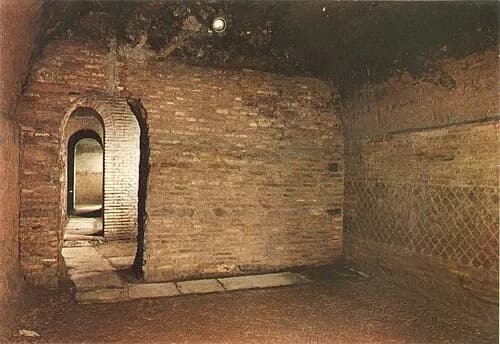
First-Century Roman Warehouse
As you descend to the deepest level of the complex, you are standing nearly ten meters below the modern street level of Rome. Here, the walls are made of massive, rectangular blocks of tufa stone. These are the remains of a first-century Roman warehouse, known as a 'horreum.' These structures were designed to be incredibly sturdy, as they stored precious goods like grain, wine, and oil for the growing imperial city. These particular walls are believed to have survived the Great Fire of Rome in 64 AD, making them some of the oldest structural elements in the entire complex. The sheer size of the stones reflects the industrial scale of Roman engineering. In the first century, this area was a bustling commercial and administrative district, situated strategically close to the Colosseum. Over time, as the ground level of Rome rose due to floods and debris, this warehouse was eventually filled in to create the foundation for a grander residence, and later, the first church. Walking among these stones, you can feel the weight of the two basilicas resting above you. The precise masonry and the lack of decorative flourishes remind us that this was once a purely functional space, built to support the logistical needs of an empire.
Want to hear the rest?
Download the Stanza app to unlock all 25 stops and full GPS-guided navigation.
Frequently Asked Questions
How long does the Basilica di San Clemente audio tour take?
The Basilica di San Clemente audio guide includes 25 narrated stops. Most visitors spend 45 minutes to 1.5 hours exploring the complete tour, though you can listen at your own pace and skip or revisit any stop.
Is the Basilica di San Clemente audio guide available in my language?
Stanza supports 15 languages: English, Spanish, French, German, Italian, Portuguese, Russian, Japanese, Chinese, Korean, Arabic, Hindi, Polish, Dutch, Hebrew. Check the guide in the app to confirm the languages currently available for this tour.
Can I use the audio guide offline at Basilica di San Clemente?
Yes! Download the complete Basilica di San Clemente tour — including all audio, maps, and images — before your visit. The Stanza app works completely offline, so you don't need WiFi or mobile data at the venue.
How much does the Basilica di San Clemente audio guide cost?
The Stanza app is free to download. The current listed price for the Basilica di San Clemente audio guide is $1.99; app-store region and currency may affect the final price.
How do I use the Stanza audio guide at Basilica di San Clemente?
Download the free Stanza app, search for "Basilica di San Clemente", and download the tour. When you arrive at the venue, the app uses GPS to detect your location and automatically plays the relevant narration as you move between points of interest — completely hands-free.
What makes the Stanza audio guide different from other Basilica di San Clemente tours?
Stanza offers GPS-triggered narration that plays automatically as you walk through Basilica di San Clemente — no need to manually select stops. The tour is available in 15 languages, works fully offline, and includes 25 expertly narrated stops with images and historical context.
What other audio guides are available near Basilica di San Clemente?
Stanza offers multiple audio guides in Rome, Italy and nearby areas. After downloading the app, browse the map to discover all available tours near Basilica di San Clemente. Each guide can be downloaded for offline use.