Languages
15Fontana di Trevi Audio Guide
Fontana di Trevi is a landmark in Rome, Italy. Explore it with Stanza's GPS-triggered offline audio guide — available in 15 languages.
Quick Facts
15
Stops
15
Languages
100%
Offline
📍 Rome, Italy · 41.9008°N, 12.4831°E
About Fontana di Trevi
The Trevi Fountain is a famous Baroque fountain in the Trevi district of Rome, Italy. It is the largest Baroque fountain in the city and one of the world's most iconic landmarks, known for its intricate sculptures and the tradition of coin-tossing.
Fontana di Trevi is also known as Fontana di Trevi.
This self-guided audio tour features 15 narrated stops organized across 7 sections. As a landmark, Fontana di Trevi offers a unique cultural experience in the heart of Rome, Italy.
The Stanza audio guide is available in 15 languages and works entirely offline — download the complete tour including audio narration, maps, and images before your visit. As you walk through Fontana di Trevi, GPS-triggered narration plays automatically at each point of interest.
Last updated:
What you will hear
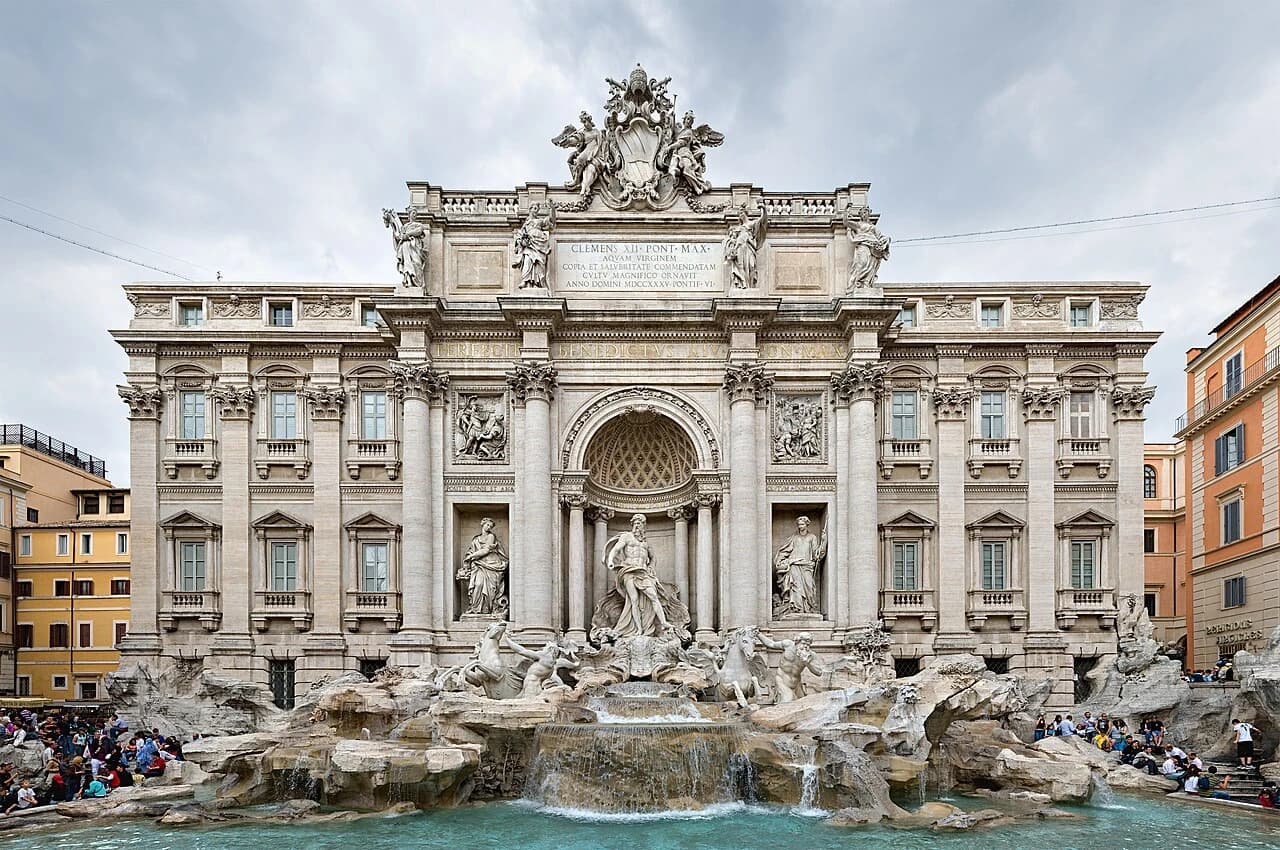
The Piazza and Palazzo Poli Backdrop
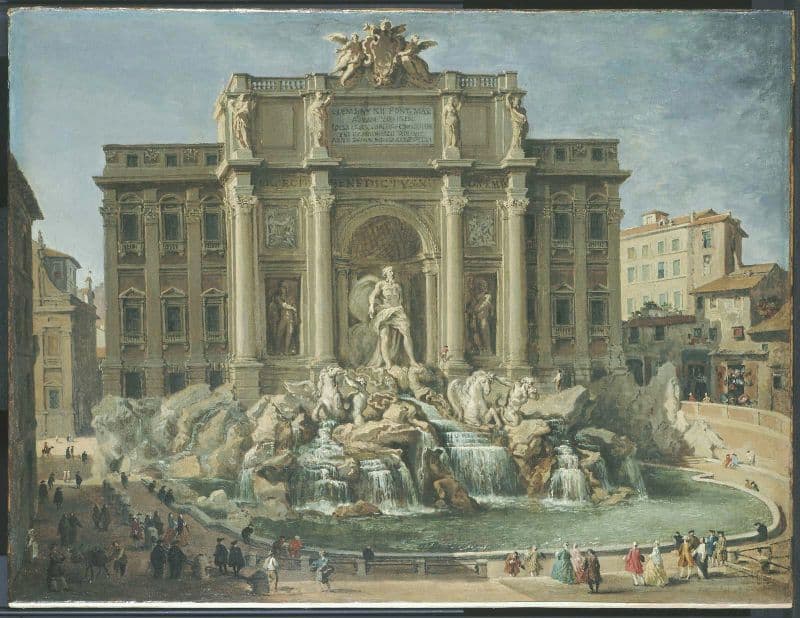
Start with a wide view of the piazza and the fountain's unique integration into the facade of Palazzo Poli. Use the modern wide shot to establish the scene and the historical painting to show the architectural continuity.
The 30-Year Competition
This painting provides a glimpse into the long and complex construction history of the fountain, which spanned from 1732 to 1762. The story begins with a grand competition held by Pope Clement XII to find a suitable architect for the project. While many talented artists entered, Nicola Salvi eventually emerged as the winner. Legend has it that Salvi wasn't actually the first choice; a French architect supposedly submitted a superior design. However, Roman pride won out, as the Pope was determined to have an Italian architect design such a prominent landmark for the city. This decision set in motion thirty years of labor. Sadly, the creation of such a massive monument is a slow process, and Salvi spent the rest of his life dedicated to this single vision. He worked tirelessly on the intricate details of the facade and the central sculptures, but he died in 1751, eleven years before the fountain was finally inaugurated. His legacy, however, remains one of the most celebrated architectural achievements in Rome.
The Triumph of Oceanus
Focus on the central figure of the fountain. Use an upward angle to emphasize the grandeur and a frontal close-up to see the detail of Pietro Bracci's masterpiece.
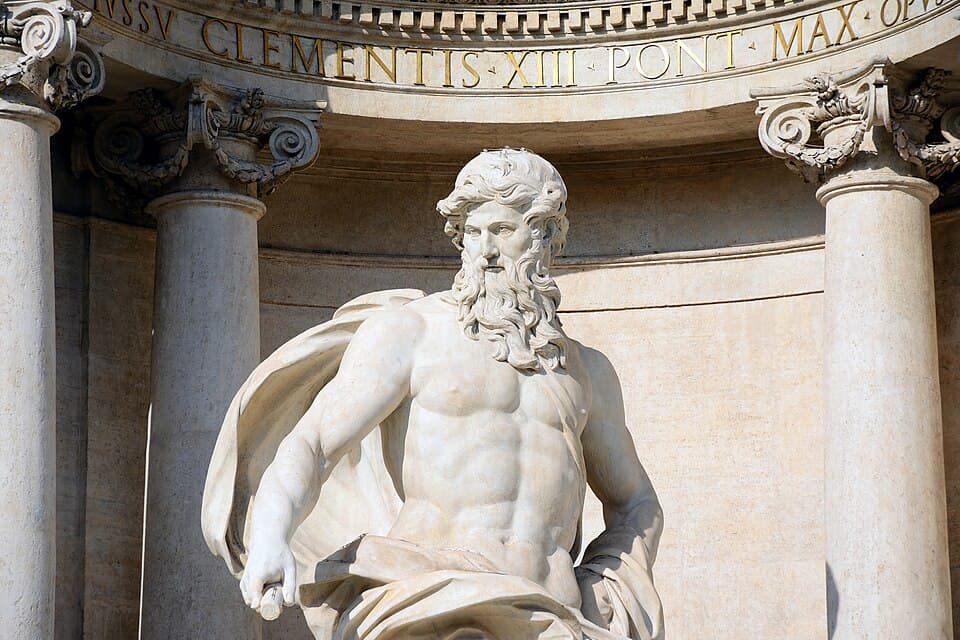
Details of the Sea God
This close-up allows you to appreciate the incredible craftsmanship required to bring a figure of this size to life. Notice the detailed texture of Oceanus’s face and his long, flowing beard, which seems to mimic the movement of water. Because the fountain took so long to build, the sculpting duties passed through different hands. While Giovanni Battista Maini was the original sculptor assigned to the central figure, he passed away before it could be finished. The task was taken over by Pietro Bracci, who completed the statue in 1762. Bracci was a master of the Late Baroque style, and you can see his skill in how he used the natural light of the square to create deep shadows and bright highlights across the musculature. Depending on the time of day, the expression on Oceanus’s face can appear to change as the sun moves across the sky. This careful attention to detail ensures that the figure remains striking even when viewed from a distance.
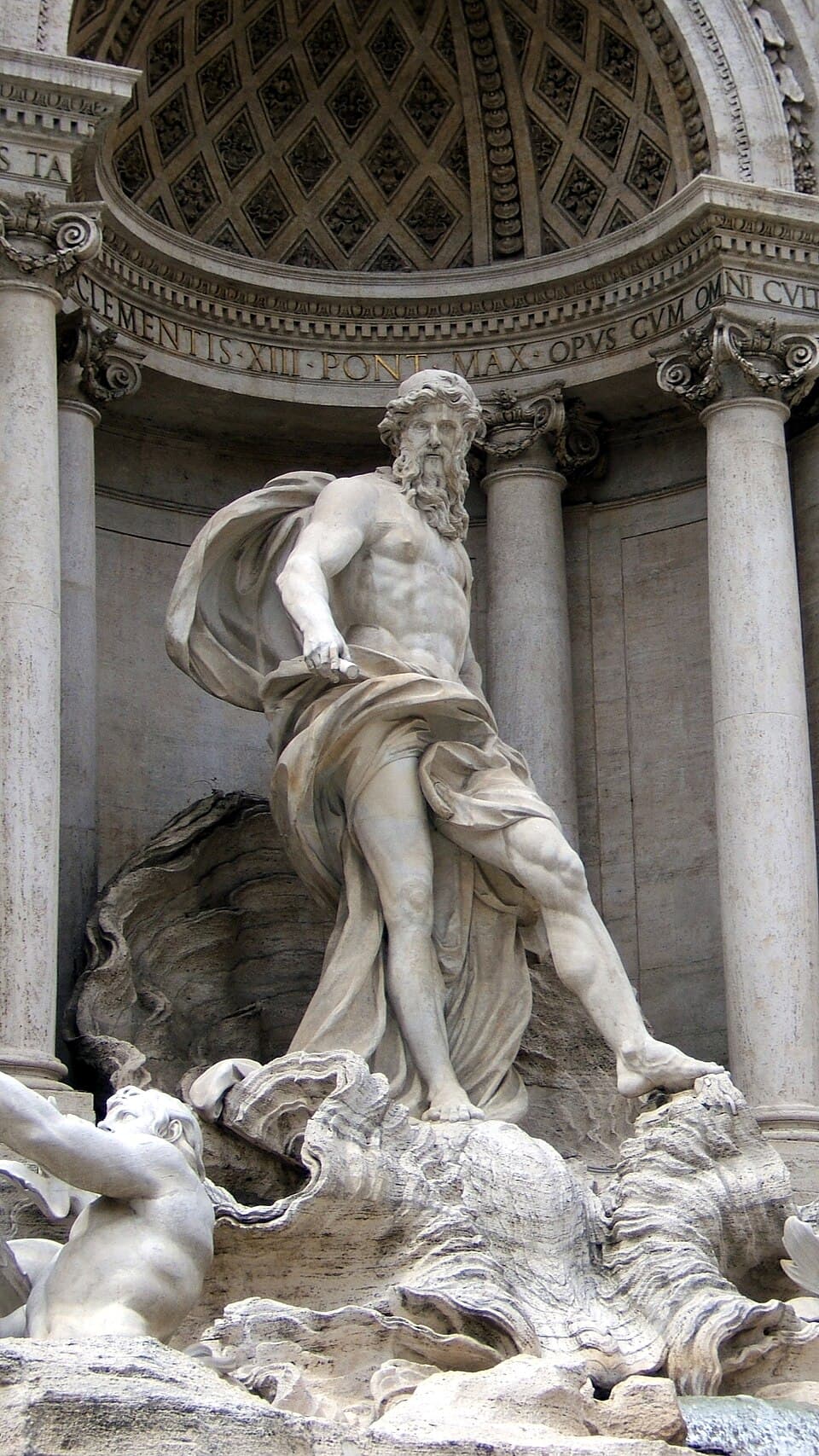
Oceanus and the Shell Chariot
Dominating the center of the fountain is a massive figure that many visitors mistake for Neptune. However, this is actually Oceanus, the personification of the world-ocean. Unlike Neptune, who is often shown with a trident, Oceanus is traditionally depicted as a more primordial force. Take a moment to observe his powerful, muscular physique. He stands in a triumphant, commanding pose, his cloak billowing behind him as if caught in a sea breeze. He stands atop a chariot shaped like a large scallop shell, which appears to be surging forward out of the central triumphal arch. This arch provides a grand architectural frame, making it look as though Oceanus is emerging from the palace itself to enter the square. The composition creates a sense of movement and drama, as if the entire scene has been frozen in a single, powerful moment. The design captures the transition from the orderly architecture of the building above to the wild, untamed nature of the rocky reef below.
The Agitated and Placid Hippocamps
Highlight the two winged horses that represent the different moods of the sea. Include images of both the struggling horse on the left and the calm horse on the right.
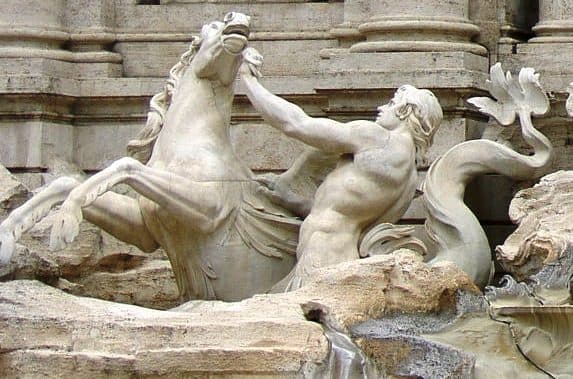
The Agitated Hippocamp
To the left of Oceanus, you can see a winged horse, known as a hippocamp, being led by a Triton. This particular horse is famously referred to as the 'agitated' hippocamp. Look at its wide eyes, flared nostrils, and the way its head is tossed back in a show of resistance. Every muscle in its body is strained, creating a sense of intense dynamic tension in the stone carving. This horse is more than just a decorative element; it serves as a powerful symbol for the rough and rebellious nature of the ocean. It represents the storms and the untamed power of the water that can crash against the shore. The Triton, a messenger of the sea with a human torso and a fish-like tail, is shown struggling to restrain the winged beast, his own muscles bulging as he pulls on the harness. This carving showcases the Baroque love for drama and movement, turning cold stone into a scene filled with energy and conflict.
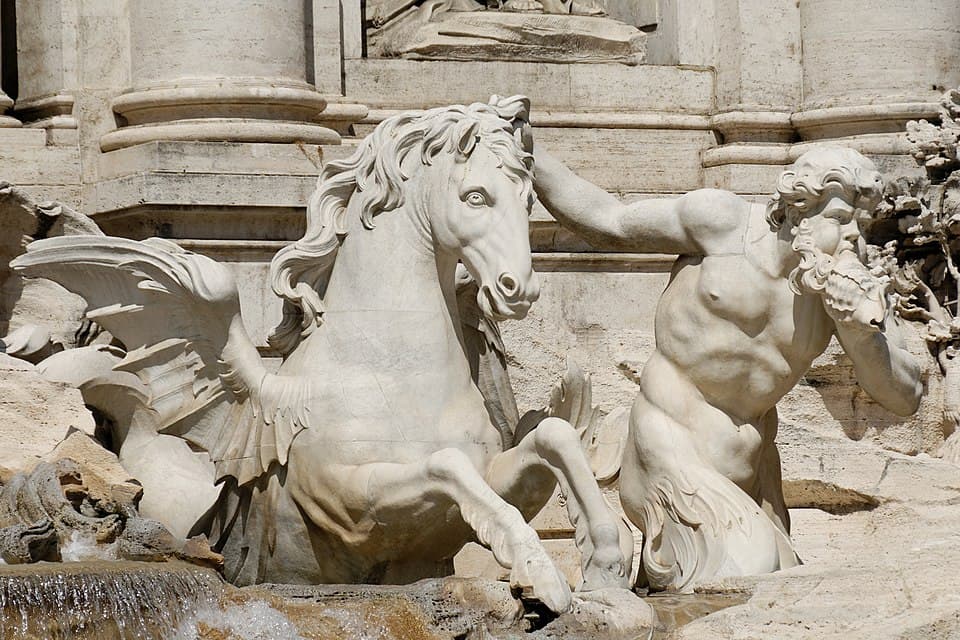
The Placid Hippocamp
Now, observe the horse on the right side of the fountain. In direct contrast to its counterpart, this is known as the 'placid' hippocamp. You can see the difference immediately in its body language. Its head is lowered, its expression is calm, and its wings are folded closer to its body. The Triton accompanying this horse holds it with much less effort, almost guiding it gently through the water with one hand while holding a conch shell in the other. This figure represents the opposite side of the sea's personality: the calm, navigable, and manageable waters that allowed for trade and travel. Together, these two horses illustrate the dual nature of the ocean’s power—at once dangerous and life-giving. This thematic balance is a key part of the design, ensuring that every element tells a story about the water it celebrates. The symmetry of these two contrasting groups adds a sense of harmony to the chaotic rockwork below the central figure.
Niches of Abundance and Salubrity
Explain the allegorical benefits of water. Use close-ups of the two female statues flanking Oceanus in their respective niches.
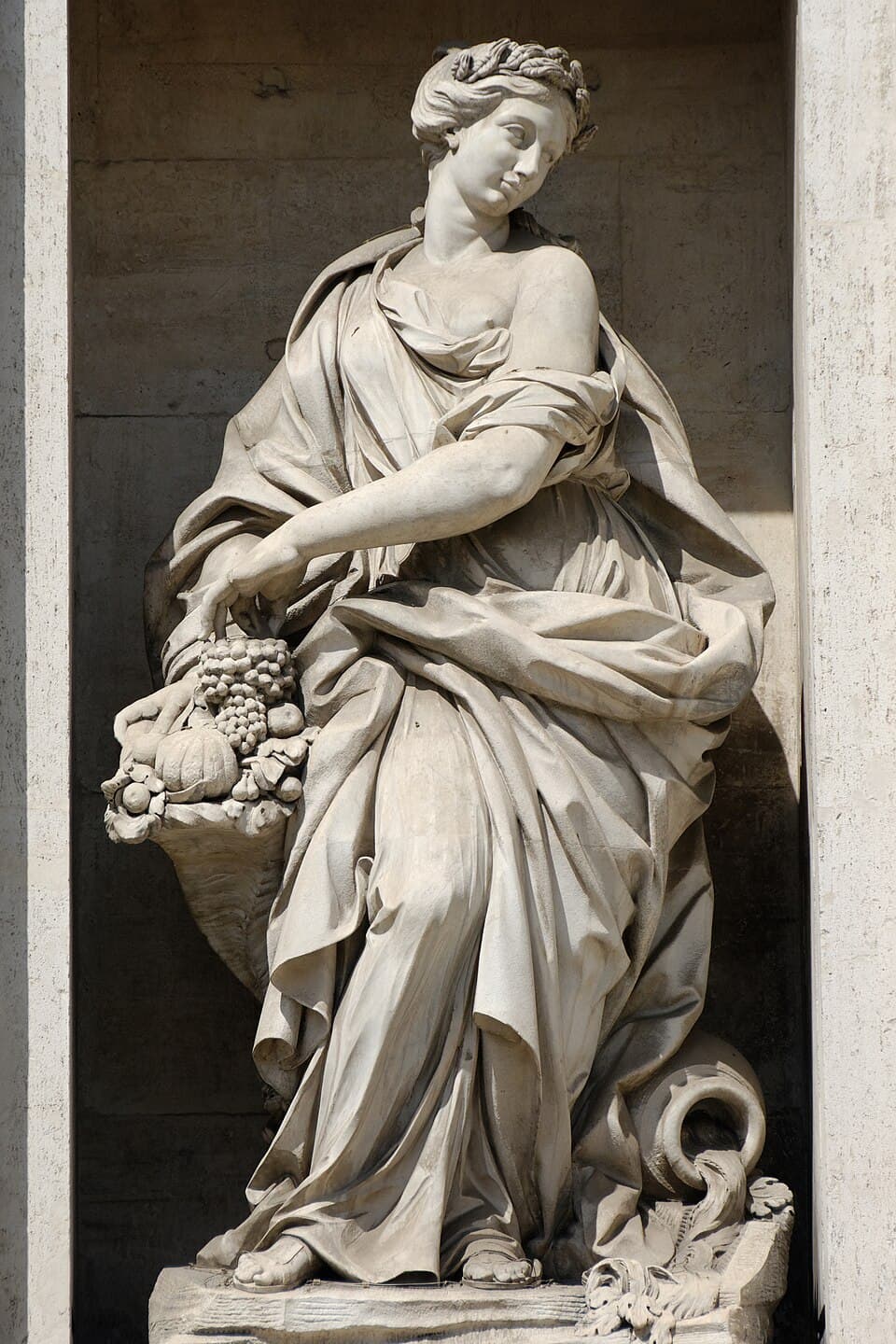
Statue of Abundance
In the niche located to the left of Oceanus stands a female figure representing Abundance. She is depicted in a graceful pose, holding a 'horn of plenty,' or cornucopia, which is overflowing with a variety of fruits and grains. This symbolism is very deliberate; it celebrates the prosperity that the arrival of reliable, clean water brought to the city of Rome. Throughout history, the health and wealth of a city were directly tied to its aqueducts. Without water, agriculture would fail and commerce would stall. By placing Abundance here, the designers were honoring the fountain not just as a work of art, but as a vital public utility. Notice the flowing drapery of her robes, which adds to the sense of movement found throughout the fountain's facade. She stands as a reminder that the beauty of the monument is matched by its practical importance to the Roman people, serving as a monument to the life-sustaining power of the local water sources.
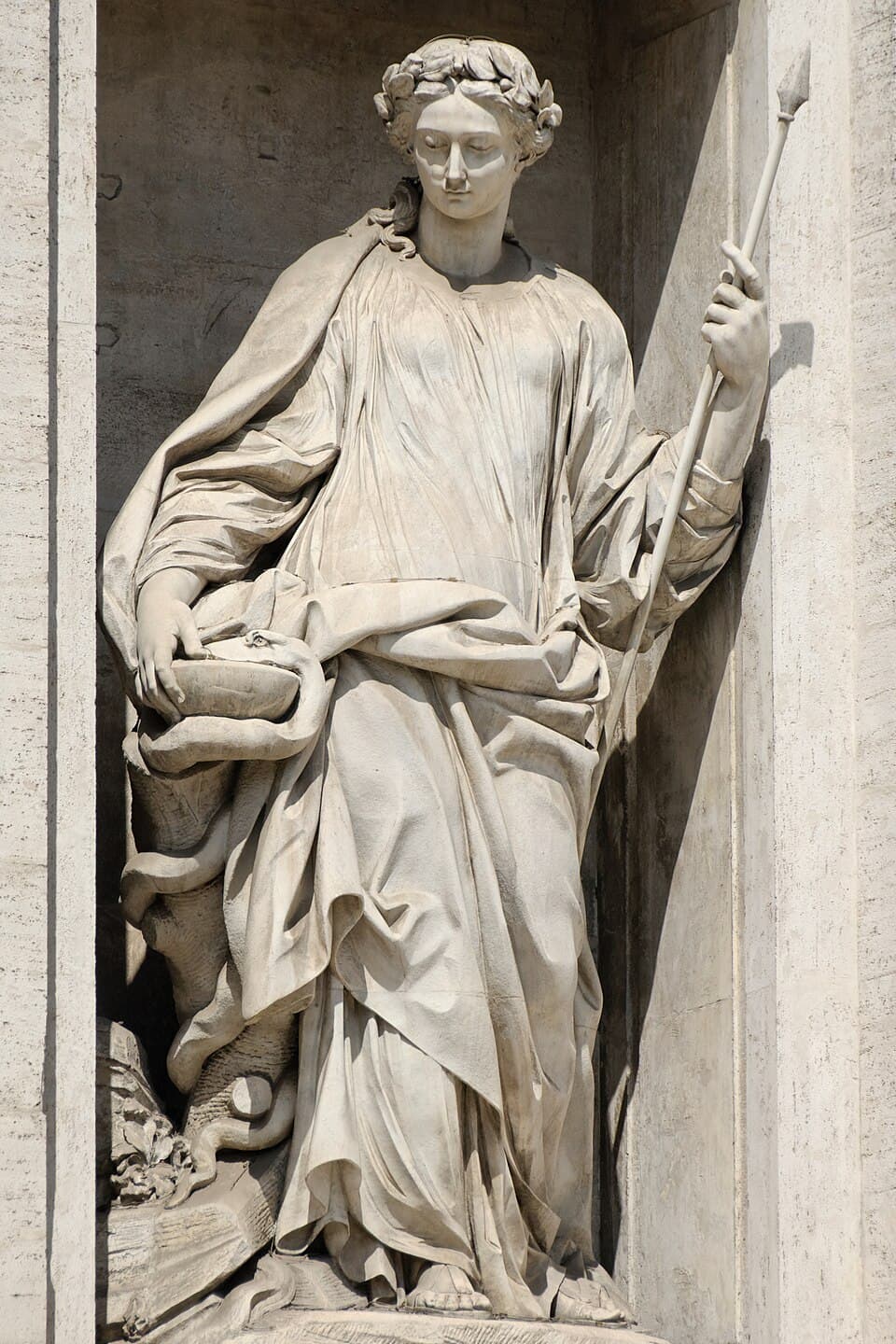
Statue of Salubrity
Occupying the niche to the right of Oceanus is the statue of Salubrity, or Health. She is a counterpart to the statue of Abundance, representing another essential gift provided by the fountain: cleanliness and well-being. Look closely at what she is holding. In one hand, she carries a cup, and a snake is seen winding its way up to drink from it. In ancient symbolism, the snake and the cup were often associated with Hygieia, the goddess of health, representing the medicinal and purifying qualities of water. This figure celebrates the legendary purity of the water delivered by the ancient Aqua Virgo aqueduct. For centuries, this particular water source was famous for being among the cleanest and best-tasting in the city. Her calm and serene presence reinforces the idea that this fountain is a source of life and vitality for everyone who visits, providing a sense of order amidst the more dramatic sea gods nearby.
The Legend of the Virgin Water
Detail the history of the Aqua Virgo aqueduct through the bas-relief panels above the niches. Show Agrippa and the young girl pointing out the spring.
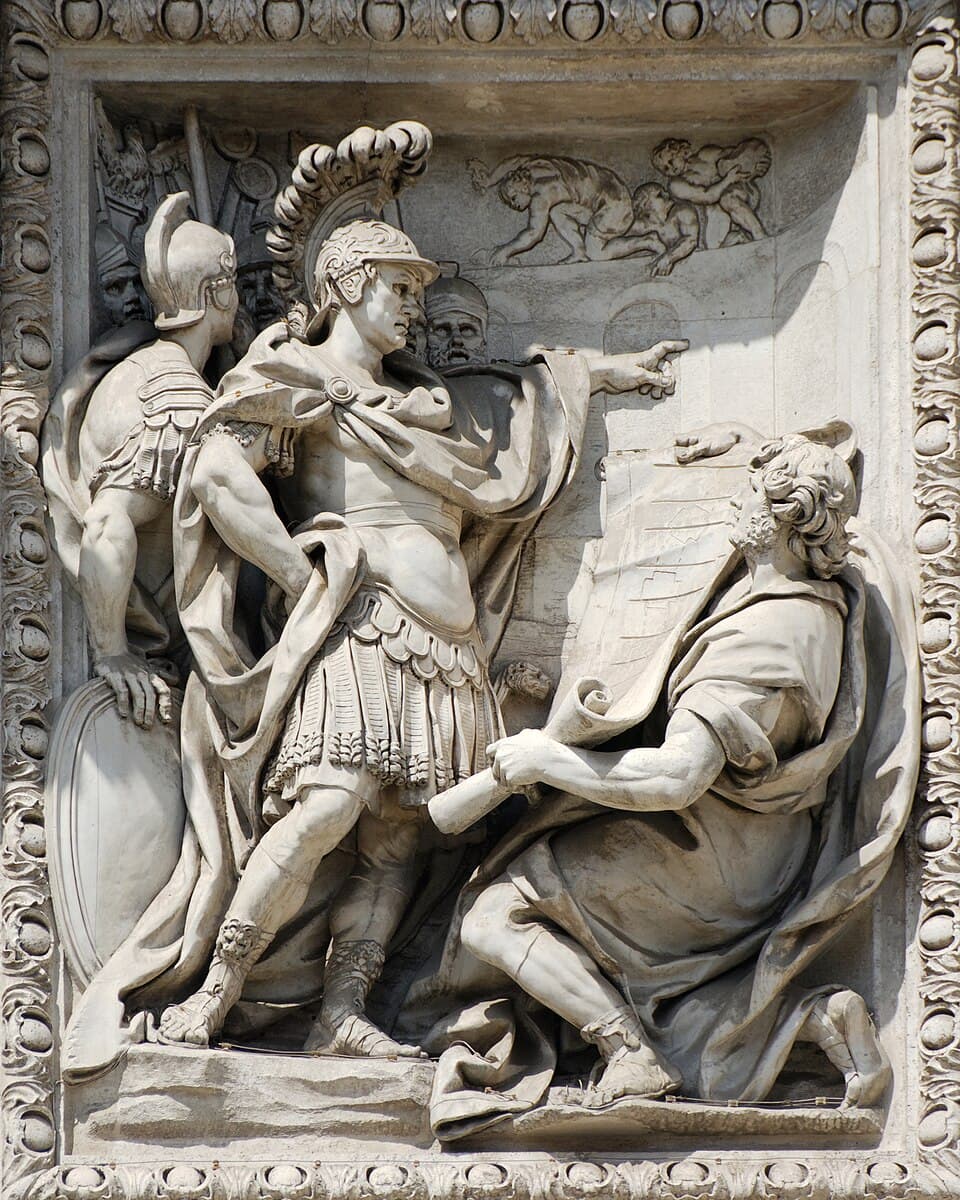
Agrippa and the Aqueduct
Above the statue of Abundance, you will find a bas-relief depicting a man in traditional Roman military attire. This is Marcus Agrippa, a powerful general and the right-hand man to Emperor Augustus. Agrippa was a master of engineering and was responsible for commissioning the original Aqua Virgo aqueduct in 19 BC. This relief serves as a historical bridge, connecting the 18th-century fountain you see today with the ancient Roman infrastructure that still feeds it. It is remarkable to think that the water cascading into the basin right now has traveled through channels laid down over two thousand years ago. In the carving, Agrippa is shown overseeing the plans for the aqueduct, emphasizing his role as a builder and provider for the people. This inclusion reminds us that the Trevi Fountain is not just a stand-alone monument, but the grand showpiece of an engineering marvel that has served Rome since the dawn of the Empire.
The Living Reef and Hidden Details
Explore the travertine rockwork and the legend of the Barber's Vase. Include the Fontanina degli Innamorati located on the side of the monument.
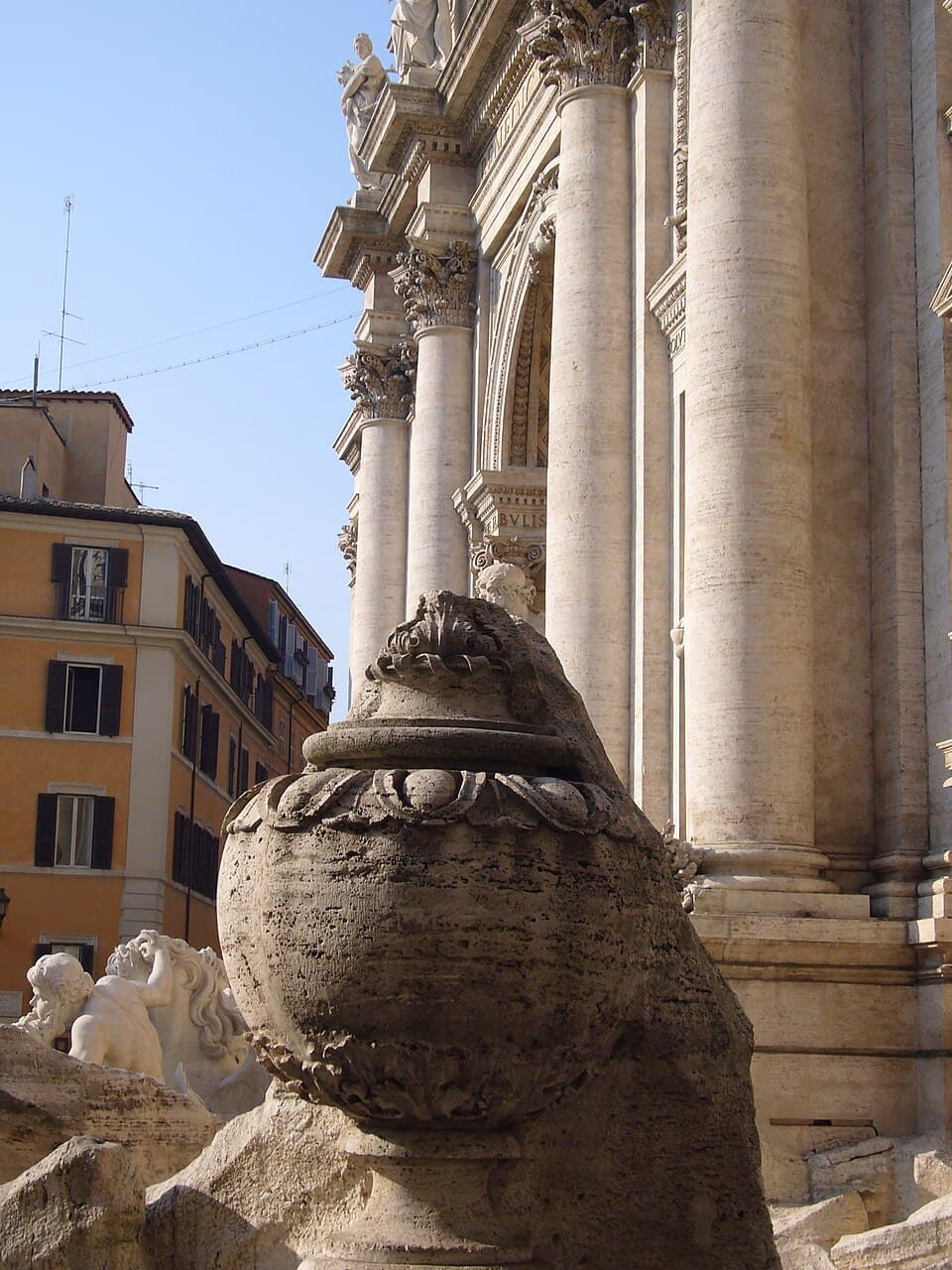
The Ace of Cups
While much of the fountain is dedicated to grand themes of gods and history, this particular detail is much more personal. Look toward the right side of the rocky travertine reef, where you will see a large, ornamental vase. Locals call this the 'Asso di Coppe,' or the 'Ace of Cups,' because of its resemblance to a suit in traditional Italian playing cards. There is a famous story behind its placement. During the construction of the fountain, a local barber had his shop in one of the buildings facing the square. He was reportedly a constant critic of the architect Nicola Salvi, shouting complaints about the design every single day. Eventually, Salvi had enough. He sculpted this massive vase and positioned it specifically to block the barber’s view of the main central sculptures from inside his shop. It was a silent, permanent act of revenge. Even today, if you stand where the barber's shop used to be, the Ace of Cups perfectly obstructs the view of the central figures, proving that even great artists have a sense of humor.
The Basin and the Coin Toss Tradition
Conclude the tour at the water's edge. Use a spectacular night shot to illustrate the fountain's modern iconic status and the place where visitors make their legendary coin toss.
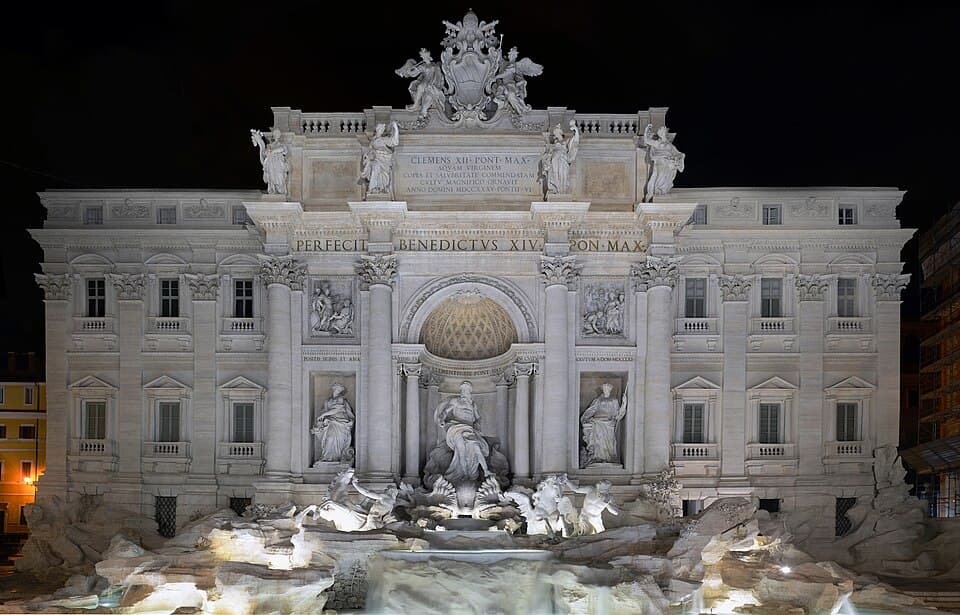
Charity and Cinema
No visit to the Trevi Fountain is complete without participating in the world-famous coin toss. According to tradition, you must hold the coin in your right hand and throw it over your left shoulder with your back turned to the water. One coin ensures you will return to Rome. But there is a much more practical side to this tradition. Every day, thousands of euros are tossed into the water, totaling approximately 1.4 million euros annually. This money is collected every morning and donated to the Caritas charity to support those in need. Beyond its charitable work, the fountain is also a global icon of cinema. You might recognize it from its central role in Federico Fellini’s 'La Dolce Vita.' To preserve this cinematic beauty, a major restoration was completed in 2014, famously funded by the fashion house Fendi. As you leave, you take with you a piece of a story that blends ancient engineering, Baroque art, and modern legend.
Want to hear the rest?
Download the Stanza app to unlock all 15 stops and full GPS-guided navigation.
Frequently Asked Questions
How long does the Fontana di Trevi audio tour take?
The Fontana di Trevi audio guide includes 15 narrated stops. Most visitors spend 45 minutes to 1.5 hours exploring the complete tour, though you can listen at your own pace and skip or revisit any stop.
Is the Fontana di Trevi audio guide available in my language?
Stanza supports 15 languages: English, Spanish, French, German, Italian, Portuguese, Russian, Japanese, Chinese, Korean, Arabic, Hindi, Polish, Dutch, Hebrew. Check the guide in the app to confirm the languages currently available for this tour.
Can I use the audio guide offline at Fontana di Trevi?
Yes! Download the complete Fontana di Trevi tour — including all audio, maps, and images — before your visit. The Stanza app works completely offline, so you don't need WiFi or mobile data at the venue.
How much does the Fontana di Trevi audio guide cost?
The Stanza app is free to download. The current listed price for the Fontana di Trevi audio guide is $4.99; app-store region and currency may affect the final price.
How do I use the Stanza audio guide at Fontana di Trevi?
Download the free Stanza app, search for "Fontana di Trevi", and download the tour. When you arrive at the venue, the app uses GPS to detect your location and automatically plays the relevant narration as you move between points of interest — completely hands-free.
What makes the Stanza audio guide different from other Fontana di Trevi tours?
Stanza offers GPS-triggered narration that plays automatically as you walk through Fontana di Trevi — no need to manually select stops. The tour is available in 15 languages, works fully offline, and includes 15 expertly narrated stops with images and historical context.
What other audio guides are available near Fontana di Trevi?
Stanza offers multiple audio guides in Rome, Italy and nearby areas. After downloading the app, browse the map to discover all available tours near Fontana di Trevi. Each guide can be downloaded for offline use.