Languages
15Palatine Hill Audio Guide
Palatine Hill is an archaeological site in Rome, Italy. Explore it with Stanza's guided offline audio tour — narrated in 15 languages.
Quick Facts
41
Stops
15
Languages
100%
Offline
📍 Rome, Italy · 41.8883°N, 12.4869°E
About Palatine Hill
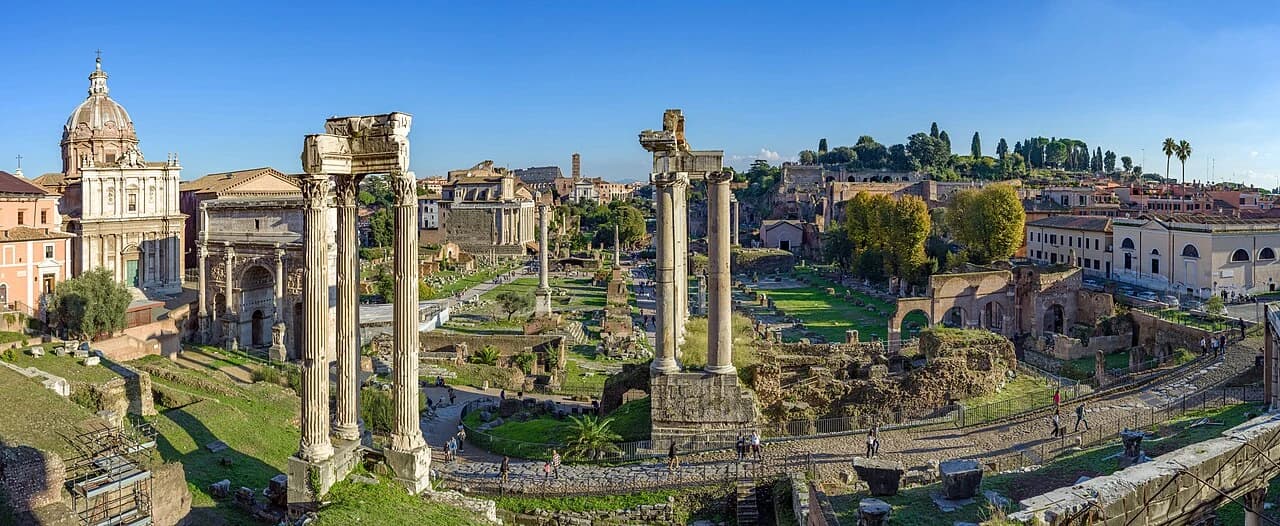
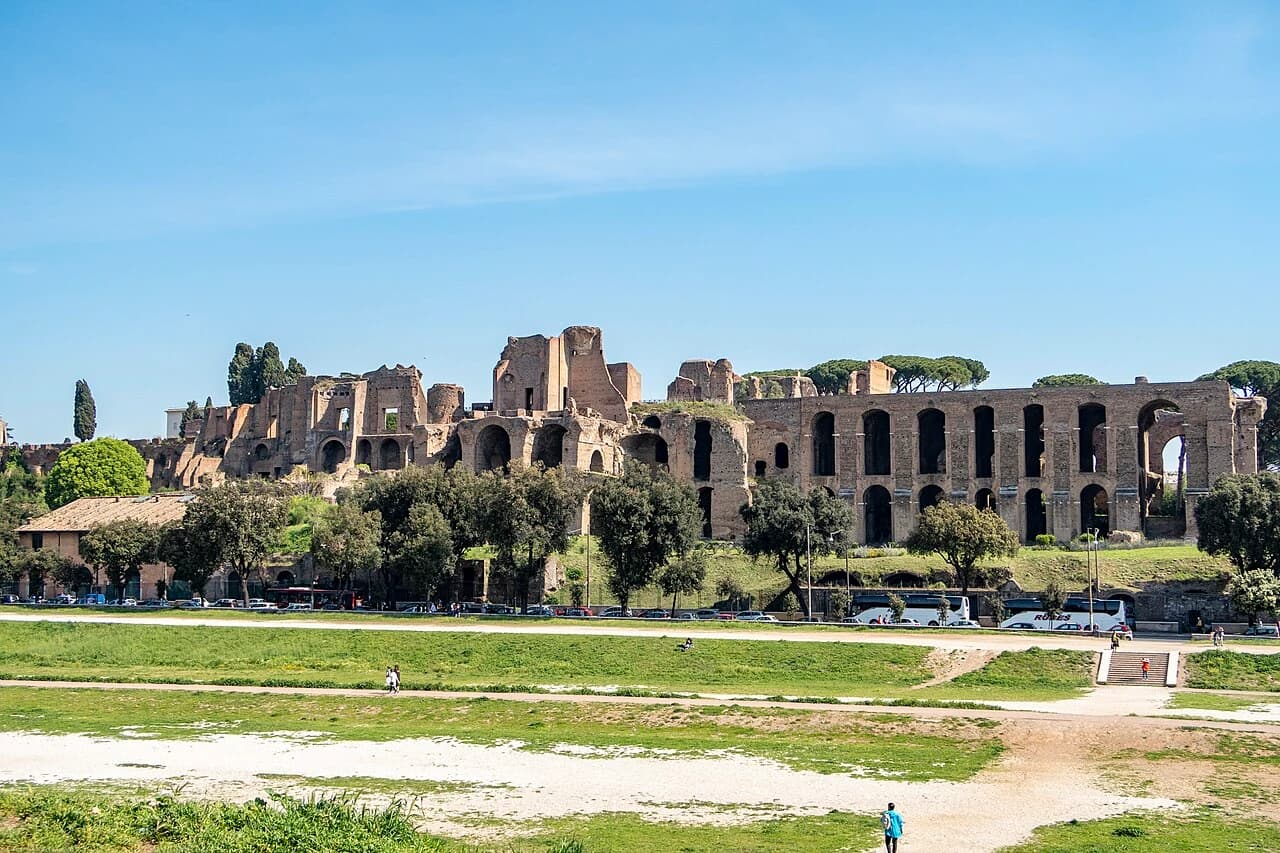
The Palatine Hill is the centremost of the seven hills of Rome, Italy. It is a significant archaeological site, featuring ancient ruins and also houses a national museum.
This self-guided audio tour features 41 narrated stops organized across 7 sections. As a archaeological site, Palatine Hill offers a unique cultural experience in the heart of Rome, Italy.
The Stanza audio guide is available in 15 languages and works entirely offline — download the complete tour including audio narration, maps, and images before your visit. As you walk through Palatine Hill, GPS-triggered narration plays automatically at each point of interest.
Last updated:
What you will hear
House of Livia
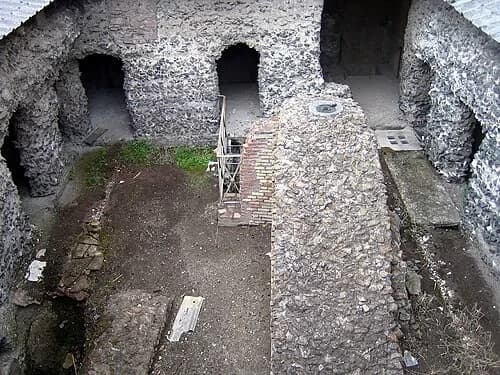
This was the residence of Livia Drusilla, wife of Emperor Augustus, featuring some of the most sophisticated wall paintings found in the ancient world.
House of Livia
This structure is identified as the residence of Livia Drusilla, the influential wife of Rome's first emperor, Augustus. Compared to the sprawling, multi-story palaces that would later dominate the Palatine Hill, this house appears remarkably modest. This was a calculated political choice. Augustus famously preferred a simple lifestyle to maintain the appearance of a 'first citizen' or protector of the Republic, rather than a divine king. By living in a relatively small home, he distanced himself from the perceived excesses of eastern monarchs. This site was uncovered during excavations in the 19th century. Archaeologists were able to confirm its identity when they found lead water pipes stamped with Livia’s name, a common Roman method for identifying property owners. While the architecture is restrained, the interior once boasted some of the most sophisticated decorations in Rome. The house is built on a traditional Roman layout, centering around an atrium that provided light and air to the internal rooms. This domestic space provides a glimpse into the private life of the woman who was a key advisor to Augustus and mother to his successor, Tiberius. Small terracotta fragments found nearby suggest the roof was once adorned with traditional Roman decorative elements.
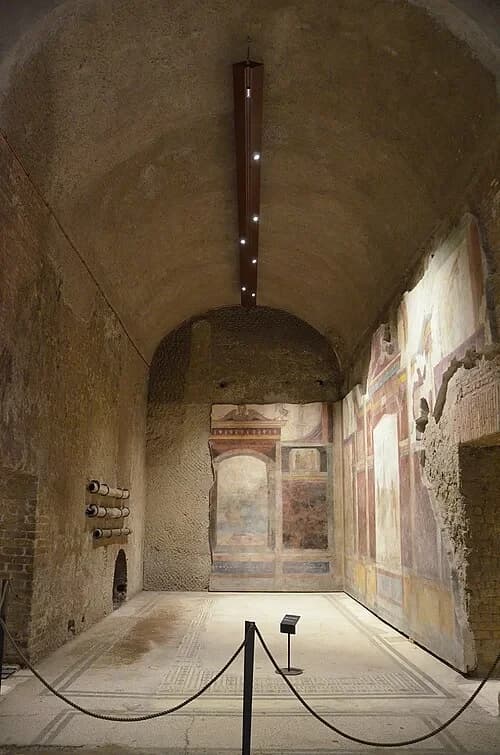
Livia's Central Hall
The central hall of the House of Livia features exceptional examples of the 'Second Style' of Roman wall painting. This style was characterized by its use of complex perspective to create the illusion of depth, effectively making a room feel much larger than its physical dimensions. Artists used carefully calculated vanishing points and shading to suggest that the flat walls were actually openings into grand porticos or distant mythological landscapes. Looking at these frescoes today, it is remarkable to consider that they are over 2,000 years old. They represent the height of sophisticated interior design during the early Empire, reflecting a taste for refined, intellectual environments. The scenes depicted often include mythological narratives, surrounded by painted columns and cornices that mimic real architecture with startling realism. These paintings weren't just decorative; they were a status symbol, demonstrating the owner's cultural knowledge and wealth. The preservation of these colors is a miracle of archaeology, as the rooms were protected for centuries under the massive foundations of later imperial constructions. The level of detail, from the delicate shadows cast by the painted pillars to the intricate borders, showcases the skill of the master painters. You can still see the fine brushstrokes that define the figures and architectural moldings.
House of the Griffins
Hidden beneath later imperial levels, this is the oldest house on the Palatine, dating to the 2nd century BC and named for its exquisite stucco reliefs.
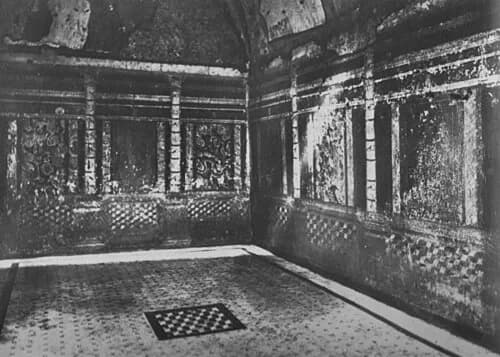
House of the Griffins
The House of the Griffins is the oldest house discovered on the Palatine Hill, dating back to the late 2nd century BC. It was found deep beneath the floor of the much later Flavian Palace, preserved when the valley was filled with earth to create a level platform for the emperors. This house showcases the 'First Style' of Roman decoration, a fashion that was popular during the transition from the Republic to the Empire. In this style, plaster was skillfully molded and painted to imitate expensive slabs of rare colored marble. This was a clear sign of the growing wealth and ambition of the Roman Republic's elite, who wanted to surround themselves with luxury even if they couldn't yet afford the actual imported stone. The rooms are arranged around a small courtyard, following the traditional domestic architecture of the period. Because it was buried so early, it offers a rare look at how high-ranking Romans lived before the hill became the exclusive domain of the emperors. The preservation of the walls is remarkable, showing the sturdy construction methods used by Republican builders. This house serves as a vital link between the early Iron Age settlements and the massive imperial structures that followed. The lower sections of the walls still show the bold, blocky patterns intended to mimic heavy stonework.
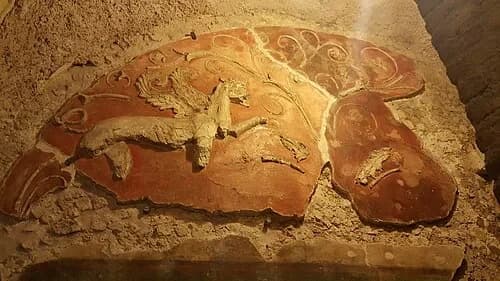
Stucco Relief of the Griffins
The namesake of this ancient residence is an intricate stucco relief depicting two griffins flanking a central motif. These mythical creatures, with the bodies of lions and the wings and heads of eagles, were popular symbols of protection and strength in ancient Roman decorative arts. They were often thought to be guardians of treasure or sacred sites. The craftsmanship visible in the raised plaster is exceptional; the artist used fine tools to carve the feathers and muscular forms directly into the damp stucco. While the relief appears white today, traces of original color suggest that it was once boldly painted, likely with a background of deep red or blue to make the white figures stand out. This level of detail in a domestic setting highlights the sophistication of early Roman interior design. Stucco was a versatile material that allowed for three-dimensional decoration that was lighter and more affordable than carved stone but could be just as intricate. The griffins are shown in a stylized, heraldic pose, common in the late Republican period. This relief wasn't just art; it was meant to convey the prestige and security of the household. If you look closely at the edges of the wings, you can still see the fine lines where the artist's hand worked the plaster.
House of Augustus
The primary residence of Rome's first emperor, Augustus, this complex represents the transition from private home to imperial palace.
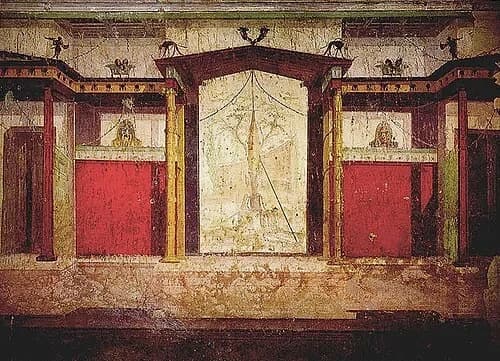
House of Augustus
This room is part of the House of Augustus, the residence of the first emperor. Unlike the more restrained rooms of Livia’s house, this space features a vivid theatrical theme. Observe the painted columns and geometric patterns, featuring dramatic masks and a complex architectural stage set known as a 'scaenae frons.' These paintings highlight Augustus's deep personal interest in the arts and his desire to surround himself with Greek-influenced culture, which was considered the height of sophistication in Rome. The masks, depicting characters from tragedy and comedy, are rendered with startling realism, appearing to sit on shelves within the painted architecture. This style of decoration was intended to transform a private room into a miniature theater, creating a sense of intellectual and cultural refinement. The use of bright reds, deep yellows, and rich blacks creates a dramatic atmosphere that would have been illuminated by flickering oil lamps in antiquity. By adopting these themes, Augustus signaled his role as a patron of literature and drama, connecting his imperial rule to the great traditions of the Hellenistic world. The layout of the room suggests it was used for receiving guests who would be impressed by the emperor's taste. Look for the small garlands draped between the painted columns.
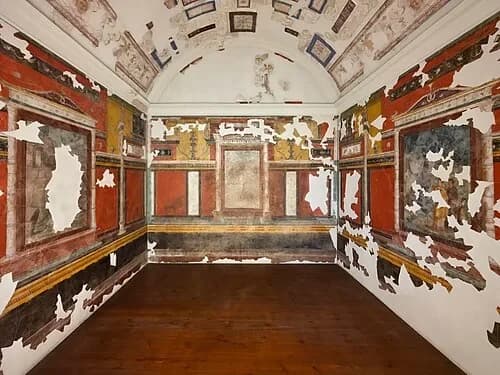
The Emperor's Private Studio
This small, exceptionally well-preserved room is often called the 'Studio.' It is believed to be one of the most intimate spaces in the House of Augustus, where the emperor likely retreated to handle private correspondence and sensitive state matters away from the public gaze. The decoration here is particularly refined, featuring ceiling paintings and bright red and yellow panels. Unlike the grand reception halls, the scale of this room is personal and focused. The ceiling is a rare example of preserved Roman plasterwork, showing intricate geometric patterns and small figures that would have looked down on the emperor at work. The wall paintings are executed with incredible precision, using the finest pigments available to create a warm, inviting atmosphere. This was a space of intense concentration, the nerve center of an empire that stretched from Britain to Egypt. The survival of such an intimate room allows us to imagine Augustus not just as a powerful ruler, but as a man working late into the night. The light from a single window or lamp would have caught the highlights on the painted borders, making the room feel like a precious, jewel-toned box. The different colored panels are separated by thin, elegant lines that define the architectural space.
Hall of Isis
Part of the House of Augustus, this room is decorated with Egyptian-themed frescoes, reflecting the Roman fascination with Isis after the conquest of Egypt.
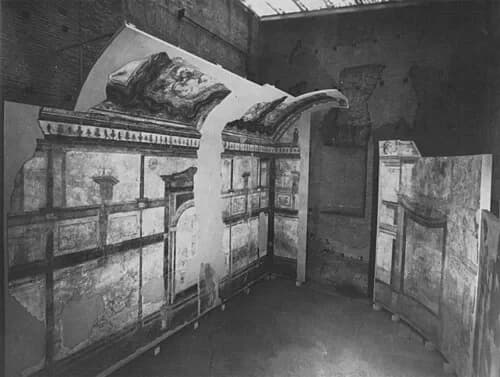
Temple of Isis
Within this room, which once belonged to the House of Augustus, you can see the profound impact of Roman expansion on domestic life. Following the decisive defeat of Mark Antony and Cleopatra, a wave of 'Egyptomania' swept through the Roman capital. The victory not only expanded the empire but also brought Egyptian aesthetics and religious cults into the private spheres of the Roman elite. The frescoes here incorporate distinct motifs that would have appeared exotic and sophisticated to a Roman visitor. Look for the goddess Isis, often associated with motherhood and magic, alongside lotus flowers and sacred cobras known as uraei. These elements were not merely decorative; they reflected the growing integration of foreign religious traditions into the traditional Roman pantheon. By incorporating these symbols into his own residence, Augustus signaled his control over Egypt and his role as a global ruler. This blending of cultures in a single room shows how the Roman home became a canvas for political and religious shifts. The paint still clings to the plaster, offering a look at the vibrant colors that once defined these imperial spaces.
Stairs of Cacus
According to legend, these stairs lead to where the hero Hercules fought the fire-breathing giant Cacus on the Palatine Hill.
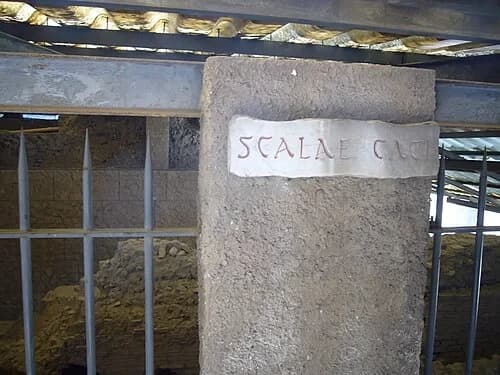
Stairs of Cacus
These ancient steps, known as the Scalae Caci, lead down the steep western slope of the Palatine. According to local legend, this was the site of a fierce battle between the hero Hercules and the fire-breathing giant Cacus. Tradition holds that Cacus lived in a cave here and stole the cattle of Geryon from Hercules, leading the hero to slay the giant on this very hillside. Beyond the myth, these stairs served a vital practical and ritual purpose for the earliest Romans. They formed one of the oldest pathways connecting the primitive settlements at the top of the hill to the valley of the Forum Boarium near the Tiber River. This connection was essential for trade and the movement of livestock in the city's early days. Over the centuries, the pathway was reinforced with stone, becoming a permanent fixture of the hill's landscape. Even as massive palaces grew up around it, the Stairs of Cacus remained a tangible link to Rome's archaic origins. The simple, utilitarian nature of the steps contrasts sharply with the luxury of the nearby imperial complexes, marking the enduring footprint of the city's founders.
The Hut of Romulus
This sacred site contains post-holes from 8th-century BC Iron Age huts, traditionally identified as the home of Rome's legendary founder, Romulus.
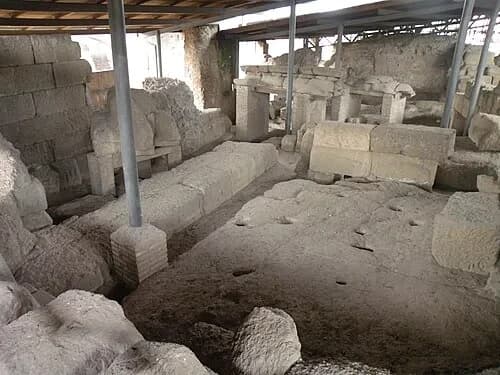
House of Romulus
In this excavated area, you can see series of indentations and post-holes cut directly into the tufa bedrock. These are the remains of Iron Age huts dating back to the 8th century BC, the traditional era of Rome's founding. For centuries, the Romans of the Republic and the Empire treated this site with extreme reverence, believing it was the 'Casa Romuli,' or the House of Romulus. They went to great lengths to preserve these humble structures, even as they built massive marble palaces nearby. When a hut would burn down or decay, it was carefully rebuilt in its original style with wattle, daub, and thatch to honor the city’s founder. Archaeologists have confirmed that this area was part of a small village of shepherd-farmers who were the hill's earliest permanent inhabitants. The contrast between these tiny, circular dwellings and the sprawling halls of the Flavian Palace is staggering. By maintaining this site, emperors like Augustus and Domitian connected their own sophisticated rule to the rugged, traditional virtues of the first Romans. These holes are the most physical evidence remaining of the city's birth nearly three millennia ago.
Baths of Septimius Severus
The emperors enjoyed their own private bath complex here, complete with heated rooms and stunning views over the Circus Maximus.
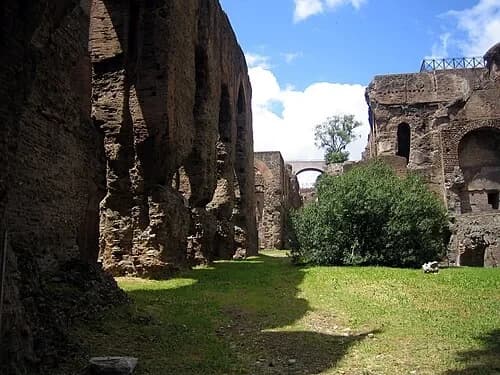
Baths of Septimius Severus
Bathing was a fundamental ritual of Roman life, and the emperor’s private facilities were the ultimate expression of this tradition. These ruins belong to the Baths of Septimius Severus, a complex designed to provide every possible luxury for the imperial court. The structure included a sequence of rooms with varying temperatures: the caldarium for hot baths, the tepidarium for warming up, and the frigidarium for a cold plunge. Beneath the floors, a system of brick pillars called hypocausts allowed hot air from furnaces to circulate, heating the rooms from below. Steam rooms provided a sauna-like experience, while open-air courtyards were used for exercise and massage. Supplying such a massive complex required an enormous amount of water. To meet this demand, the Claudian aqueduct was extended across the valley specifically to reach this part of the Palatine. This constant flow of fresh mountain water was a high-status luxury that few Romans could access privately. Today, you can see the deep arched niches that once held statues and the broken plumbing that formerly channeled water through the complex. The scale of these ruins suggests a space that was as much about architecture and social display as it was about personal hygiene.
Want to hear the rest?
Download the Stanza app to unlock all 41 stops and the complete guided audio tour.
Frequently Asked Questions
How long does the Palatine Hill audio tour take?
The Palatine Hill audio guide includes 41 narrated stops. Most visitors spend 45 minutes to 1.5 hours exploring the complete tour, though you can listen at your own pace and skip or revisit any stop.
Is the Palatine Hill audio guide available in my language?
Stanza supports 15 languages: English, Spanish, French, German, Italian, Portuguese, Russian, Japanese, Chinese, Korean, Arabic, Hindi, Polish, Dutch, Hebrew. Check the guide in the app to confirm the languages currently available for this tour.
Can I use the audio guide offline at Palatine Hill?
Yes! Download the complete Palatine Hill tour — including all audio, maps, and images — before your visit. The Stanza app works completely offline, so you don't need WiFi or mobile data at the venue.
How much does the Palatine Hill audio guide cost?
The Stanza app is free to download. The current listed price for the Palatine Hill audio guide is $5.99; app-store region and currency may affect the final price.
How do I use the Stanza audio guide at Palatine Hill?
Download the free Stanza app, search for "Palatine Hill", and download the tour. When you arrive at the venue, the app uses GPS to detect your location and automatically plays the relevant narration as you move between points of interest — completely hands-free.
What makes the Stanza audio guide different from other Palatine Hill tours?
Stanza offers GPS-triggered narration that plays automatically as you walk through Palatine Hill — no need to manually select stops. The tour is available in 15 languages, works fully offline, and includes 41 expertly narrated stops with images and historical context.
What other audio guides are available near Palatine Hill?
Stanza offers multiple audio guides in Rome, Italy and nearby areas. After downloading the app, browse the map to discover all available tours near Palatine Hill. Each guide can be downloaded for offline use.