Languages
15Castel Sant'Angelo Audio Guide
Castel Sant'Angelo is a landmark in Rome, Italy. Explore it with Stanza's GPS-triggered offline audio guide — available in 15 languages.
Quick Facts
35
Stops
15
Languages
100%
Offline
📍 Rome, Italy · 41.9030°N, 12.4663°E
About Castel Sant'Angelo
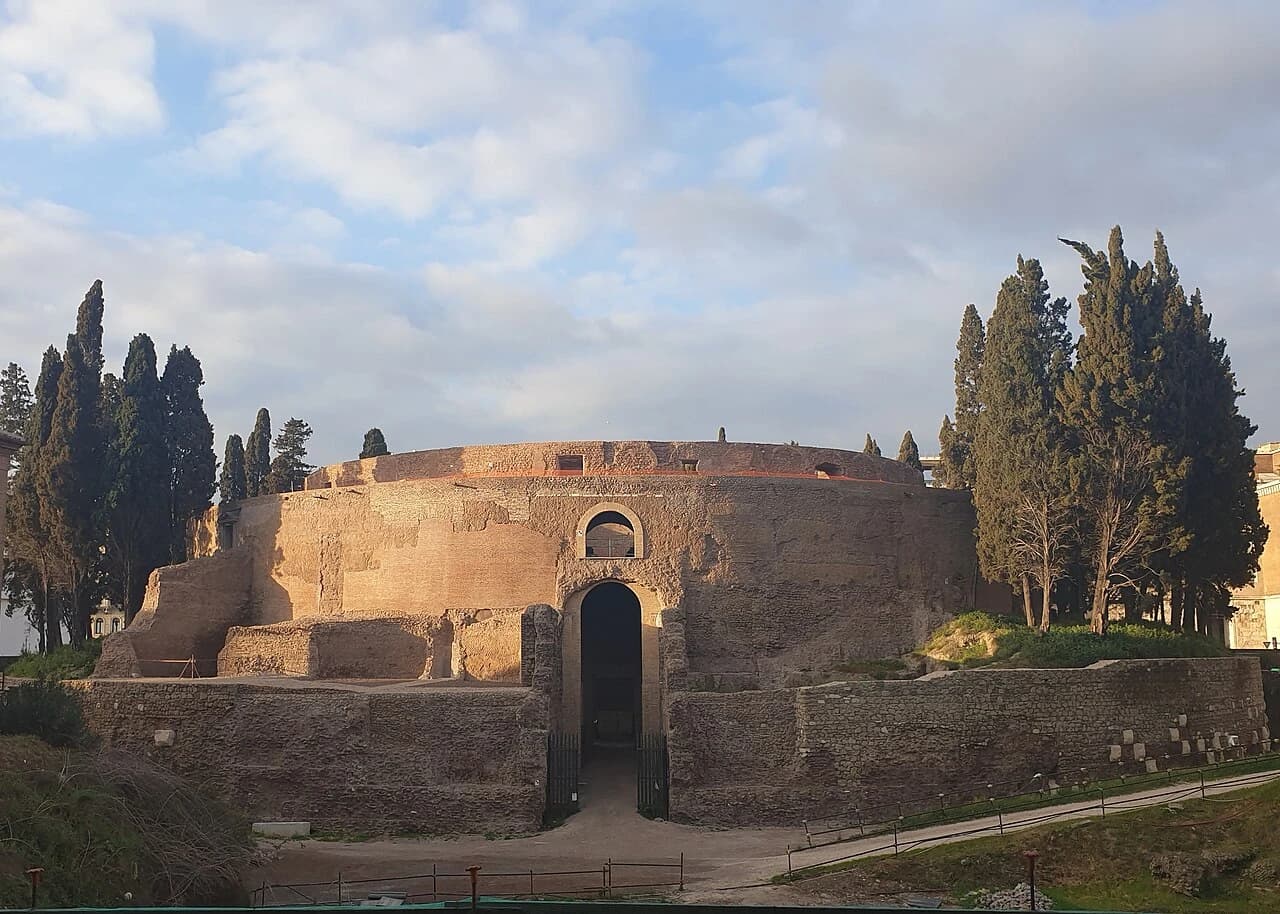
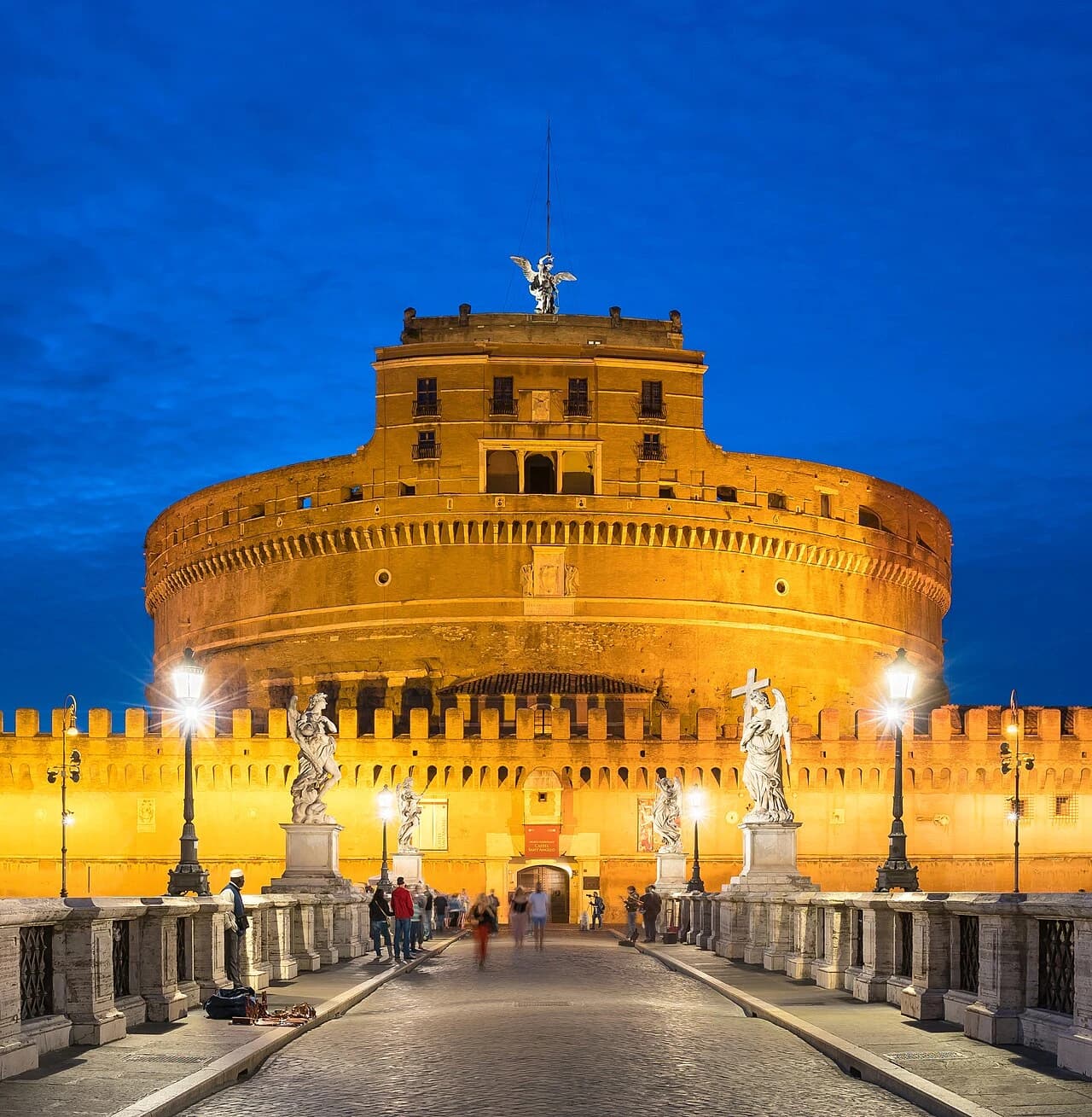
Castel Sant'Angelo is a circular castle and museum located in Rome, Italy. It originally served as the imperial mausoleum for Emperor Hadrian and later Roman emperors.
Castel Sant'Angelo is also known as mausolée d'Hadrien, Mausoleum of Hadrian, Castel Sant'Angelo in Rome, Castel Sant'Angelo Rome, and 5 other names in various languages.
This self-guided audio tour features 35 narrated stops organized across 10 sections. As a castle, Castel Sant'Angelo offers a unique cultural experience in the heart of Rome, Italy.
The Stanza audio guide is available in 15 languages and works entirely offline — download the complete tour including audio narration, maps, and images before your visit. As you walk through Castel Sant'Angelo, GPS-triggered narration plays automatically at each point of interest.
Last updated:
What you will hear
The Helical Ramp: The Processional Path
The original Roman entrance tunnel that spirals upward, designed to allow funeral processions to reach the burial chamber in the heart of the drum.

The Helical Ramp
This 120-meter-long spiral tunnel, known as the helical ramp, is one of the most impressive surviving features of the original Roman mausoleum. Designed with a gentle, rhythmic incline, it was intended to allow large imperial funeral processions to reach the central burial chamber with ease and dignity. As you observe the space, take note of the ancient brickwork that lines the walls and the vaulted ceiling. The ramp ascends gradually, wrapping around the core of the building in a continuous curve. In antiquity, the floor was likely paved with fine mosaics, and the walls might have been decorated with marble panels. Today, the exposed bricks offer a raw look at the engineering skills of the Roman builders. The slow, steady climb creates a sense of separation from the outside world, pulling visitors deeper into the massive stone structure. It was a functional necessity for the mausoleum's design, ensuring that the heavy imperial sarcophagi could be transported safely to the very center of the drum, high above the level of the Tiber River. The acoustics here often carry the echo of footsteps, much as they would have centuries ago.
The Hall of Urns: The Imperial Heart
The central chamber of the ancient mausoleum where the remains of Emperor Hadrian and his successors were once kept in golden urns.

The Internal Bridge
This internal bridge offers a perfect view of the castle’s complex history as a vertical timeline. From this vantage point, you can see how later generations quite literally built on top of the ancient Roman core. The massive, weathered blocks of the mausoleum serve as the foundation for the lighter, more defensive brickwork and elegant papal rooms above. Every century that passed left its mark on this space, resulting in a dense accumulation of different masonry styles and construction techniques. Notice the contrast between the rough-hewn stone of the second century and the smoother, more precisely laid brick of the Renaissance. This elevated walkway was added to allow movement through the structure after it was converted into a fortress and palace, bypassing the original Roman paths. It highlights the ingenuity required to transform a solid, impenetrable tomb into a functional, multi-story residence and defensive stronghold. This intersection of the ancient and the early modern periods illustrates why the castle is an architectural puzzle, where the past is integrated into the present. The railing provides a safe view down into the monumental core of the building.
The Historical Prisons
The dark side of the castle's history, where famous figures like Benvenuto Cellini were held in cramped, high-security cells.

The Sammalò Prison
During the castle's transition into a papal stronghold, parts of it were repurposed as a notorious prison. The cell known as the Sammalò is one of the most chilling examples. This deep, narrow pit was accessible only through a trapdoor in the ceiling, meaning prisoners were literally lowered into the darkness. One of its most famous occupants was the Renaissance sculptor and goldsmith Benvenuto Cellini, who was held here in 1538 on charges of theft. Despite the cell's design, Cellini staged one of history's most audacious escapes. Using ropes he fashioned from his own bedsheets, he managed to lower himself from the castle's high ramparts. Although he broke his leg during the descent, he survived the attempt, adding a layer of legend to these grim walls. Looking down into the cell today, it is easy to grasp the isolation and despair of those held within. The transition from the luxurious papal apartments just floors away to this brutal subterranean prison highlights the dual nature of the castle as both a sanctuary for the powerful and a dungeon for their enemies. The rough stone walls offer no comfort and very little light to those once trapped below.
The Sala Paolina: Papal Grandeur
The most luxurious of the Papal Apartments, decorated with intricate frescoes and gold leaf to showcase the power and taste of Pope Paul III.

Stories of Alexander
Frescoes in the papal apartments depict scenes from the life of the ancient Greek conqueror, Alexander the Great. It may seem unusual for a Pope to decorate his private residence with the stories of a pagan military leader, but the choice was highly strategic. During the Renaissance, Church leaders frequently sought to align their authority with the prestige and power of classical antiquity. By portraying himself as a modern successor to Alexander, Pope Paul III was making a bold statement about his own leadership and the global influence of the Papacy. The paintings themselves are rich in detail, showing battles, councils, and the triumphant moments of the Macedonian king's life. This thematic choice reflects the humanist culture of the time, where the study of ancient history was seen as essential for any great ruler. These frescoes served as more than just decoration; they were a form of visual propaganda, designed to impress visitors with the Pope’s intellectual depth and his place within the long lineage of world-shaping figures, reaching back far beyond the Christian era. The central figures are often shown in heroic poses, surrounded by intricate borders that feature additional mythological motifs.
The Library
The Sala della Biblioteca, used for papal archives and private study, featuring stunning ceiling motifs.

The Papal Library
This grand hall served as the Papal Library, a repository that once held the most sensitive archives and private collections of the Vatican. It was a place of study and preservation, hidden away in the secure upper reaches of the fortress. The ceiling decoration reflects this intellectual purpose, featuring a series of allegorical figures. These figures represent different branches of knowledge, such as philosophy, theology, and the arts, illustrating the Church’s role as the guardian of history and wisdom. Notice how the figures are integrated into a complex geometric framework, a style that emphasizes order and enlightenment. By surrounding themselves with these images, the Popes underscored their authority not just as political rulers, but as the intellectual leaders of the Christian world. The room’s design balances the gravity of its contents with the elegance of Renaissance art, turning a storage space into a temple of learning. While the original manuscripts have long since been moved to the Vatican Library, the architectural splendor remains, preserving the memory of a time when this room was the intellectual nerve center of the Papacy.
The Treasury Room
A secure room used by the Popes to store the Vatican's wealth and archives during times of siege and war.

The Treasury Room
The circular shape of this room mirrors the ancient core of the building, but its function was purely Renaissance. This was the Treasury Room, the most secure location in the entire fortress. Chosen for its position deep within the upper levels, it was surrounded by layers of thick masonry and guarded by elite soldiers. The heavy wooden cabinetry lining the walls was specifically built to organize and store the immense wealth and records of the Papacy. Because the castle was the ultimate safe haven, this room became the de facto central bank for the Popes during emergencies. Its location made it incredibly difficult for any invading force to reach, requiring them to fight through the ramparts, the helical ramp, and several defensive halls first. The cabinets you see here were once filled with silver plate, precious stones, and the deeds to vast territories. Even today, the room feels distinctively different from the ceremonial halls nearby; it is a space designed for business and security rather than display. The functional, robust nature of the woodwork reflects the sober reality of protecting a state's assets behind fortress walls.
The Loggia of Paul III
An elegant arched gallery offering views over Rome, decorated with delicate grotesque frescoes.

Loggia Detail
Look closely at the lunette, where a delicate fresco provides a striking contrast to the surrounding stone. The artist utilized classical architectural motifs and sprawling landscapes to create a sense of openness and airiness. In a structure as massive and enclosed as Castel Sant'Angelo, these painted windows were vital for making the interior spaces feel less like a prison and more like a palace. Observe the use of atmospheric perspective in the painted hills, drawing the eye toward a distant horizon. This technique was a hallmark of Renaissance art, aiming to bring the beauty of the natural world indoors. The inclusion of classical ruins and columns within the painting connects the building’s Roman past with the aesthetics of the 16th century. For the residents of the castle, who might spend weeks confined within these walls during a siege, such details offered a much-needed visual reprieve. The light colors and graceful lines create a decorative contrast to the massive, rough-hewn blocks of the castle's outer walls.
The Terrace of the Angel: The Climax
The highest point of the castle, offering 360-degree views of Rome and dominated by the bronze statue of St. Michael.

The Vision of the Angel
This figure captures one of the most famous legends in Roman history. According to tradition, in the year 590 AD, Rome was being ravaged by a terrible plague. Pope Gregory the Great led a solemn penitential procession through the streets to pray for deliverance. As they reached the bridge leading to the mausoleum, the Pope looked up and saw a vision of the Archangel Michael standing atop the building. The angel was in the act of sheathing his flaming sword, a gesture interpreted as a sign that the divine wrath had passed and the pestilence was over. To honor this miracle, the building was renamed Castel Sant'Angelo, and a statue of the angel was placed at its summit. The figure you see here depicts that specific, triumphant moment of sheathing the blade. Over the centuries, this image became a symbol of hope and divine protection for the city. It marks the definitive point where the ancient tomb of Hadrian was fully transformed into a Christian fortress, guarded by a heavenly sentinel whose presence still defines the Roman skyline.
The Passetto di Borgo: The Secret Escape
The 800-meter-long fortified corridor that connects the castle directly to the Vatican's Apostolic Palace.

The Secret Escape
Running from the Vatican directly into the heart of the castle is the Passetto di Borgo, a fortified elevated passage stretching about 800 meters. While it might look like a simple wall from the outside, it contains a hidden walkway that allowed the Pope to move between his palace and the fortress in complete secrecy. Its most famous and dramatic use occurred during the 1527 Sack of Rome. As the mutinous troops of Emperor Charles V breached the city walls and swarmed the Vatican, Pope Clement VII fled through this very corridor. While the Swiss Guard fought a desperate holding action at the foot of St. Peter's to buy him time, the Pope hurried along this narrow path to the safety of the castle. He reached the heavy iron doors just as the invaders arrived at the other end. This narrow, stone-walled escape route turned the castle from a nearby monument into a literal lifesaver, ensuring the survival of the papacy during one of its darkest hours. Today, it remains a physical record of the strategic lengths taken to ensure the survival of the papacy during times of crisis.
Imperial Origins: Hadrian's Legacy
Artifacts and models within the museum that reveal the original appearance and identity of the building's founder.

The Original Design
Use this model to strip away the centuries of battlements and brickwork. In the 2nd century, the structure looked dramatically different. It began with a massive square base of white marble, which supported a giant stone cylinder. Most strikingly, the top of that cylinder was not a flat platform for cannons, but a tiered garden filled with evergreen trees. At the very center of this aerial grove rose a smaller drum topped by a colossal golden chariot driven by the sun god Helios, or perhaps Hadrian himself. This opulent design was intended to look like a sacred mountain rising from the riverbank. Every inch of the exterior was once clad in gleaming Parian marble and decorated with fine bronze statuary. Over time, as the empire fell and the city became a battlefield, the marble was stripped for other buildings, the trees were cleared for defensive positions, and the statues were used as projectiles against invaders. This model reminds us that the austere, brown fortress we explore today was born as a jewel of classical architecture, designed to celebrate imperial glory rather than withstand a siege.
Want to hear the rest?
Download the Stanza app to unlock all 35 stops and full GPS-guided navigation.
Frequently Asked Questions
How long does the Castel Sant'Angelo audio tour take?
The Castel Sant'Angelo audio guide includes 35 narrated stops. Most visitors spend 45 minutes to 1.5 hours exploring the complete tour, though you can listen at your own pace and skip or revisit any stop.
Is the Castel Sant'Angelo audio guide available in my language?
Stanza supports 15 languages: English, Spanish, French, German, Italian, Portuguese, Russian, Japanese, Chinese, Korean, Arabic, Hindi, Polish, Dutch, Hebrew. Check the guide in the app to confirm the languages currently available for this tour.
Can I use the audio guide offline at Castel Sant'Angelo?
Yes! Download the complete Castel Sant'Angelo tour — including all audio, maps, and images — before your visit. The Stanza app works completely offline, so you don't need WiFi or mobile data at the venue.
How much does the Castel Sant'Angelo audio guide cost?
The Stanza app is free to download. The current listed price for the Castel Sant'Angelo audio guide is $3.99; app-store region and currency may affect the final price.
How do I use the Stanza audio guide at Castel Sant'Angelo?
Download the free Stanza app, search for "Castel Sant'Angelo", and download the tour. When you arrive at the venue, the app uses GPS to detect your location and automatically plays the relevant narration as you move between points of interest — completely hands-free.
What makes the Stanza audio guide different from other Castel Sant'Angelo tours?
Stanza offers GPS-triggered narration that plays automatically as you walk through Castel Sant'Angelo — no need to manually select stops. The tour is available in 15 languages, works fully offline, and includes 35 expertly narrated stops with images and historical context.
What other audio guides are available near Castel Sant'Angelo?
Stanza offers multiple audio guides in Rome, Italy and nearby areas. After downloading the app, browse the map to discover all available tours near Castel Sant'Angelo. Each guide can be downloaded for offline use.