Stanza · Audio guide
Palazzo Reale di TorinoAudio guide
A place to remember. A story to take with you.
The Royal Palace of Turin is a historic royal residence located in Turin, Italy. It also houses a religious museum within its premises.
Download Stanza, then search for “Palazzo Reale di Torino”.
About the tour
One guide. Your kind of visit.
The Royal Palace of Turin is a historic royal residence located in Turin, Italy. It also houses a religious museum within its premises.
Ready when you are.
- 01Get the free Stanza app.
iOS & Android
- 02Find your guide.
“Palazzo Reale di Torino”
- 03Download before you go.
Works offline
Audio guide / 17 narrated stops
Inside the guide
Get to know a few of the stories before you go. Open a stop to read more.
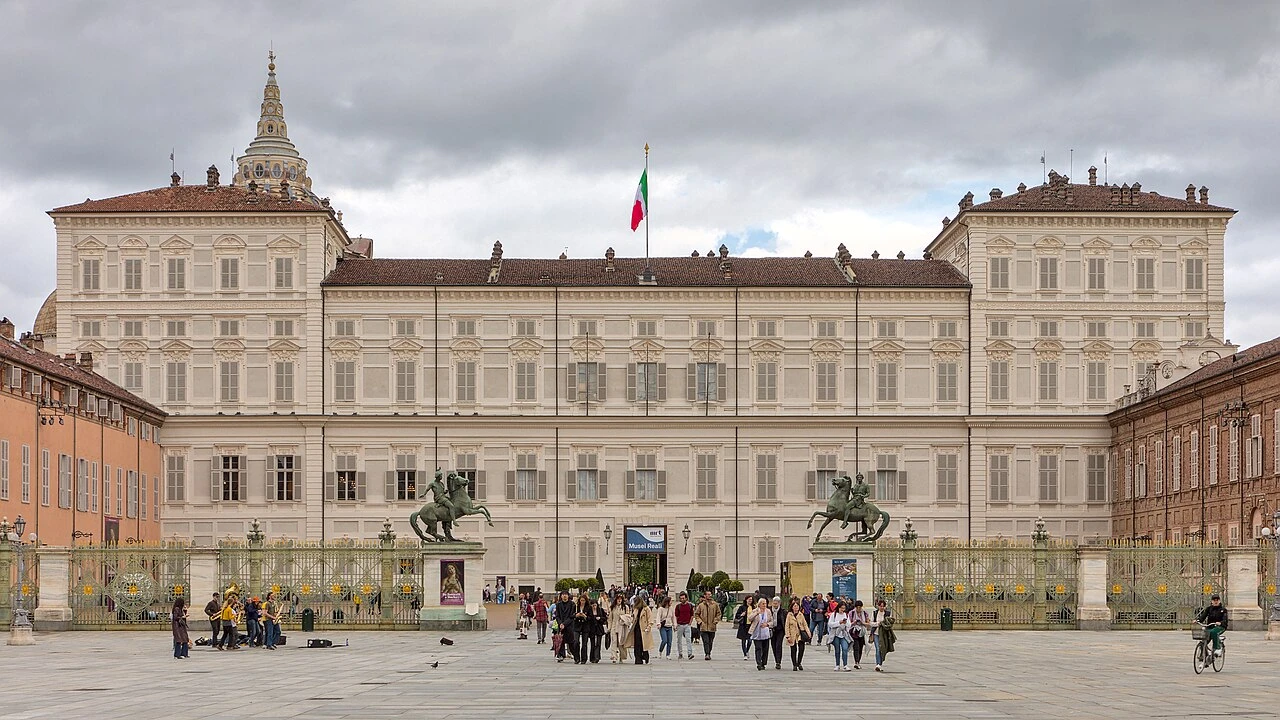
01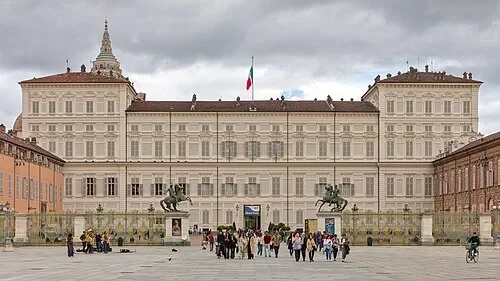 Piazzetta Reale and the Royal GatesRoyal Palace Gate
Welcome to the Royal Palace of Turin, a structure that fundamentally transformed the identity of this city. The massive facade stretches for 107 meters and reaches an average height of 30 meters, presenting a uniform and imposing presence to the public square. Construction of this royal seat began in 1645 under the direction of Regent Christine Marie of France. Her vision for the site was instrumental in shifting Turin's status from a modest provincial town into a sophisticated royal capital. Before this period, the court of Savoy inhabited the adjacent Bishop’s Palace, but the growing power of the dynasty demanded a more monumental setting. The architectural style reflects the transition from early Baroque to a more restrained, classical language. This building was not merely a house for the family; it was a physical manifestation of sovereign power, designed to communicate the legitimacy and longevity of the Savoy line to every visitor who crossed the threshold of the square.
Benjamin Smith · CC BY-SA 4.0
02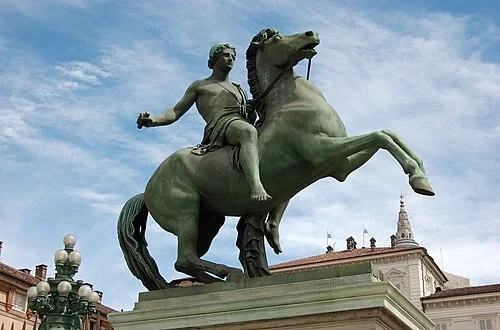 Piazzetta Reale and the Royal GatesEquestrian Statue of Castor
Notice the two bronze equestrian figures flanking the main entrance to the palace. These represent the mythical twin brothers, Castor and Pollux, known collectively as the Dioscuri. In Roman mythology, these figures were celebrated for their skill in horsemanship and were often invoked as protectors. Their presence here at the very threshold of the palace is deeply symbolic, suggesting that the House of Savoy enjoyed divine protection and held a divine right to rule over their lands. Look at the dynamic composition of the figures; the horses are depicted in energetic, rearing poses, capturing a sense of movement and tension. This specific iconography of the horse and rider has been used throughout history to associate monarchs with strength, control, and military prowess. By placing these legendary guardians at the gate, the dynasty signaled to all who entered that they were entering a realm of stability and ancient authority.
Photo: Xadhoomx · CC BY-SA 3.0
03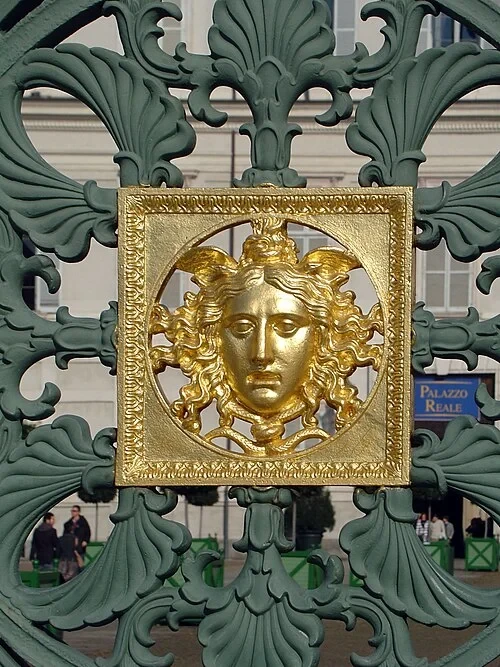 Piazzetta Reale and the Royal GatesMedusa Gate
Look for the gilded head of Medusa woven into the dark ironwork of the palace gates. This feature is a classic example of apotropaic art—a term derived from the Greek word for 'turning away.' In ancient traditions, images of the Medusa, with her petrifying gaze, were placed on doorways and thresholds to protect the inhabitants within by turning enemies to stone or simply warding off bad luck. The bright gold leaf creates a sharp contrast against the dark, heavy iron, making the face of the Gorgon immediately visible to those approaching. While the rest of the gates showcase the elegance of 19th-century metalwork, this central figure connects the palace to much older traditions of magical protection. It serves as a reminder that the entrance to a royal residence was a highly managed border, where every decorative element had a specific role in reinforcing the safety and sanctity of the sovereign family living inside.
Listen in the appPhoto: Anassagora · CC BY 3.0
04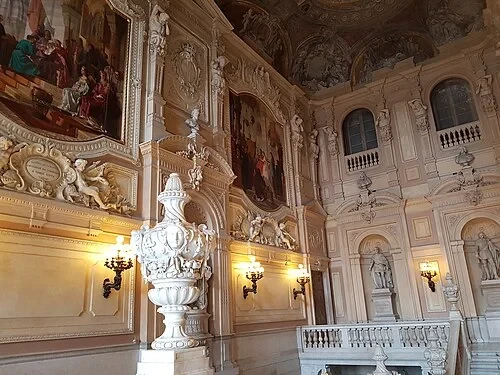 Scalone d'Onore (Grand Staircase of Honor)Grand Staircase of Honor
Moving into the interior, the architectural scale shifts from the public openness of the square to the controlled grandeur of the palace. The Grand Staircase of Honor was specifically designed as a visual prologue to the power of the House of Savoy. In the era of absolute monarchy, a staircase was far more than a functional path between floors; it was a stage for courtly ritual. Visiting ambassadors and nobles would ascend these wide ramps, surrounded by intricate stucco decorations and marble sculptures housed in recessed niches. The sheer volume of the space was intended to make the visitor feel small in comparison to the institution of the monarchy. The light filtering from above highlights the craftsmanship of the plasterwork, which depicts themes of virtue and victory. Every step upward brought a guest closer to the private apartments and the presence of the King, building anticipation through an increasingly opulent environment that reflected the wealth and taste of the court.
Listen in the appPhoto: Ambra75 · CC BY-SA 4.0
05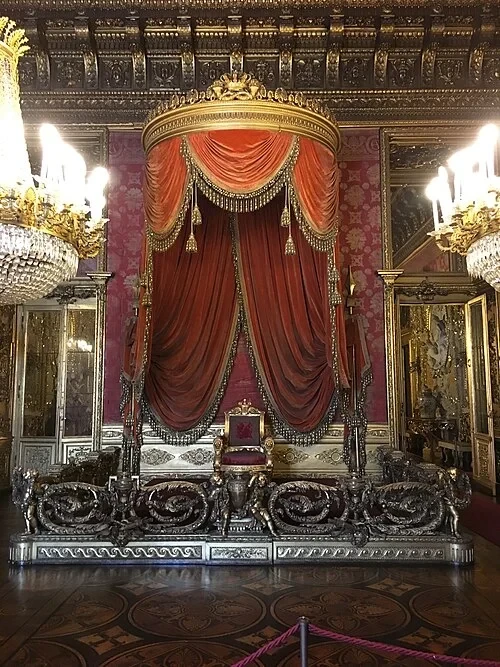 The State Apartments and Throne RoomThrone Room of the Royal Palace of Turin
The Throne Room stands as the political epicenter of the complex, having served as the heart of the Kingdom of Sardinia and later the Kingdom of Italy. The visual elements of sovereignty are concentrated here, most notably in the large velvet canopy and the gilded throne. This environment was carefully staged to create an aura of untouchable authority during audiences with the monarch. While the eye is often drawn upward to the ornate ceiling, pay close attention to the floor beneath you. It features an incredibly complex wood inlay, a hallmark of 18th-century cabinet making. This specific floor is the work of Pietro Piffetti, a master craftsman renowned for his use of rare woods, ivory, and mother-of-pearl. The level of detail in the geometric and floral patterns reflects the extreme luxury that the Savoy family demanded for their most formal spaces. In this room, the ruler was not just a person, but the living representative of a state, framed by the finest artistry the kingdom could produce.
Listen in the appPhoto: Manuelarosi · CC BY-SA 4.0
06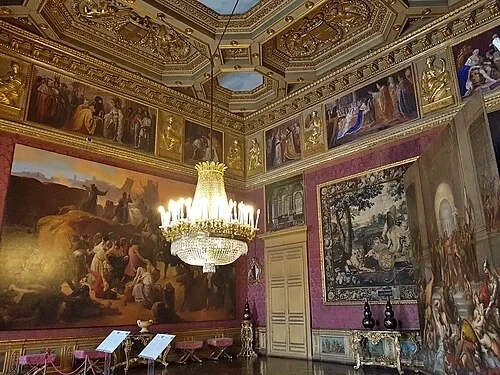 The State Apartments and Throne RoomHall of the Corazzieri
The Hall of the Corazzieri functioned as an anteroom where the Cuirassiers, the King’s elite horse guards, would stand watch. Because this was a primary waiting area for those seeking an audience with the sovereign, it was used as a prime location for royal propaganda. The walls are covered with massive tapestries and narrative paintings that illustrate the military victories and historical lineage of the House of Savoy. These artworks were not chosen for aesthetic pleasure alone; they served to remind everyone in the room of the family's long history of leadership and their successes on the battlefield. The scale of the narratives is deliberately overwhelming, ensuring that the history of the dynasty was the dominant feature of the space. From portraits of armored ancestors to scenes of pivotal battles, the room functioned as a visual history book. This carefully curated environment reinforced the idea that the current monarch’s power was built upon centuries of martial excellence and ancestral duty.
Listen in the appPhoto: Ambra75 · CC BY-SA 4.0
07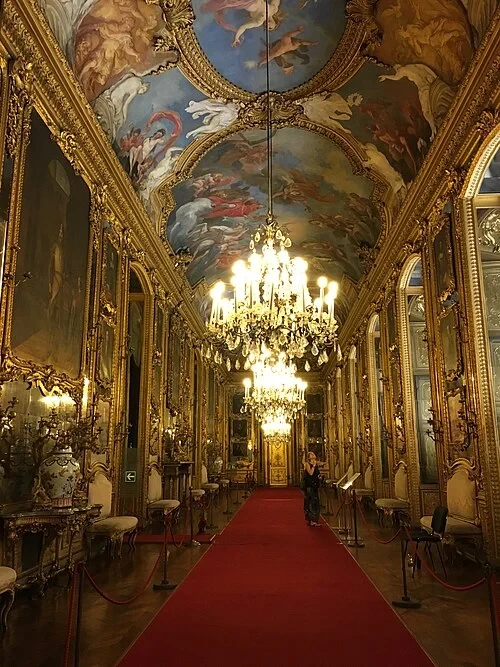 Galleria del DanielDaniel's Gallery
This stunning space was the Savoy response to the famous Hall of Mirrors at Versailles. The room is a masterclass in the Baroque use of light and illusion to create a feeling of infinite space. Look up at the ceiling to see the frescoes by Daniel Seiter, which utilize a technique known as quadratura. This architectural painting style uses forced perspective to make the ceiling appear as though it is opening up to the sky, populated by figures that seem to float in a three-dimensional heavens. The effect is further amplified by the sequence of large mirrors and extensive gold leaf that covers nearly every surface. Under the flickering light of candles in the past, the reflections and the gilded details would have created a shimmering, immersive environment that blurred the boundaries of the room. This gallery served as a prestigious setting for court festivities and walks, demonstrating that the Savoy court was as culturally sophisticated and fashionable as any other in Europe.
Listen in the appPhoto: Manuelarosi · CC BY-SA 4.0
08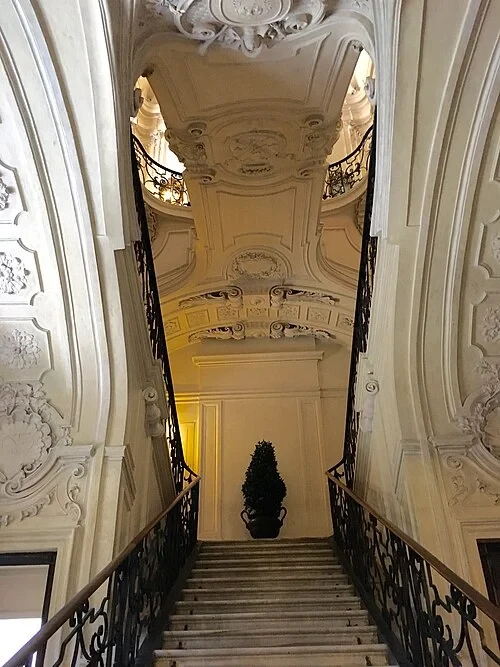 Scala delle Forbici (Scissors Staircase)Scissors Staircase
The Scissors Staircase is one of the most brilliant architectural achievements of Filippo Juvarra, the master architect of 18th-century Turin. When Juvarra was tasked with connecting the royal apartments to the higher levels, he faced a massive structural problem: the new staircase had to be installed over a series of pre-existing rooms that had fragile wooden floors. To solve this, Juvarra engineered a system of light-filled ramps and innovative weight distribution that diverted the pressure onto the more solid surrounding walls. The result is a structure that feels remarkably light and airy, despite being made of stone. The use of large windows and white stucco work enhances the feeling of weightlessness as you ascend. It was a radical departure from the heavy, dark stairwells common in earlier periods. This staircase demonstrates how Baroque architecture moved beyond mere decoration into the realm of complex engineering, using light and geometry to overcome physical limitations and create a space that feels suspended in the air.
Listen in the appPhoto: Manuelarosi · CC BY-SA 3.0
09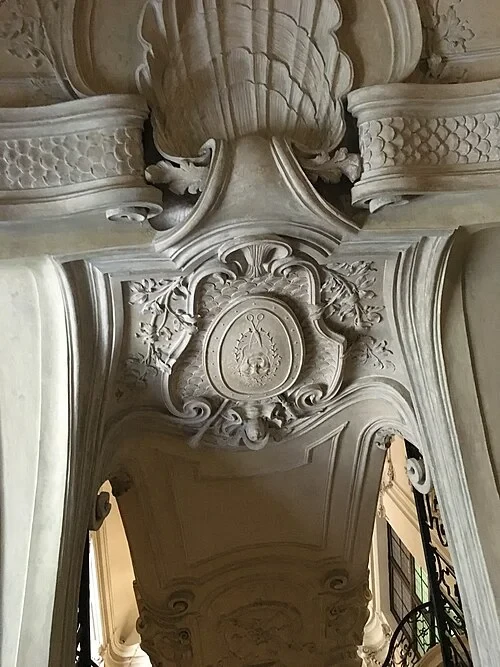 Scala delle Forbici (Scissors Staircase)Scissors Motif
While admiring the graceful curves of the staircase, look closely at the stucco decorations to find a small, curious detail: a pair of scissors. This visual pun is the source of the name 'Scala delle Forbici,' or the Scissors Staircase. Local legend suggests that architect Filippo Juvarra added this detail as a silent rebuttal to his contemporary critics at court. These detractors claimed that Juvarra’s design was impossible and that by 'cutting' through the existing structure of the palace to fit his new stairs, he would cause the entire building to collapse. By hiding a pair of scissors in the very plasterwork of the completed, stable structure, Juvarra had the final laugh, mocking the short-sightedness of those who doubted his engineering genius. It is a rare moment of personal humor in a setting usually dominated by rigid formality. The scissors remain a permanent reminder of the architect's confidence in his own revolutionary methods and his ability to outmaneuver his rivals.
Listen in the appPhoto: Manuelarosi · CC BY-SA 3.0
10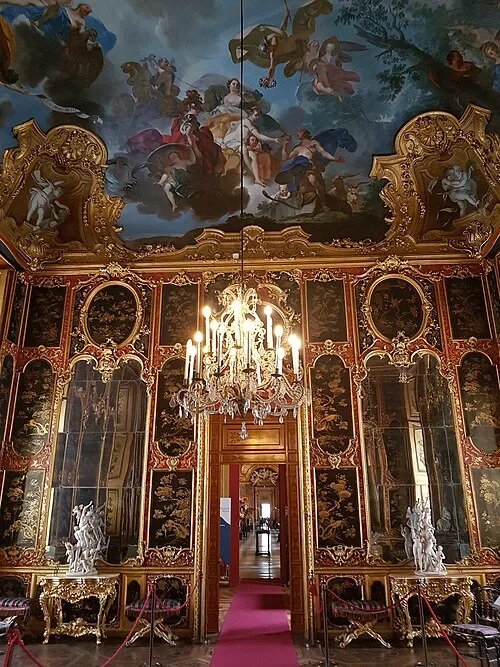 Gabinetto Cinese (Chinese Cabinet)Chinese Cabinet of the Royal Palace of Turin
This room is a perfect example of Chinoiserie, a decorative style that swept through European royal courts in the 1700s. It reflects an era when the 'Orient' was seen as a place of exotic mystery and extreme luxury. The walls are covered in lacquered wood panels featuring detailed scenes of landscapes, figures, and birds. Some of these panels were genuine imports brought over from East Asia at great expense, while others were clever local imitations created by Italian artisans who had mastered the lacquering technique. Notice the sharp contrast between the dark, moody background of the panels and the heavy, bright gold gilding that frames them. This combination was essential to the high Baroque style, which valued drama and the display of wealth. While the subject matter is Eastern, the way the room is structured and ornamented is entirely European, showing how the Savoy court integrated global influences into their own distinct aesthetic of power and prestige.
Listen in the appPhoto: Ambra75 · CC BY-SA 4.0
Palazzo Reale di Torino
Frequently asked questions
How much does the guide cost?
Free app download. Listed guide price: $0.99. Guide price shown in the app. Audio guide only. Venue admission is separate.
Can I listen without internet?
Yes. Download the guide’s audio, images, and maps in the app before your visit. Your downloaded content is then available offline.
Can I listen in my language?
Stanza supports 15 languages. Check the app for the languages available for this guide.
Do I need to follow a schedule?
No. This is a self-guided experience. Choose your stops, pause whenever you like, and return to a story at your own pace.
At your own pace
Explore Palazzo Reale di Torino.
Download Stanza, then search for “Palazzo Reale di Torino”.
Free app download · Guide price shown in the app
Keep exploring
Nearby audio guides
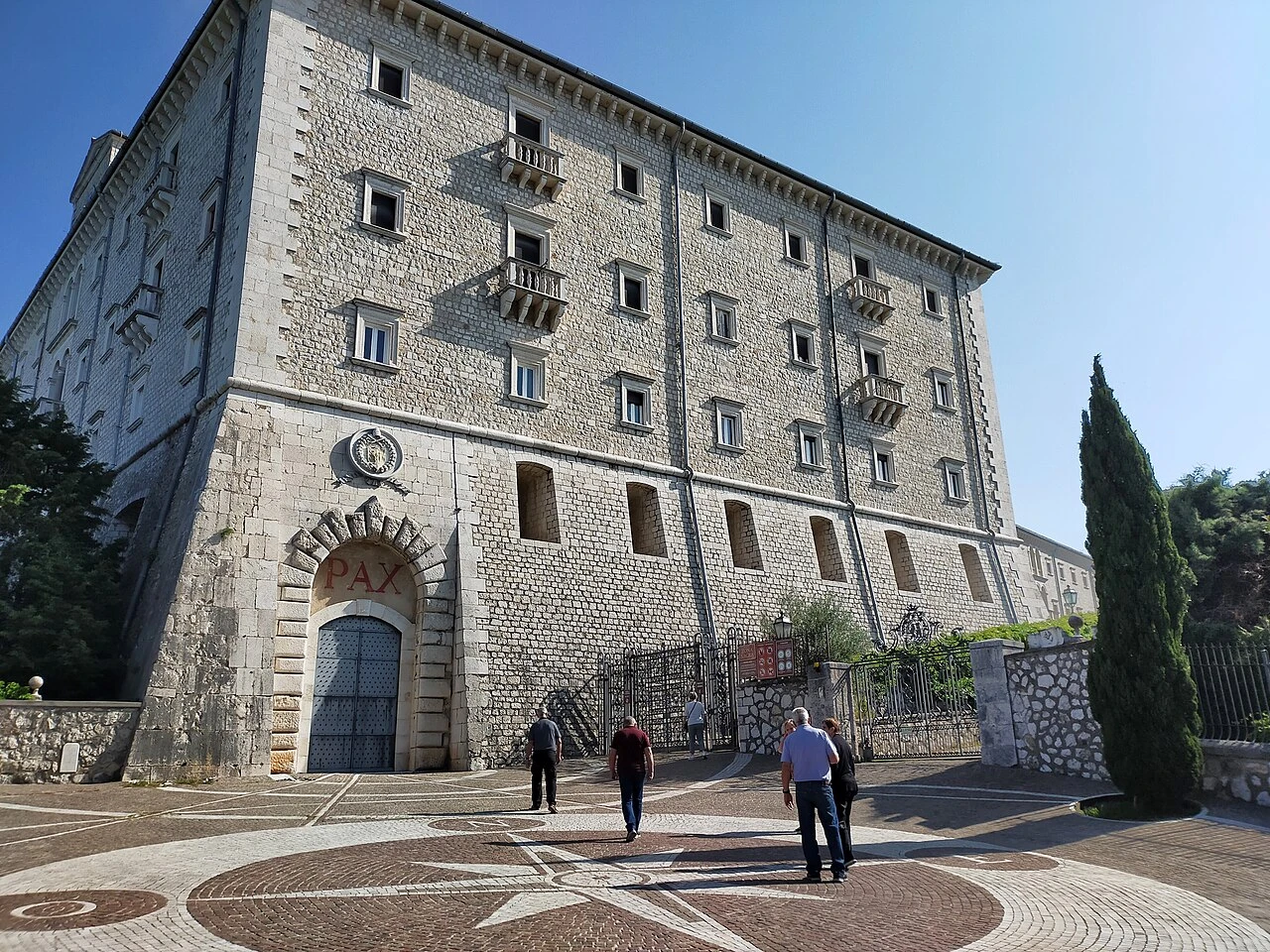
Cassino
Abbey of Monte Cassino
Content & sources
Photo: Marica Massaro · CC BY-SA 4.0
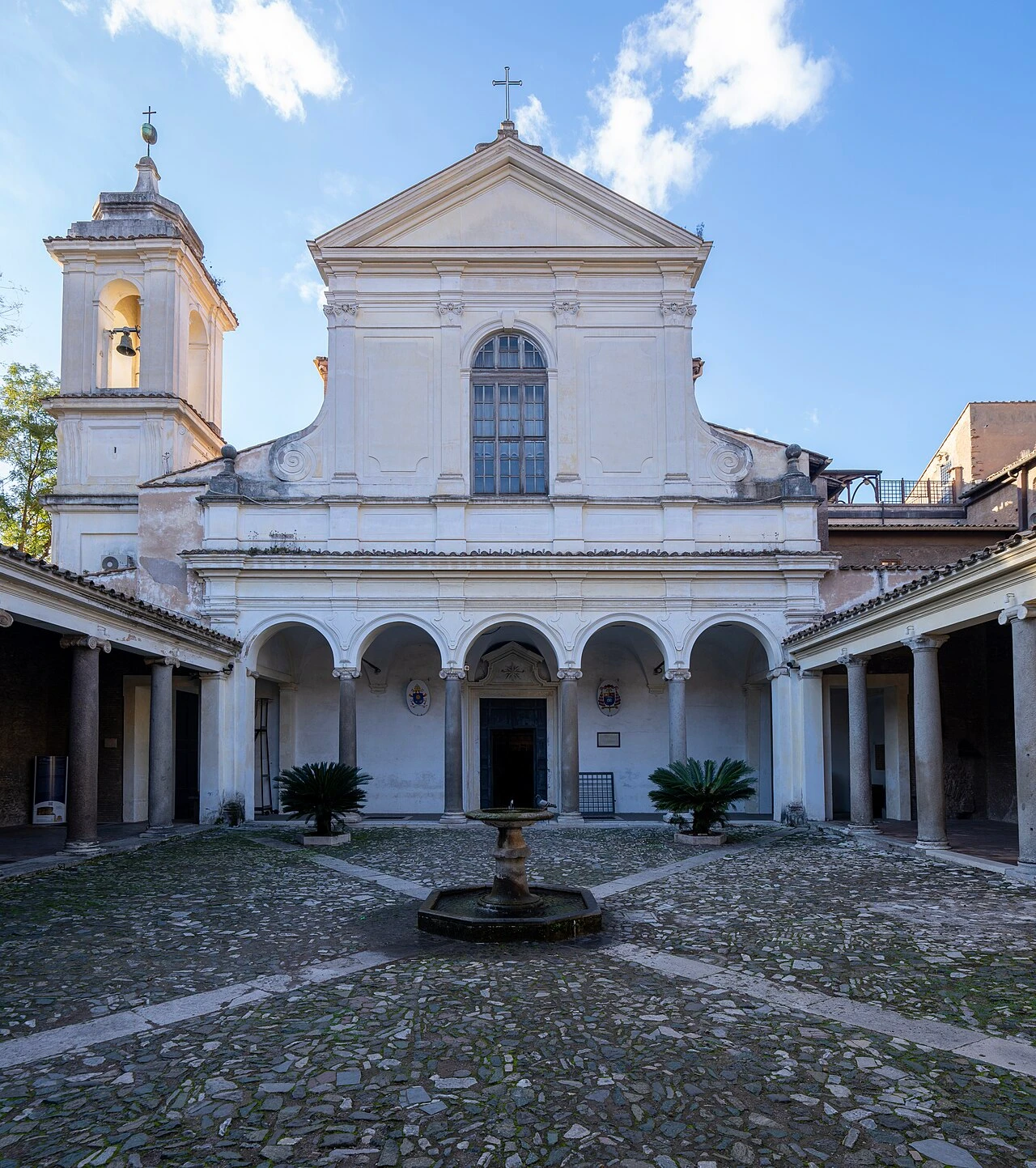
Rome
Basilica di San Clemente
Content & sources
Photo: Labicanense · CC BY-SA 4.0
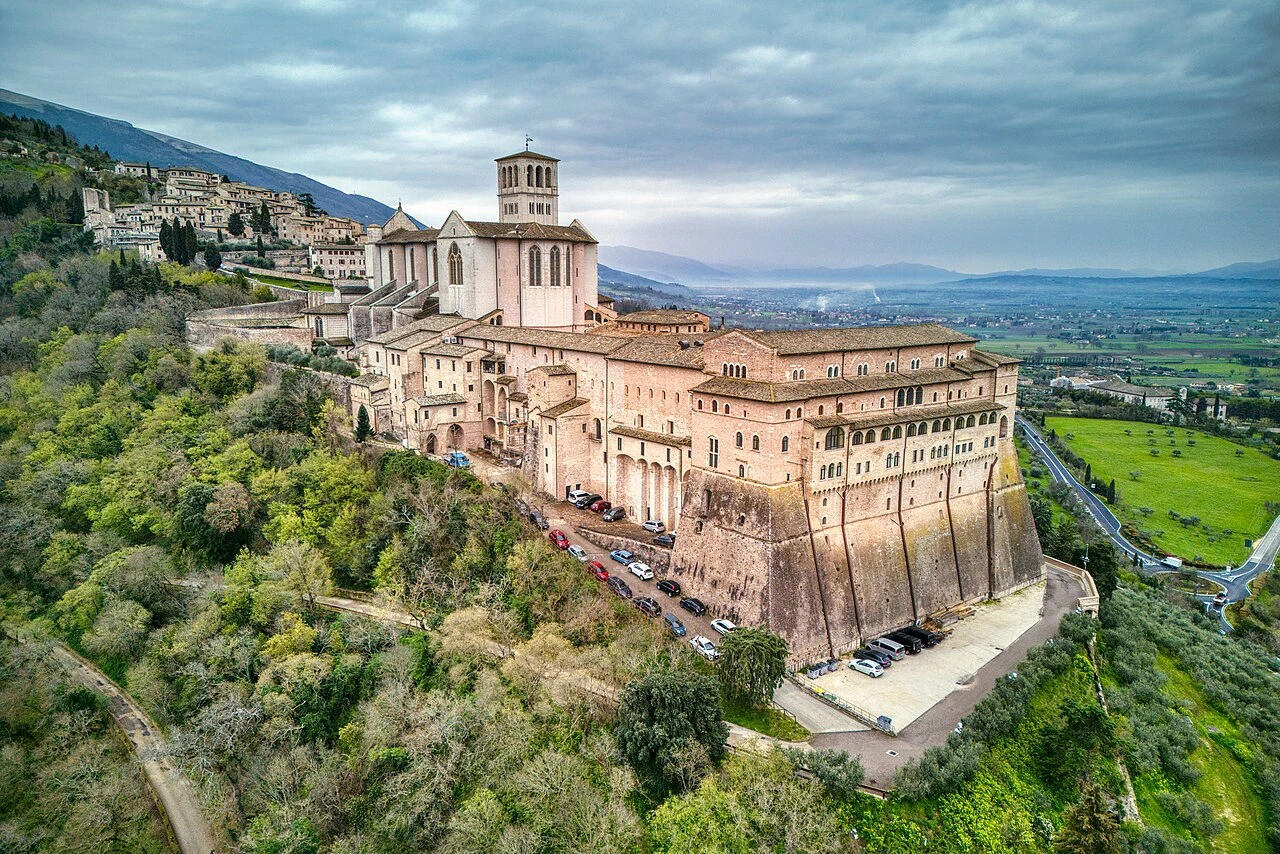
Assisi
Basilica di San Francesco
Content & sources
Hagai Agmon-Snir حچاي اچمون-سنير חגי אגמון-שניר · CC BY-SA 4.0
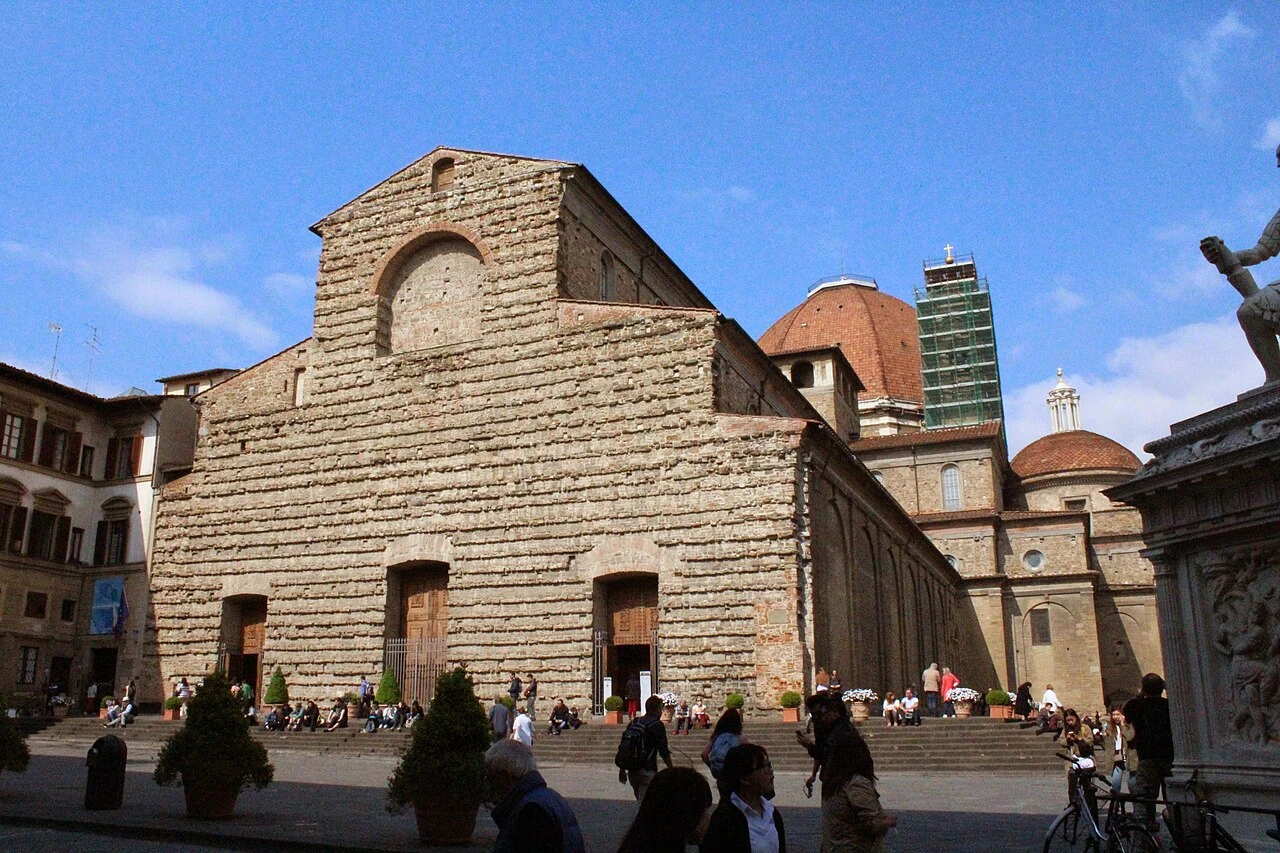
Florence
Basilica di San Lorenzo
Content & sources
Nelson Pérez · CC BY-SA 3.0