Stanza · Audio guide
伊勢神宮 Audio Guide
A place to remember. A story to take with you.
Ise Shrine is a Shinto shrine complex located in Ise, Mie Prefecture, Japan. It is dedicated to the solar goddess Amaterasu Ōmikami and the grain goddess Toyouke-hime.
Download Stanza, then search for “伊勢神宮”.
About the tour
One guide. Your kind of visit.
Ise Shrine is a Shinto shrine complex located in Ise, Mie Prefecture, Japan. It is dedicated to the solar goddess Amaterasu Ōmikami and the grain goddess Toyouke-hime.
Ready when you are.
- 01Get the free Stanza app.
iOS & Android
- 02Find your guide.
“伊勢神宮”
- 03Download before you go.
Works offline
Audio guide / 29 narrated stops
Inside the guide
Get to know a few of the stories before you go. Open a stop to read more.
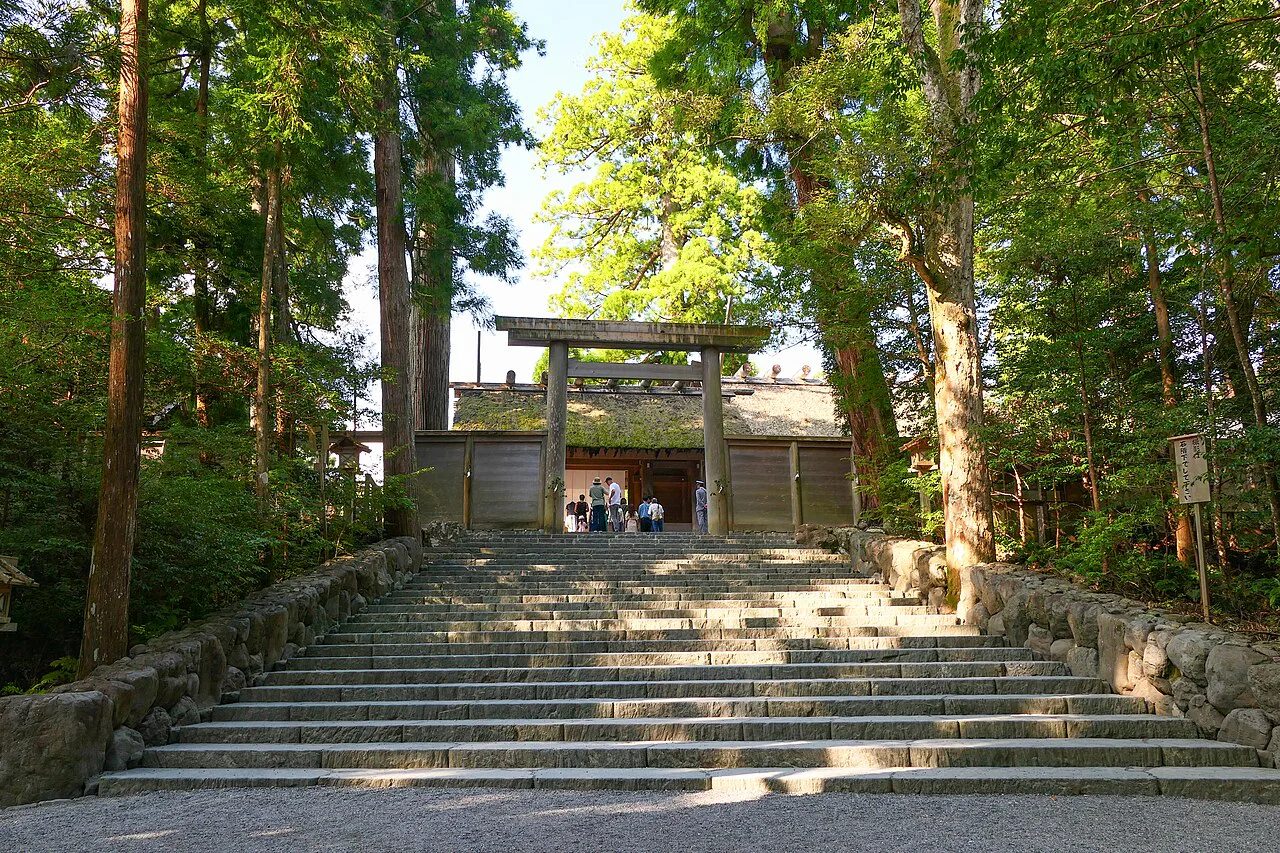
01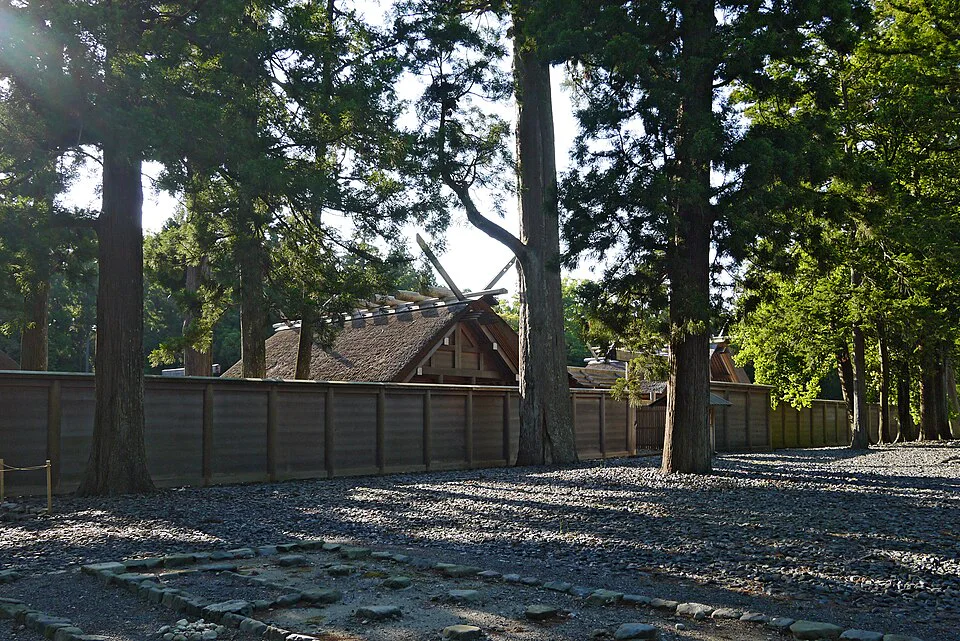 Toyōke Daijingū (Gekū Main Sanctuary)
Legend says the sun goddess Amaterasu came to Emperor Yūryaku in a dream. She said she was unable to get food, and asked him to bring Toyouke, the grain goddess, from Tanba to help her. Gekū, the Outer Shrine, was founded in answer to that request. The shrine itself gives its founding as about fifteen hundred years ago, in the fifth century. Its daily work is a meal. Each dawn, a food offering called the Higoto Asayū Omikesai is made to Amaterasu in a hall called the Mikeden. That meal has been held every day since the founding.
Photo: Oilstreet · CC BY 2.5
02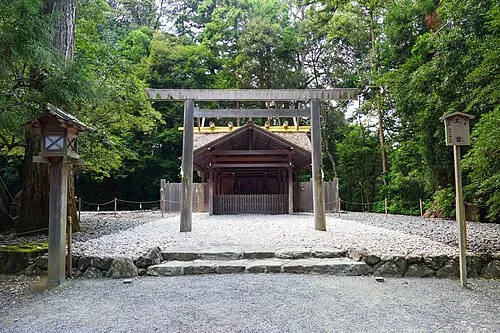 Tsuchi-no-miya Shrine
Tsuchi-no-miya
Tsuchi-no-miya is one of many shrines spread around the two main sanctuaries at Ise. Around Ise there are a hundred and twenty-three more shrines linked to the two main ones. Thirty-two of those belong to Gekū, the Outer Shrine, and this one is among them. It honours Ōtsuchi-no-mioya-no-kami, a deity said to look after the land of the Gekū precinct. Shrines of its kind inside the precinct usually face south and have no torii gate. This one faces east, and it does have a torii. Soon after it was given the rank of a separate shrine, some people asked for it to be turned to face south. It was left as it was.
Photo: MaedaAkihiko · CC0
03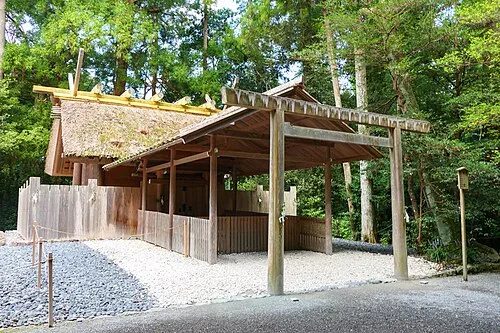 Kaze-no-miya Shrine
Kaze-no-miya (Gekū)
Two wind deities, Shinatsuhiko and Shinatobe, share this one building. They are deities of wind and rain, both essential to farming. The same two also have a shrine inside Naikū, the Inner Shrine, called Kazahinomi. Here the building stands on wooden posts, with a thatched roof and an open covered porch on one side. The tips of the roof ridge are gold-coloured.
Listen in the appPhoto: MaedaAkihiko · CC0
04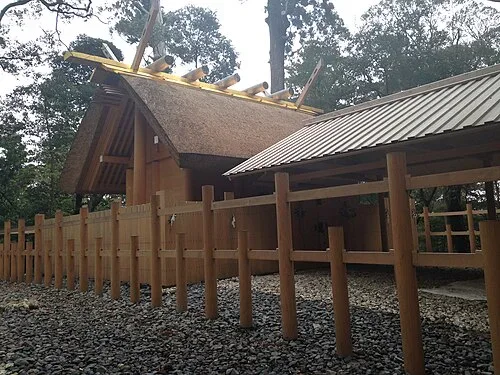 Taka-no-miya Shrine
Taka-no-miya (Gekū)
Taka-no-miya is one of four separate shrines belonging to Gekū, and it ranks highest of the four. It holds the rough, active spirit of Toyouke, the grain goddess. The building stands behind a single row of wooden posts and a low fence. Between the fence and the building, the ground is covered with gravel. The main sanctuary of Gekū is enclosed by four rows of fences. Worshippers may approach only as far as the first gate.
Listen in the appPhoto: そらみみ · CC BY-SA 3.0
05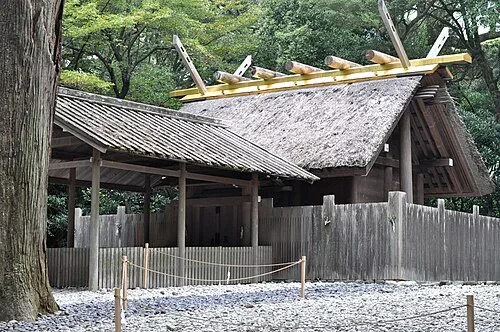 Tsukiyomi-no-miya Shrine (Gekū)
Tsukiyomi-no-miya (Gekū)
This Outer Shrine honours the moon god Tsukiyomi. In the medieval period, priests of the Outer Shrine made a bold claim. The Watarai priests wanted Toyouke raised to a rank equal to Amaterasu, not kept beneath her. To do it, they linked Toyouke with a creator deity of water. Then they set out a series of matching opposites. Water and fire. Yin and yang. Sun and moon. Amaterasu is the sun, and her brother Tsukiyomi is the moon. From these pairs, the priests argued that the two shrines had been founded together, with no difference between them. They summed it up as nikū ikkō, meaning the two shrines, one light. The argument drew on a set of texts called the Shintō gobusho, the Five Books of Shinto. Deguchi Nobuyoshi was one of the scholars who expanded them in the Edo period.
Listen in the appPhoto: Ocdp · CC BY-SA 3.0
06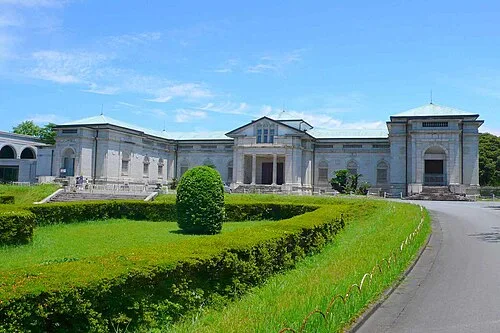 Jingu Museum (Jingū Chokokan)
Jingu Museum (Jingū Chōkokan)
This is the Jingū Chōkokan, the museum of Ise Shrine. One chapter of the shrine's history is its chief priestess, who from the late seventh century until the fourteenth was a member of the imperial family. She was called a Saiō. According to the Man'yōshū, an old collection of poems, the first Saiō was Princess Ōku, a daughter of Emperor Tenmu. The Tale of Genji mentions the Saiō in several chapters, and so does The Tales of Ise. The system came to an end during the turmoil of the Nanboku-chō period, when two rival courts competed for power. Since State Shinto was disestablished during the Occupation of Japan, the two top priestly posts have been held by former members of the imperial family or their descendants.
Listen in the appPhoto: N yotarou · CC BY 2.5
07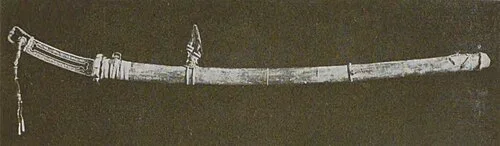 Jingu Museum (Jingū Chokokan)
Kenuki-gata Tachi (Sword Photograph)
A long blade, slightly curved, is pale in colour. At one end, a hilt is visible, with a cord hanging from it. Its name is kenuki-gata tachi. We do not know its date, its maker, or how it came to be linked with Ise.
Listen in the appUnknown author · Public domain
08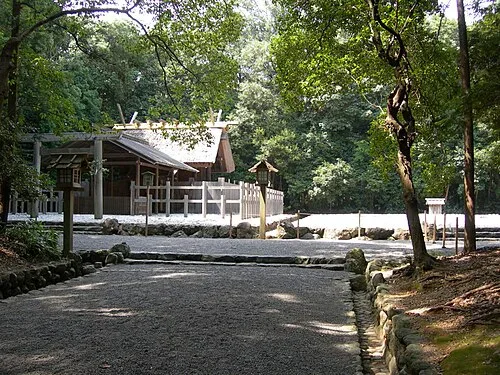 Yamatohime-no-miya Shrine
Yamatohime-no-miya
According to the Nihon Shoki, about two thousand years ago, a princess named Yamatohime set out to find a permanent home for the sun goddess Amaterasu. She was a daughter of Emperor Suinin, and she left Mount Miwa, in what is now Nara Prefecture. For about twenty years she wandered through Ōmi and Mino, searching. Her search brought her to Ise. Amaterasu is said to have spoken there: 'Ise is a secluded and pleasant land. In this land I wish to dwell.' At the village of Uji-tachi, Yamatohime set up fifty bells to mark the ground as sacred to Amaterasu. That is why the river is called the Isuzu, or fifty bells.
Listen in the appNo machine-readable author provided. N yotarou assumed (based on copyright claims). · CC BY 2.5
09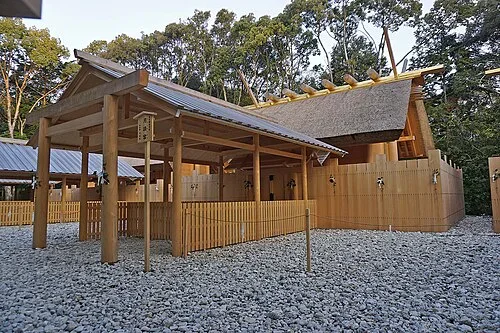 Tsukiyomi-no-Miya Shrine (Naikū Precinct)
Tsukiyomi-no-miya (Naikū Precinct)
Tsukiyomi has a precinct of his own outside Naikū, with his main sanctuary and three more beside it. Those three honour the rough spirit of Tsukiyomi, and the creator deities Izanagi and Izanami. A dark myth explains why the sun and moon keep apart. A food goddess, sometimes identified with Toyouke, was killed. The Nihon Shoki names Tsukiyomi as the killer, and Amaterasu was so unwilling to go near him that the sun and moon ended up on opposite sides of the sky. Other accounts name Susanoo. When the sanctuary for the rough spirit was taken down in 2014, its old timber went to the Yakumo Shrine in Ashikaga, Tochigi Prefecture. That shrine had lost its main hall to fire in 2012.
Listen in the appz tanuki · CC BY 3.0
10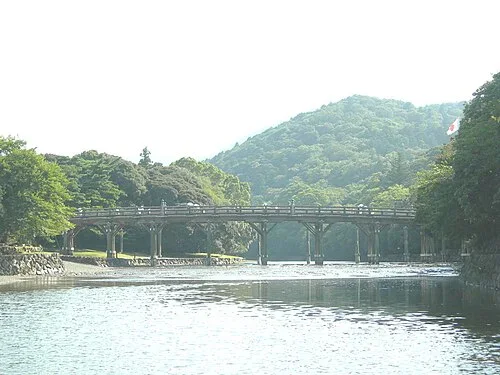 Uji Bridge
The Uji Bridge is taken down and built again every twenty years, just as the main shrines of Naikū are. The renewal is called the Shikinen Sengū. The belief behind it is called tokowaka, the idea that renewal keeps divine prestige strong. The rebuilding also passes building skills from one generation to the next. Nobody knows for certain why the cycle began. Emperor Tenmu is said to have set up the twenty-year cycle, and his wife, Empress Jitō, carried out the first rebuilding in 690. The planks are fifteen centimetres thick these days. About four million visitors cross the bridge each year, and the planks wear down quickly, by about six centimetres in one cycle. After the Second World War, the main rebuilding was postponed. The bridge's decay was too severe to wait, so the bridge was rebuilt alone in 1949. Since then, it has been rebuilt four years before the shrines.
Listen in the appNo machine-readable author provided. N yotarou assumed (based on copyright claims). · CC BY 2.5
- 11
Uji Bridge Timber Pier (Detail)
How the carpenters who build this bridge are ranked by experience, and why power tools are banned here.
- 12
Aedohashihime Shrine
A small shrine for the guardian of the Uji Bridge, just outside the Inner Shrine.
- 13
Oyamazumi Shrine
The rite that once opened every rebuilding, and a single central post set in stone-strewn ground.
- 14
Koyasu Shrine
The myth of a goddess who gave birth amid fire, and the small shrine whose prayers for children grow from it.
- 15
First Torii (Naikū)
A plain, unpainted gate, and the line where Naikū's sacred ground begins.
- 16
Temizusha
Before any prayer, visitors rinse their hands and mouths here, and the priests' purification lasts much longer.
- 17
Miumaya
A plain timber stable with an open front, and a name that opens with a word of respect.
- 18
Second Torii (Naikū)
A pilgrimage so popular in the Edo period that old counts put the crowds in the millions.
- 19
Kazahi Prayer Shrine (Kazahinomi-no-miya)
The Ise year opens with a prayer for a good harvest, and later a rite asks the sky for fair weather.
- 20
Takimatsurinokami
A shrine where a sacred stone sits open to the sky, and even those who serve there cannot say why it has no hall.
- 21
Kaguraden
A richly decorated hall in a shrine known for austere simplicity, with blue hangings and gold ornaments.
- 22
Yuki-no-mikura
A small plank building with a locked door, at the modest end of Ise's network of shrines.
- 23
Minie-chōsha (Offering Preparation Hall)
A broad stone stair climbs through trees toward a hall named for offerings, though the hall is not in view.
- 24
Kōtai Jingū (Naikū Main Sanctuary)
The inner sanctuary of the sun goddess, where a mirror said to come from the gods stays out of sight.
- 25
Itagaki Minami-gomon (Main Sanctuary Gate)
Ise Shrine is really a whole network of shrines, built around two main precincts.
- 26
Ise Shrine Main Sanctuary Precinct (Wider View)
Every twenty years these buildings are rebuilt on a neighbouring site, and the next rebuild is already scheduled.
- 27
Gehei-den
A building style that no other shrine may use, and whose name means only one.
- 28
Mishine-no-mikura
A storehouse for sacred rice, whose raised, thatched form is said to copy early rice granaries.
- 29
Aramatsuri-no-miya
Amaterasu's rough, active spirit has a shrine of its own, and a stone on the approach must not be stepped on.
伊勢神宮
Frequently asked questions
How much does the guide cost?
Free app download. Listed guide price: $2.99. Guide price shown in the app. Audio guide only. Venue admission is separate.
Can I listen without internet?
Yes. Download the guide’s audio, images, and maps in the app before your visit. Your downloaded content is then available offline.
Can I listen in my language?
This audio guide is available in 15 languages, including English.
Do I need to follow a schedule?
No. This is a self-guided experience. Choose your stops, pause whenever you like, and return to a story at your own pace.
At your own pace
Explore 伊勢神宮.
Download Stanza, then search for “伊勢神宮”.
Free app download · Guide price shown in the app
Keep exploring
Nearby audio guides
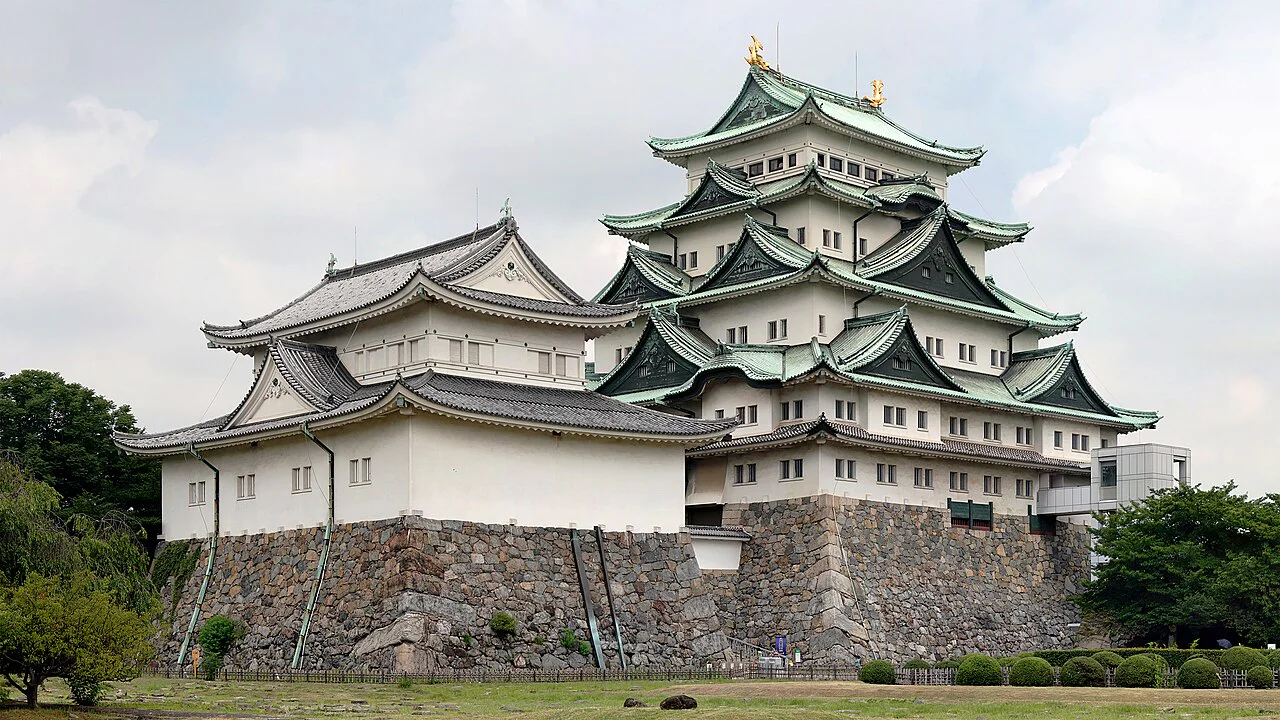
Nagoya · 83 km
名古屋城
Content & sources
Base64 · CC BY-SA 3.0
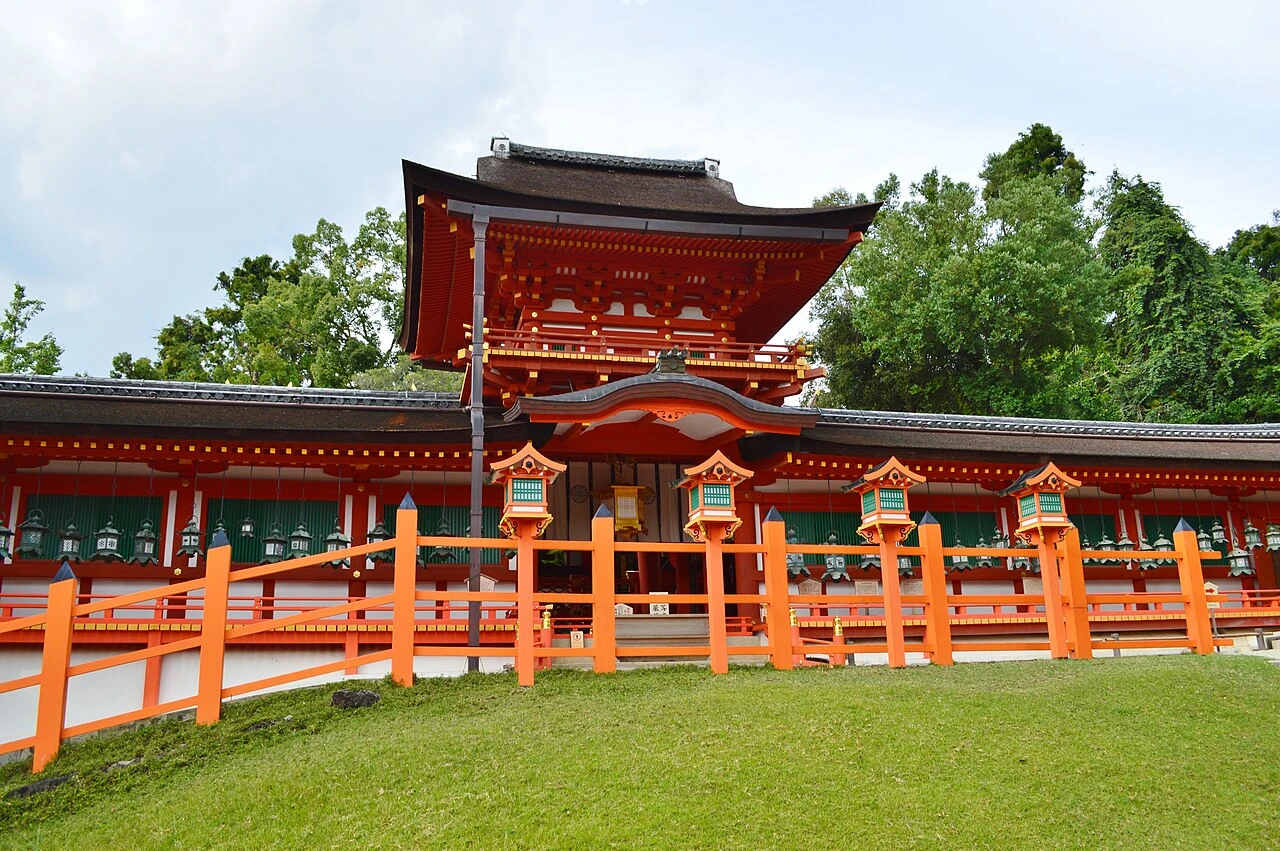
Nara · 84 km
Kasuga-taisha
Content & sources
Photo: Saigen Jiro · CC0
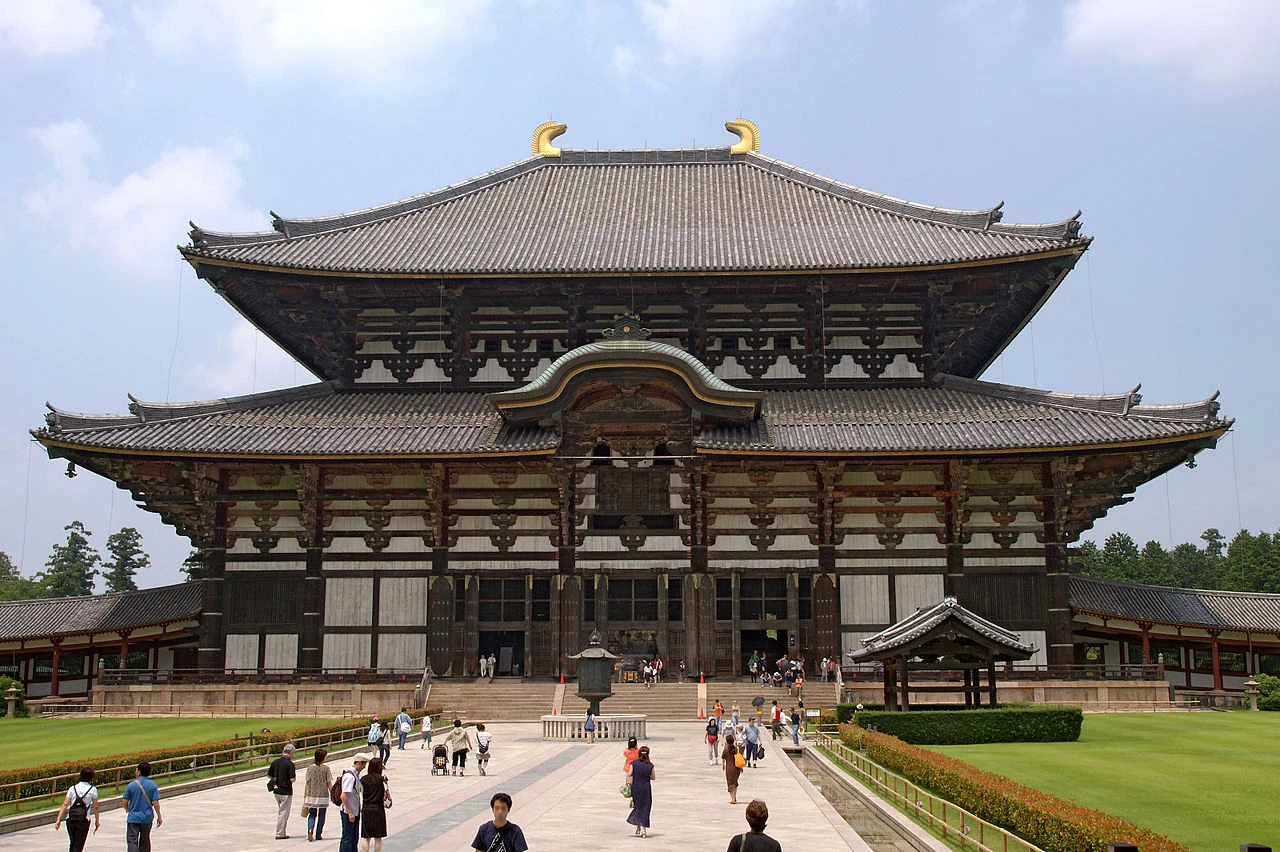
Nara · 85 km
Tōdai-ji Temple
Content & sources
Photo: 663highland · CC BY 2.5
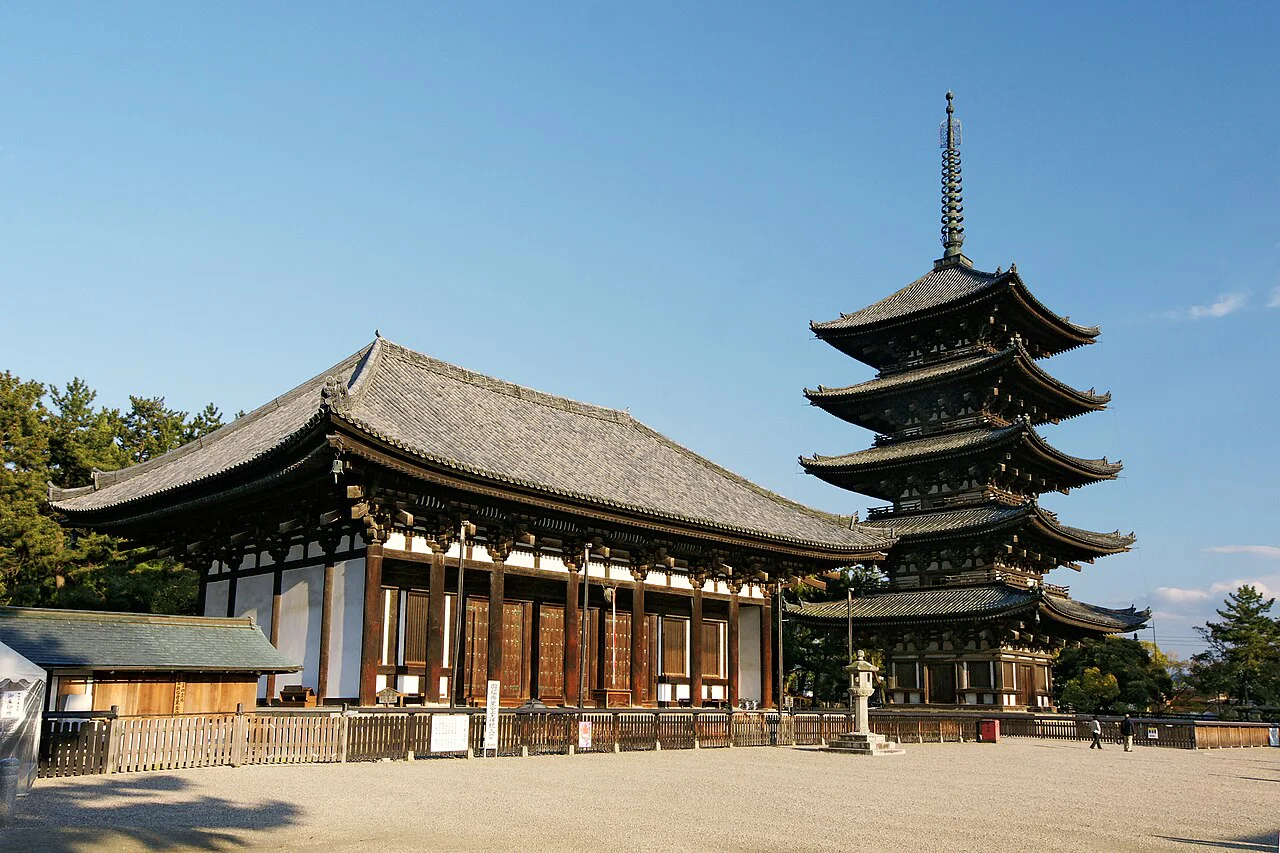
Nara · 86 km
興福寺
Content & sources
Photo: 663highland · CC BY-SA 4.0