Languages
15東大寺 Audio Guide
東大寺 is an archaeological site in Nara, Japan. Explore it with Stanza's guided offline audio tour — narrated in 15 languages.
Quick Facts
32
Stops
15
Languages
100%
Offline
📍 Nara, Japan · 34.6892°N, 135.8397°E
About 東大寺
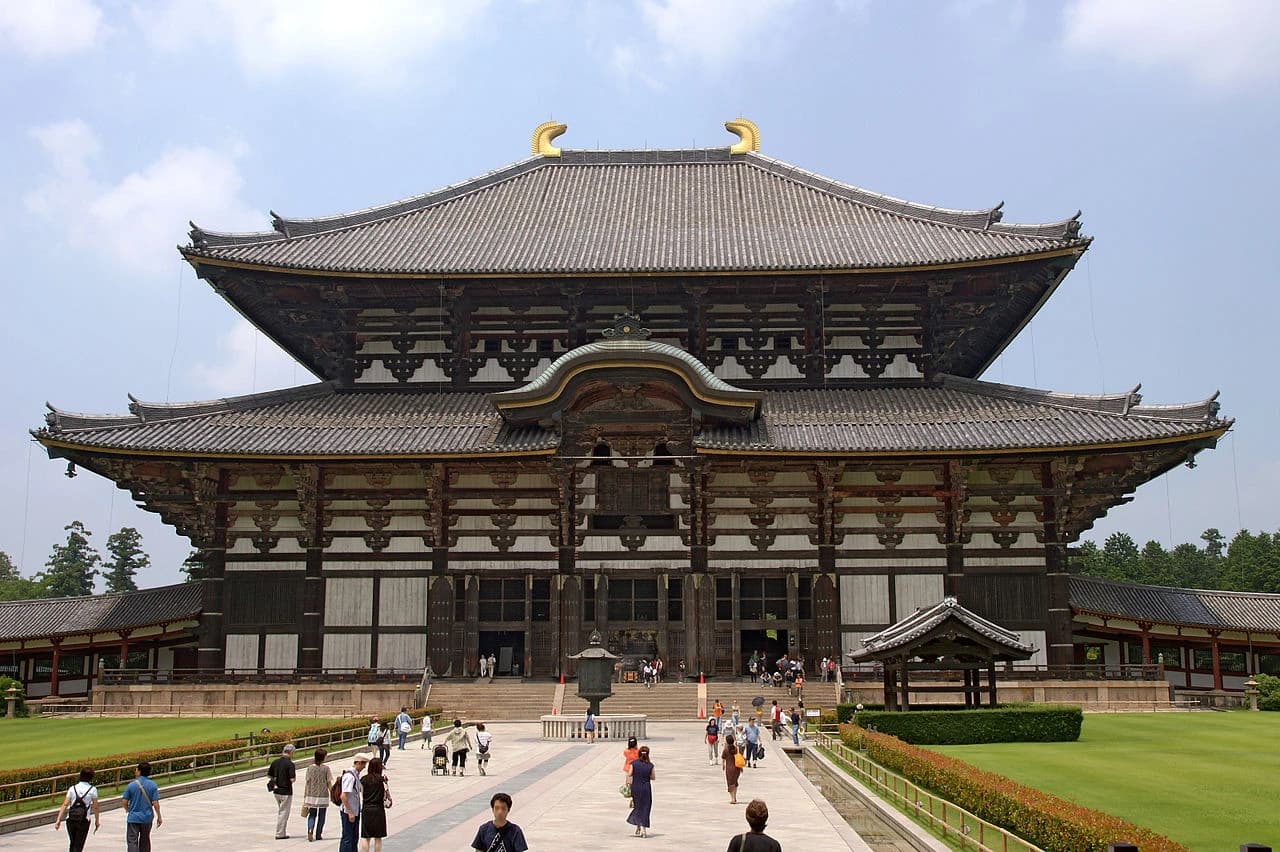
Tōdai-ji is a prominent Buddhist temple complex located in Nara, Japan, and a UNESCO World Heritage Site. It is home to the world's largest bronze statue of the Buddha Vairocana, and its main hall, the Daibutsu-den, was historically the world's largest wooden building.
This self-guided audio tour features 32 narrated stops organized across 9 sections. As a temple, 東大寺 offers a unique cultural experience in the heart of Nara, Japan.
The Stanza audio guide is available in 15 languages and works entirely offline — download the complete tour including audio narration, maps, and images before your visit. As you walk through 東大寺, GPS-triggered narration plays automatically at each point of interest.
Last updated:
What you will hear
Nandaimon (Great South Gate)
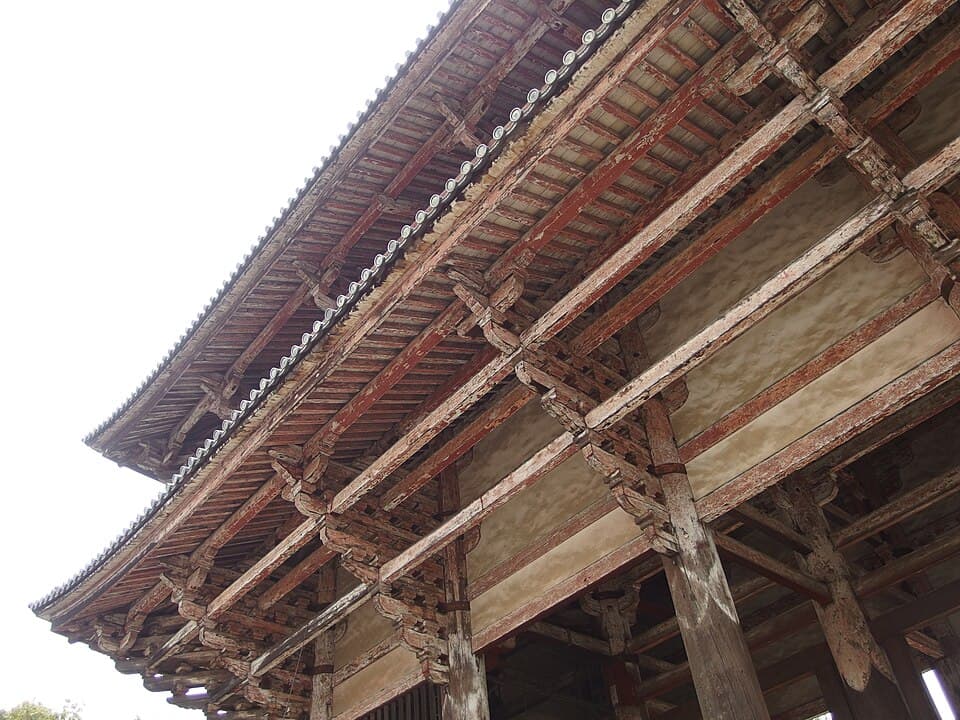
This massive 12th-century gate is the grand entrance to Tōdai-ji and houses two of Japan's most famous wooden guardian statues.
Medieval Beam Engineering
Looking up beneath the eaves of the gate, you can see the complex 'inserted tie-beam' technique that gives the structure its strength. In traditional architecture, horizontal beams usually rest on top of vertical pillars. However, in this 'Great Buddha Style,' the thick horizontal beams pass directly through the main pillars. This creates a flexible, interlocking skeleton that can move and sway during an earthquake without collapsing. It is an early and highly effective form of seismic engineering that has allowed this structure to survive for centuries in a tectonically active region. Notice the appearance of the wood itself. Unlike the bright red vermillion often seen in earlier Buddhist architecture, these beams remain unpainted and weathered. This reflects the aesthetic of the 12th-century reconstruction, which emphasized the raw power and natural texture of the timber over decorative finishes. The repetitive, stacked brackets that support the overhanging roof are not just decorative; they distribute the immense weight of the tile roof evenly down through the pillars. This visual density of timber creates a sense of immense weight and stability, ensuring that the gate remains a permanent landmark in Nara’s landscape.
Tōdai-ji Culture Center
A modern museum housing many of the temple's smaller treasures and providing historical context for the site's construction.
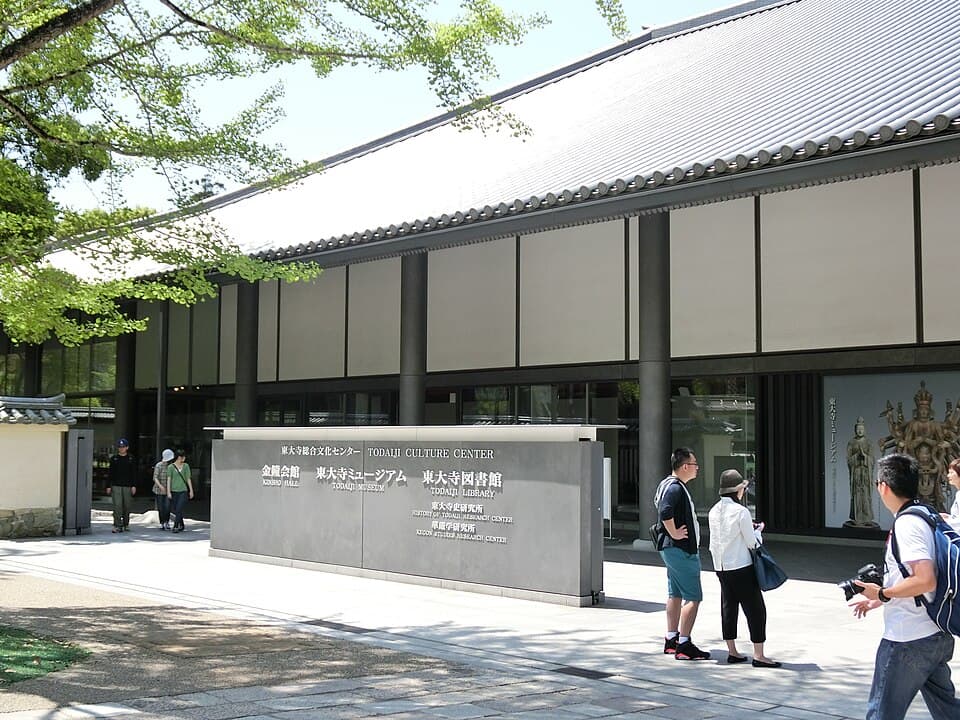
Todai-ji Cultural Center
Before heading deeper into the temple grounds, this modern facility offers a chance to see the history of Tōdai-ji on a more intimate scale. The Cultural Center serves as a museum for many of the temple's most precious and fragile artifacts that cannot be kept in the open-air halls. Inside, you can find the original bronze relief carvings that once adorned the 8th-century octagonal lantern, showing the incredible skill of early metalworkers. The center also preserves a significant collection of Silk Road treasures. During the Nara period, Japan was the eastern terminus of this vast trade network, and the temple became a repository for exotic goods, glassware, and musical instruments from as far away as Persia and Central Asia. While the main halls are defined by their staggering size, the objects here allow you to appreciate the fine details of temple life and the global connections of ancient Japan. It provides essential context for the massive structures you are about to explore, highlighting the artistic and cultural sophistication of the 8th-century court that founded this great institution.
Kagami-ike (Mirror Pond)
A scenic pond reflecting the Great Buddha Hall, featuring a small island with a shrine dedicated to the goddess Benzaiten.
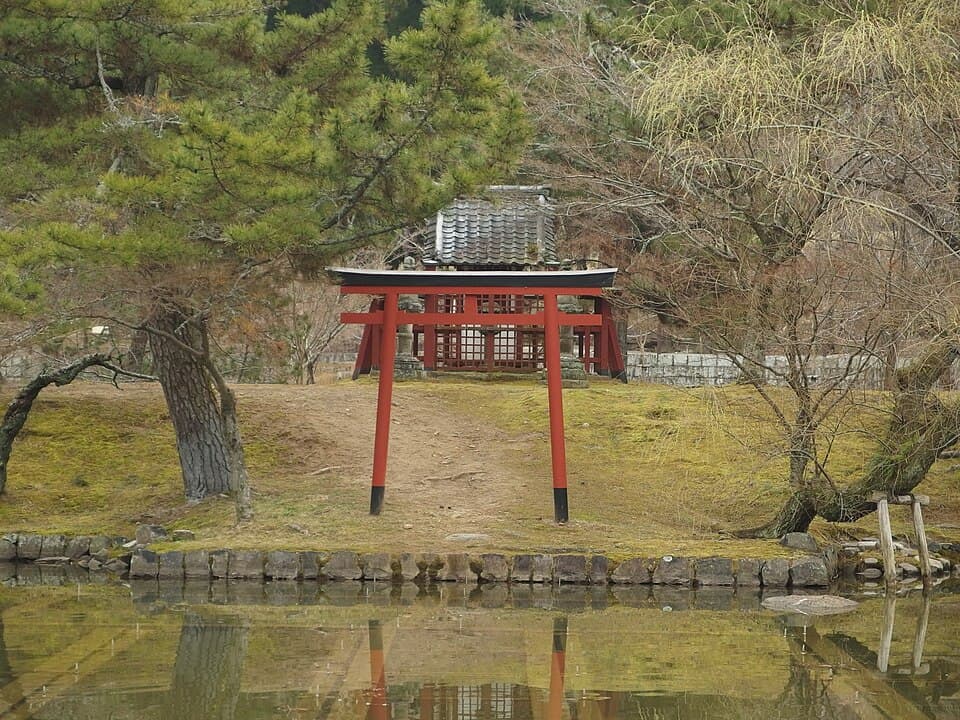
Shrine of the Water Goddess
On the island within the Mirror Pond, you may notice a small red torii gate. This marks a Shinto shrine dedicated to Benzaiten, a goddess associated with everything that flows—including water, music, poetry, and wealth. Her presence here within a major Buddhist temple is a perfect example of Shinbutsu-shūgō, the historical blending of Shinto and Buddhism in Japan. For over a thousand years, it was common practice to invite local Shinto deities to protect Buddhist temple grounds. Rather than seeing the two religions as separate or competing, the Japanese viewed them as complementary partners. Benzaiten, who is often depicted holding a lute, is the only female deity among the Seven Lucky Gods. Her shrine here ensures the protection of the waters and the prosperity of the temple. This small, colorful structure provides a striking visual contrast to the muted tones of the nearby wooden halls, reminding us that Japanese spirituality has long been a rich tapestry of different traditions working in harmony to protect the spiritual heart of the nation.
Daibutsuden (Great Buddha Hall)
The world's largest wooden building, housing the massive bronze statue of the Vairocana Buddha.
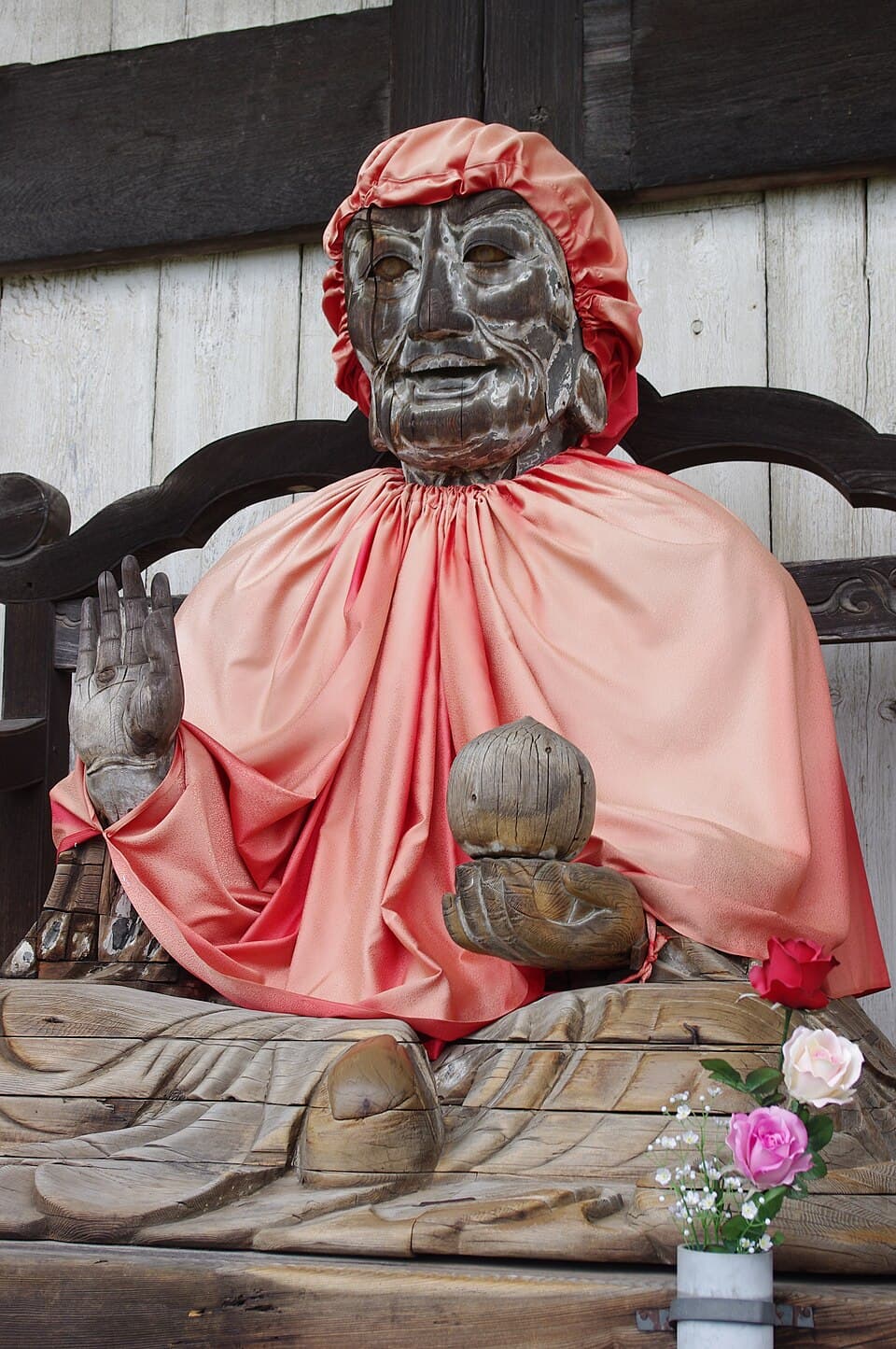
The Healing Statue
Just outside the entrance to the Great Buddha Hall, you will find a worn wooden statue wearing a red bib. This is Binzuru, one of the original disciples of the Buddha. In Japanese folklore, Binzuru is renowned for his extraordinary healing powers. There is a long-standing tradition associated with this figure: if you are suffering from an ailment, you should touch the corresponding part of the statue’s body and then touch your own. For example, if you have a sore knee or a headache, you would rub Binzuru's knee or head before rubbing your own. Over many centuries, the hands of countless pilgrims have worn the wood smooth, giving the statue a dark, polished sheen. Binzuru sits outside the main hall because, according to legend, he was once forbidden from entering the inner sanctuary due to his occasional displays of supernatural powers. Despite this, he remains one of the most beloved figures at the temple, offering a personal and physical connection to the spiritual healing traditions that have drawn people to Nara for generations.
The Great Buddha (Daibutsu)
The spiritual heart of Tōdai-ji, this 15-meter tall bronze statue represents the cosmic Buddha.
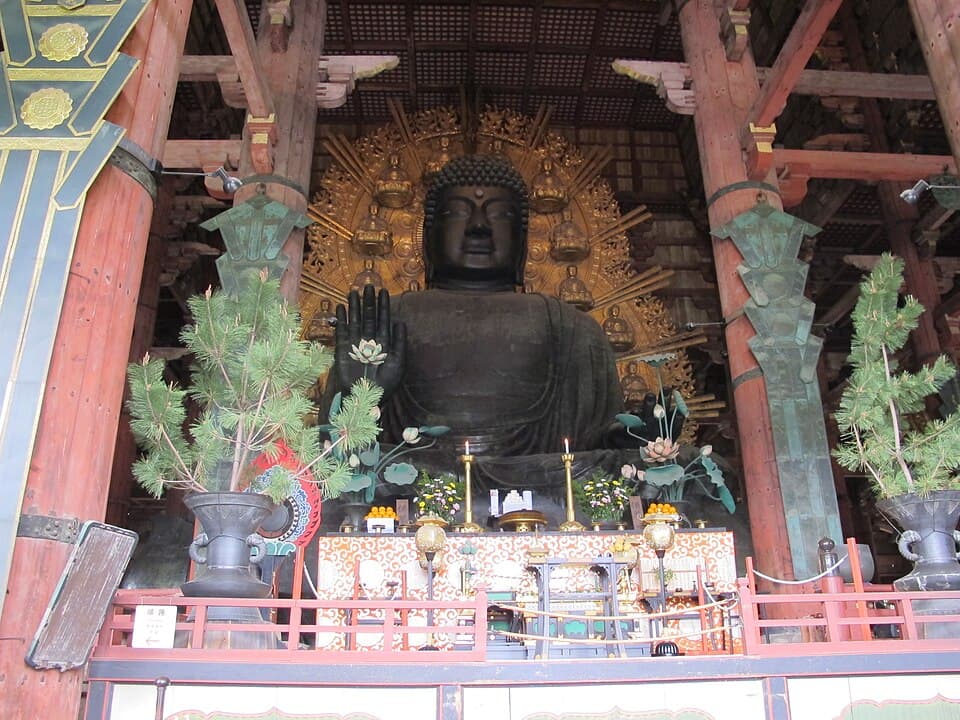
Todai-ji Great Buddha
You are now face-to-face with the Daibutsu, or Great Buddha. This massive figure represents Vairocana, the cosmic Buddha whose light shines throughout the universe. Standing—or rather, sitting—at 15 meters tall and weighing roughly 500 tons, it is one of the largest bronze statues in the world. The statue was completed in 752 AD, an event marked by the 'Eye Opening Ceremony.' During this ritual, an Indian monk used a massive brush with a long string attached to it to 'paint' the pupils onto the statue’s eyes, symbolically bringing it to life. The Emperor, the Empress, and 10,000 guests from across Asia watched this moment of national spiritual unity. Notice the position of the Buddha’s hands. The right hand is raised with the palm facing outward in the Abhaya Mudra, a gesture that translates to 'do not fear.' The left hand rests in his lap with the palm up, signifying the granting of wishes. Despite being damaged by earthquakes and fires over the centuries, the head and parts of the lotus pedestal have been recast, while much of the torso remains original 8th-century bronze.
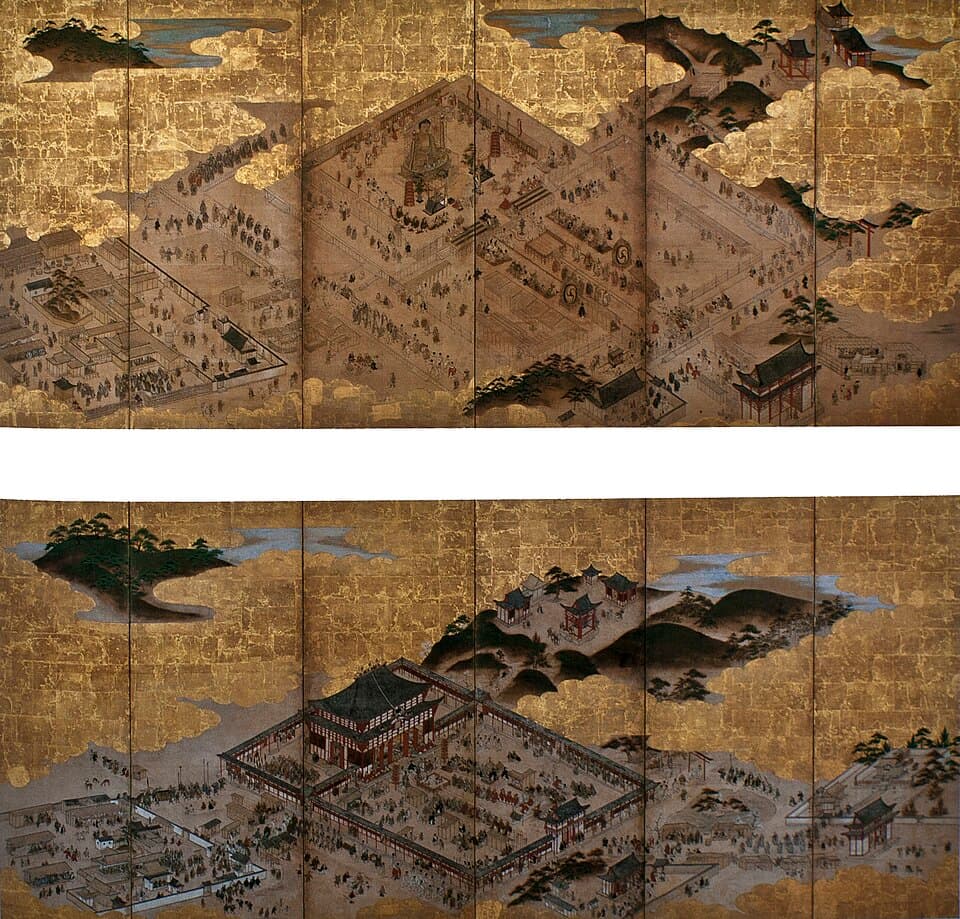
The Golden Anniversary Screen
Nearby, you can find a depiction of the temple's history on a painted screen. This artwork illustrates the grand celebrations held at Tōdai-ji during the 16th century. It provides a fascinating look at how the temple functioned not just as a religious site, but as a massive stage for political and social life. The screens show thousands of people—monks, samurai, and commoners—gathered in the courtyard. You can see elaborate processions with colorful banners and musicians, highlighting the temple's role as the spiritual heart of the nation. These images emphasize that the reconstruction of the Great Buddha Hall was a project of national importance, intended to demonstrate the stability and unity of the country after periods of civil war. By studying the details of the screen, you get a sense of the scale of the crowds and the festive atmosphere that once filled this courtyard. It reminds us that for over a thousand years, Tōdai-ji has been a place where the people of Japan came together to witness the intersection of divine power and earthly authority.
Hokke-dō (Sangatsu-dō)
The oldest building in the Tōdai-ji complex, containing an incredible array of 8th-century statues.
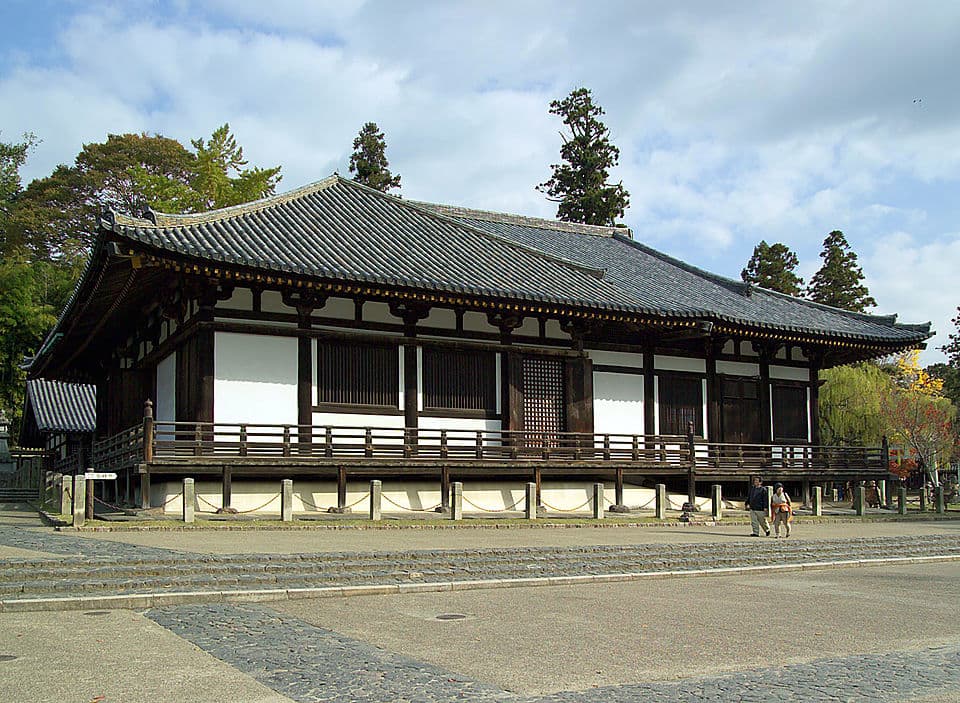
Hokke-do Hall
Hokke-dō, often called Sangatsu-dō, holds a special place in the complex as the oldest building still standing. While the Great Buddha Hall was destroyed and rebuilt twice, this structure miraculously survived the fires of war and the passage of time. It dates back to the very founding of the temple in the 8th century. Originally, it was a site dedicated to the study and practice of the 'Lotus Sutra,' which is why it bears the name Hokke-dō, or Lotus Hall. What makes the building architecturally fascinating is its hybrid nature. The structure is actually two buildings that were joined together over time. The front section exhibits the 12th-century Kamakura style, while the rear section preserves the original 8th-century Nara-period aesthetic. If you look closely at the roofline and the pillar placements, you can see where these two distinct eras of Japanese craftsmanship meet. This seamless integration allows visitors to see the evolution of temple design in a single glance. Inside, the hall remains a sanctuary of ancient art, housing several National Treasures that have been protected by these walls for over 1,200 years. Standing here, you are experiencing the most authentic link to the original vision of the Emperor who commissioned Tōdai-ji, a rare pocket of history that has remained largely untouched since the dawn of Japanese Buddhism.
Shōsōin (Treasure Repository)
An 8th-century log storehouse that preserved thousands of artifacts from the Silk Road for over a millennium.
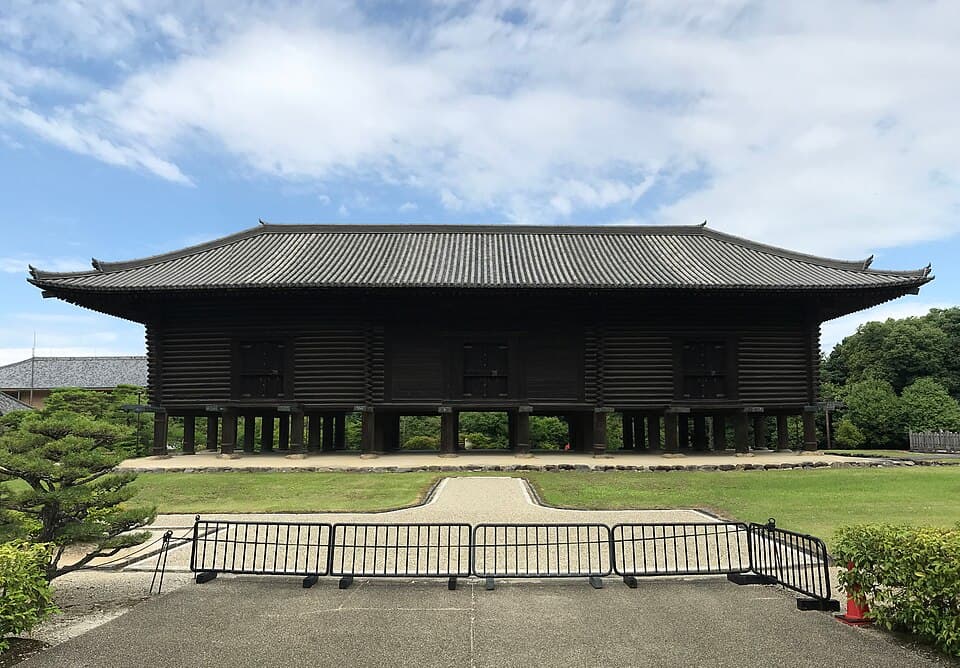
Shoso Repository
Shōsōin is a marvel of ancient engineering and one of the world's oldest treasure houses. It was built in the mid-8th century to store the personal belongings of Emperor Shōmu and a vast collection of items used in the temple's opening ceremony. The building is constructed in the 'azekura' style, which uses triangular logs that interlock at the corners without the use of nails. This design is more than just an aesthetic choice; it acts as a natural climate control system. In humid weather, the wood expands to seal out moisture, and in dry weather, it contracts to allow air to circulate. This simple but brilliant mechanism successfully preserved over 9,000 artifacts for over a millennium. The items once held inside are a testament to Japan's early international connections. They include glassware from Persia, musical instruments from India, and textiles from China, brought to Nara via the Silk Road. For 1,200 years, the repository was kept under 'Imperial Seal,' meaning it could only be opened with the direct permission of the Emperor, ensuring that its contents remained safe from theft and light damage. While the treasures are now housed in a modern, climate-controlled facility nearby, this original wooden structure remains a National Treasure and a symbol of Japan's role as the eastern terminus of the Silk Road.
Kaidan-in (Ordination Hall)
The site where monks were formally ordained, housing four world-famous clay statues of the Four Heavenly Kings.
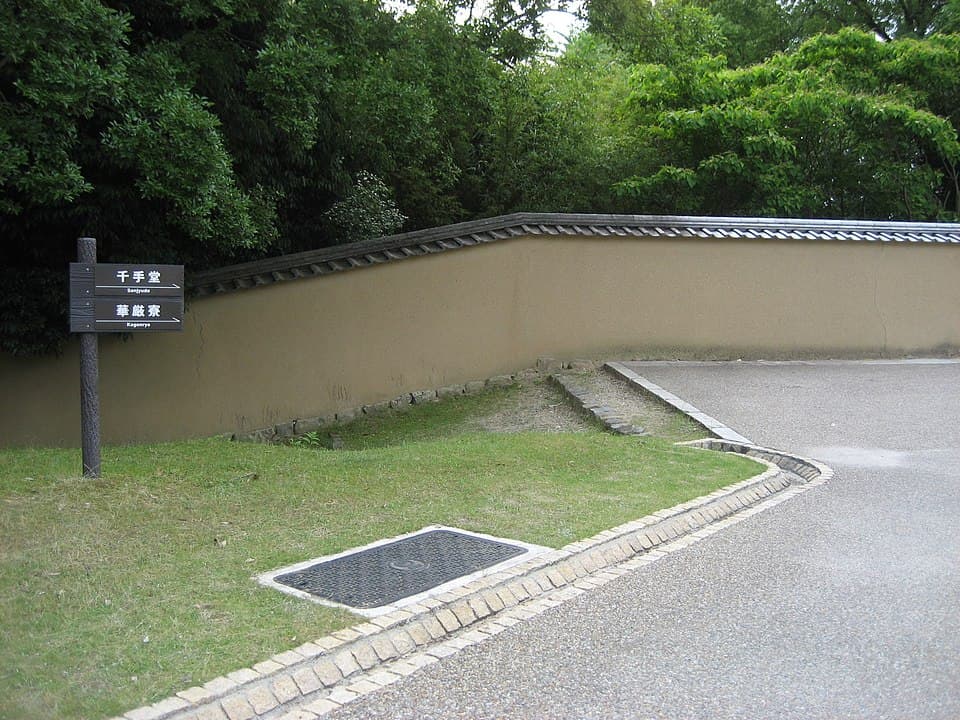
Kaidan-in Hall
The path leading toward the Kaidan-in area offers a shift in atmosphere, moving away from the grand scale of the main halls into a more intimate and quiet space. Notice the high, earth-colored walls topped with heavy grey tiles. These are classic 'tsuijibei' or rammed-earth walls, which serve as boundary markers for the most sacred precincts of the temple. They were designed not only for physical privacy but also for spiritual defense. Tradition holds that the paths within these areas were often built with slight curves or staggered turns. This was based on the folk belief that evil spirits could only travel in straight lines; a curved path would effectively block their entry. As you walk along this quiet lane, the muted colors of the clay and the weathered wood create a sense of timelessness. This area was historically used for the most solemn ceremonies, including the ordination of new monks. The lack of bright colors or grand ornamentation is intentional, reflecting the discipline and focus required of those who lived and studied here. The walls dampen the sounds of the modern city nearby, allowing you to experience a moment of the same stillness that monks have sought here for over a thousand years. It is a place that highlights the importance of boundaries and the creation of a 'pure' space within the larger temple complex.
Sashizu-dō Hall
Rebuilt by the priest Kokei, this hall was used as a base for planning the Great Buddha's restoration in the Edo period.
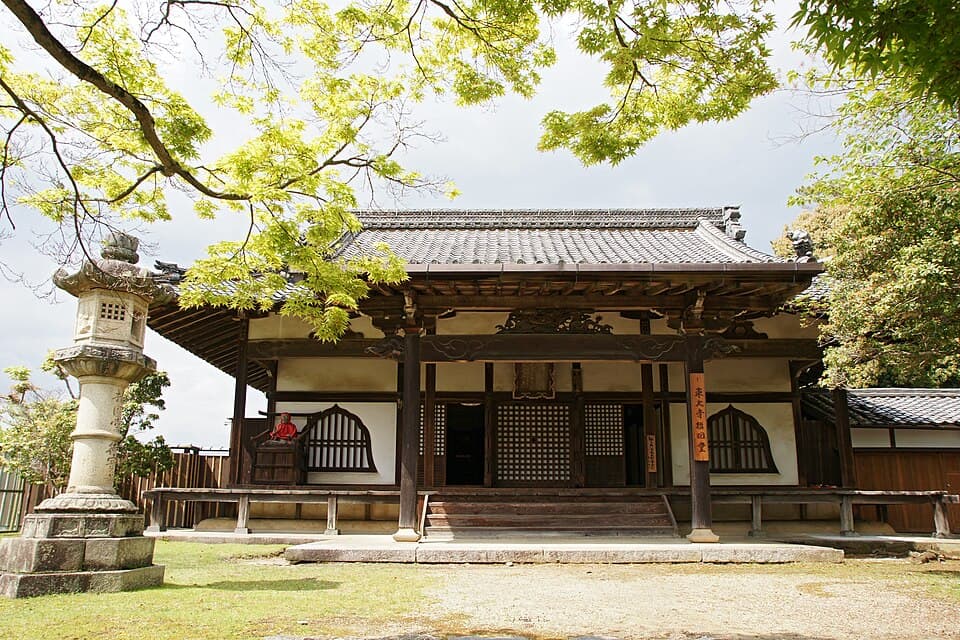
Sashizu-do Hall
The name Sashizu-dō translates literally to 'Hall of Plans,' a title that reveals its unique and practical history. While many structures within the temple complex are dedicated to specific deities or rituals, this hall functioned as the essential headquarters for one of the greatest engineering projects in Japanese history. It was rebuilt in the 1600s by a monk named Kokei, who dedicated himself to the monumental task of restoring the Great Buddha and its massive hall after centuries of damage. Kokei used this building as his administrative and strategic center. Inside, he carefully preserved the architectural drawings, blueprints, and technical diagrams that outlined the temple's complex timber-frame construction. These documents were more than just paper; they were the DNA of the temple, allowing Kokei and his team of master carpenters to understand how to rebuild the world’s largest wooden structure from the ashes once again. Without the meticulous planning that occurred within these walls, the restoration of the Great Buddha Hall might never have been completed. As you look at this hall, imagine it filled with scrolls and busy planners working to ensure the temple’s survival for future generations. It serves as a quiet reminder that the grandeur of the temple complex is built not just on faith, but on human ingenuity, persistence, and careful organization.
Want to hear the rest?
Download the Stanza app to unlock all 32 stops and the complete guided audio tour.
Frequently Asked Questions
How long does the 東大寺 audio tour take?
The 東大寺 audio guide includes 32 narrated stops. Most visitors spend 45 minutes to 1.5 hours exploring the complete tour, though you can listen at your own pace and skip or revisit any stop.
Is the 東大寺 audio guide available in my language?
Stanza supports 15 languages: English, Spanish, French, German, Italian, Portuguese, Russian, Japanese, Chinese, Korean, Arabic, Hindi, Polish, Dutch, Hebrew. Check the guide in the app to confirm the languages currently available for this tour.
Can I use the audio guide offline at 東大寺?
Yes! Download the complete 東大寺 tour — including all audio, maps, and images — before your visit. The Stanza app works completely offline, so you don't need WiFi or mobile data at the venue.
How much does the 東大寺 audio guide cost?
The Stanza app is free to download. The current listed price for the 東大寺 audio guide is $3.99; app-store region and currency may affect the final price.
How do I use the Stanza audio guide at 東大寺?
Download the free Stanza app, search for "東大寺", and download the tour. When you arrive at the venue, the app uses GPS to detect your location and automatically plays the relevant narration as you move between points of interest — completely hands-free.
What makes the Stanza audio guide different from other 東大寺 tours?
Stanza offers GPS-triggered narration that plays automatically as you walk through 東大寺 — no need to manually select stops. The tour is available in 15 languages, works fully offline, and includes 32 expertly narrated stops with images and historical context.
What other audio guides are available near 東大寺?
Stanza offers multiple audio guides in Nara, Japan and nearby areas. After downloading the app, browse the map to discover all available tours near 東大寺. Each guide can be downloaded for offline use.