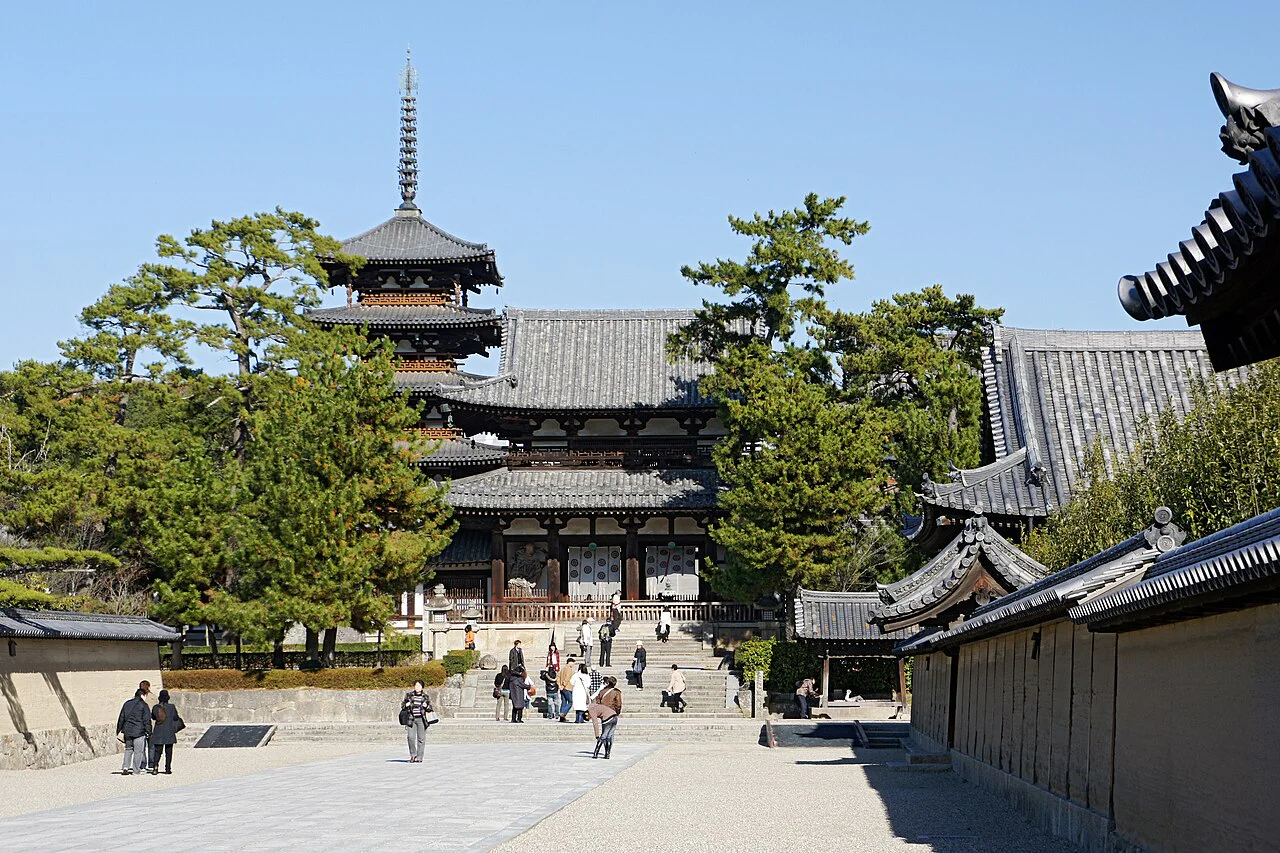
Stanza · Audio guide
法隆寺 Audio Guide
A place to remember. A story to take with you.
Hōryū-ji is a Buddhist temple located in Ikaruga, Nara Prefecture. It is one of the oldest Buddhist sites in Japan and was once one of the powerful Seven Great Temples.
Download Stanza, then search for “法隆寺”.
About the tour
One guide. Your kind of visit.
Hōryū-ji is a Buddhist temple located in Ikaruga, Nara Prefecture. It is one of the oldest Buddhist sites in Japan and was once one of the powerful Seven Great Temples.
Ready when you are.
- 01Get the free Stanza app.
iOS & Android
- 02Find your guide.
“法隆寺”
- 03Download before you go.
Works offline
Audio guide / 17 narrated stops
Inside the guide
Get to know a few of the stories before you go. Open a stop to read more.
01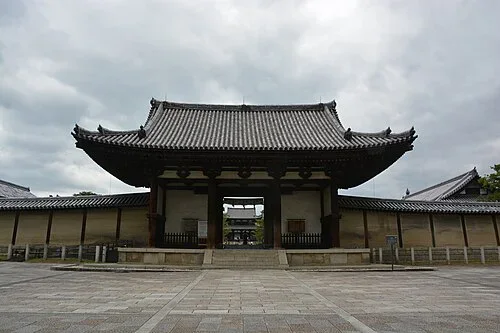 The South Great Gate (Nandaimon)
Nandaimon (South Great Gate)
Hōryū-ji began as a centre of Buddhist learning. Its full name, Hōryū Gakumonji, means the Learning Temple of the Flourishing Law. The South Great Gate, called Nandaimon, has a tiled roof over a wide central passage. Long walls run out to either side across a paved forecourt. Prince Shōtoku founded the temple not long after Buddhism reached Japan, so it is one of the country's oldest Buddhist sites. The temple was first vowed to Yakushi Nyorai, the Buddha of healing, by the prince's ailing father, Emperor Yōmei. The temple was once one of the powerful Seven Great Temples. In 1993 Hōryū-ji and Hokki-ji were registered together as Japan's first UNESCO World Heritage Site, under the name Buddhist Monuments in the Hōryū-ji Area.
Photo: Jonashtand · CC BY-SA 4.0
02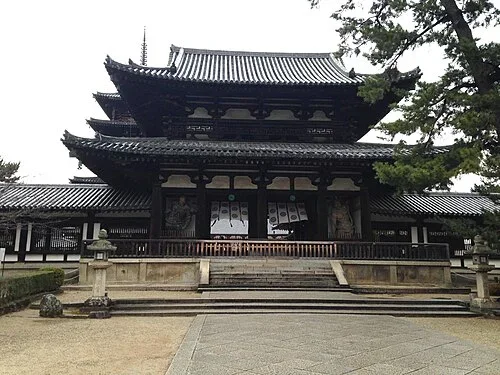 The Middle Gate (Chūmon) and Cloister
Chūmon (Middle Gate)
The Chūmon's name means Middle Gate, and in English it is often called the Inner Gate. It stands on the route from the South Great Gate toward the Golden Hall and the five-storey pagoda. Two tiers of tiled roof rise above it. Stone steps lead up to the entrance, with a wooden railing across the front and a stone lantern at each side. The columns are described as entasis columns, which means each one swells gently along its length rather than running perfectly straight.
Photo: そらみみ · CC BY-SA 3.0
03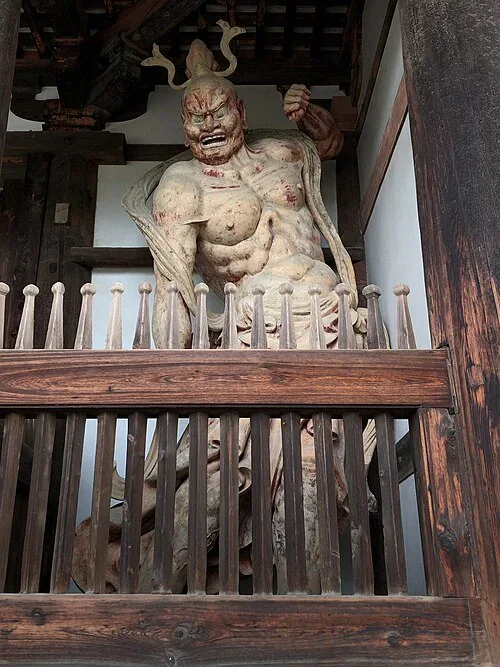 The Middle Gate (Chūmon) and Cloister
Kongō-rikishi Guardian (Open-Mouthed Form), Chūmon
The guardian's mouth is wide open, his teeth are bared, and one arm is raised high. His chest and shoulders are heavily muscled, and traces of red paint still show on his face and chest. He is a Kongō-rikishi, known in Sanskrit as Vajrapāṇi, and he stands behind a wooden railing of upright slats. In general, Niō guardians like this one are placed at temple gates to guard the way in. The guardian figures of the Chūmon are dated to 711, a year close to when the rebuilt temple is believed to have been finished.
Listen in the appPhoto: Bijutsushitan · CC0
04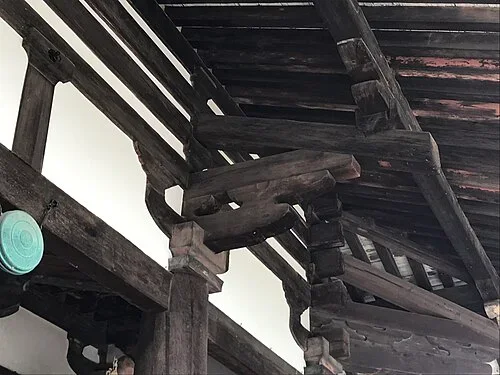 The Middle Gate (Chūmon) and Cloister
Cloud Bracket Arms (Kumohijiki) of the Chūmon
Under the eaves, stacked timber arms step outward, each one carrying the roof further from the wall. Bracket arms like these are called kumohijiki, a name joining the word for cloud and the word for an elbow-shaped block of wood. The bracket work here resembles that of a surviving fragment of a small gilt bronze pagoda from Baekje, a kingdom on the Korean peninsula. The buildings draw on influences from the Three Kingdoms of Korea, especially Baekje, and from China, from the Eastern Han through to the Northern Wei. Scholars call the style here more conservative than that of Yakushi-ji, another temple of the period, meaning it holds on to older forms.
Listen in the appPhoto: あずきごはん · CC BY-SA 4.0
05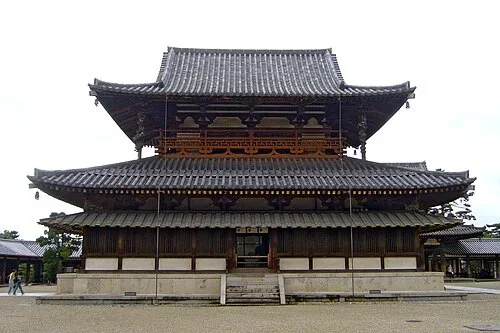 The Golden Hall (Kondō)
Kondō (Golden Hall), Exterior
The Golden Hall, known in Japanese as the Kondō, has two storeys, and its roofs curve up at the corners. A short flight of steps leads up to the entrance. The lower storey has a double roof. In the Nara period, builders added extra posts to hold up the original roof, which stretched more than four metres beyond the walls. Accounts widely recognise the Golden Hall as the oldest wooden building in the world. A fire in 1949 badly damaged it. Restoration was completed in 1954. Roughly fifteen to twenty percent of the original seventh-century material is thought to remain in the building.
Listen in the appPhoto: 663highland · CC BY 2.5
06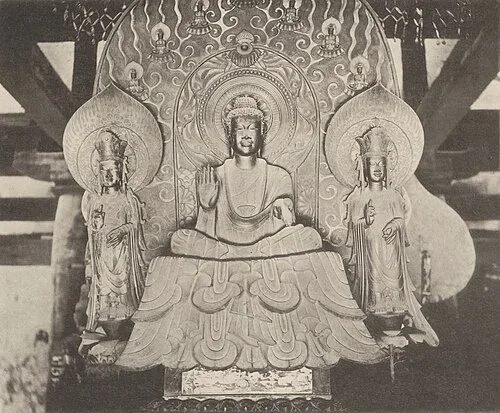 The Golden Hall (Kondō)
Shaka Triad by Tori Busshi
Tori Busshi is credited with this bronze group, and the inscription on the halo behind the central figure dates it to 623. The central figure is Shaka, the historical Buddha, seated with one hand raised. Two attendant bodhisattvas stand on either side of him, each with a halo of his own. The figures are two-dimensional in style, and the cloth falls in repeated, pattern-like folds. Scholars link this style to Northern Wei art, and it is known as Tori style after the sculptor. According to the inscription, the royal family made a vow while the prince lay ill. They promised an image of Shaka sized to his own body. The prince died in 622, and the image was finished the next year. Scholars read the inscription in different ways, and some doubt its date. The present Golden Hall dates to around the late seventh century, so where the triad stood before that is unknown. Four wooden guardian kings from the end of the Asuka period stand at the corners of the platform around it.
Listen in the appby Japan. Commission impériale à l'Exposition universelle de Paris, 1900; Tronquois, Victor Emmanuel Virgile, 1855-1918; Foukoutci, Mataitci; Ki, Yoshio; Tokyo Teishitsu Hakubutsukan · Public domain
07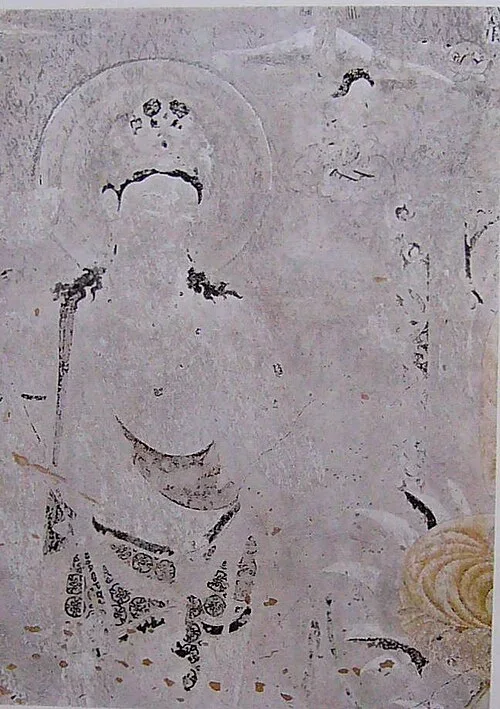 The Golden Hall (Kondō)
Golden Hall Wall Painting, Sixth Panel, After the 1949 Fire
In January 1949, fire broke out in the Golden Hall while it was being dismantled for repair. It destroyed one of the Asuka-period murals, a national treasure. What remains of this sixth panel is a faint halo and a few dark lines of drapery. The loss shocked the Japanese public. That day, the twenty-sixth of January, is now fire prevention day for cultural properties. The original wall paintings were removed after the fire and are kept in a treasure house that the public cannot enter. Twenty small wall paintings came through the fire unharmed and remain in their original places. Reproductions have replaced the damaged sections. The large walls are generally believed to show the Pure Land, the Buddhist paradise, with several Buddhas, including Shaka and Amida. Some of the robes are modelled in a way that resembles murals at Ajanta in India and Dunhuang in China.
Listen in the appUnknown author · Public domain
08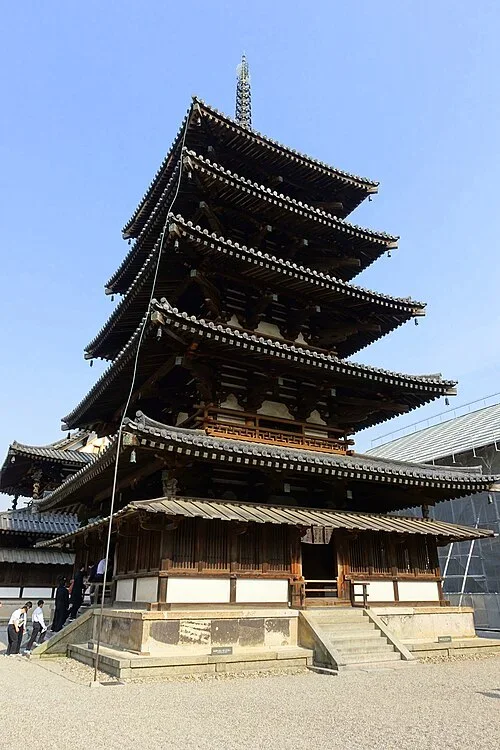 The Five-Story Pagoda (Gojūnotō)
Five-Storied Pagoda (Gojūnotō)
The five-storey pagoda stands about thirty-two and a half metres tall, and its heart is a single timber pillar. That pillar is the central pillar, also called the axis mundi. Accounts describe the pagoda as the oldest surviving wooden five-storey pagoda in the world. In 2001 a tree-ring survey dated the pillar's timber. The wood is estimated to have been felled in 594. According to the Nihon Shoki, lightning destroyed the temple's buildings in 670. So the timber is older than that fire. The pillar sits about three metres below the surface of a massive foundation stone, reaching into the ground. At its base, a relic believed to be a fragment of the Buddha's bones is enshrined. Around the pillar, four sculpted scenes from the Buddha's life face the four directions. As is customary for pagodas, visitors cannot enter it.
Listen in the appPhoto: Daderot · CC0
09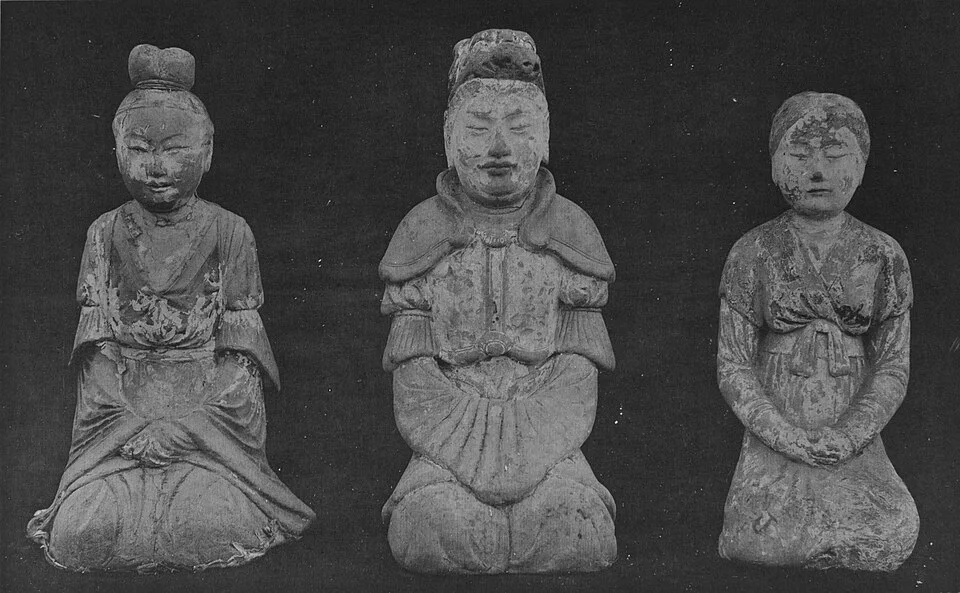 The Five-Story Pagoda (Gojūnotō)
Three Seated Clay Figures
Three clay figures sit or kneel side by side, each with its hands folded before it. The figure on the left wears a robe with wide sleeves, and its hair is gathered into a high knot. The middle figure has a broad collar draped over its shoulders, and its face looks calm, with the faintest smile. The figure on the right bows its head slightly, with its hands clasped low. Their surfaces are worn in places. It is unclear whether these three were ever inside the pagoda, though the clay sculptures inside the pagoda are designated national treasures.
Listen in the appImperial Japanese Commission to the Panama-Pacific International Exposition · Public domain
10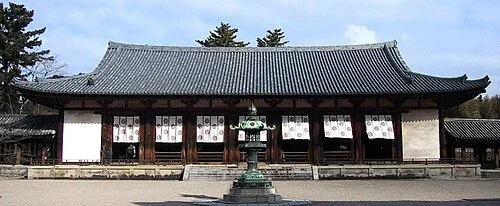 The Great Lecture Hall (Daikōdō)
Great Lecture Hall (Daikōdō)
A fire in 925 swept through the Sai-in, the western precinct, and destroyed the Great Lecture Hall along with the bell tower of the same precinct. The hall was rebuilt in 990, several decades later. Halls of this kind were where monks studied and gathered for their assemblies. Other buildings in the complex housed libraries, monks' quarters and dining halls. The hall has a single storey and a long, low roof. White hangings cover its front, and a bronze lantern stands in the courtyard. The Great Lecture Hall belongs to a temple whose repairs have taken a very long time. A major restoration of the whole complex began in 1934, but the Second World War interrupted it. Large parts of the temple were taken apart and hidden in the hills around Nara. The work resumed after the war and was finished in 1985.
Listen in the appPhoto: Chris 73 · CC BY-SA 3.0
- 11
Kudara Kannon (Standing Kannon Bodhisattva)
A slender Asuka-period Kannon, meant to be seen at an angle, unlike the frontal triad in the Golden Hall.
- 12
Tamamushi Shrine (Tamamushi-no-zushi)
A shrine named for beetle wings that have mostly flaked away, and one of the oldest of its kind in East Asia.
- 13
Tamamushi Shrine Painted Panel (Feeding the Tigress)
A Buddhist tale of self-sacrifice painted on a shrine, now so faded that its figures are hard to make out.
- 14
Wakakusa-garan Excavation (Original Temple Site)
The temple that stood before the present complex, lost to fire, and the excavation that helped settle an old argument.
- 15
Tōdaimon (East Great Gate)
The gate standing at the threshold between the temple's two separate precincts.
- 16
Yumedono (Hall of Dreams)
A palace site, a hall built to calm a prince's spirit, and a name that comes from a legend.
- 17
Guze Kannon (Yumedono Kannon)
A gilded Kannon kept wrapped in cloth, and the 1884 survey said to have unwrapped it.
法隆寺
Frequently asked questions
How much does the guide cost?
Free app download. Listed guide price: $1.99. Guide price shown in the app. Audio guide only. Venue admission is separate.
Can I listen without internet?
Yes. Download the guide’s audio, images, and maps in the app before your visit. Your downloaded content is then available offline.
Can I listen in my language?
This audio guide is available in 15 languages, including English.
Do I need to follow a schedule?
No. This is a self-guided experience. Choose your stops, pause whenever you like, and return to a story at your own pace.
At your own pace
Explore 法隆寺.
Download Stanza, then search for “法隆寺”.
Free app download · Guide price shown in the app
Keep exploring
Nearby audio guides
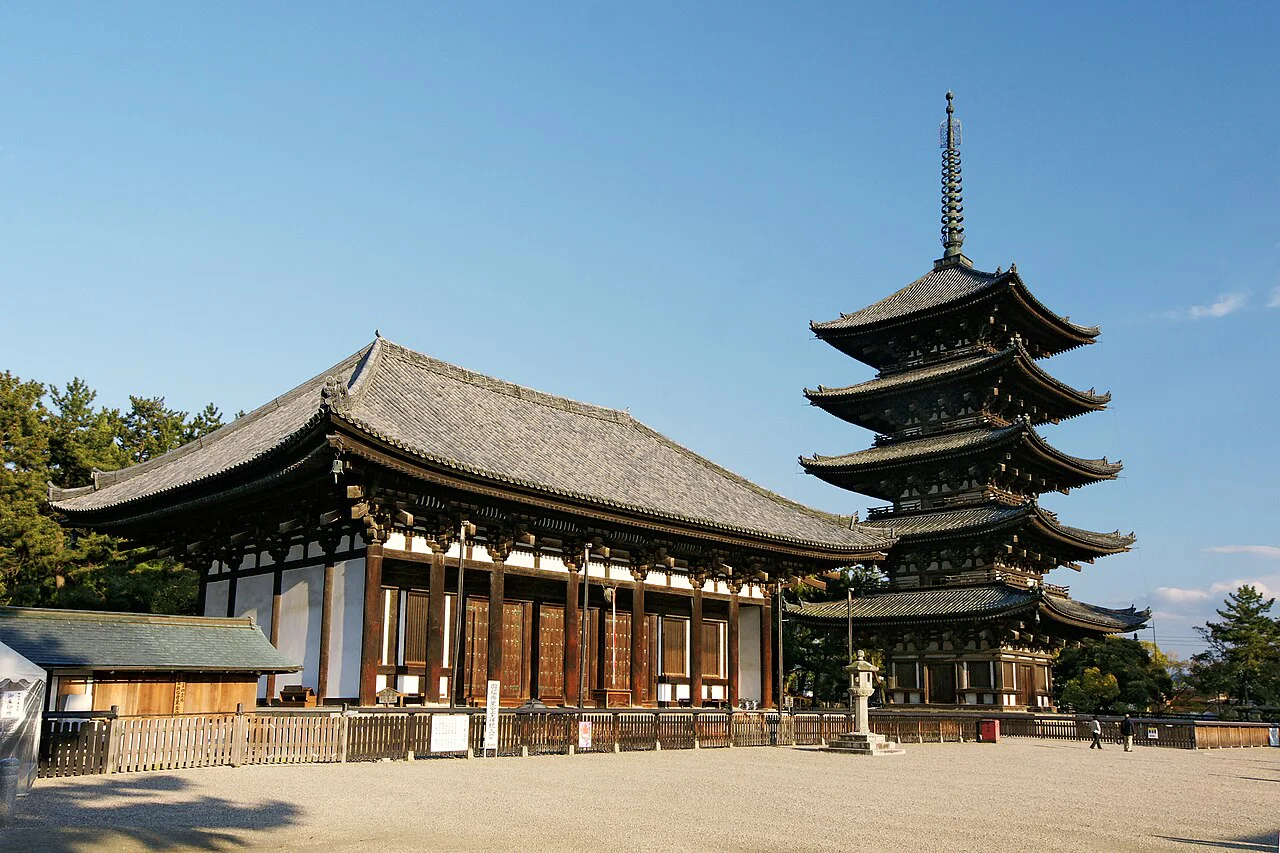
Nara · 12 km
興福寺
Content & sources
Photo: 663highland · CC BY-SA 4.0
Nara · 13 km
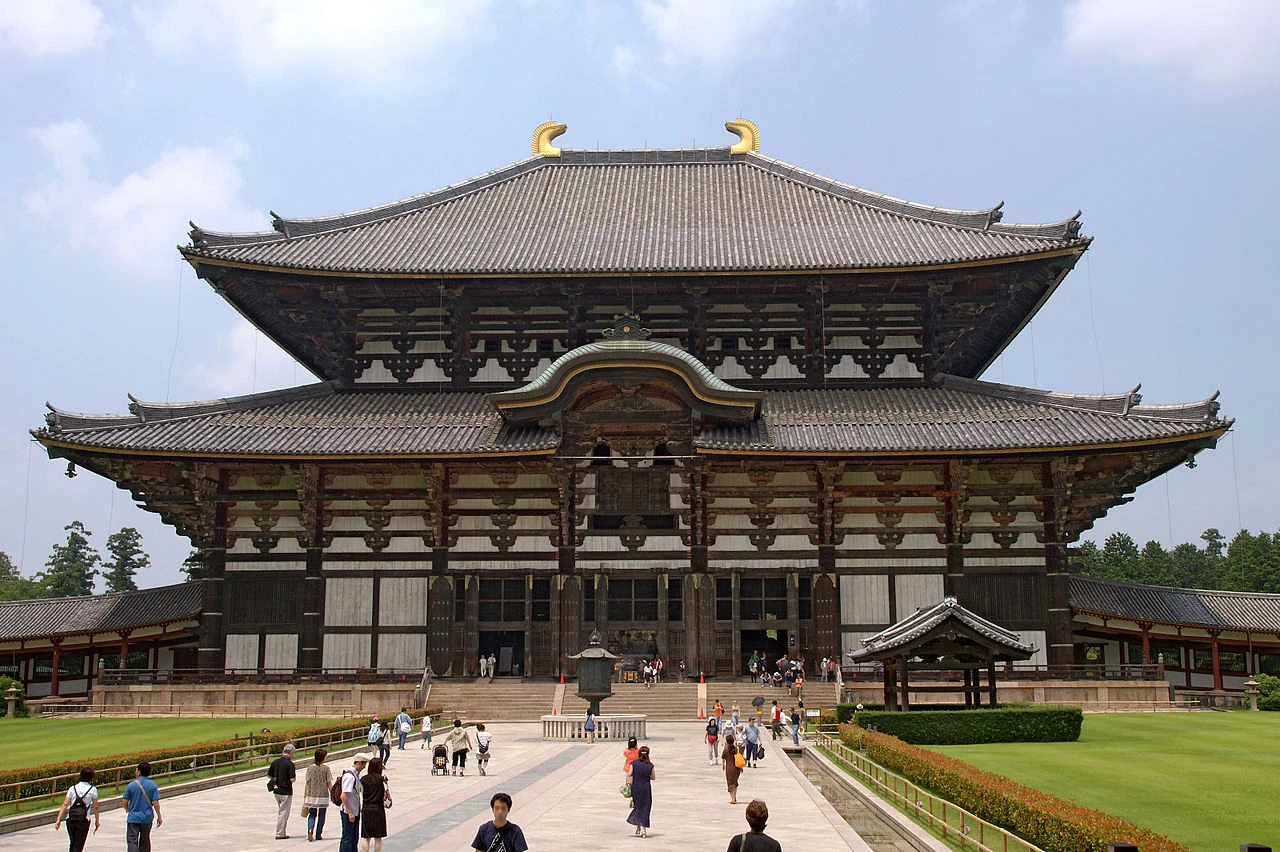
Tōdai-ji Temple
Content & sources
Photo: 663highland · CC BY 2.5
Nara · 13 km
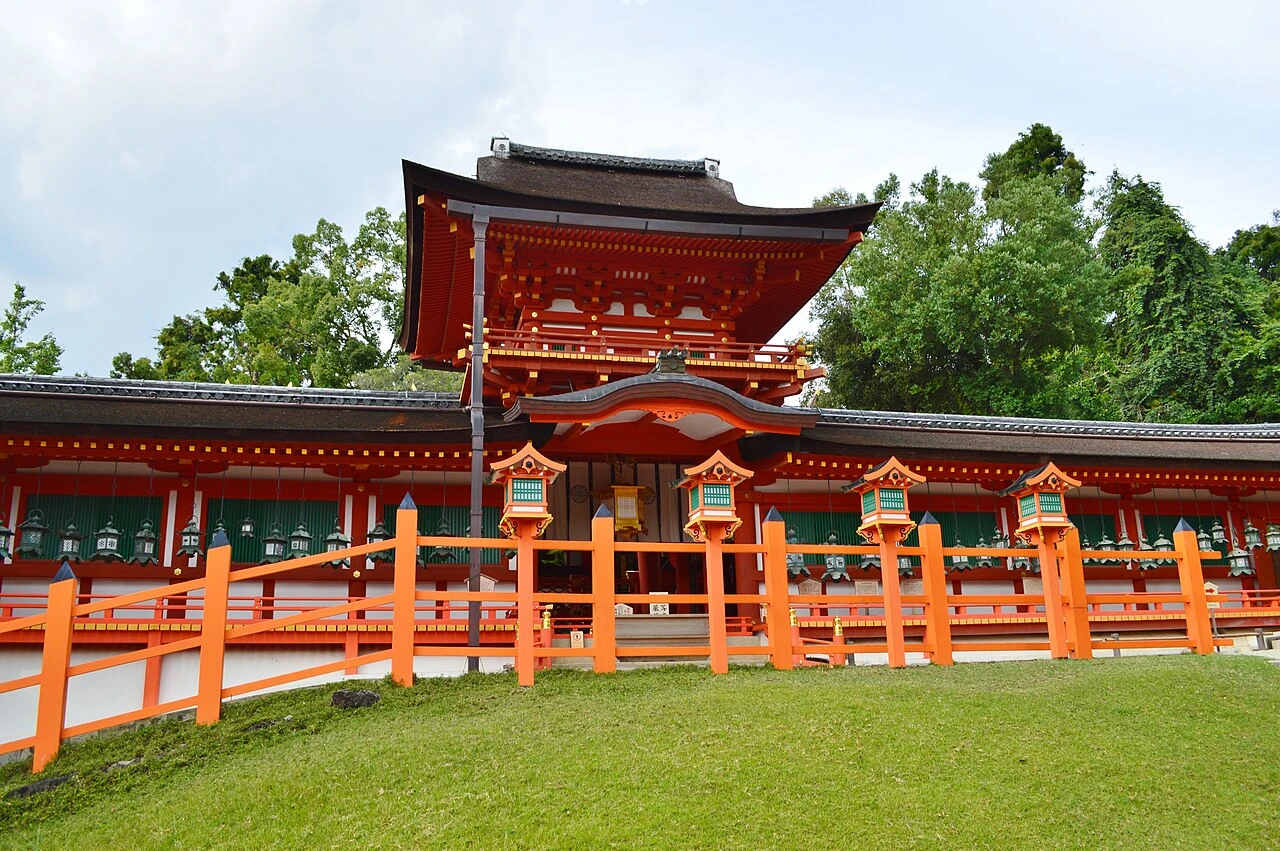
Kasuga-taisha
Content & sources
Photo: Saigen Jiro · CC0
Osaka · 21 km
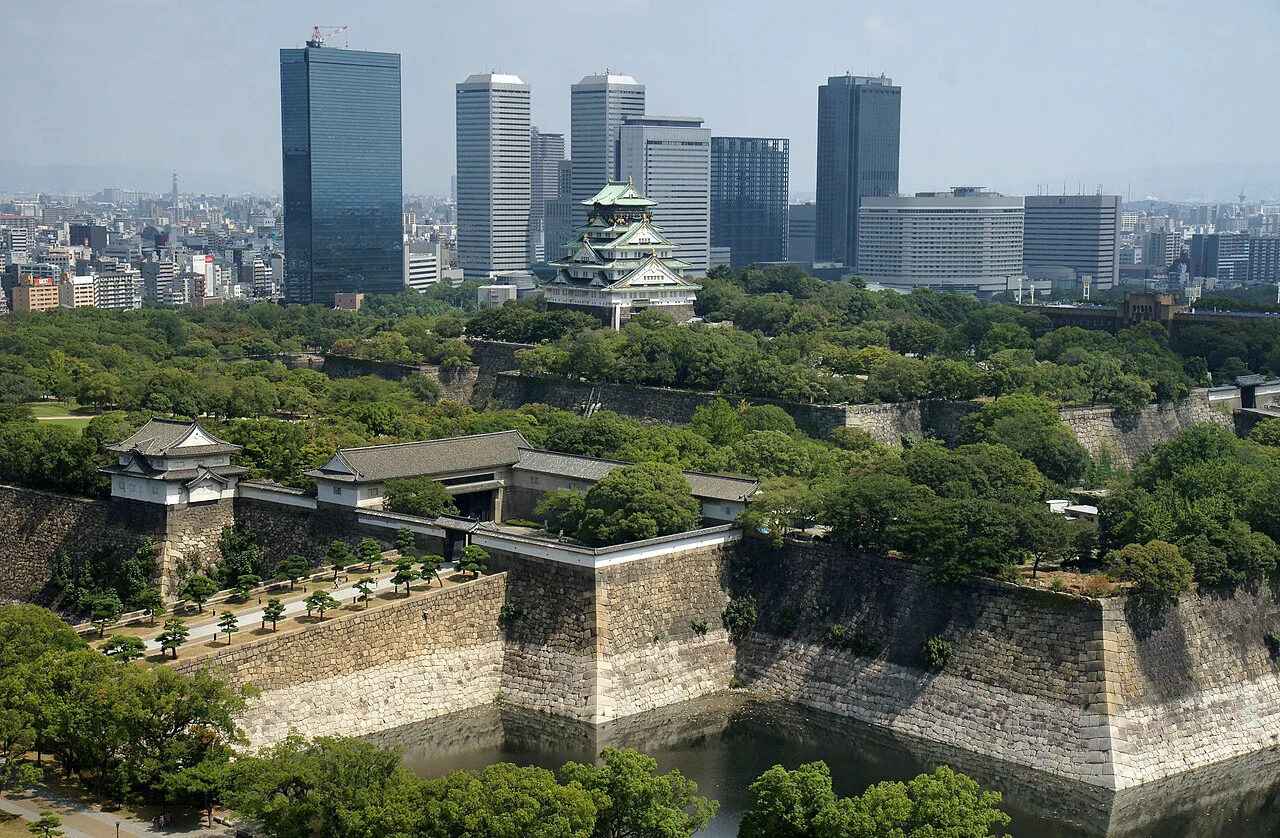
大坂城
Content & sources
Photo: 663highland · CC BY 2.5