Stanza · Audio guide
大坂城 Audio Guide
A place to remember. A story to take with you.
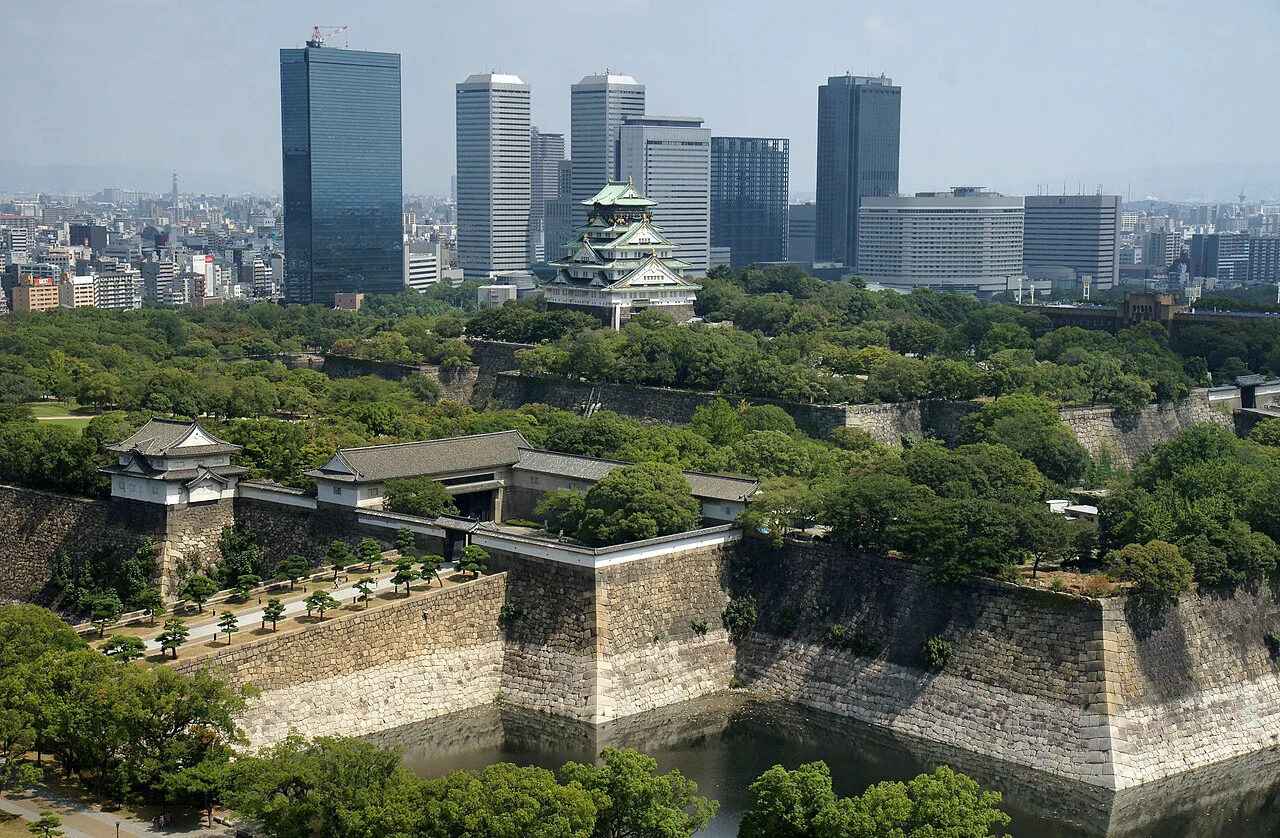
Osaka Castle is a Japanese castle located in Chūō-ku, Osaka, Japan. It is one of Japan's most famous landmarks and played a major role in the unification of Japan during the sixteenth century.
Download Stanza, then search for “大坂城”.
About the tour
One guide. Your kind of visit.
Osaka Castle is a Japanese castle located in Chūō-ku, Osaka, Japan. It is one of Japan's most famous landmarks and played a major role in the unification of Japan during the sixteenth century.
Ready when you are.
- 01Get the free Stanza app.
iOS & Android
- 02Find your guide.
“大坂城”
- 03Download before you go.
Works offline
Audio guide / 13 narrated stops
Inside the guide
Get to know a few of the stories before you go. Open a stop to read more.
01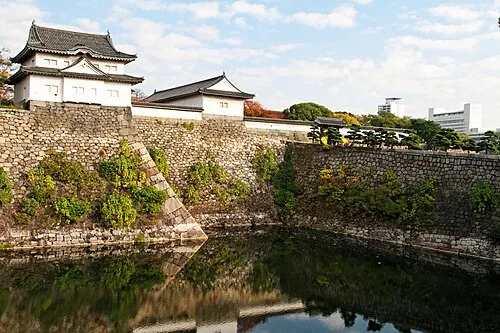 Otemon Gate and Western Outer Defense
Otemon Gate and the Sengan Turret
Welcome to Osaka Castle, one of Japan's most famous landmarks, a place that played a major part in the unification of Japan in the sixteenth century. The gate and turret in this view hold the key to everything that follows. Nearly every wall, gate and turret here was raised by the Tokugawa shoguns, who began rebuilding in 1620 after dismantling the older castle that stood on this spot. The shoguns handed the construction of the new walls to individual samurai clans, each clan delivering its own share of stone. The castle is ringed by two moats, an inner one and an outer one, with walled baileys stacked between them. Otemon Gate, the main south-western entrance, was founded in 1628 and repaired in 1848. The Sengan Turret beside the gate is one of the survivors of that rebuilding, watching over the outer moat.
KimonBerlin · CC BY-SA 2.0
02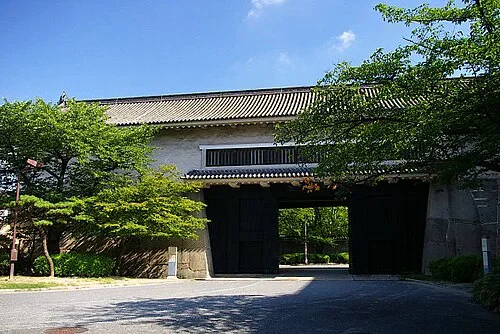 Otemon Gate and Western Outer Defense
Tamon Turret
The long, low building running along the wall is a tamon turret, a style built for work rather than show. Turrets of this kind hug a wall like a warehouse, giving defenders a protected platform and the garrison a dry place for supplies. Thirteen structures on these grounds, turrets, gates and storehouses among them, carry the government's Important Cultural Property designation. Their survival is the remarkable part. In 1660 lightning struck the castle's gunpowder storehouse, and the explosion set fire to turrets and other buildings. Lightning, fire and the conflicts of the nineteenth century have taken most of the castle's timber buildings. The ones that remain, like this one, are rare survivors of the Edo fortress.
Photo: Inoue-hiro · CC BY-SA 3.0
03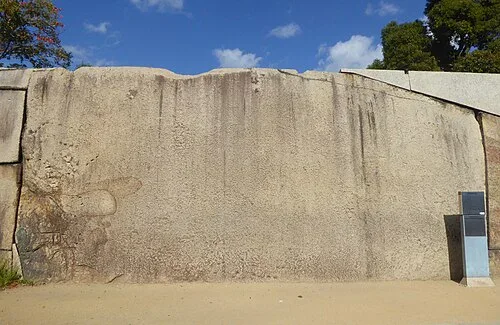 Sakuramon Gate and the Takoishi Megalith
The Octopus Stone (Takoishi)
Beside the Sakuramon gate square stands a single block of granite known as the Octopus Stone, and it dwarfs everyone who comes to see it. It is thought to weigh well over a hundred tonnes, one stone among the thousands in these walls. The Tokugawa builders set their granite in interlocked courses without any mortar, letting weight and shape hold the walls together. Many blocks came by sea from quarries near the Seto Inland Sea. The lords who supplied them carved their family crests into the stone, turning the defences into a public display of loyalty and wealth. For all its size, the Octopus Stone carries no official cultural property designation, yet it is the largest stone in the whole castle. As for the octopus name, no one is quite sure how it arose.
Listen in the appEthan Doyle White · CC BY-SA 4.0
04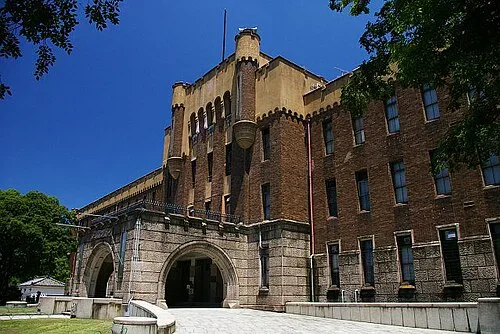 Hommaru Central Plaza and Modern Heritage
Former 4th Division Headquarters Building
This brick building with its crenellated tower housed the headquarters of the Imperial Japanese Army's 4th Division. Under the Meiji government the castle grounds became part of the Osaka Army Arsenal, turning out guns, ammunition and explosives for Japan's rapidly expanding Western-style military. By the Second World War the arsenal had grown into one of the largest in the country, employing about sixty thousand workers. On August 14, 1945, American bombing destroyed roughly ninety percent of the arsenal. Three hundred and eighty-two people were killed. The workshops stood elsewhere on the grounds; this headquarters building was the army's administrative face, and it outlasted the war.
Listen in the appPhoto: Inoue-hiro · CC BY-SA 3.0
05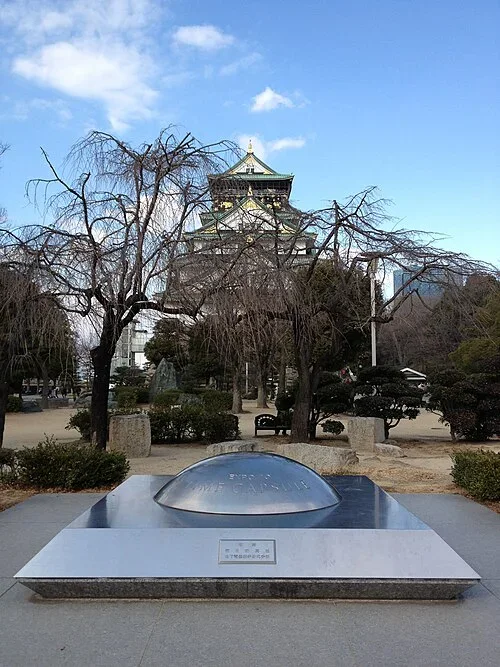 Hommaru Central Plaza and Modern Heritage
EXPO '70 Time Capsule
A low steel dome set in a stone base occupies part of the central plaza, deposited here after the 1970 Osaka Exposition. The electronics company Matsushita, known today as Panasonic, and the Mainichi newspaper buried this time capsule before the main keep. It carries a message entrusted to the far future: it is to be opened five thousand years from now. The castle grounds have gathered new meanings century after century, from fortress to army ground to park. This dome is the newest layer of all.
Listen in the appPhoto: Bzgru · CC BY-SA 3.0
06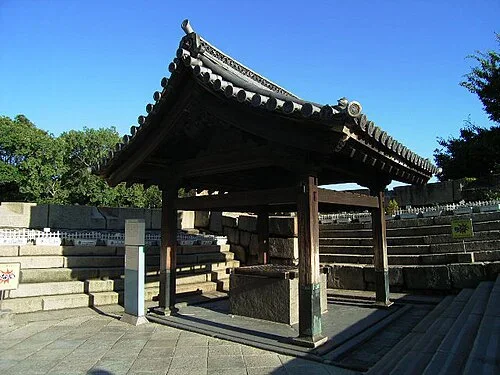 Hommaru Central Plaza and Modern Heritage
Kinmeisui Well House
Under this tiled roof sits the Kinmeisui Well, and with it one of the castle's best stories. The recorded part is plain. In 1740 a shogunal guard named Kajisuke Nakama stole four thousand ryō of gold from inside the castle. He was twenty-five years old. The crime was soon discovered, he was arrested and confessed, and that September he was sentenced to crucifixion. The legend came later, and it changed him. In the retelling, Nakama became a thief hunting a treasure that Toyotomi Hideyoshi himself had dropped down this very well, gold cast into the water to purify it. This well house is where the story says the gold lies.
Listen in the appUser:DX Broadrec · CC BY-SA 3.0
07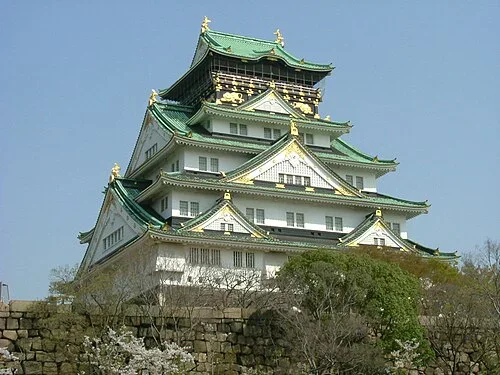 Main Keep Museum and Osaka's Heroic History
The Main Keep from Nishinomaru Garden
The great white tower seen from the Nishinomaru Garden is the castle's main keep, and it is younger than it looks. The tower standing today is ferroconcrete, rebuilt in 1931 and funded largely by donations from the citizens of Osaka. It rises 54.8 metres, counting its stone foundation and golden roof ornaments. Its style is deliberately double. White plaster in the Tokugawa manner below gives way to a black-and-gold top floor in the Toyotomi style. Two eras merged into one silhouette. American raids damaged the keep in 1945, in the same bombing that destroyed the arsenal. A restoration in the 1990s returned it to its Edo-era splendour, and the eight floors inside now work as a modern history museum, elevators included.
Listen in the appPhoto: Midori · Public domain
08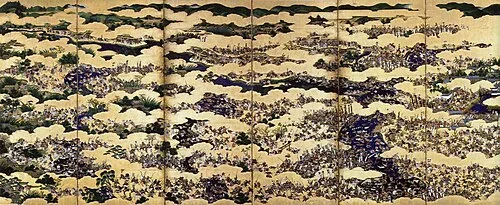 Main Keep Museum and Osaka's Heroic History
Screen Painting of the Siege of Osaka
Folding screens like this one depict the event that decided the castle's fate: the Siege of Osaka. In the winter of 1614, Tokugawa Ieyasu came against the castle with an army of some two hundred thousand. The Toyotomi defenders, outnumbered roughly two to one, managed to hold the outer walls. Ieyasu answered by filling in the outer moat, erasing one of the castle's main defences. When Hideyori began digging the moat open again in the summer of 1615, Ieyasu sent his armies back. On June 4 they routed the defenders inside the walls, and the castle buildings burned. The castle's lord, Hideyori, and his mother Yodo-dono did not survive its fall. Painters of the Edo period drew the campaign as a sweeping bird's-eye view, clouds and armies filling every panel. It shows the whole war at once, not one moment or one place.
Listen in the appanonymous · Public domain
09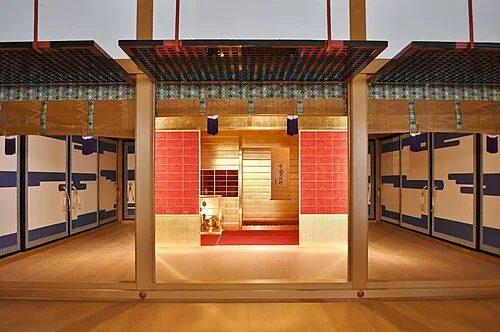 Main Keep Museum and Osaka's Heroic History
The Golden Tea Room
Gold, for Hideyoshi, was a language of power. When he began building this castle in 1583, on the site of the Ishiyama Hongan-ji temple, he modelled his plan on Oda Nobunaga's Azuchi Castle, and meant to surpass it in every way. His tower rose five stories, with three more underground, and gold leaf on its sides to impress visitors. The gilded room shown here is a modern reconstruction of the Golden Tea Room, first created in 1585 and now held by the MOA Museum. Its walls and fittings sheathed in gold, it carried the same display of authority in miniature. The original has long since vanished, and this recreation belongs to the museum rather than to the castle itself. Construction of the castle was finished in 1597. Hideyoshi died the following year, leaving it to his son Hideyori.
Listen in the appPhoto: Saigen Jiro · Public domain
10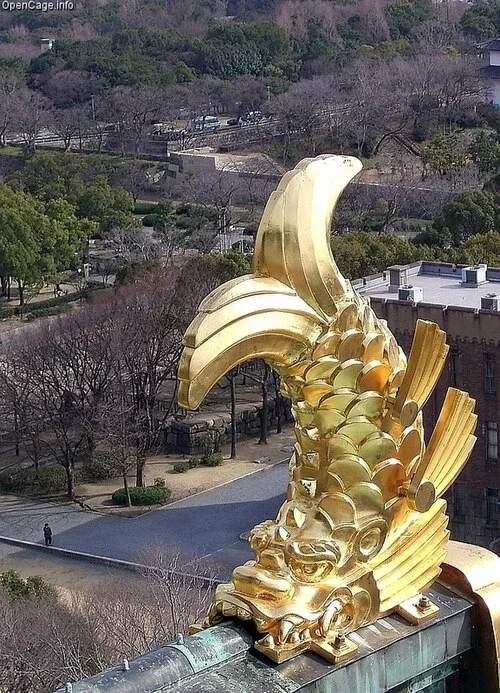 Keep Observation Deck and Golden Shachihoko
The Golden Shachihoko
Curving above the keep's roof is a golden shachihoko, a mythical creature with the body of a fish and the head of a tiger. From the observation deck at the top, the whole grounds spread out below, moats, walls and the city beyond. Shachihoko were traditionally set on Japanese castle roofs as charms against fire, water creatures guarding timber buildings. This castle had particular need of such protection. In 1665 lightning struck the Edo-period keep and burned it down. The golden pair crowning the tower today belong to the twentieth-century rebuilding.
Listen in the appPhoto: Daiju Azuma · CC BY-SA 2.5
- 11
Toyotomi Stone Wall Museum
The underground museum where Hideyoshi's own stone walls, buried up to ten metres deep, came back into the light.
- 12
Gokuraku-bashi Bridge
One of only two bridges over the inner moat, where walls, water and keep compose themselves into a single view.
- 13
Memorial to Hideyori and Yodo-dono
A quiet stele in the Yamazato-maru bailey, where the Toyotomi clan's story ended and the castle's many layers meet.
大坂城
Frequently asked questions
How much does the guide cost?
Free app download. Listed guide price: $1.99. Guide price shown in the app. Audio guide only. Venue admission is separate.
Can I listen without internet?
Yes. Download the guide’s audio, images, and maps in the app before your visit. Your downloaded content is then available offline.
Can I listen in my language?
This audio guide is available in 15 languages, including English.
Do I need to follow a schedule?
No. This is a self-guided experience. Choose your stops, pause whenever you like, and return to a story at your own pace.
At your own pace
Explore 大坂城.
Download Stanza, then search for “大坂城”.
Free app download · Guide price shown in the app
Keep exploring
Nearby audio guides
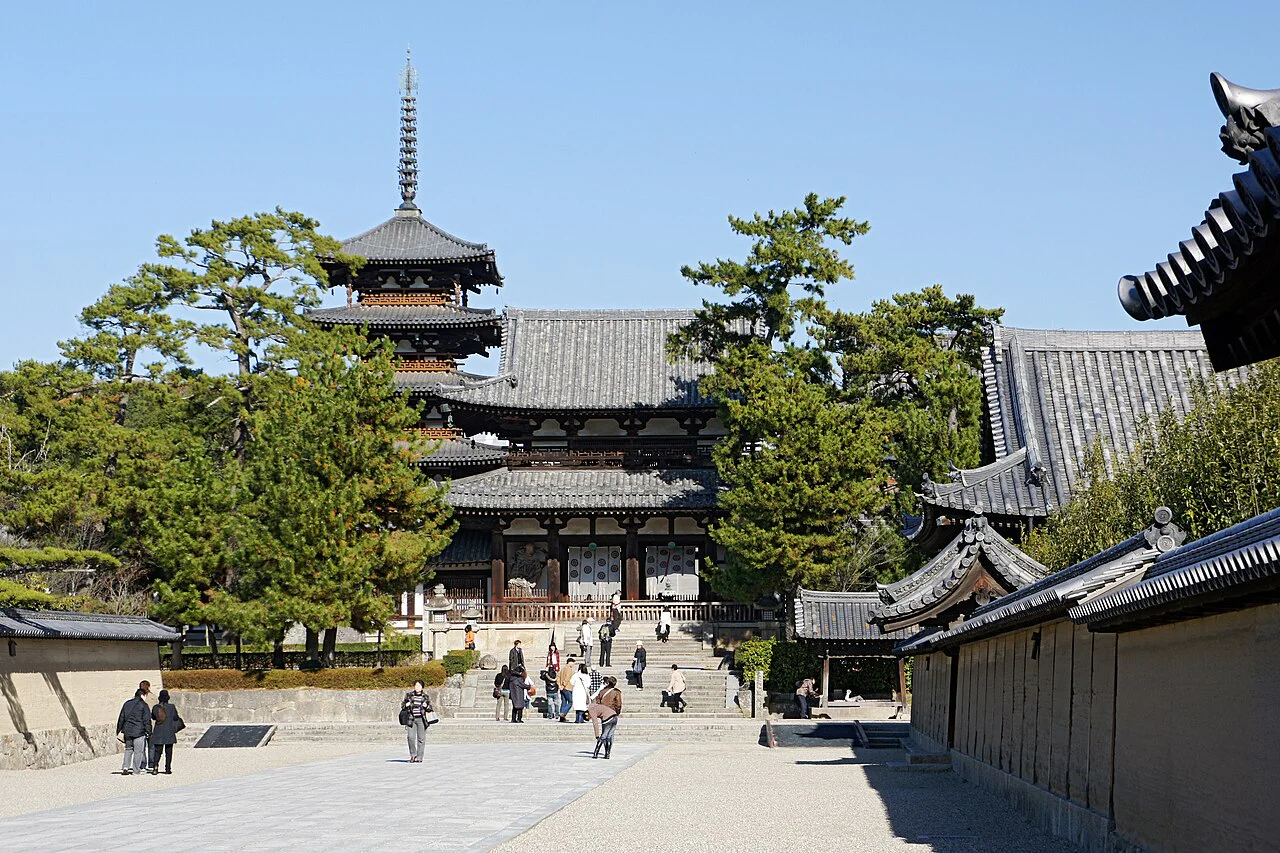
Ikaruga · 21 km
法隆寺
Content & sources
Photo: 663highland · CC BY 2.5
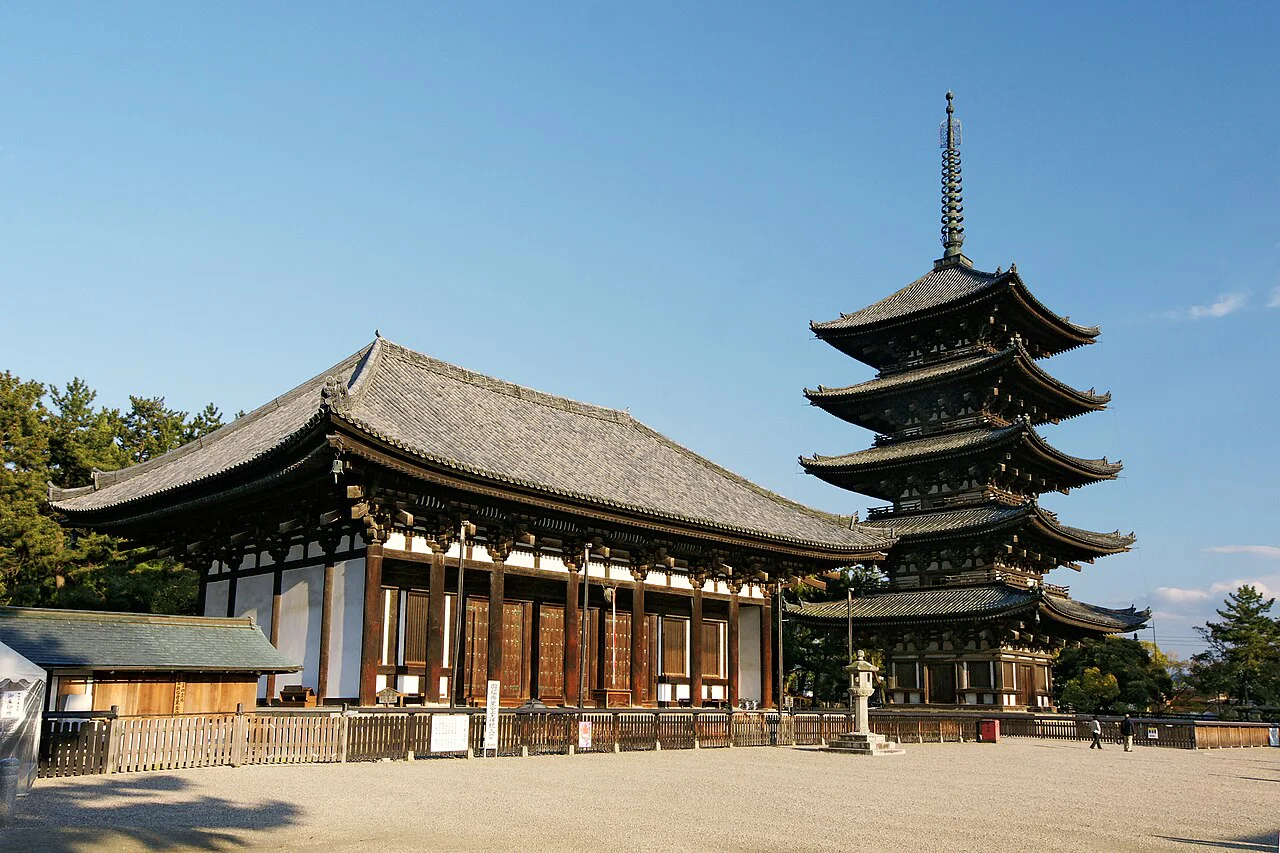
Nara · 28 km
興福寺
Content & sources
Photo: 663highland · CC BY-SA 4.0
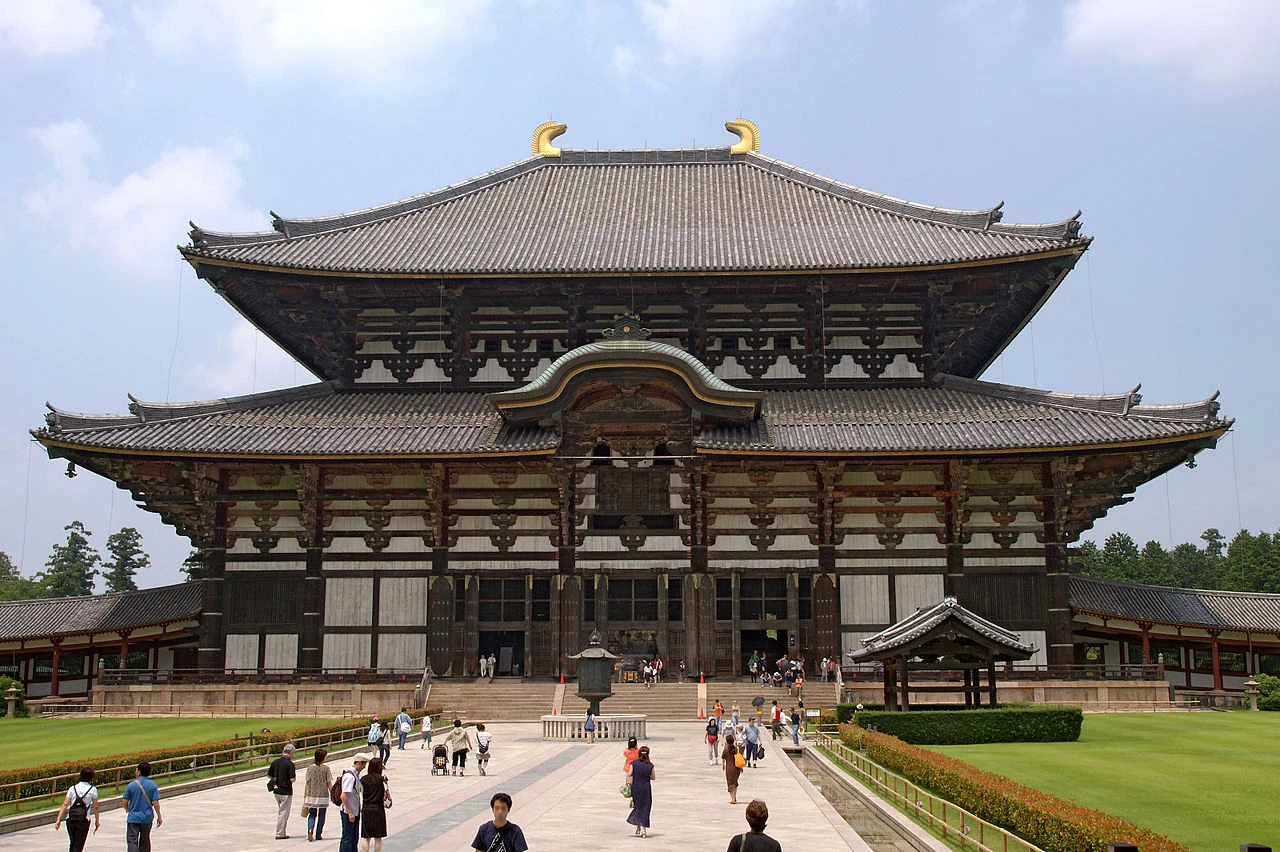
Nara · 29 km
Tōdai-ji Temple
Content & sources
Photo: 663highland · CC BY 2.5
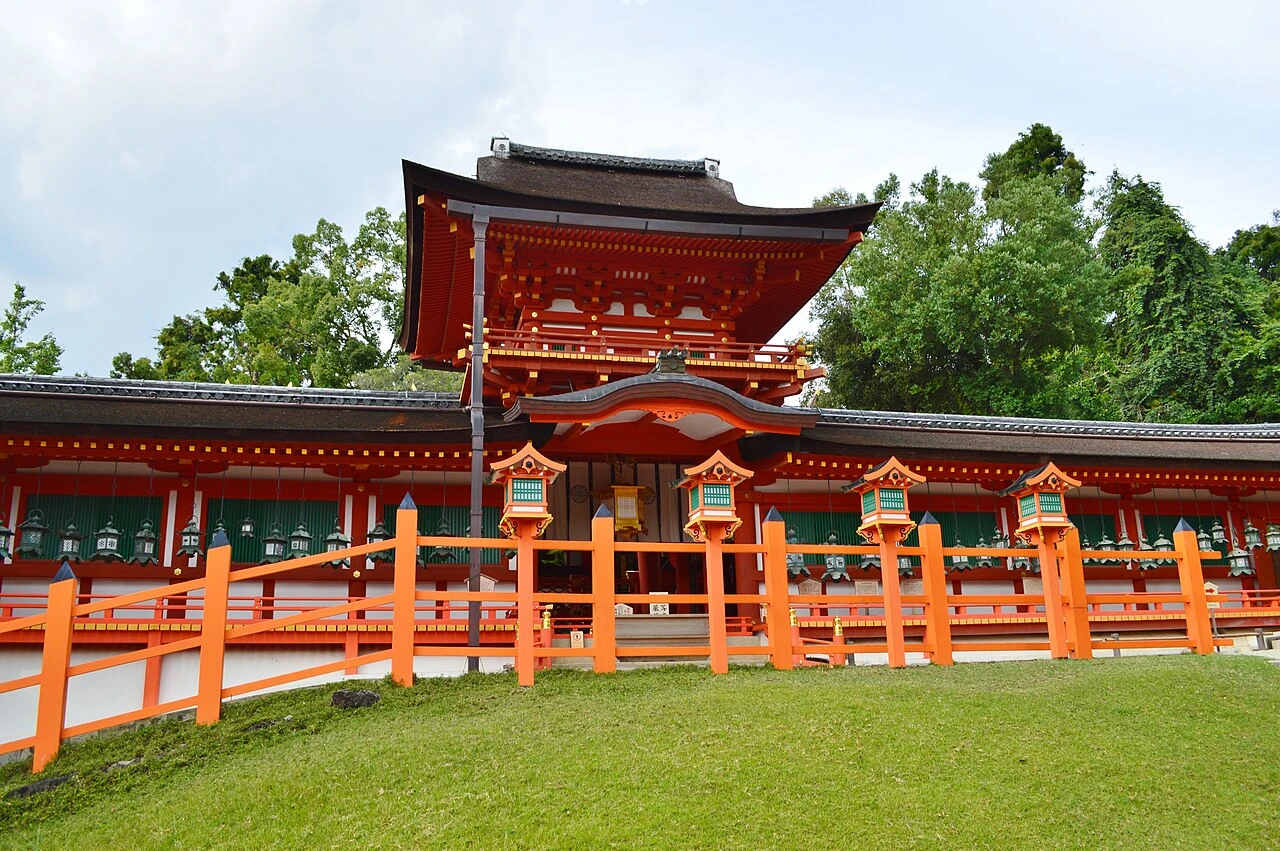
Nara · 29 km
Kasuga-taisha
Content & sources
Photo: Saigen Jiro · CC0