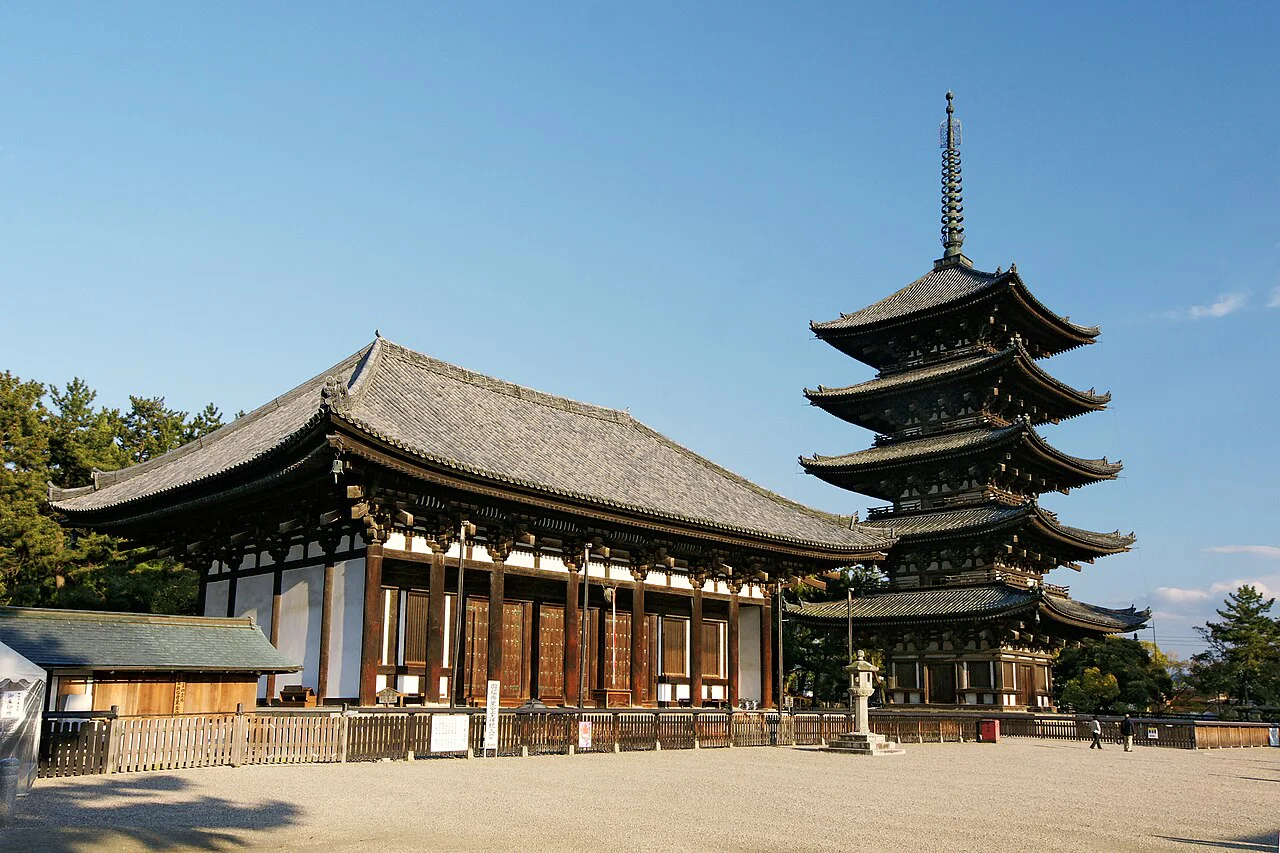
Stanza · Audio guide
興福寺 Audio Guide
A place to remember. A story to take with you.
Kōfuku-ji is a Buddhist temple in Japan that was once one of the powerful Seven Great Temples in the city of Nara. It is the national headquarters of the East Asian Yogācāra school and part of the Historic…
Download Stanza, then search for “興福寺”.
About the tour
One guide. Your kind of visit.
Kōfuku-ji is a Buddhist temple in Japan that was once one of the powerful Seven Great Temples in the city of Nara. It is the national headquarters of the East Asian Yogācāra school and part of the Historic Monuments of Ancient Nara World Heritage Site.
Ready when you are.
- 01Get the free Stanza app.
iOS & Android
- 02Find your guide.
“興福寺”
- 03Download before you go.
Works offline
Audio guide / 14 narrated stops
Inside the guide
Get to know a few of the stories before you go. Open a stop to read more.
01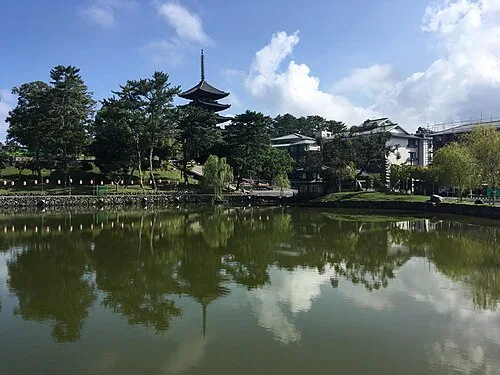 Sarusawa Pond and the South Great Gate Site
Sarusawa Pond: The Approach to Kōfuku-ji
Welcome to Kōfuku-ji, in the city of Nara. Sarusawa Pond gives the classic first view of it: still water holding the sky and clouds, and a five-storied pagoda rising above the trees on the far bank. Kōfuku-ji was once counted among the Seven Great Temples of Nara, the most powerful Buddhist establishments of the old capital. It is the ancestral temple of the Fujiwara clan, the family that steered Japanese court life for centuries, and part of the Historic Monuments of Ancient Nara, a World Heritage site. From the water's edge, a flight of stone steps climbs into the temple grounds. There are no enclosing walls to pass; the temple simply flows into Nara Park. That silhouette of the pagoda above the pond has become the emblem of Nara itself.
Photo: Christophe95 · CC BY-SA 4.0
02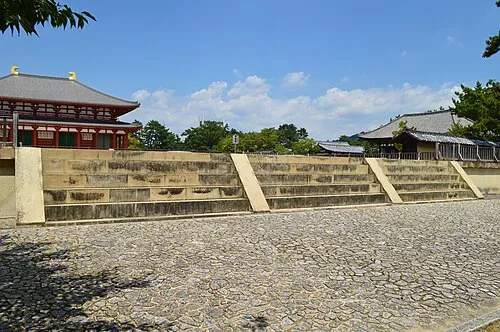 Sarusawa Pond and the South Great Gate Site
The South Great Gate Site: Founding the Temple
These stone terraces are all that remains of the temple's great southern gateway. The South Great Gate, the Central Gate and the corridor were destroyed and never rebuilt, so their foundations stand open to the sky. The story of the temple begins earlier, in 669. A noblewoman named Kagami-no-Ōkimi built a temple at Yamashina, near present-day Kyoto, to pray for the recovery of her sick husband, Fujiwara no Kamatari. After his death the temple moved twice. It went first to Fujiwara-kyō, the early planned capital, then in 710 to this spot beside the new capital of Heijō-kyō. Kamatari's son, Fujiwara no Fuhito, gave it the name Kōfuku-ji, the Temple that Generates Blessings, after a sutra he revered. As the Fujiwara rose, so did their temple. It was bound to the Kasuga Shrine nearby, and grew so entwined with power that it influenced the imperial government, at times by aggressive means.
Photo: Saigen Jiro · CC0
03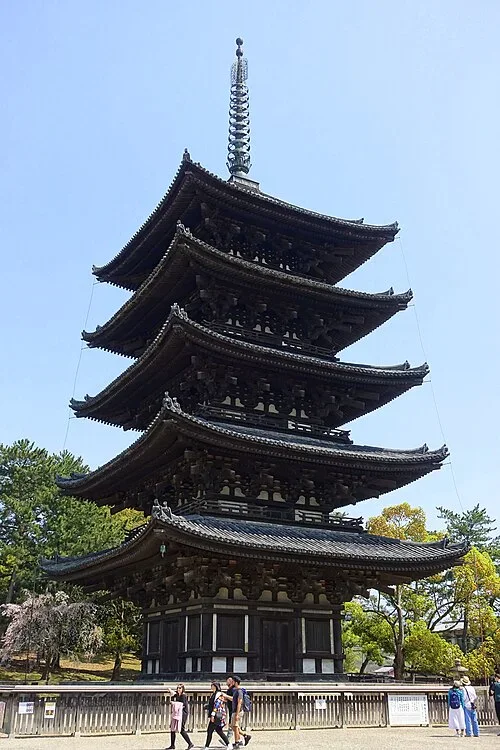 Five-Storied Pagoda (Gojū-no-tō)
The Five-Storied Pagoda
The Five-Storied Pagoda was commissioned in 730 by Empress Kōmyō, a devoted Buddhist, and it was the first of six towers to stand on this spot. The present timber building dates from 1426, raised after yet another fire. It climbs a little over fifty meters, the tallest historic building in Nara Prefecture, and second only to the pagoda of Tō-ji in Kyoto among Japan's wooden towers. Its survival once hung by a thread. In 1870 a decree of the Meiji government stripped the temple of nearly all its lands and even forbade it to use its own name. Local lore tells that the pagoda was then sold off for around two hundred and fifty yen, to a buyer who meant to burn the timber down for the metal fittings inside it. The townsfolk objected, the story goes, and the tower was spared. The pagoda stayed, and today it is a National Treasure. A major repair began in 2023 and is planned to run for several years, so the tower may be wrapped in scaffolding during a visit.
Listen in the appPhoto: Daderot · CC0
04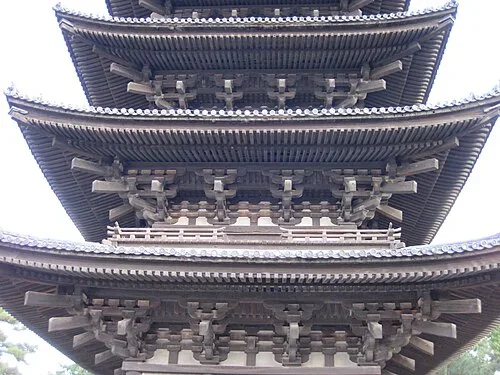 Five-Storied Pagoda (Gojū-no-tō)
Reading the Pagoda's Timber
Under each roof of the pagoda, layers of wooden brackets step outward like branches, carrying the deep eaves that throw off the rain. The roofs are hung with heavy tiles, yet the tower does not resist an earthquake — it sways. Pagodas of this Japanese type are built around a central mast, and their jointed timber is deliberately flexible. In a quake the stories can slide against one another and then settle back into place. That is how a wooden tower can stand for centuries in one of the most earthquake-prone countries on earth. Carpenters rebuilt these towers again and again over the generations, and each rebuilding carried the craft a little further.
Listen in the appPhoto: Nekosuki · CC BY-SA 4.0
05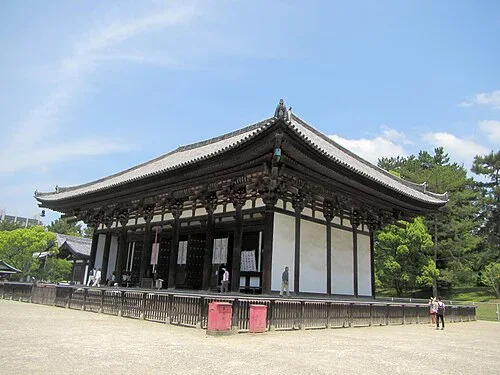 East Golden Hall (Tōkondō)
The East Golden Hall (Tōkondō)
The East Golden Hall began as a prayer for healing. In 726 Emperor Shōmu raised it to pray for the recovery of the retired Empress Genmyō, his aunt, and installed in it a triad of Yakushi, the Buddha of medicine. The hall has burned with the rest of the temple more than once. The building here is the fifth, put up in 1415 during the Muromachi period. Its builders deliberately reached back to the Tenpyō style of the Nara period, taking the Golden Hall of Tōshōdai-ji as their model. The deep hipped roof and the dark bracket work across the façade carry that older manner. The hall is designated a National Treasure, and it remains a numbered station on a pilgrimage of Yakushi temples, so worshippers still come before the healing Buddha today.
Listen in the appPhoto: Nekosuki · CC BY-SA 4.0
06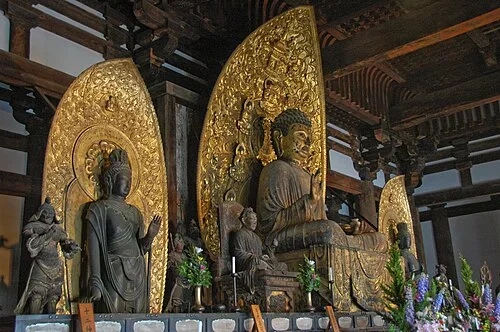 East Golden Hall (Tōkondō)
Inside the East Golden Hall: The Bronze Head from Yamada-dera
The gilded altar inside this hall holds the temple's sacred images, and one of the strangest tales in Japanese sculpture is buried here. In 1187, with the temple still recovering from the wars, monks of this hall went to Yamada-dera in the Asuka region and carried off a celebrated bronze Yakushi triad, a statue thought to have been built in 685. They set it up as this hall's main image. Then, in 1411, fire consumed the hall. The two flanking bodhisattvas were rescued, but the central Buddha burned, and only its head survived, the left ear warped by the heat. The scorched head was placed inside the pedestal of the newly made main image, and there it lay in darkness for centuries. In 1937, when workmen dismantled the hall for repair, they uncovered it, along with a rare silver arm of a Buddhist image. The head is now a National Treasure in its own right, a survivor from the seventh century.
Listen in the appBamse · CC BY-SA 3.0
07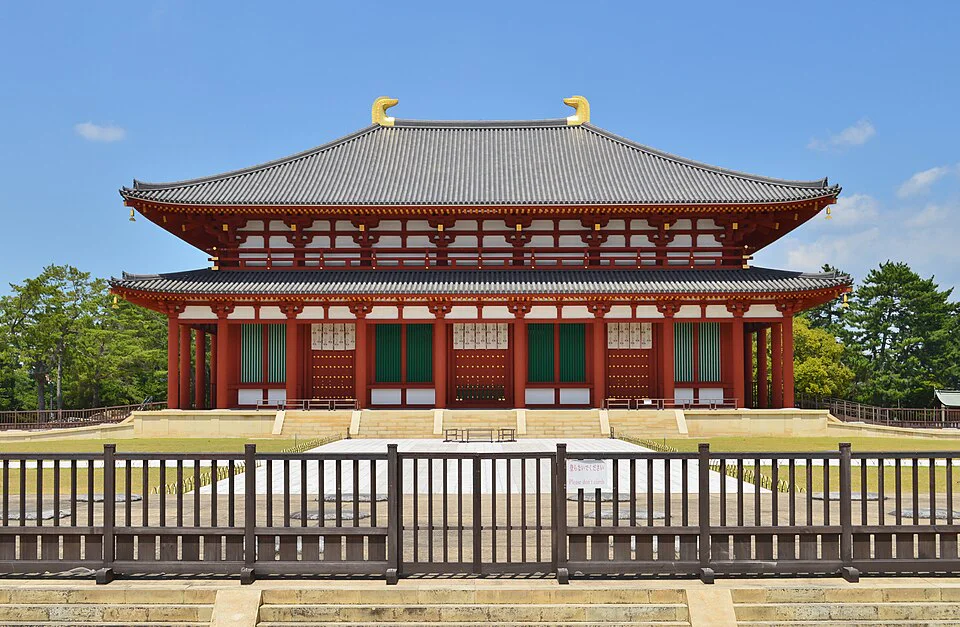 Central Golden Hall (Chū-kondō)
The Central Golden Hall Reborn
The vermilion Central Golden Hall is the ninth of its line, completed in 2018. The first was begun just after the capital moved to Heijō-kyō, as the temple's principal Buddha hall, and it has burned and risen again many times. The worst blow came in 1717, when fire left it in ruins. For nearly three centuries the temple made do with a small temporary hall, painted red and loved as the Red Hall. It was built of cheap pine with poor tiles, and the roof leaked worse every year. Until the museum opened, it even sheltered many of the temple's greatest statues. The old temporary hall was finally taken down in 2000. Work on the new hall began more than thirteen hundred years after the temple's founding, and it was consecrated in October of 2018. It once more enshrines the temple's main deity, the Buddha Shaka Nyorai.
Listen in the appPhoto: Saigen Jiro · CC0
08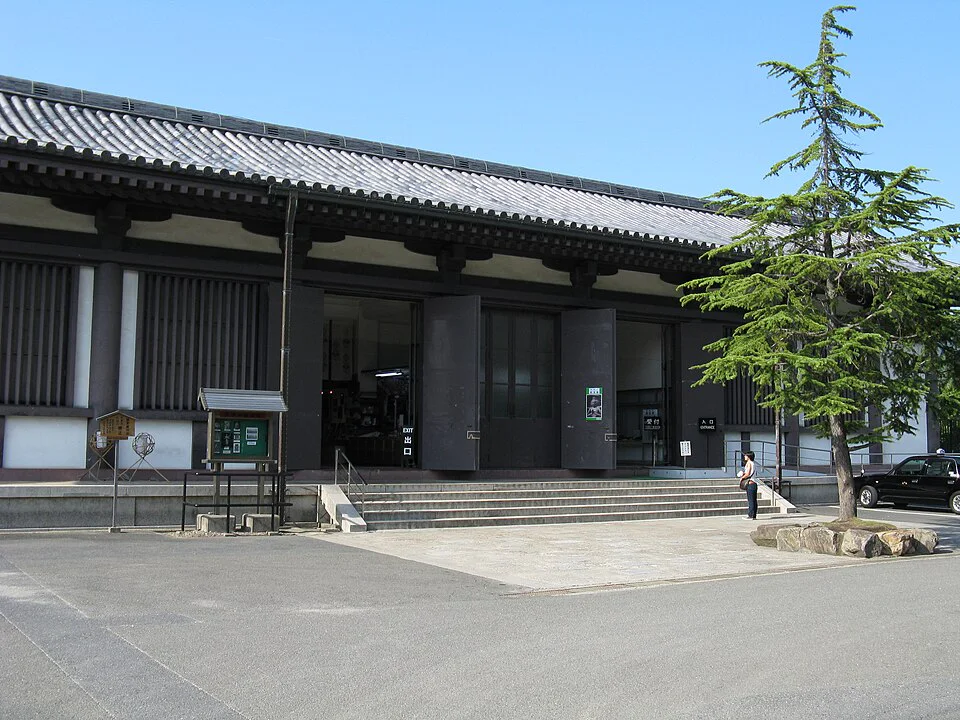 National Treasure Museum (Kokuhōkan)
The National Treasure Museum (Kokuhōkan)
This long, low gallery is the National Treasure Museum, built in 1959 to house the temple's collection. It stands on the footprint of the monks' dining hall, a Nara-period building torn down in the Meiji era when the temple had fallen on hard times, and the old foundations are preserved intact beneath the floor. The architecture deliberately echoes the temple buildings of Nara's classical age. At its center stands one of the collection's giants: a Thousand-Armed Kannon just over five meters tall, which once served as the dining hall's own main image. Kōfuku-ji holds twenty-seven National Treasures across its halls and this collection, a density few temples in Japan can match. Recent renovations replaced the old lighting with LEDs, so many of the statues now stand in open air rather than behind glass.
Listen in the appPhoto: KENPEI · CC BY-SA 3.0
09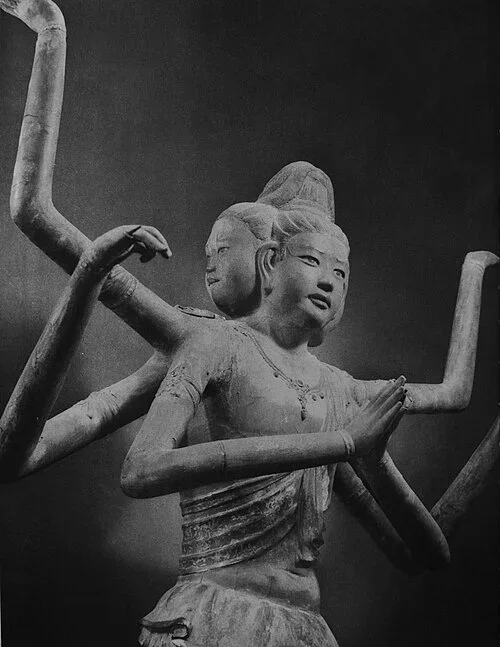 National Treasure Museum (Kokuhōkan)
The Ashura
Of all the faces in the museum, this one is loved most. The Ashura is one of the Eight Classes of Beings, a set of guardian figures commissioned in 734 under Empress Kōmyō for a West Golden Hall she raised in memory of her mother. The hall itself is long gone, burned in the eighteenth century and never rebuilt, so its statues moved into the museum instead. The figure is formed of dry lacquer, shaped into a slender youth with several arms and several faces. Generations of visitors have read its expression as sorrowful and humane — a young being who seems to carry a quiet grief. It has become an emblem of Nara-period sculpture.
Listen in the app今泉篤男 et al. · Public domain
10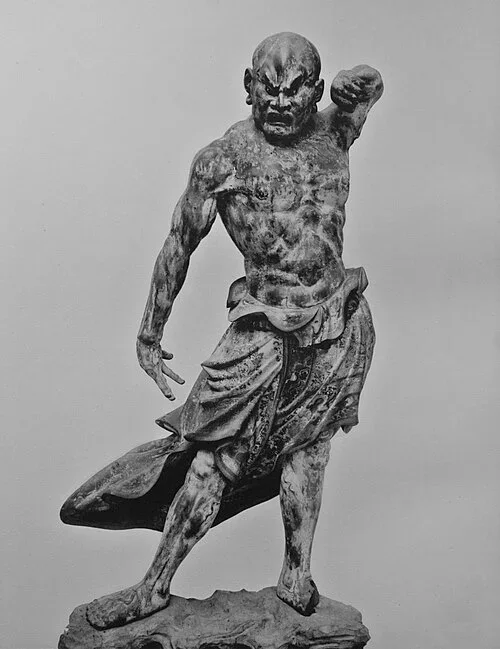 National Treasure Museum (Kokuhōkan)
Guardian of the Gate: Nio (Agyō)
This guardian is Agyō, the open-mouthed one of the two guardian kings who stand watch at Japanese temple gates. The figure dates from the Kamakura period, but its story begins with a catastrophe. In 1180, during the civil wars, much of Nara was put to the torch, and Kōfuku-ji burned with it. Out of the ashes came a renaissance in sculpture. The temple's workshop of image makers, the Kei school led by Kōkei and his son Unkei, forged a new style: bodies with swelling muscles and taut veins, drapery caught mid-motion, faces full of force. It reshaped Japanese Buddhist sculpture, and the realism proved durable. This guardian is a product of that new manner.
Listen in the appStatue: Jōkei I; Photo: Nara National Museum 奈良帝室博物館 (Showa 8 - 1933) · Public domain
- 11
The South Octagonal Hall (Nan'endō)
A living pilgrimage temple: the ninth stop on the Saigoku Kannon route, its doors closed all year except one October day.
- 12
The North Octagonal Hall (Hoku'endō)
The oldest building at Kōfuku-ji, raised by two reigning empresses for the memorial of Fujiwara no Fuhito and rebuilt in 1210.
- 13
Portrait of a Patriarch: Muchaku
Muchaku, Indian patriarch of the doctrine Kōfuku-ji still teaches, captured in the Kamakura age's revolutionary new realism.
- 14
The Three-Storied Pagoda: A Temple That Rises Again
The quiet 1185 Three-Storied Pagoda in its sunken hollow, and the thirteen centuries of loss and renewal that are Kōfuku-ji's true monument.
興福寺
Frequently asked questions
How much does the guide cost?
Free app download. Listed guide price: $0.99. Guide price shown in the app. Audio guide only. Venue admission is separate.
Can I listen without internet?
Yes. Download the guide’s audio, images, and maps in the app before your visit. Your downloaded content is then available offline.
Can I listen in my language?
This audio guide is available in 15 languages, including English.
Do I need to follow a schedule?
No. This is a self-guided experience. Choose your stops, pause whenever you like, and return to a story at your own pace.
At your own pace
Explore 興福寺.
Download Stanza, then search for “興福寺”.
Free app download · Guide price shown in the app
Keep exploring
Nearby audio guides
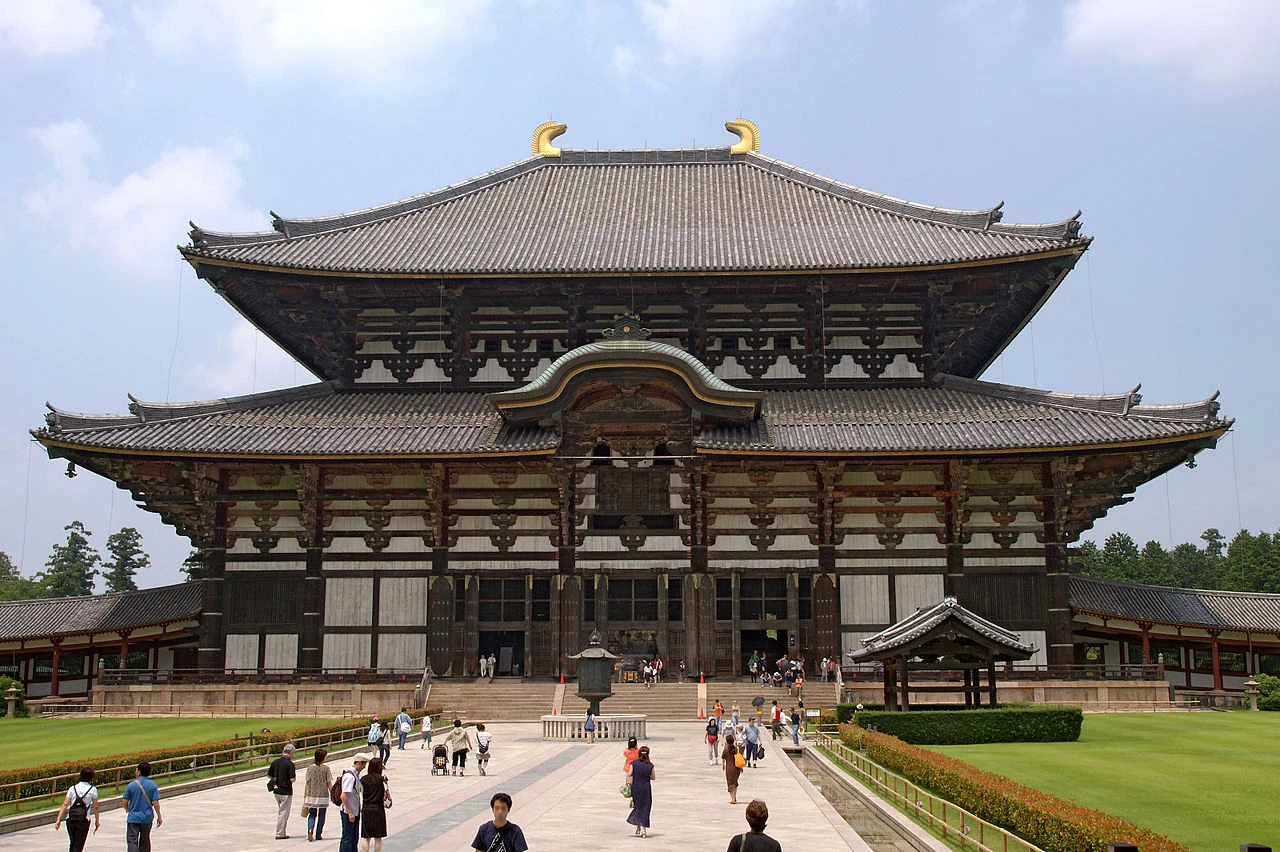
Nara · 1 km
Tōdai-ji Temple
Content & sources
Photo: 663highland · CC BY 2.5
Nara · 2 km
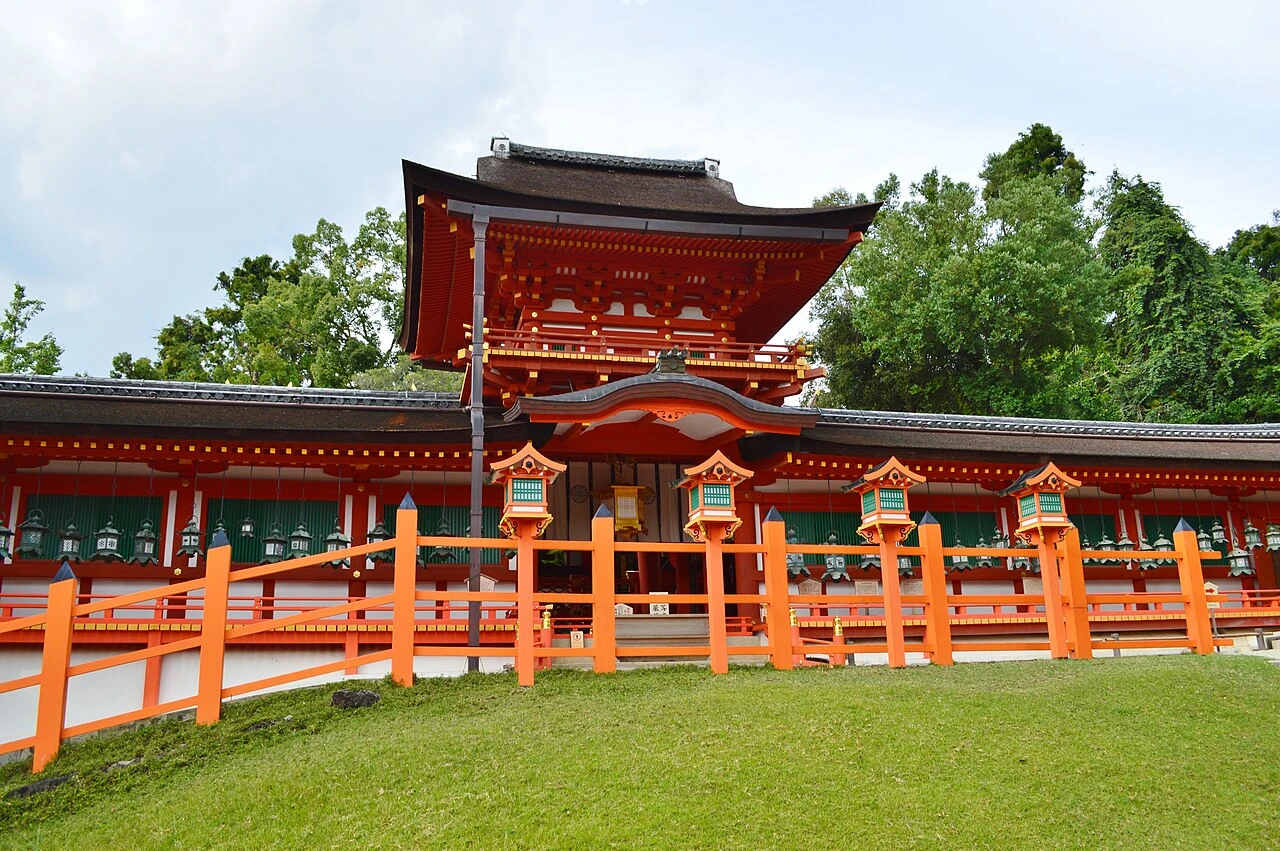
Kasuga-taisha
Content & sources
Photo: Saigen Jiro · CC0
Ikaruga · 12 km
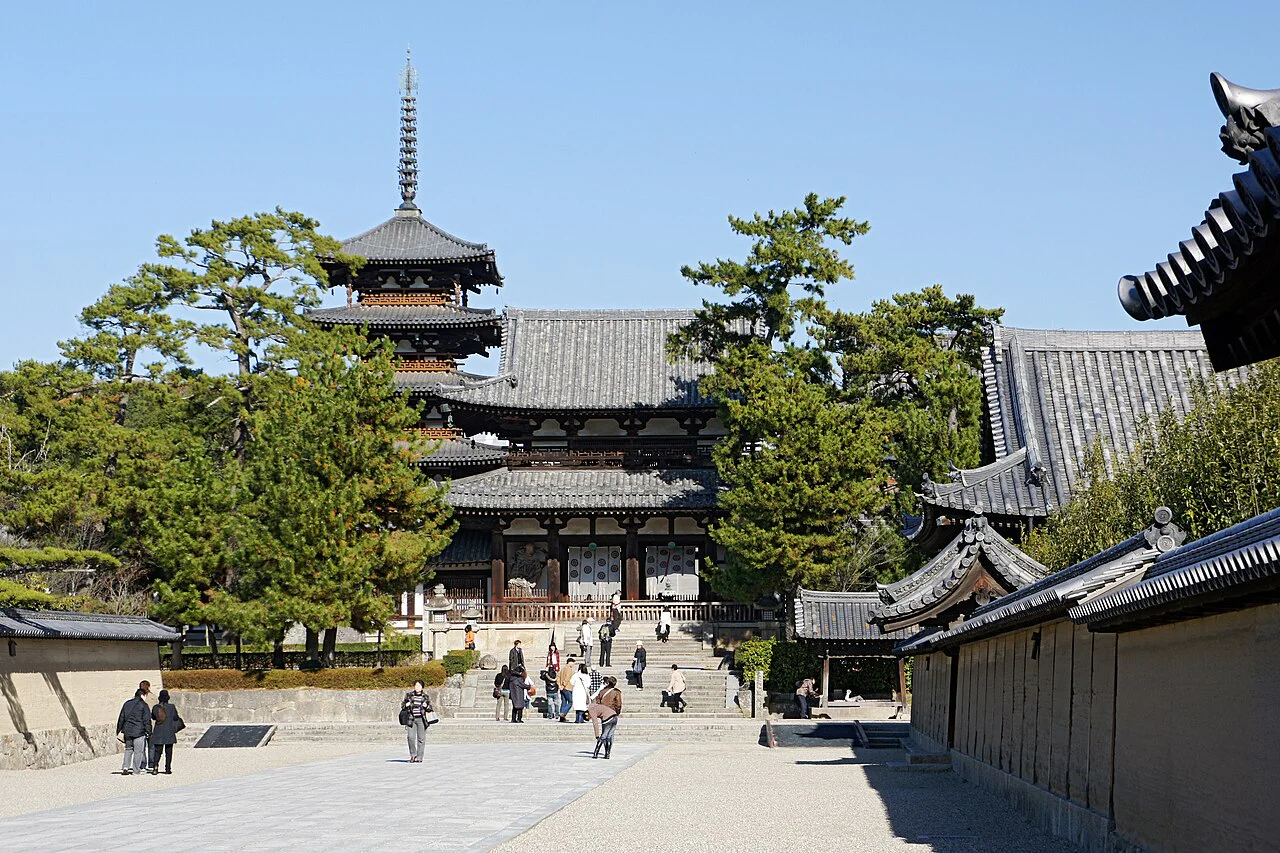
法隆寺
Content & sources
Photo: 663highland · CC BY 2.5
Uji · 23 km
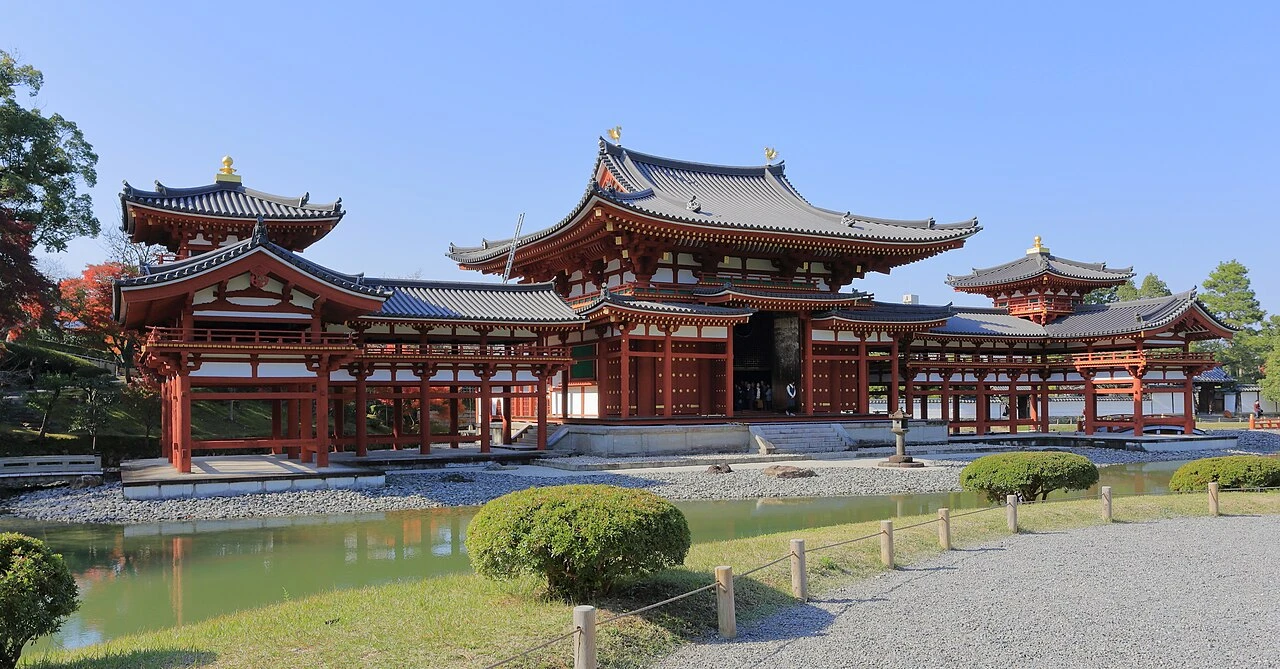
Byōdō-in
Content & sources
Photo: Martin Falbisoner · CC BY-SA 4.0