Languages
15Tokyo Skytree Audio Guide
Tokyo Skytree is a landmark in Sumida, Japan. Explore it with Stanza's GPS-triggered offline audio guide — available in 15 languages.
Quick Facts
20
Stops
15
Languages
100%
Offline
📍 Sumida, Japan · 35.7101°N, 139.8107°E
About Tokyo Skytree
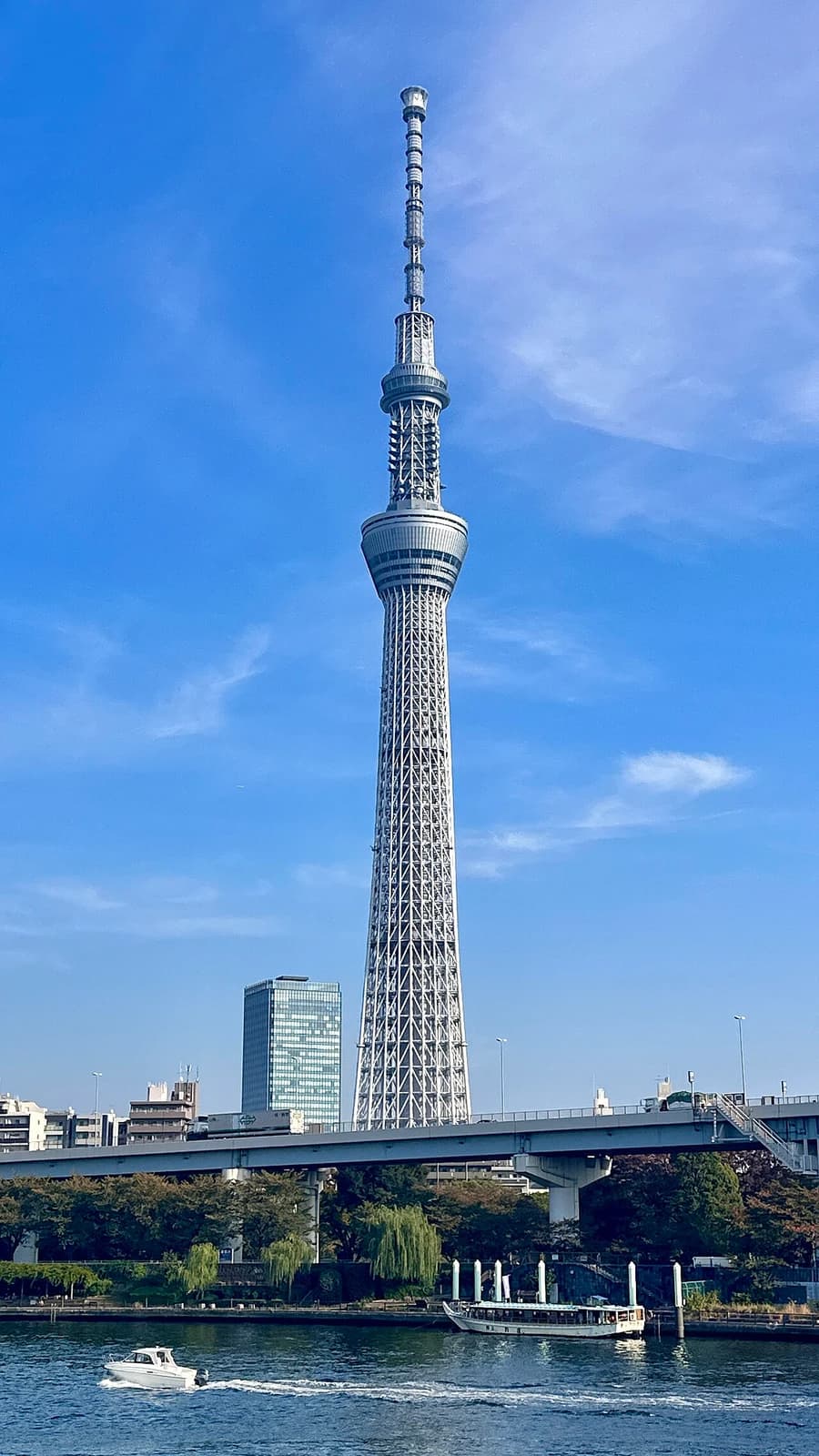
Tokyo Skytree is a broadcasting and observation tower located in Sumida, Tokyo, Japan. It is recognized as the tallest tower in the world, providing visitors with panoramic views of the city.
Tokyo Skytree is also known as New Tokyo Tower, TOKYO SKYTREE, スカイツリー, 東京スカイツリー.
This self-guided audio tour features 20 narrated stops organized across 7 sections. As a tower, Tokyo Skytree offers a unique cultural experience in the heart of Sumida, Japan.
The Stanza audio guide is available in 15 languages and works entirely offline — download the complete tour including audio narration, maps, and images before your visit. As you walk through Tokyo Skytree, GPS-triggered narration plays automatically at each point of interest.
Last updated:
What you will hear
4F Entrance Lobby
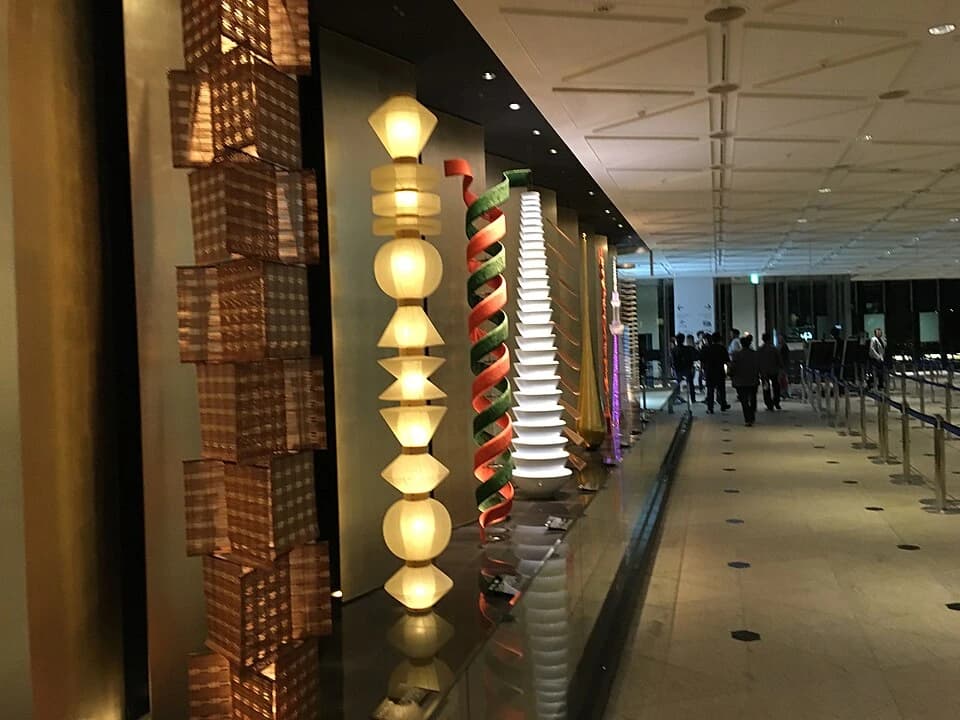
The transition point from the ground to the sky, featuring digital displays and artistic patterns.
The Digital Art Wall
As you prepare for your ascent, you will encounter the Digital Art Wall, a series of light installations that serve as an artistic transition from the ground to the sky. These displays use high-resolution digital technology to present motifs inspired by the traditional aesthetic of the Edo period, the era that defined the culture of old Tokyo. You might see patterns resembling traditional textiles, seasonal flora, or the flowing waters of the nearby Sumida River. This installation perfectly encapsulates the overarching theme of the Skytree: the harmony between cutting-edge technology and historical craftsmanship. By using state-of-the-art light-emitting diodes to recreate ancient designs, the artists have created a visual metaphor for the tower itself. It reminds visitors that while we are traveling to the heights of modern engineering, we are doing so from a foundation of centuries-old culture. These calming, rhythmic displays are meant to prepare your mind for the journey, offering a moment of beauty and reflection before you step into the high-speed elevators that will whisk you into the clouds.
The Tembo Shuttle
The high-speed elevator experience that reaches 350 meters in just 50 seconds.
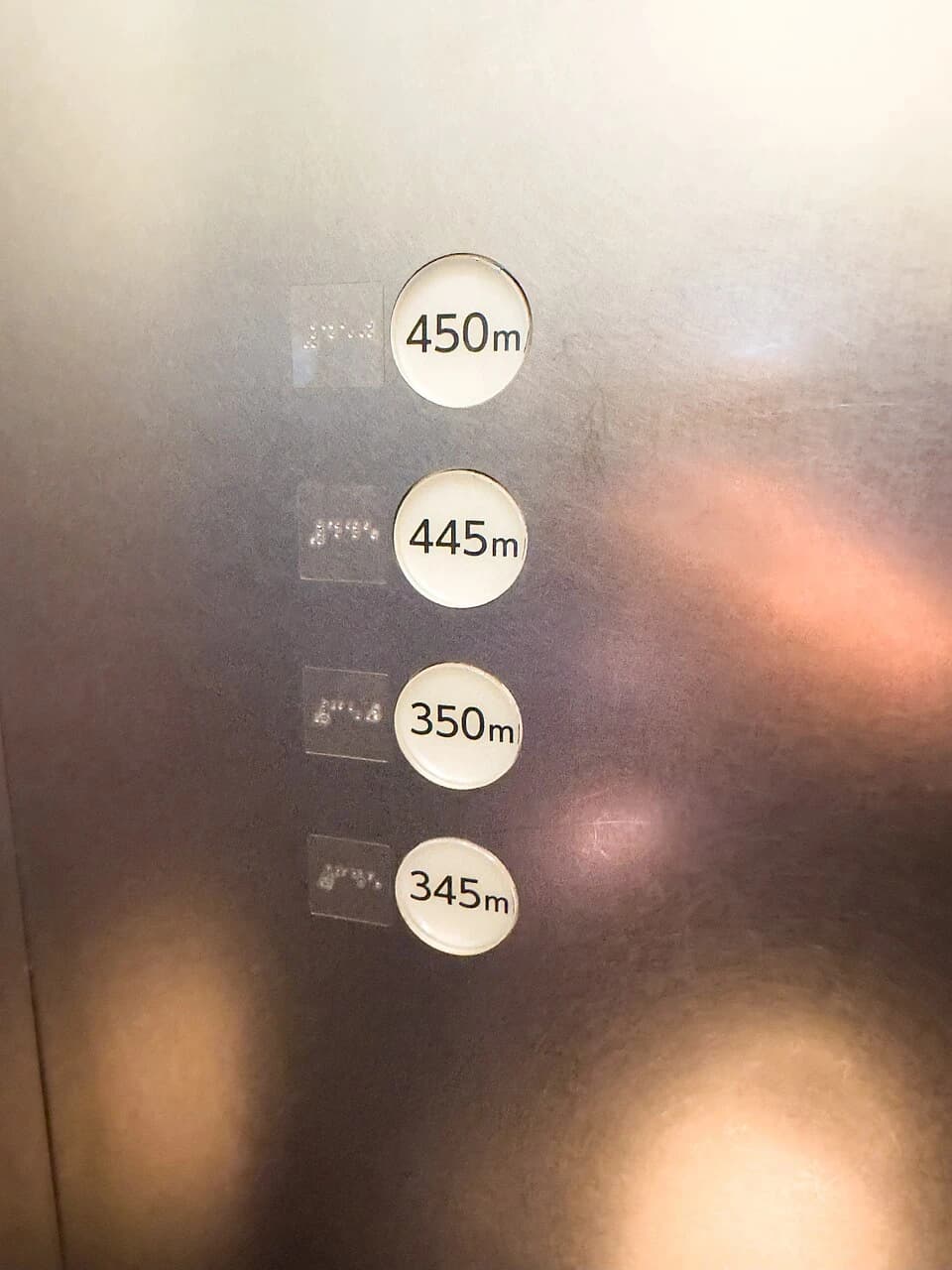
The Vertical Journey
As you travel through the tower, you will encounter panels like this one that help clarify your route through the clouds. There are two primary observation zones to explore. The first is the Tembo Deck, located at Floor 350. This is the main hub of the tower, featuring wide viewing areas, a cafe, and a restaurant. It provides the first truly panoramic view of the Kanto region, allowing you to see the city's vast layout from a moderate but still impressive height. For those who want to go even higher, your journey continues to the Tembo Galleria, which spans Floors 445 and 450. The elevation difference between these two zones is significant. While 350 meters offers a clear view of the city's buildings and streets, the 450-meter level provides a more detached, aerial perspective where the city begins to look like a map. Understanding these two distinct levels is key to enjoying your visit, as each offers a different sensory experience of the height and the landscape of Tokyo.
Tembo Deck (350m)
The primary observation level offering 360-degree views of the Kanto region and Mount Fuji.
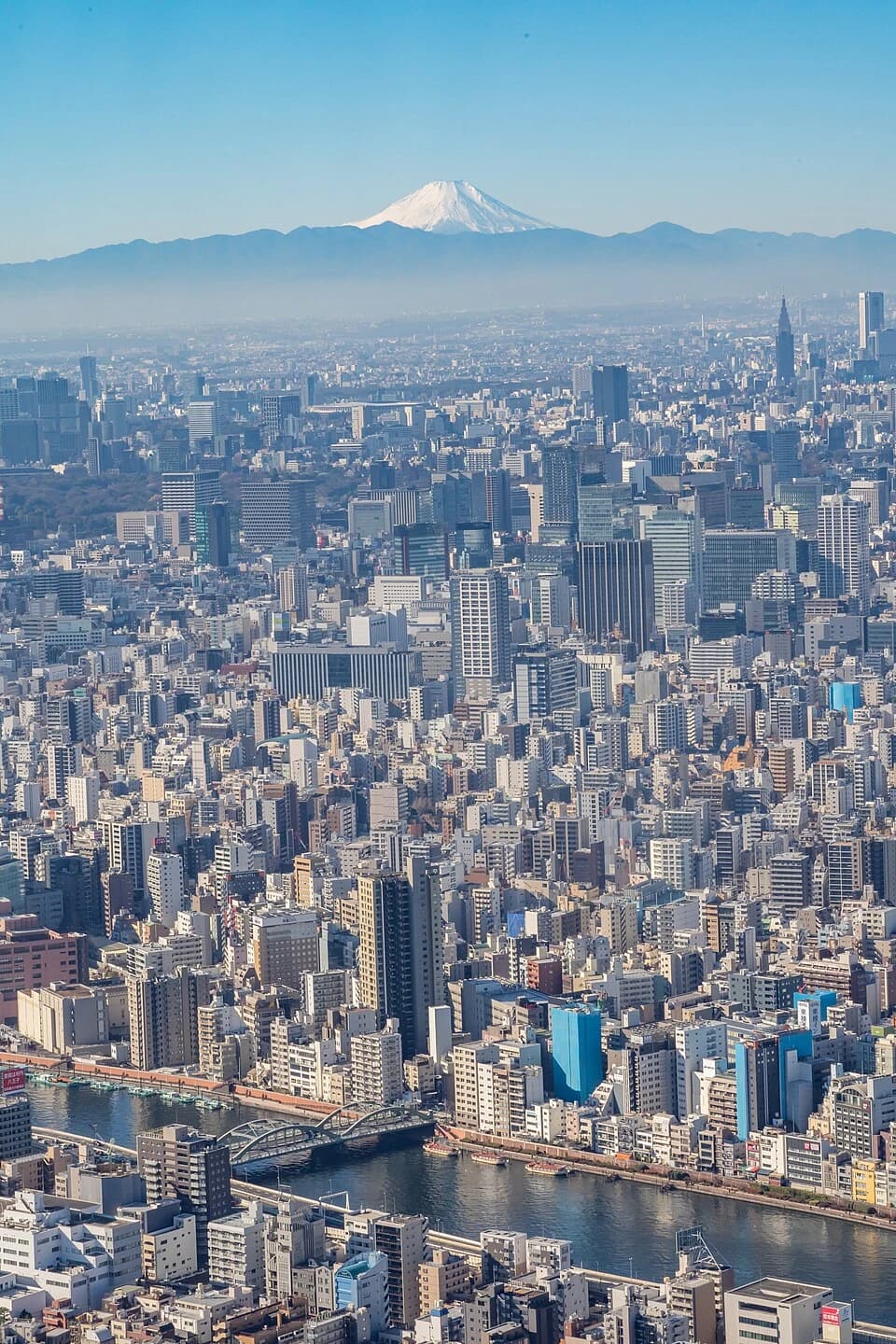
View of Mount Fuji
If you look toward the southwest horizon on a clear day, you will be rewarded with a view of the majestic Mount Fuji, standing approximately 100 kilometers away. Its perfectly symmetrical, snow-capped cone is one of the most recognizable symbols of Japan. For centuries, artists and poets have celebrated this mountain as a sacred entity, and seeing it from the Skytree provides a fascinating modern perspective on this ancient landmark. In the Edo period, Mount Fuji was the dominant feature of the Tokyo skyline, and many buildings were oriented specifically to catch a glimpse of it. Today, the Skytree offers one of the few places where you can look over the modern skyscrapers and still connect with that historic view. Seeing the mountain rise above the hazy blue of the horizon, often framed by the city's sprawl, reminds us of the natural beauty that exists just beyond the urban reach. It remains a deeply cultural experience for the people of Tokyo, serving as a reminder of the timeless landscape that surrounds this ever-changing city.
Tembo Galleria Spiral Walk
The glass-enclosed skywalk from 445m to 450m, designed to feel like walking through the clouds.
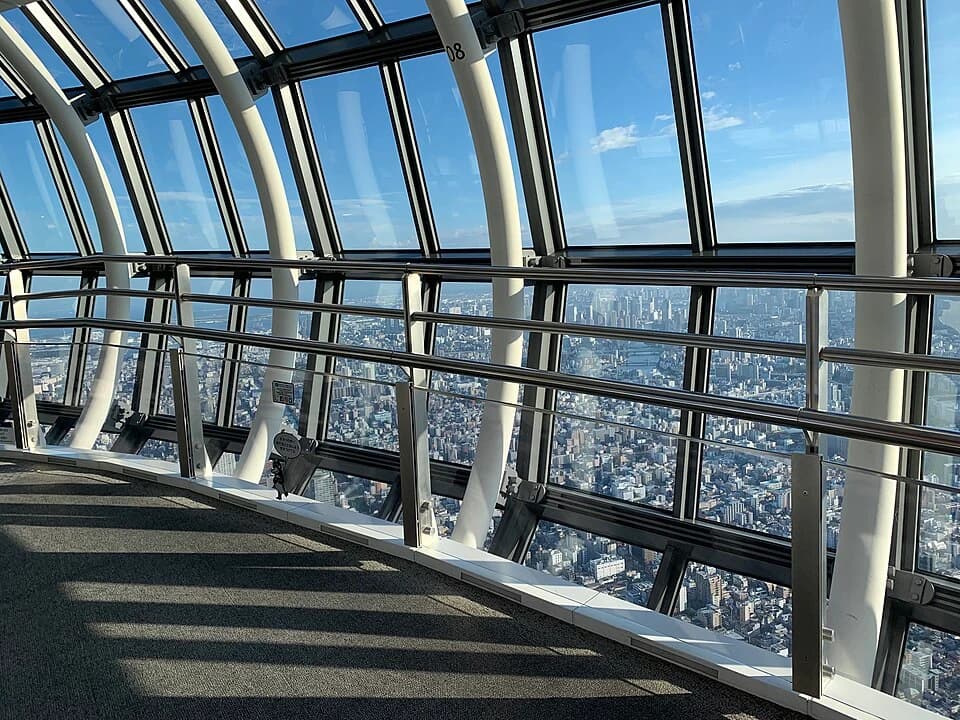
The Skywalk Perspective
Standing here at 450 meters, the sensory experience of the city changes dramatically. From this vantage point, notice how the massive, white steel ribs of the tower's outer structure frame your view. These ribs are a constant reminder of the incredible strength required to support a building of this height. Looking through them, the vast, sprawling metropolis of Tokyo, with its millions of people and thousands of buildings, begins to look like an intricate miniature model or a detailed map come to life. The air up here is significantly thinner and clearer than at the base, and the silence of the high-altitude environment contrasts sharply with the noise and bustle of the streets below. From this height, even the largest skyscrapers look like small blocks, and the trains moving along the tracks look like tiny toys. This perspective shift is one of the most memorable parts of a visit to the Skytree; it provides a sense of peace and detachment, allowing you to appreciate the organized chaos of the world's largest city from a calm, elevated distance.
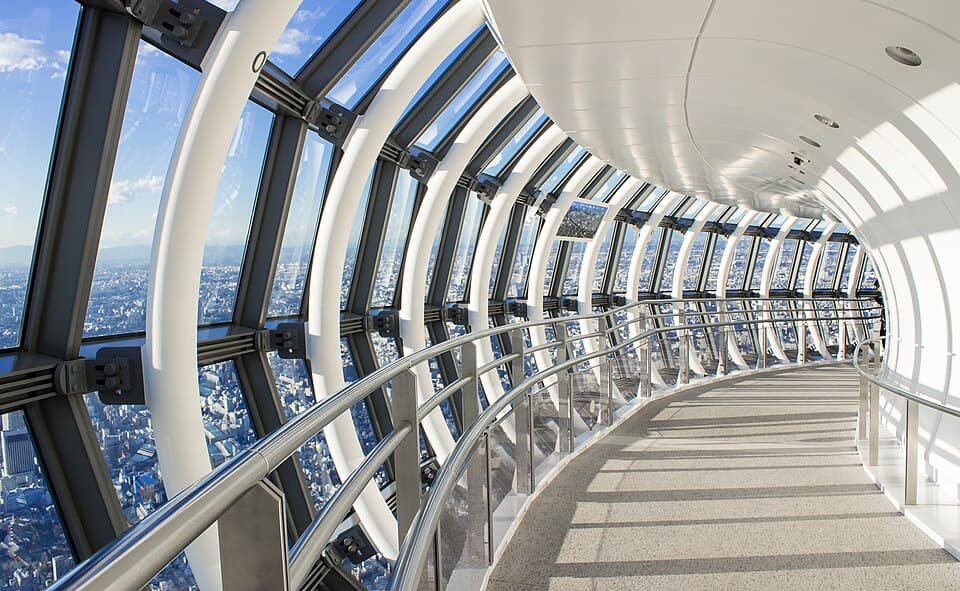
Tokyo Skytree Tembo Galleria
2012
While the observation decks are for the public, these pods you see in the tower's structure house the Skytree's core technical mission. Within these high-altitude compartments is the essential broadcasting equipment for Japan's major television and radio networks, including the national broadcaster NHK. The tower’s extreme height was a direct response to the needs of these broadcasters. As Tokyo’s skyline filled with more and more skyscrapers over 200 meters tall, signal interference became a serious issue for the older, shorter Tokyo Tower. By placing the antennas and transmitters at this height, the Skytree can broadcast signals over the top of the tallest office buildings, ensuring clear digital reception for millions of homes across the Kanto region. The pods are designed to protect the sensitive equipment from the elements, including high winds and extreme temperatures. This integration of a high-tech utility with a public landmark is a hallmark of Japanese urban planning, where every massive structure is expected to serve a vital role in the city's daily life and infrastructure.
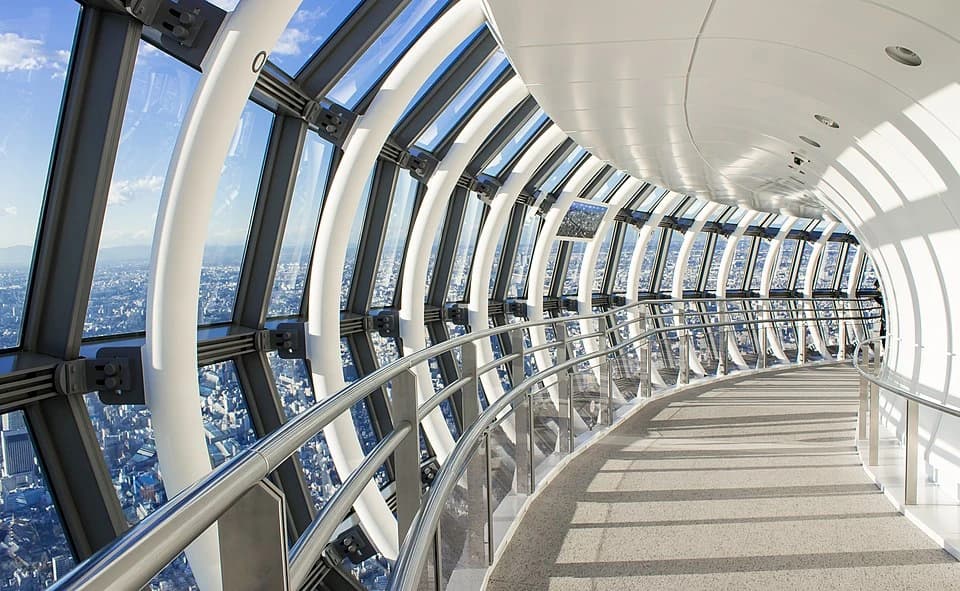
The Tembo Galleria
You are now entering the Tembo Galleria, perhaps the most thrilling part of the Skytree experience. This glass-enclosed spiral skywalk winds its way around the outside of the tower's core, ascending gradually from Floor 445 to Floor 450. The path is designed to give you the sensation of 'walking in the clouds.' Because the walkway is transparent on almost all sides, you can see both the city far below and the clouds passing by at eye level. The design of the Galleria is intentionally light and airy, allowing visitors to feel the full impact of the height while being safely enclosed within the reinforced glass and steel structure. As you walk along the slope, the perspective of the city changes constantly, providing a truly immersive, 360-degree experience. This architectural feature was designed to make the final stage of the ascent an active journey rather than just a ride in an elevator. It is a place where you can pause, take in the incredible vistas, and truly appreciate the unique engineering that allows humans to walk so high above the earth.
Sorakara Point: The Summit
The highest accessible point at 451.2 meters, featuring light and glass installations.
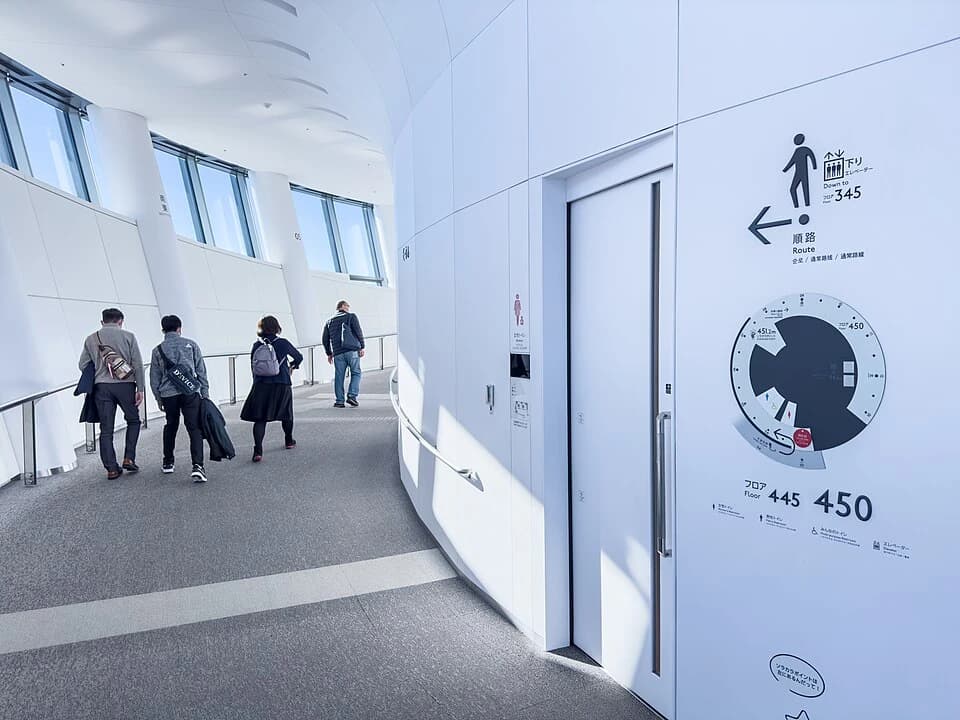
Sorakara Point
You have arrived at Sorakara Point, which, at 451.2 meters, is the highest point in the Tokyo Skytree accessible to the general public. The name 'Sorakara' translates roughly to 'from the sky,' and the space is designed to make you feel as though you have left the solid earth behind. This final destination features a unique interior design with geometric light patterns and a glass floor installation that creates an immersive, floating sensation. Standing here, you are higher than most of the clouds that drift over Tokyo. The lighting in this area is designed to shift and change, mirroring the colors of the sky as day turns to night. It is a place for final reflections and for taking in the absolute most expansive view possible. Being at Sorakara Point is a symbolic achievement for many visitors, representing the end of a vertical journey that began over 450 meters below. From this summit, you can see the curvature of the earth on the horizon, a powerful reminder of our place in the world and the incredible human ingenuity that built this path into the heavens.
Floor 340: The Glass Floor
The descent leads to the thrilling glass floor section where visitors can look straight down to the base.
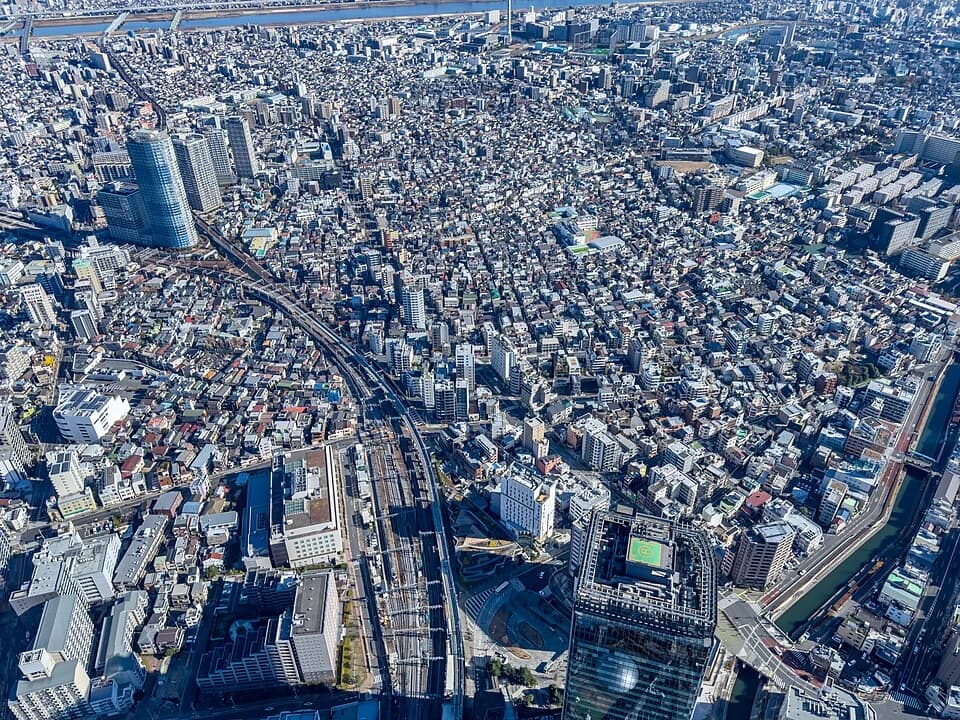
The Sumida River Grid
Gazing straight down from the heights of the Skytree, the city reveals its true character as a complex urban tapestry. Directly below lies the Sumida Ward, characterized by its dense grid of streets and low-rise residential buildings. You can see the Sumida River snaking its way through this landscape, a historic waterway that has been the lifeblood of the city for centuries. The river's path is lined with parks and walkways that provide a rare bit of green in the grey urban expanse. From here, you can clearly see the contrast in scales that defines Tokyo. In the foreground are the old, tightly packed neighborhoods where the spirit of old Edo still lingers. In the distance, however, you can see the sharp, metallic clusters of the Shinjuku district, home to the city's most famous modern skyscrapers. This view helps you understand the geography of the Kanto Plain and how the city has grown outward over time. The river acts as a constant landmark, guiding the eye through a city that seems to go on forever in every direction.
Iki and Miyabi: A Night Reflection
Conclusion of the tour, focusing on the tower's cultural lighting themes and its place in Tokyo's nightscape.
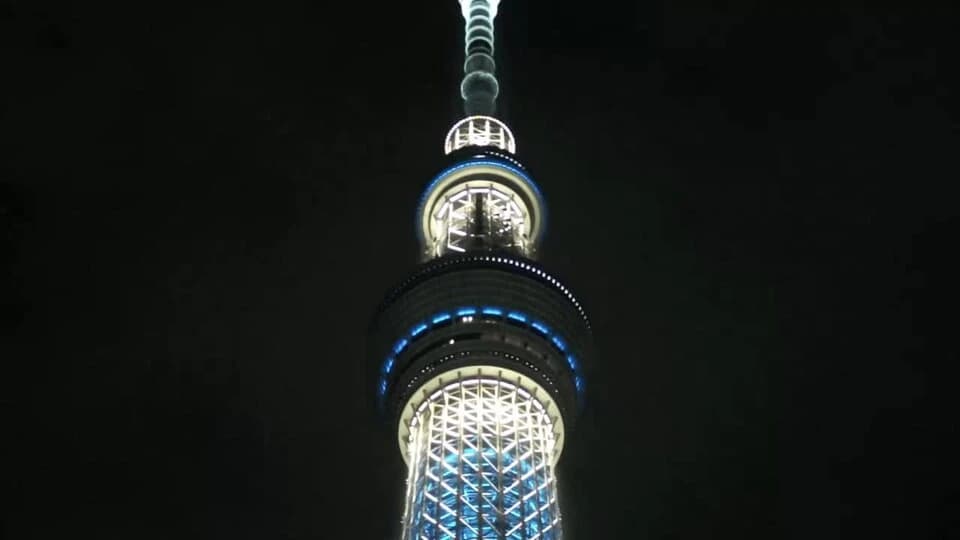
The Iki Lighting
Another core lighting theme you will often see is 'Iki,' characterized by a cool, pale blue glow. In Japanese culture, 'Iki' is a complex aesthetic concept that translates to something between 'chic,' 'stylish,' and 'sophisticated.' This particular light is meant to represent the clear, flowing waters of the nearby Sumida River, which has been central to the identity of this part of Tokyo for generations. The lighting themes for the Skytree typically alternate daily, allowing the tower to reflect the shifting moods and rhythms of the city. While 'Miyabi' is about elegance and tradition, 'Iki' is about a crisp, modern vitality. The designers also included a subtle shimmering effect in the lights, intended to mimic the way light reflects off the river's surface. These nightly displays have turned the tower into a dynamic piece of public art that can be seen from miles away. It serves as a visual heartbeat for the city, changing its appearance to match the time of year and the spirit of the people who live in its shadow.
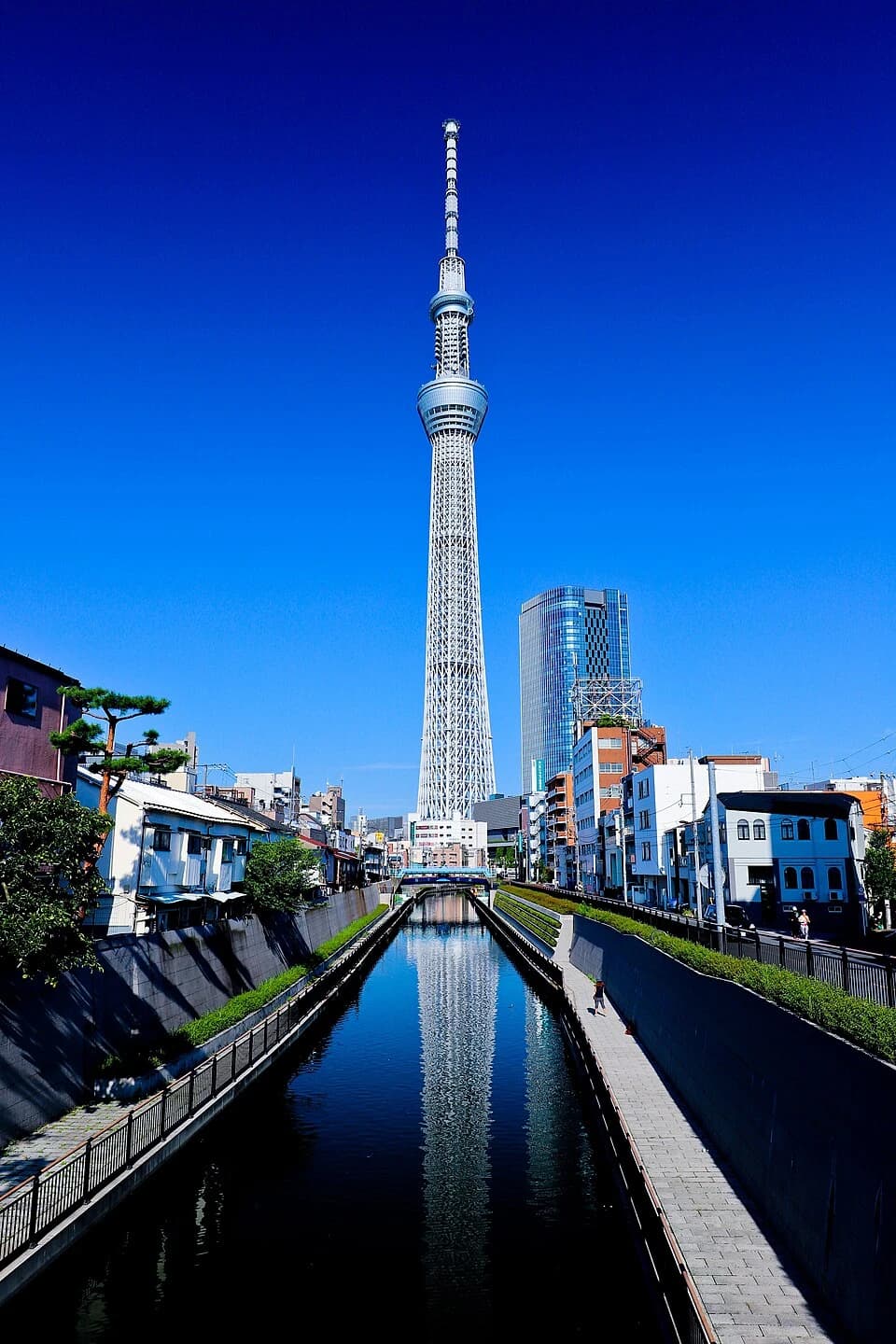
The Tower's Reflection
As our tour comes to an end, take a final look at the Tokyo Skytree. Construction on this massive project was officially completed on February 29, 2012—a rare Leap Day. This date added another layer of uniqueness to a building that was already a world-breaker. Since its opening, the Skytree has become much more than a broadcasting tower or a tourist attraction; it is a powerful symbol of Japan's recovery and its enduring pride in technological innovation. Following the tragedies of 2011, the Skytree stood as a beacon of hope and a demonstration of the country's ability to build for a safer future. Its design, which so carefully balances ancient Japanese aesthetics like the curves of a sword with future-facing seismic engineering, has made it a beloved part of the cityscape. It serves as a reminder that even in a world of constant change, we can find ways to honor our past while reaching for the clouds. Thank you for joining us on this journey through the Tokyo Skytree, a true masterpiece of human achievement that continues to define the spirit of modern Tokyo.
Want to hear the rest?
Download the Stanza app to unlock all 20 stops and full GPS-guided navigation.
Frequently Asked Questions
How long does the Tokyo Skytree audio tour take?
The Tokyo Skytree audio guide includes 20 narrated stops. Most visitors spend 45 minutes to 1.5 hours exploring the complete tour, though you can listen at your own pace and skip or revisit any stop.
Is the Tokyo Skytree audio guide available in my language?
Stanza supports 15 languages: English, Spanish, French, German, Italian, Portuguese, Russian, Japanese, Chinese, Korean, Arabic, Hindi, Polish, Dutch, Hebrew. Check the guide in the app to confirm the languages currently available for this tour.
Can I use the audio guide offline at Tokyo Skytree?
Yes! Download the complete Tokyo Skytree tour — including all audio, maps, and images — before your visit. The Stanza app works completely offline, so you don't need WiFi or mobile data at the venue.
How much does the Tokyo Skytree audio guide cost?
The Stanza app is free to download. The current listed price for the Tokyo Skytree audio guide is $2.99; app-store region and currency may affect the final price.
How do I use the Stanza audio guide at Tokyo Skytree?
Download the free Stanza app, search for "Tokyo Skytree", and download the tour. When you arrive at the venue, the app uses GPS to detect your location and automatically plays the relevant narration as you move between points of interest — completely hands-free.
What makes the Stanza audio guide different from other Tokyo Skytree tours?
Stanza offers GPS-triggered narration that plays automatically as you walk through Tokyo Skytree — no need to manually select stops. The tour is available in 15 languages, works fully offline, and includes 20 expertly narrated stops with images and historical context.
What other audio guides are available near Tokyo Skytree?
Stanza offers multiple audio guides in Sumida, Japan and nearby areas. After downloading the app, browse the map to discover all available tours near Tokyo Skytree. Each guide can be downloaded for offline use.