Stanza · Audio guide
Kerak Castle Audio Guide
A place to remember. A story to take with you.
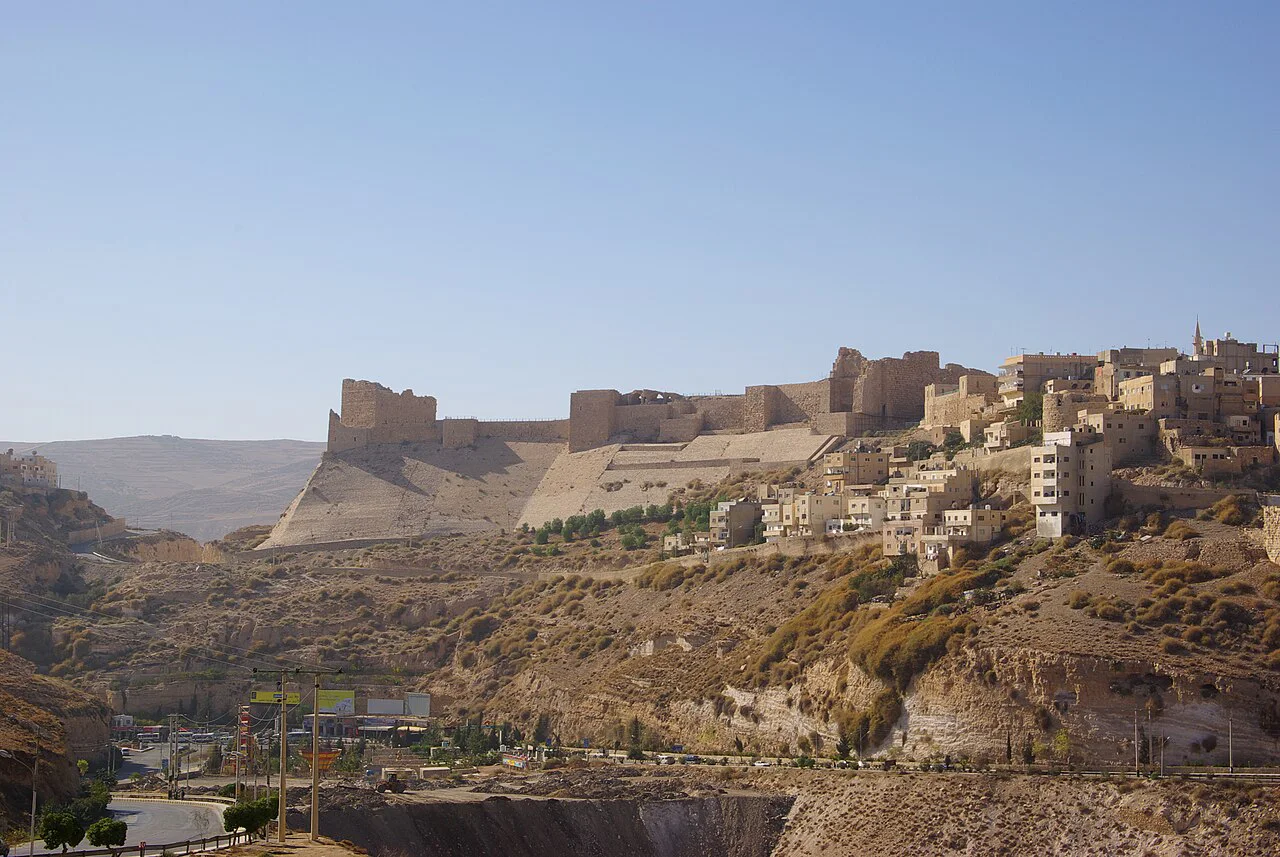
Kerak Castle is a large medieval castle located in al-Karak, Jordan. It is one of the largest castles in the Levant.
Download Stanza, then search for “Kerak Castle”.
About the tour
One guide. Your kind of visit.
Kerak Castle is a large medieval castle located in al-Karak, Jordan. It is one of the largest castles in the Levant.
Ready when you are.
- 01Get the free Stanza app.
iOS & Android
- 02Find your guide.
“Kerak Castle”
- 03Download before you go.
Works offline
Audio guide / 13 narrated stops
Inside the guide
Get to know a few of the stories before you go. Open a stop to read more.
01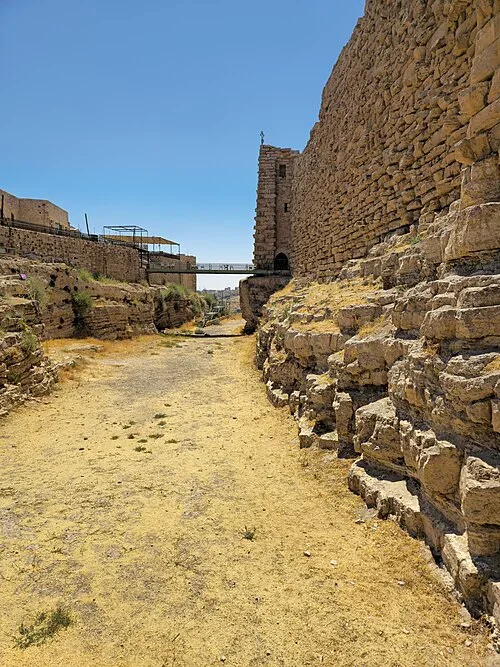 Northern Moat and Gatehouse Approach
The Northern Moat and the Spur
Welcome to Kerak Castle, one of the largest castles the Crusaders built in the Levant. They called it Crac des Moabites, Karak in Moab. The place itself explains the design. The castle sits at the southern end of a plateau, ringed on three sides by steep hills. That made it a spur castle, a fortress shaped by the land it stands on. An attacker could only approach seriously from one side, so the defenders could gather most of their men there. The deep cutting in front of the walls is the work of human hands. The Crusaders had two great ditches cut into the rock, north and south, to keep siege engines at a safer distance from the walls. The southern ditch did double duty as a cistern, storing water. A second ditch lies near the town, deeper but narrower, though it has largely filled in over the centuries. The bridge across the gap marks the way in.
Photo: Mohammad hajeer · CC BY-SA 4.0
02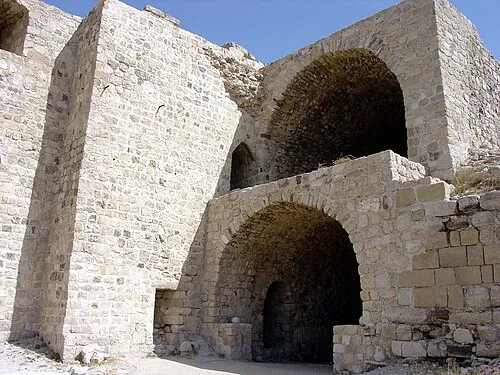 Northern Moat and Gatehouse Approach
The Entrance Gateways
The story begins in the 1140s, when Pagan the Butler built this castle for Fulk, King of Jerusalem. Pagan was Lord of Oultrejordain, the lands beyond the Jordan, and he made Kerak the centre of his power. It replaced Montreal, an older castle to the south that could not match this position. The reason was money and movement. From here, the lordship controlled the trade routes running from Damascus to Egypt and Mecca, along with the bedouin herders of the steppe. Every caravan that passed could be watched, taxed, or stopped. People had used this high ground long before the Crusaders arrived. The Arabic account of the castle records earlier use going back to the Moabites, and carvings left by the Nabataeans in its earliest bases. How much of that early work survives beneath the walls is a question that keeps archaeologists busy. The way in runs through layered gateways, one after another, before the upper courtyard opens up.
Michael Gunther · CC BY-SA 4.0
03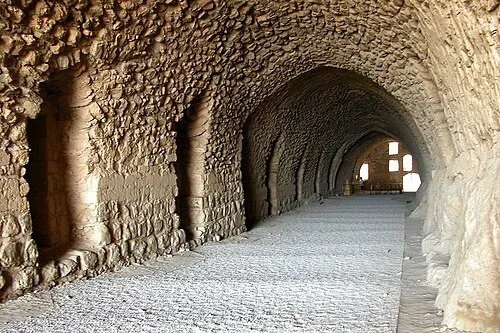 Northern Vaulted Galleries and Barracks
The Great Vaulted Gallery
The north wall holds the most striking Crusader work left in the castle. Immense arched halls are built straight into the stone, stacked on two levels, and the vaults run on and on. These rooms worked hard. They served as living quarters for the garrison and as stables for its horses. The upper level formed a fighting gallery, overlooking the castle approach, so defenders could shoot down on anyone coming at the north side. The same thick vaults gave shelter against missiles hurled by siege engines. When Muslim armies began hauling siege weapons into the field, Frankish castles answered with heavier and more solid walls. Kerak's builders went further and put the walls to work as barracks. One long vault could house men, feed and stable their horses, and still hold a fighting line above the entrance road.
Listen in the appDennis G. Jarvis · CC BY-SA 2.0
04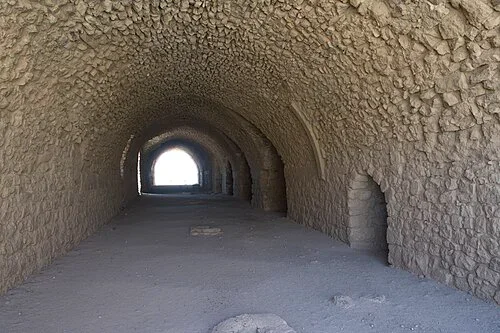 Northern Vaulted Galleries and Barracks
The Upper Gallery
The galleries repeat bay after bay, each vault the height of a man or more, ending in a bright opening toward the daylight. Walking them gives a sense of how many soldiers a castle like this could hold. The records give one answer for the thirteenth century. Under its ruler al-Mughith, the castle kept a standing force of at least seven hundred horsemen. Seven hundred mounted men meant stabling, fodder, and quarters on a grand scale, which is exactly what these halls provided. Under the Mamluks, Kerak remained a military and administrative centre of real weight, and the size of its garrison showed it.
Listen in the appPhoto: Dosseman · CC BY-SA 4.0
05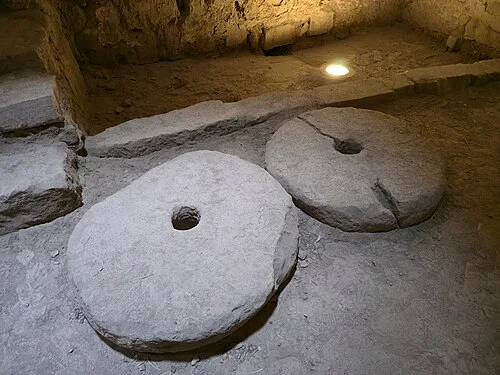 Subterranean Labyrinth: Press and Ovens
The Underground Press
Much of Kerak's survival lay underground. Beneath the courts runs a network of rock-cut corridors, multi-storey vaulted rooms, and cisterns, a hidden layer that let the castle live cut off from the town above it. The great circular stones here belong to a press, set into one of the lower chambers. Presses like this processed produce into oil or wine, though which crop this one handled is not recorded. What the machinery shows is the principle behind it. A stronghold that expected to be besieged had to process its own food, deep inside its own walls. Grinding, pressing, storing, and drawing water all happened below ground, out of reach of any army camped outside.
Listen in the appPhoto: Mohammad hajeer · CC BY-SA 4.0
06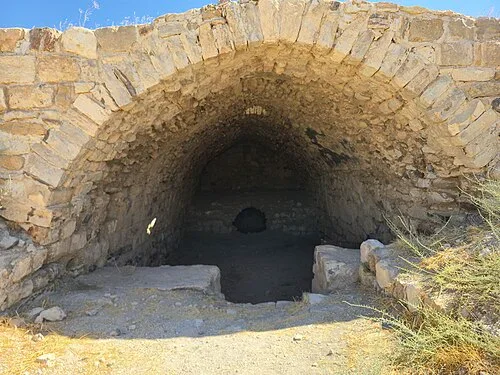 Subterranean Labyrinth: Press and Ovens
The Castle Ovens
This deep vaulted bay held the castle's ovens, and in a siege, bread was the whole game. In 1184, Saladin came back to Kerak and tried a different kind of attack. Instead of storming the walls, his army set about filling in the ditches that kept his siege engines out of range. The siege lasted four weeks. In the end, Saladin and his men withdrew before a crusader relief army could arrive. The ovens tell the other side of that arithmetic. As long as the fires burned and the grain held out, a garrison could simply wait an enemy out. Four weeks of siege had to be endured one loaf at a time.
Listen in the appPhoto: Mohammad hajeer · CC BY-SA 4.0
07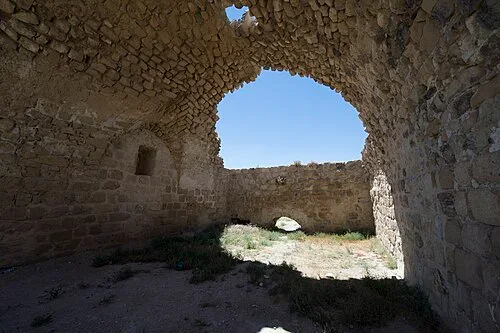 Crusader Chapel and Mamluk Palace
The Crusader Chapel
Halfway along the east curtain wall stands the castle's chapel. Today its vaulted ceiling opens to the sky through a great broken arch. This is where the Frankish garrison worshipped, soldiers and lords praying inside a working fortress. The room also carries a lesson in the castle's architecture as a whole. Kerak mixes three traditions: west European, Byzantine, and Arab. Crusader builders drew on all of them, and the vaults and arches here show that blend in stone.
Listen in the appPhoto: Dosseman · CC BY-SA 4.0
08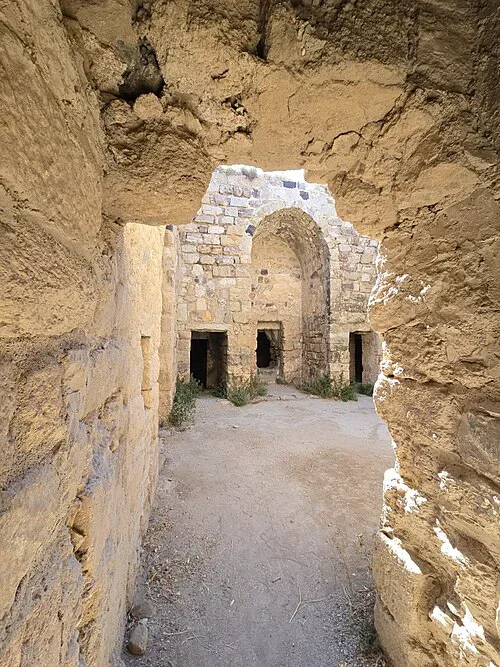 Crusader Chapel and Mamluk Palace
The Mamluk Palace
After the Muslim reconquest, Kerak changed trades. It became a seat of government. Under the Ayyubid dynasty, the castle served as the administration centre for all the regions of Jordan. When Saladin's brother al-'Adil took control, he made it the site of one of his royal treasuries, and it kept that role for the rest of the dynasty. The Mamluks raised the stakes further. A court chronicler, Ibn 'Abd al-Zahir, recorded that the castle held four ministries: the army, finance, Kerak itself, and the chancery. The courts and vaulted halls here housed clerks and officials rather than knights. Prestige followed the paperwork. It was recorded that only the governors of Kerak and Damascus were permitted to send their official correspondence on red paper.
Listen in the appPhoto: Mohammad hajeer · CC BY-SA 4.0
09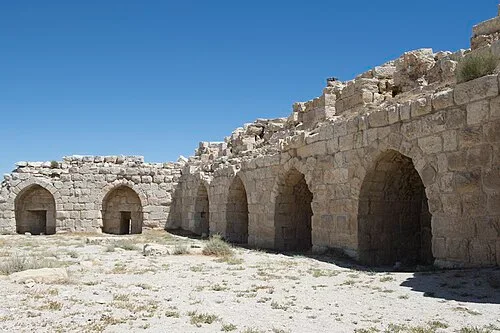 Keep of Sultan Baibars (Burg al-Zahir)
The Keep of Sultan Baibars
The boldest single structure in the castle belongs to the Mamluk sultan Baibars, and it is known by his name, Burg al-Zahir. The Arabic account says he ordered it built within the southern wall in 1262, and that it took seventeen years to complete. An English account instead dates a tower of his to 1263 and places it on the northwest corner. The two records have never been fully reconciled, so the exact date and position stay open. What is not in doubt is the engineering. The keep is roughly square and rises four storeys. Its walls run between six and seven metres thick, which gave it remarkable strength. Arrow slits are distributed across all four levels for the defenders. At its heart lies a grand reception hall two storeys high, with openings cut into its ceiling for light and air.
Listen in the appPhoto: Dosseman · CC BY-SA 4.0
10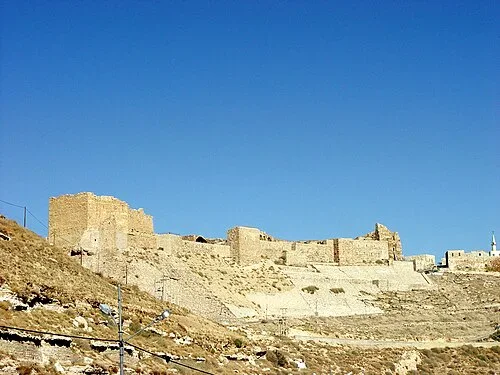 Keep of Sultan Baibars (Burg al-Zahir)
The Siege of Kerak
From below, the walls rise the way an attacker would have seen them, and this castle saw three great sieges. The first, in 1183, caught Kerak in the middle of a wedding. Humphrey of Toron was marrying Isabella of Jerusalem inside the fortress while Saladin's army besieged it. The story recorded later tells that the bride's mother sent dishes from the wedding feast out to Saladin, and he agreed, as a point of chivalry, not to target the newlyweds' chamber while his machines battered the rest of the castle. King Baldwin the Fourth of Jerusalem eventually arrived and relieved the siege. The last siege of the twelfth century came in 1188, led by Sa'd al-Din, Saladin's nephew. A year earlier, Saladin had crushed the crusader army at the Battle of Hattin, and no relief force could be gathered now. The Muslim army cut off supplies, and after several months Kerak surrendered. It is believed the castle ran short of arms rather than food. With Kerak fallen, Montreal, the old castle it had replaced, surrendered soon after.
Listen in the appAlexander · CC BY-SA 2.0
- 11
The Glacis
The slippery masonry glacis at the wall's base, and how to read two empires in the colour of the stones.
- 12
The Watch over the Wadis
The wide view over the wadis that made Kerak priceless, and the lord who turned it into a weapon.
- 13
The Lower Court: After the Crusaders
The castle's long afterlife: Ibrahim Pasha's bombardment, an Ottoman garrison of 1,400, and nearly eight centuries of soldiers.
Kerak Castle
Frequently asked questions
How much does the guide cost?
Free app download. Listed guide price: $0.99. Guide price shown in the app. Audio guide only. Venue admission is separate.
Can I listen without internet?
Yes. Download the guide’s audio, images, and maps in the app before your visit. Your downloaded content is then available offline.
Can I listen in my language?
This audio guide is available in 15 languages, including English.
Do I need to follow a schedule?
No. This is a self-guided experience. Choose your stops, pause whenever you like, and return to a story at your own pace.
At your own pace
Explore Kerak Castle.
Download Stanza, then search for “Kerak Castle”.
Free app download · Guide price shown in the app
Keep exploring
Nearby audio guides
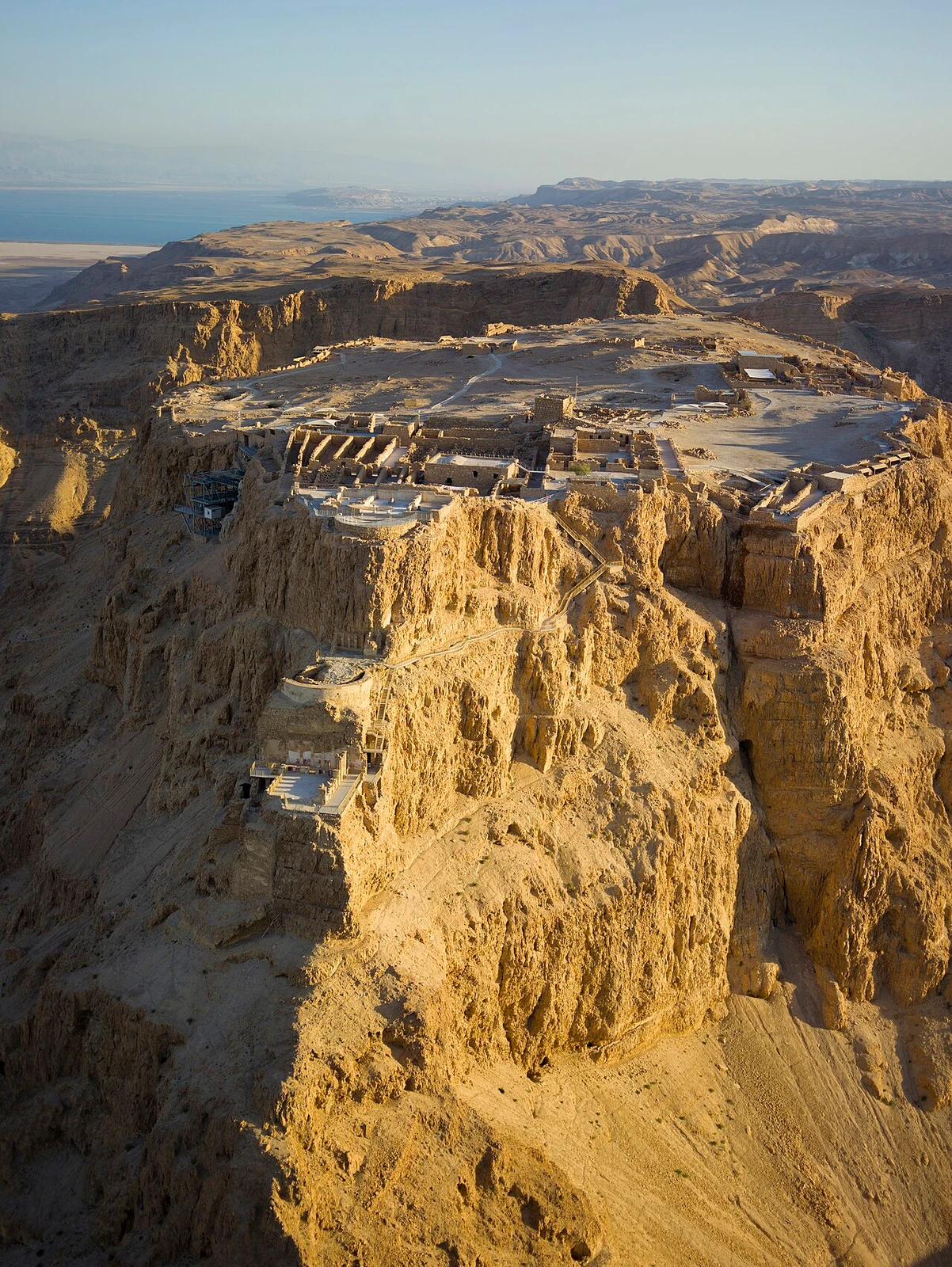
Masada · 36 km
Masada
Content & sources
Photo: Godot13 · CC BY-SA 4.0
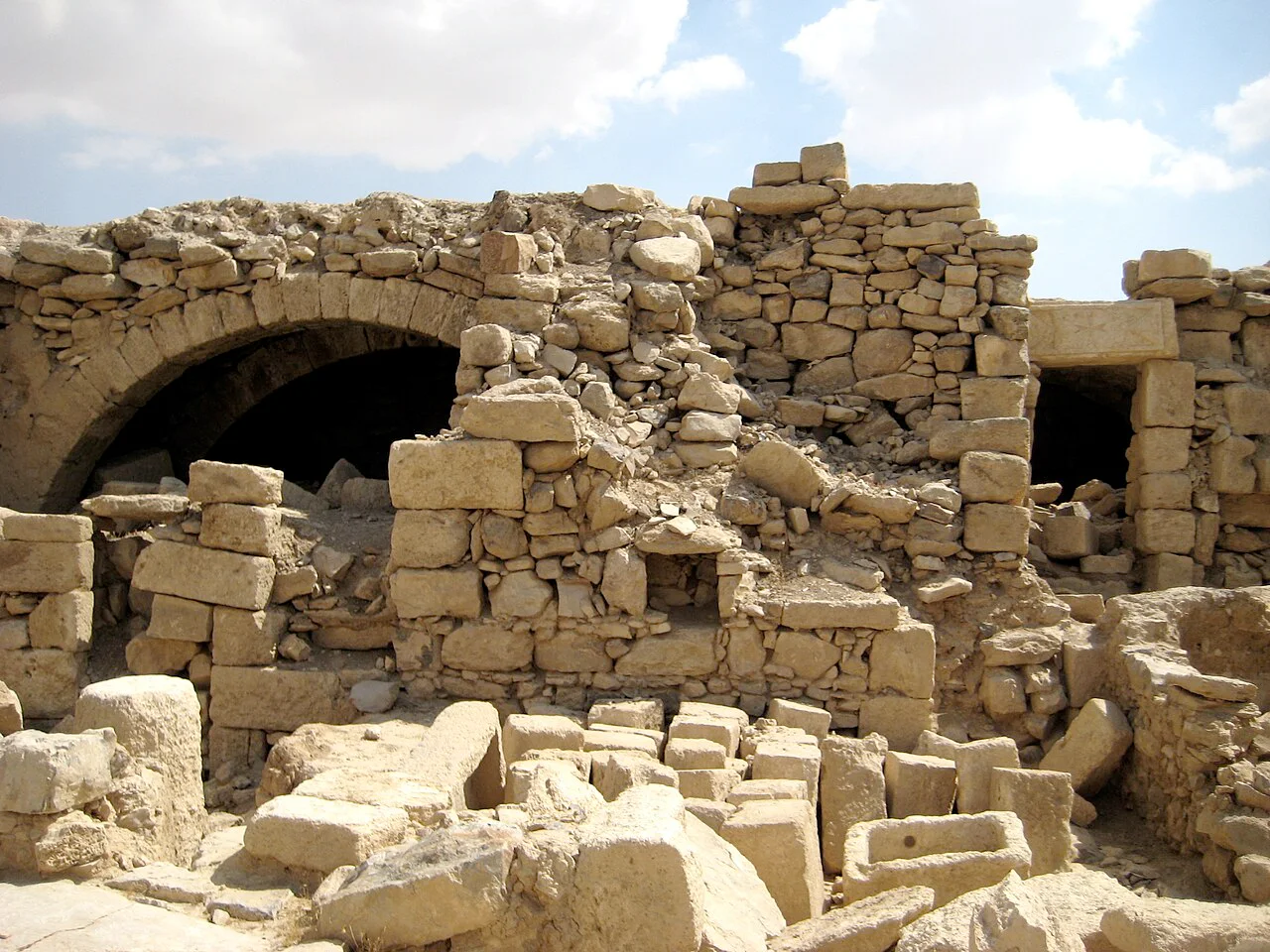
Um al Risas · 41 km
Umm ar-Rasas
Content & sources
Daniel Kirk · Public domain
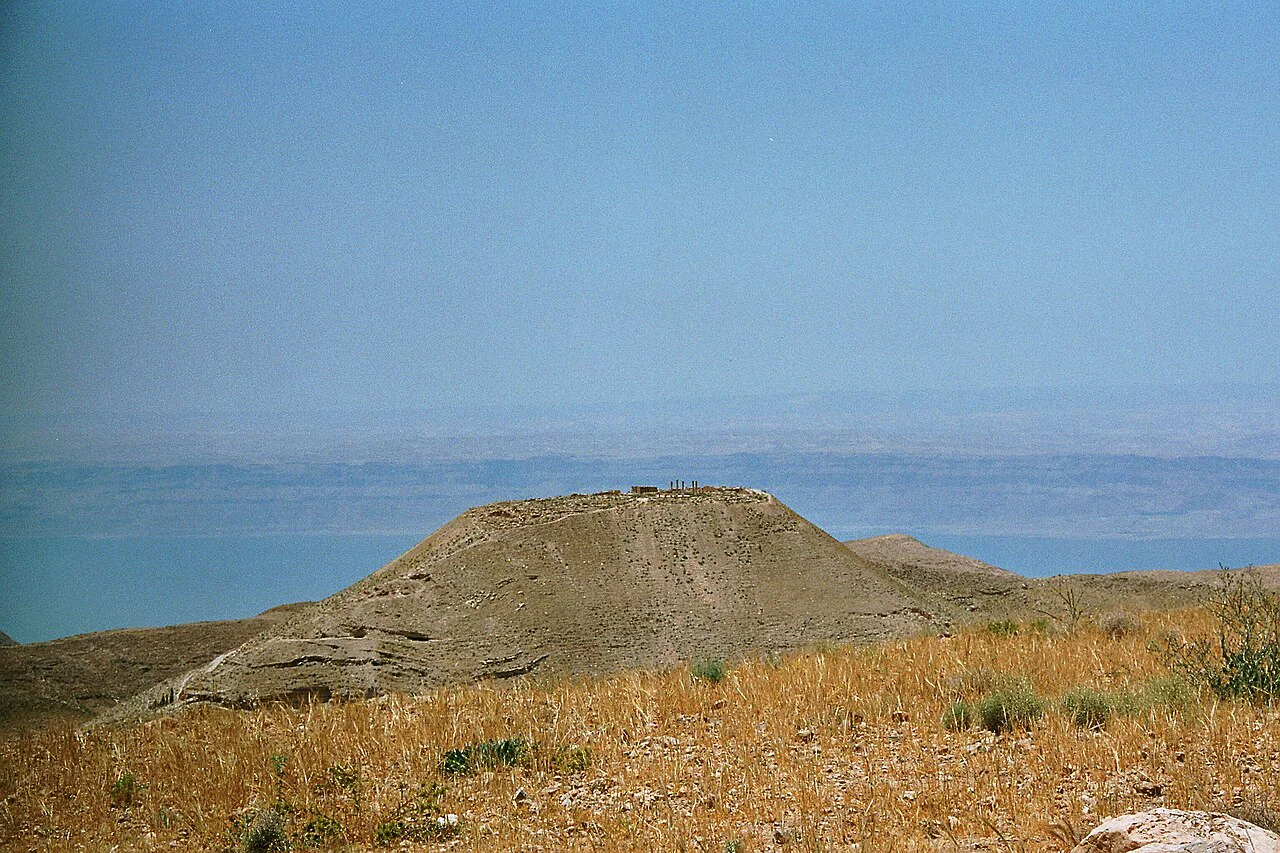
Mukawir · 43 km
Machaerus
Content & sources
Photo: Tbantle~commonswiki · Public domain
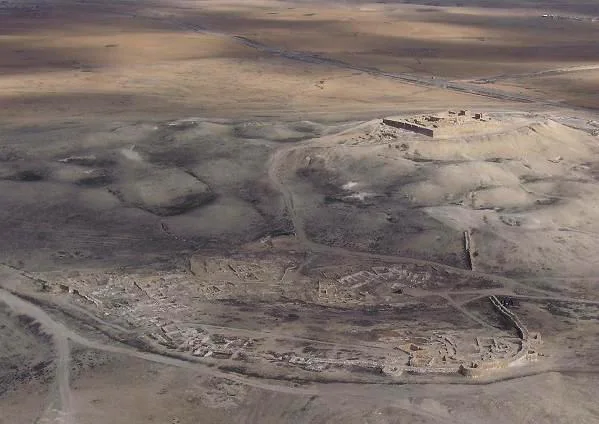
Arad · 56 km
Tel Arad
Content & sources
Photo: Hanay · Public domain