Stanza · Audio guide
Machaerus Audio Guide
A place to remember. A story to take with you.
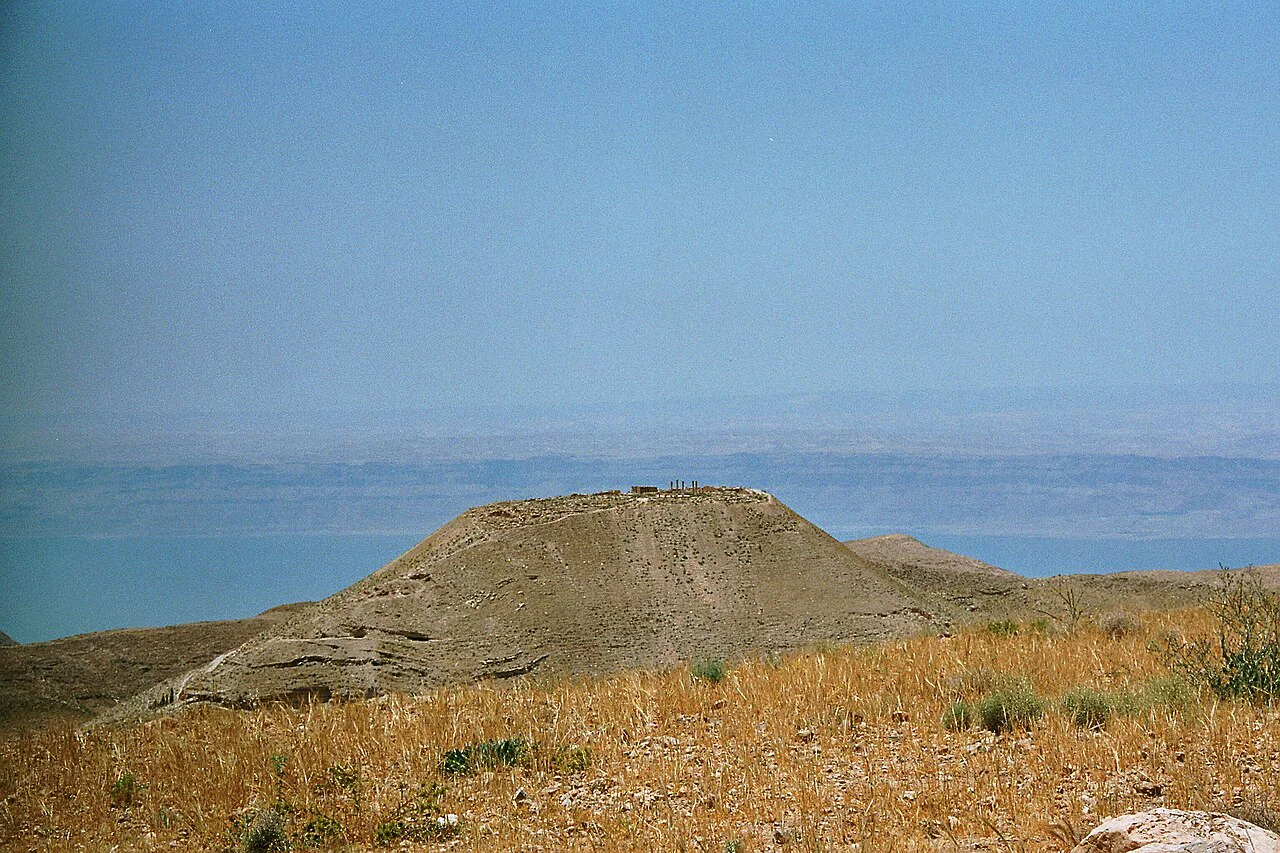
Machaerus was a Hasmonean hilltop palace and desert fortress that was later rebuilt by Herod. The site is now in ruins and overlooks the Dead Sea from its location near the village of Mukawir.
Download Stanza, then search for “Machaerus”.
About the tour
One guide. Your kind of visit.
Machaerus was a Hasmonean hilltop palace and desert fortress that was later rebuilt by Herod. The site is now in ruins and overlooks the Dead Sea from its location near the village of Mukawir.
Ready when you are.
- 01Get the free Stanza app.
iOS & Android
- 02Find your guide.
“Machaerus”
- 03Download before you go.
Works offline
Audio guide / 8 narrated stops
Inside the guide
Get to know a few of the stories before you go. Open a stop to read more.
01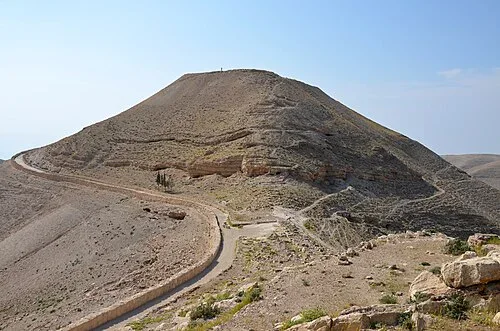 The Ascent Path and Fortress Silhouette
The Fortress Peak of Machaerus
Welcome to Machaerus, the desert fortress above the Dead Sea. This bare, cone-shaped peak is also known in Arabic as Qala'at Mukawir, the castle of Mukawir. The Greeks called the place Machaerus, from makhaira, a sword, and the name suits the ridge. Around 90 BCE the Hasmonean king Alexander Jannaeus built a fortress here. The spot made sense. From this height, watchers could spot invasions coming from the east, and the summit stood in line of sight of other citadels, so trouble on the horizon could be signalled on. In 57 BCE the Roman general Gabinius destroyed it, during conflicts with Aristobulus the Second. Herod the Great rebuilt it around 30 BCE as a military base guarding his lands east of the Jordan, and as a possible refuge for himself. The mountain rises about 1,100 metres above the Dead Sea, and the winding path up is part of every visit. Herod judged the place to deserve the strongest fortification, above all because of its closeness to Arabia.
Carole Raddato from FRANKFURT, Germany · CC BY-SA 2.0
02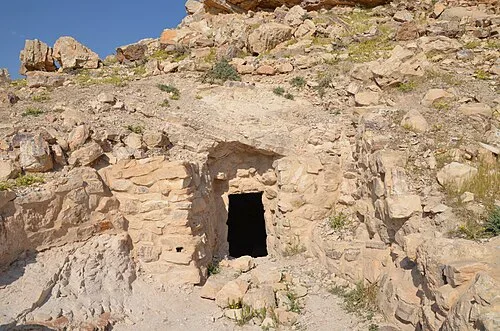 The Caves of the Lower Town
Rock-cut Caves on the Eastern Slope
The summit palace was only part of the settlement. Farther down the eastern slope, Josephus describes walls and towers that made up a lower town. The caves cut into this hillside belonged to that wider community, though whether they served as homes, storerooms or tombs, no one can say for certain. Water made life possible on this dry peak. An aqueduct, still traceable where it comes from the east, carried water up to the fortress cisterns. Pottery scattered over the area runs from the late Hellenistic age into Roman times, matching the site's two main periods of occupation, the Hasmonean years and the Herodian ones.
Carole Raddato from FRANKFURT, Germany · CC BY-SA 2.0
03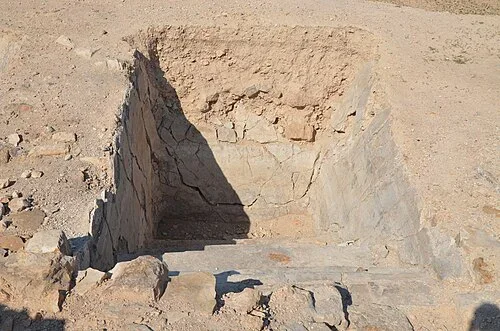 The Subterranean Cisterns
Cisterns and the Prison of John the Baptist
Deep cisterns carved into the rock hold this mountain's most famous story. Herod the Great's son Antipas inherited the fortress and ruled from 4 BC until 39 AD. In 27 AD he fell in love with Herodias, the wife of one of his half-brothers. To marry her, he divorced his Nabataean wife, who fled to her father, the Nabataean king. John the Baptist denounced the new marriage as adulterous, and Antipas imprisoned him here at Machaerus. The Gospel of Matthew tells what followed. At a birthday feast for Antipas, Herodias's daughter Salome danced before the guests. Pleased, Antipas swore to grant her whatever she asked. Prompted by her mother, she asked for John's head on a platter. Distressed by the request, Antipas still honoured his oath and ordered the execution in prison. Josephus places John's imprisonment and death here, and the Gospels tell how he was beheaded, around the year 32. Which dark room or cistern actually held the prophet, no one can say. In 2000 Pope John Paul the Second visited the site, and Machaerus has counted among Jordan's five official Christian pilgrimage sites ever since.
Listen in the appCarole Raddato from FRANKFURT, Germany · CC BY-SA 2.0
04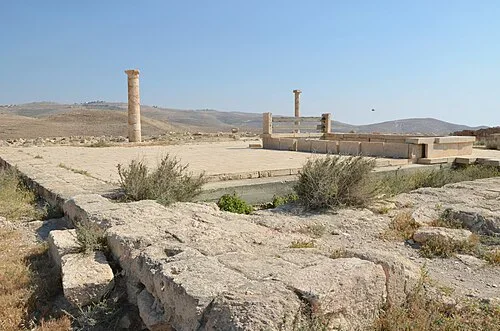 The Royal Courtyard and Palace Summit
The Royal Courtyard and Herod's Palace
Herod built his palace at the centre of the fortified crest. A wall about a hundred metres long and sixty wide ringed the summit, with three corner towers rising some twenty-seven metres. Inside stood rooms, a triclinium for banquets, a peristyle, a bath, and this large paved courtyard. The precision of the design convinced the excavators that highly trained royal architects were at work, probably sent from the Ptolemaic court in Alexandria after the Battle of Actium. This courtyard matters beyond Machaerus. It is considered one of the closest existing parallels to the Herodian Gabbatha in the Jerusalem Praetorium, where Pontius Pilate judged Jesus of Nazareth. The column standing here has a story of its own. In 2014 a team led by the archaeologist Győző Vörös re-erected it, together with an Ionic column from the bathhouse, by anastylosis, rebuilding only with the original stones, joined by stainless steel plugs set into the old sockets. Both columns were later vandalized, one in 2022 and the other a year later. After King Abdullah the Second visited the site in September 2023, the Department of Antiquities set both upright again that November.
Listen in the appCarole Raddato from FRANKFURT, Germany · CC BY-SA 2.0
05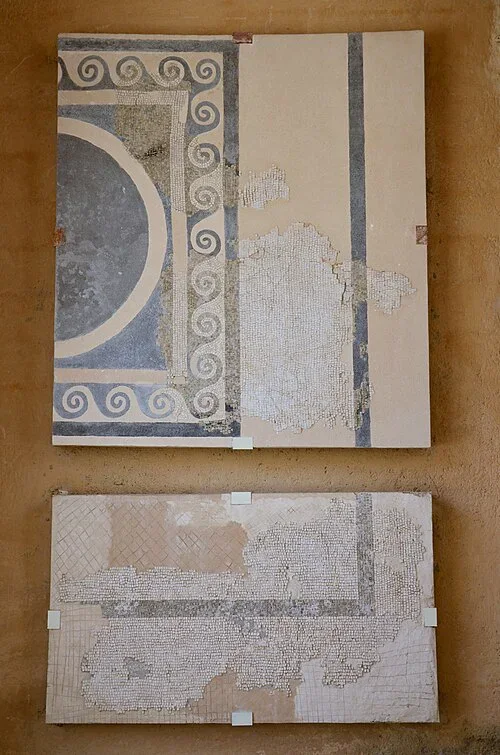 The Palace Bathhouse
The Oldest Mosaic in Jordan
Even a stronghold built for war kept room for luxury. Herod's palace held an elaborate bath, and its floor was paved with mosaic. The mosaic was later lifted and is now displayed in the Madaba Archaeological Park, in the town of Madaba. Its fragments carry geometric borders of spirals and wave patterns, beside panels of plain tesserae. They are considered the oldest mosaic discovered anywhere in Jordan, laid in the first century. Work this refined, inside a desert fortress, shows how thoroughly Herod furnished his refuge.
Listen in the appCarole Raddato from FRANKFURT, Germany · CC BY-SA 2.0
06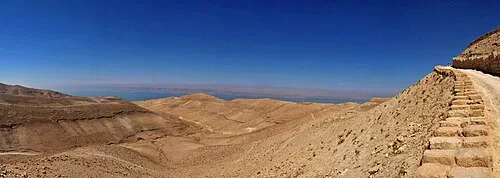 The Western Overlook
The Western Ravines and the Dead Sea
The Jewish historian Josephus gave a full account of this mountain's defences. Deep ravines surround the hilltop on every side, he wrote, and give it great natural strength. The valley on the west runs sixty stadia down to the Dead Sea, which he calls Lake Asphaltitis. The valley on the east descends a hundred cubits, about forty-five metres. There was no gentle way up the rock for an attacker. That natural strength gave Machaerus its reputation for impregnability. How the fortress finally fell is told at the Roman siege works, the next stop. Today the same panorama draws pilgrims and travellers to the edge of the rift.
Listen in the apphikinginjordan · CC BY-SA 3.0
07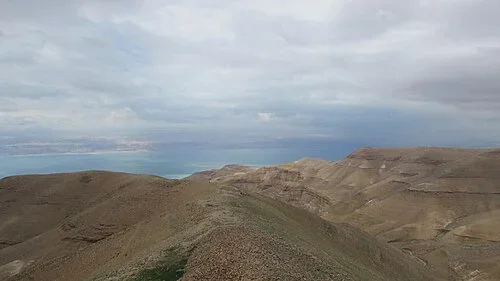 The Roman Siege Works and Camps
The Roman Siege of 71 CE
After the revolt began in 66, Jewish rebels took control of Machaerus. Jerusalem fell to Titus in 70, and Rome came to finish the war here. The legate Lucilius Bassus advanced with his troops and began the siege in 71. His engineers filled the ravine on the southeast and raised an assault ramp, then started a second from the higher northwestern ridge. A rectangular wall of circumvallation, studded with fixed camps, ringed the mountain so no one could slip away. The garrison sent raiding parties against the besiegers, with losses on both sides, until the turning point. A young, well-born defender named Eleazar lingered outside the gates and was seized by a Roman soldier called Rufus. Bassus had him flogged in full view of the fortress and ordered a cross brought up. Eleazar then called on his horrified comrades to save themselves by surrendering. Envoys came out, and Bassus agreed to spare Eleazar and grant the Jewish defenders safe conduct. The non-Jewish inhabitants saw that the terms covered only Jews and tried to escape by night. Warned in advance, the Romans intercepted the breakout. Some fought through, but 1,700 men are reported to have been killed, and the women and children were taken and sold. The Jewish rebels marched out alive. In 1973 the German scholar August Strobel traced the wall of that siege across this ground.
Listen in the appPhoto: יעקב · CC BY-SA 4.0
08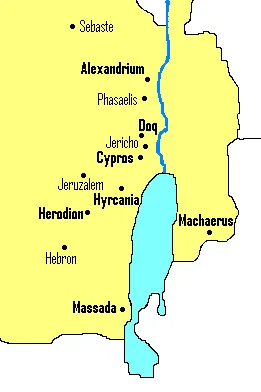 The Roman Siege Works and Camps
Herod's Desert Fortress Network and the Long Silence
Machaerus was one link in a chain of desert strongholds. The map shows Herod's fortresses strung along the eastern approaches to his realm: Alexandrium and Hyrcania in the north, Herodium and Masada in the Judean desert, and Machaerus farthest east. After the siege, the Romans demolished the fortress so completely that only its foundations were left. Then the site went silent for more than seventeen hundred years. In 1807 the Frisian explorer Ulrich Jasper Seetzen visited the village on the plateau east of the mountain. Its name, Mukawir, reminded him of Machaerus in the Greek sources. Systematic excavation began in 1968 under Jerry Vardaman, and from 1978 a team of Franciscan archaeologists from Jerusalem carried the work further. Their digs brought the palace, the cisterns and the bath back into the light. The fortress Herod built for refuge, and that held John the Baptist, can now be walked through in the open air. Of all Herod's desert castles, Machaerus is the one whose story runs from royal architects to a prophet's last days.
Listen in the appnl:Gebruiker:Machaerus · CC BY-SA 3.0
Machaerus
Frequently asked questions
How much does the guide cost?
Free app download. Listed guide price: $0.99. Guide price shown in the app. Audio guide only. Venue admission is separate.
Can I listen without internet?
Yes. Download the guide’s audio, images, and maps in the app before your visit. Your downloaded content is then available offline.
Can I listen in my language?
This audio guide is available in 15 languages, including English.
Do I need to follow a schedule?
No. This is a self-guided experience. Choose your stops, pause whenever you like, and return to a story at your own pace.
At your own pace
Explore Machaerus.
Download Stanza, then search for “Machaerus”.
Free app download · Guide price shown in the app
Keep exploring
Nearby audio guides
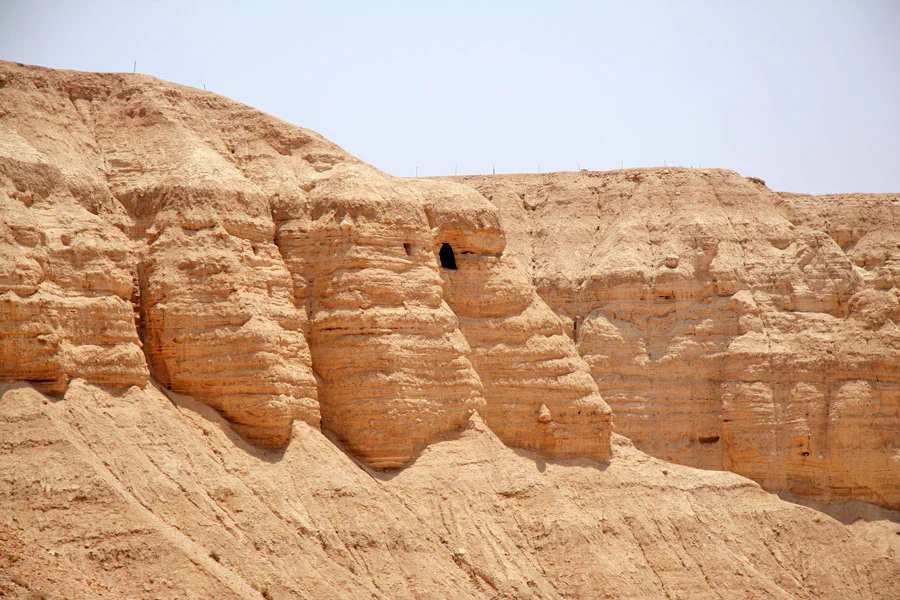
Megilot Yam HaMelakh Regional Council · 25 km
Qumran
Content & sources
Photo: Tamarah · CC BY-SA 2.5
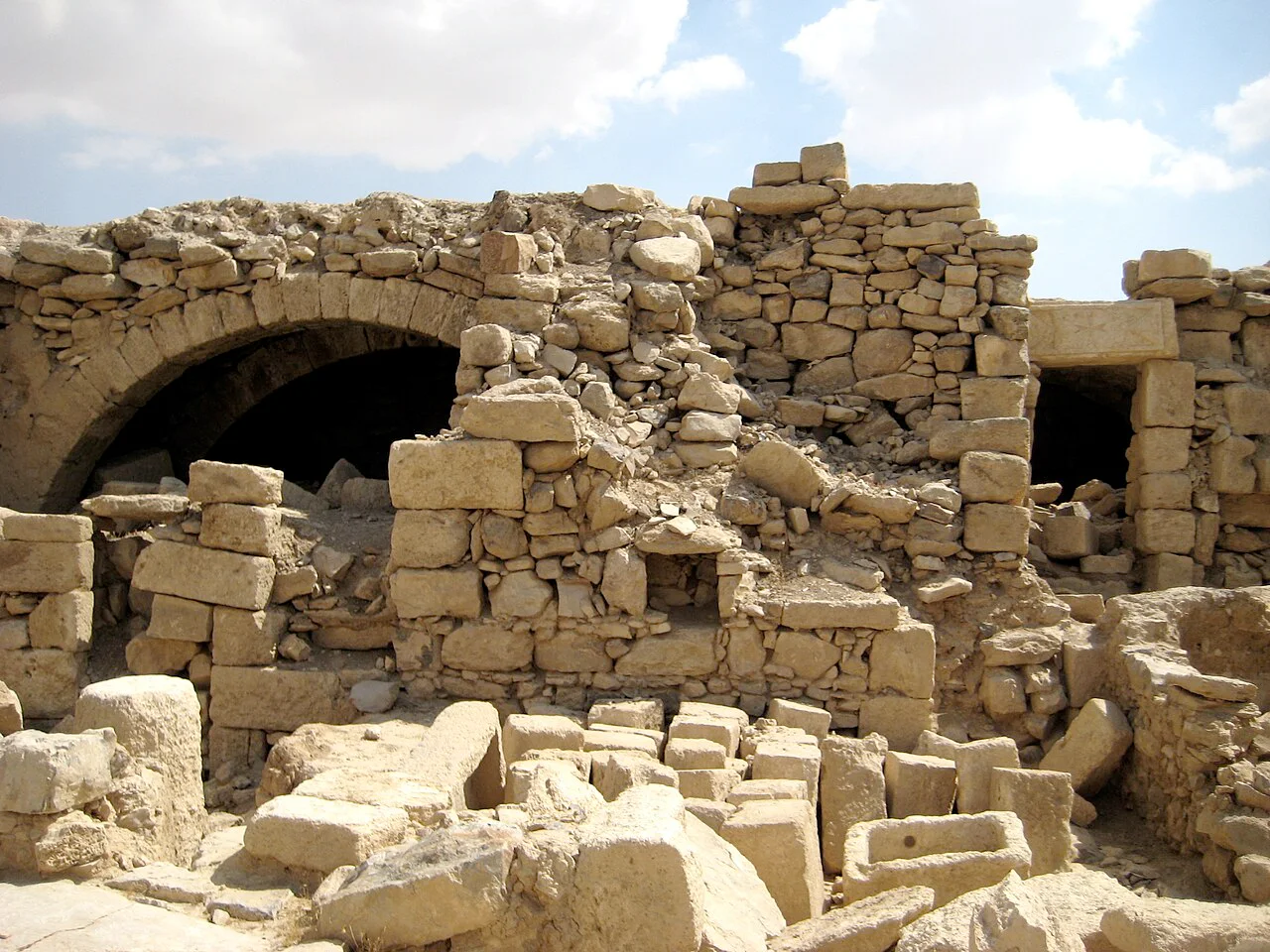
Um al Risas · 28 km
Umm ar-Rasas
Content & sources
Daniel Kirk · Public domain
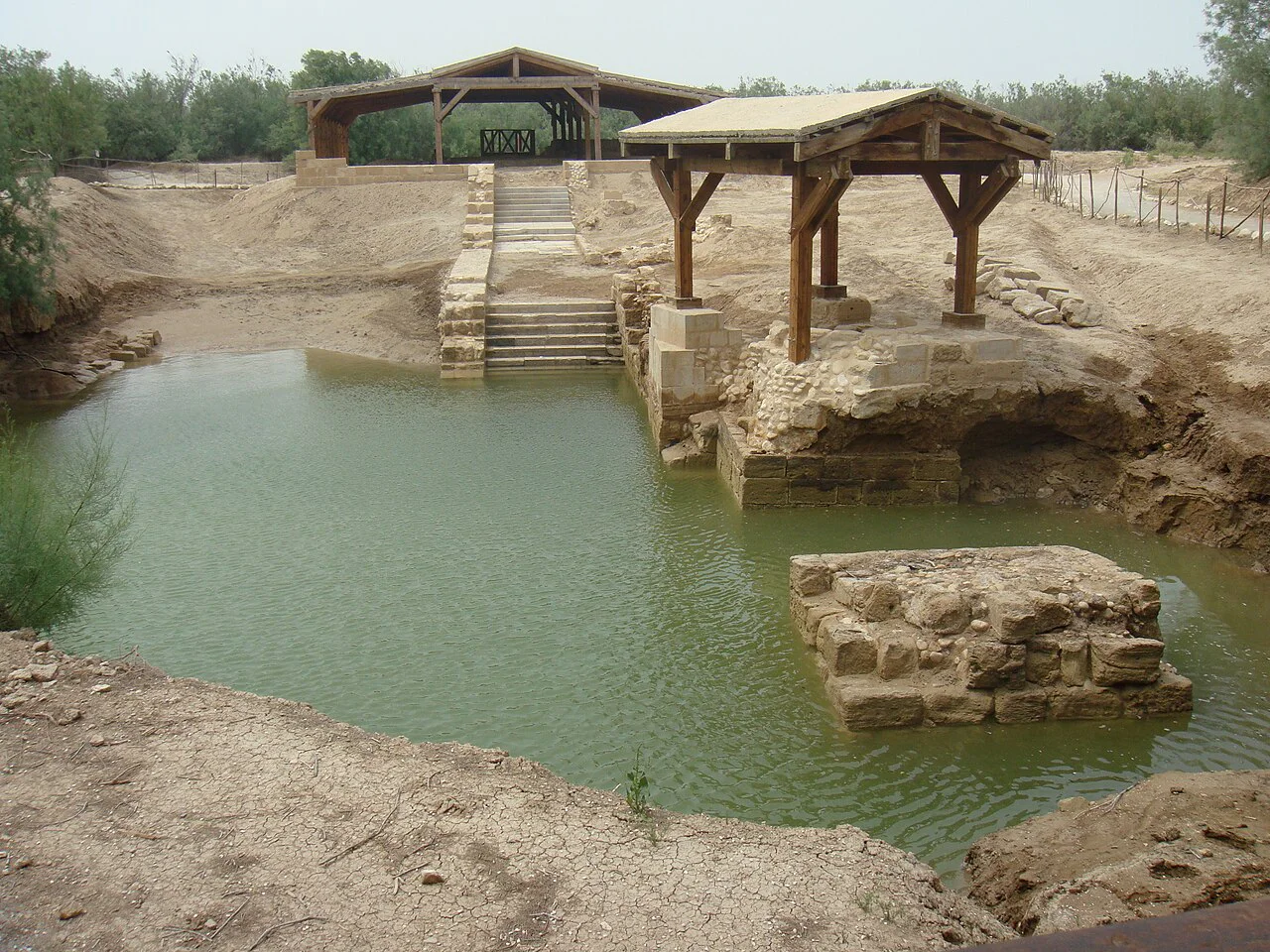
Shoonah Janoobiyah Sub-District · 31 km
Al-Maghtas
Content & sources
Producer (talk) · CC BY 2.5
Masada · 39 km
Masada
Content & sources
Photo: Godot13 · CC BY-SA 4.0