 Stanza / Audio guide
Content & sources
Stanza · Audio guide
Qusayr 'Amra Audio Guide
A place to remember. A story to take with you.
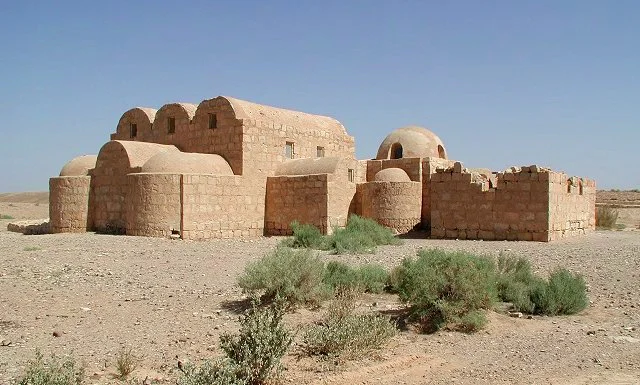
Qusayr 'Amra is a desert castle located in eastern Jordan. It is considered one of the most important examples of early Islamic art and architecture.
Download Stanza, then search for “Qusayr 'Amra”.
About the tour
One guide. Your kind of visit.
Qusayr 'Amra is a desert castle located in eastern Jordan. It is considered one of the most important examples of early Islamic art and architecture.
Ready when you are.
- 01Get the free Stanza app.
iOS & Android
- 02Find your guide.
“Qusayr 'Amra”
- 03Download before you go.
Works offline
Audio guide / 8 narrated stops
Inside the guide
Get to know a few of the stories before you go. Open a stop to read more.
01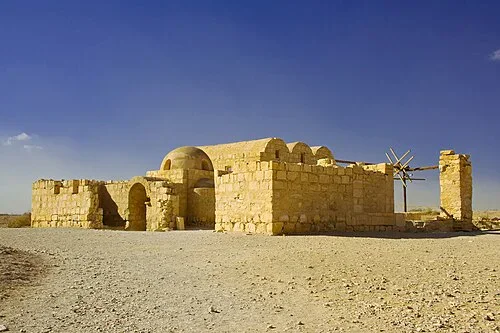 Site Approach and the Desert Hydraulic System
Qusayr 'Amra: A Royal Retreat in the Desert
Welcome to Qusayr 'Amra, a small stone lodge in the steppe of eastern Jordan. It was built between 723 and 743 by Walid Ibn Yazid, a prince of the Umayyad caliphs who ruled from Damascus. The name means the little palace of Amra. He came here to get away from court life, to hunt, to banquet and to bathe. What stands today is only the bath lodge, a low building of rough stone. But traces of enclosing walls show it once belonged to a much larger complex, covering about twenty-five hectares. A real castle stood nearby, able to house a garrison, though the retreat itself had no military purpose. The place was abandoned and forgotten for centuries. In 1898 the Austrian scholar Alois Musil found it again, and drawings of its frescoes made the lodge famous. In 1985 UNESCO listed it as a World Heritage Site. People come for the paintings inside, among the most important surviving evidence of early Islamic art.
David Bjorgen · CC BY-SA 4.0
02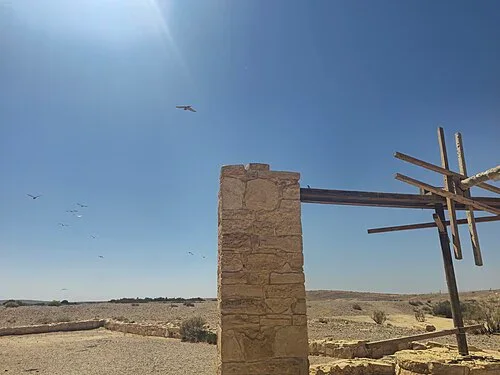 Site Approach and the Desert Hydraulic System
The Well and the Saqiya: Water in the Desert
A steam bath in the desert needs water, and plenty of it. Just to the southeast, a well shaft plunges forty metres into the rock. When rains fell, floodwater ran down Wadi al-Butm and filled the well, which could hold about a hundred cubic metres. An animal-driven wheel called a saqiya lifted the water up into a reservoir beside the shaft. Traces of that mechanism, and of a small dam, have been found here. From the reservoir, ceramic pipes carried water along two lines. One fed a fountain in the inner courtyard. The other supplied the bathhouse and its heated rooms. Since 2010 a conservation project has been at work here, run by the World Monuments Fund with Italian restorers and Jordan's Department of Antiquities. Unusually, it reaches beyond the famous interiors, shoring up the well works, the watch tower and the outer buildings with lime mortar.
Photo: Mohammad hajeer · CC BY-SA 4.0
03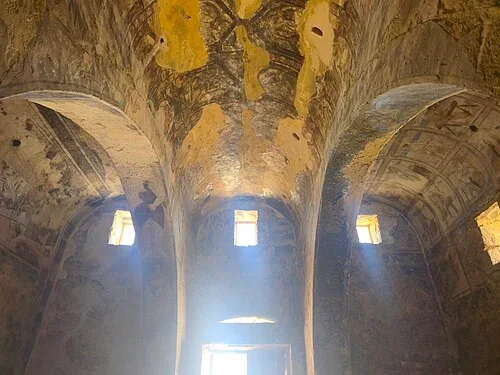 The Triple-Vaulted Audience Hall
Three stone vaults carry the roof of the reception hall, the social heart of the lodge. Here the prince received guests, held banquets and heard music and poetry, far from the strict etiquette and intrigue of the Damascus court. Nearly every surface was painted. The vaults and walls carried rulers, hunting parties, dancers, craftsmen at work and figures from myth. In the west aisle, Jonah and the whale appear four times. These are the earliest known images of Jonah in Islamic art. Whether they follow the Quran's telling or the Bible's is hard to settle, since the two versions are very similar. Small amphorae in the scenes lean toward the Biblical telling. Some scholars think that detail shows the painters worked from ready-made models rather than from either text directly.
Listen in the appPhoto: Mohammad hajeer · CC BY-SA 4.0
04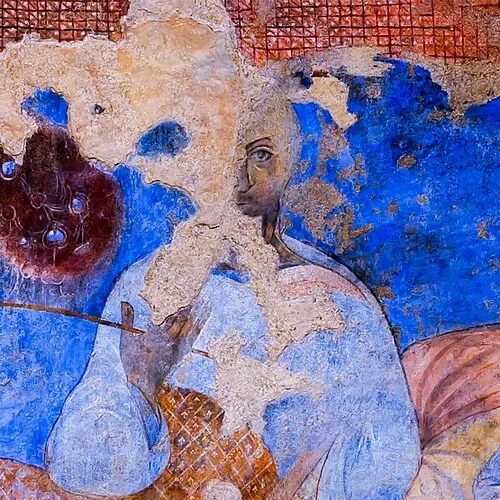 The Triple-Vaulted Audience Hall
Portrait of Prince Walid Ibn Yazid
One face on these walls belongs to the man who ordered this lodge built: Walid Ibn Yazid, the future caliph Walid the Second. He spent long stretches away from Damascus before taking the throne. Writers knew him as a pleasure-seeker, and the frescoes around here match his tastes: wine, music, revelry, lounging at the edge of pools while poets and musicians performed. Once, performers dressed as stars and constellations entertained him, a detail worth keeping in mind for the bath dome later on. His cousin Yazid was known for the same appetites. Their family had ties to Persian culture, and Yazid's mother was a Persian princess. For years scholars argued over whether the caliph Walid the First or one of these two princes was the lodge's main user, and this portrait has been drawn into that debate. It has long been identified as the prince himself.
Listen in the appPhoto: Taha b. Wasiq b. Hussain · CC BY-SA 4.0
05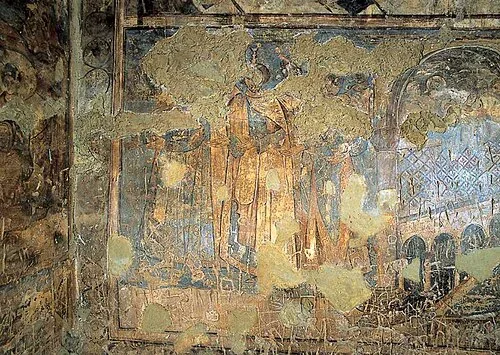 Throne Alcove: The Painting of the Six Kings
The Painting of the Six Kings
The lodge's most famous painting shows six kings. Four can be named from inscriptions and details: the Byzantine emperor, the Visigothic king Roderic, the Sasanian shah and the Negus of Ethiopia. Another figure puzzled researchers for a long time, who guessed a Turkish, Chinese or Indian ruler. It is now understood to be the emperor of China. What the scene meant is still argued over. Nearby, the painters wrote the Greek word nike, meaning victory, which suggests the caliph triumphant over his rivals. Others read the six figures as supplicants, bowing toward the caliph seated in this hall. The painting also set off a long dating puzzle. Because Roderic's reign lasted only a few years around 710, researchers long dated the image, and the whole building, to about then, and credited the caliph Walid the First. Then, during conservation work in 2012, an inscription came to light. It fixed construction between 723 and 743, commissioned by Walid Ibn Yazid, crown prince under Caliph Hisham, who became caliph himself briefly in 743.
Listen in the appunknown Umayyad 8th century painter · Public domain
06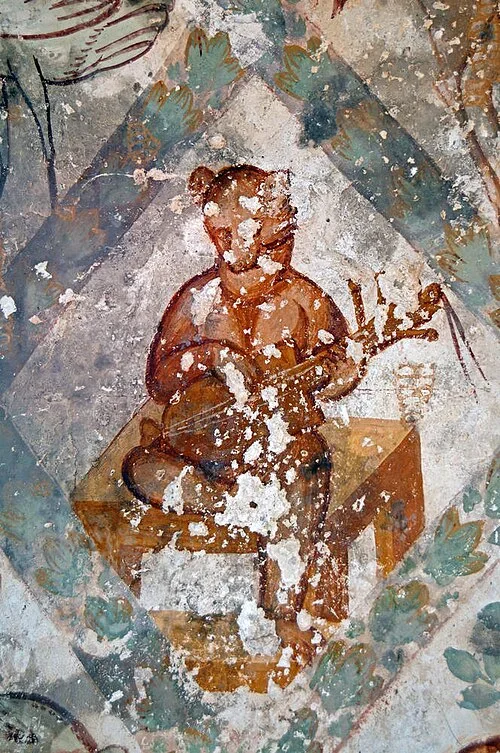 The Apodyterium: Changing Chamber and Musical Fables
The Bear Musician of the Apodyterium
The apodyterium was the changing room, where guests of the bath left their clothes. Its decoration was made to raise a smile: animals caught doing human things, above all making music. A bear sits playing a lute, and other creatures perform around it. Not everything here is light. One image shows an angel gazing down on a shrouded human form. It has often been read as a death scene, though some think the shroud covers a pair of lovers instead. Three darkened faces on the ceiling were long thought to show the stages of a life. Christians of the surrounding area take the middle face to be Jesus Christ. The paintings were made to amuse and intrigue guests as they prepared for the bath.
Listen in the appanonymous painter 723-743 A.D., photographer unknown (part of World Monuments Fund project) · Public domain
07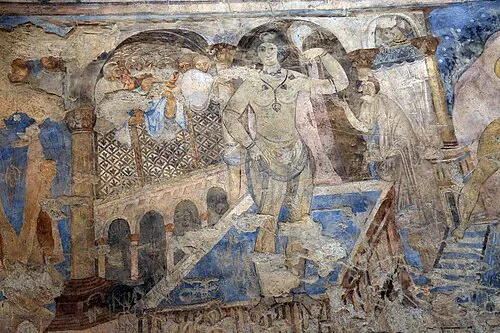 The Tepidarium: Bathing Culture and Sensual Murals
Bathing Frescoes of the Tepidarium
The warm room, the tepidarium, carries the bath's most sensual paintings. Its walls and ceiling show plants and trees, close kin to the mosaics of the Umayyad Mosque in Damascus. Two of the lodge's three bathing scenes stand here: nude women carrying water buckets to bathe their children, attended by erotes, the winged boys of Roman art. The classical style, the erotes and the Roman-like backgrounds all point to inherited tradition, and some scholars connect the scenes to a Dionysiac infant cycle. The women are probably not meant as humans. Women were not allowed into bathhouses, and the male bathers in these paintings appear partly covered, so the nude figures were likely goddesses. One scene shows a figure pouring water over another's head, echoing what happened in this very room. Arab physicians of the day believed baths drained the body's spirits, and advised covering the walls with hunting, lovers, gardens and palm trees to revive them.
Listen in the appflowcomm · CC BY 2.0
08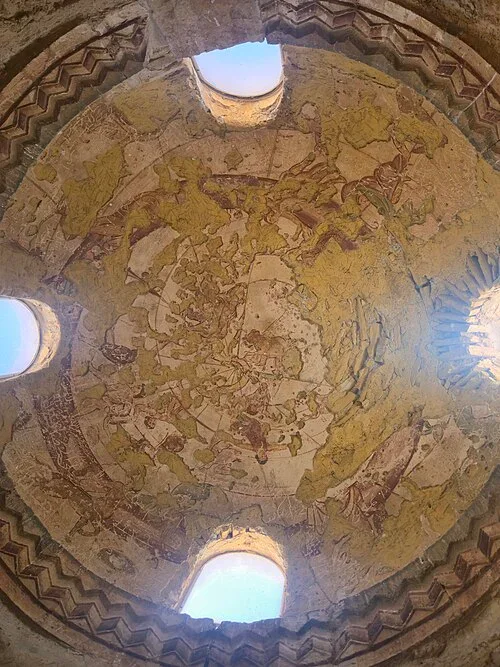 The Caldarium: The Celestial Dome of Heaven
The Celestial Dome of the Caldarium
The dome above the hot bath holds the lodge's greatest wonder: the night sky, painted on a curved surface. It is the earliest known image of the heavens on anything other than a flat plane. Thirty-five constellations can be identified, with the zodiac running among them. The painter worked with striking care. The radii of the stars emerge correctly from the north celestial pole, not from the centre of the dome, and the angle of the zodiac is accurate too. He redid several parts of the fresco, which shows how demanding the curved surface was. One error survives. The constellations run counterclockwise, in mirror image, which suggests he copied the sky from a flat manuscript or globe and never adjusted it for the dome. Guests of the prince once watched performers dressed as these very stars. In one small desert lodge, Greek science, Persian craft and Arab power met on a ceiling of plaster.
Listen in the appPhoto: Mohammad hajeer · CC BY-SA 4.0
Qusayr 'Amra
Frequently asked questions
How much does the guide cost?
Free app download. Listed guide price: $0.99. Guide price shown in the app. Audio guide only. Venue admission is separate.
Can I listen without internet?
Yes. Download the guide’s audio, images, and maps in the app before your visit. Your downloaded content is then available offline.
Can I listen in my language?
This audio guide is available in 15 languages, including English.
Do I need to follow a schedule?
No. This is a self-guided experience. Choose your stops, pause whenever you like, and return to a story at your own pace.
At your own pace
Explore Qusayr 'Amra.
Download Stanza, then search for “Qusayr 'Amra”.
Free app download · Guide price shown in the app
Keep exploring
Nearby audio guides
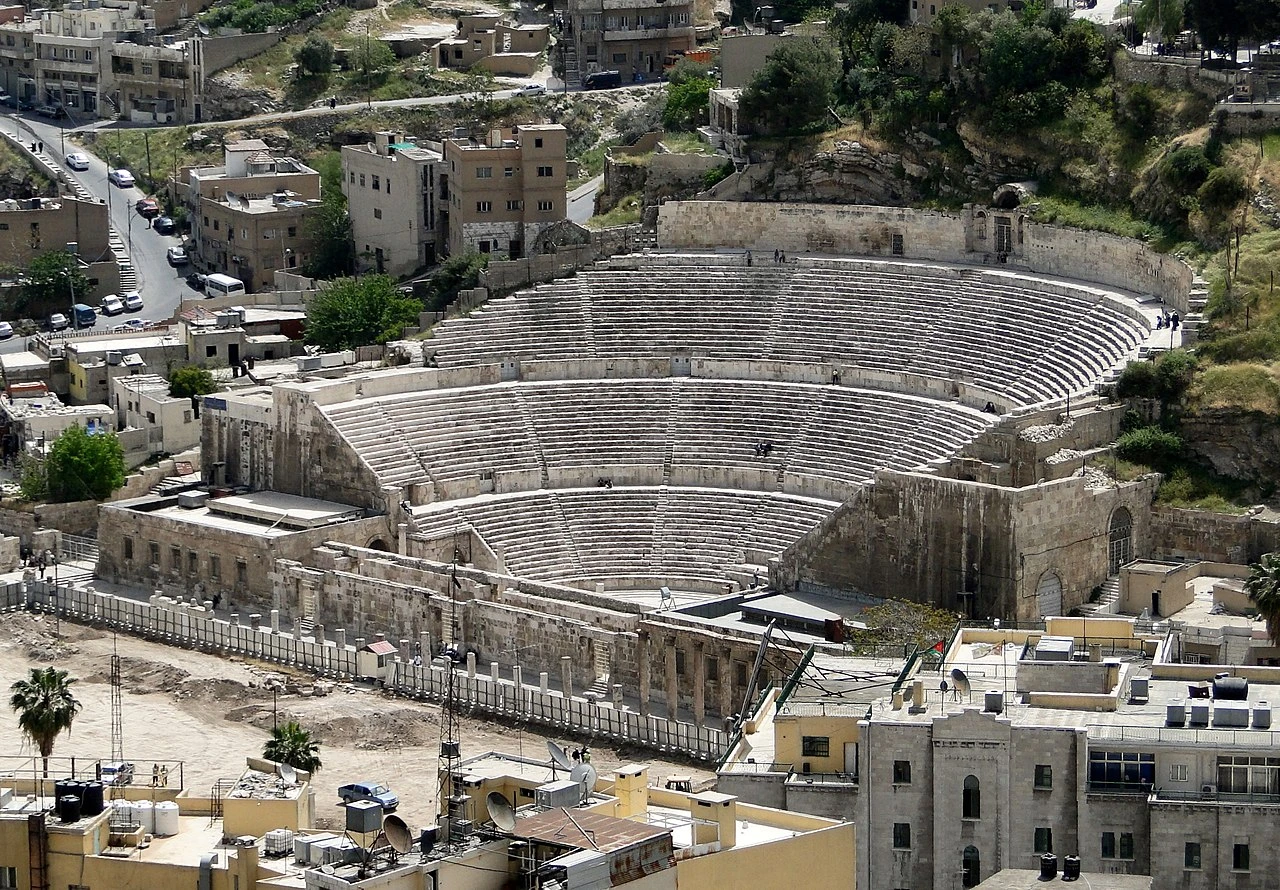
Amman · 63 km
Roman Theatre of Amman
Content & sources
Bernard Gagnon · CC BY-SA 4.0
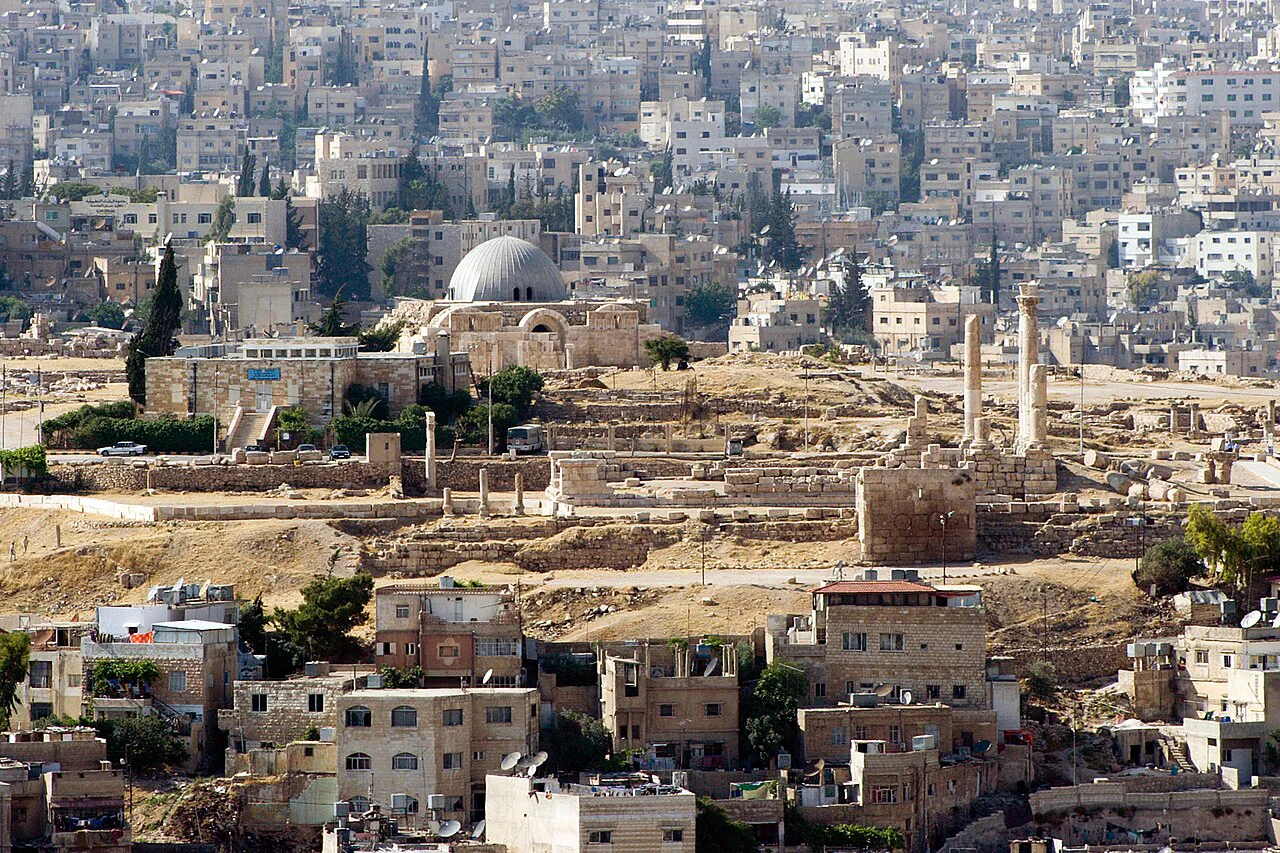
Amman · 64 km
Amman Citadel
Content & sources
David Bjorgen · CC BY 2.5
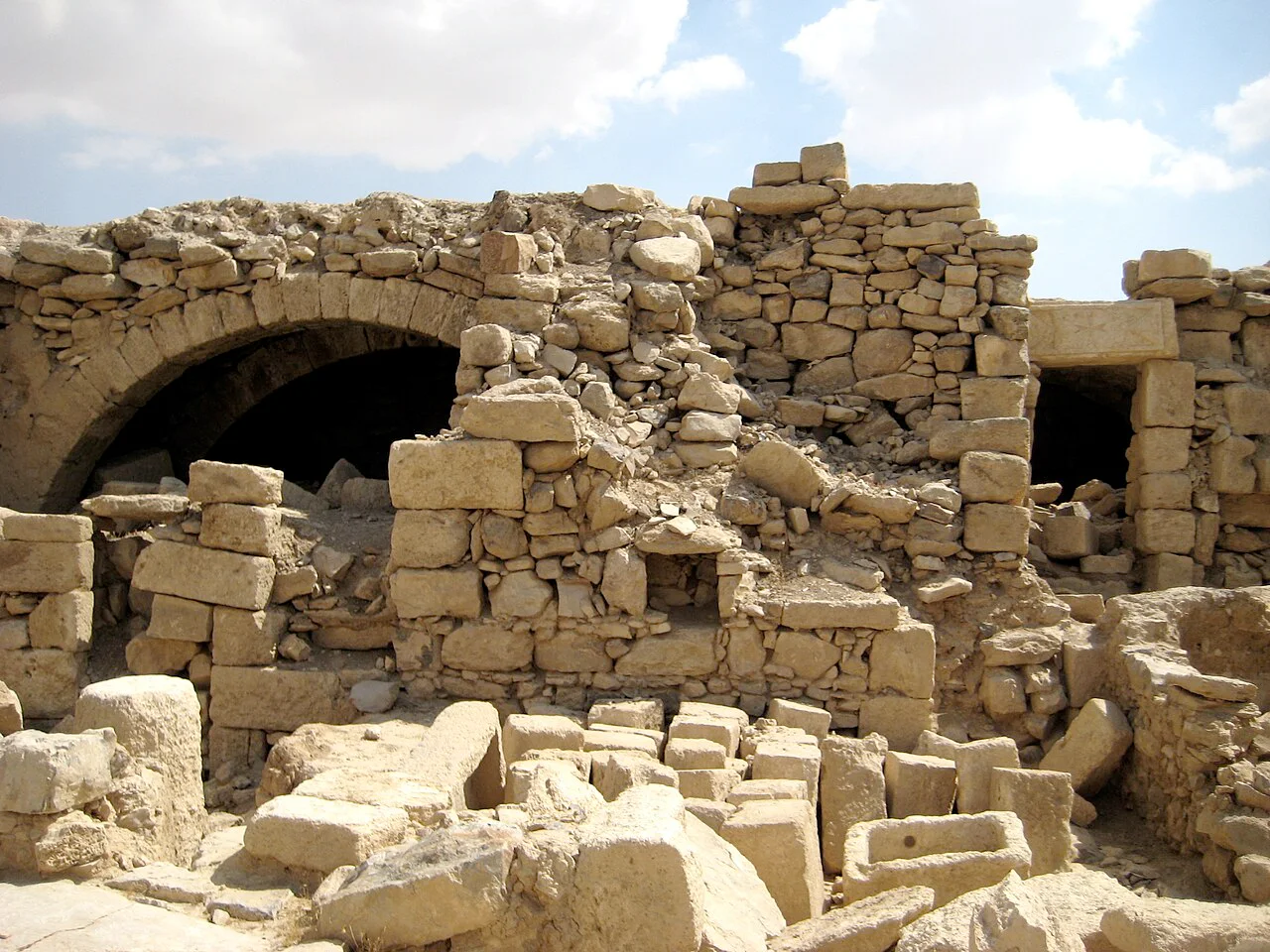
Um al Risas · 72 km
Umm ar-Rasas
Content & sources
Daniel Kirk · Public domain
Jerash · 84 km
Jerash
Content & sources
Photo: JoTB · CC BY-SA 3.0