Stanza · Audio guide
Byblos Audio Guide
A place to remember. A story to take with you.
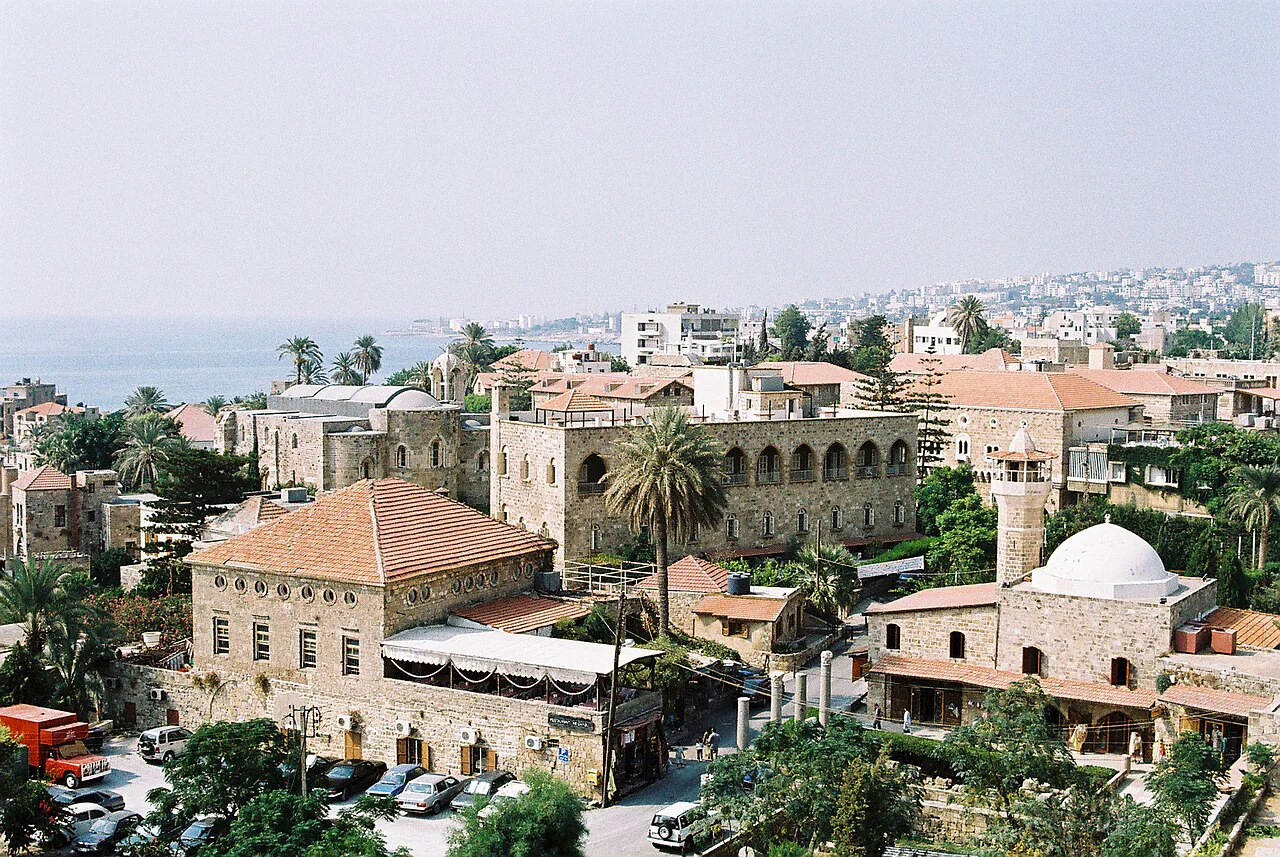
Byblos is an ancient city in the Keserwan-Jbeil Governorate of Lebanon. It is one of the oldest cities in the world and is a UNESCO World Heritage Site.
Download Stanza, then search for “Byblos”.
About the tour
One guide. Your kind of visit.
Byblos is an ancient city in the Keserwan-Jbeil Governorate of Lebanon. It is one of the oldest cities in the world and is a UNESCO World Heritage Site.
Ready when you are.
- 01Get the free Stanza app.
iOS & Android
- 02Find your guide.
“Byblos”
- 03Download before you go.
Works offline
Audio guide / 13 narrated stops
Inside the guide
Get to know a few of the stories before you go. Open a stop to read more.
01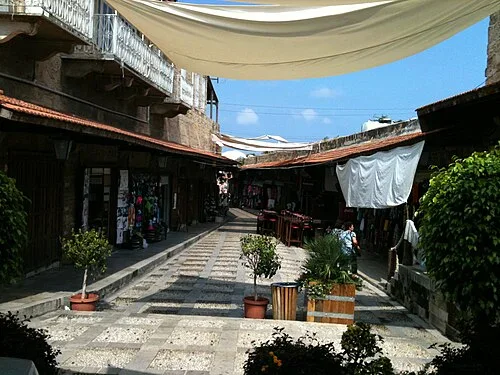 The Old Souks and Medieval Gate
The Old Souk and Medieval Walls
Welcome to Byblos, a small seaside town in Lebanon that may be the oldest city in the world. People first camped this coast somewhere between 8800 and 7000 BC, and the town has been lived in without a break since about 5000 BC. This market street gives you the flavor of the place. It sits inside the old medieval quarter, a walled town only about 270 meters from east to west and 200 from north to south. Around these streets lie Canaanite houses, Phoenician temples, Roman streets, a Crusader castle and Ottoman shops, all in one small patch of ground. Canaanite, Egyptian, Phoenician, Persian, Roman, Crusader, Mamluk, Ottoman, each left a layer, and UNESCO listed the whole stack as World Heritage. The walk ahead climbs down through those layers, one stop at a time.
Photo: Chaps the idol · CC BY-SA 3.0
02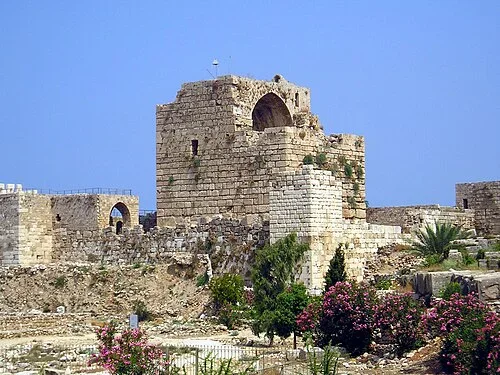 Crusader Castle and Site Museum
The Crusader Castle of Gibelet
That squat stone tower ruling the site is the Crusader castle, raised in the 12th century. Its builders were the Embriaco family, merchants from Genoa who took over the town and ruled it as the Lordship of Gibelet, the Crusader name for Byblos. At first they administered it for the Republic of Genoa; later it became a hereditary fief, on condition they paid a yearly fee to Genoa and to the city's cathedral of San Lorenzo. The masonry tells you where their building material came from. Ancient columns and much older limestone blocks are set right into the Crusader walls, torn from the ruins the family found all around them. The fortress changed hands often. Saladin took it in 1187, the Crusaders won it back, and in the late 13th century the Mamluk sultans took the coast around it. Even so, the Embriacos held on until around 1300.
Heretiq · CC BY-SA 2.5
03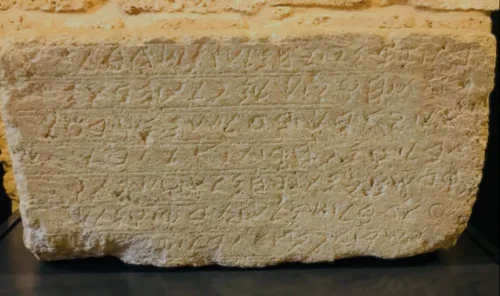 Crusader Castle and Site Museum
A Royal Inscription Inside the Castle
Inside the castle's ground-floor museum sits a carved limestone block, known as the Yehimilk inscription, set up in the name of one of the city's own kings. It belongs to a group of five royal inscriptions from Byblos, carved between about 1150 and 950 BC. Together they prove that the Phoenician alphabet, a lean script of just twenty-two characters, was in use here. There is a quiet irony in where it now stands. A Crusader fortress, itself assembled from the city's older stones, now shelters a written monument from the city's oldest kings. And the script on this stone did not stay home. Phoenician merchants carried their twenty-two letters with them on their voyages, spreading them along the sea routes into North Africa and Europe. Most of the alphabets later written around the Mediterranean trace something of their shape back to characters like these.
Listen in the appPhoto: Onceinawhile · CC BY-SA 4.0
04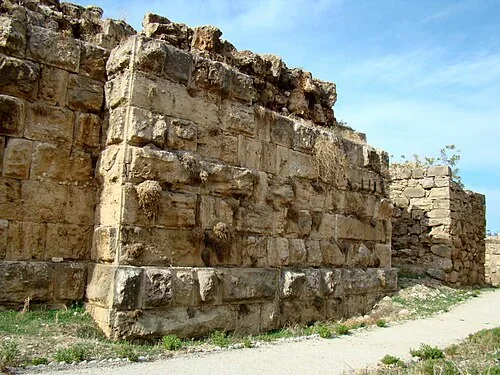 The Persian Fortifications
The Achaemenid Fortifications
These are some of the biggest stones on the whole site, and they belong to the Persian period. From 538 to 332 BC the Achaemenid emperors organized the Phoenician coast into vassal kingdoms, and Byblos was counted the fourth of the four, after Sidon, Tyre and Arwad. Defensive works like this wall of rough, massive masonry date from that era, part of the chain guarding a harbor city that every empire passing through the Mediterranean wanted to hold. The blocks were set without mortar, their sheer weight doing the work. Empires came and went here, Egyptian, Assyrian, Persian, and each one left its mark on the defenses. These walls are the Persians' mark.
Listen in the appPhoto: O.Mustafin · Public domain
05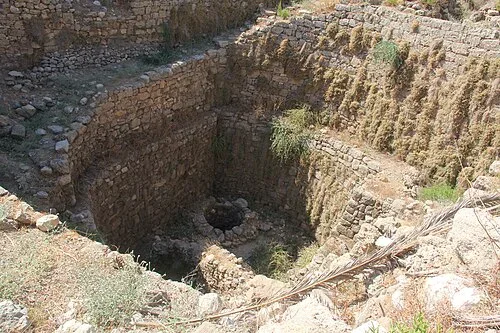 The King's Spring (Ain el-Malik)
Water is the reason a city can grow here at all, and this deep cavity is where it came from. Ain el-Malik, the King's Spring, is a natural hollow about twenty meters deep, reached by spiral stairs, and it once supplied the whole city. A shrine stood at the spring from very early times, and it was gradually built up into a sacred well. The spot also carries one of the great Egyptian legends, told by the Greek writer Plutarch. The story goes that the goddess Isis, searching for her murdered husband Osiris, was met on the spring's stairs by the servants of Byblos's king. They brought her to the royal palace, where she found her husband's body hidden inside one of the palace pillars. Whether or not the myth happened here, people have drawn water from this spot for thousands of years.
Listen in the appPhoto: Elgaard · CC BY-SA 3.0
06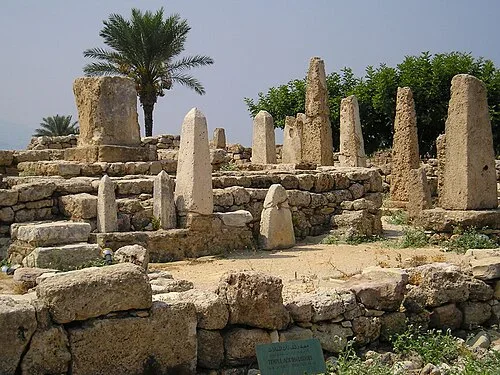 The Temple of the Obelisks
This field of small standing stones was a temple, and its god was Resheph, the Canaanite god of war and plague. The sanctuary was built between about 1600 and 1200 BC, set on top of an older temple with an L-shaped floor plan. The many little obelisks that give the place its name were not monuments to anyone. They were offerings, dedicated one by one by worshippers, until the courtyard filled with them. By the time of Alexander the Great the temple had already fallen into ruins. What stands here now was moved by archaeologists to this position, stone by stone, so the whole sanctuary could be read in one place. Even the layout of the visit, then, is part of the site's long story of one era built on another.
Listen in the appPhoto: Heretiq · CC BY-SA 2.5
07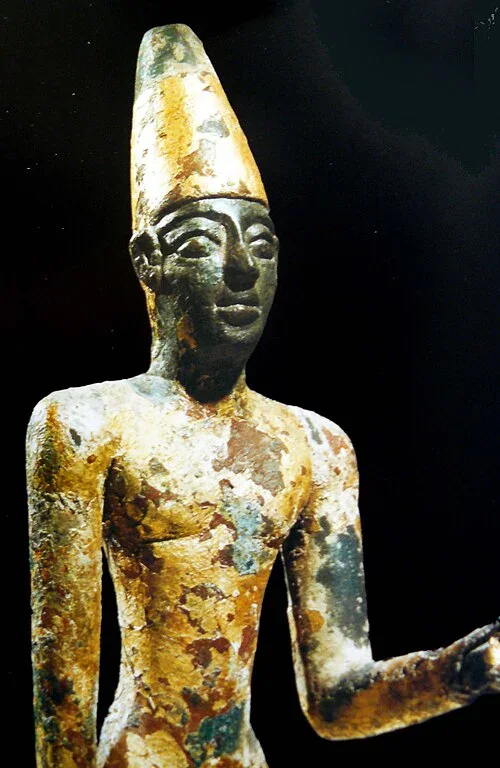 The Temple of the Obelisks
A Gilded Bronze Votive Figure
Under those standing stones, excavators found the worshippers' gifts. The sanctuary held a large number of human figurines cast in bronze and covered with thin gold leaf, small precious dedications left for the god by individual people. Not grand monuments, then, but personal offerings, a face and a body at the scale of a hand, dressed in gold. The originals are kept in the National Museum of Beirut, and a figure like this one gives a sense of what they look like. The gilding has flaked and mottled over the centuries, bronze and gold weathering together. Each one once stood where a worshipper placed it, a small act of devotion in a courtyard full of them.
Listen in the appElie_plus · CC BY-SA 3.0
08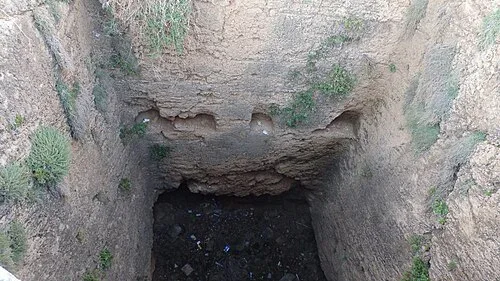 The Royal Necropolis
 Shafts
The kings of Byblos were buried in the second millennium BC in a royal necropolis, and this deep square shaft shows the design. Workers cut straight down into the living rock, then opened a burial chamber at the bottom where the king was laid in a stone sarcophagus. The shaft worked like a sealed well, a vertical drop that could be filled in again, hiding the chamber below from anyone passing overhead. In 1923 the French archaeologist Pierre Montet, in the middle of a campaign that ran from 1921 to 1924, opened these tombs. What he found at the bottom of one of them turned out to be one of the most important discoveries in the history of writing. That sarcophagus is the next stop.
Listen in the appPhoto: M0d3M · CC BY-SA 3.0
09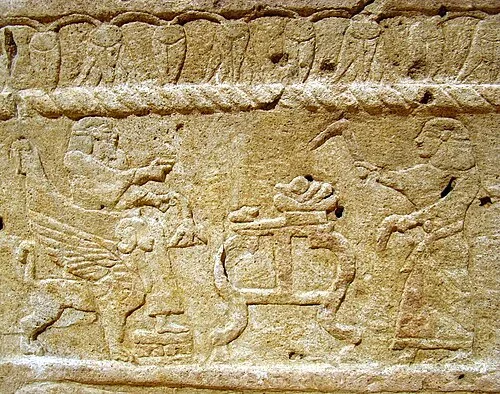 The Royal Necropolis
The Sarcophagus of King Ahiram
Around 1000 BC, King Ahiram was laid to rest in a carved limestone sarcophagus, and its side panels carry the story of his funeral. A king sits at a table laid with offerings, attended by servants, and beside him crouches a winged, sphinx-like figure. But the decisive thing about this coffin is not the carving. Around it runs the oldest known complete inscription in the Phoenician alphabet. The inscription itself carries a warning: anyone who opens the coffin will see his sceptre broken and his throne overturned. The exact wording is still argued over, but the message to grave robbers is unmistakable. The sarcophagus itself is no longer here: it is now in the National Museum of Beirut.
Listen in the appPhoto: O.Mustafin · Public domain
10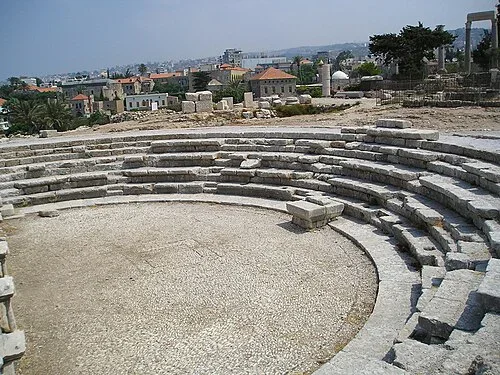 The Roman Theater
Roman Byblos built itself a theater around AD 218, a compact semicircle of stone seats looking out toward the sea. Its survival says the city still had public life and money for spectacle under Roman rule, centuries after the Phoenician kings. The theater has a second story, though, and it is an honest one. Archaeologists dismantled the whole structure and rebuilt it where it stands now, turned to a different orientation, so they could dig down through the ground it had covered. Beneath it lay older layers, going back to Bronze Age Byblos. So the building you see has been moved once in modern times, after standing in place for some seventeen hundred years.
Listen in the appPhoto: Heretiq · CC BY-SA 2.5
- 11
The Ancient Phoenician Port
The harbor where cedar sailed to Egypt, and where the word Bible was born.
- 12
Cathedral of Saint John-Mark
A Crusader cathedral from 1115, shaken by an earthquake and still ringing over the old town.
- 13
A Living Town, Closing Reflection
The carved porch of the cathedral, where medieval craft and daily life still meet.
Byblos
Frequently asked questions
How much does the guide cost?
Free app download. Listed guide price: $1.99. Guide price shown in the app. Audio guide only. Venue admission is separate.
Can I listen without internet?
Yes. Download the guide’s audio, images, and maps in the app before your visit. Your downloaded content is then available offline.
Can I listen in my language?
This audio guide is available in 15 languages, including English.
Do I need to follow a schedule?
No. This is a self-guided experience. Choose your stops, pause whenever you like, and return to a story at your own pace.
At your own pace
Explore Byblos.
Download Stanza, then search for “Byblos”.
Free app download · Guide price shown in the app
Keep exploring
Nearby audio guides
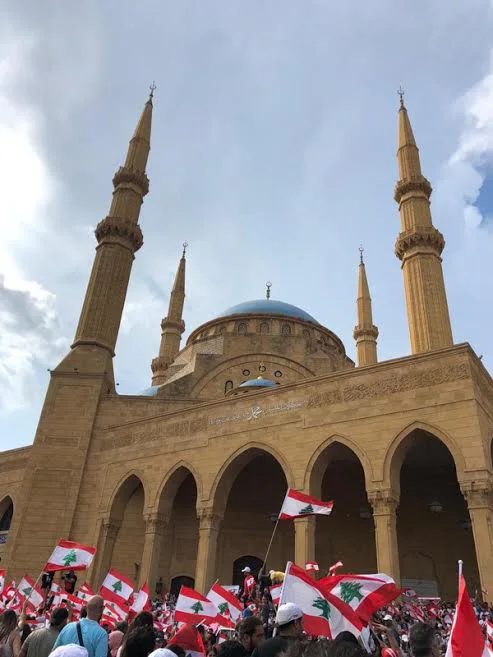
Beirut · 28 km
Mohammad Al-Amin Mosque
Content & sources
Photo: NicolasGaron · CC BY-SA 4.0
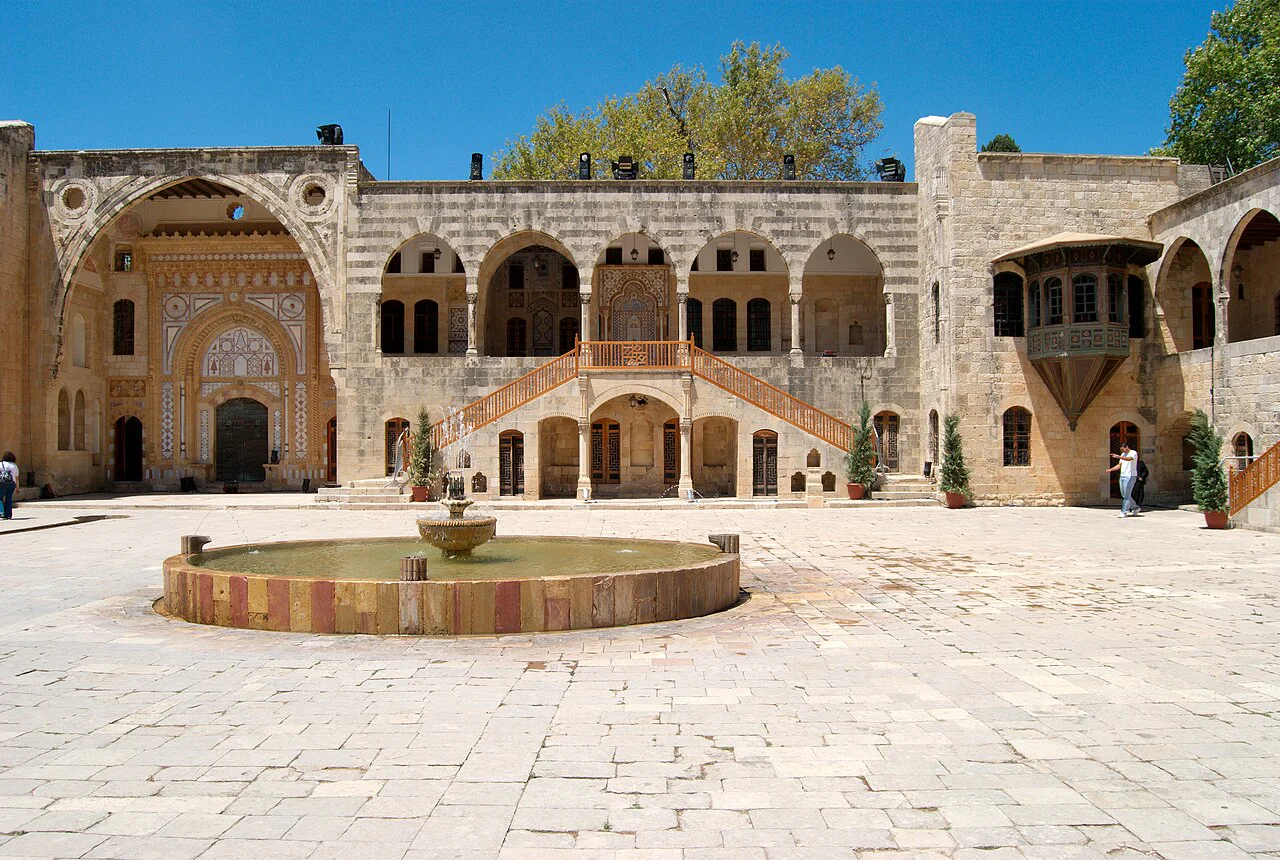
Beit ed-Dine · 47 km
Beiteddine Palace
Content & sources
Photo: Peripitus · CC BY-SA 3.0
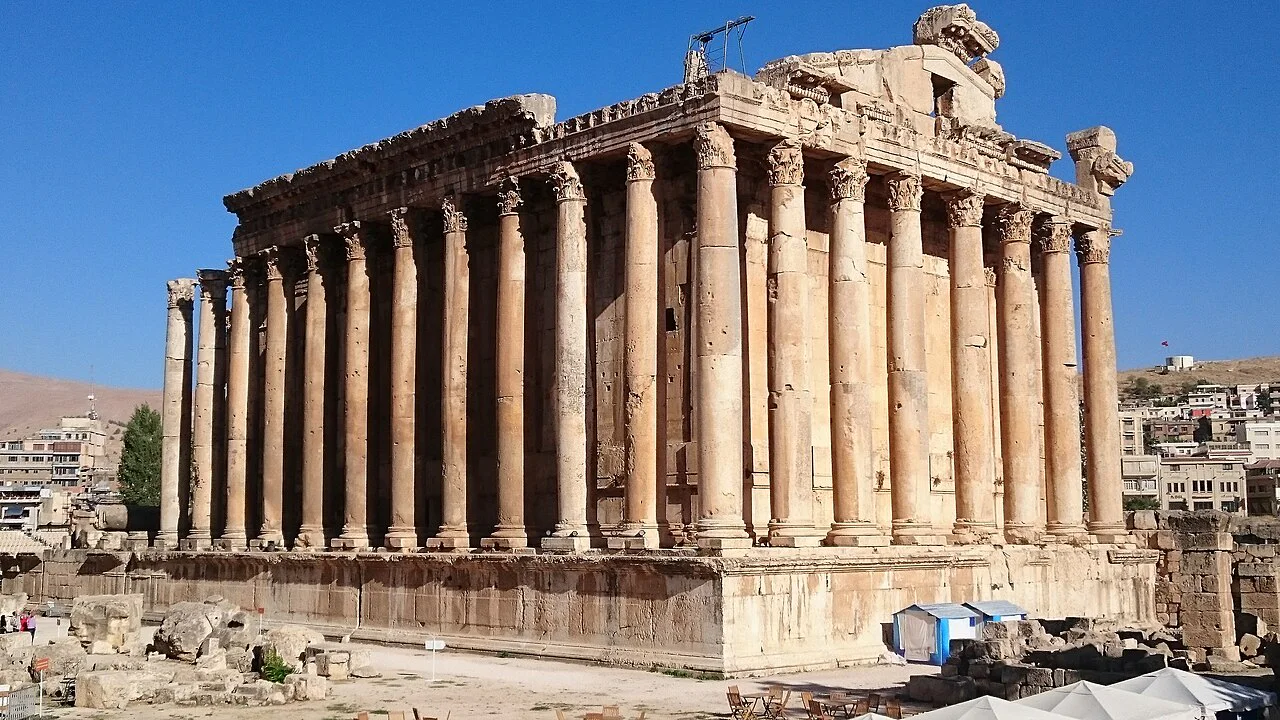
Baalbek · 53 km
Baalbek
Content & sources
Saadedine AL SAIDI · CC BY-SA 4.0
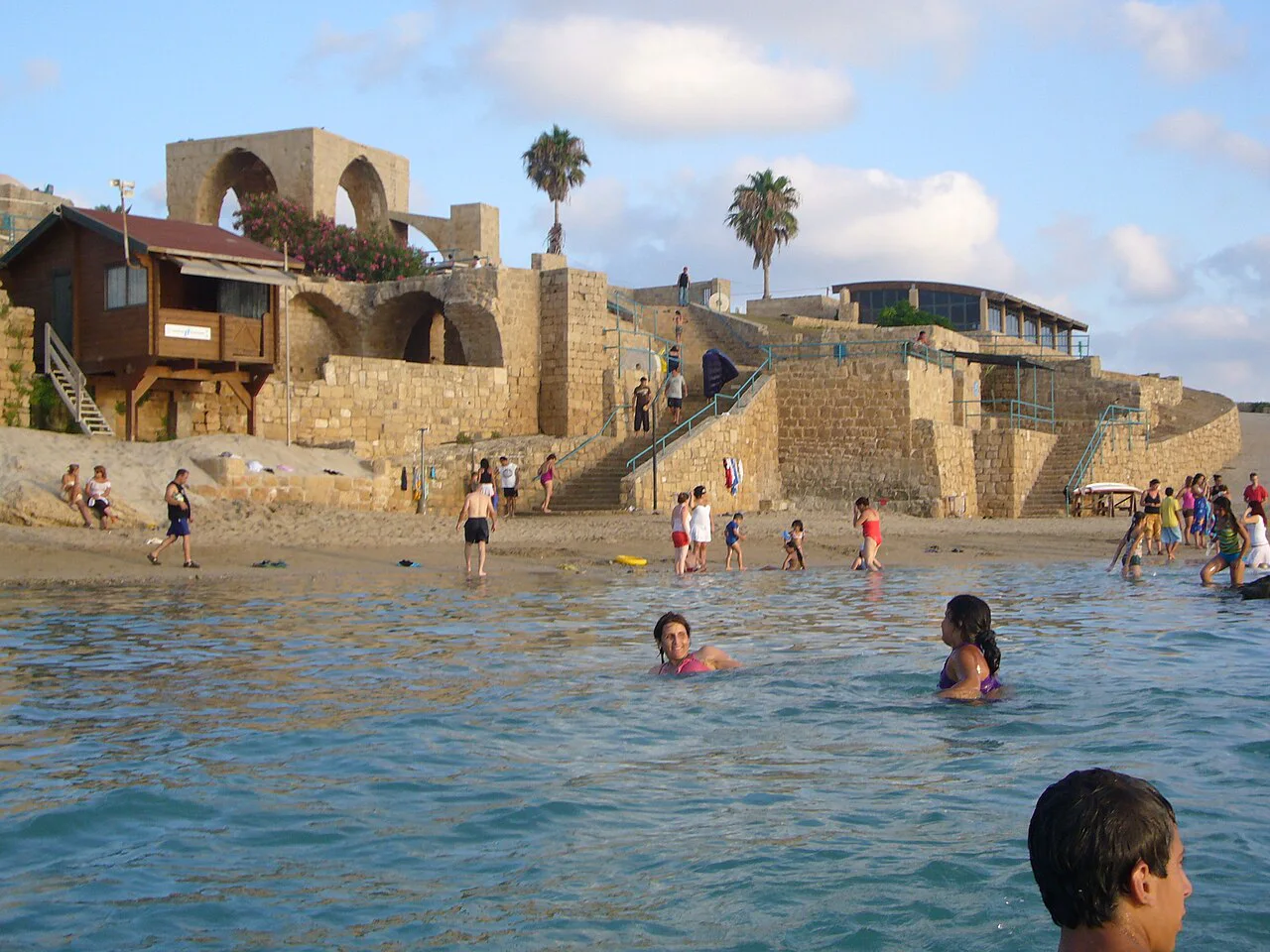
Mate Asher Regional Council · 129 km
Achziv
Content & sources
Al Ameer son (talk) 19:03, 11 August 2008 (UTC) · Public domain