Stanza · Audio guide
Toniná Audio Guide
A place to remember. A story to take with you.
Tonina is a pre-Columbian archaeological site and ruined city of the Maya civilization. It is located in the Mexican state of Chiapas, 13 km east of the town of Ocosingo.
Download Stanza, then search for “Toniná”.
About the tour
One guide. Your kind of visit.
Tonina is a pre-Columbian archaeological site and ruined city of the Maya civilization. It is located in the Mexican state of Chiapas, 13 km east of the town of Ocosingo.
Ready when you are.
- 01Get the free Stanza app.
iOS & Android
- 02Find your guide.
“Toniná”
- 03Download before you go.
Works offline
Audio guide / 18 narrated stops
Inside the guide
Get to know a few of the stories before you go. Open a stop to read more.
01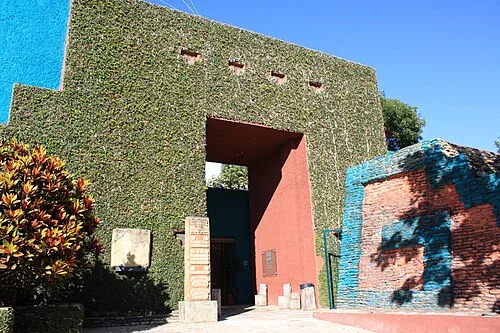 Toniná Site Museum
 Entrance
Welcome to Toniná, a royal city of the Classic Maya hidden in the hills of Chiapas, southern Mexico. The name is modern, and it comes from the Tzeltal language spoken nearby: it means house of stone. The kings themselves had a different title, one that used the word Po, and some readings suggest their city was actually called Popo. Behind these ivy-covered walls and this red-painted gateway sits the site museum, opened in the year 2000. It stands a few hundred metres outside the archaeological zone, so the ruins come later. Toniná was built on a limestone ridge that was easy to defend, high in the Chiapas Highlands, near the town of Ocosingo. Three threads run through everything here: the city's striking sculpture, its long rivalry with Palenque, and monuments carved later than at almost any other Maya city. The museum shows kings and captives, carved in stone.
David Cabrera · CC BY-SA 2.0
02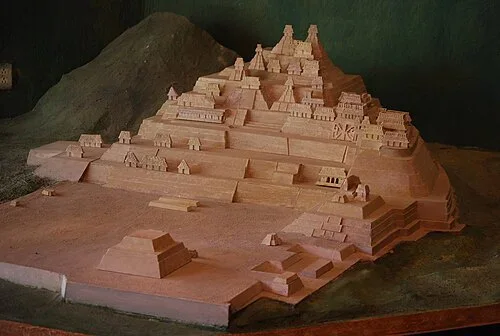 Toniná Site Museum
Scale Model of the Acropolis
This model shows the heart of Toniná as a single stepped mass, platform stacked on platform, with palaces and temples set at different levels. The real acropolis climbs a hillside in a series of terraces, seven of them by one count, each faced with stone. Buildings do not sit at random here; most of them meet at right angles, which gives the city a sharper geometry than most Maya sites. The museum's first room takes up the pyramid shape itself, and how it may connect to Maya ideas about sacred mountains and the cosmos. Keep in mind that this is a reconstruction, a guide to the layout rather than a portrait of any single moment. The real thing is waiting outside, and it is far bigger than it looks here.
Photo: J. Antonio Cruz Coutiño · CC BY-SA 4.0
03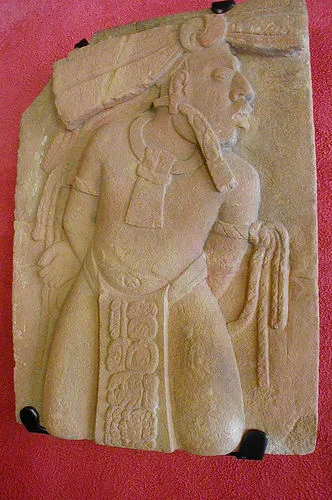 Toniná Site Museum
Carved Relief of a Figure with a Cord
A figure kneels in profile, wearing a tall feathered headdress and a broad necklace, a thick cord hanging at his side. Panels like this belong to the harder half of Toniná's story. The museum's pieces show two faces of power: sculptures of the city's rulers on one hand, bound prisoners of war on the other. In August of 711, while Toniná's own king was still a child, its warriors captured Kan Joy Chitam the Second, the king of Palenque himself. The victory was so complete that Palenque's dynastic record simply stops for ten years, and the captive king may have spent that time as a hostage. A monument at Toniná shows him bound, in low relief. The rivalry cut both ways: a text carved at Palenque says its king captured a ruler of Toniná back in 687.
Listen in the appPhoto: Poppy · Public domain
04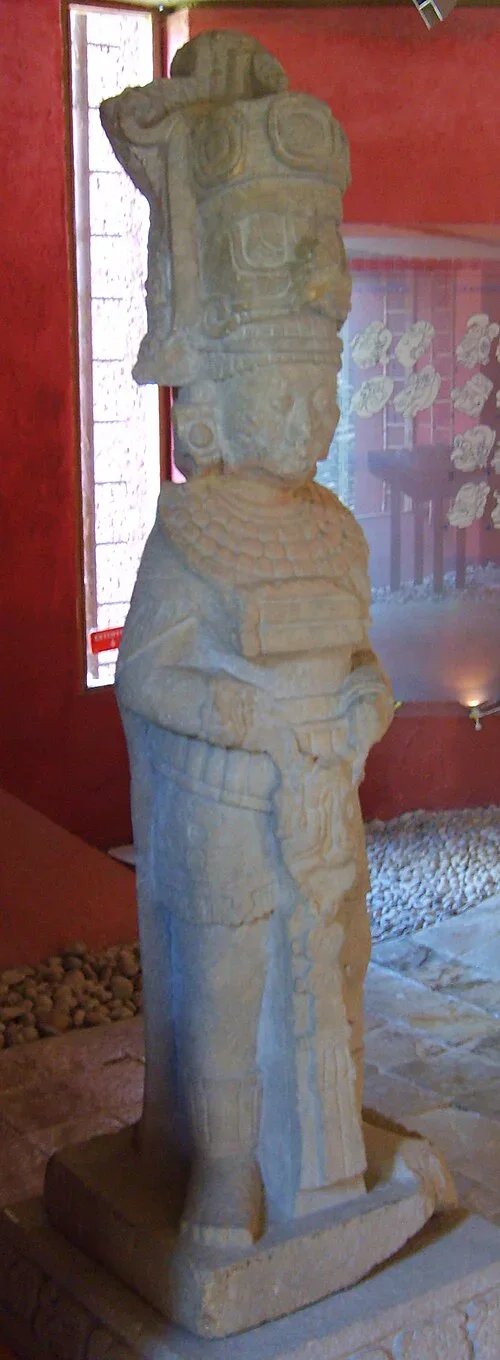 Toniná Site Museum
Standing In-the-Round Figure in the Site Museum
Most Maya cities carved their kings in flat profile, on slabs of stone. Toniná did something different: it carved them as freestanding statues, like this figure with his layered headdress, broad collar and arms held before his body. A ruler known as Ruler Two, enthroned in 668, established this in-the-round style, and it came to define the monuments of the city. Sculpture on this scale had not been seen in Mesoamerica since the Olmec civilization, more than a thousand years before. On the acropolis, these standing kings in stone quite literally overshadowed the flat images of defeated enemies carved beside them. Many of these statues carry hieroglyphic text running down the spine, from head to base, so the king's name and deeds travelled the full height of his own body.
Listen in the appPhoto: Simon Burchell · CC BY-SA 3.0
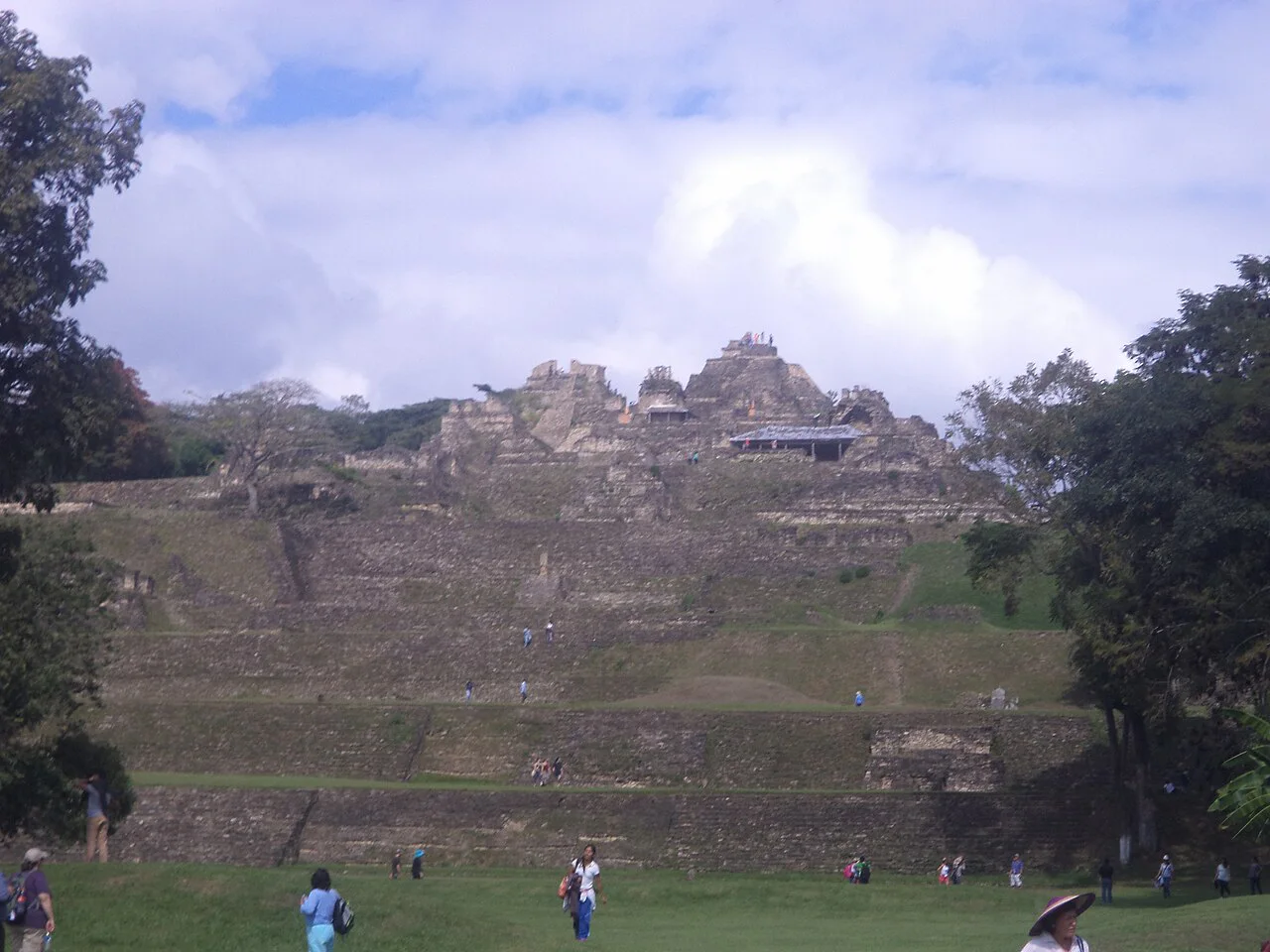
05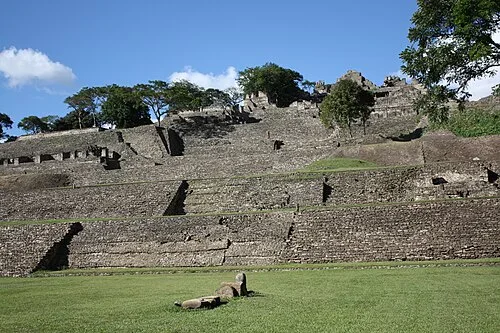 The Lower Plaza and the Great Acropolis
The Acropolis from the Lower Plaza
From the grass of the great plaza, the acropolis reads as a single hillside of stone, terrace after terrace climbing toward the trees on top. The terraced temple-pyramids rise some seventy-one metres above the plaza floor. Some sources put the great pyramid at seventy-four metres, which would make it taller than the Pyramid of the Sun at Teotihuacan, and one of the largest pyramids in all of Mexico. What looks like a natural hill is largely human work, built up on a ridge above the valley. The stone face in front of you held temples, palaces and carved images of the kings who commanded all of it. Few visitors expect this scale from a site so far off the main routes.
Listen in the appDavid Cabrera · CC BY-SA 2.0
06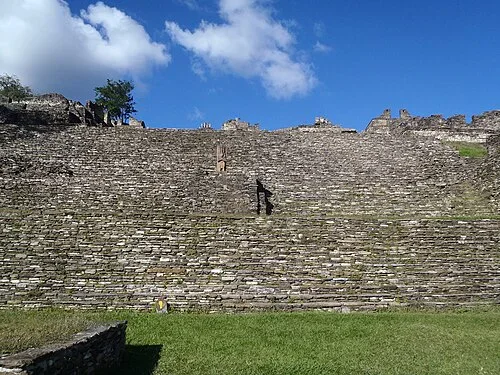 The Lower Plaza and the Great Acropolis
Layered Terrace Masonry
These neat horizontal courses of stone tell a story of building and rebuilding. The oldest remains at Toniná, from the Early Classic period, lie entirely buried beneath later construction, which is why the city's early history is so hard to read. Each generation added its own layer on top of the last, and the acropolis grew outward and upward. One late king, Ruler Eight, carried out an extensive remodelling of the upper levels. Archaeologists only reached this buried history through excavation: a French project began digging here in 1972, led by Pierre Becquelin and Claude Baudez, and Mexico's Institute of Anthropology and History took over the work a few years later.
Listen in the appPhoto: Luisinho34 · CC BY-SA 3.0
07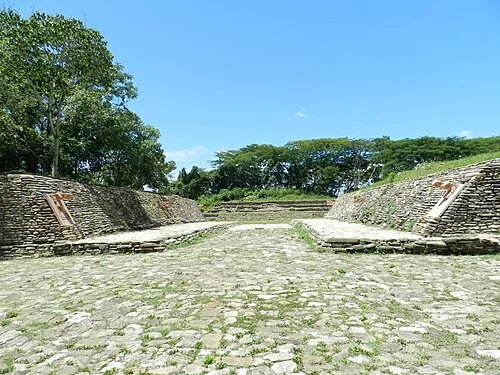 The Sunken Ballcourt
This sunken court, the larger of Toniná's two ballcourts, was dedicated in 699 by a king called K'inich B'aaknal Chaak. It was built to mark three military victories over Palenque and its king, K'inich Kan Balam the Second. The sloping stone sides frame a paved alley where the ballgame was played, a game that ran deep through Mesoamerican ritual and politics. Six sculptures of captured vassals of the Palenque king served as the court's markers, set along the playing alley. One of them is named: Yax Ahk, Green Turtle, lord of a site that probably lay along the south side of the Usumacinta River. The court was more than a place for sport; it was a scoreboard in stone, announcing who ruled the region.
Listen in the appCarlos Martell Muñoz · CC BY-SA 3.0
08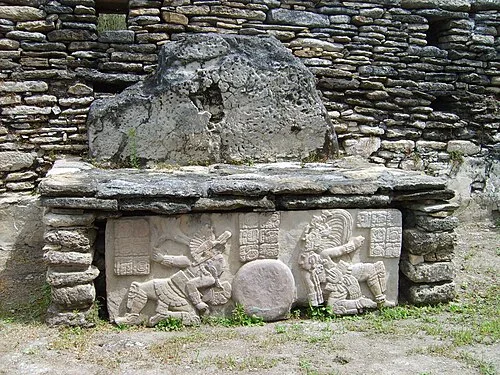 The Sunken Ballcourt
Ballgame Relief with a Round Object
Two figures face each other in profile across a round object, with glyph blocks carved at the corners and a heavy stone slab above. The scene opens onto one of the strangest findings at Toniná. In the Temple of the Sun, archaeologists found urns holding the cremated remains of Maya rulers. Those same urns also contained rubber, coal and roots, exactly the materials used to make the rubber balls of the Mesoamerican ballgame. This led the archaeologists to believe that the people of Toniná memorialized their dead kings by incorporating their ashes into the ritual game itself. If so, the rulers who once played and presided here took part in the game after death, in the very rubber that bounced across the court.
Listen in the appPhoto: Simon Burchell · CC BY-SA 3.0
09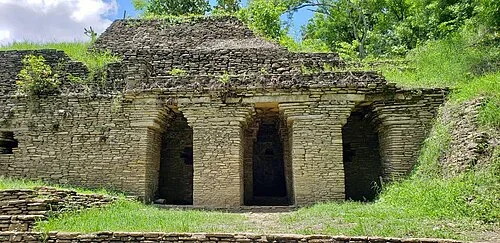 Lower Terraces and the Palace of the Underworld
The Palace of the Underworld Arches
Three dark openings break the grassy face of a lower terrace, each crowned with a stepped arch of stone vaulting. These are the entrances to the Palace of the Underworld, set on the eastern side of the terrace. The stepped profile of the arches is classic Maya vaulting, built up in overlapping stones until the walls could span the doorway. Spanish-language accounts of the site call this part of the acropolis a labyrinth, a warren of passages and chambers within the terraces. The name of the place points toward the underworld of Maya belief, the dark realm beneath the earth. What happened behind these arches, the ruins do not say.
Listen in the appMX · CC BY-SA 4.0
10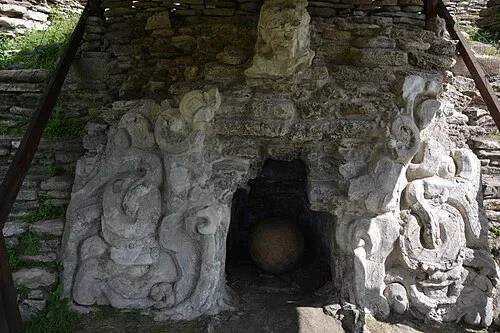 Lower Terraces and the Palace of the Underworld
Carved Masks Framing a Doorway
A dark doorway opens in the stone, and on either side a carved face curls around the opening, its features worn into scrolling forms. Deep inside the passage sits a rounded object, half lost in shadow. Carvings like these belong to an old Maya habit: framing doorways with sculpted masks, so that anyone entering passed between two supernatural faces. Toniná's sculptors were especially skilled, and the city is known for how well its carved and modelled surfaces have survived. What these particular faces represent is not settled, and the names sometimes given to them come from later guesses. The rounded shape inside could be a stone ball, or simply a boulder left where it lay. Either way, the doorway turns a plain entrance into a threshold between worlds.
Listen in the appG.Mannaerts · CC BY-SA 4.0
- 11
Stone Stair and Parapet
The carved step where a captured lord of Palenque was meant to be trodden on, over and over.
- 12
Excavated Rooms Viewed from Above
Low ruined rooms on the acropolis, and the Palace of the Frets with its spirals and its throne.
- 13
The Frieze of the Four Suns (Frieze of the Dream Lords)
The great stucco mural found in 1992, cut into four scenes under a feathered scaffold.
- 14
Close-Up of the Frieze's Relief Figures
The frieze's skeletal spirit figures, including Turtle Foot Death and the severed head no one agrees on.
- 15
Carved Figure Set in a Terrace Wall
A ruler's image built straight into the face of a terrace wall.
- 16
Carved Stone Monument with Layered Headdress
What Toniná's monuments announced: royal titles and the turning dates of the Maya calendar.
- 17
Upper Terraces at the Summit
The summit ruins, and the last dated monument of the whole Maya world.
- 18
View of the Valley from the Summit
The wide valley from the top, and what the carved stone still tells about its makers.
Toniná
Frequently asked questions
How much does the guide cost?
Free app download. Listed guide price: $1.99. Guide price shown in the app. Audio guide only. Venue admission is separate.
Can I listen without internet?
Yes. Download the guide’s audio, images, and maps in the app before your visit. Your downloaded content is then available offline.
Can I listen in my language?
This audio guide is available in 15 languages, including English.
Do I need to follow a schedule?
No. This is a self-guided experience. Choose your stops, pause whenever you like, and return to a story at your own pace.
At your own pace
Explore Toniná.
Download Stanza, then search for “Toniná”.
Free app download · Guide price shown in the app
Keep exploring
Audio guides — Mexico
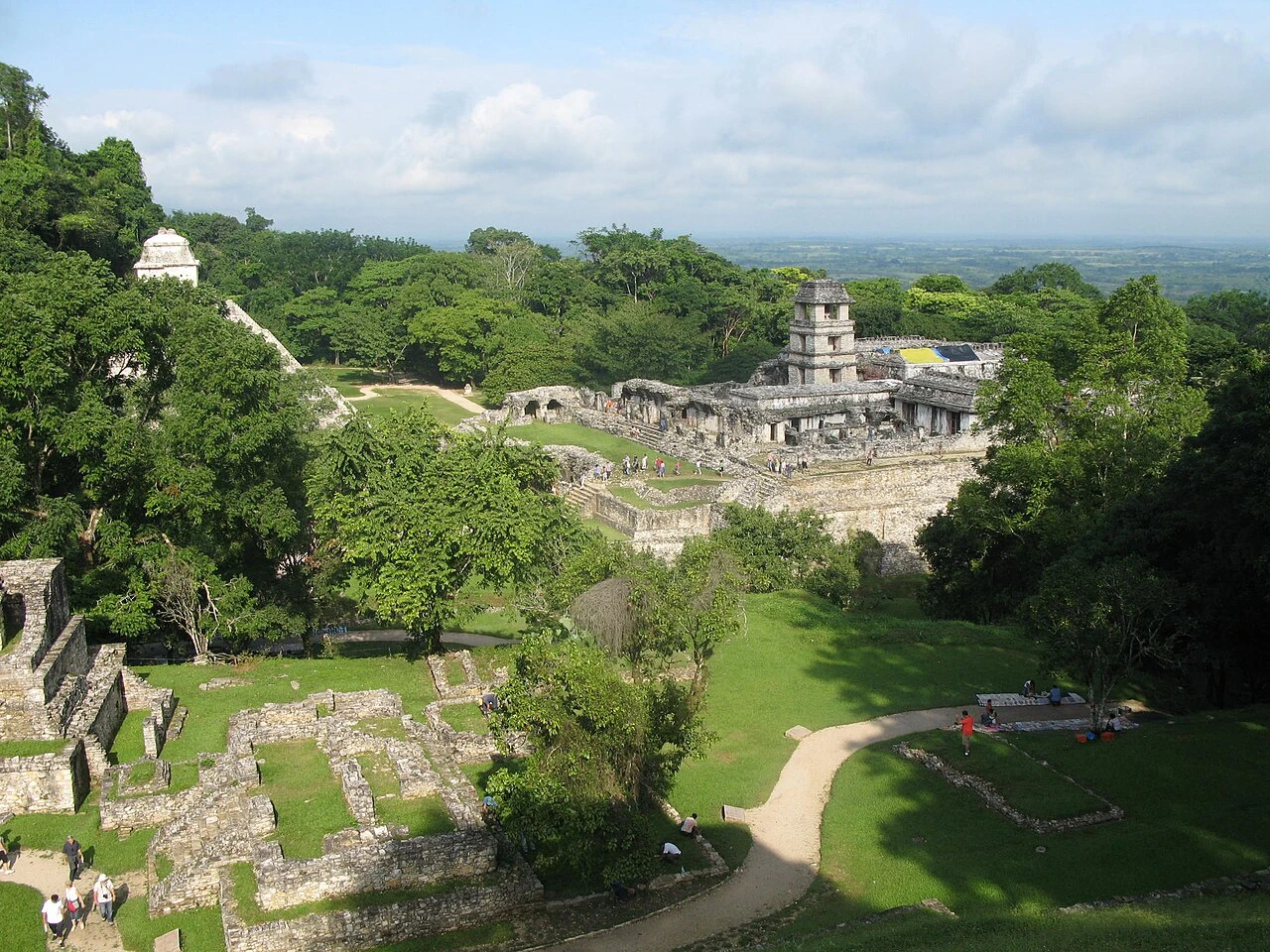
Palenque · 65 km
Palenque
Content & sources
Ljuba brank at Slovenian Wikipedia · CC BY-SA 3.0
Ocosingo · 103 km
Bonampak
Content & sources
Photo: Oleksii0 · CC BY-SA 3.0
Ocosingo · 111 km
Yaxchilán
Content & sources
Jacob Rus · CC BY-SA 2.0
La Venta
La Venta
Content & sources
Photo: Alfonsobouchot · Public domain