Stanza · Audio guide
Jardin MajorelleAudio guide
A place to remember. A story to take with you.
A two-acre botanical garden and artist's landscape garden designed by French Orientalist artist Jacques Majorelle. It currently houses the Musée Berbère and is known for its distinctive cobalt blue accents.
Download Stanza, then search for “Jardin Majorelle”.
About the tour
One guide. Your kind of visit.
A two-acre botanical garden and artist's landscape garden designed by French Orientalist artist Jacques Majorelle. It currently houses the Musée Berbère and is known for its distinctive cobalt blue accents.
Ready when you are.
- 01Get the free Stanza app.
iOS & Android
- 02Find your guide.
“Jardin Majorelle”
- 03Download before you go.
Works offline
Audio guide / 17 narrated stops
Inside the guide
Get to know a few of the stories before you go. Open a stop to read more.
01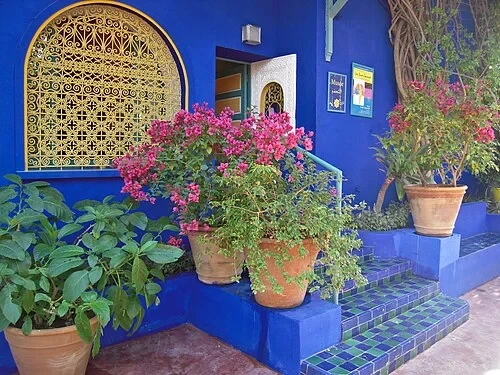 The Main Entrance on Rue Yves Saint LaurentThe Studio Entrance
Welcome to the Jardin Majorelle. In 1923, the French painter Jacques Majorelle purchased this initial four-acre plot of land on the outskirts of Marrakesh, far from the bustling city center we know today. Step inside and you will immediately notice the shift in atmosphere. The chaotic noise of the modern Gueliz district fades away, replaced by the vibrant presence of this building, which originally served as Majorelle's personal painting studio. The architecture is a bold statement in cobalt blue, a shade that has become synonymous with this site. Look up at the windows to see the intricate geometric gold latticework, a traditional Moroccan design element that adds a metallic gleam to the matte walls. This architectural precision is softened by the organic growth of climbing bougainvillea, whose bright flowers drape over the sharp edges of the structure. Majorelle spent decades refining this space, treating the entire garden as a three-dimensional extension of his canvas. The deep blue provides a saturated background that makes the natural greens and pinks of the surrounding flora pulse with life.
Michal Osmenda from Brussels, Belgium · CC BY-SA 2.0
02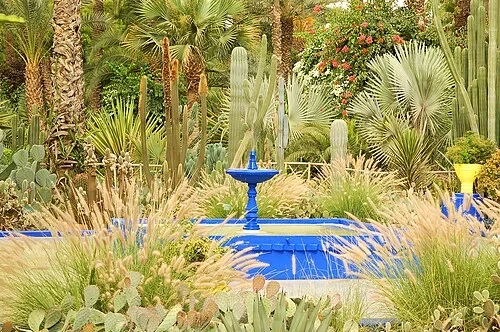 The Main Cactus AlleyThe Blue Fountain
The striking blue you see here is not just any shade; it is officially known as Majorelle Blue. Jacques Majorelle was deeply moved by the traditional tiles found throughout Marrakesh and the indigo-dyed garments worn by the Berber people of the Sahara desert. Seeking to capture that intensity, he developed and patented this specific cobalt pigment to use across the garden’s structures. Notice how the symmetry of the fountain creates a sense of order and tranquility. The electric blue finish creates a sharp visual contrast against the surrounding environment, particularly the pale, dry grasses and the dusty, desert-toned soil. In the harsh North African sun, this color remains remarkably vivid, never appearing washed out. The sound of water trickling into the basin provides a soft acoustic layer to the garden, a key element in traditional Moroccan garden design where water is as much a decorative tool as the plants themselves. This fountain serves as a primary example of how the artist used a single, powerful color to unify various architectural elements with the natural landscape.
No machine-readable author provided. Lviatour assumed (based on copyright claims). · CC BY-SA 3.0
03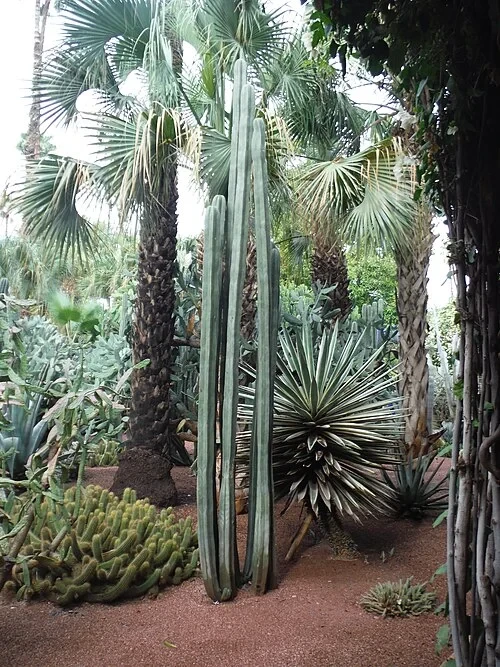 The Main Cactus AlleyThe Living Museum of Cacti
Rather than a random assortment of plants, this area functions as a living museum of rare botanical species. Jacques Majorelle was a passionate plant collector, spending nearly forty years scouring five continents to bring exotic specimens back to his home in Marrakesh. As you look around, you can see the results of four decades of careful cultivation and intentional arrangement. The vertical, ribbed columns of the tall cacti provide a strong structural element, reaching toward the sky like living architecture. These sharp, rigid forms find a soft counterpart in the fan-like fronds of the surrounding palms, which sway gently in the breeze. Closer to the ground, look for the low, spherical succulents that cluster together, offering a completely different geometric profile. The variety of textures is immense, from the prickly needles of the desert varieties to the smooth, waxy surfaces of the tropical plants. Every species was selected for its unique visual contribution to the garden’s overall composition. The sandy paths underfoot and the warm light filtering through the canopy highlight the intricate details of each specimen in this curated global collection.
Listen in the appPhoto: Elgaard · CC BY-SA 4.0
04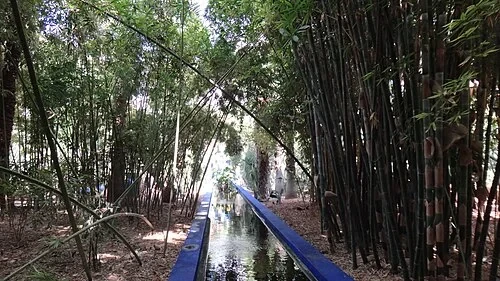 The Bamboo Grove and Irrigation ChannelsThe Irrigation Canal
Flowing through the center of the garden is a 'seguia,' a traditional Moroccan irrigation channel. While these systems are usually found in olive groves or farms, Majorelle transformed this one into a design feature by painting the concrete in his signature blue. These narrow channels are vital to the garden's survival, distributing water to the various sections to maintain a specific microclimate. If you look down the long, straight line of the channel, you can see how it draws the eye toward the dense bamboo grove in the distance. Beyond its functional role in watering the plants, the presence of moving water has a significant cooling effect on the immediate area. On a hot Marrakesh afternoon, the temperature near these channels can drop by several degrees compared to the city streets outside. This creates a refreshing corridor for visitors to walk alongside. The dark water reflects the sky and the overhanging foliage, adding a sense of movement and depth to the landscape. It is a practical piece of engineering that Majorelle elevated into a core aesthetic component of his oasis.
Listen in the appkarel291 · CC BY 3.0
05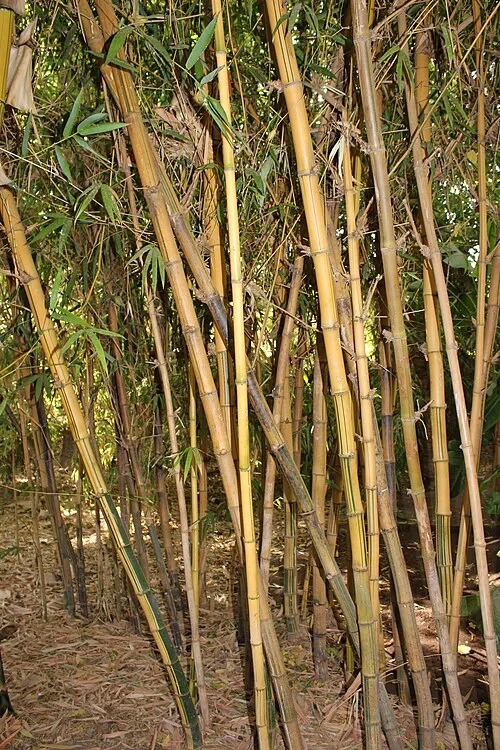 The Bamboo Grove and Irrigation ChannelsThe Bamboo Grove
The bamboo grove offers one of the most immersive experiences in the garden, creating a dense, cool screen that completely obscures the city beyond. These tall, yellow-green stalks belong to the species Bambusa vulgaris. Because bamboo grows so rapidly and tightly together, it forms a living wall that filters both the sunlight and the city noise. As you stand here, pay attention to the unique soundscape of this area. Unlike the open cactus garden, the grove is filled with the rustle of thin leaves and the rhythmic, hollow clacking of the stalks as they knock against each other in the wind. This area highlights the incredible diversity of Majorelle’s botanical collection; just steps away from arid desert species, you find yourself in the heart of a lush, tropical-style forest. The vertical lines of the bamboo mirror the tall cacti seen earlier, but with a flexible, organic quality. The canopy overhead is thick enough to create a deep, dappled shade, making it one of the coolest spots on the property. Fallen leaves create a soft carpet on the ground, muffling the sound of footsteps and adding to the sense of secluded tranquility.
Listen in the appEmőke Dénes · CC BY-SA 4.0
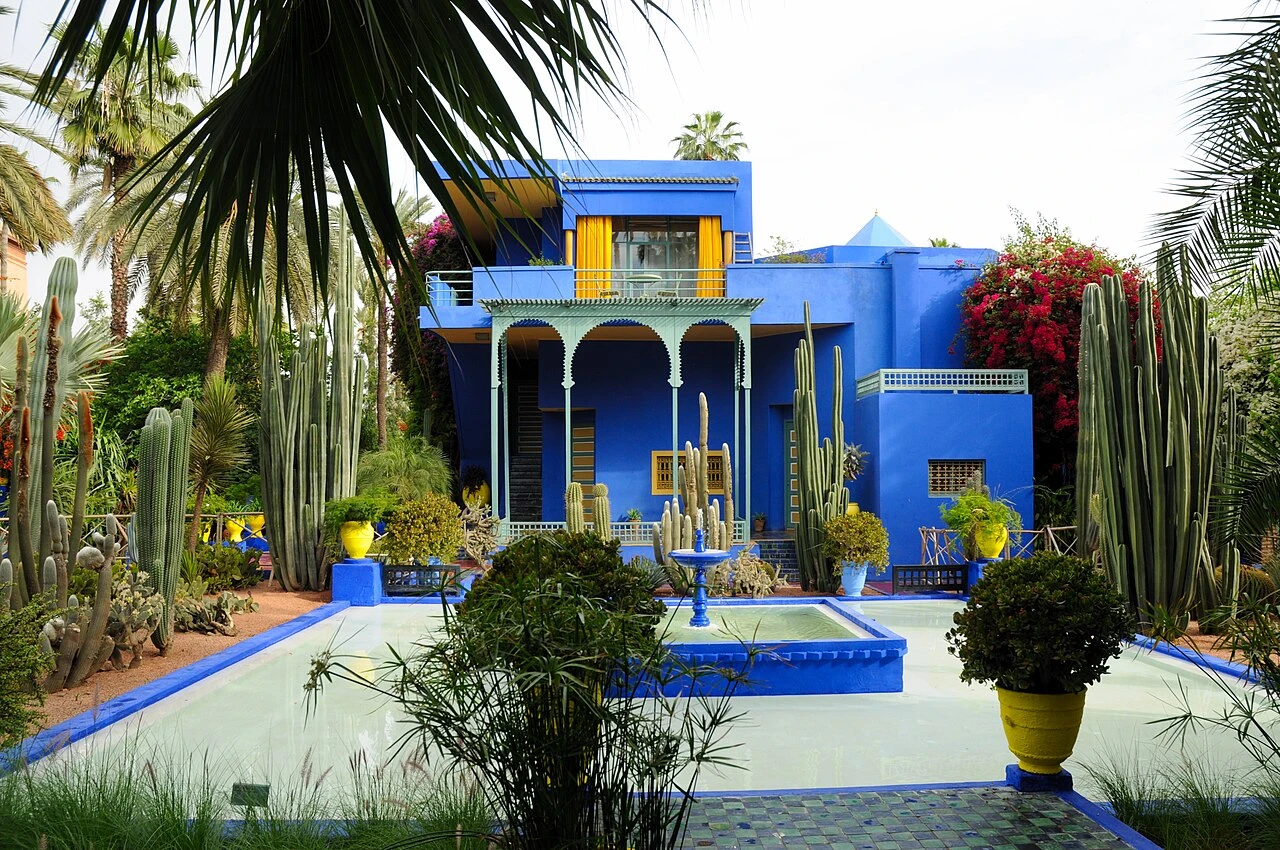
06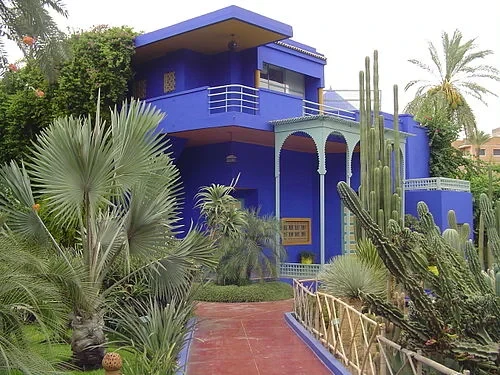 The Cubist Villa (Villa Oasis)The Cubist Villa
Standing before you is the main villa, a masterpiece of modern architecture designed by the French architect Paul Sinoir in the 1930s. This building is particularly significant as a rare example of Cubist architecture in Morocco. You can see the hallmarks of the style in its clean, geometric lines, flat roof sections, and long horizontal balconies. While the style is modern, it pays homage to traditional Moorish elements, such as the elegant arched columns supporting the lower porch. This blend of European modernism and North African tradition creates a unique aesthetic that felt revolutionary at the time of its construction. The villa currently serves as the home of the Berber Museum, but it was originally designed as a residence and a grander studio space for Jacques Majorelle. The saturated blue of the exterior walls serves to emphasize the building's sharp corners and flat planes, making the architecture appear almost like a three-dimensional painting against the blue sky. The horizontal railings and the recessed windows create a rhythmic play of light and shadow across the facade throughout the day.
Listen in the appmwanasimba from La Réunion · CC BY-SA 2.0
07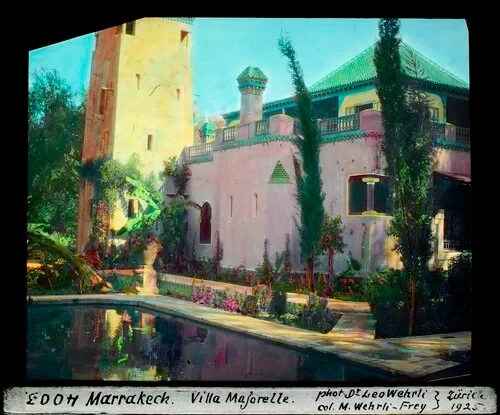 The Cubist Villa (Villa Oasis)A Glimpse of the Past
Looking at this photograph from 1925, you can see how much the villa and the surrounding grounds have evolved over the decades. In the early years, the building was painted in much softer, earthier tones—a pinkish-beige that was common in the architecture of the era. It wasn't until much later that Jacques Majorelle began his experiments with the bold, saturated colors we see today. One element that has remained constant, however, is the green-tiled roof. This is a classic 'minzah' style, a staple of Moroccan architecture designed to provide a shaded vantage point over a garden or courtyard. These green glazed tiles are iconic in Marrakesh, often seen on the roofs of mosques and palaces. The image also shows the early stages of the botanical collection, with smaller palms and less dense foliage than the lush canopy that exists now. It serves as a reminder that the garden is a dynamic, changing work of art. Majorelle’s vision shifted from a traditional Orientalist aesthetic toward something more vibrant and avant-garde, eventually leading him to patent his signature blue in the 1940s.
Listen in the appLeo Wehrli · CC BY-SA 4.0
08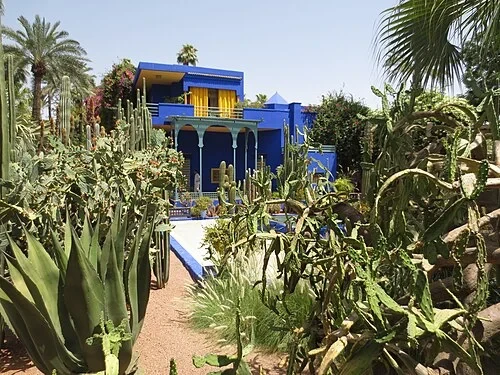 The Berber Museum (Former Artist Studio)Villa and Cacti Landscape
From this vantage point, you can clearly see how Jacques Majorelle 'painted' the landscape, treating the plants and architecture as a single, unified composition. The vibrant yellow window frames and curtains provide a sharp, warm contrast to the deep blue of the villa walls, a color combination that Majorelle used to draw the eye toward specific architectural details. Notice the group of 'organ pipe' cacti in the foreground. Their tall, ribbed verticality is no accident; Majorelle intentionally placed them here to mimic the upright lines of the villa's columns and the sharp corners of the Cubist structure. This visual repetition blurs the line between the natural and the man-made. The 40 years of work that Majorelle put into this garden were dedicated to this kind of precise, aesthetic layering. Every angle was considered, ensuring that whether you were looking at a single plant or a wide architectural vista, the colors and forms would remain balanced. The sunlight hits the blue walls at different angles throughout the day, constantly changing the intensity of the colors and the length of the shadows cast by the surrounding palms.
Listen in the appPhoto: Arnaud 25 · CC BY-SA 3.0
09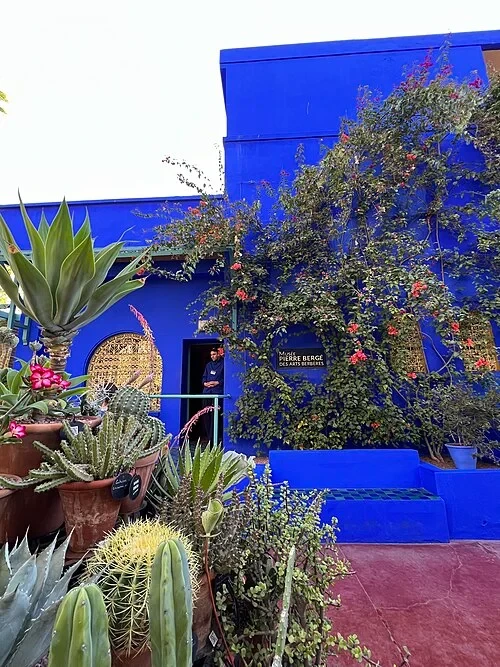 The Berber Museum (Former Artist Studio)The Berber Museum Entrance
This building has undergone a significant transformation, moving from Jacques Majorelle's personal painting studio to its current role as the Pierre Bergé Museum of Berber Arts. Majorelle had a profound respect for the Amazigh, or Berber, people, and he spent much of his career documenting their daily lives and landscapes in his paintings. When Yves Saint Laurent and Pierre Bergé took over the property, they decided to honor this legacy by creating a museum dedicated to Berber culture. Inside, the collection features over 600 artifacts, ranging from intricate silver jewelry and vibrant textiles to everyday household objects and traditional costumes. The entrance itself is framed by a burst of color; look for the vibrant bougainvillea that spills over the blue walls and the collection of terracotta pots filled with various succulents. These potted plants allow for a high degree of detail at eye level, showcasing the smaller, more delicate species in the garden’s collection. The sign above the door marks the transition into a space that preserves the ancient heritage of the mountains and deserts that so inspired the garden's original creator.
Listen in the appPhoto: TMorata · CC BY 4.0
10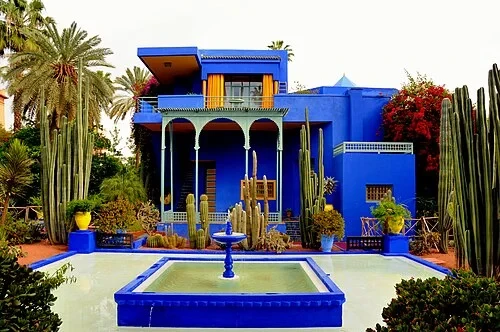 The Central Fountain CourtyardThe Reflection Pool
Water is a central element in Islamic garden design, often symbolizing life and paradise, and this large rectangular reflecting pool is a prime example of that tradition. Situated directly in front of the villa, the still water acts as a perfect mirror for the cobalt architecture and the surrounding palms. This doubling of the landscape creates a sense of symmetry and expansive space. Around the perimeter of the pool, you'll see a series of vibrant yellow pots. These aren't just decorative containers; they are strategically placed to add rhythmic color highlights that pop against the blue and green backdrop. The contrast between the saturated yellow of the pots and the deep blue of the buildings is a signature look of the garden today. In the heat of Marrakesh, the pool also serves a practical purpose by humidifying the air, helping to maintain the lushness of the nearby plants. The clean, geometric edges of the pool reflect the Cubist influence of the villa, reinforcing the garden's blend of modern and traditional styles. Small ripples occasionally break the surface, distorting the reflections of the towering date palms that lean over the water.
Listen in the appViault · CC BY-SA 3.0
Jardin Majorelle
Frequently asked questions
How much does the guide cost?
Free app download. Listed guide price: $3.99. Guide price shown in the app. Audio guide only. Venue admission is separate.
Can I listen without internet?
Yes. Download the guide’s audio, images, and maps in the app before your visit. Your downloaded content is then available offline.
Can I listen in my language?
Stanza supports 15 languages. Check the app for the languages available for this guide.
Do I need to follow a schedule?
No. This is a self-guided experience. Choose your stops, pause whenever you like, and return to a story at your own pace.
At your own pace
Explore Jardin Majorelle.
Download Stanza, then search for “Jardin Majorelle”.
Free app download · Guide price shown in the app
Keep exploring
Nearby audio guides
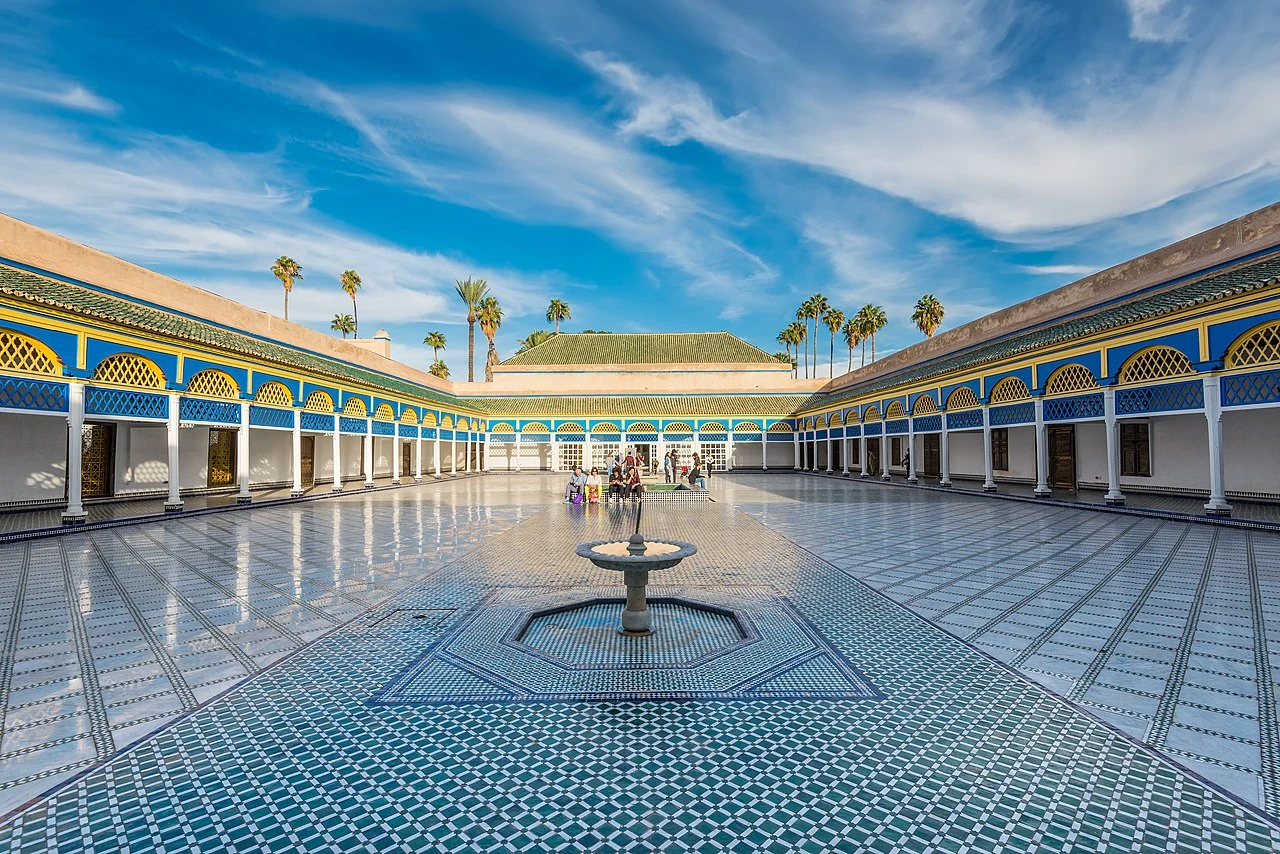
Marrakesh
Bahia Palace
Content & sources
Val Traveler · CC BY-SA 4.0
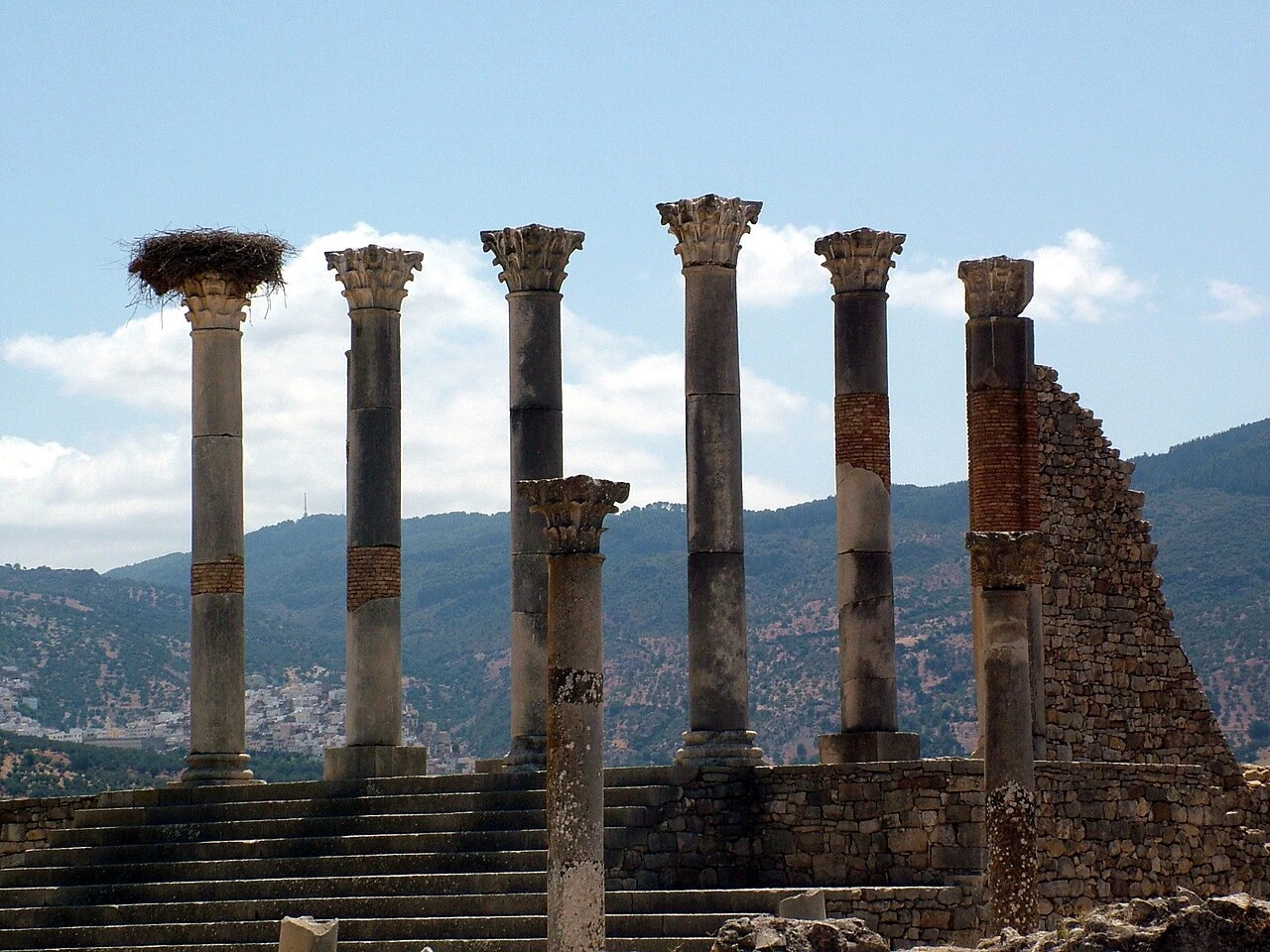
Volubilis
Volubilis
Content & sources
Marcin Sochacki (Wanted) · CC BY-SA 4.0