Stanza · Audio guide
Paleis Het Loo Audio Guide
A place to remember. A story to take with you.
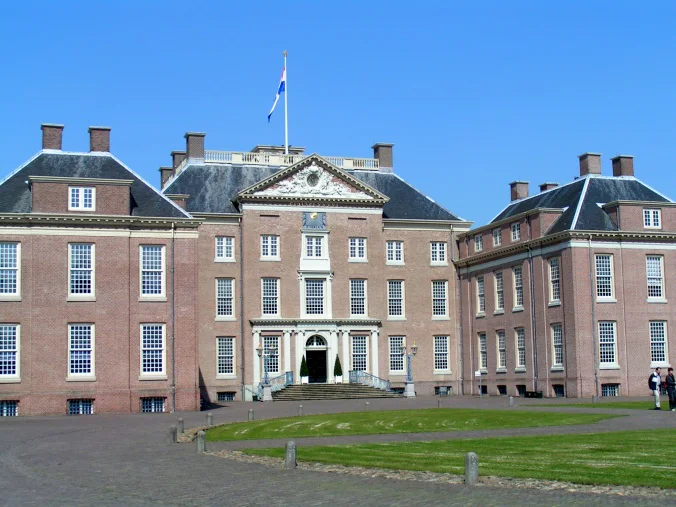
Het Loo Palace is a palace located in Apeldoorn, Netherlands. It was built by the House of Orange-Nassau.
Download Stanza, then search for “Paleis Het Loo”.
About the tour
One guide. Your kind of visit.
Het Loo Palace is a palace located in Apeldoorn, Netherlands. It was built by the House of Orange-Nassau.
Ready when you are.
- 01Get the free Stanza app.
iOS & Android
- 02Find your guide.
“Paleis Het Loo”
- 03Download before you go.
Works offline
Audio guide / 16 narrated stops
Inside the guide
Get to know a few of the stories before you go. Open a stop to read more.
01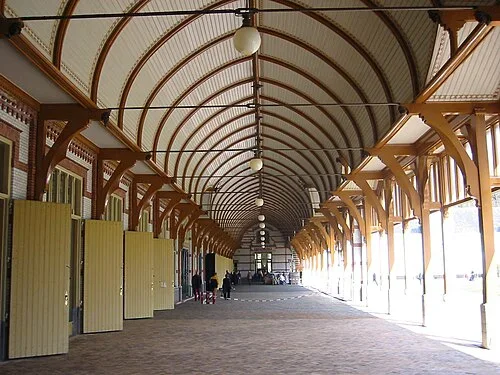 The Royal Stables and Coach House
Royal Stables of Paleis Het Loo
Welcome to Paleis Het Loo, the palace of the Dutch royal House of Orange-Nassau at Apeldoorn. This tour follows it from the stables, across the forecourt, into the palace itself, and on out to the great garden. The building around you is younger than the palace at its heart. It went up between 1907 and 1910, a large stable complex with a garage for the new age of motoring. The plan is simple and symmetrical: a middle section for the carriages and the harnessing of horses, flanked by two long wings for the animals themselves. For decades the coaches of the royal family were kept and readied here, and when the court travelled, it travelled from this yard. Today the stables belong to the national museum, and they still open the visit the way royal arrivals once did.
nl:Gebruiker:GerardM · CC BY-SA 3.0
02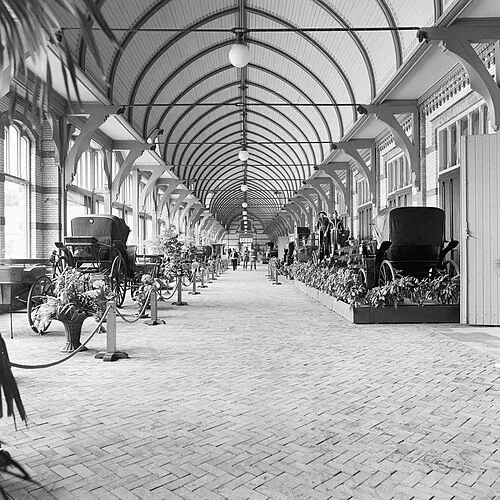 The Royal Stables and Coach House
The Royal Railway to Het Loo
Under this vaulted roof the court kept its carriages and sleighs, the vehicles of the Royal Staldepartement, the department that served the royal household. They carried the family around the estate, but the long journey to Het Loo was made by rail. William the Third wanted to travel by train straight from The Hague to his hunting palace, and on the first of May 1876 he opened the line himself. It ran for three and a half kilometres, and the platform stood at the end of the driveway, right in front of the entrance gate. In the 1920s and 1930s the royal family used it often. In 1903 a new royal train was presented to Queen Wilhelmina at the palace, and in 1908 the platform had to be lengthened because the royal train had grown longer. Wilhelmina went on using the line after the war, when it was restored. The tracks were lifted in 1954, and the old railway bed is now the broad central strip of the avenue that leads away south from the palace.
Listen in the appTon Schollen · CC BY-SA 4.0
03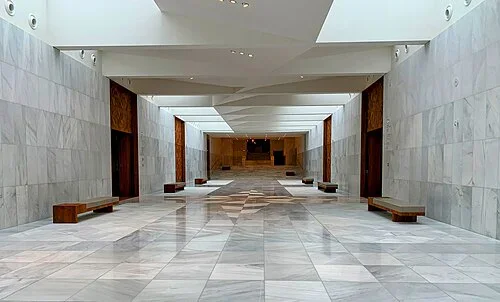 The Underground Grand Foyer
The newest part of Paleis Het Loo is the one you cannot see from outside. In 2016 an international competition was held for the renovation and extension of the palace and its main courtyard. KAAN Architecten won it. Their answer was to put the new museum underground. More than five thousand square metres of facilities now sit beneath the forecourt, with further spaces inside the existing wings. The old grass and gravel courtyard above gave way to a large central fountain, and a skylight drops daylight into the Grand Foyer below. From that hall, broad new staircases rise towards the main house. The work opened to visitors in April 2023. A palace that has been altered by every generation gained its boldest addition by leaving the skyline untouched.
Listen in the appPhoto: Dhdewit · CC BY-SA 4.0
04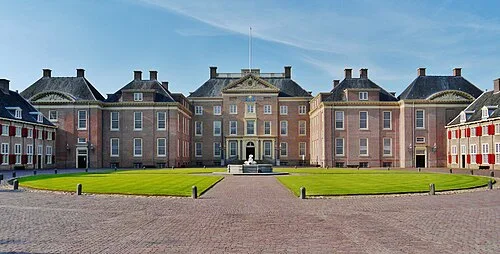 The Palace Forecourt and Dutch Baroque Facade
The Cour d'Honneur and the Palace Front
In 1684 the stadtholder William the Third, great-grandson of William of Orange, bought the medieval castle Het Oude Loo here. He wanted a new hunting lodge beside it. The name itself describes the ground: a loo is an open, leafy wood on higher sandy soil, and the hills here fed water naturally down towards the site, ideal for gardens and fountains. The master carpenter of Leiden, Jacobus Roman, designed a square main block with a side wing on either hand, and Johan van Swieten worked with him. The result is deliberately restrained. Where Versailles overwhelms, Het Loo presents itself as simply a fine gentleman's residence. Its own engraved title called it a Lust-hof, a pleasure retreat. The volumes step down symmetrically from the centre, expressing the rank of whoever lived in each part, and the whole sits neatly between courtyard and garden.
Listen in the appPhoto: Zairon · CC BY-SA 4.0
05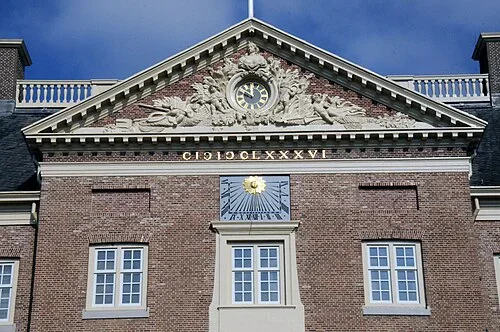 The Palace Forecourt and Dutch Baroque Facade
The Tympanum and the Return to 1686
Above the central bay, the carved tympanum carries a date in old numerals: 1686, the year the palace was completed. The brick you see here was not always visible. Over the centuries the facade was coated in white plaster, and later generations kept adding to the building. Between 1977 and 1984 a thorough restoration set out to return the palace to its original seventeenth-century state. The plaster came off, and the original brickwork reappeared. A whole extra storey added to the main building in the twentieth century was taken down. Later wings, including a large dining hall and bath rooms on the garden side, were removed as well. Inside, ceiling and marble paintings from earlier periods were uncovered and retouched where they needed it. The palace now wears the face its builders gave it.
Listen in the appHenk Monster · CC BY 3.0
06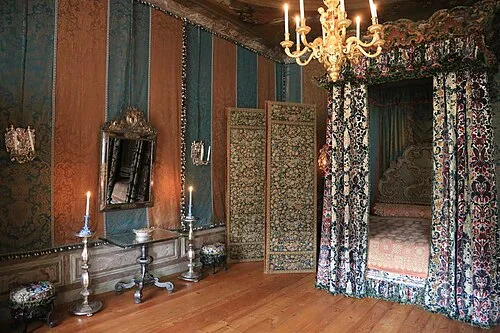 The Royal Apartments of William III and Mary II
Mary II's Bedchamber
A four-poster bed hung with patterned silk, a gilded chandelier, candlesticks by the mirror: this was the private world of Mary the Second. She and her husband William the Third used Het Loo as a retreat from court ceremony, and their own apartments sat on the first floor of the main block. When the great restoration of the late twentieth century was planned, the couple's rooms were returned to their original position on that floor. The furnishings follow the seventeenth-century arrangement, with period pieces set where the household would have used them. The folding screen near the bed, the small table for washing, the tall silver candlesticks: these were the practical furniture of a queen's morning. It is the most intimate room in the palace, and it belonged to the woman who helped build it.
Listen in the appHans A. Rosbach · CC BY-SA 3.0
07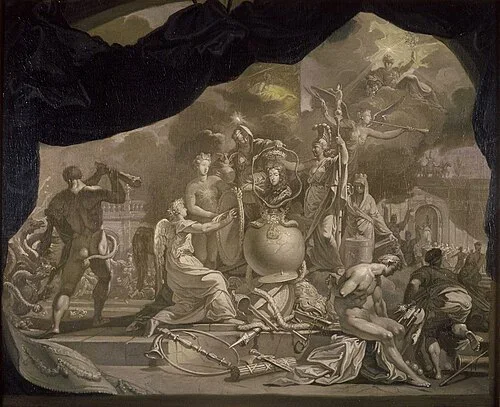 The Royal Apartments of William III and Mary II
The Glorification of Stadholder-King William III
In 1690 the painter Gerard de Lairesse made this allegory, The Glorification of Stadholder-King William the Third. The title marks the moment: William had crossed to England and been crowned king alongside his wife Mary. De Lairesse dressed that political triumph in classical myth, turning a Dutch stadtholder into a hero attended by gods and victories. The painting belongs to a wider campaign to enliven the palace interiors around the time of the expansions of the early 1690s. De Lairesse was the most celebrated of the painters involved, and Johannes Glauber worked on the ceiling decorations alongside him. Their art did real work. Walls and ceilings carried William's image outward as a ruler chosen by heaven, at precisely the time he needed Europe to believe it.
Listen in the appGerard de Lairesse · Public domain
08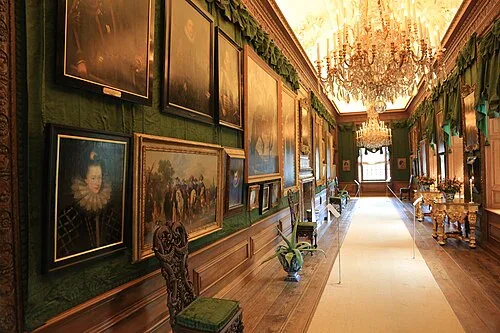 The Grand Picture Gallery and Royal Legacy
The Picture Gallery
Once William the Third was King of England, Het Loo grew to match his rank. From 1691 to 1694 four pavilions were added, two on each side, linking the main block with the side wings. They held the dining hall, the palace chapel and this picture gallery, with interiors designed by Daniël Marot. A long room hung with portraits, lit by chandeliers and lined with velvet, was built to impress the visitors a king received. William died in 1702 without children, and the elder line of Orange-Nassau ended with him. His will left his Dutch estates to his cousin John William Friso of the Nassau-Dietz branch. Frederick the First of Prussia claimed them too, as a descendant of the princes of Orange. In the end it was John William Friso's son, William the Fourth, who took possession of Het Loo, and the palace passed down his line to the kings and queens of the Netherlands.
Listen in the appHans A. Rosbach · CC BY-SA 3.0
09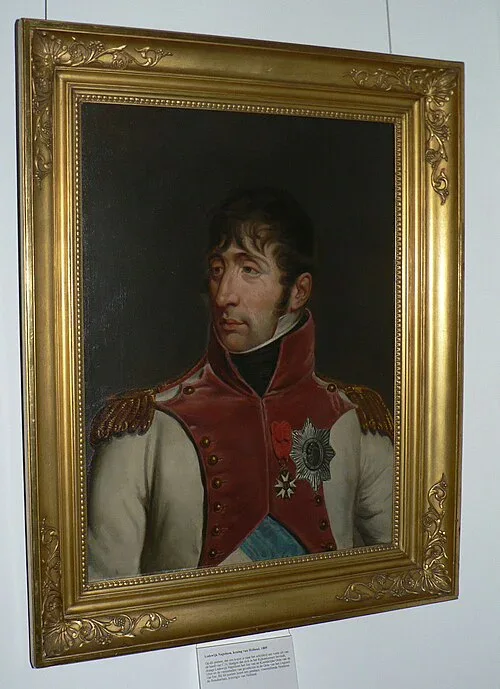 The Grand Picture Gallery and Royal Legacy
Louis Bonaparte, King of Holland
A man in a red military coat looks out of this portrait with a wary, tired face. Louis Bonaparte, brother of Napoleon, was made King of Holland in 1806, and he took Het Loo as his summer palace. He had the brick facades plastered white and cut tall Empire windows into them. Inside, many rooms were refitted in the Empire style of his family's court. The garden, already largely destroyed, was filled in and levelled into a flat lawn. Louis judged the result harshly. He had complained that his palace in Amsterdam had no garden. Here, he said, it was the other way round: a garden without a palace. After that he hardly came back to see it. When the Kingdom of Holland was annexed by France, Napoleon himself spent two days here in October 1811.
Listen in the appAfter Charles Howard Hodges · Public domain
10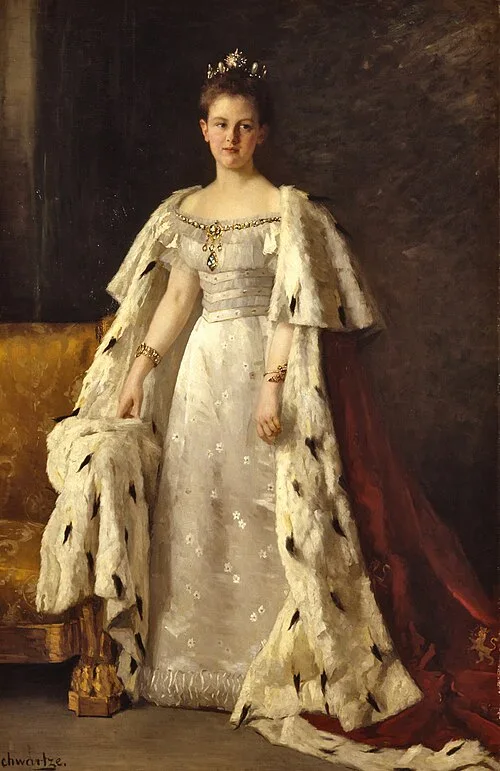 The Grand Picture Gallery and Royal Legacy
Queen Wilhelmina in Coronation Robes
Thérèse Schwartze painted Wilhelmina in 1898, in the white gown and ermine mantle of her coronation, a small crown set on her head. For Wilhelmina, Het Loo was home as much as workplace. She abdicated in 1948 but simply stayed on, living in the palace until the end of her life. In 1960 she decided that the estate around the palace should pass to the Dutch state when she died. She set one condition: if the Netherlands ever abolished the monarchy, it was to go back to her family. She died at Het Loo in 1962. After that the palace became a national museum, open to the public since 1984, filled with the furniture, objects and paintings of the House of Orange-Nassau. Queen Juliana never lived here herself, though her daughter Princess Margriet lived in the right wing until 1975.
Listen in the appThérèse Schwartze · Public domain
- 11
The Palace Chapel
The wood-panelled house church where the royal family worshipped on the scale of a private household.
- 12
The Great Baroque Garden
The symmetrical Baroque garden of a stadtholder, lost to an English landscape park and rebuilt for 1984.
- 13
The Venus Fountain
How William the Third beat Versailles at its own game, with jets of water flying higher than the Sun King's.
- 14
The Globe Fountain
Hercules instead of Apollo, and orange trees planted as a pun on the House of Orange.
- 15
The Colonnades and the Garden Vista
The colonnade that closes the garden, and the night in 2000 when a scooter tore through it.
- 16
Het Oude Loo and the Hunter's Palace
Falconry at the medieval moated house where Het Loo began, and the estate still in royal hands.
Paleis Het Loo
Frequently asked questions
How much does the guide cost?
Free app download. Listed guide price: $0.99. Guide price shown in the app. Audio guide only. Venue admission is separate.
Can I listen without internet?
Yes. Download the guide’s audio, images, and maps in the app before your visit. Your downloaded content is then available offline.
Can I listen in my language?
This audio guide is available in 15 languages, including English.
Do I need to follow a schedule?
No. This is a self-guided experience. Choose your stops, pause whenever you like, and return to a story at your own pace.
At your own pace
Explore Paleis Het Loo.
Download Stanza, then search for “Paleis Het Loo”.
Free app download · Guide price shown in the app
Keep exploring
Nearby audio guides
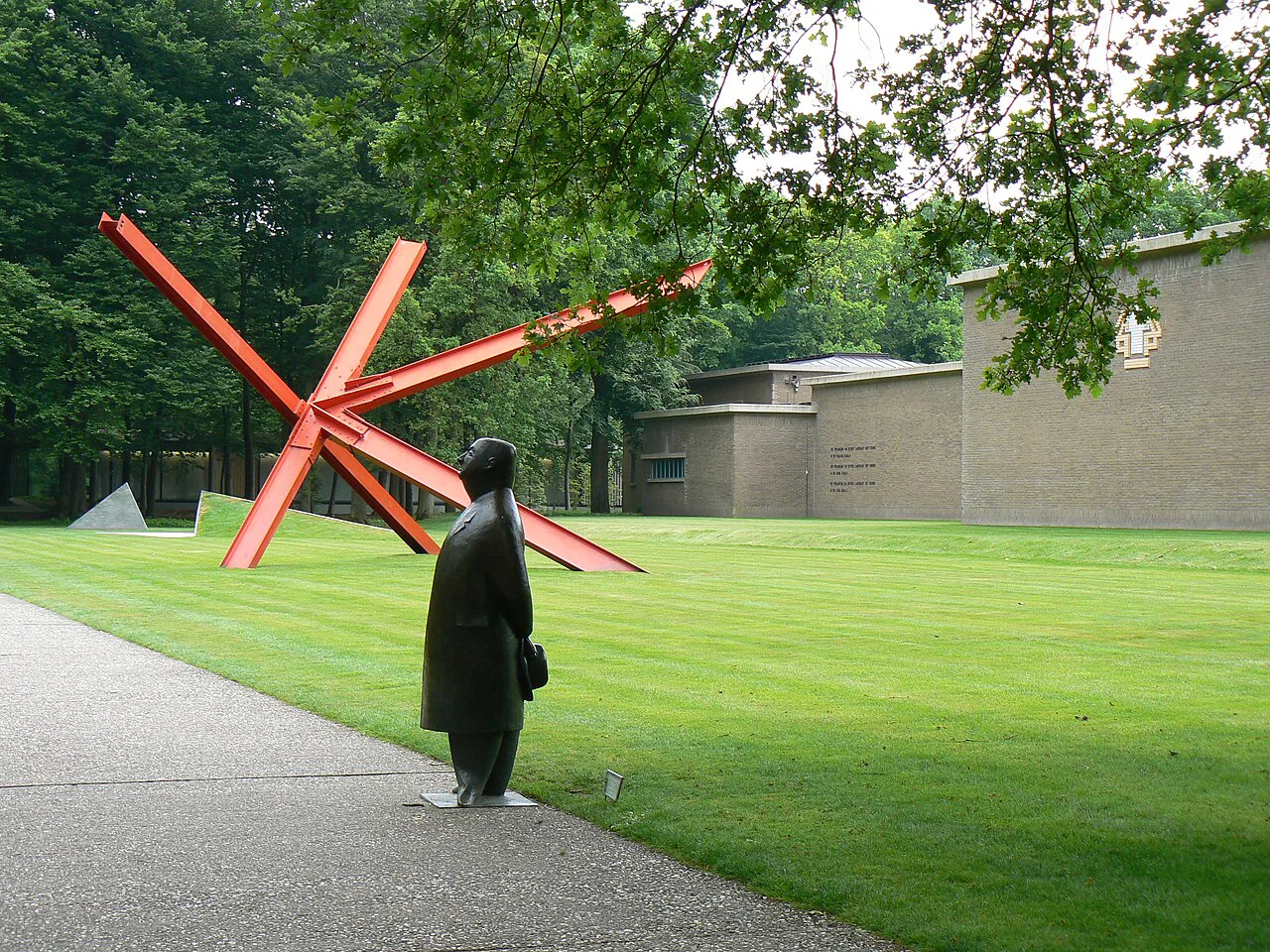
Otterlo · 18 km
Kröller-Müller Museum
Content & sources
Photo: Gerardus · Public domain
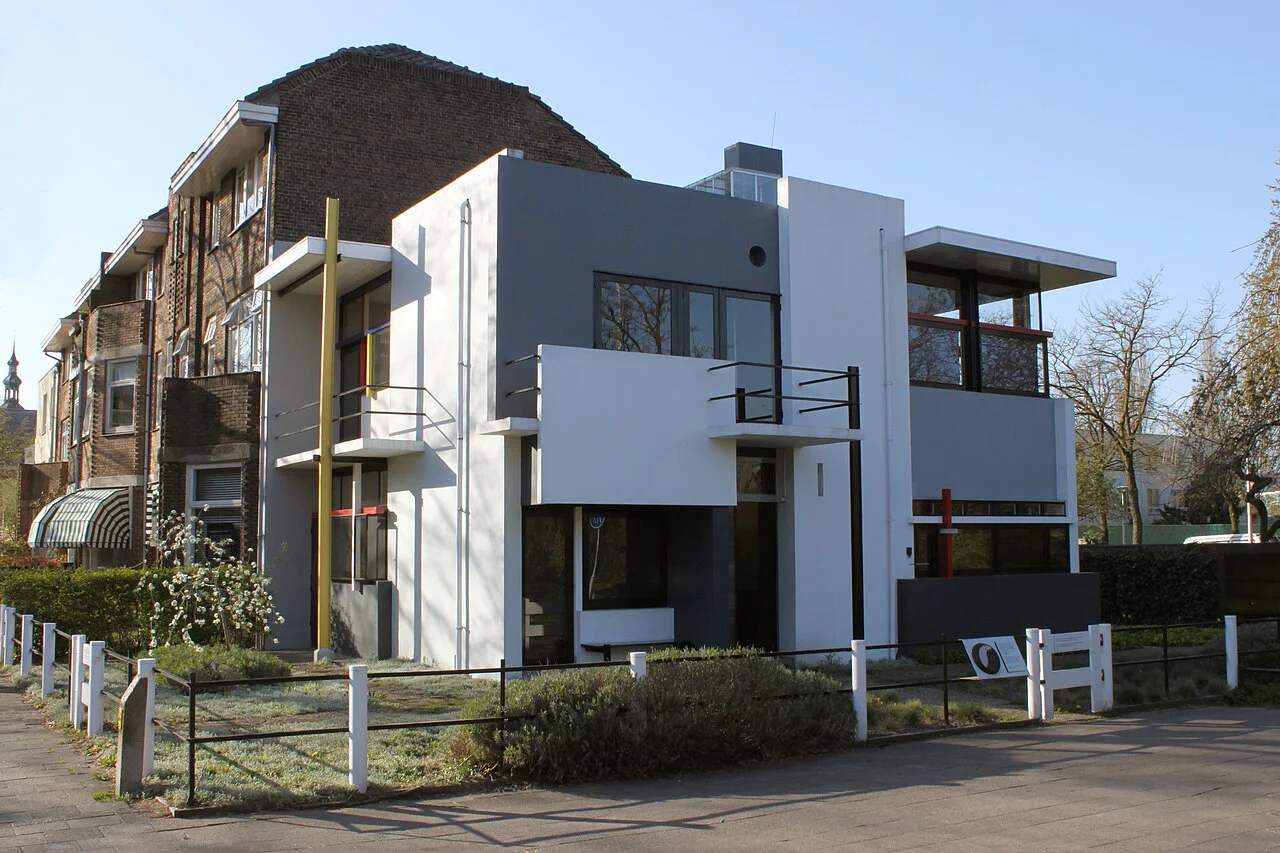
Utrecht · 57 km
Rietveld Schröderhuis
Content & sources
User:Husky · CC BY 3.0
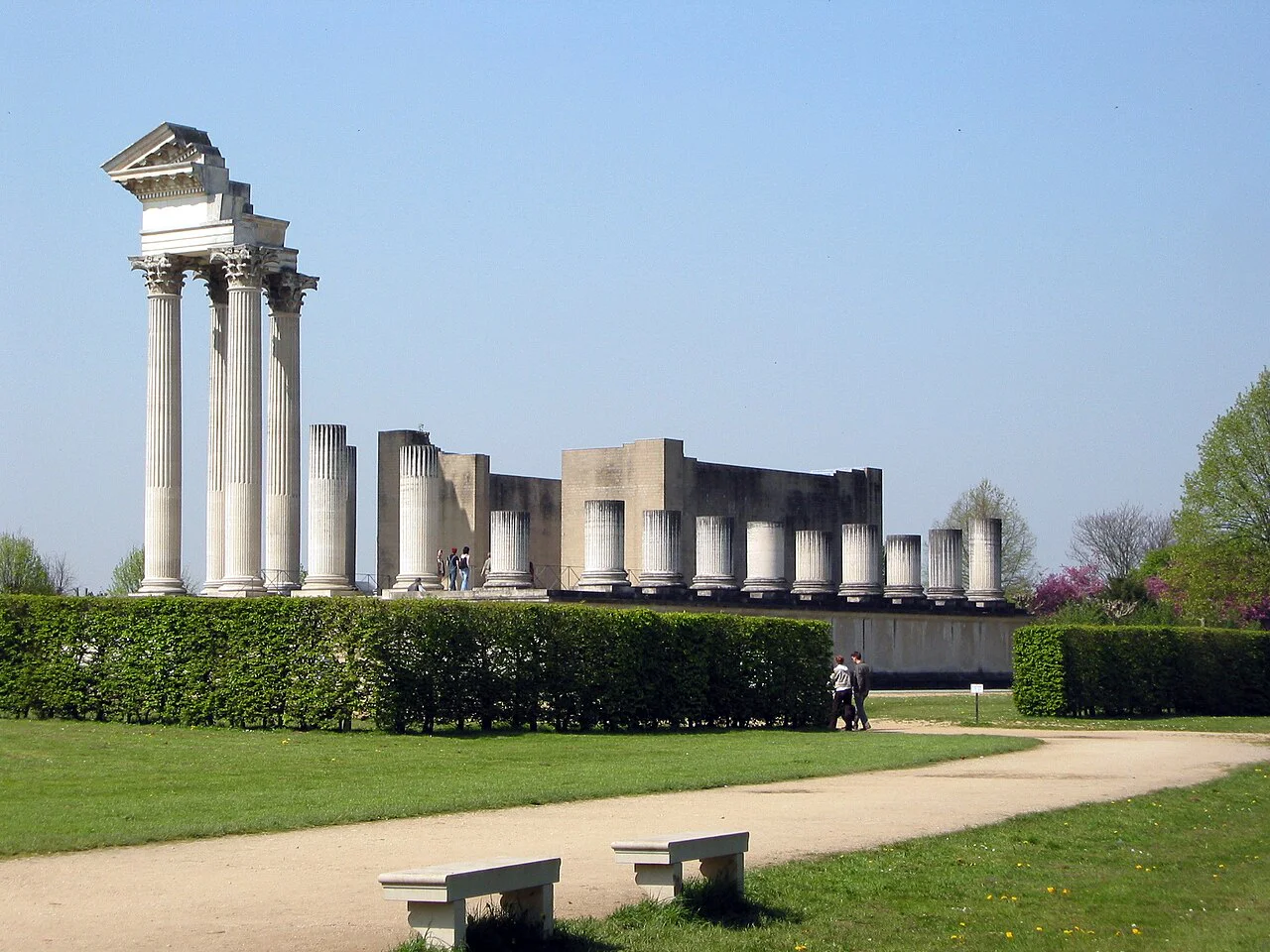
Xanten · 72 km
Colonia Ulpia Traiana
Content & sources
Photo: Magnus Manske · CC BY-SA 3.0
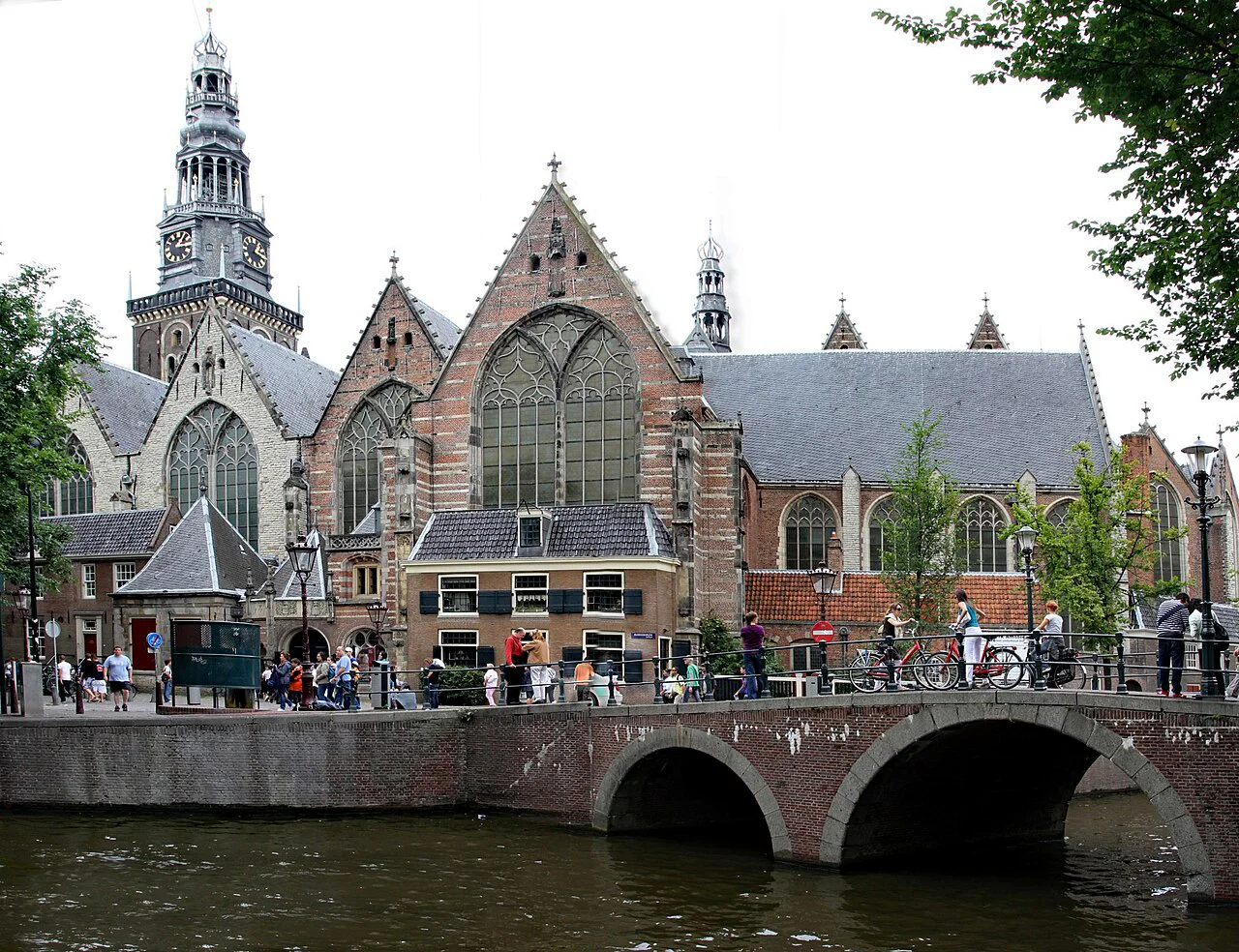
Amsterdam · 73 km
Oude Kerk
Content & sources
Gerd Eichmann · CC BY-SA 4.0
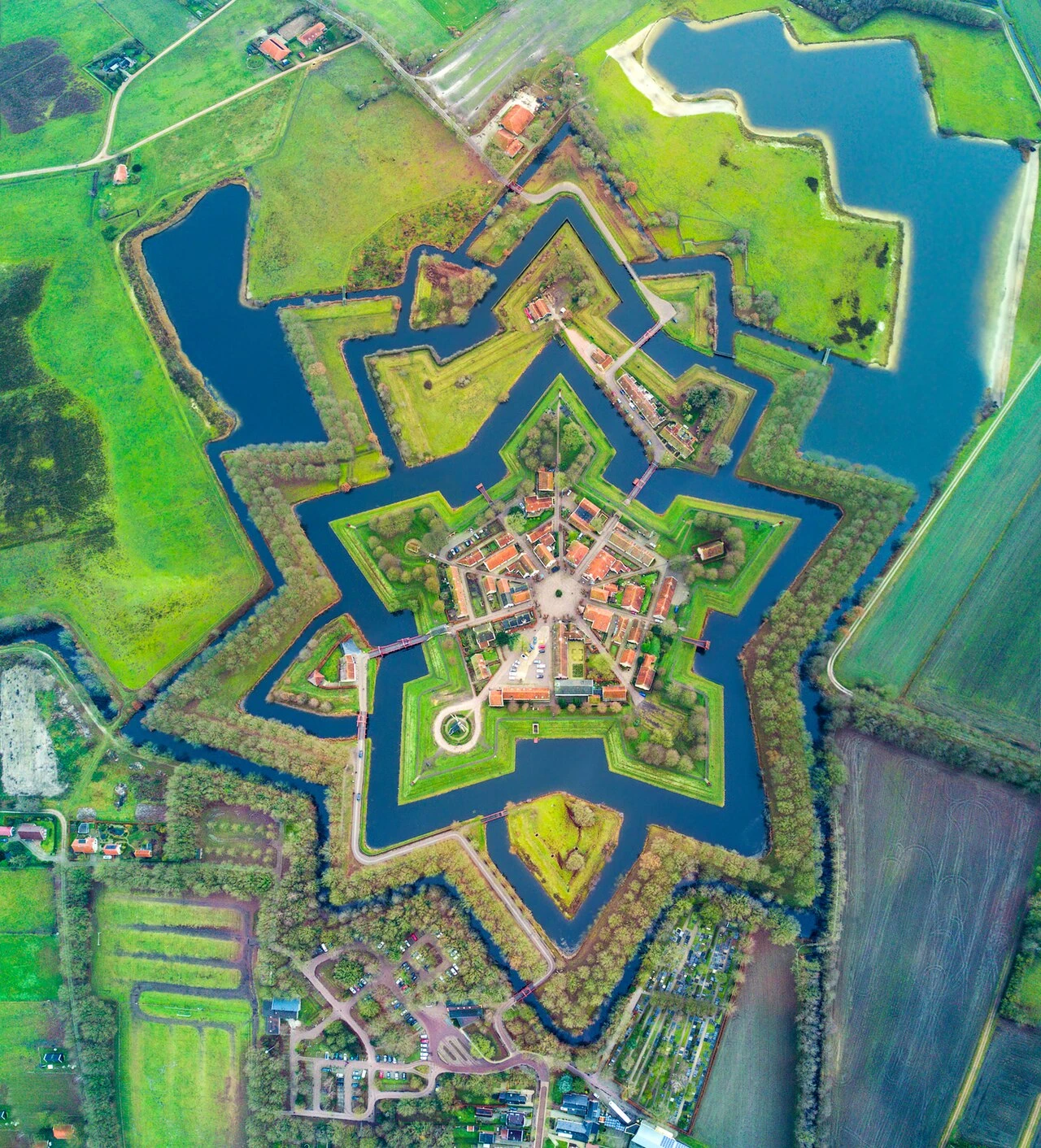
Bourtange · 120 km
Bourtange Fortress
Content & sources
Photo: Dack9 · CC BY 4.0