Stanza · Audio guide
Chan Chan Audio Guide
A place to remember. A story to take with you.
Chan Chan was the capital city of the Chimor kingdom during the pre-Columbian era in South America. It is now an archaeological site located in the department of La Libertad near Trujillo, Peru.
Download Stanza, then search for “Chan Chan”.
About the tour
One guide. Your kind of visit.
Chan Chan was the capital city of the Chimor kingdom during the pre-Columbian era in South America. It is now an archaeological site located in the department of La Libertad near Trujillo, Peru.
Ready when you are.
- 01Get the free Stanza app.
iOS & Android
- 02Find your guide.
“Chan Chan”
- 03Download before you go.
Works offline
Audio guide / 13 narrated stops
Inside the guide
Get to know a few of the stories before you go. Open a stop to read more.
01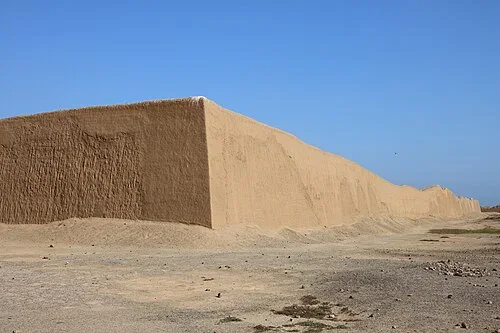 The Monumental Outer Walls
The Outer Wall of Nik An
Chan Chan was a capital built of mud. Around the year 850, the Chimú made it the seat of their kingdom, Chimor, on the desert coast of northern Peru. The city spread over some twenty square kilometers, the largest adobe city in the Americas and the second largest in the world. Adobe is sun-dried mud brick, and here every wall was finished with a smooth coat of clay. Rain almost never falls in this desert, which is the only reason walls of earth could survive on this scale. The enclosure rises as high as twelve meters. At the base it is five meters thick. From there it narrows to a single meter at the top, the whole face leaning slightly inward. That slope is deliberate engineering, meant to keep the wall standing through earthquakes on this unstable coast. Estimates put the population at sixty thousand, growing perhaps to a hundred thousand.
Photo: Draceane · CC BY-SA 4.0
02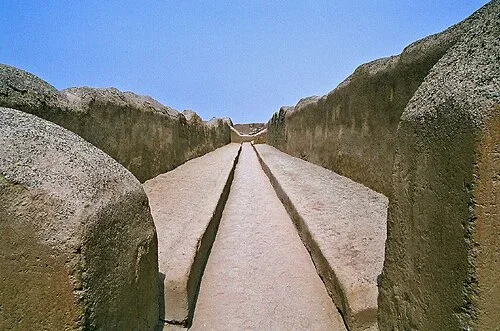 The Monumental Outer Walls
The Entrance Corridor
The way in is deliberately narrow. Chan Chan held ten great walled compounds, called ciudadelas, and each was built for a single ruler. Every one of them had just one entrance, so anyone coming or going passed a single controlled point. High walls sealed each compound for defense. These were palaces for kings, not public spaces. The builders left no names. The city rose under the direction of the Chimú rulers themselves, beginning with Tacaynamo, the first sovereign, whose story is more legend than chronicle. The compound called Nik An, once known as Tschudi, is the only one of the ten open to visitors today. Its corridor funnels people from the open desert into the king's own ground.
Bruno Girin · CC BY-SA 2.0
03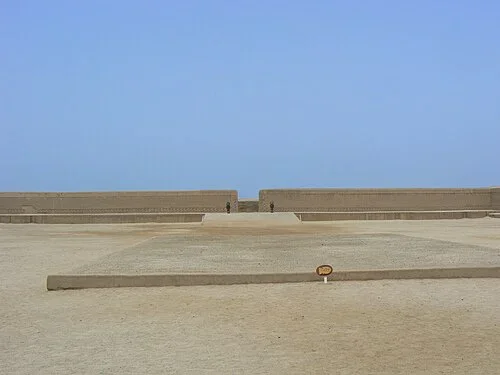 The Grand Ceremonial Plaza
The Great Ceremonial Plaza
Inside the walls, the ground suddenly opens. This vast courtyard was the stage for the great ceremonies of the Chimú state, where tribute was presented and the king's power displayed before a gathered crowd. The space is deliberately empty. Nothing interrupts the flat clay floor, so the architecture itself does the controlling. Connecting the plaza to the platforms around it are low, broad ramps. Elsewhere on the Peruvian coast, people climbed steep stone stairways to reach their pyramids. Here the builders chose gentle inclines instead, easy to walk and easy to stage. Whoever entered this courtyard was watched by few and managed by the walls.
Listen in the appPhoto: Kevstan · CC BY-SA 3.0
04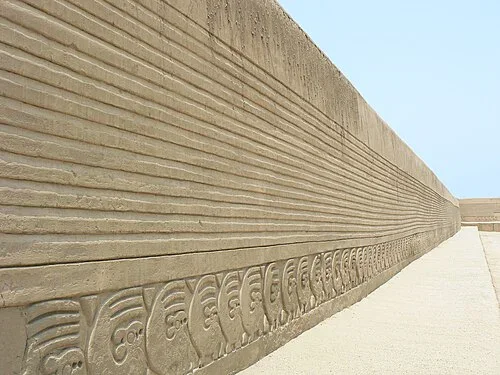 The Grand Ceremonial Plaza
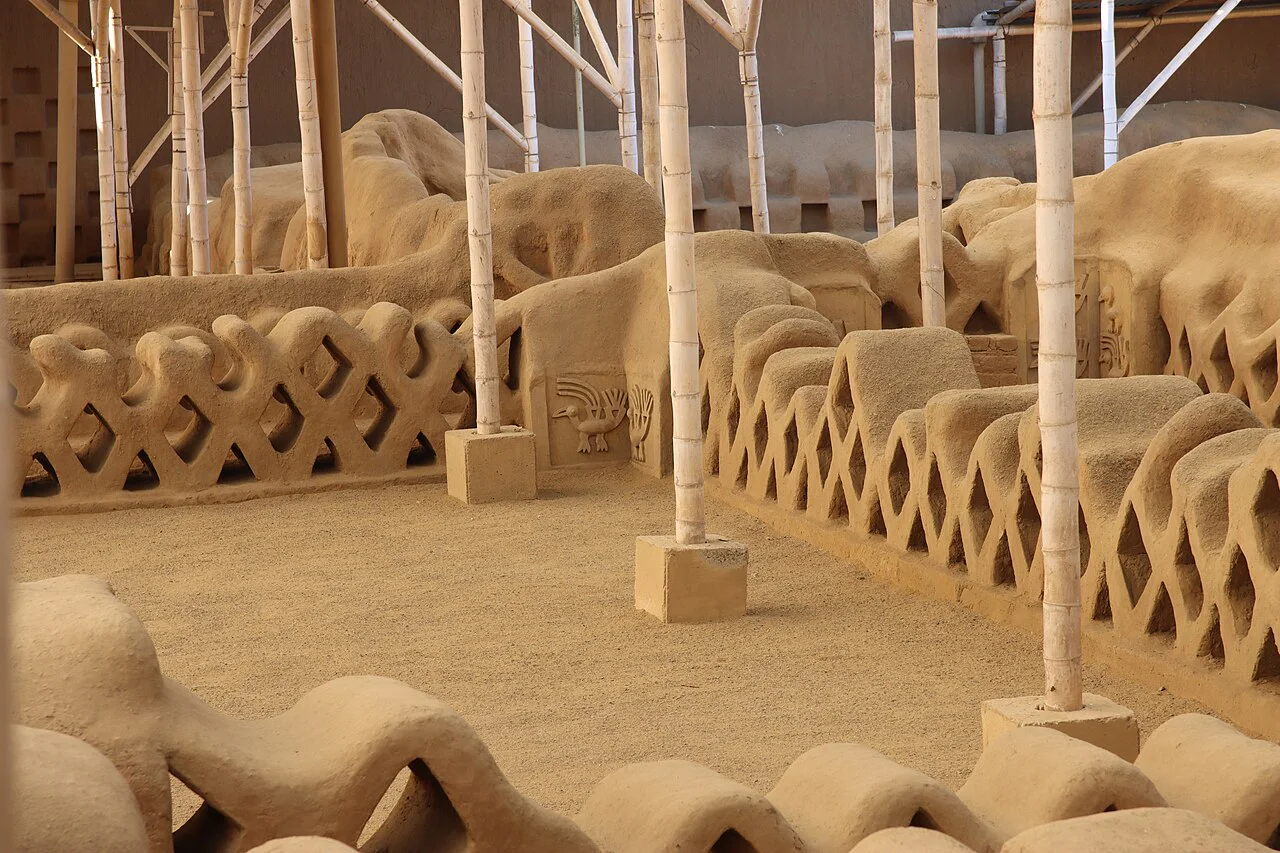
Carved Frieze of the Plaza Wall
The wall around the plaza carries its own decoration. Chimú craftsmen carved designs straight into the mud surface while it was still wet, so pattern and wall are one piece. Two styles appear across Chan Chan. One shows birds, fish and small mammals much as they look in life. The other treats the same creatures in a flat, graphic, stylized way. Along the base of this wall runs a frieze of repeating figures, each carved with the same care as the last. The maritime reliefs further on take up these sea creatures in detail.
Listen in the appPhoto: Kevstan · CC BY-SA 3.0
05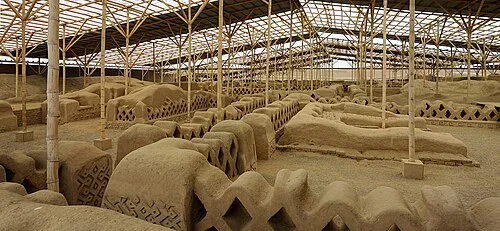 The Administrative Audiencias
The Audiencias
Government happened in rooms like these. The Chimú called these spaces audiencias. Each is a U-shaped niche set into the wall, where officials are thought to have carried out the city's most important administrative functions. Pots made for burials often show buildings that look very much like audiencias, a sign of how central this architecture was to the Chimú. The size of the building works speaks too. Raising a city on this scale took an enormous labor force, and it was likely the working class that supplied it. That points to a strictly ordered society, rulers above and builders below.
Listen in the appPhoto: Velvet · CC BY-SA 4.0
06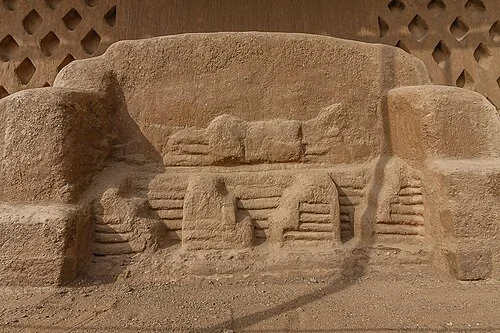 The Administrative Audiencias
The Ceremonial Seat
A single block of earth, carved into the shape of a seat. Its exact use is uncertain, but a seat like this would have belonged to authority, a place where one person sat above the rest. What makes it remarkable is what the Chimú lacked. They had no writing system at all, and no way to note down measurements or building plans. Yet they spoke a language of their own, called Quingnam, and raised this ordered, planned city without a single blueprint. The Inca conquest wiped Quingnam out, and no one can say today how it sounded. One theory holds that they kept records on knotted cords, like the Inca khipu. That remains only a theory. No grammar of Quingnam survives anywhere.
Listen in the appPhoto: Enrique Jara · CC BY-SA 4.0
07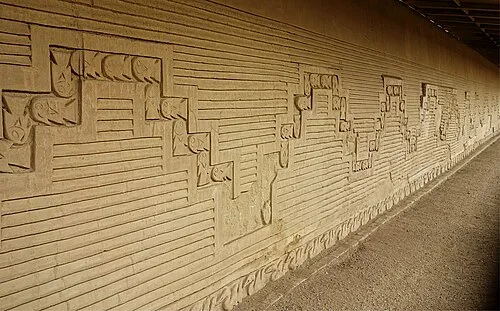 The Maritime Bas-Reliefs
The Fish Reliefs
Fish swim along this wall in high relief, and their direction is the point. The carvings face north and south, which has been read as the two currents of the Peruvian coast. One is the cold Humboldt Current, coming from the south. The other is the warm El Niño, coming from the north. That reading is an interpretation, but a fitting one, because the sea fed and shaped everything here. Of all the buildings of Chan Chan, Nik An is described as the greatest expression of the importance of water, and of the cult that surrounded it. Even the city's name is a puzzle. Specialists still disagree about what Chan Chan means, and which language it came from.
Listen in the appPhoto: Velvet · CC BY-SA 4.0
08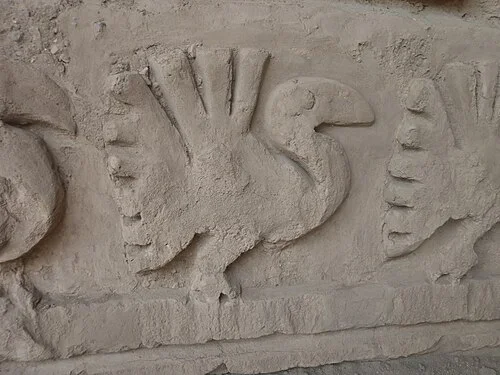 The Maritime Bas-Reliefs
The Pelican Frieze
Here a pelican spreads its carved wings. The Chimú lived beside the Pacific and drew most of their food from it, so the ocean stood at the center of their religion. They also depended on irrigation canals for their crops, which made gods of water and sea the ones to honor above all. Sea creatures fill the walls of this palace for that reason. It is believed that Nik An was built in honor of the Chimú god of the sea. His name in Quingnam is unknown, lost with the language itself. The pelican was a fitting emblem, a bird that lived off the same waters that fed the city.
Listen in the appPhoto: Ajor933 · CC BY-SA 3.0
09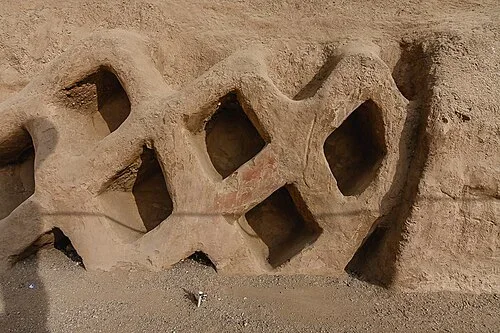 The Maritime Bas-Reliefs
The Fishing-Net Rhomboids
These openwork diamonds read as fishing nets. The motif, called rombito in Spanish, is identified as a net for catching sea creatures, and nets for taking shellfish such as Spondylus appear among the carvings. Decoration here came straight from the work of feeding a city. The same softness that lets mud be carved so finely makes it wear away. Storms from El Niño bring heavy rain and flooding to this coast, soaking the bases of the walls, and rising humidity draws in salt and vegetation that crumble the foundations. Forty-six points of critical damage have been catalogued, and the true total is far higher. A conservation master plan, drawn up in 1998, blends traditional and modern engineering to hold the city together. UNESCO named Chan Chan a World Heritage Site in 1986, and put it on the List of World Heritage in Danger at the same time. It has stayed there ever since.
Listen in the appPhoto: Enrique Jara · CC BY-SA 4.0
10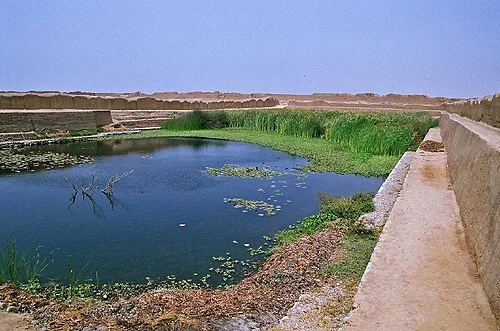 The Great Water Reservoir
Water is what this green basin is about. The city first relied on wells sunk about fifteen meters into the ground. To farm more land, the Chimú dug a vast network of canals carrying water from the Moche River, some running as far as thirty kilometres down the valley. They also dug sunken fields called huachaques, down to the water table, and the palaces held ponds used in ceremonies of fertility and the worship of water. That system was also the kingdom's weakness. In 1470 the Inca, unable to break through the walls, cut the irrigation canals instead. With the crops dying, the city surrendered. The Inca then scattered the Chimú population among lands they had recently conquered, under what they called the mitma system, and Chan Chan slid into decline.
Listen in the appBruno Girin · CC BY-SA 2.0
- 11
The Wooden Guardians
Carved wooden sentries at the threshold between the palace and its tombs.
- 12
The Royal Burial Platform
Why every royal palace here ended its life as a king's tomb.
- 13
Gold Funerary Costume
Three cosmic eggs, a tomb worth five million dollars in gold, and what the Spanish took.
Chan Chan
Frequently asked questions
How much does the guide cost?
Free app download. Listed guide price: $1.99. Guide price shown in the app. Audio guide only. Venue admission is separate.
Can I listen without internet?
Yes. Download the guide’s audio, images, and maps in the app before your visit. Your downloaded content is then available offline.
Can I listen in my language?
This audio guide is available in 15 languages, including English.
Do I need to follow a schedule?
No. This is a self-guided experience. Choose your stops, pause whenever you like, and return to a story at your own pace.
At your own pace
Explore Chan Chan.
Download Stanza, then search for “Chan Chan”.
Free app download · Guide price shown in the app
Keep exploring
Audio guides — Peru
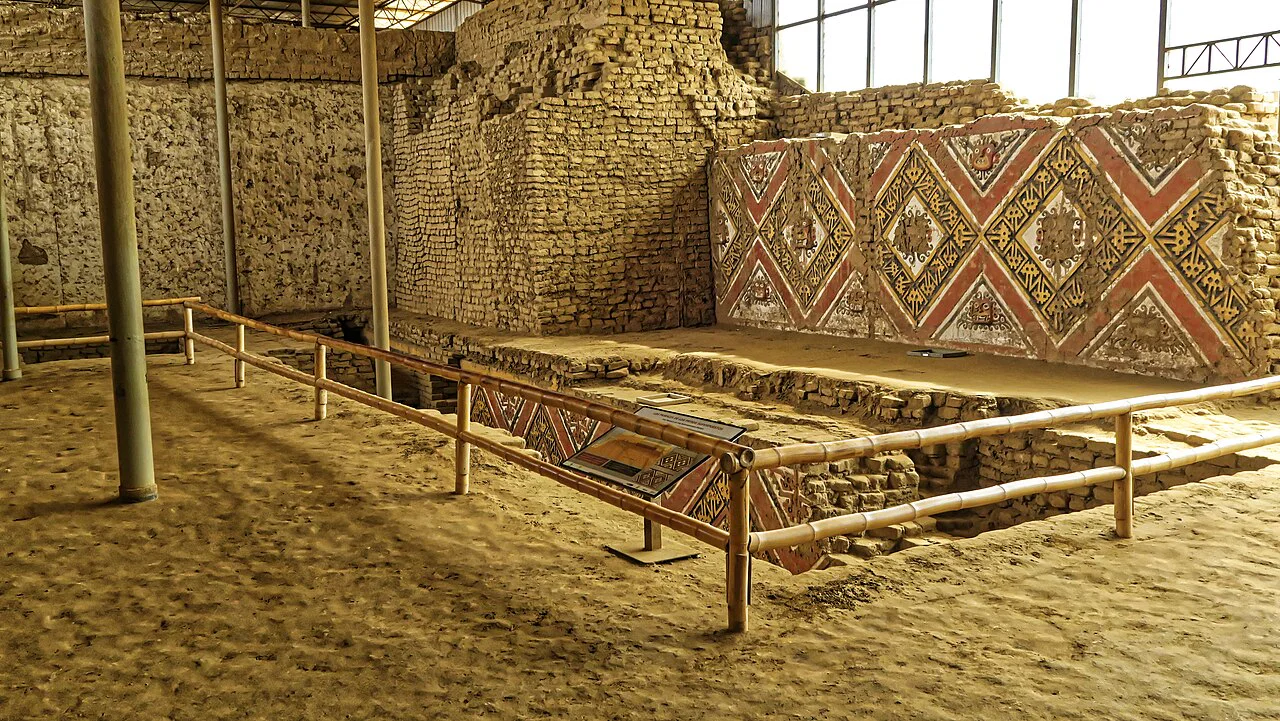
Moche · 10 km
Huaca de la Luna
Content & sources
Burkhard Mücke · CC BY-SA 4.0
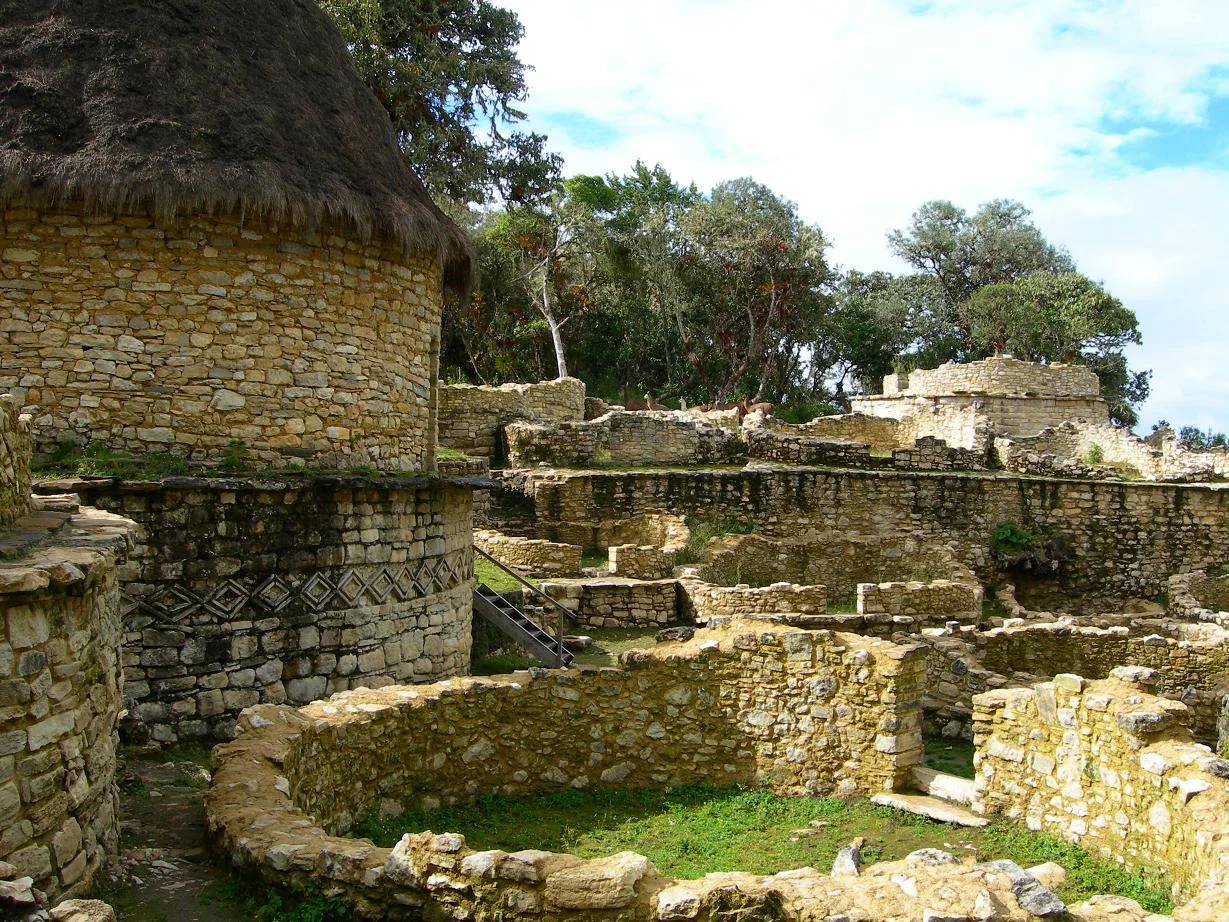
Tingo
Kuélap
Content & sources
Photo: Elemaki · CC BY-SA 2.5
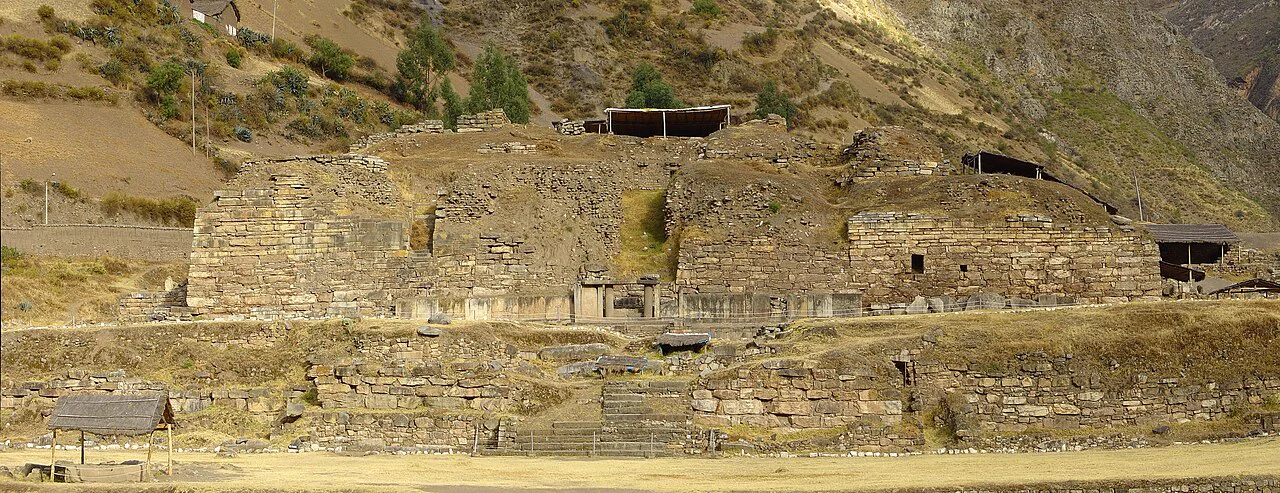
Chavín de Huántar
Chavín de Huántar
Content & sources
Martin St-Amant (S23678) · CC BY 3.0
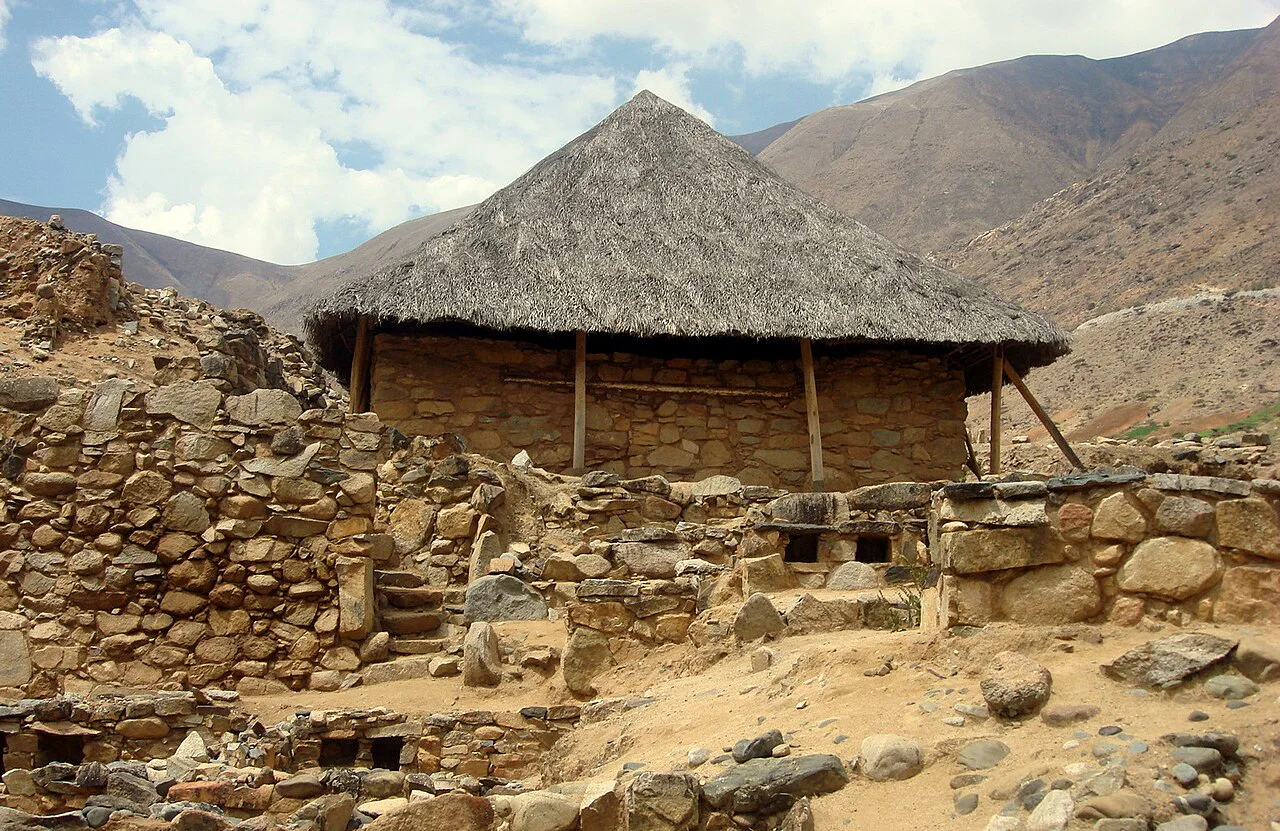
Huánuco
Kotosh
Content & sources
Gustavo Madico · CC BY 2.0
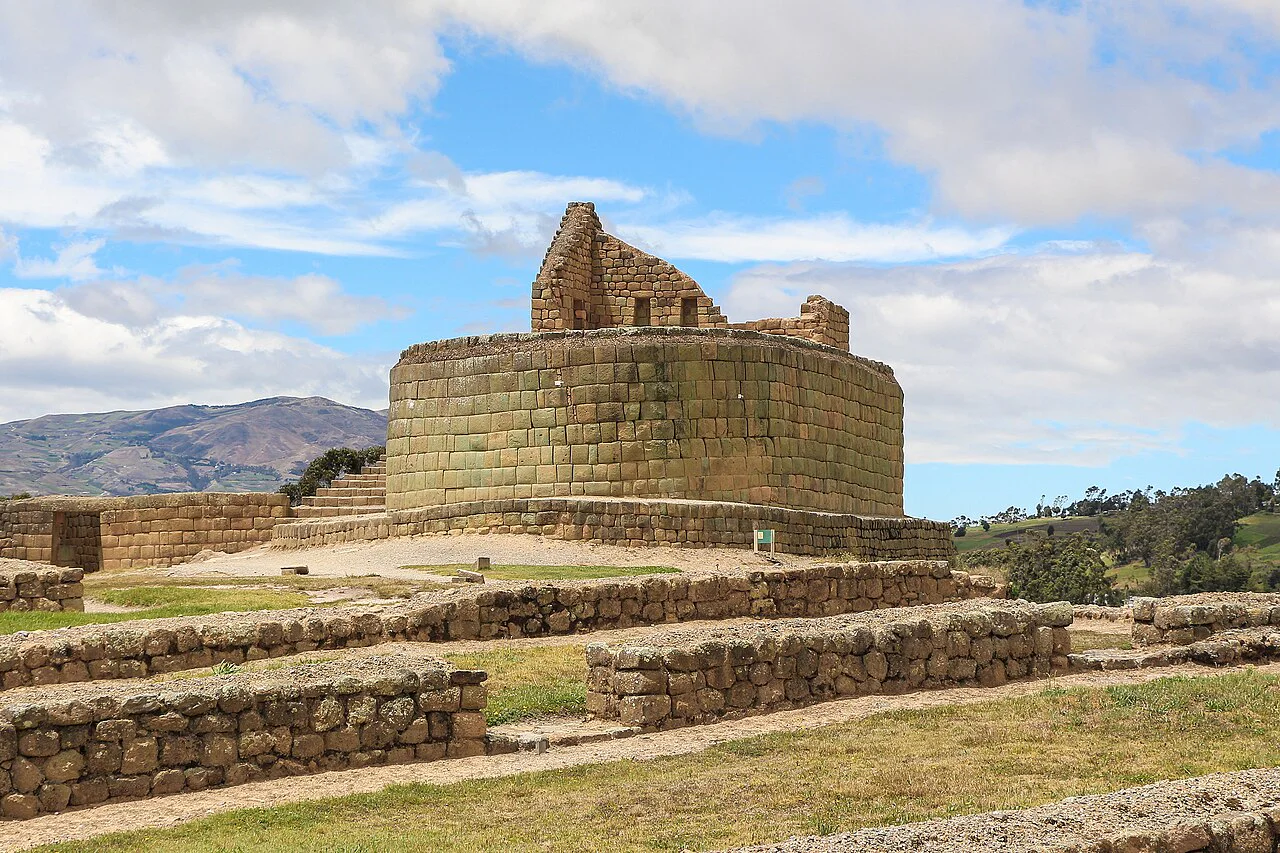
Ingapirca
Ingapirca
Content & sources
Bernard Gagnon · CC BY-SA 3.0