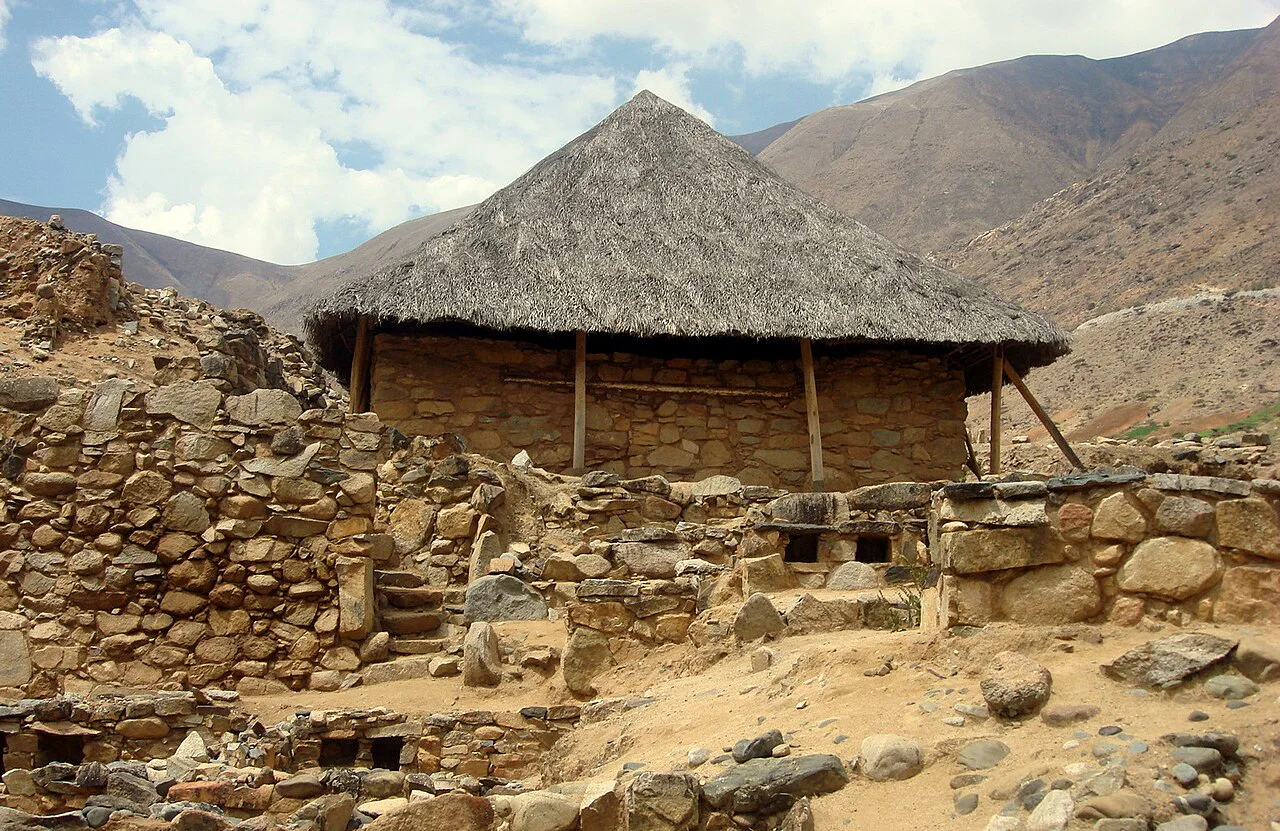
Stanza · Audio guide
Kotosh Audio Guide
A place to remember. A story to take with you.
Kotosh is an archaeological site located near the town of Huánuco, Peru. It consists of a series of buildings that represent six periods of continuous occupation.
Download Stanza, then search for “Kotosh”.
About the tour
One guide. Your kind of visit.
Kotosh is an archaeological site located near the town of Huánuco, Peru. It consists of a series of buildings that represent six periods of continuous occupation.
Ready when you are.
- 01Get the free Stanza app.
iOS & Android
- 02Find your guide.
“Kotosh”
- 03Download before you go.
Works offline
Audio guide / 8 narrated stops
Inside the guide
Get to know a few of the stories before you go. Open a stop to read more.
01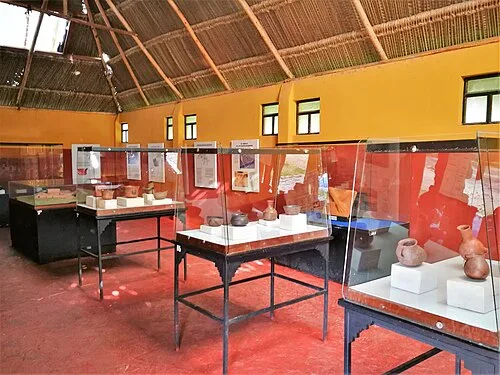 The Site Museum and Early Ceramics
Kotosh Site Museum
Welcome to Kotosh, an archaeological site in the highlands of Peru, not far from the city of Huánuco. For a long time these ruins hid under what looked like a natural hill. In 1960 the University of Tokyo sent an expedition led by Professor Seiichi Izumi, with a team of archaeologists and anthropologists. They cleared the mound of debris until they reached the remains of a very ancient building. It belonged to the preceramic age, and they named it the Temple of the Crossed Hands, after clay reliefs of crossed arms found on two of its walls. No pottery turned up with it. That proved ceremonial architecture was raised here before ceramics existed, around 1800 BC. The temple counts among the oldest religious architecture in Peru, and in the Americas. The museum's cases hold the finds that tell the rest of the story.
Photo: Pitxiquin · CC BY-SA 4.0
02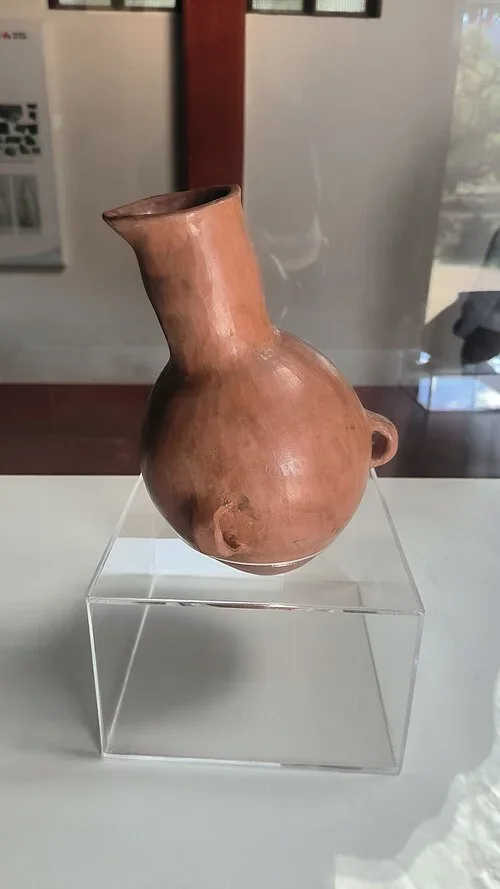 The Site Museum and Early Ceramics
Early Ceramic Vessel (Site Museum)
One small reddish vessel among the museum's cases marks a turning point in the story. In the centuries after the Crossed Hands temple, the first pottery appeared at Kotosh. The early Wairajirca wares were polished brown and black, decorated with incised lines and with paint applied after firing, in red, white and yellow. The designs stayed simple and geometric; human figures came only in later periods. Maize cultivation appeared later still, in the phase archaeologists call the Kotosh period. Long before the Japanese dug here, the archaeologist Julio César Tello visited Kotosh in 1935 and judged it a site of real importance. He saw a kinship between its pottery and the ceramics of Chavín, the great culture of the northern highlands. That link fed his theory that Andean civilization had come from the forest, moving from the Amazonian lowlands up into the mountains.
Photo: Txolo · CC BY-SA 4.0
03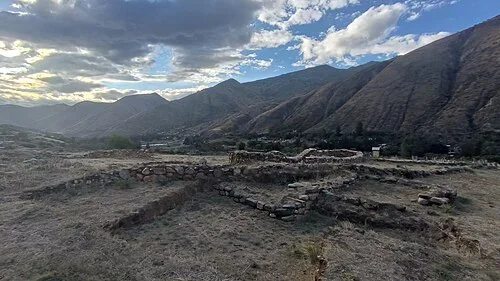 The Archaeological Mound and Valley Landscape
The Archaeological Mounds and Higueras Valley
The ruins of Kotosh occupy a small pampa four kilometers west of Huánuco, on the right bank of the Higueras River. From a distance the site reads as gentle mounds and low lines of wall running across dry ground. Those are the traces of a settlement rebuilt again and again for nearly two thousand years. Occupation ran from the Late Archaic, around 1800 BC, into the Early Intermediate period, near 100 AD. Archaeologists divide that long span into six phases of continuous building. Each generation raised its structures on artificial platforms, filled with earth and stones rolled smooth by the river. The mountains close in around the valley, and the Higueras still runs below the site.
Listen in the appPhoto: Txolo · CC BY-SA 4.0
04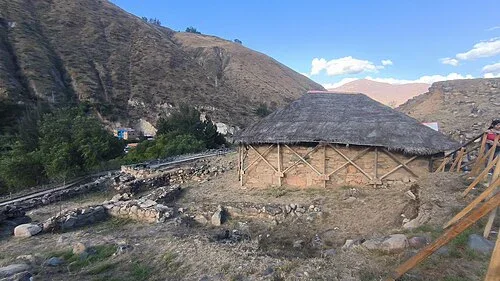 The Temple of the Crossed Hands
Temple of the Crossed Hands - Exterior
The best-known building at Kotosh sits under a broad thatched roof, raised to shield the ancient walls from sun and rain. Behind that shelter lies a temple nearly square in plan, about nine and a half meters along its longer side. Its walls of local fieldstone and mud mortar rise well over two meters. Entry was through a stone doorway just over two meters high. The room had no windows, and it probably carried a flat roof.
Listen in the appPhoto: Txolo · CC BY-SA 4.0
05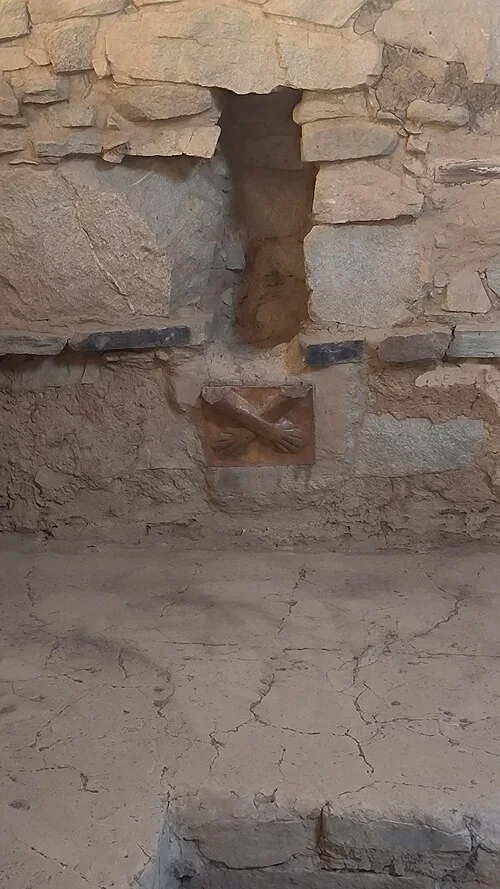 The Temple of the Crossed Hands
Crossed Hands Relief in the Temple Wall
Low on the temple wall, beneath one of its niches, two forearms cross in modeled clay. The relief was made around 1800 BC, in what archaeologists call the Kotosh-Mito phase. It counts among the earliest relief sculptures known in the Americas. What the crossed arms mean is a mystery that has never been solved. The Japanese excavators suggested friendship, approach, or goodness. Other scholars see the hands as the fundamental element of the temple, the core piece of a rite in what would have been the first great American religion. It is quite probable, too, that the relief formed part of a larger effigy that has not survived.
Listen in the appPhoto: Txolo · CC BY-SA 4.0
06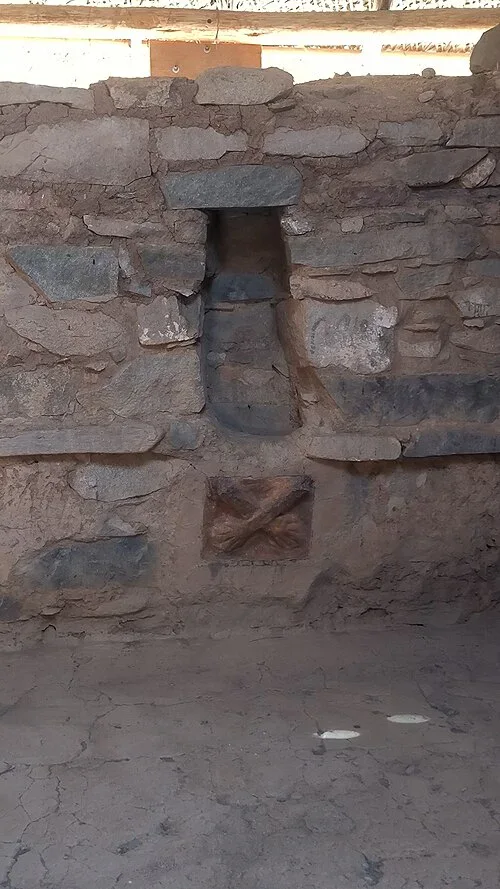 The Temple of the Crossed Hands
Second Crossed Hands Relief and Wall Niches
The second crossed-hands relief sits in its own wall, and it shows how the whole room was once finished. The stone walls were coated with a fine layer of cream-white clay. Niches and large trapezoidal recesses dressed the plastered surface. Beneath two of those niches the modelers set the famous crossed arms in terracotta. The excavators worked with great care around the fragile figures, mindful of damaging them. The two reliefs are not identical. Researchers suggest that one crosses the right arm over the left, and the other the left over the right, a deliberate duality if they are right.
Listen in the appPhoto: Txolo · CC BY-SA 4.0
07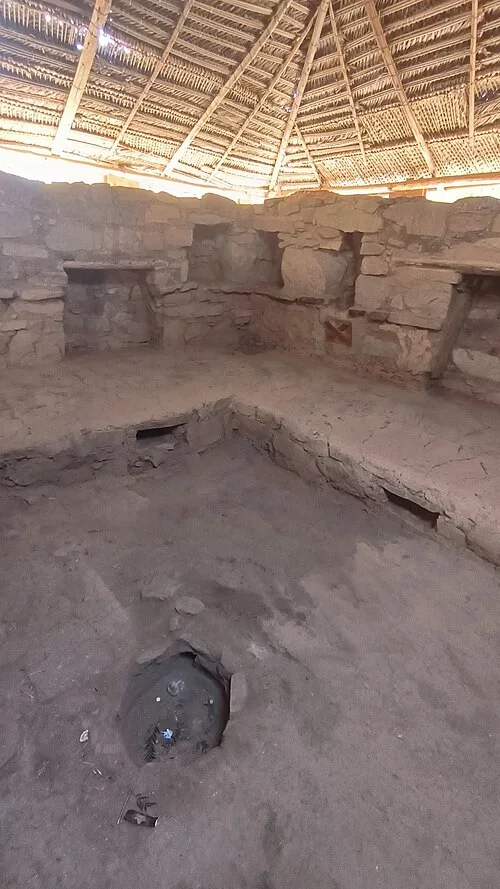 The Sacred Hearth and Sunken Floor
Sunken Floor, Hearth and Ventilation Duct
The heart of the temple lies in its floor, built on two levels. A sunken square pit sits surrounded by a higher, bench-like ledge. At the center of the lower level a small hearth was set, connected to an underground duct that carried the smoke out of the building. Offerings were probably burned in that fire, though what exactly went into the flames is the scholars' reading. This arrangement gives its name to the Kotosh Religious Tradition, also called the Mito tradition or the Tradition of the Sacred Fire Altars. Windowless square rooms built this way appear across the north-central Andes. The idea is older and wider than Kotosh itself. Hearth-temples at La Galgada date to about 2380 BC, and those at Huaricoto to about 2796 BC. Traces of the same pattern have also been found at Caral, at Huacaloma, and at Tantamayo.
Listen in the appPhoto: Txolo · CC BY-SA 4.0
08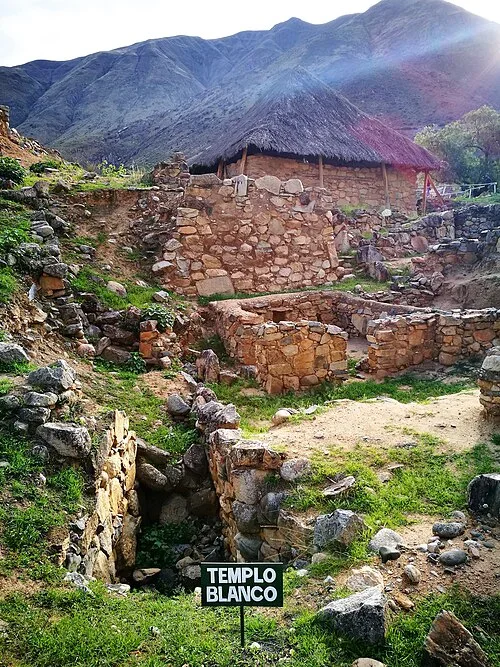 The Superimposed Temples and Templo Blanco
Templo Blanco and the Superimposed Temples
Temples at Kotosh did not fall into ruin; they were buried on purpose. When a temple's ceremonial life ended, builders packed it full of earth and river-rolled stones, and raised the next temple directly above it. The result is a stack of superimposed buildings, each generation founding its temple on the last. The Templo Blanco stands in front of the thatched building that protects the Crossed Hands temple. Pottery first appears not in the Crossed Hands temple but in the structure above it, called the Templo de los Nichitos. In 1963 Seiichi Izumi returned with a larger team of specialists, dug the temples out completely, and confirmed that the lower one held no pottery at all. His campaign also fixed a long ceramic sequence for Kotosh, running on to the Early Intermediate period. Almost two thousand years of continuous building lie stacked in these slopes.
Listen in the appPhoto: Pitxiquin · CC BY-SA 4.0
Kotosh
Frequently asked questions
How much does the guide cost?
Free app download. Listed guide price: $0.99. Guide price shown in the app. Audio guide only. Venue admission is separate.
Can I listen without internet?
Yes. Download the guide’s audio, images, and maps in the app before your visit. Your downloaded content is then available offline.
Can I listen in my language?
This audio guide is available in 15 languages, including English.
Do I need to follow a schedule?
No. This is a self-guided experience. Choose your stops, pause whenever you like, and return to a story at your own pace.
At your own pace
Explore Kotosh.
Download Stanza, then search for “Kotosh”.
Free app download · Guide price shown in the app
Keep exploring
Audio guides — Peru
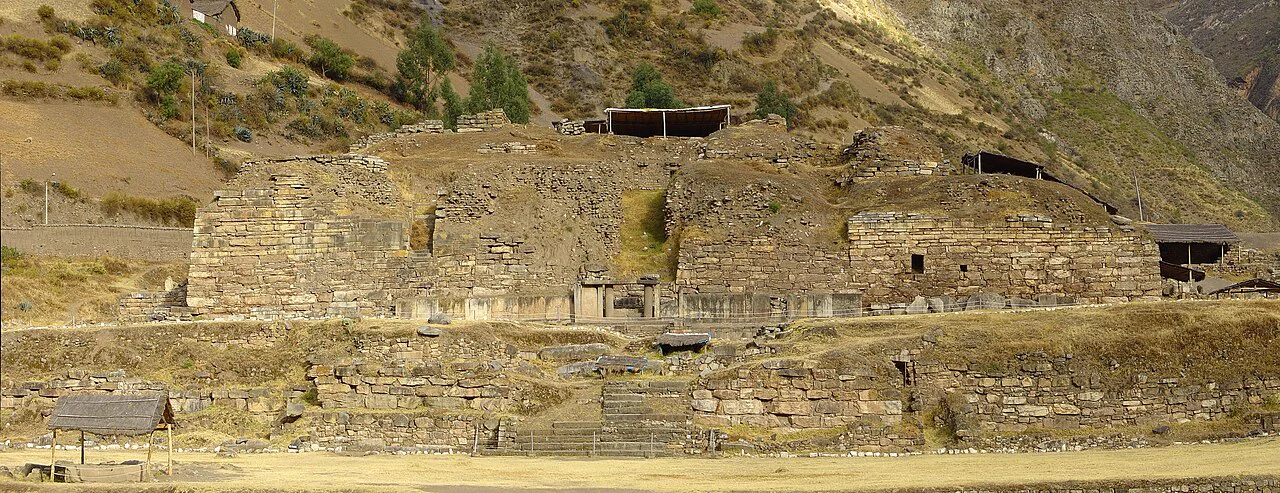
Chavín de Huántar · 105 km
Chavín de Huántar
Content & sources
Martin St-Amant (S23678) · CC BY 3.0
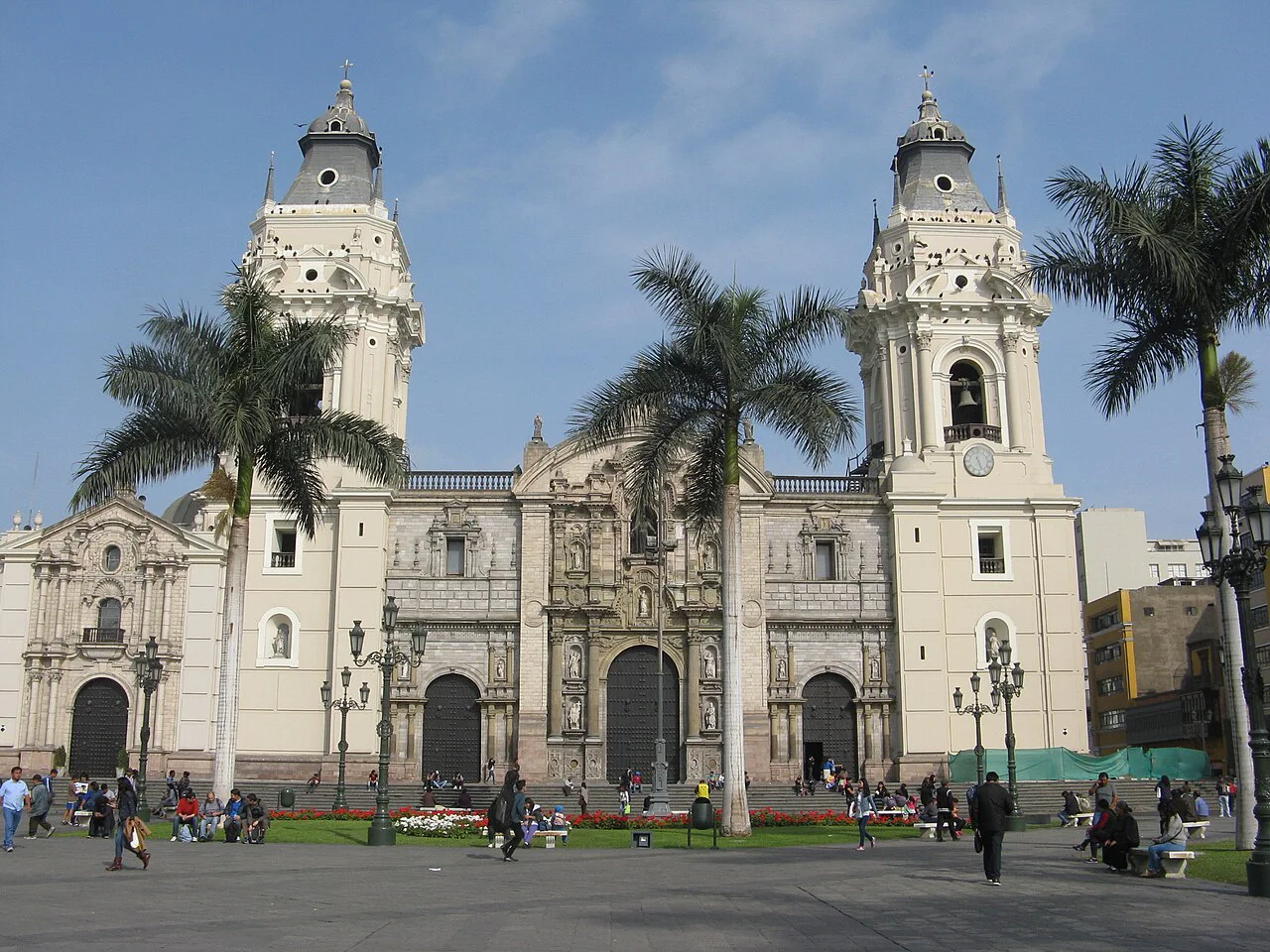
Lima
Metropolitan Cathedral of Lima
Content & sources
Photo: Wasiwatana · CC BY-SA 4.0
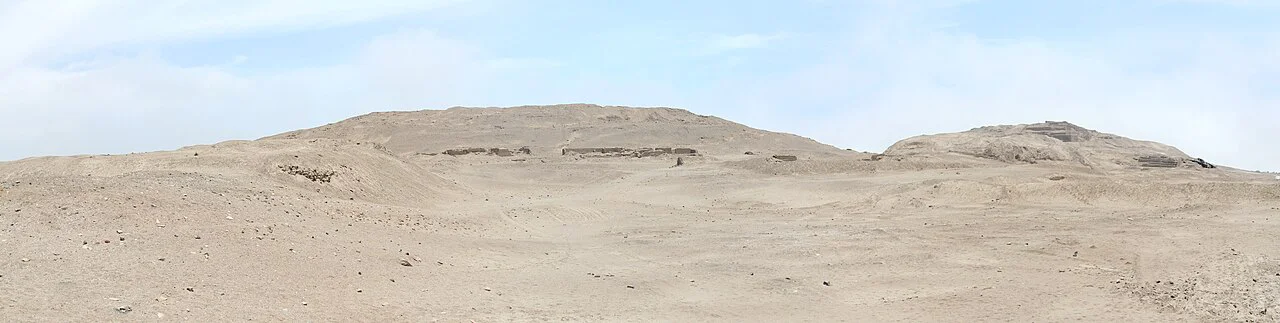
Lima
Pachacamac
Content & sources
Ingo Mehling · CC BY-SA 3.0
Moche
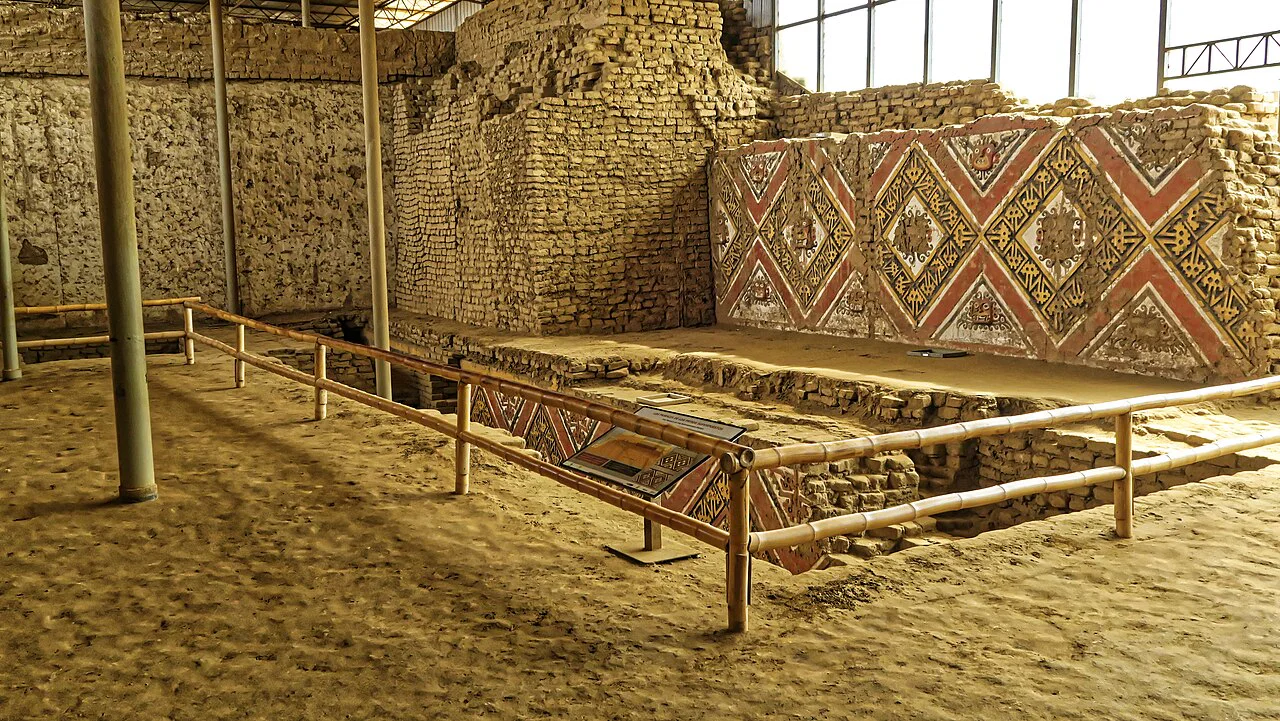
Huaca de la Luna
Content & sources
Burkhard Mücke · CC BY-SA 4.0