Stanza · Audio guide
Pachacamac Audio Guide
A place to remember. A story to take with you.
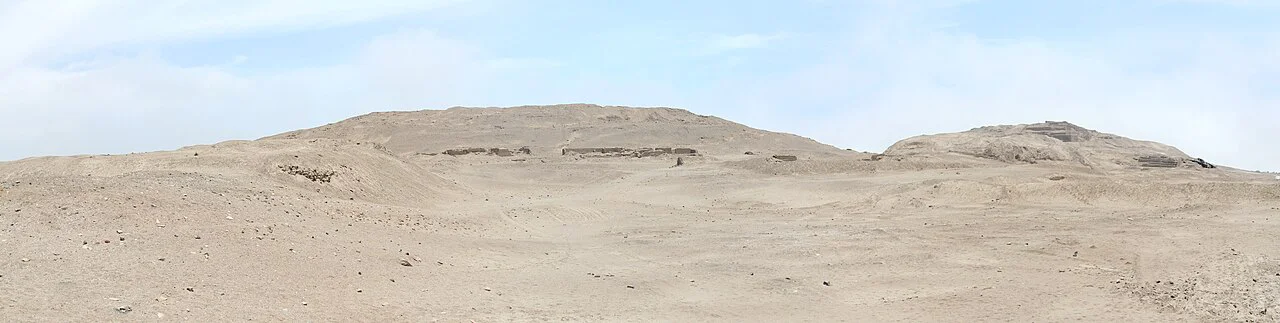
Pachacámac is an archaeological site located 40 kilometres southeast of Lima in the Valley of the Lurín River. The site was first settled around A.D. 200 and flourished for approximately 1,300 years.
Download Stanza, then search for “Pachacamac”.
About the tour
One guide. Your kind of visit.
Pachacámac is an archaeological site located 40 kilometres southeast of Lima in the Valley of the Lurín River. The site was first settled around A.D. 200 and flourished for approximately 1,300 years.
Ready when you are.
- 01Get the free Stanza app.
iOS & Android
- 02Find your guide.
“Pachacamac”
- 03Download before you go.
Works offline
Audio guide / 15 narrated stops
Inside the guide
Get to know a few of the stories before you go. Open a stop to read more.
01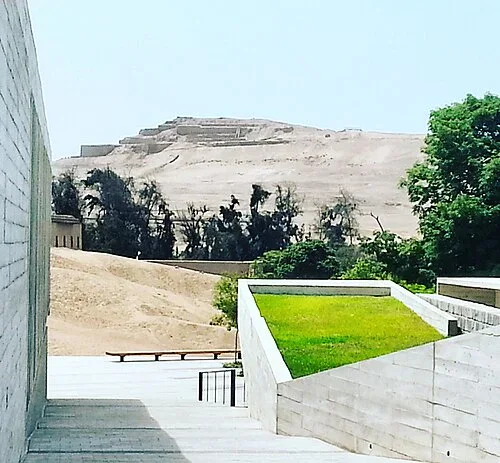 Pachacámac Site Museum
 – Orientation
Welcome to Pachacámac, one of the great sacred places of the ancient Andes. About thirty kilometers southeast of Lima, in the valley of the Lurín River, lies a sanctuary that grew for some thirteen hundred years. People first settled this ground around two hundred years after Christ. They named it for Pacha Kamaq, the Earth-Maker, the god who created the world. Conquerors arrived here one after another, and each absorbed the shrine instead of destroying it. The sanctuary covers around five hundred hectares of desert, temples, and pyramids. In 2014, UNESCO listed Pachacámac as part of the Qhapaq Ñan, the great Inca road system. The museum itself was founded in 1965 by Arturo Jiménez Borja and reopened in a modern building in 2016. Its cases hold the sanctuary's recovered treasures.
Photo: A.isa140 · CC BY-SA 4.0
02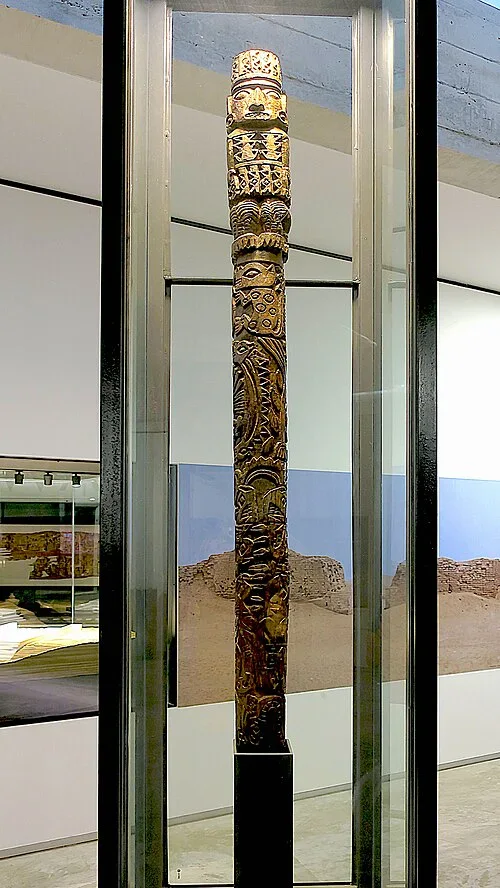 Pachacámac Site Museum
The Pachacámac Idol
A carved wooden pillar stands in a glass case, taller than a person, its surface packed from top to bottom with figures. It is the idol of Pacha Kamaq, the Earth-Maker, the creator god who gave this sanctuary its name. The peoples of this coast worshipped him as the maker of all things before the Inca ever arrived. The Inca took him into their own pantheon, though they ranked him below their great Viracocha. An archaeologist found the idol in 1938, buried at the Painted Temple. It measures two point three meters long and thirteen centimeters across. Radiocarbon dating placed it between about 760 and 876, the age of the Wari Empire, and it was once painted red with cinnabar. Here lies a puzzle. Colonial accounts say Hernando Pizarro destroyed the idol of Pachacámac in 1533, yet a wooden idol came to light in 1938. The two stories have never fully fit, and no one knows whether this carving is the one the chronicles mourned.
Photo: AlisonRuthHughes · CC BY-SA 4.0
03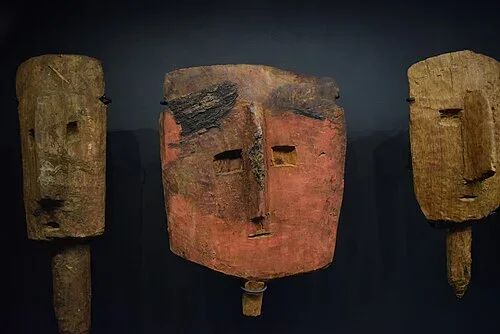 Pachacámac Site Museum
Wari Funerary Masks
Three wooden faces, plain and solemn, stare out of the dark. Masks like these traveled with the dead at Pachacámac, a place ringed by cemeteries. In 2005, excavations in the Uhle Cemetery, before the Painted Temple, uncovered an intact elite tomb of the Ychsma culture. Its chamber held dozens of well-preserved funerary bundles. The most important dead wore false heads and ornaments made of vivid Amazonian parrot feathers. Seven years later, a Belgian team found a tomb about a thousand years old in front of the site. It contained more than eighty skeletons and mummies, many of them infants. The dead took ceramics, copper and gold alloy objects, wooden masks, dogs, and guinea pigs with them. Graves like these show that burial was never an afterthought here. It was one of the sanctuary's central works.
Listen in the appPhoto: A.isa140 · CC BY-SA 4.0
04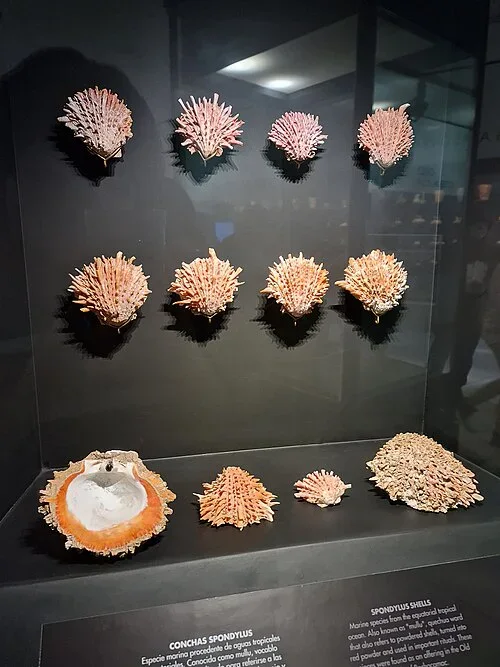 Pachacámac Site Museum
Spondylus Shells from Ecuador
Spiny, shell-pink, and sharp as a thornbush: the thorny oyster, Spondylus, a creature of warm tropical seas far from this desert coast. Shells like these made their way to Pachacámac from the waters off Ecuador. They are evidence of something larger. The sanctuary's prestige drew goods across an entire continent. Ancient DNA and isotope analyses of feather ornaments from the elite tombs tell the same story from another direction. The Ychsma acquired live, wild-caught macaws and Amazon parrots straight from the Amazon basin. The birds crossed the Andes and were kept alive on this arid coast, moving along direct routes or through intermediaries such as the Chimú. All of that happened long before the Inca ever integrated the region.
Listen in the appPhoto: Alexander Ayala PCA · CC BY-SA 4.0
05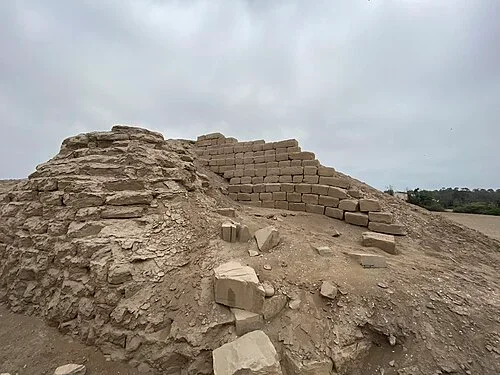 The Old Temple and Lima Culture Sector
Lima-Culture Adobe Bricks (Adobitos)
Millions of small bricks, each one small enough to hold in a hand, stacked on end in panels like books on a shelf. This is the oldest layer of Pachacámac. Between roughly 200 and 650, the Lima culture built here, in the valleys of the central coast. Their Old Temple, raised on a rocky promontory, is the oldest building at the sanctuary. The Adobitos complex nearby carries the same signature. Peruvians call the technique librero, bookshelf, because the little adobes stand upright in rows. Some archaeologists read those upright panels as a builder's answer to the earthquakes that shake this coast. Whatever its purpose, the brickwork marks the moment this valley's shrine began its long climb toward fame.
Listen in the appPhoto: Lucero Novoa Llerena · CC BY-SA 4.0
06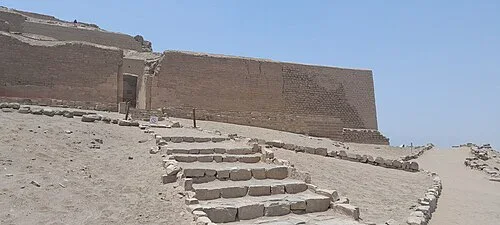 The Painted Temple
Here stood the reason people crossed mountains to reach this valley: the oracle of Pachacámac. The Painted Temple is a stepped pyramid about a hundred meters long and fifty wide, with a stone base and adobe above, all finished with a fine coat of clay. Long ramps rise in a zigzag toward two large courts at the top. Pilgrims came from every corner of the Andes seeking answers to their problems and their doubts. The oracle was famed as one that could predict the future and control the movements of the earth. That reputation, more than any building, made this the supreme ceremonial center of the coast.
Listen in the appPhoto: Jhon Manayay · CC BY-SA 4.0
07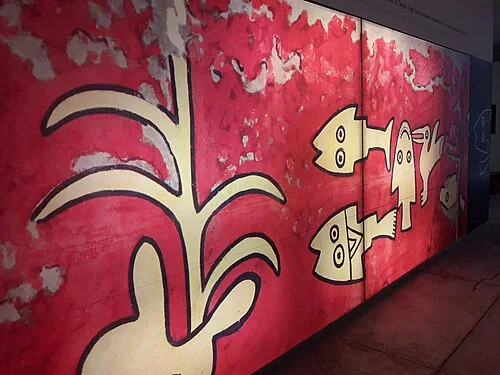 The Painted Temple
Murals of the Painted Temple (Reproduction)
Red walls alive with fish, plants, and human figures, drawn in pink, yellow, and blue-green. This reproduction shows what the Painted Temple looked like in color. Its terraces were painted red, and sections of them carried multicolored figures of people, fish, marine animals, and plants. The originals came to light in the 1930s. Their style places them in the Tiahuanaco-Huari period, between roughly 650 and 900. Weather has not been kind. The paintings are now degraded, and some sectors are erased altogether. What survives is the shape beneath: the terraces, the ramps, the form of the temple itself.
Listen in the appPhoto: Alexander Vrimer Mateo Cartagena · CC BY-SA 4.0
08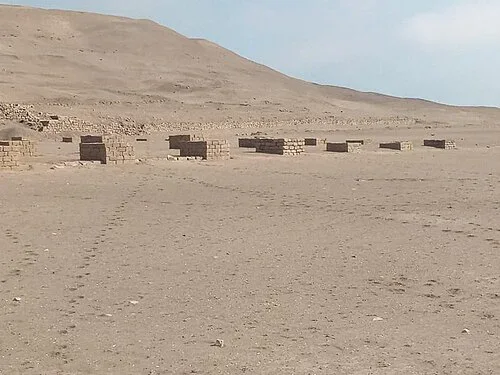 Plaza of the Pilgrims
A flat rectangle of desert, three hundred meters long, leveled by Inca hands. This is the Plaza of the Pilgrims, built around 1450 on the west side of the Temple of the Sun. It served as an ante-room for the crowds waiting their turn to consult the oracle. Perimeter walls enclosed the space, and a seated throne, an ushnu, stood within it. A double row of column foundations runs down the center and the sides, with a third row heading toward the temple. The columns may have carried a light covering, perhaps of totora reed. In 2003, Izumi Shimada led excavations here that recovered idols, textiles, and ceramics. Those finds settled the question of the plaza's use: it was ceremonial, through and through.
Listen in the appPhoto: GeralMuZa · CC BY-SA 4.0
09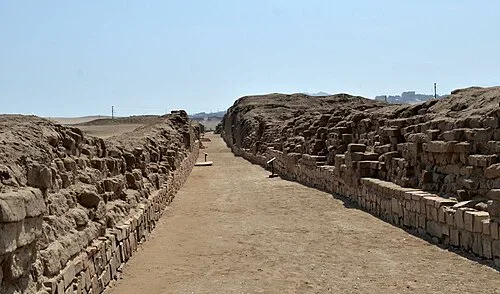 The Walled North-South Street
The Inca Coastal Road (Qhapaq Ñan)
A straight corridor between high stone-and-adobe walls, running into the heart of the sanctuary. This is the coastal branch of the Qhapaq Ñan, the Inca royal road system. The Inca wired their empire together with roads that moved people, goods, and messages across vast distances. This segment carried the flow of devotees toward the oracle, linking Pachacámac directly to the imperial network. That is why Pachacámac is counted as one of its segments. The road itself is the reason: the shrine was not a dead end, but a destination on a living highway.
Listen in the appPhoto: Aga Khan (IT) · CC BY-SA 4.0
10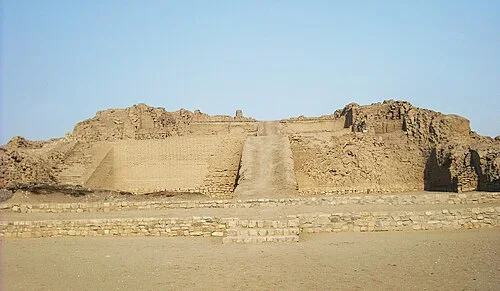 The Ychsma Pyramids with Ramps
Ychsma Pyramid with Ramp
Sixteen stepped pyramids with ramps, raised by the local lords of these valleys before the Inca ever came. Between 1100 and 1450, the Ychsma ruled the Rímac and the Lurín. Each of their pyramids has a base of cut stone and adobe above, and the walls were once plastered smooth. For decades, scholars called these buildings religious embassies, housing delegations from distant communities who came to worship, bring tribute, and make offerings. Then the archaeologist Peter Eeckhout began digging. His Ychsma Project started in 1999, and his team found that the structures lacked the features that marked religious centers of the time. He concluded they were palaces for the Ychsma rulers themselves. The debate is not closed, but the palaces now lead the argument.
Listen in the appCharles Gadbois · CC BY 3.0
- 11
Palace of Tauri Chumpi
The palace of Tauri Chumpi, the governor who received Hernando Pizarro in 1533 as the sanctuary was violated.
- 12
The Temple of the Sun
The Inca Temple of the Sun: thirty thousand square meters of terraces, evidence of sacrifice, and later Spanish quarrying.
- 13
Red Plaster on the Temple of the Sun
Traces of red pigment on the temple walls, and the god who lives on in Lima's Lord of Miracles.
- 14
The Acllahuasi – Sanctuary of the Chosen Women
The Acllahuasi, home of the chosen women of the sun who wove for the priests and brewed the festival beer.
- 15
Acllahuasi Doorways – Closing Reflection
Inca trapezoidal doorways up close, and the thousand-year story of a sanctuary that every empire added to.
Pachacamac
Frequently asked questions
How much does the guide cost?
Free app download. Listed guide price: $1.99. Guide price shown in the app. Audio guide only. Venue admission is separate.
Can I listen without internet?
Yes. Download the guide’s audio, images, and maps in the app before your visit. Your downloaded content is then available offline.
Can I listen in my language?
This audio guide is available in 15 languages, including English.
Do I need to follow a schedule?
No. This is a self-guided experience. Choose your stops, pause whenever you like, and return to a story at your own pace.
At your own pace
Explore Pachacamac.
Download Stanza, then search for “Pachacamac”.
Free app download · Guide price shown in the app
Keep exploring
Audio guides — Peru
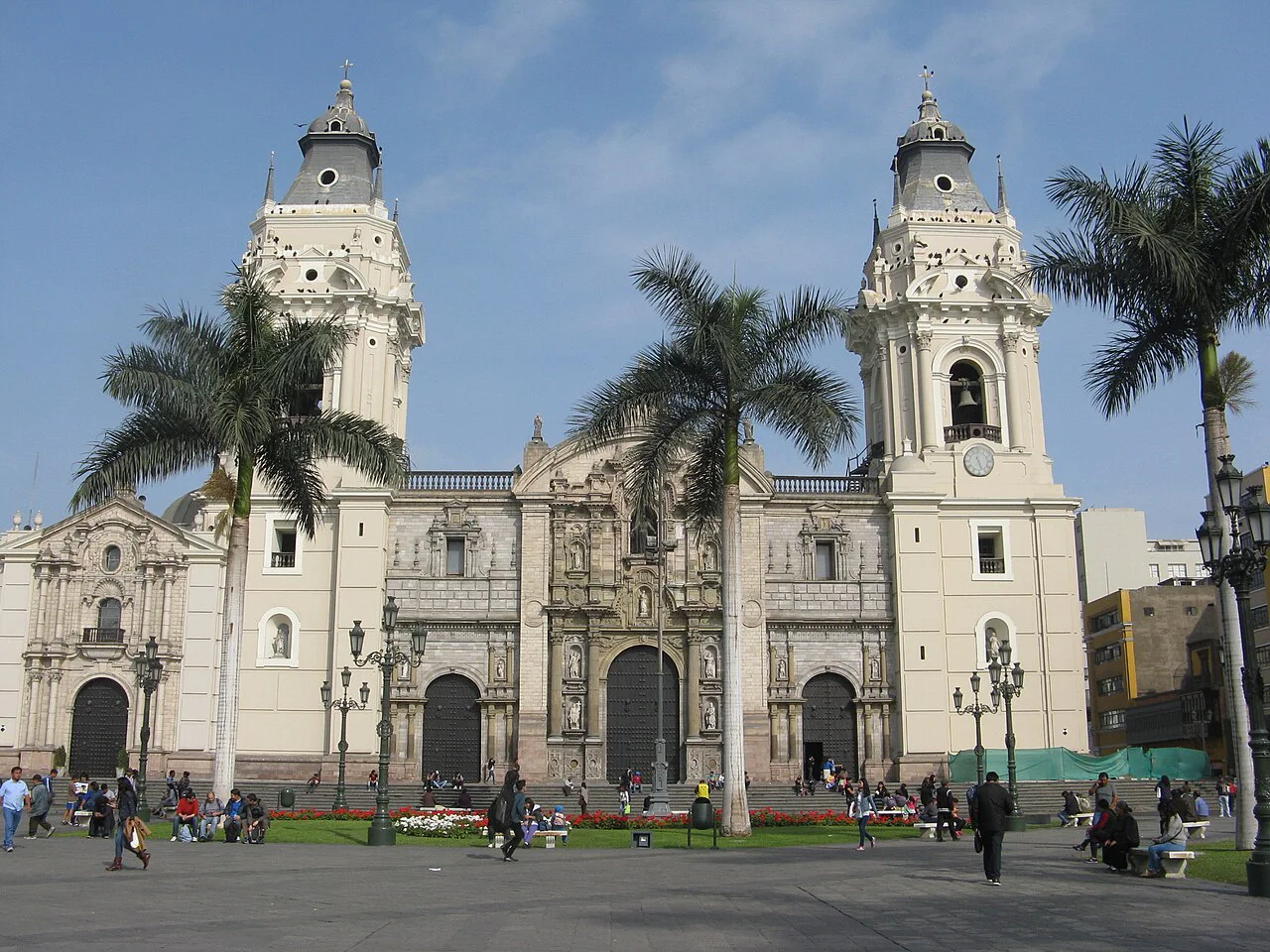
Lima · 27 km
Metropolitan Cathedral of Lima
Content & sources
Photo: Wasiwatana · CC BY-SA 4.0
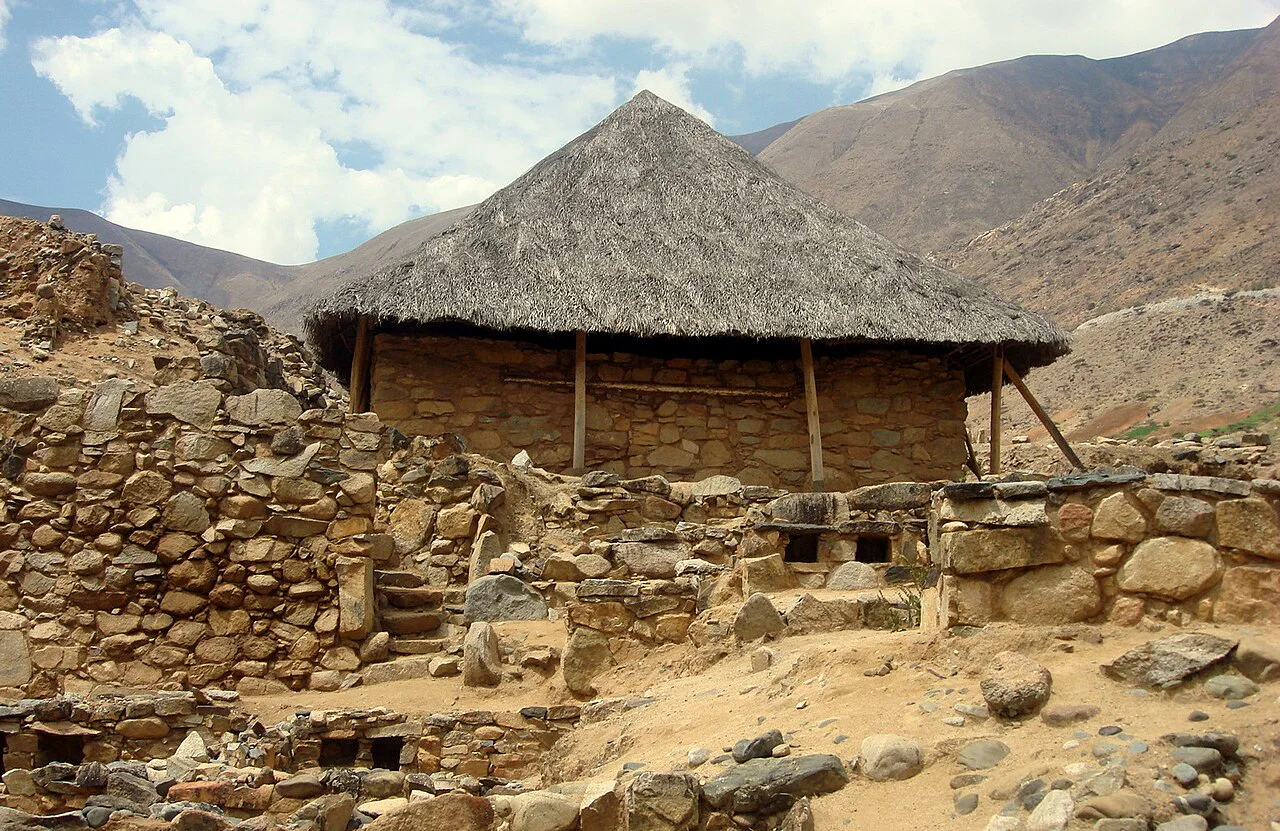
Huánuco
Kotosh
Content & sources
Gustavo Madico · CC BY 2.0
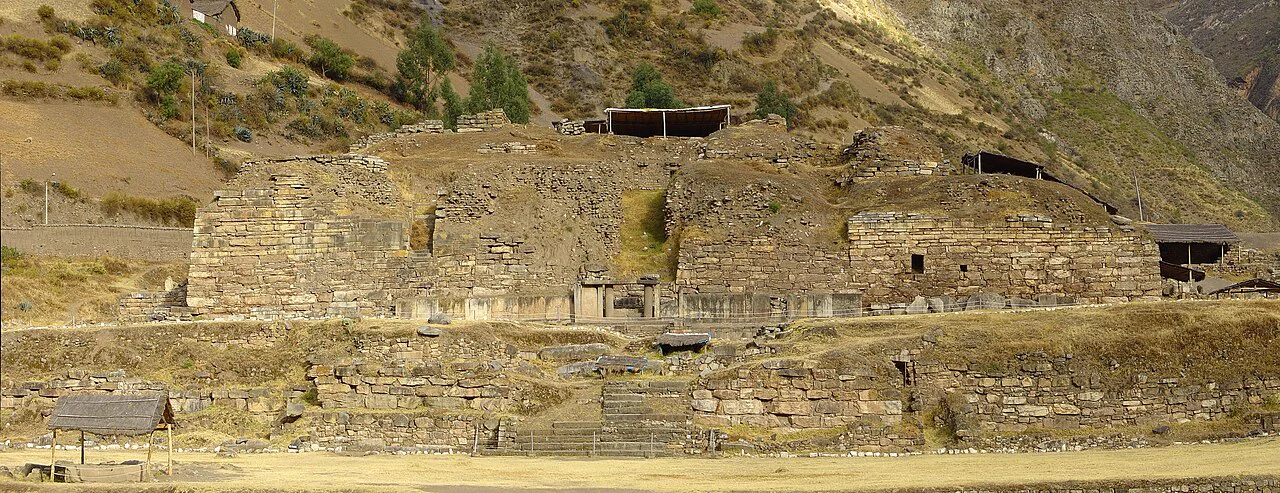
Chavín de Huántar
Chavín de Huántar
Content & sources
Martin St-Amant (S23678) · CC BY 3.0
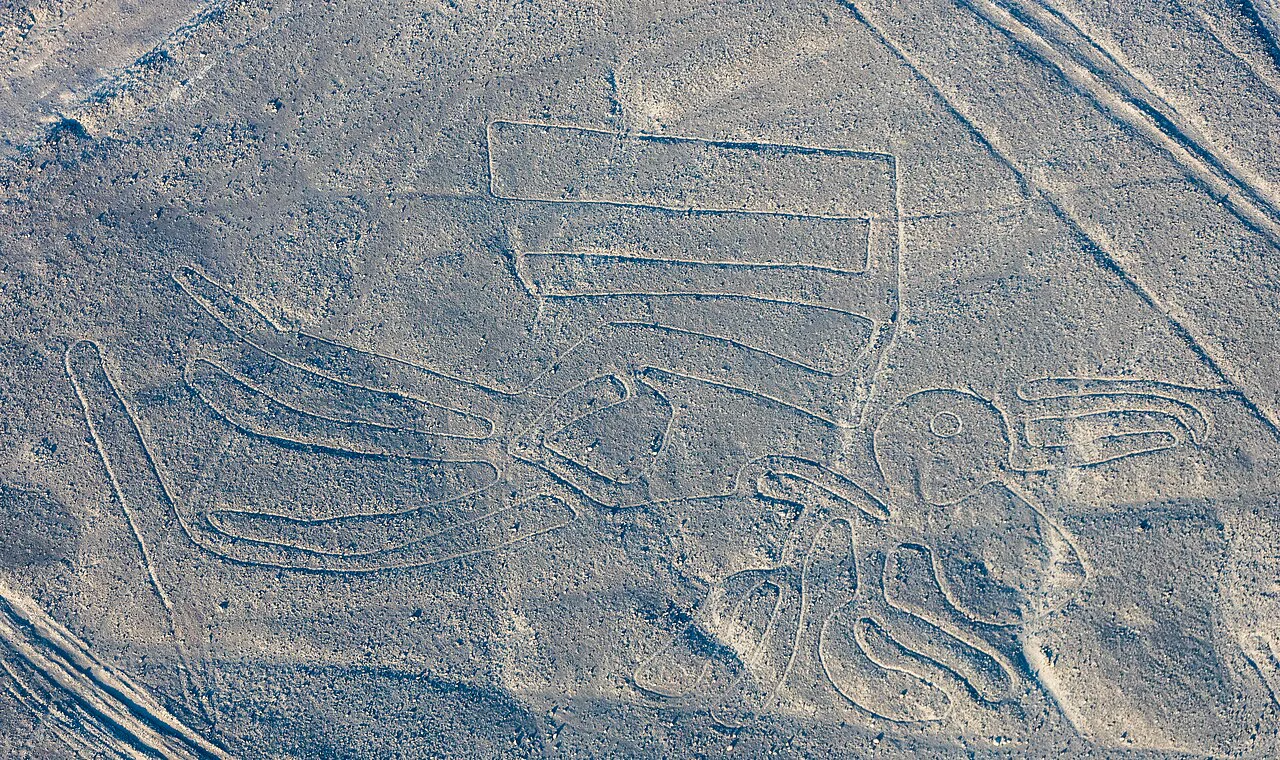
San Miguel de la Pascana
Nazca lines
Content & sources
Diego Delso · CC BY-SA 4.0
Isla de Pascua
Anakena
Content & sources
Rivi · CC BY-SA 3.0