Stanza · Audio guide
Metropolitan Cathedral of Lima Audio Guide
A place to remember. A story to take with you.
The Metropolitan Cathedral of Lima is a Roman Catholic cathedral located in Lima, Peru. Construction of the cathedral began in 1535 and it serves as the seat of the Archdiocese of Lima.
Download Stanza, then search for “Metropolitan Cathedral of Lima”.
About the tour
One guide. Your kind of visit.
The Metropolitan Cathedral of Lima is a Roman Catholic cathedral located in Lima, Peru. Construction of the cathedral began in 1535 and it serves as the seat of the Archdiocese of Lima.
Ready when you are.
- 01Get the free Stanza app.
iOS & Android
- 02Find your guide.
“Metropolitan Cathedral of Lima”
- 03Download before you go.
Works offline
Audio guide / 13 narrated stops
Inside the guide
Get to know a few of the stories before you go. Open a stop to read more.
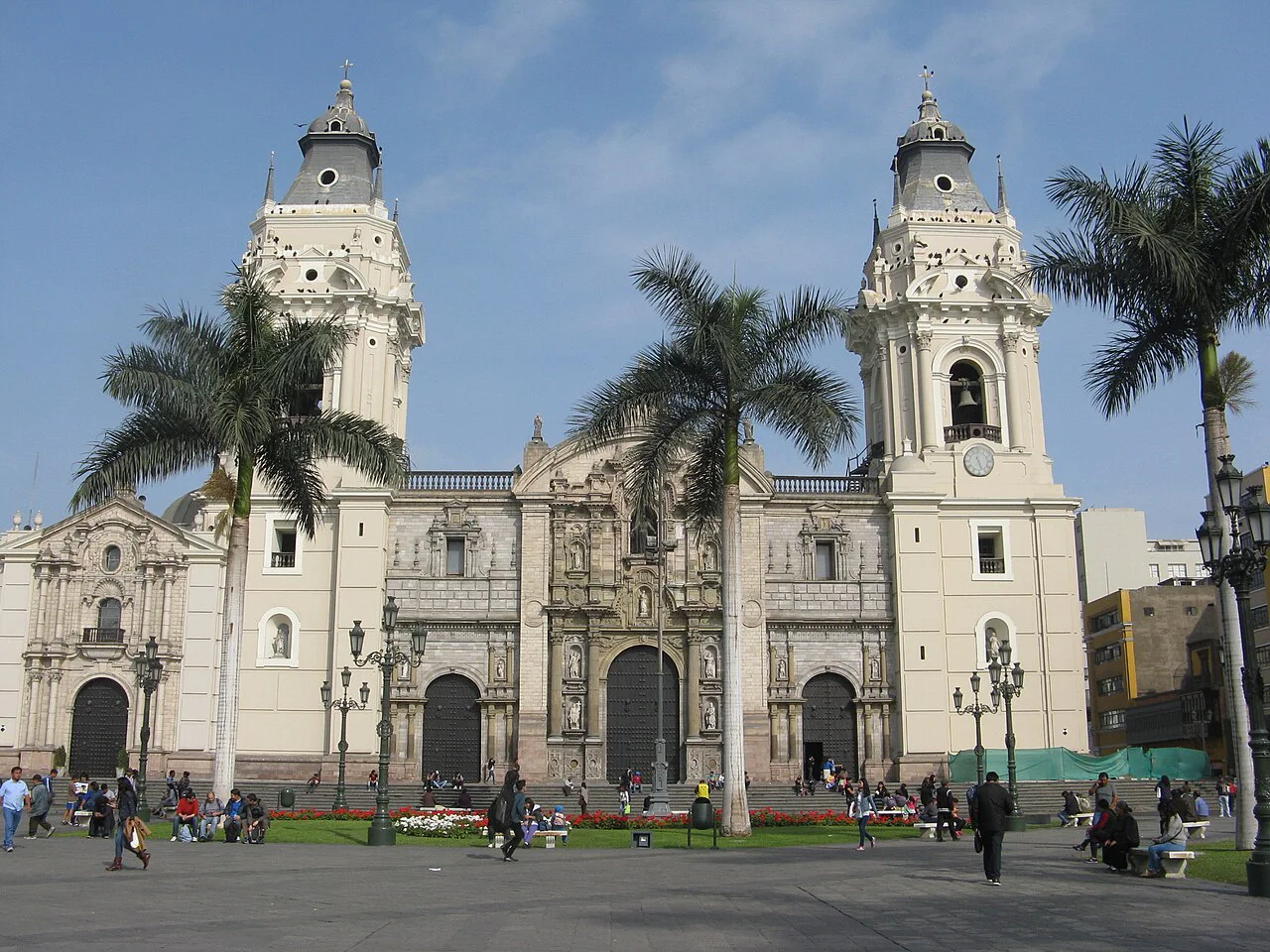
01 Plaza Mayor and the Cathedral's Grand Facade
The Plaza Mayor and the Mother Church of Peru
Welcome to Lima, and to the great church that anchors the east side of its main square. The Metropolitan Cathedral of Lima is the mother church of Peru, the seat of its archbishops for nearly five centuries. Francisco Pizarro founded Lima on the eighteenth of January, 1535, and on that same day he marked out this church. He laid its foundation stone with his own hands and carried the first timber for its frame. The building that stands here today has been rebuilt many times, but it keeps that founding role. Pizarro's daughter Francisca Pizarro Yupanqui later gave five thousand golden pesos toward a grander church on this spot. The cathedral still serves the nation. Every twenty-eighth of July, the President and the government ministers come here for the Te Deum of thanks for Peruvian independence. And each eighteenth of January, the Mayor attends a Mass for the city's birthday.
Allan Grey · CC BY-SA 2.0
02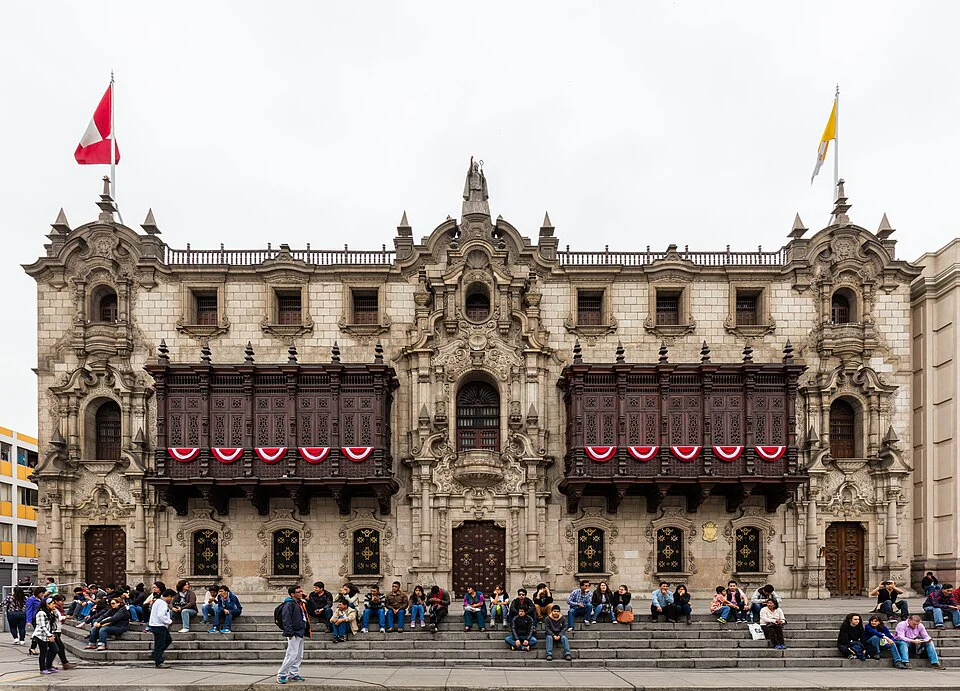 Plaza Mayor and the Cathedral's Grand Facade
The Archbishop's Palace
Beside the cathedral rises a building almost as richly carved as the church itself: the Archbishop's Palace. This is the seat of the ecclesiastical government of Lima, the office from which the archbishops administered the Peruvian church. The cathedral, then, does not stand alone. On this side of the square it heads a whole complex, completed by the palace and by the neighbouring Sagrario church, one of the oldest in the city. When Lima was raised to an archbishopric, Archbishop Jerónimo de Loayza dreamed of a cathedral to rival the great churches of Spain, and the whole quarter grew around that ambition. Church, palace and parish together made this square the centre of church power in colonial Peru.
Diego Delso · CC BY-SA 4.0
03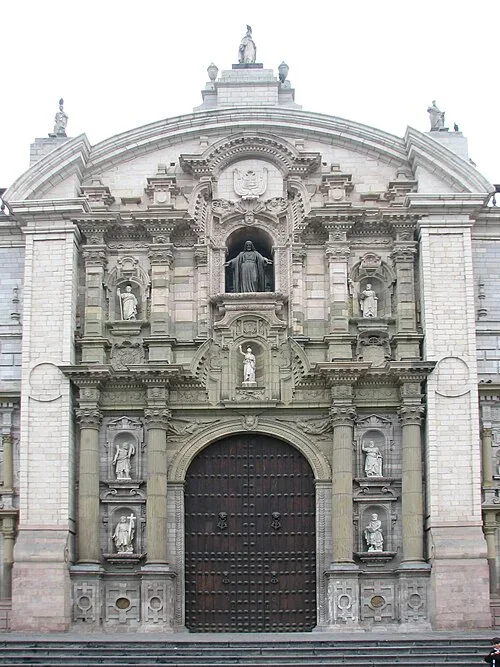 Plaza Mayor and the Cathedral's Grand Facade
The Main Facade and the Puerta del Perdón
The cathedral's west front is Renaissance in structure, dressed in Plateresque ornament, the delicate silversmith-style carving the Spanish loved. In its niches stand statues of the Apostles, gathered around the figure of Christ in the central niche. At the very top sits the coat of arms of Peru, placed where the arms of the city of Lima once hung, beneath the motto Plus Ultra, further beyond. The front has three doors, as most cathedrals do. The central one is called the Puerta del Perdón, the Door of Pardon. To its right stands the Puerta de la Epístola, and to its left the Puerta del Evangelio. The main entrance was designed by Juan Martínez de Arrona and finished in 1632. The tall towers with their slate spires came much later, Neoclassical in style with hints of the Escorial and of northern Europe, completed in 1797.
Listen in the appAgainErick · CC BY-SA 3.0
04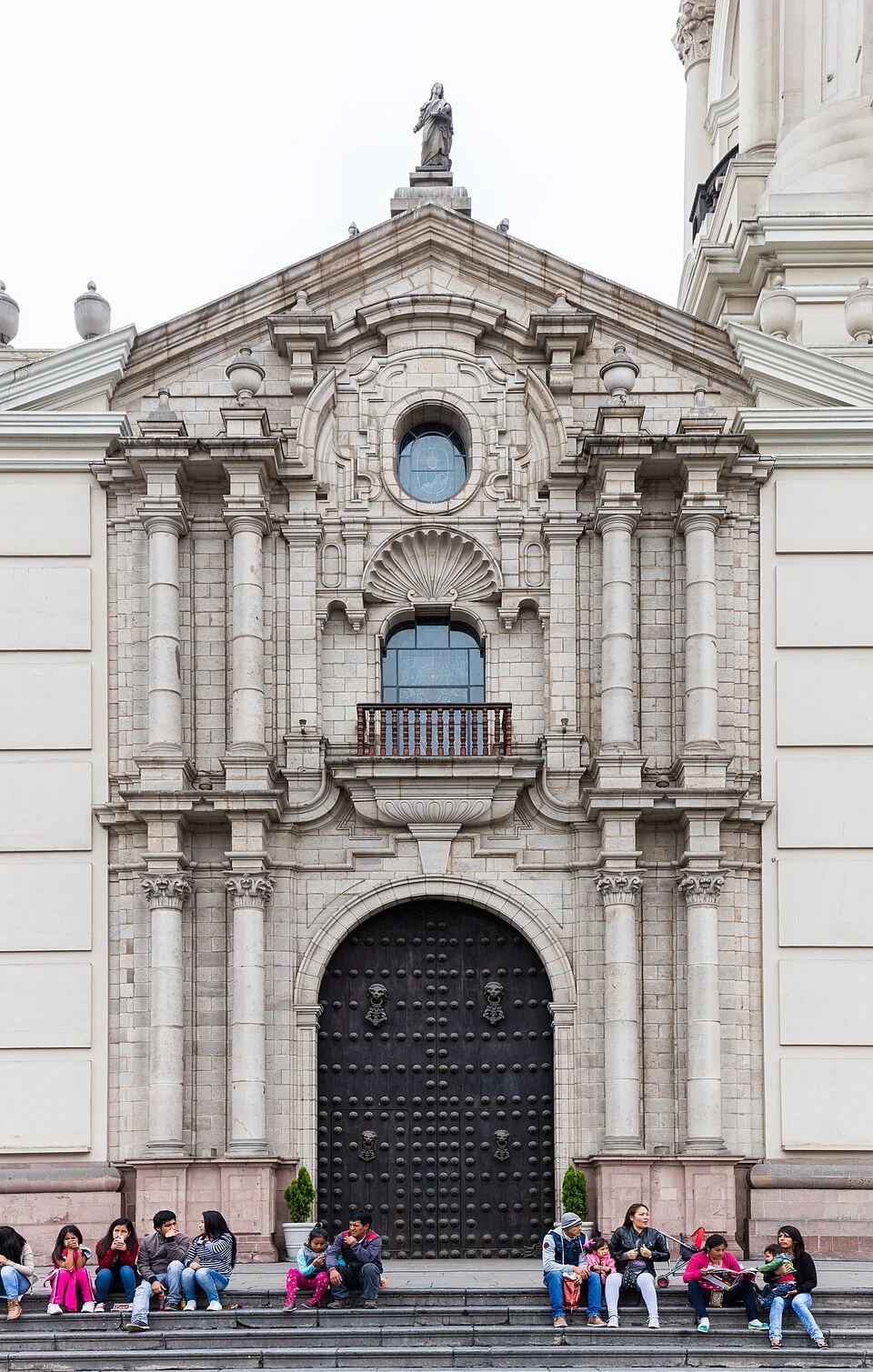 Sagrario Metropolitano de Lima
The Sagrario Metropolitano
This finely carved stone portal belongs to the Sagrario Metropolitano, the parish church that stands beside the cathedral. A cathedral complex like this one kept two churches side by side, each with its own job. The Sagrario served as the parish of the neighbourhood, the place where local residents were baptised, married and buried. The cathedral next door was reserved for the solemn functions of the archdiocese, the great ceremonies of the see. The division sounds administrative, but it shaped daily life in colonial Lima: the everyday sacraments of ordinary families happened here, in the smaller church, while pomp and procession belonged to the great one beside it.
Listen in the appDiego Delso · CC BY-SA 4.0
05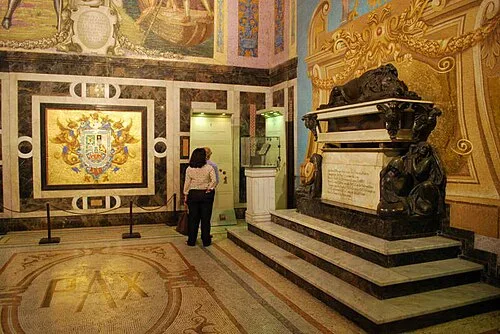 Chapel and Tomb of Francisco Pizarro
The Crypt and Tomb of Francisco Pizarro
Francisco Pizarro rests in a chapel in the right nave, close to the entrance. Every wall of it is covered in mosaics alluding to the Conquest, and the coat of arms of Lima shines on one side. The monument was designed by Manuel Piqueras Cotolí, an artist who gave the founder a sarcophagus ringed with sculpted figures. On it, the head lies visibly separated from the body, possibly the result of the many times his remains were handled and moved after death. In front of the sarcophagus sits a small chest holding earth brought from Trujillo, the Spanish town where he was born. Pizarro did not die in bed. He was assassinated in 1541, struck down in Lima itself, and his body was buried and reburied more than once before it came to this chapel.
Listen in the appDiego Tirira from Quito, Ecuador · CC BY-SA 2.0
06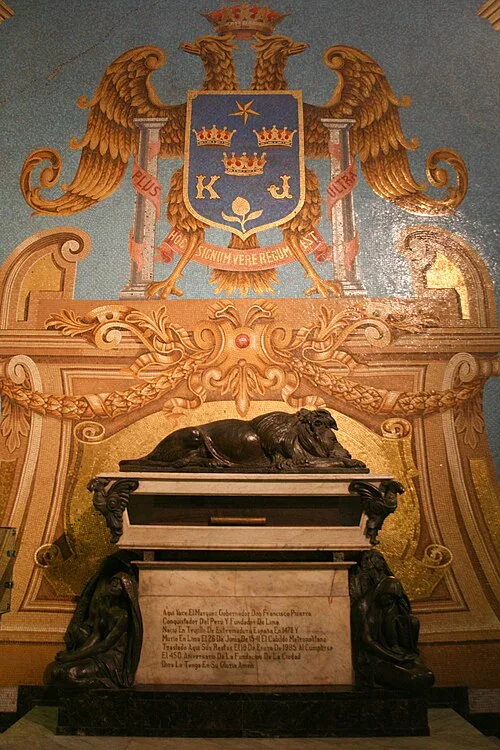 Chapel and Tomb of Francisco Pizarro
The Imposter Mummy and the 1977 Discovery
The gilded mosaic above the sarcophagus, with its double-headed eagle, its crowns and its Plus Ultra banner, carries the heraldry of the empire Pizarro served. And for a long time, the man honoured here was not Pizarro at all. In 1891, for the 350th anniversary of his death, the church put a mummified body on display in a glass urn on a marble altar. It was dried and saffron-coloured, and the tourist guides presented it to every visitor as the conqueror of Peru. People bowed before it for 86 years. Then in 1977, workmen doing maintenance in the crypts broke through a sealed wall and found a niche behind it. Inside lay a lead box with blurred inscriptions. The words read: here is the head of the Lord Marquis Don Francisco Pizarro, who discovered and won the kingdoms of Peru. Beside it rested a velvet-lined coffin full of bones. Scientists studied the remains for months: a woman, two children, and an adult male, who proved to be Pizarro himself.
Listen in the appPhoto: FotosATP-Pe · CC BY-SA 4.0
07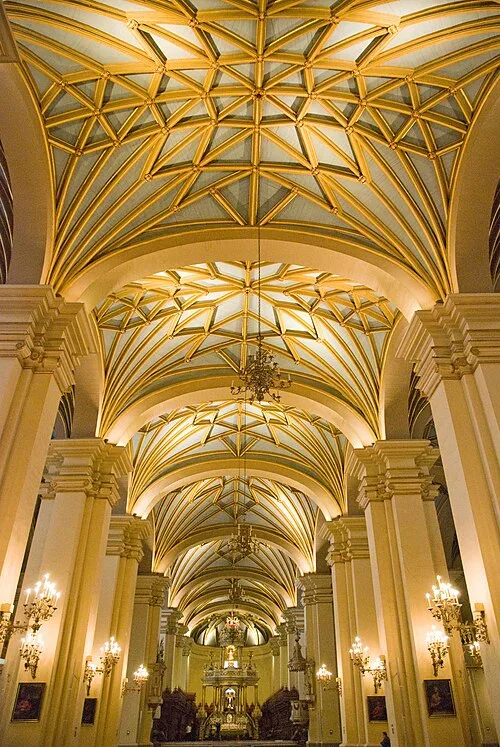 The Central Nave and Anti-Seismic Quincha Vaults
The Quincha Vaults: Architecture Against Earthquakes
The ceiling overhead looks like a Gothic night sky, ribbed vaults fanning into stars. Then comes the surprise: it is not stone. These vaults are made of wood and stucco, in the lightweight building method called quincha, so the walls carry as little weight as possible and stand a chance when the earth shakes. The idea was argued out room by room. After an earthquake in 1606 the final plan was drawn, and another quake in 1609 damaged the vaults already built. The chief architect, Juan Martínez de Arrona, wanted vaults of brick. Members of the Cabildo, the municipal council, insisted wood was safer. Wearied by the quarrel, the council appointed a man named Bartolomé Lorenzo as advisor to Arrona to settle it. Wood won, and in October 1625 the naves of the third cathedral were consecrated. The plan itself is a hall church in the manner of Seville Cathedral, its three naves of equal height as in Jaén Cathedral, so the light and space run unbroken down the length of the building.
Listen in the appPhoto: JulioKuLu · CC BY-SA 4.0
08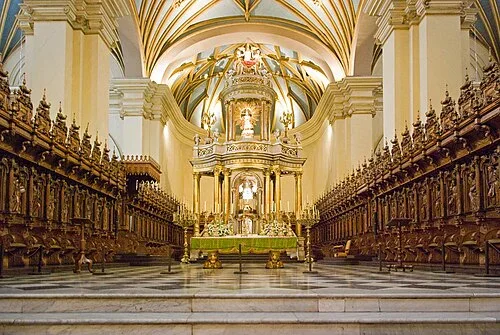 The High Altar and Presbytery
The High Altar and Matías Maestro's Neoclassical Reform
The church Pizarro founded did not stay small for long. On the fourteenth of May, 1541, Pope Paul III issued a bull creating the Diocese of Lima and raising the little church to the rank of cathedral. Building began the next year under Cristóbal Vaca de Castro, and the new church was inaugurated in 1552 by Archbishop Jerónimo de Loayza. The altar at the head of the nave belongs to a much later chapter. It is the Neoclassical main altarpiece made by Matías Maestro in 1799, presided over by an Immaculate Conception. Maestro led a reform that swept the old Baroque altars out of the cathedral and replaced them with Neoclassical ones, from 1804 onward. His pulpit is crowned by Saint John the Evangelist, patron of the cathedral, and in the transept stand his statues of Saints John, Peter, Paul and James.
Listen in the appPhoto: JulioKuLu · CC BY-SA 4.0
09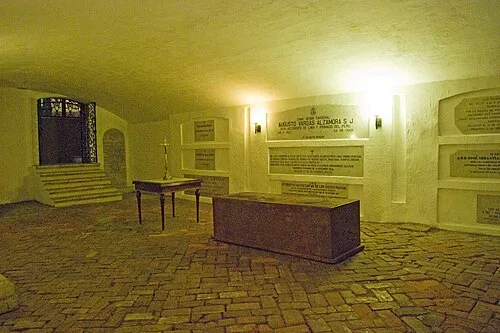 The Subterranean Crypt of the Archbishops
The Crypt of the Archbishops
Directly beneath the high altar lies the crypt of the Archbishops. Here rest the remains of almost all the shepherds of Lima, in an unbroken line of office. The first was Jerónimo de Loayza, the archbishop who inaugurated the second cathedral. Among the most recent is Cardinal Augusto Vargas Alzamora. Wall plaques carry their names down the generations, a succession of pastors stretching across four centuries. Compared with the founder's mosaic-covered chapel, the setting is plain: brick vaults, simple tombs, quiet walls. The men who governed the Peruvian church from the palace on the square ended their story here, below the altar they served.
Listen in the appPhoto: JulioKuLu · CC BY-SA 4.0
10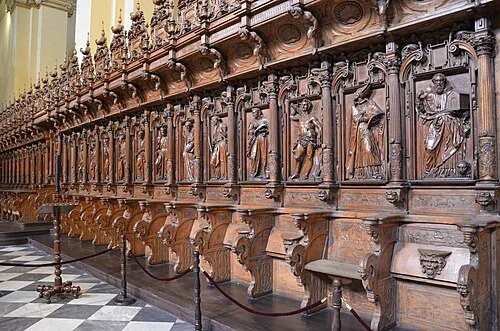 The Pedro de Noguera Choir Stalls
Flanking the altar today stand two long ranks of cedar carving, the choir stalls of the cathedral. They were designed by the Spaniard Martín Alonso de Mesa and carved by the Catalan Pedro de Noguera in the seventeenth century, and they count among the crowning achievements of colonial wood sculpture in South America. Their position tells a story of its own. The choir once stood in front of the main altar, filling the crossing, much as it still does in the cathedral of Mexico City. Later it was moved, and the stalls now flank the sanctuary instead, leaving the altar open to view. The change rearranged how the liturgy used this space. On the backs of the stalls march ranks of saints in cedar: Apostles, Doctors of the Church, Popes, Bishops and virgins, a whole calendar of holiness carved in wood.
Listen in the appChristian Córdova from Santiago, Chile · CC BY 2.0
- 11
Inside the Stalls: Bishops in Cedar
Bishops in high-relief cedar, and the throne with the Redeemer that makes this a cathedral.
- 12
The Sacristy: Arrona's Cabinets and the Bassano Zodiac
Arrona's apostle cabinets, a room of Bassano zodiac paintings, and the lost Treasure of Lima.
- 13
Our Lady of Evangelization and the Golden Rose
A Virgin sent by Charles V, one of the first in the New World, honoured with a Golden Rose.
Metropolitan Cathedral of Lima
Frequently asked questions
How much does the guide cost?
Free app download. Listed guide price: $0.99. Guide price shown in the app. Audio guide only. Venue admission is separate.
Can I listen without internet?
Yes. Download the guide’s audio, images, and maps in the app before your visit. Your downloaded content is then available offline.
Can I listen in my language?
This audio guide is available in 15 languages, including English.
Do I need to follow a schedule?
No. This is a self-guided experience. Choose your stops, pause whenever you like, and return to a story at your own pace.
At your own pace
Explore Metropolitan Cathedral of Lima.
Download Stanza, then search for “Metropolitan Cathedral of Lima”.
Free app download · Guide price shown in the app
Keep exploring
Audio guides — Peru
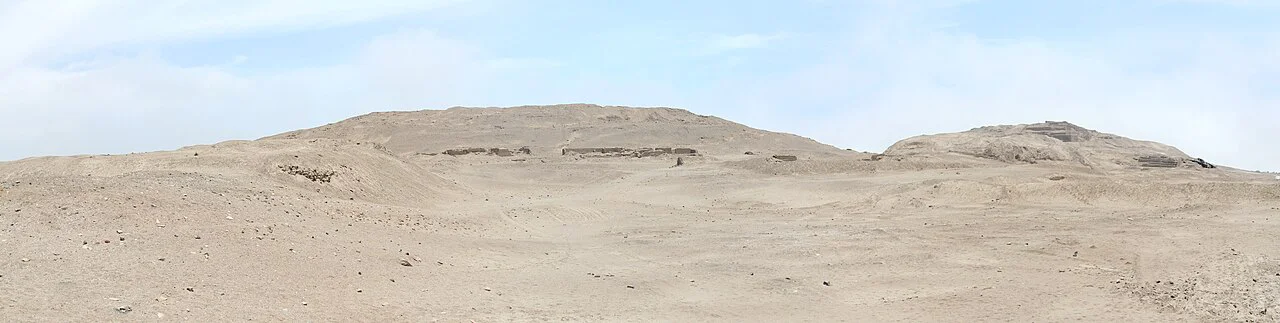
Lima · 27 km
Pachacamac
Content & sources
Ingo Mehling · CC BY-SA 3.0
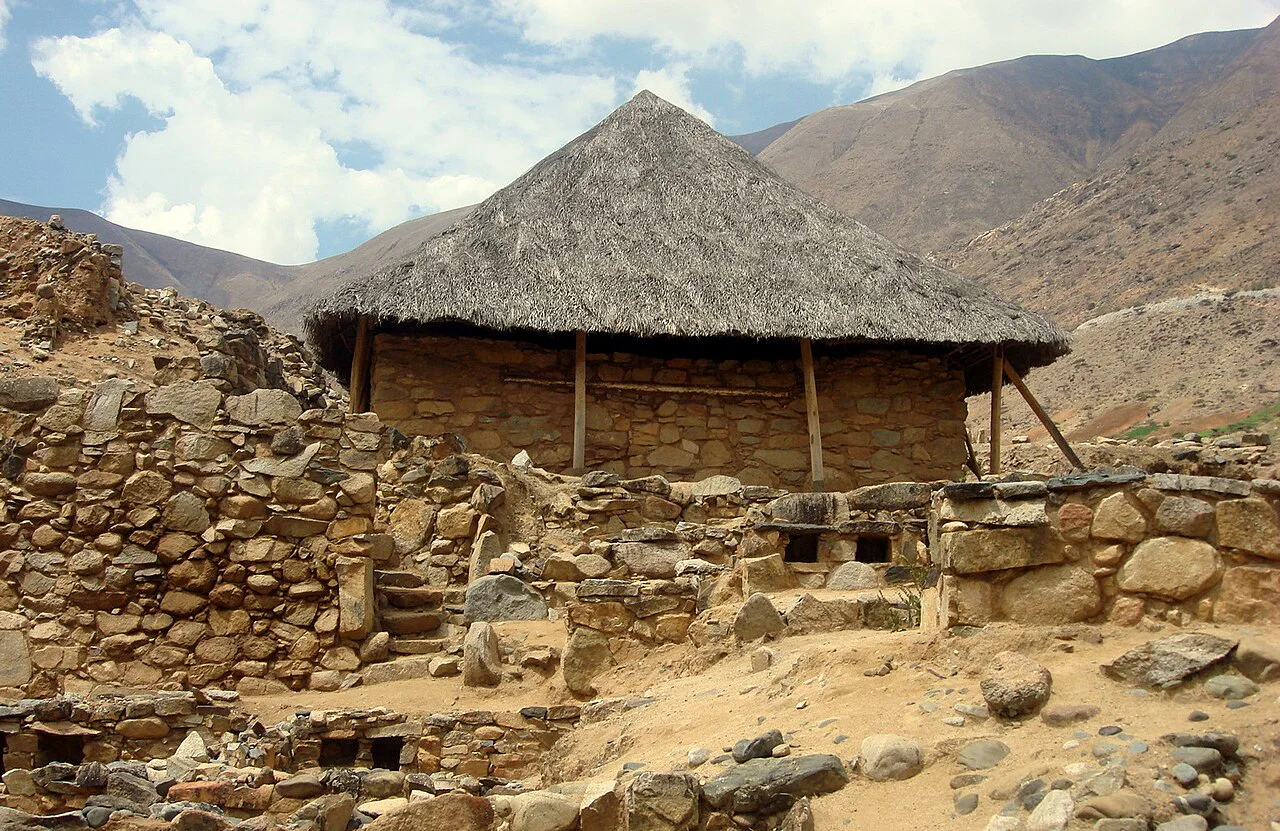
Huánuco
Kotosh
Content & sources
Gustavo Madico · CC BY 2.0
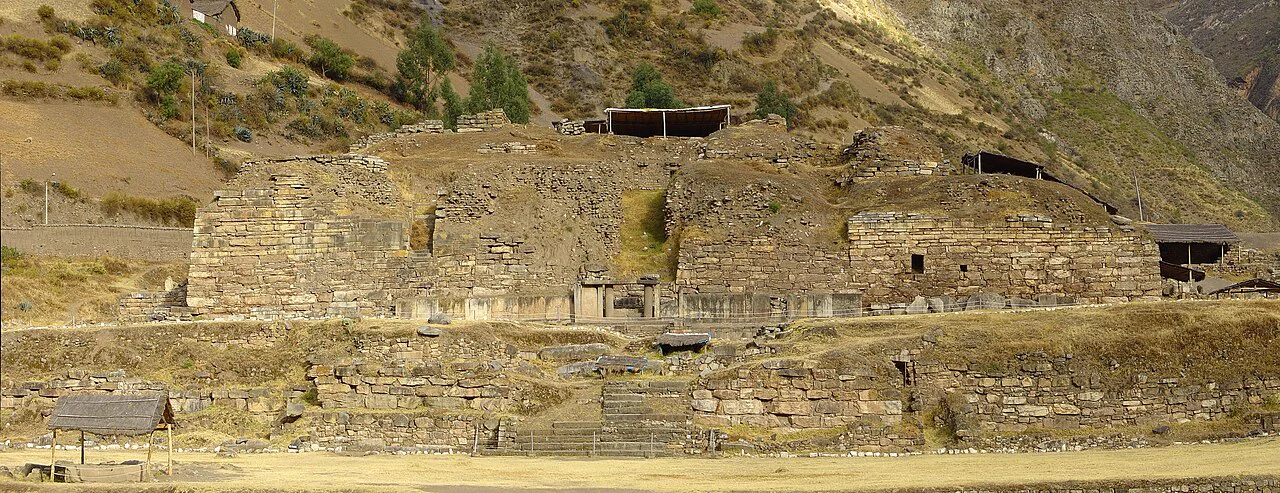
Chavín de Huántar
Chavín de Huántar
Content & sources
Martin St-Amant (S23678) · CC BY 3.0
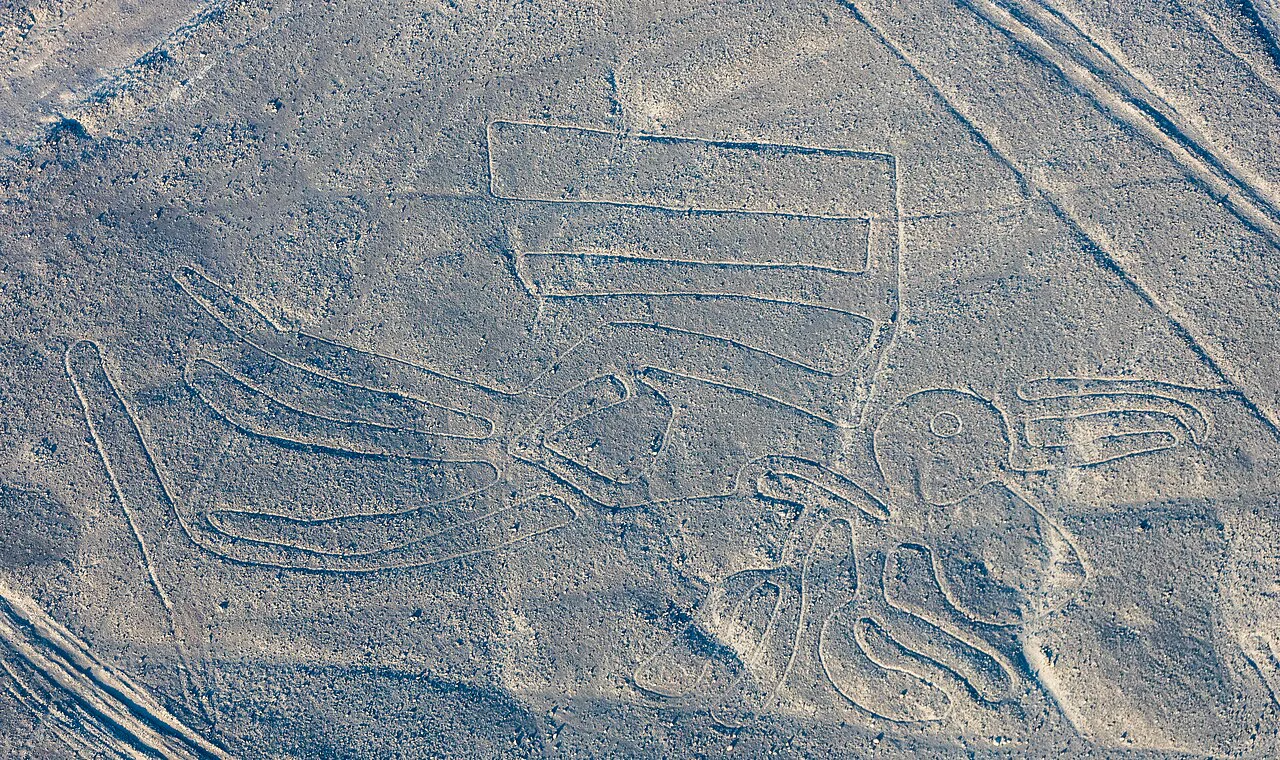
San Miguel de la Pascana
Nazca lines
Content & sources
Diego Delso · CC BY-SA 4.0
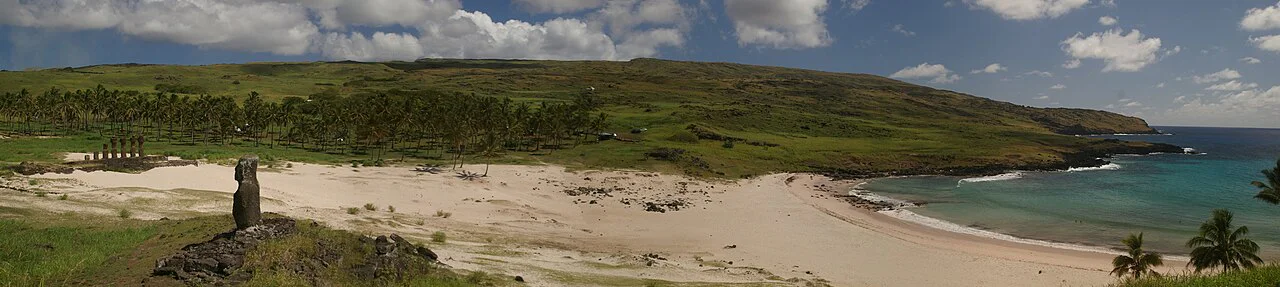
Isla de Pascua
Anakena
Content & sources
Rivi · CC BY-SA 3.0