Stanza · Audio guide
Huaca de la Luna Audio Guide
A place to remember. A story to take with you.
Huaca de la Luna is a large adobe brick structure built mainly by the Moche people of northern Peru. It was a major component of the ancient Moche capital city of Cerro Blanco and was inhabited between the…
Download Stanza, then search for “Huaca de la Luna”.
About the tour
One guide. Your kind of visit.
Huaca de la Luna is a large adobe brick structure built mainly by the Moche people of northern Peru. It was a major component of the ancient Moche capital city of Cerro Blanco and was inhabited between the 1st and 9th century AD.
Ready when you are.
- 01Get the free Stanza app.
iOS & Android
- 02Find your guide.
“Huaca de la Luna”
- 03Download before you go.
Works offline
Audio guide / 13 narrated stops
Inside the guide
Get to know a few of the stories before you go. Open a stop to read more.
01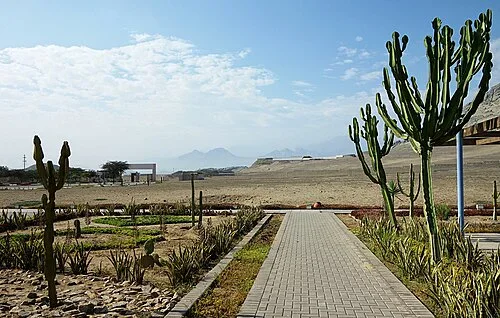 Arrival & The Adobe Maker Marks
Arrival at the Temple of the Moon
Welcome to the Huaca de la Luna, the Temple of the Moon. This is an adobe temple in the desert of northern Peru, near the mouth of the Moche River. The Pacific lies about five kilometers to the west. For the Moche people, this was the religious and ceremonial heart of their capital, built and used from the first to the ninth century. It never stood alone. Across the plain rises its larger companion, the Huaca del Sol, the Temple of the Sun. The Moche split the work between them. The Sun handled administration, housing, and the burials of their elite. The Moon belonged to the gods. Behind the temple, the mountain Cerro Blanco watches over the whole valley. Everything that follows, the painted walls, the plazas, the processions, happened in its shadow.
Photo: Kevstan · CC BY-SA 3.0
02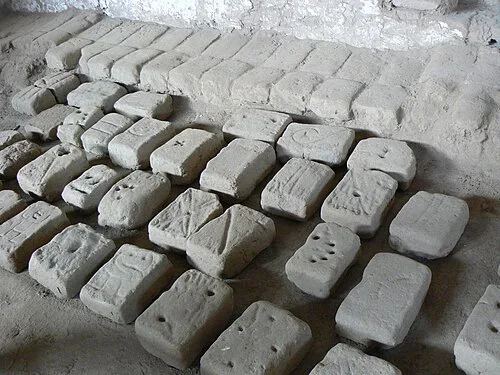 Arrival & The Adobe Maker Marks
Signed Adobe Bricks
Every wall of this temple is made of adobe, sun-dried bricks of mud and straw. And many of those bricks carry a signature. Pressed into the clay before drying, each mark identifies the community that made the brick. Archaeologists have counted one hundred twenty-eight distinct marks, from the villages that surrounded the valley. Each community contributed its own quota of bricks to the building of the temples. So this was not the work of one architect or one workforce. It was a collective undertaking, neighborhood by neighborhood, generation after generation. The bricks themselves were made to a shared standard, all wider than they are tall, so they lock together in neat courses. Look at a single wall here, and you are reading a ledger of who helped build it.
Photo: Kevstan · CC BY-SA 3.0
03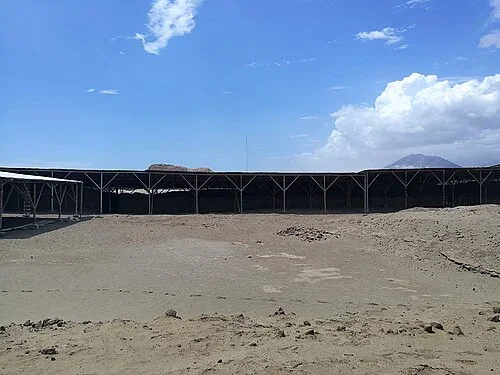 Plaza 1 & The Prisoner Procession
Plaza 1, the Great Northern Plaza
Before any ceremony could begin, the people had to gather somewhere. This was that place. Plaza 1 is a huge, low, open space lying directly north of the great temple platform. It was likely built to hold large crowds during significant events, thousands of people assembled with a clear view of the temple. At its edge stood Recinto 1, an elaborately decorated building raised on its own elevated platform. Its walls carried murals of warriors, and of prisoners being led in procession. The plaza was the stage; the decorated building was the backdrop against which the Moche elite appeared before their people.
Listen in the appPhoto: Pitxiquin · CC BY-SA 4.0
04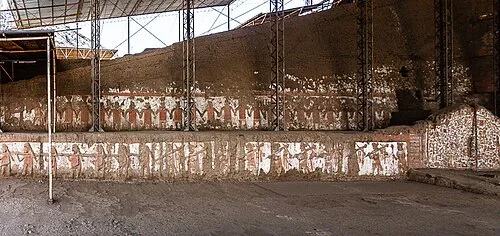 Plaza 1 & The Prisoner Procession
Relief of the Prisoner Procession
Here the story turns sober. Along this excavated wall runs a painted frieze of naked prisoners, bound and roped at the neck, marched in line by warriors. The warriors carry the captives' weapons, taken from them. The image matches Moche pottery exactly, which shows the same nude prisoners with ropes around their necks, and the same warriors holding their weapons. The scene records a Moche way of war in which combat aimed at capture rather than killing on the field. Fighting men were taken alive, then presented in procession before the temple's divinities and its priestly elite. What happened to them next took place in the plazas to the east.
Listen in the appPhoto: Enrique Jara · CC BY-SA 4.0
05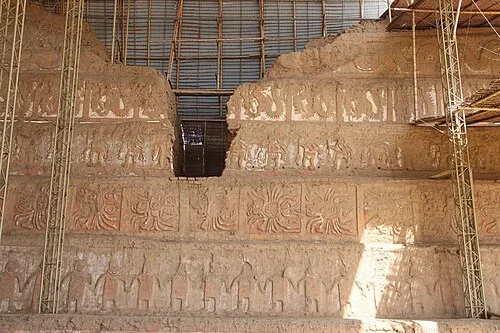 The Great Polychrome Facade
The great facade rises in tier after tier, each band repeating the same figures in painted relief: warriors, mythic creatures, processions. Across the whole site, the Moche covered some ten thousand square meters of wall with polychrome murals. Five colors carry the design. The red comes from hematite, an iron mineral ground to powder. The white comes from clay. Yellow, black, and other tones came from minerals and organic sources in turn. All of it has survived roughly fifteen hundred years in one of the driest landscapes on earth. The repeating bands give the wall its rhythm, figure after figure, register after register, a facade designed to be read from a distance by a crowd.
Listen in the appPhoto: Draceane · CC BY-SA 4.0
06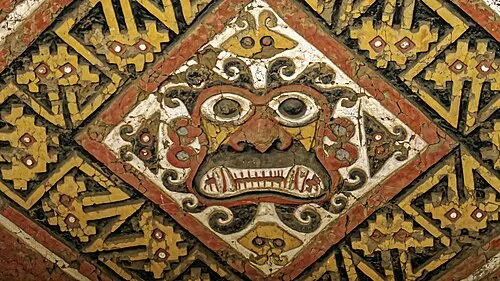 The Great Polychrome Facade
The Fanged Face of Ai Apaec
Out of a diamond of interlocking patterns stares a face with round eyes, bared fangs, and ears made of curled ornaments. This is the face that appears again and again throughout the temple, and scholars identify it as Ai Apaec, the supreme deity of the Moche. The name comes from Muchik, the language of the region, and it means all knowing. In Moche belief he was a bringer of life and a taker of it, and their art shows him too as the decapitator, a god tied to the shedding of blood. That side of the religion is painted into these same walls. For the Moche, his face watching from the masonry was the presence that made the temple holy.
Listen in the appBurkhard Mücke · CC BY-SA 4.0
07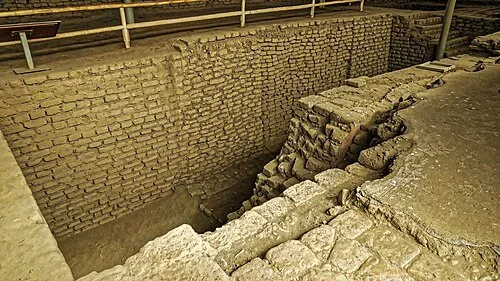 Platform I (The Layered Temple)
Layers of Adobe: How the Temple Grew
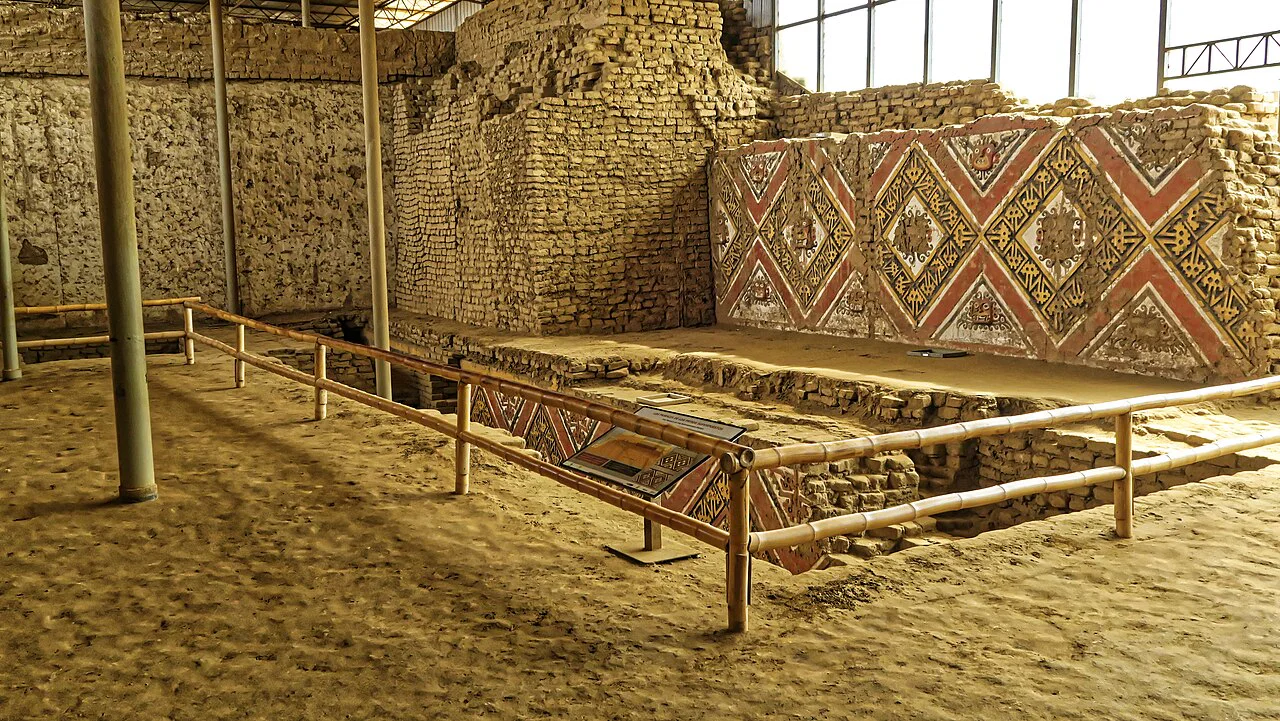
The trench cut through this brickwork reveals the temple's strangest habit. The Moche did not demolish their old temples. They buried them whole, and built the next one directly on top. Excavation shows a new platform raised over an existing one roughly every hundred years, across six centuries. Each finished temple became the foundation of its successor, so the structure grew taller with every generation. The result, Platform I, is the largest of them all, standing thirty meters high. Inside it lie the sealed bodies of six temples, each one holding the paintings and rooms of its own era, untouched above the last.
Listen in the appBurkhard Mücke · CC BY-SA 4.0
08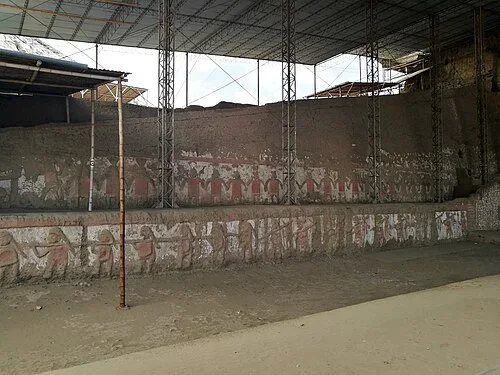 Platform I (The Layered Temple)
Superposed Facades of the Old Temple
Because each temple was sealed rather than demolished, its painted facades were sealed with it. That is the reason so much color survives here at all. The facades visible at different heights record successive building campaigns, one era of painting stacked above another, each preserved at the moment it was covered. Wind did the rest. Over the centuries, drifting sand buried the site, and that covering left the structure and its interiors remarkably well preserved. When archaeologists reached these walls, the old temples were still waiting underneath, painted surfaces and all.
Listen in the appPhoto: Pitxiquin · CC BY-SA 4.0
09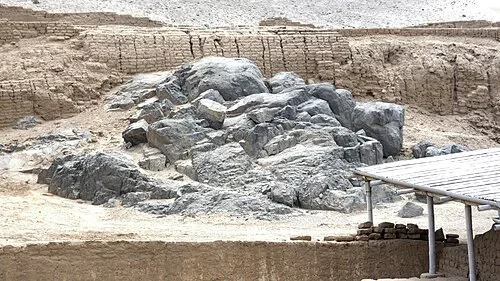 Plaza 3A and the Sacred Rock
The Sacred Rock
Among all the molded adobe of this temple stands one thing the Moche did not build: a great outcrop of dark natural rock. The eastern platform, the black rock, and the patios beside them were the sites of human sacrifice. At the foot of the rock, archaeologists found the skeletons of adult men. Their bones show trauma and signs of imprisonment. Many had healed and fresh fractures, injuries consistent with wartime, but the fatal wound was most often a severe blow to the head. After the sacrifice, the bodies were hurled over the side of the platform and left exposed in the patios below. It is a hard place to stand and an important one, the physical evidence behind everything the murals depict.
Listen in the appPhoto: BluesyPete · CC BY-SA 3.0
10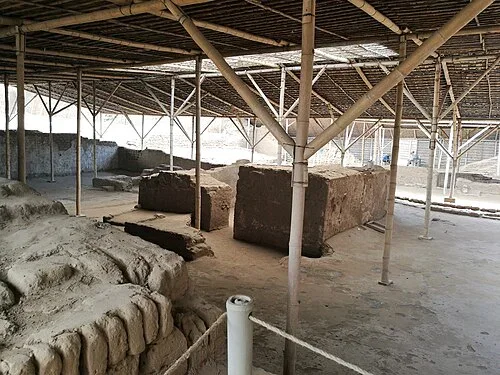 Plaza 3A and the Sacred Rock
The Sacrificial Enclosures of Plaza 3
Directly east of the great platform lie three interconnected enclosures, Plazas 3A, 3B, and 3C. They sit at the elevation closest to the temple platform of any of the plazas, and human sacrifice was practiced across them. Who the victims were is a question scholars still debate. The bones suggest fighters from other communities: there is bioarchaeological evidence of real warfare, and the bodies were given no burial, no respect. But the murals complicate that reading. They show no victories over foreign enemies, and the soldiers on both sides look strikingly similar, as if the combat were staged between Moche groups themselves. Real war, ritual war games, or both. The evidence allows each answer, and no one has settled it.
Listen in the appPhoto: Pitxiquin · CC BY-SA 4.0
- 11
The Painted Altar and the El Nino Sacrifices
A painted altar with serpent bands, and the sacrifices made when the floods came.
- 12
The Mural of the Myths
The Mural of the Myths: a whole religion compressed into a single painted wall.
- 13
The Temple and the Sacred Mountain
The temple and Cerro Blanco, and the modern work that brought it back into the light.
Huaca de la Luna
Frequently asked questions
How much does the guide cost?
Free app download. Listed guide price: $0.99. Guide price shown in the app. Audio guide only. Venue admission is separate.
Can I listen without internet?
Yes. Download the guide’s audio, images, and maps in the app before your visit. Your downloaded content is then available offline.
Can I listen in my language?
This audio guide is available in 15 languages, including English.
Do I need to follow a schedule?
No. This is a self-guided experience. Choose your stops, pause whenever you like, and return to a story at your own pace.
At your own pace
Explore Huaca de la Luna.
Download Stanza, then search for “Huaca de la Luna”.
Free app download · Guide price shown in the app
Keep exploring
Audio guides — Peru
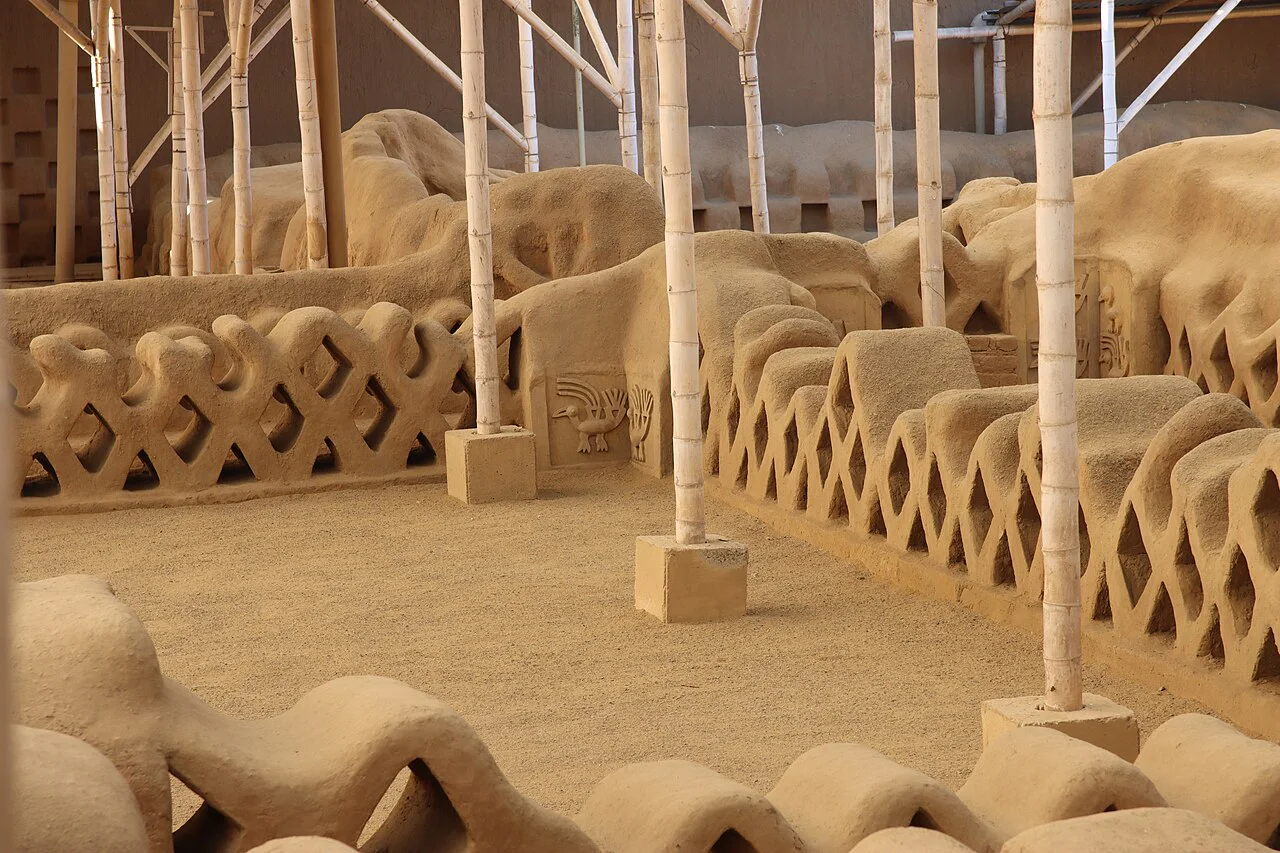
Huanchaco · 10 km
Chan Chan
Content & sources
Photo: Draceane · CC BY-SA 4.0
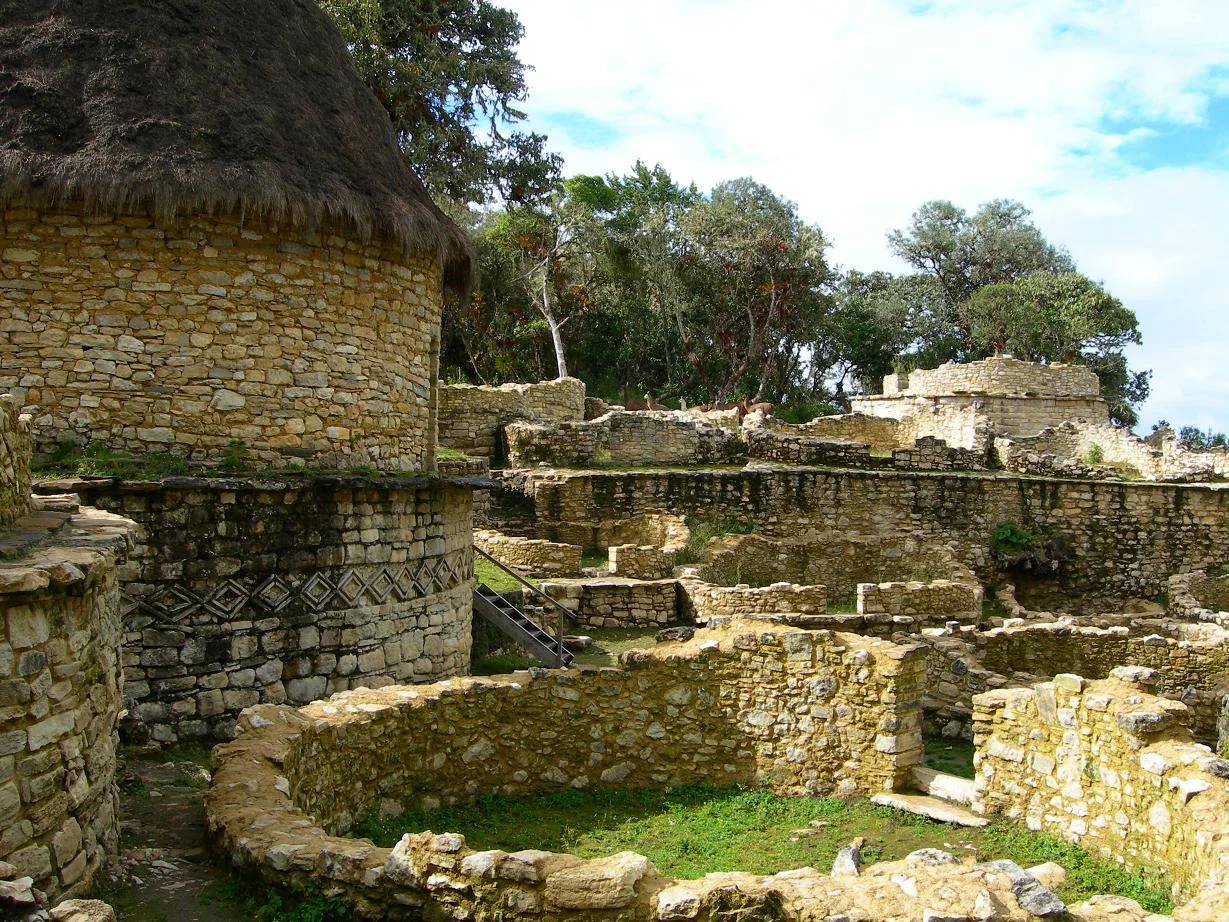
Tingo
Kuélap
Content & sources
Photo: Elemaki · CC BY-SA 2.5
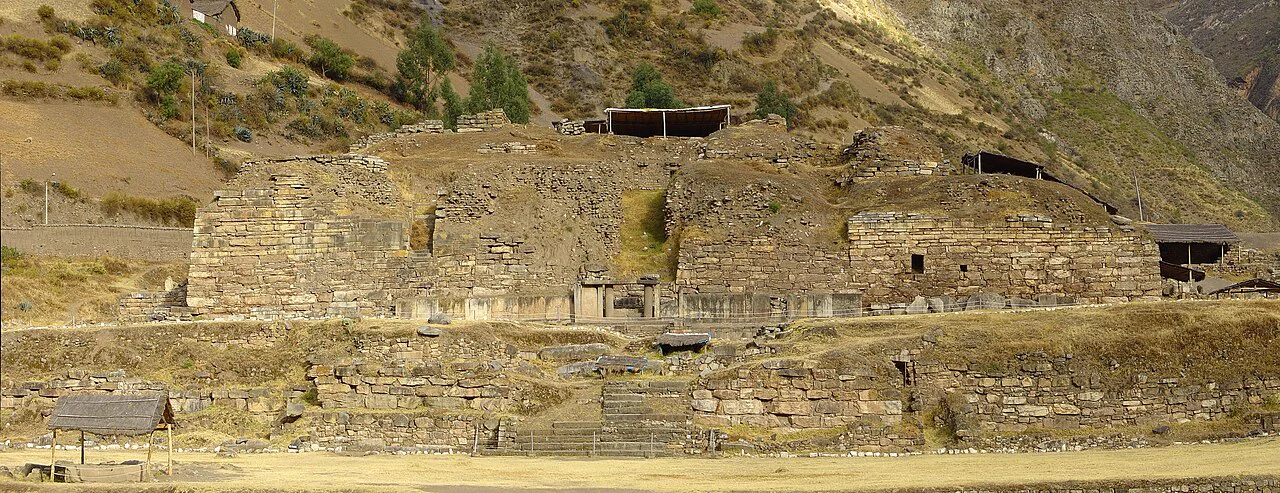
Chavín de Huántar
Chavín de Huántar
Content & sources
Martin St-Amant (S23678) · CC BY 3.0
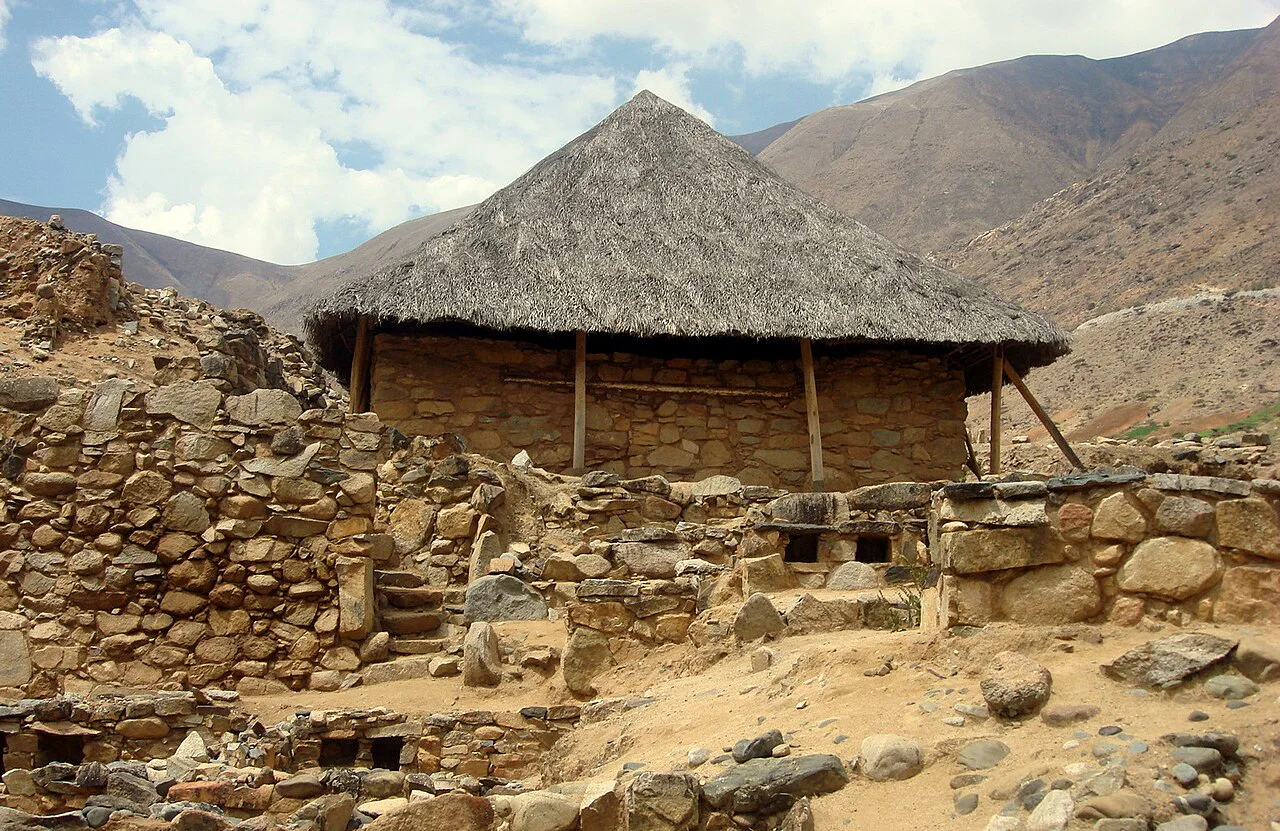
Huánuco
Kotosh
Content & sources
Gustavo Madico · CC BY 2.0