Stanza · Audio guide
Fort Santiago Audio Guide
A place to remember. A story to take with you.
Fort Santiago is a citadel built in 1571 by Spanish navigator and governor Miguel López de Legazpi for the city of Manila. It served as a defense fortress located within the walled city of Intramuros.
Download Stanza, then search for “Fort Santiago”.
About the tour
One guide. Your kind of visit.
Fort Santiago is a citadel built in 1571 by Spanish navigator and governor Miguel López de Legazpi for the city of Manila. It served as a defense fortress located within the walled city of Intramuros.
Ready when you are.
- 01Get the free Stanza app.
iOS & Android
- 02Find your guide.
“Fort Santiago”
- 03Download before you go.
Works offline
Audio guide / 14 narrated stops
Inside the guide
Get to know a few of the stories before you go. Open a stop to read more.
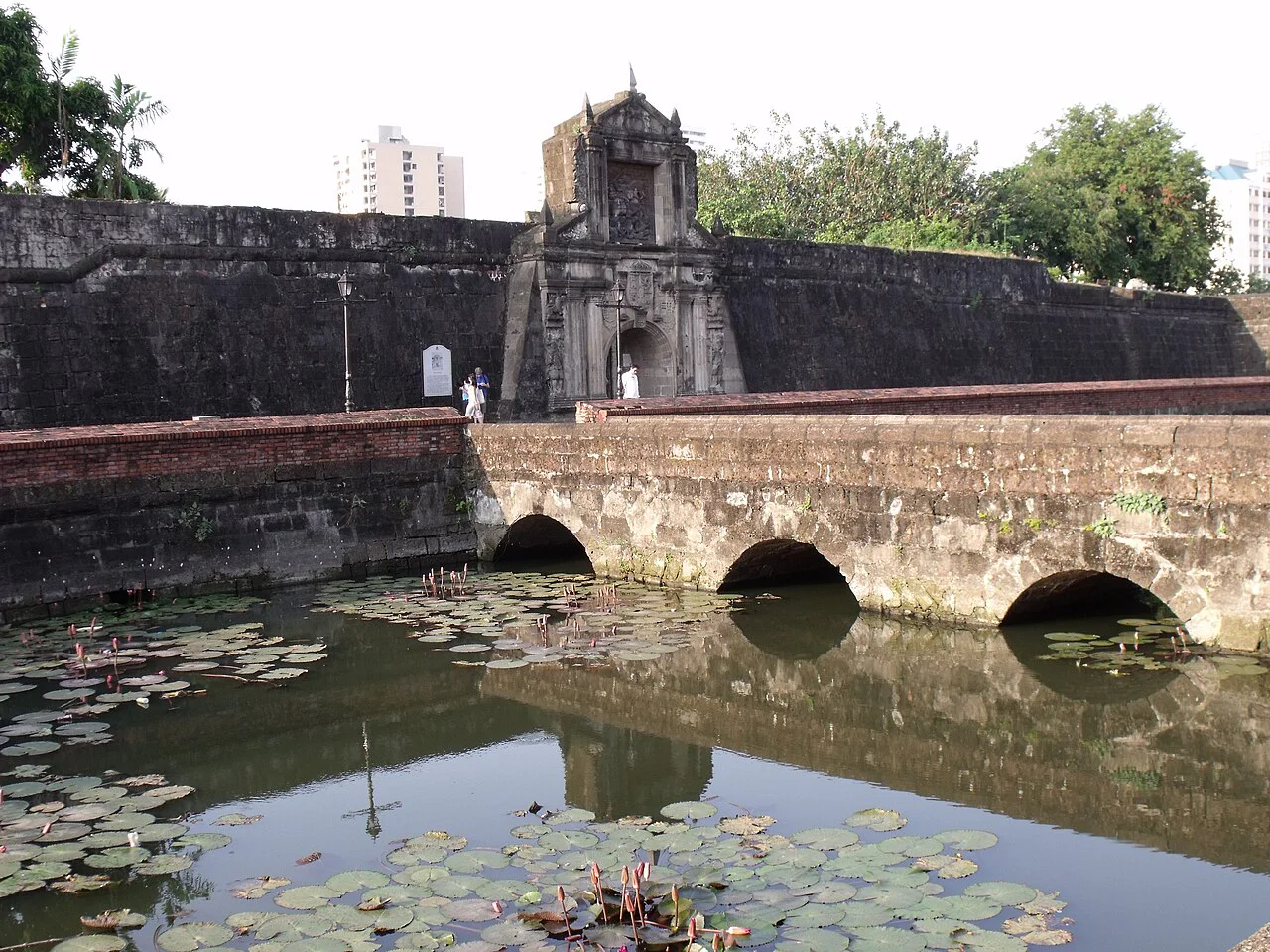
01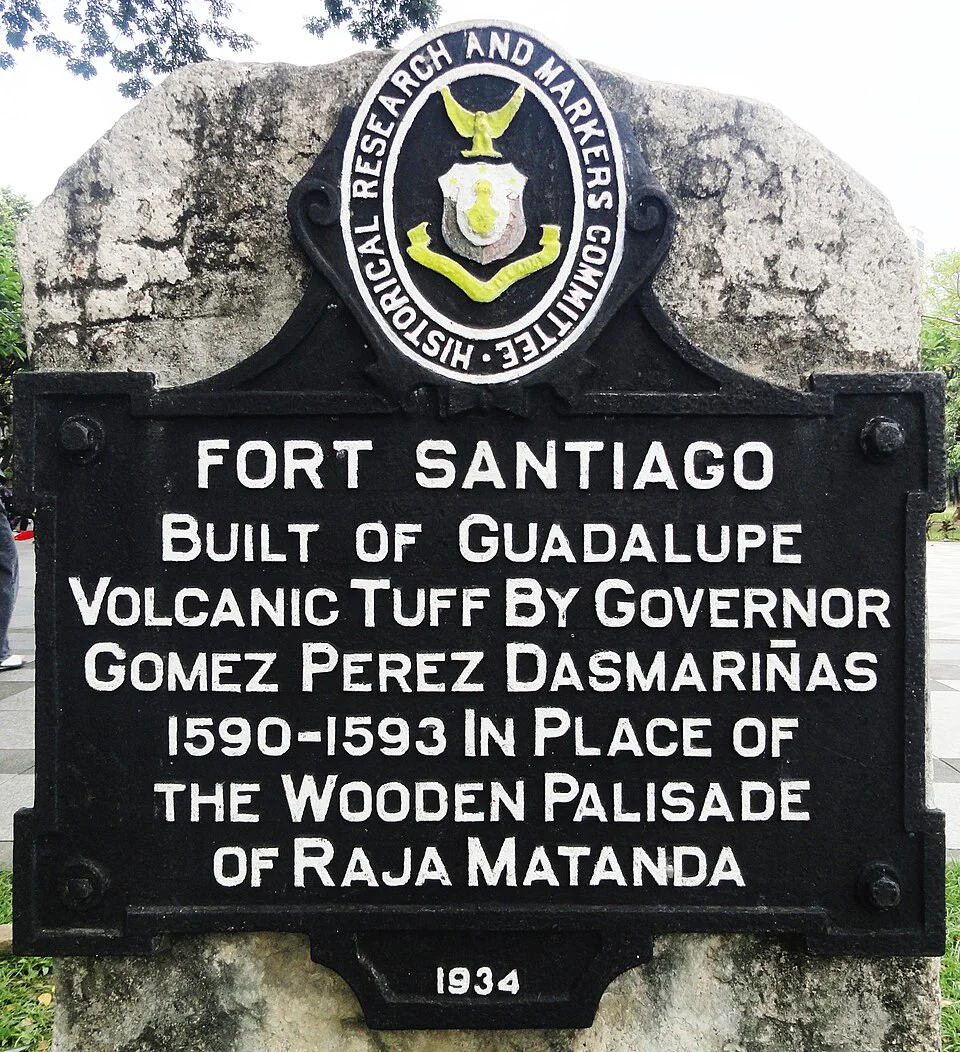 Plaza Moriones & Outer Moat Approach
Fort Santiago Historical Marker
Welcome to Fort Santiago, the old citadel at the mouth of the Pasig River in Manila. The black marker by the path was cast in 1934, and it states the essentials in a few carved lines. Governor-General Gomez Perez Dasmarinas began the stone fort in 1590. The work was finished three years later. Its walls were quarried from volcanic tuff at Guadalupe, across the river in what is now Makati. The marker also remembers what stood here before, the wooden palisade of Rajah Matanda. Why Spain needed a fortress at this river mouth, and what happened inside these walls over four centuries, is the story this tour follows. The older tale, of the rajah and the conquest of Manila, belongs to the ruins near the plaza.
Kej Andrés (Ryomaandres) · CC BY-SA 3.0
02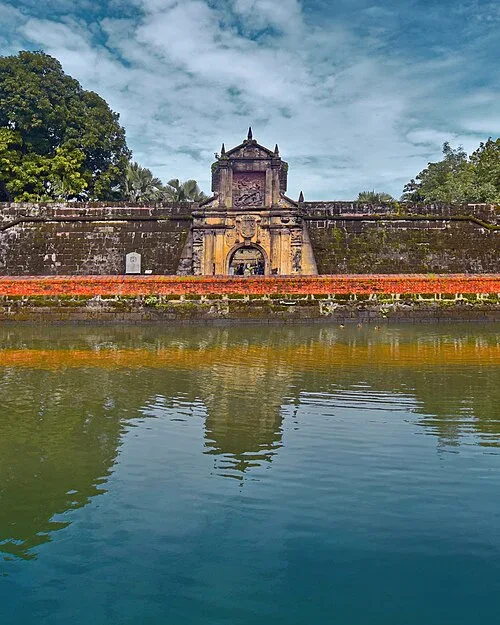 Plaza Moriones & Outer Moat Approach
Moat, Bridge and Front Facade
A moat once separated this fort from the city, fed by a channel from the Pasig River. The walls rise about twenty-two feet. They are eight feet thick, pierced only where the garrison needed a way through. The south front of the fort faces the city, with the gateway in its middle. On August 13, 1898, the American flag was raised over the fort, marking the start of American rule in the Philippines. The fort then served as headquarters for the United States Army, and the occupiers made changes of their own. The moats were drained, and the empty ground was turned into a golf course.
Allan Jay Quesada · CC BY-SA 4.0
03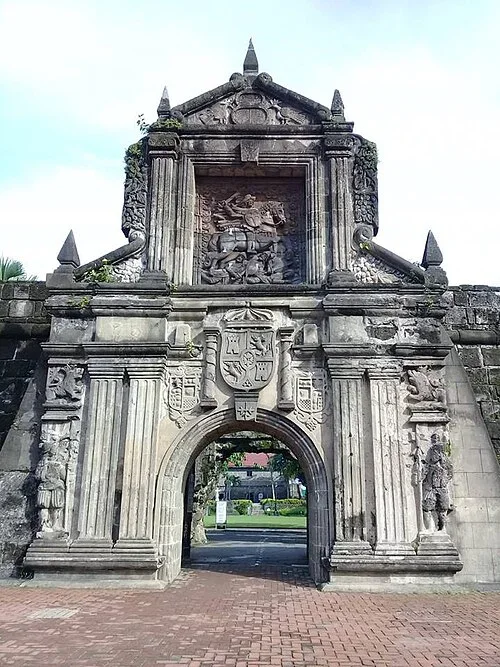 The Main Gate & Facade Relief
The Main Gate
The ornate front gate of the fort went up in 1714, together with new military barracks. The facade above the arch rises forty feet, facing the city. Earthquakes struck Luzon in 1880 and destroyed much of Manila. The front edifice of the fort was among the ruins, and its character changed with the damage. In the Second World War the gate was destroyed again. The Intramuros Administration rebuilt it in 1982, and the gate standing now is that reconstruction. An entrance that has been raised, broken and raised again is a fair summary of the fort behind it.
Listen in the appPhoto: Andronette · CC BY-SA 4.0
04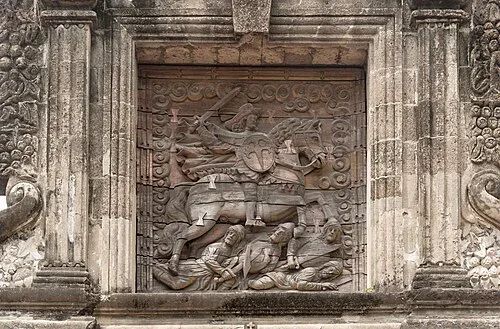 The Main Gate & Facade Relief
Relief of Saint James
High on the gate, a carved warrior on horseback rides down his enemies. That is Saint James, Santiago in Spanish, the patron saint of Spain, and the fort takes its name from him. Legend says he appeared in battle centuries after his death, fighting at Clavijo, which earned him the title of Saint James the Muslim-slayer. The story is legend rather than history, but Spain embraced it and set it above the entrance of a premier defense fortress of Spanish rule in the islands. The facade also carries the lesser arms of the Spanish monarch. An emblem like that over the doorway of a garrison fort says plainly what its builders claimed this place was for.
Listen in the appxiquinhosilva · CC BY 2.0
05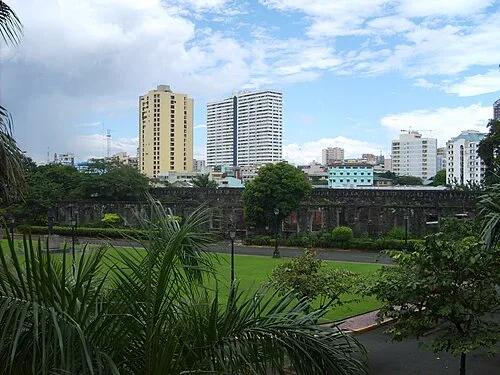 Plaza de Armas & Rajah Sulayman Theatre Ruins
Plaza de Armas
The open square at the center of the fort is the Plaza de Armas, the parade ground of the garrison. Within the walls were guard stations and barracks for the troops, quarters for the warden and his officers, storehouses, a chapel, the powder magazine, sentry towers and cisterns. A fort like this was a small town built for soldiers. In 1672, eighty-one soldiers from Mexico were posted here, one of several such detachments sent over the seventeenth century. Day after day, this square belonged to the drill and routine of men waiting out a siege or preparing for one.
Listen in the appPhoto: Simon Burchell · CC BY-SA 3.0
06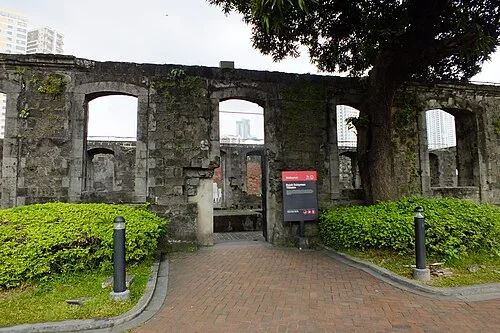 Plaza de Armas & Rajah Sulayman Theatre Ruins
Rajah Sulayman Theatre Ruins
Long before Spanish stone, this ground carried a fort of a different kind. Rajah Matanda, a Muslim Tagalog rajah who was a vassal of the Sultan of Brunei, kept a palisaded fort here, armed with bronze guns. In 1570 Martin de Goiti arrived from Cebu and fought several battles with the native defenders, and the old fort was destroyed. On June 24, 1571, Manila was established as a Spanish city and made the capital of the newly colonized islands, and the Spaniards began their own fort on this spot. The ruined stone barracks here later found a second life as an open-air stage, the Rajah Sulayman Theatre.
Listen in the appWide Awake! · CC BY 4.0
07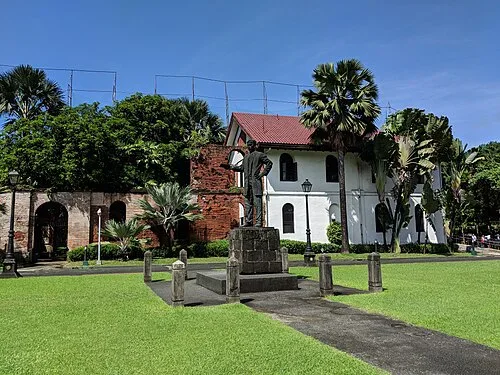 Rizal Shrine Museum & Prison Cell
Rizal Shrine
Jose Rizal is remembered as the national hero of the Philippines, and this fort shelters his memory. He was imprisoned here before his execution in 1896. The white building beside the green is the Rizal Shrine, a museum that displays memorabilia of his life and work in its collection. Part of the shrine is a replica of his ancestral house in Laguna province. Of all the stories this fort holds, his last days here are the ones the country holds closest.
Listen in the appPhoto: Lyuk98 · CC BY-SA 4.0
08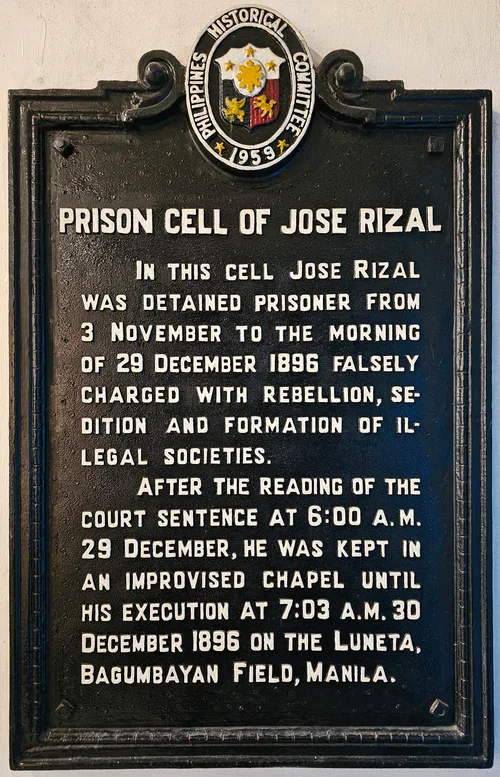 Rizal Shrine Museum & Prison Cell
Prison Cell of Jose Rizal Marker
The marker here records the chronology of Rizal's final weeks. He was held in this cell from November 3, 1896, falsely charged with rebellion, sedition and the formation of illegal societies. His court sentence was read at six in the morning of December 29. After that he was kept in an improvised chapel until the end. The execution came at 7:03 the next morning, December 30, on the Luneta at Bagumbayan field in Manila. Across the fort's grounds, bronze footsteps are set into the pavement, tracing his final walk from this cell to the place where he died.
Listen in the appAndre Ryan Maceda · CC BY-SA 4.0
09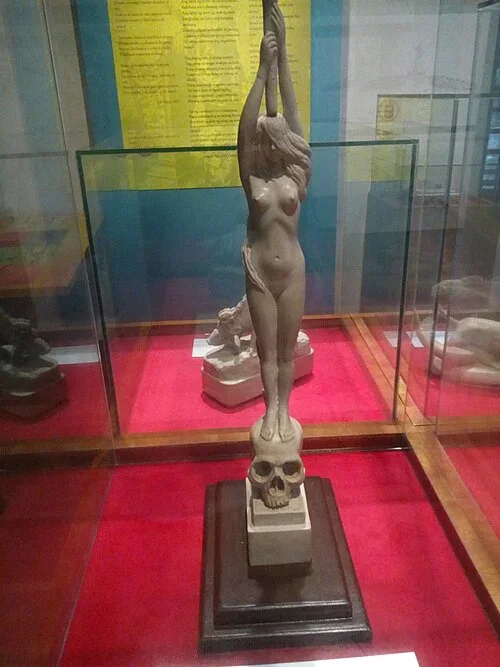 Rizal Shrine Museum & Prison Cell
Triumph of Science Sculpture
Rizal was not only a writer. He also worked as a sculptor, and the shrine's display cases hold examples of that side of him. Among them stands a figure of a woman rising from a skull, one arm lifted overhead. The piece is known as the Triumph of Science over Death. It is shown among his sculptural works and memorabilia, in the same collection that keeps the story of his imprisonment. The range of talents on display here is what made him the emblem of the reform movement.
Listen in the appMoon Rivers · CC BY-SA 4.0
10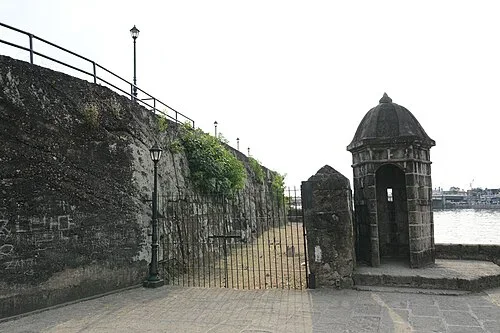 Baluarte de Santa Barbara & Subterranean Dungeons
Baluarte de Santa Barbara and the River Front
The strongpoint where the walls meet the river is the cavalier of Santa Barbara, named for the patron saint of artillerymen. It carries three faces of batteries. One looks seaward over the anchorage, one faces the entrance, and one commands the river. A tower of the same height as the walls joins it, with a descent to a semicircular water battery at the river's edge. In the 1730s Governor-General Fernando Valdes y Tamon added a large semicircular gun platform to the front, called the media naranja, the half orange, and a smaller one on the river flank. From here the guns could cover the river mouth and the bay, which was the reason the fort stood here at all.
Listen in the appJorge Láscar from Melbourne, Australia · CC BY 2.0
- 11
The River Dungeons
The vaulted cells below the bastion, used as prisons under the Spanish and the Japanese, where American prisoners died in 1945.
- 12
Memorial Cross
The white cross over the graves of the dungeon victims, and the battle that left the fort in ruins in 1945.
- 13
In Memory of the Victims Marker
The 1995 marker that names the Filipino victims found in the dungeon and dedicates their memory.
- 14
Postigo de la Soledad and the River
The discreet postern gate to the river, the galleon trade it served, and the fort's rebirth as a Shrine of Freedom.
Fort Santiago
Frequently asked questions
How much does the guide cost?
Free app download. Listed guide price: $0.99. Guide price shown in the app. Audio guide only. Venue admission is separate.
Can I listen without internet?
Yes. Download the guide’s audio, images, and maps in the app before your visit. Your downloaded content is then available offline.
Can I listen in my language?
This audio guide is available in 15 languages, including English.
Do I need to follow a schedule?
No. This is a self-guided experience. Choose your stops, pause whenever you like, and return to a story at your own pace.
At your own pace
Explore Fort Santiago.
Download Stanza, then search for “Fort Santiago”.
Free app download · Guide price shown in the app
Keep exploring
Audio guides — Philippines
Quezon
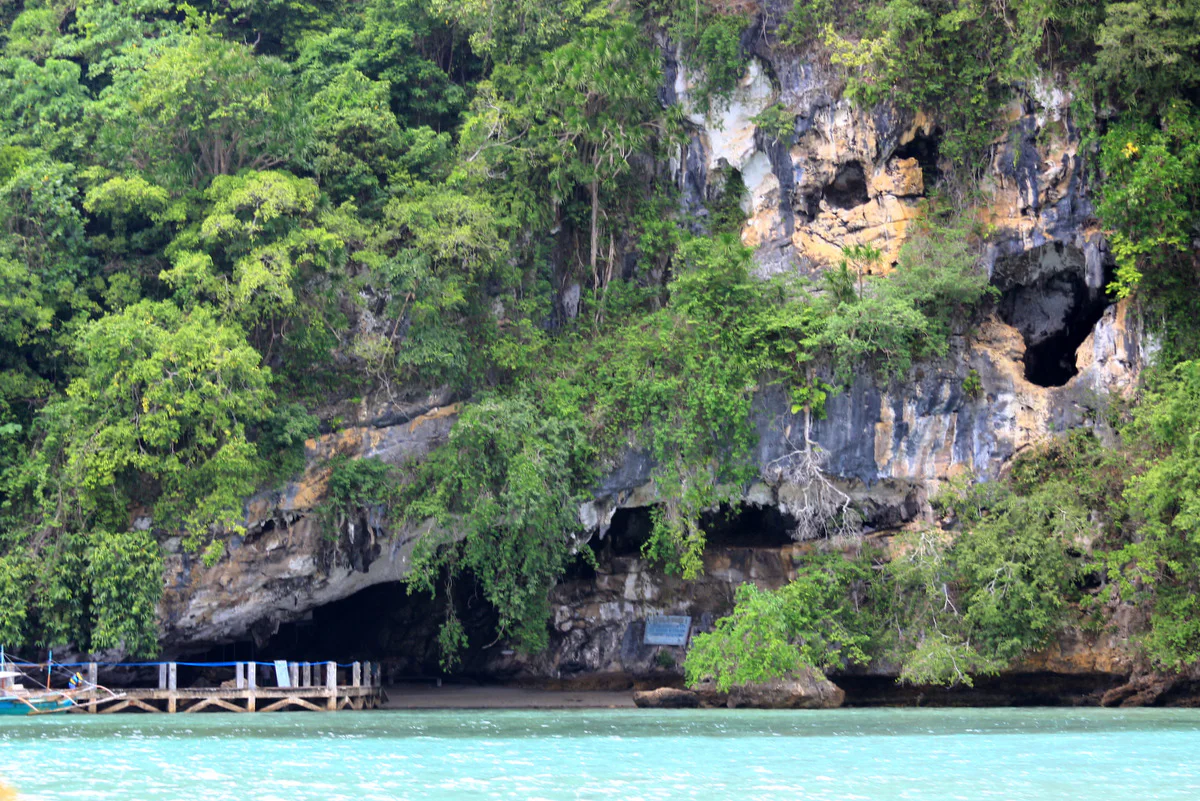
Tabon Caves
Content & sources
Photo: Jimaggro · CC BY-SA 4.0
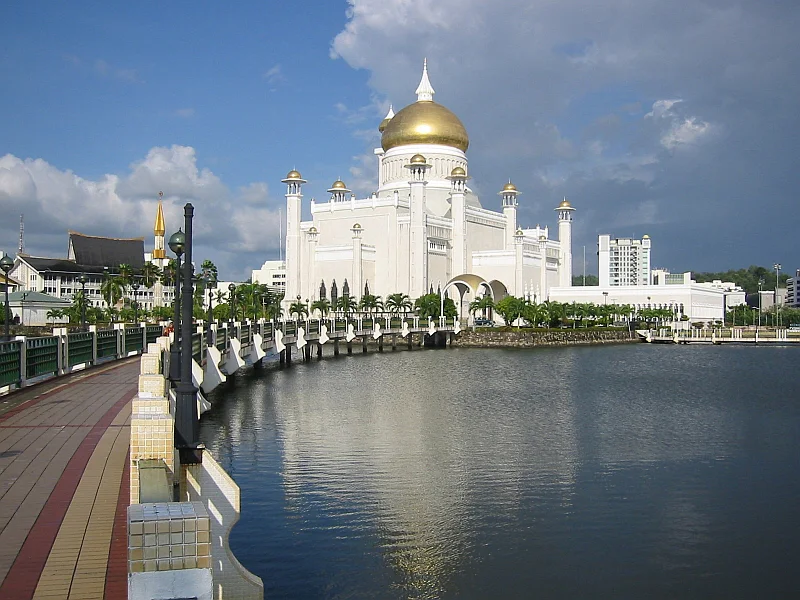
Bandar Seri Begawan
Omar Ali Saifuddien Mosque
Content & sources
Daniel Weiss · CC BY-SA 3.0