Stanza · Audio guide
Tabon Caves Audio Guide
A place to remember. A story to take with you.
The Tabon Caves is a cave system located in Lipuun Point, Quezon, Palawan. It is a site of archaeological importance due to the discovery of prehistoric human remains and jar burials.
Download Stanza, then search for “Tabon Caves”.
About the tour
One guide. Your kind of visit.
The Tabon Caves is a cave system located in Lipuun Point, Quezon, Palawan. It is a site of archaeological importance due to the discovery of prehistoric human remains and jar burials.
Ready when you are.
- 01Get the free Stanza app.
iOS & Android
- 02Find your guide.
“Tabon Caves”
- 03Download before you go.
Works offline
Audio guide / 11 narrated stops
Inside the guide
Get to know a few of the stories before you go. Open a stop to read more.
01 Lipuun Point Docking Pier & Coastal Karst Approach
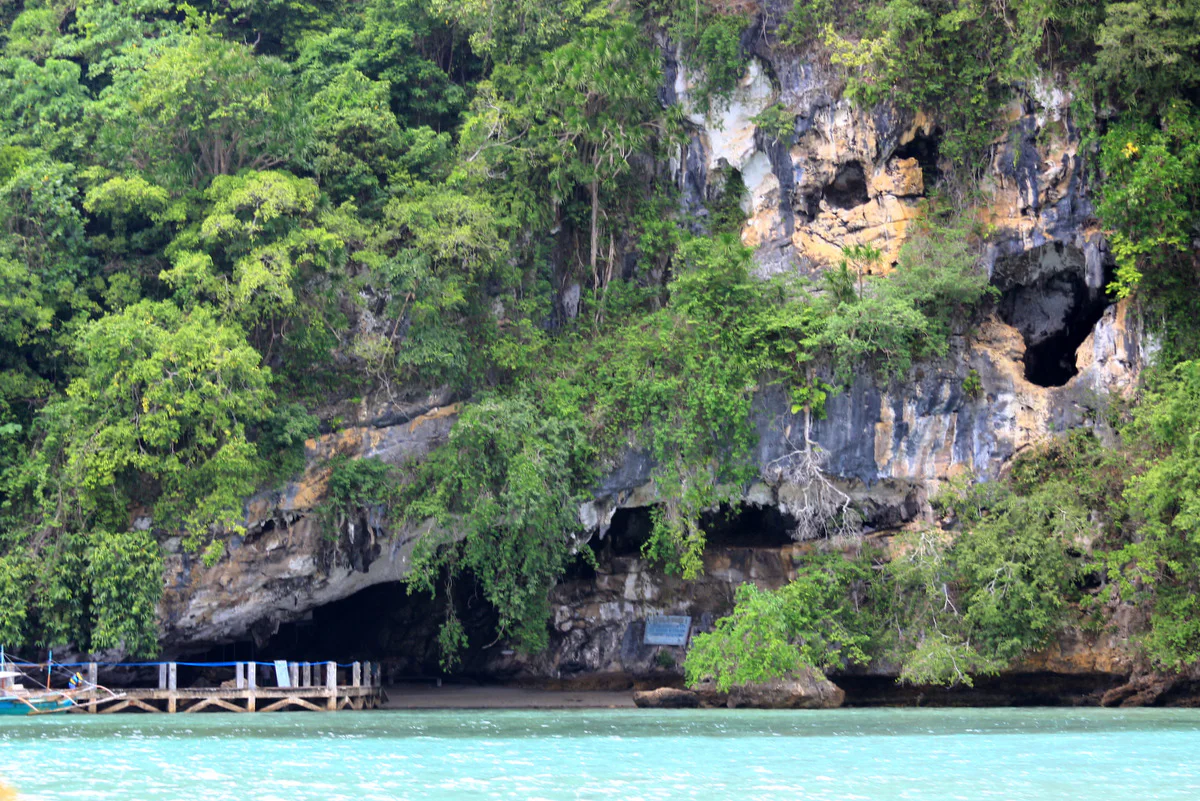
Lipuun Point Shoreline and Cave Entrances
Welcome to the Tabon Caves, on a forested headland called Lipuun Point in Quezon, Palawan. Most people arrive the way the first visitors did, by water, crossing to the limestone cliffs that rise straight out of the sea. The name Tabon comes from a bird, the Tabon scrubfowl, which lays its eggs in great mounds of sand and leaf litter. Early peoples here knew those nesting mounds well, and the caves took the bird's name. Filipinos call this place the cradle of civilization, and the title is earned. Human fossils, stone tools and well over a thousand burial jars have come out of these caves, reaching back tens of thousands of years. The tour follows that story, from the oldest bones to the jars of the dead, and into the chambers where it all was found.
Photo: Jimaggro · CC BY-SA 4.0
02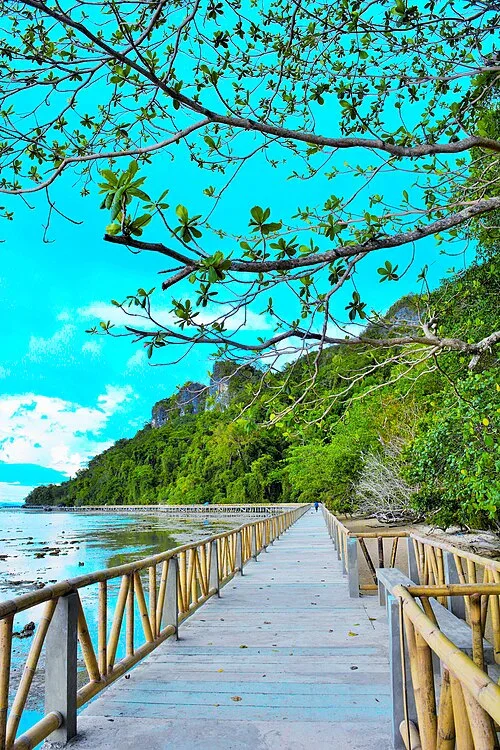 Lipuun Point Docking Pier & Coastal Karst Approach
Mangrove Boardwalk into the Reservation
A long boardwalk crosses the mangroves that join Lipuun Point to the Palawan mainland. The headland is really a small island of forest, about a hundred and thirty-eight hectares of it, set aside for what lies inside the rock. In April 1972 the government declared it a Site Museum Reservation, shielding the caves and their artifacts from deforestation. The numbers tell you how much is still hidden. There are two hundred fifteen known caves on the point. Only twenty-nine have been fully explored, and just seven are open to visitors. Everything dug up but not yet studied is stored on site. The National Museum guards the whole complex, and every visitor is watched to make sure they take nothing but pictures.
Felix A. Madriñan · CC BY-SA 4.0
03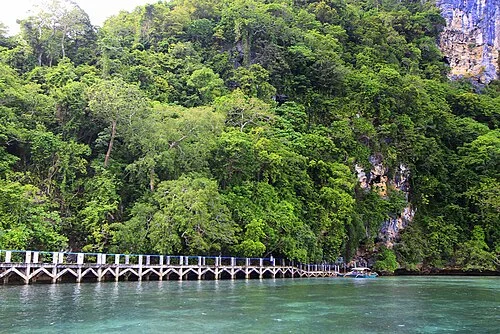 Lipuun Point Docking Pier & Coastal Karst Approach
Miocene Limestone Cliffs of the Headland
Long before any human stood here, this headland was building under the sea. The limestone of these cliffs formed on a warm ocean floor around twenty-five million years ago, in the age geologists call the Lower Middle Miocene. Then the rock was lifted above the water. Rain and groundwater worked into it, dissolving passages and hollowing out chamber after chamber. That slow chemical carving is why a single headland holds two hundred fifteen known caves. The dry shelters and deep chambers it left behind became what people needed, places to live, work, and lay their dead to rest. The geology came first, and everything human here happened on the stage it built.
Listen in the appPhoto: Jimaggro · CC BY-SA 4.0
04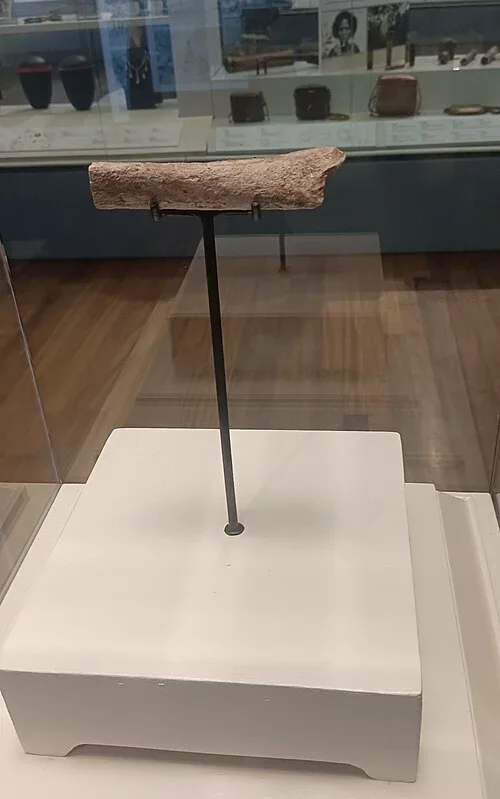 The Tabon Man Fossils & Pleistocene Settlement
The 47,000-Year-Old Tibia
A single fragment of leg bone, mounted on a slim metal stand, carries the oldest claim of this site. It is a tibia dated to about forty-seven thousand years ago, among the oldest human remains ever found in the Philippines. It is now kept in the National Museum of Anthropology in Manila. It came to light through the work of Dr. Robert B. Fox of the National Museum of the Philippines. Between 1962 and 1966, Fox and his team explored and excavated the cave system, and the finds put these caves on the world map. Alongside the human fossils they recovered stone tools, animal bones and earthenware. The discoveries showed people were living here for tens of thousands of years. That one bone changed the story of the Philippine past.
Listen in the appPhoto: KyloRen2017 · CC BY 4.0
05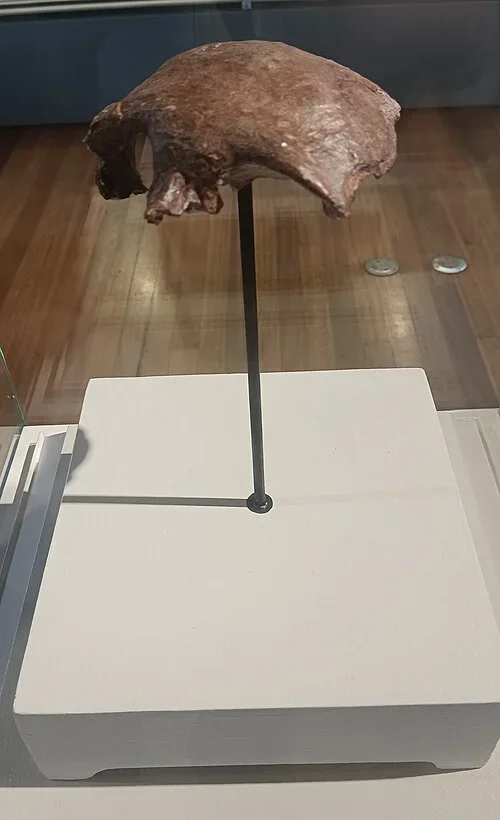 The Tabon Man Fossils & Pleistocene Settlement
The Tabon Man Skullcap
This dome of brown bone is the skullcap known as Tabon Man, mounted on its stand in the National Museum. The site's own accounts give it an age of twenty-two to twenty-four thousand years. The display label beside it reads sixteen and a half thousand years. Both figures circulate, an honest sign of science still at work on old samples. Rechecking and reanalysis have deepened the picture rather than settled it. Radioisotope dating of the cave deposits shows something remarkable, near-continuous habitation from thirty thousand to nine thousand years ago. The bone fragments from the cave have been suggested to span the late Pleistocene into the early Holocene. Generation after generation, people kept coming back to these chambers through the Ice Age and beyond.
Listen in the appPhoto: KyloRen2017 · CC BY 4.0
06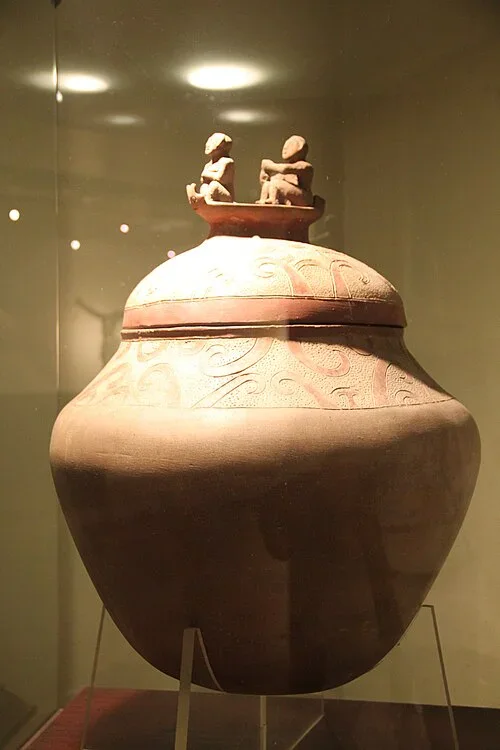 The Masterpiece Manunggul Jar & Soul's Journey
Burial Jar of Palawan, 890–710 BC
About three thousand years ago, a new custom reached these islands. People began burying their dead in large pottery jars, a practice that lasted roughly until fifteen hundred years ago. Their pottery and ornaments link them to the Sa Huỳnh culture of what is now central Vietnam, part of a seafaring world whose traces spread across Southeast Asia. In these caves, excavators found more than fifteen hundred burial jars. The upper cave called Igang, one of the longest in the complex, appears to have been the main burial place, and most of the jars came from there. This was secondary burial. The body was left to decompose first, and only then were the remains placed in the jar. The vessel here carries that date, between 890 and 710 before our era.
Listen in the appGary Todd from Xinzheng, China · CC0
07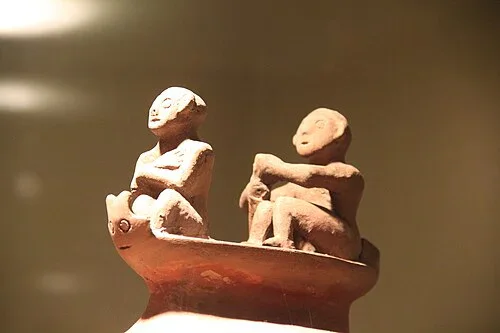 The Masterpiece Manunggul Jar & Soul's Journey
The Boat of the Dead on the Jar Lid
On the lid of one famous jar, two human figures ride in a small carved boat. One sits with arms crossed, the other holds a steering paddle behind him. This is the Manunggul Jar, recovered from Manunggul Cave among the jar finds, and astonishingly, in near-perfect condition. It is now kept in the National Museum of Anthropology in Manila. The image is read as a voyage of the soul. A steersman guides the dead across the water toward the afterlife, the way a living crew crosses the sea between islands. It is the belief of an early seafaring people, shaped in clay by a master potter more than two thousand years ago. The dead did not simply rest here. They set out, with someone at the helm.
Listen in the appGary Todd from Xinzheng, China · CC0
08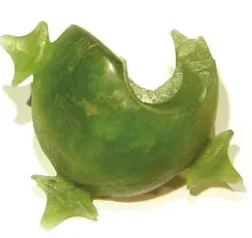 Prehistoric Crafts & Ancient Maritime Trade
Jade and Beads from Distant Shores
A piece of green jade, carved and polished, was found inside the caves. Ornaments like this, along with beads and jewelry, came out of the excavations here. The Sa Huỳnh adorned their dead with agate, carnelian and glass beads that originated far away, in India and Iran. Glass bracelets of the same kind turned up in the caves too. These islands were already stitched into maritime trade routes running across Asia. The story continued into later centuries. In Tabon Cave itself, researchers found artifacts showing trade with China during the Song and Yuan dynasties, and those pieces now rest in the Philippine National Museum in Manila.
Listen in the appOriginal work by the US Federal Government in collaboration with the US State Universities of California and Utah · Public domain
09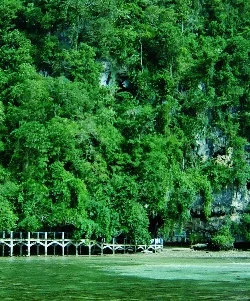 Tabon Cave Main Chamber & Geological Caverns
Tabon Cave: the Name-Giving Great Chamber
Every cave here belongs to a complex, and this one gave the complex its name. Tabon Cave is a large cavern with a big open chamber, its entrance opening toward the water. On its floor, excavators found human remains together with rock flakes, hammers and other stone tools. The pattern of finds points to a workshop, a place where flaked stone tools were produced on something like an industrial scale. Earliest cave use here combined shelter with this factory-like toolmaking. People sat in the mouth of the chamber, struck flakes from stone cores, and worked the edges into cutting tools. The cave that named the site was, for thousands of years, a place of work.
Listen in the appPhoto: Traveler1925 · Public domain
10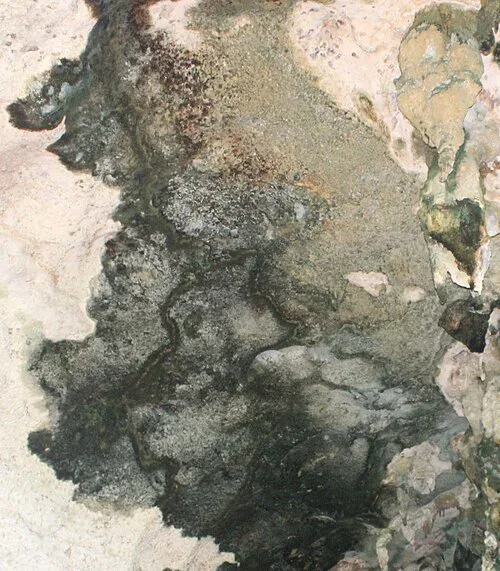 Tabon Cave Main Chamber & Geological Caverns
Marks on the Cave Wall
Halfway up the wall on one side of the cave, the limestone carries a dark blotch. Visitors have read it in different ways, but its origin has never been established, and it may simply be a mineral stain. The cave keeps some of its secrets. What excavation did establish is what people ate here during the Ice Age. The bone fragments they left behind show a diet of pig and deer. Both animals have since disappeared from this part of Palawan entirely. The hearths and the bones speak clearly, even when the walls do not.
Listen in the appPhilip Maise · CC BY-SA 4.0
- 11
Reading the Walls: How the Story Ends
Why the experts read these walls with care, and how much of the caves is still waiting underground.
Tabon Caves
Frequently asked questions
How much does the guide cost?
Free app download. Listed guide price: $0.99. Guide price shown in the app. Audio guide only. Venue admission is separate.
Can I listen without internet?
Yes. Download the guide’s audio, images, and maps in the app before your visit. Your downloaded content is then available offline.
Can I listen in my language?
This audio guide is available in 15 languages, including English.
Do I need to follow a schedule?
No. This is a self-guided experience. Choose your stops, pause whenever you like, and return to a story at your own pace.
At your own pace
Explore Tabon Caves.
Download Stanza, then search for “Tabon Caves”.
Free app download · Guide price shown in the app
Keep exploring
Audio guides — Philippines
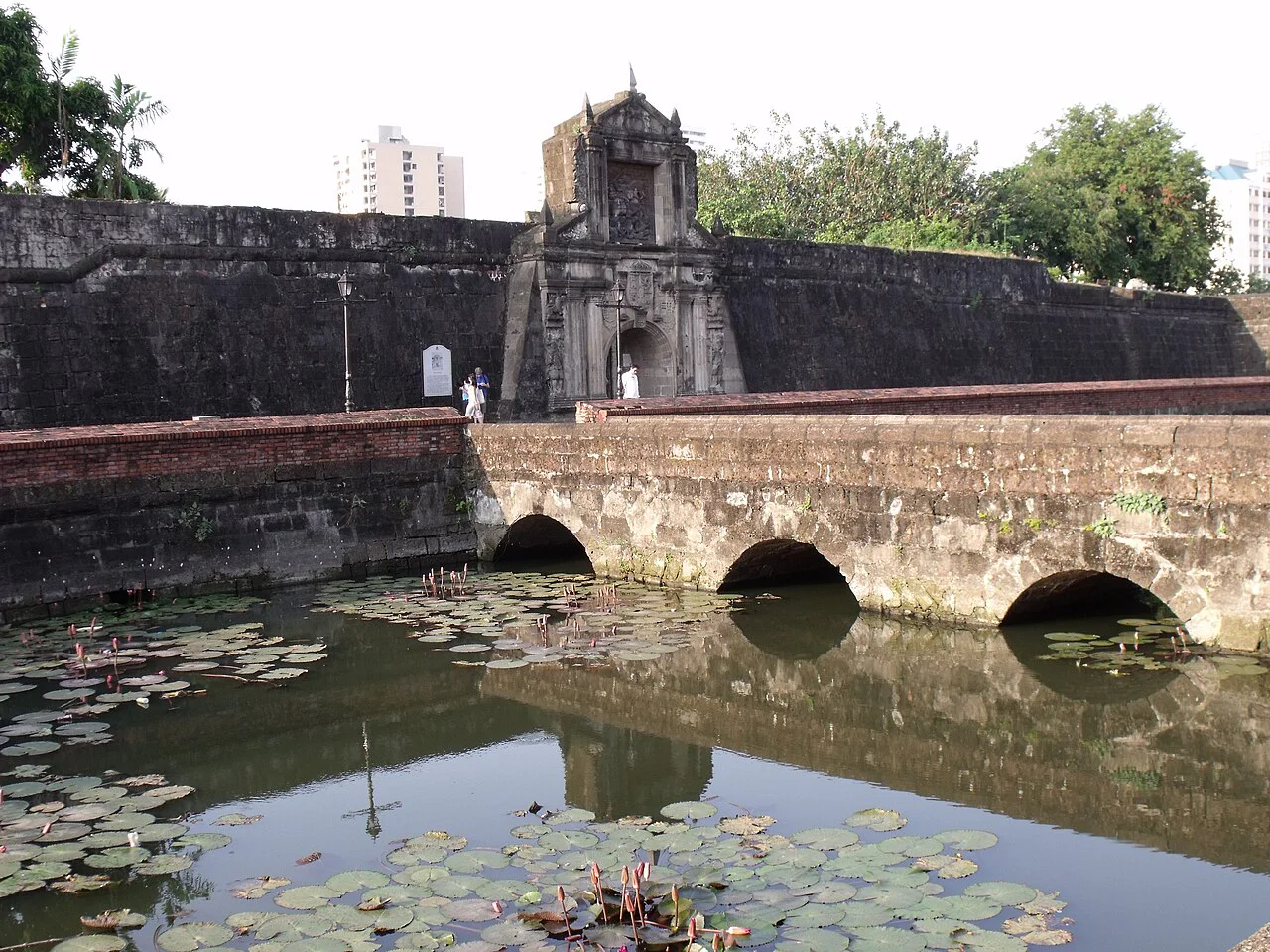
Manila
Fort Santiago
Content & sources
André Héroux · CC BY 3.0
Bandar Seri Begawan
Omar Ali Saifuddien Mosque
Content & sources
Daniel Weiss · CC BY-SA 3.0