Stanza · Audio guide
Zamek Królewski na WaweluAudio guide
A place to remember. A story to take with you.
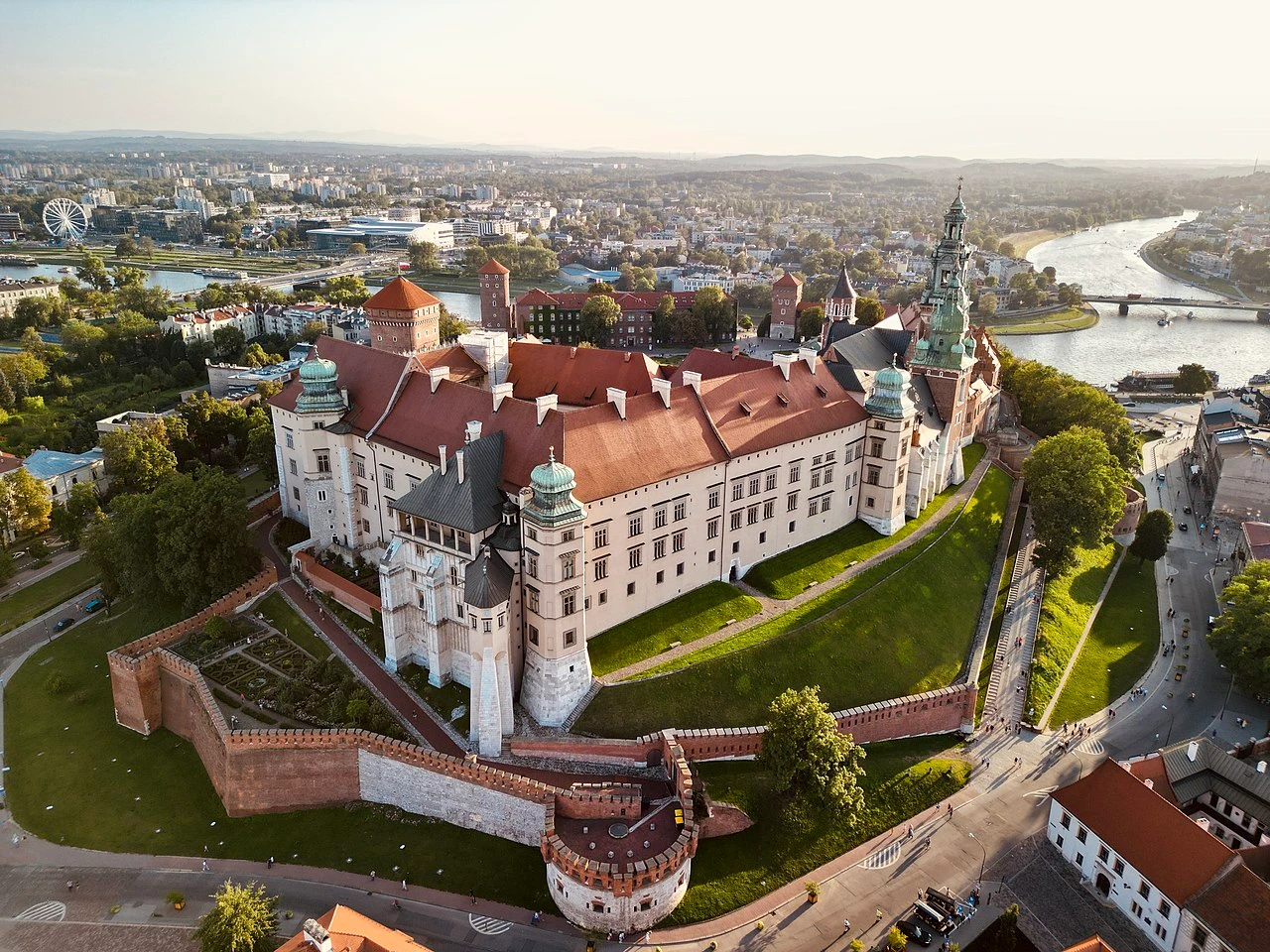
Wawel Castle is a historic castle complex in Krakow, Poland, that served as the former royal residence and a symbol of Polish statehood. It houses a variety of museums, including royal private apartments…
Download Stanza, then search for “Zamek Królewski na Wawelu”.
About the tour
One guide. Your kind of visit.
Wawel Castle is a historic castle complex in Krakow, Poland, that served as the former royal residence and a symbol of Polish statehood. It houses a variety of museums, including royal private apartments, state rooms, and art collections.
Ready when you are.
- 01Get the free Stanza app.
iOS & Android
- 02Find your guide.
“Zamek Królewski na Wawelu”
- 03Download before you go.
Works offline
Audio guide / 49 narrated stops
Inside the guide
Get to know a few of the stories before you go. Open a stop to read more.
01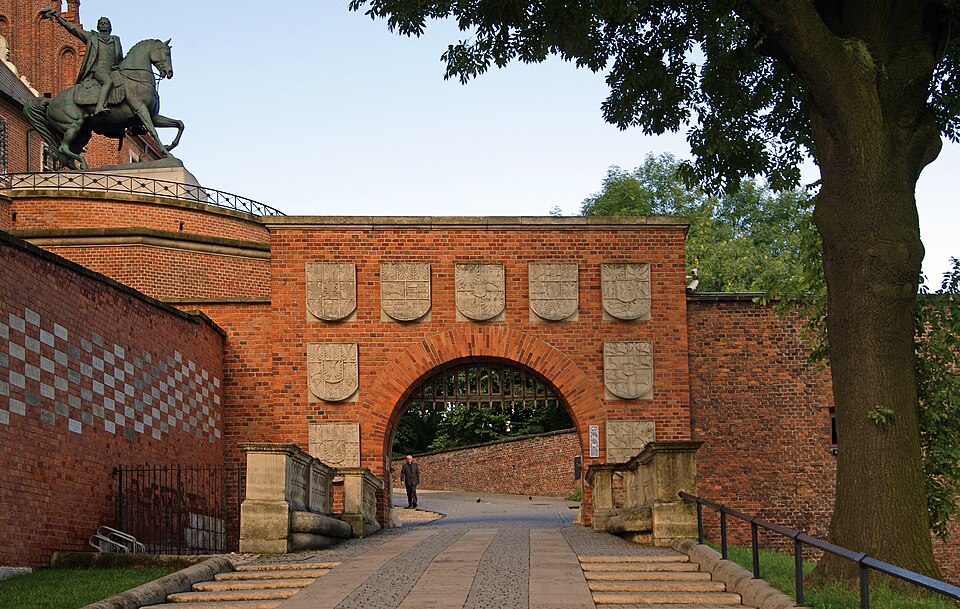 Coat of Arms GateCoat of Arms Gate in Wawel
Welcome to one of the most significant sites in Poland—Wawel Hill. For centuries, this limestone outcrop has served as the political and spiritual center of the nation. As you enter through the Coat of Arms Gate, you are stepping onto ground that has witnessed the rise and fall of dynasties. This particular entrance was constructed in 1921, shortly after Poland regained its independence following World War I. Its design serves as a monumental thank-you note to the Polish people. If you look closely at the walls, you will see numerous commemorative plaques. These bear the names of individuals and organizations who contributed funds to restore Wawel Castle to its former glory. For decades prior, the site had been used as a military barracks by the Austrian army, leaving much of the royal residence in disrepair. The gate is further adorned with various coats of arms representing the historical territories and provinces of the Polish-Lithuanian Commonwealth. These heraldic symbols were intended to visually reunify the country at a time when it was stitching itself back together. This gate isn't just an entrance; it is a symbol of national rebirth and the enduring connection between the Polish people and their royal heritage.
Zygmunt Put Zetpe0202 · CC BY-SA 4.0
02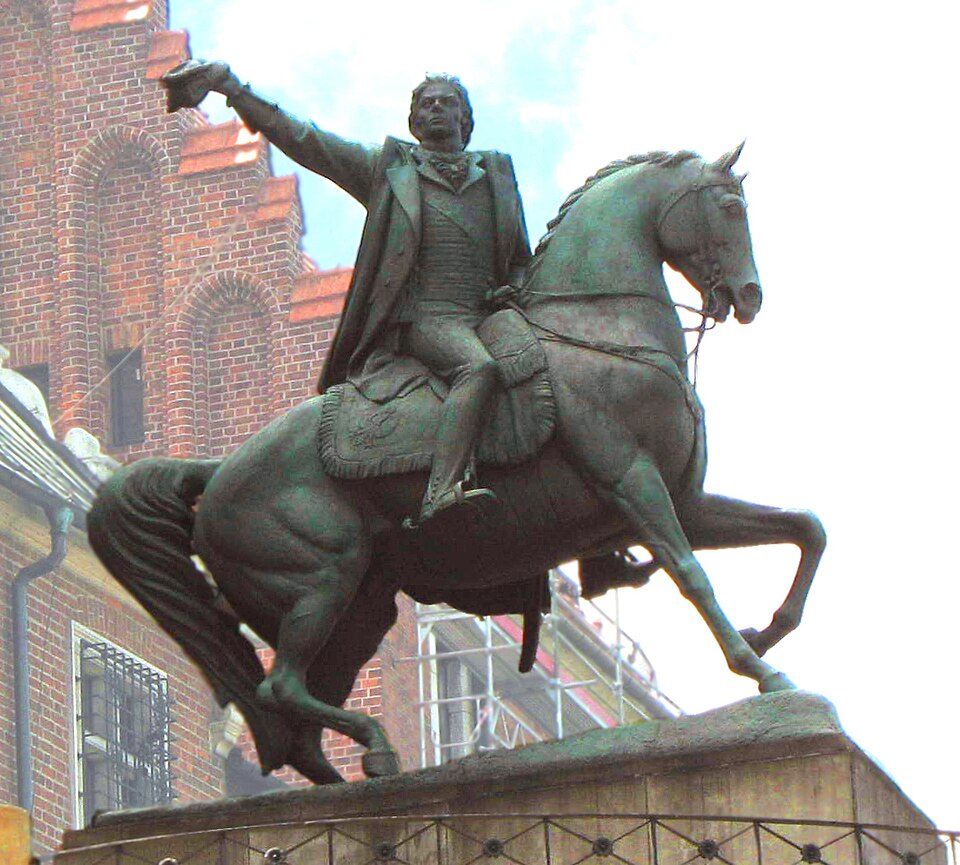 Tadeusz Kościuszko MonumentTadeusz Kościuszko Monument
Standing proudly on the ramparts is the equestrian figure of Tadeusz Kościuszko, a man whose legacy bridges the history of Poland and the United States. Kościuszko was a brilliant military engineer and a staunch advocate for human rights. In America, he is remembered for his critical role in the Revolutionary War, where his fortifications at West Point and Saratoga helped secure American independence. In Poland, he led the 1794 uprising against foreign partitioning powers, fighting to preserve the sovereignty of his homeland. This specific monument has its own story of resilience. The original statue was erected in the early 20th century but was tragically destroyed by German forces during the occupation of World War II in 1940. The figure you see today is a faithful replica, cast in 1960 and gifted to the city of Krakow. Kościuszko is depicted in a dynamic pose, capturing the spirit of a leader who believed that the first step to freedom is to dare to be free. His presence here at the gates of Wawel serves as a reminder of the universal struggle for liberty and the deep historical ties between the democratic movements of Europe and the Americas.
Poeticbent (talkВ В· contribs) · Public domain
03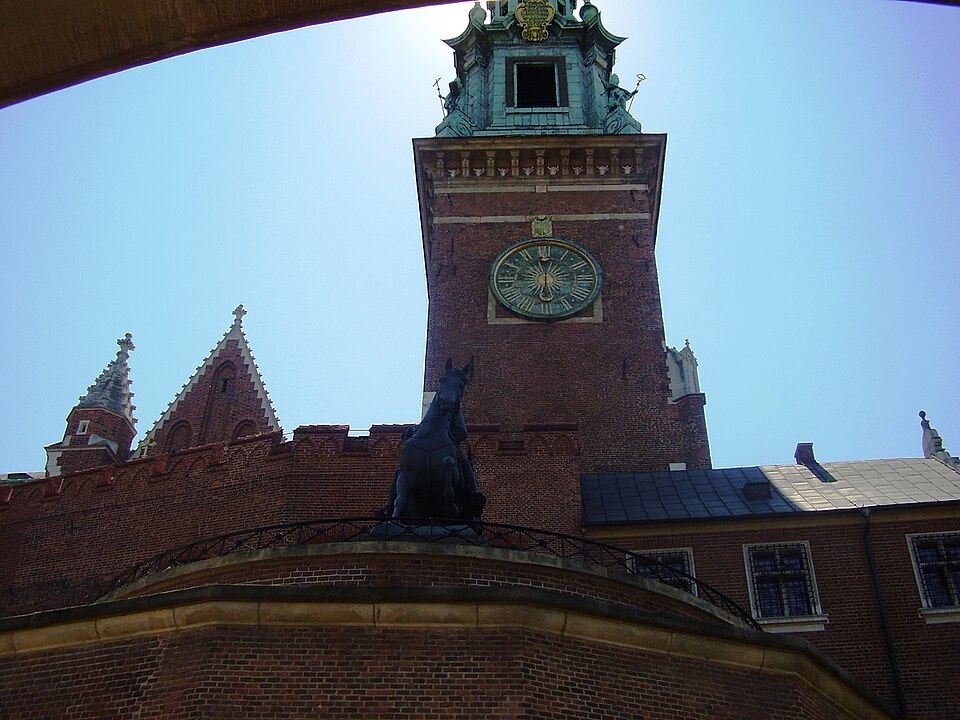 Tadeusz Kościuszko MonumentThe Clock Tower
Looking up at the skyline of Wawel Hill, you see a complex silhouette that tells the story of a millennium. This vantage point reveals how the site evolved from a medieval stronghold into a sophisticated royal residence. Notice the stark contrast between the heavy, functional brickwork of the defensive fortifications and the increasingly decorative elements of the towers above. The architecture here is not defined by a single era; instead, it is a layered blend of Romanesque, Gothic, Renaissance, and Baroque styles. This stylistic mix occurred because nearly every Polish monarch sought to leave their mark on the hill, either by building anew or modernizing existing structures. The lower sections of the walls speak to the hill's early role as a fortress, designed to withstand sieges and protect the occupants within. Higher up, the clock faces and ornate steeples reflect the Cathedral's role as the spiritual heart of the kingdom. These layers represent the 1,000-year history of Wawel as a seat of power. As the primary residence of Polish kings until the early 17th century, the hill had to be both an impenetrable shield and a showcase of European artistic trends, creating the unique architectural puzzle you see today.
Listen in the appPhoto: Rj1979 · Public domain
04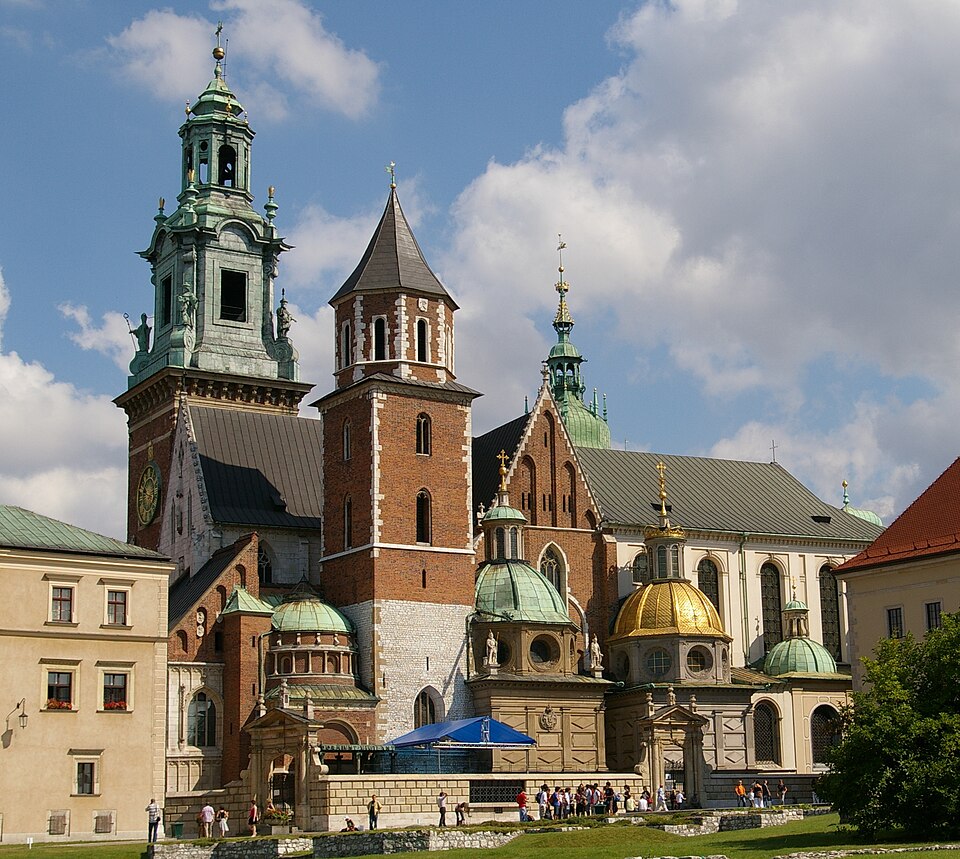 Wawel CathedralWawel Cathedral
Wawel Cathedral is much more than a church; it is the Sanctuary of the Nation. For centuries, this building served as the stage for the most important events in Polish history, including thirty-six royal coronations. It is also the necropolis where almost every Polish monarch is buried, making it a physical record of the country's dynastic history. When you observe the exterior, notice the fascinating visual tension between the different architectural components. The main body of the cathedral is constructed in a somber, dark Gothic style, characterized by its pointed arches and soaring height. However, as the centuries progressed, various kings and noble families added private burial chapels to the exterior. These additions, such as the bright Renaissance and ornate Baroque structures, appear like jewels attached to the side of the older Gothic stone. This additive process has created a cathedral that reflects the changing tastes and religious fervor of different eras. Inside and out, the building represents the continuity of the Polish state, surviving through periods of immense wealth and times of foreign partition. It remains a place where the history of Poland is literally written in stone and marble.
Listen in the appJakub HaЕ‚un · CC BY-SA 3.0
05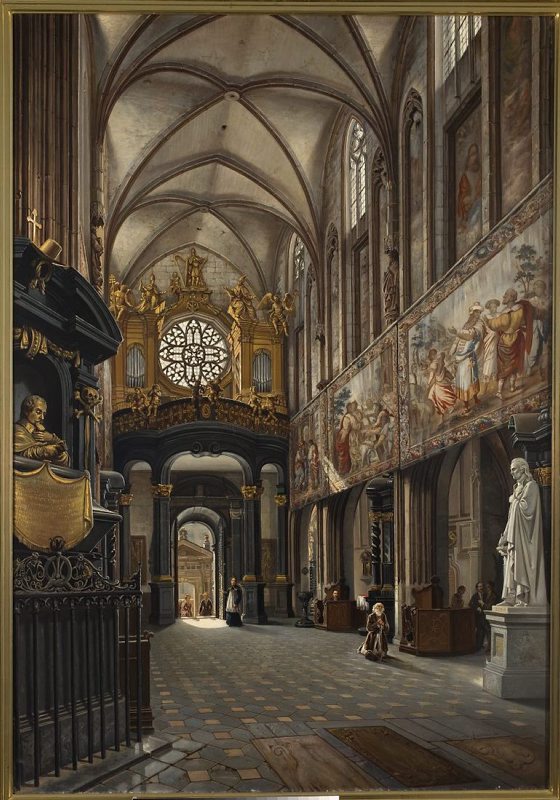 Wawel CathedralCathedral Nave in the 19th Century
This nineteenth-century artistic rendering provides a window into the enduring atmosphere of the Cathedral’s nave. For generations, this space has remained a consistent sanctuary of the nation, a place where the weight of history is felt in every corner. Notice the high Gothic vaulting overhead, where the arches meet in a complex network of ribs that draw the eye toward the heavens. This verticality was designed to inspire awe and reflection in those who gathered here for state occasions. One of the most striking details depicted in the painting is the presence of large tapestries hanging high above the nave. Traditionally, these textiles were used to decorate the cathedral during royal weddings, coronations, and funerals, softening the cold stone walls and adding a sense of grandeur to the space. The painting suggests a sense of continuity; despite the political upheavals Poland faced in the 1800s, the interior of the cathedral remained a stable symbol of national identity. As you stand in the nave today, you can imagine the countless processions that have moved through this aisle, accompanied by the same soaring architecture that has watched over the kings and queens of the past.
Listen in the appSaturnin ЕљwierzyЕ„ski · Public domain
06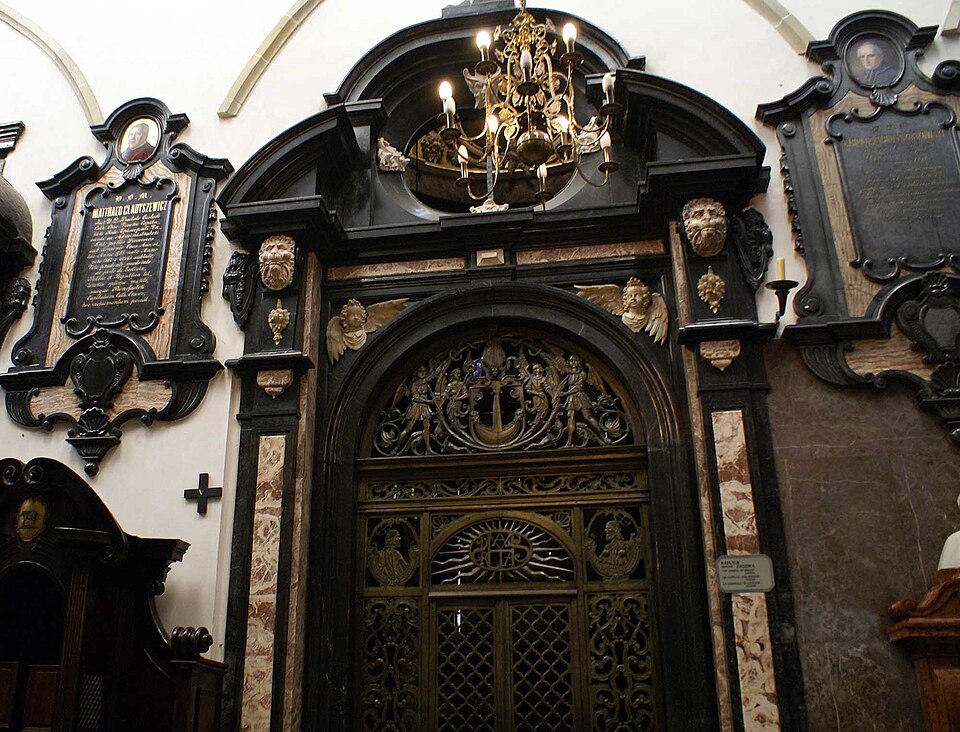 Wawel CathedralConfession of Saint Stanislaus
At the very heart of the cathedral stands the Confession of Saint Stanislaus, one of the most sacred spots in all of Poland. Beneath the monumental Baroque canopy lies a magnificent silver sarcophagus containing the remains of Saint Stanislaus, an 11th-century bishop and martyr who became the primary patron saint of the nation. The craftsmanship of the sarcophagus is exceptional, featuring intricate reliefs that depict scenes from the saint's life and the miracles attributed to him. This location is historically referred to as the Altar of the Fatherland. Its significance extends beyond religious devotion into the realm of national military history. For centuries, it was the tradition for Polish kings to return here after successful military campaigns. They would process into the cathedral and place captured enemy banners at the foot of Saint Stanislaus’s tomb as a gesture of thanksgiving and a sign of the nation's divine protection. The canopy itself, supported by gilded columns, reflects the high Baroque style, intended to create a theatrical and awe-inspiring focal point within the Gothic interior. Even today, the silver tomb serves as a powerful symbol of Polish resilience and spiritual identity, drawing pilgrims and visitors who come to pay respects to the guardian of the kingdom.
Listen in the appPhoto: Barbara Maliszewska · CC BY-SA 3.0 pl
07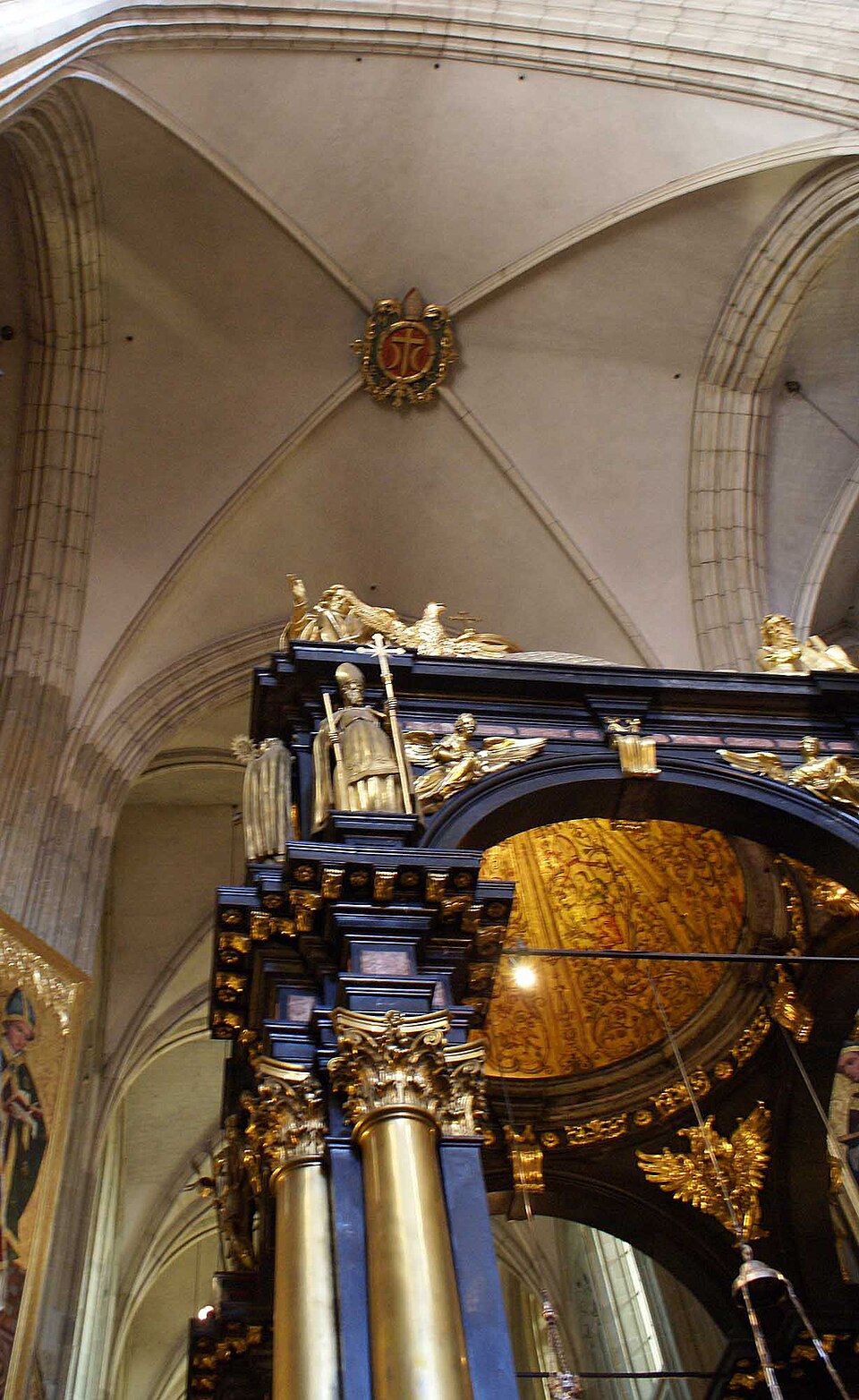 Wawel CathedralGothic Vaults and Royal Seals
If you direct your gaze toward the ceiling, you will see a stunning example of medieval engineering: the Gothic rib vaults. These stone structures were completed in the 14th century during the reign of King Casimir the Great, a monarch famous for transforming Poland's architecture from wood to stone. The vaults are composed of intersecting ribs that distribute the massive weight of the roof down into the walls and pillars, allowing for the cathedral's impressive height and large windows. Where the ribs meet at the highest point of each section, you can see decorative bosses or seals. In a medieval cathedral, these intersections weren't just functional; they were often carved with heraldic symbols, religious icons, or royal emblems to remind the faithful of the church's patrons. The precision required to carve and set these stones hundreds of years ago is a testament to the skill of the local stonemasons. These arches create a sense of rhythmic movement as they march down the length of the nave, leading the eye toward the high altar. Standing beneath them, you can appreciate the scale of ambition of the 14th-century court, which sought to build a cathedral that rivaled the great churches of Western Europe in both size and sophistication.
Listen in the appPhoto: Barbara Maliszewska · CC BY-SA 3.0 pl
08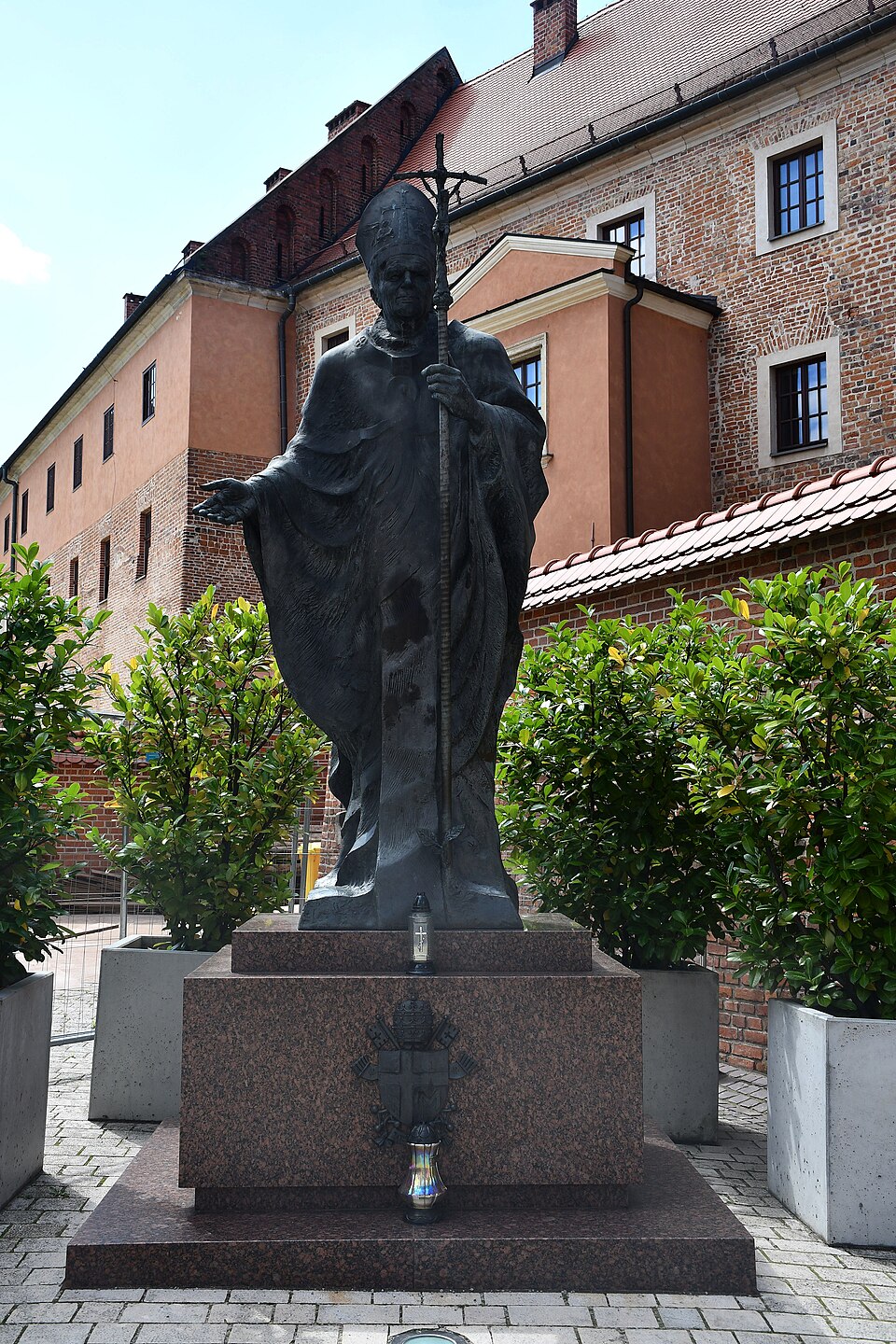 Wawel CathedralPope John Paul II Monument
The history of Wawel Cathedral continues into the modern era, most notably through its connection to Karol Wojtyła, who became Pope John Paul II. This monument honors the man who served as the Archbishop of Krakow from 1964 until his historic election as Pope in 1978. For decades, the future Pope was a familiar figure within these walls. He celebrated his first Mass as a priest in the crypts of this cathedral and later, as Archbishop, presided over countless major religious and national ceremonies here. For many Poles, John Paul II represents a pivotal figure in the 20th-century struggle for freedom and spiritual renewal. His deep personal connection to Wawel helped maintain the cathedral’s role as a living center of Polish culture during the difficult years of Communist rule. The monument captures his presence on the hill, serving as a bridge between the ancient traditions of the Polish monarchy and the contemporary life of the church and the nation. As you see his likeness, consider that he walked these same stone floors as a student, a priest, and a bishop, viewing Wawel not just as a museum of the past, but as a source of strength for the future.
Listen in the appPhoto: BugWarp · CC BY-SA 4.0
09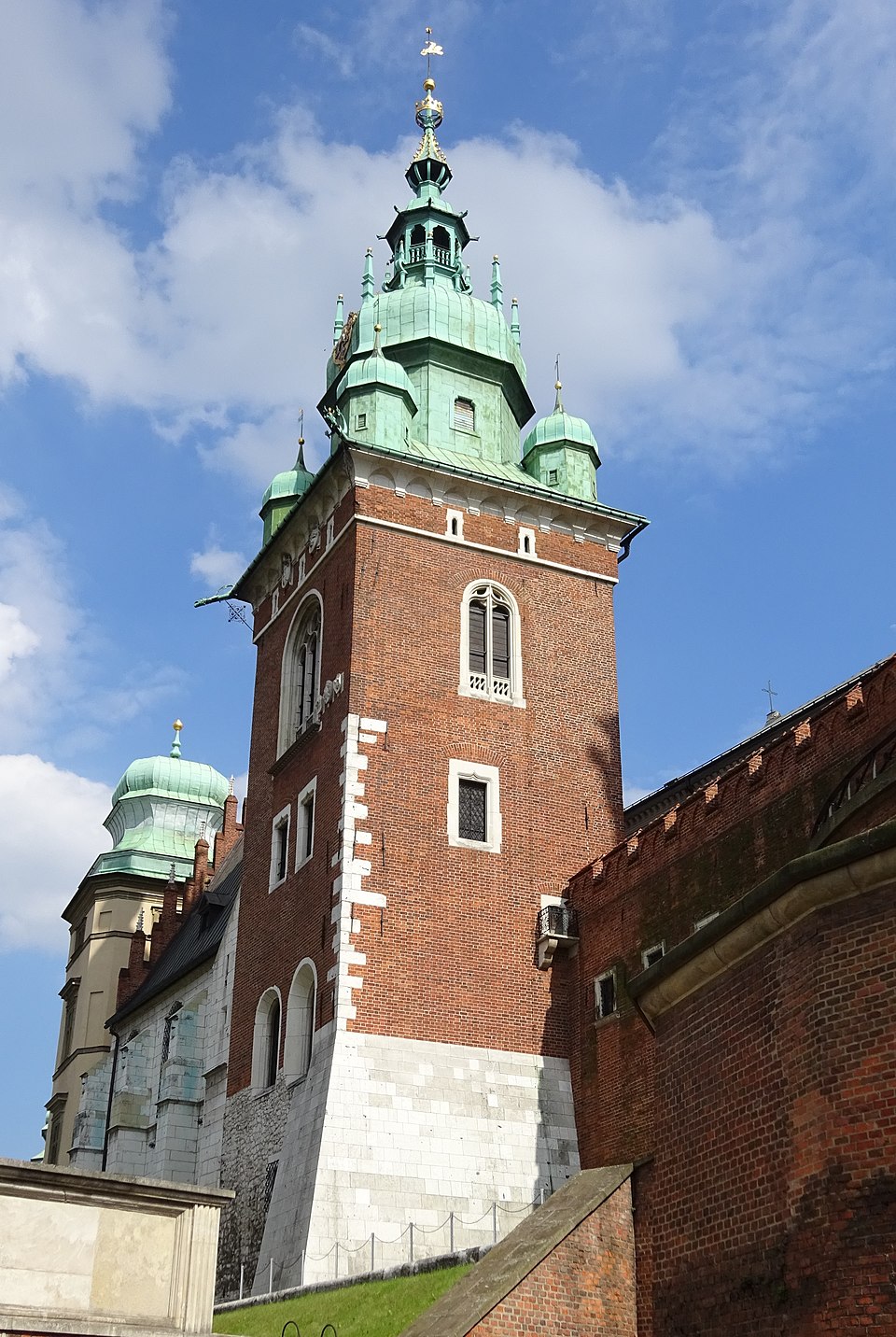 Sigismund's Tower and BellSigismund's Tower
Rising high above the cathedral is Sigismund's Tower, a structure that holds a special place in the heart of every Pole. This tower was originally built as a defensive fortification, part of the hill’s northern wall, before being converted to house the massive bell that bears its name. To reach the top, visitors must ascend a series of historic wooden stairs and ladders. Climbing these steps is a multisensory experience; you can feel the age of the timber beneath your feet and smell the scent of old wood and stone. These staircases have been maintained for centuries to allow the bell-ringers access to the heights. As you climb, you move through the literal framework of history, passing the massive oak beams that support the weight of the bells. The narrow, winding path serves as a transition from the ornate beauty of the cathedral below to the industrial strength and historical grit of the bell chamber above. This ascent prepares you for the sight of the Great Sigismund Bell itself, but it also offers a rare look at the functional, utilitarian side of Wawel's architecture, which has stood the test of time and the vibrations of the heavy bells ringing overhead for five hundred years.
Listen in the appPhoto: Mach240390 · CC BY 4.0
10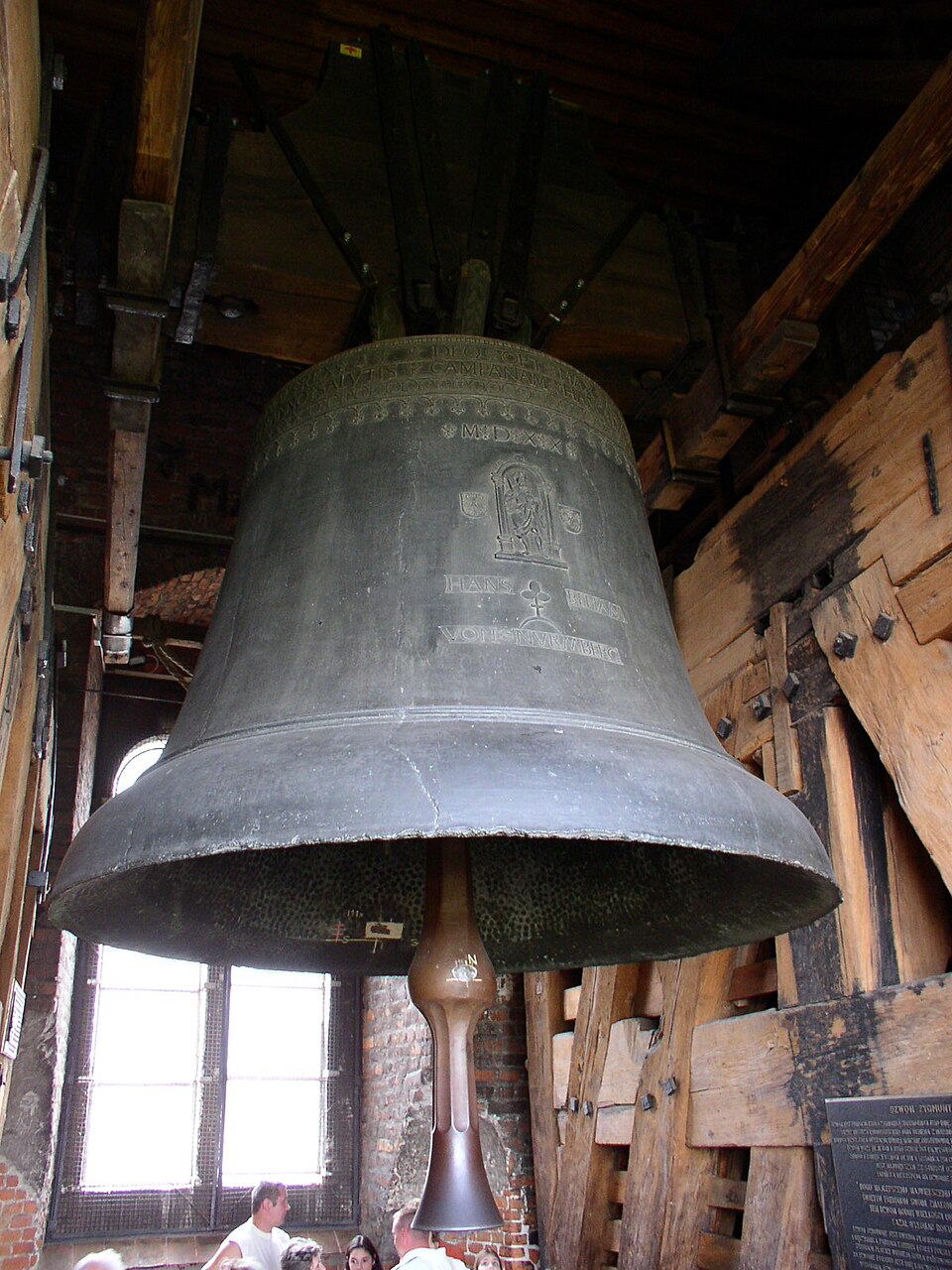 Sigismund's Tower and BellSigismund Bell
You are standing before the Sigismund Bell, the most famous and beloved bell in Poland. Cast in 1520 by the master founder Hans Beham, it was commissioned by King Sigismund the Old to honor both his patron saint and the glory of the Polish kingdom. The statistics of the bell are staggering: it weighs nearly 13 metric tons and measures over two meters in height. Because of its immense size and weight, it does not use a modern electronic motor. Instead, it requires the physical strength of twelve professional bell-ringers, who must pull on heavy ropes in perfect synchronization to move the massive bronze body. This is a labor-intensive tradition that has been preserved for half a millennium. The bell does not ring daily; it is reserved for only the most significant national and religious holidays, as well as moments of great historical importance for Poland. Its deep, resonant sound is legendary, capable of being heard up to 30 kilometers away on a clear day. For the people of Krakow, the tolling of the Sigismund Bell is the voice of the nation, signaling times of both great joy and profound mourning. Standing this close to it, you can appreciate the sheer scale of the engineering feat achieved by the Renaissance craftsmen.
Listen in the appNo machine-readable author provided. Sensor assumed (based on copyright claims). · CC BY 2.5
Zamek Królewski na Wawelu
Frequently asked questions
How much does the guide cost?
Free app download. Listed guide price: $3.99. Guide price shown in the app. Audio guide only. Venue admission is separate.
Can I listen without internet?
Yes. Download the guide’s audio, images, and maps in the app before your visit. Your downloaded content is then available offline.
Can I listen in my language?
Stanza supports 15 languages. Check the app for the languages available for this guide.
Do I need to follow a schedule?
No. This is a self-guided experience. Choose your stops, pause whenever you like, and return to a story at your own pace.
At your own pace
Explore Zamek Królewski na Wawelu.
Download Stanza, then search for “Zamek Królewski na Wawelu”.
Free app download · Guide price shown in the app
Keep exploring
Nearby audio guides
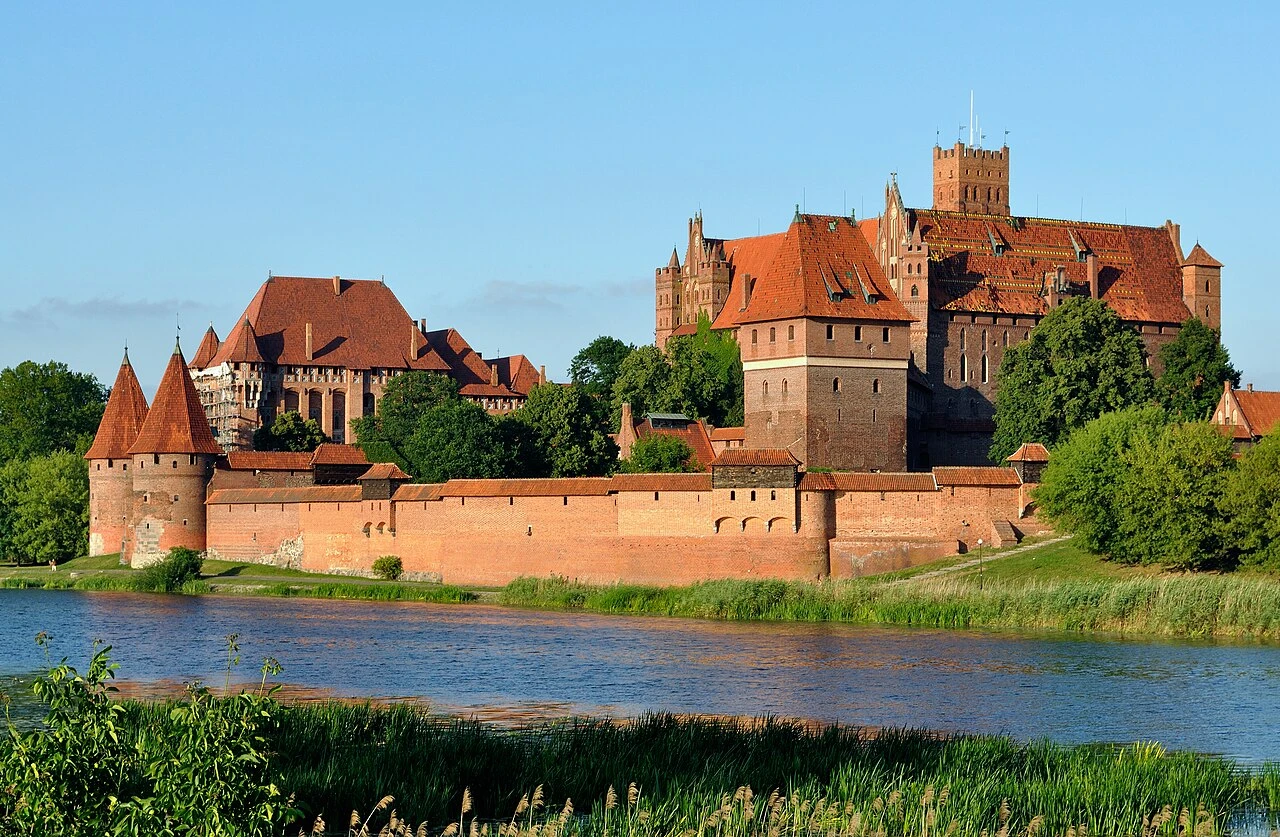
Malbork
Malbork Castle
Content & sources
DerHexer; derivate work: Carschten · CC BY-SA 3.0
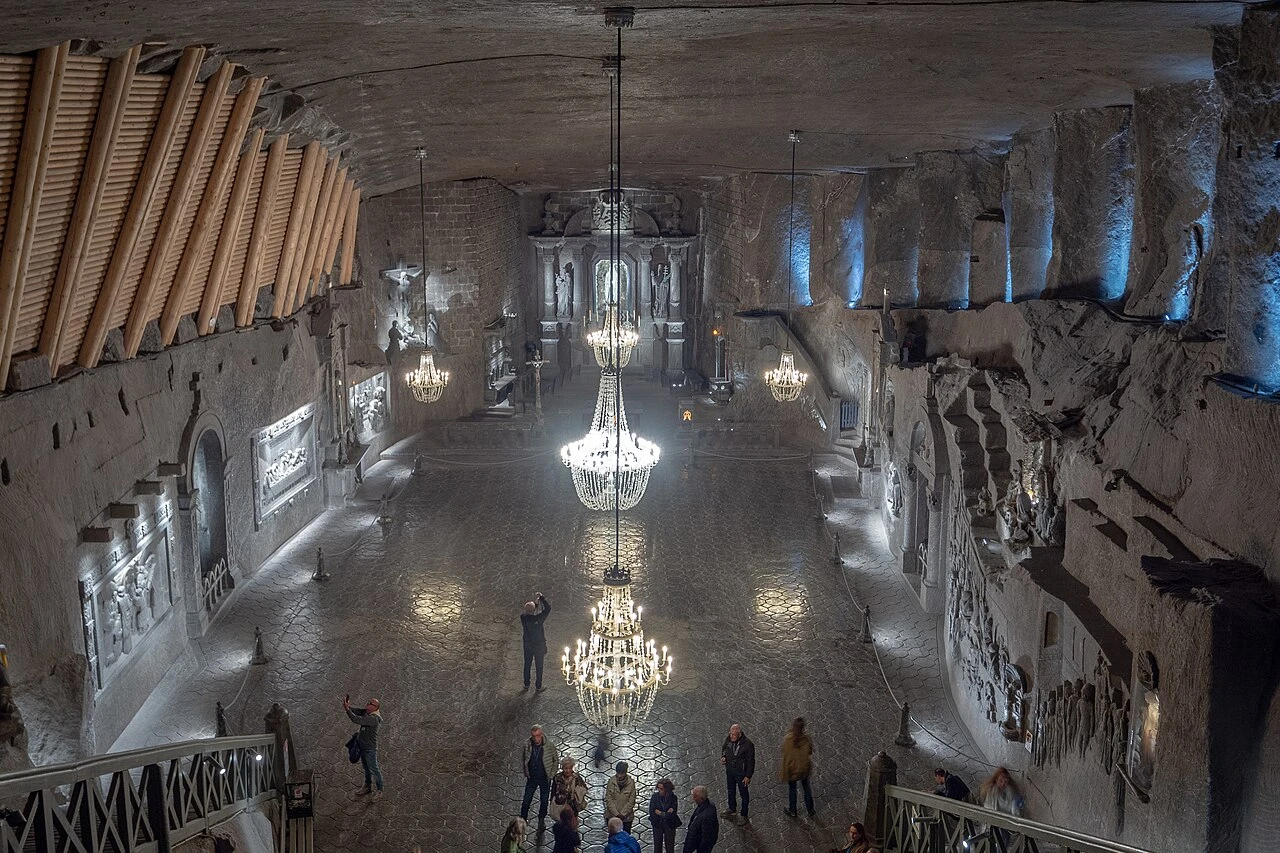
Wieliczka
Wieliczka Salt Mine
Content & sources
Photo: C messier · CC BY-SA 4.0