Stanza · Audio guide
Catedral de Santa María Audio Guide
A place to remember. A story to take with you.
The Cathedral of Sigüenza is the seat of the bishop of Sigüenza in Spain. It was declared a Bien de Interés Cultural in 1931.
Download Stanza, then search for “Catedral de Santa María”.
About the tour
One guide. Your kind of visit.
The Cathedral of Sigüenza is the seat of the bishop of Sigüenza in Spain. It was declared a Bien de Interés Cultural in 1931.
Ready when you are.
- 01Get the free Stanza app.
iOS & Android
- 02Find your guide.
“Catedral de Santa María”
- 03Download before you go.
Works offline
Audio guide / 16 narrated stops
Inside the guide
Get to know a few of the stories before you go. Open a stop to read more.
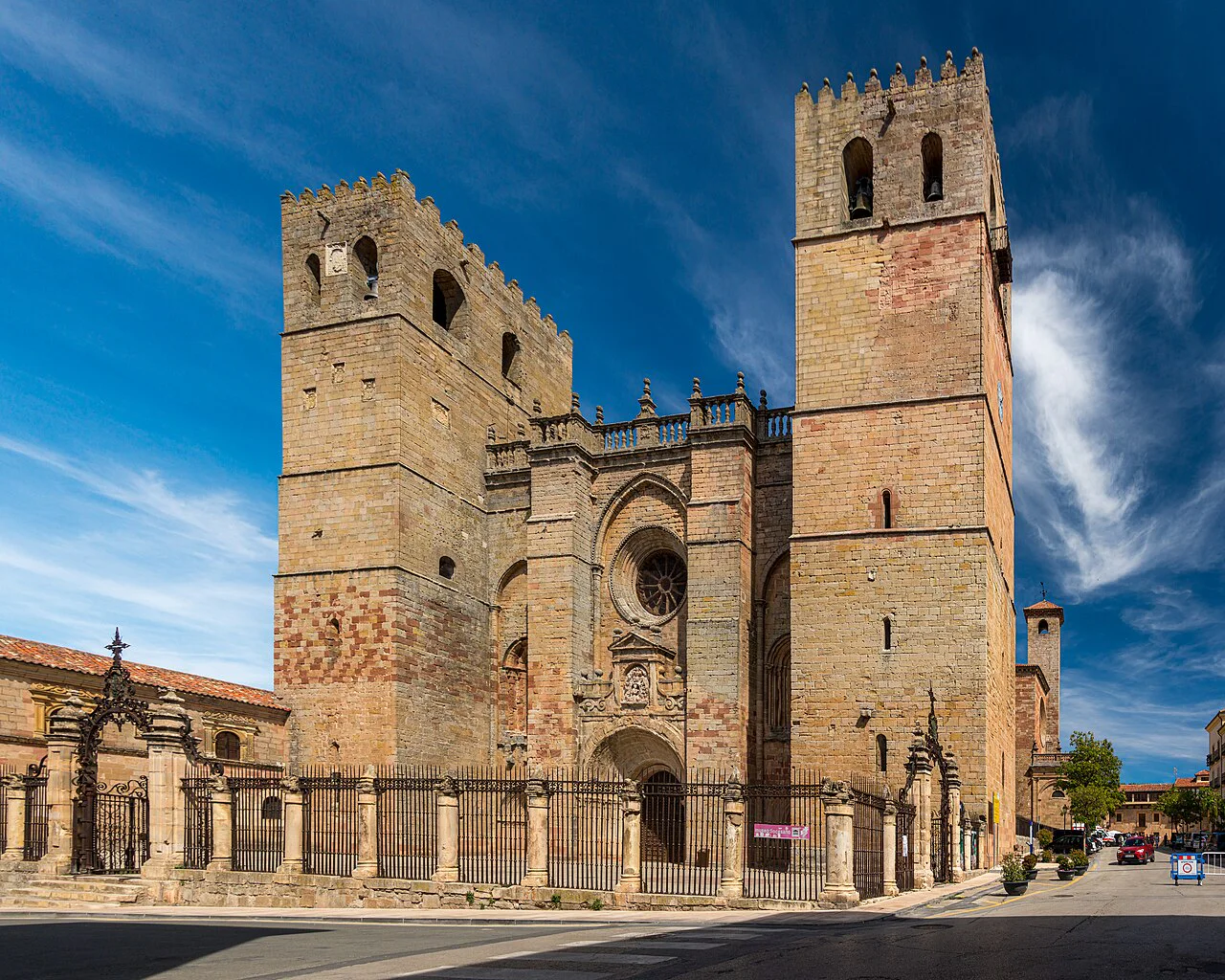
01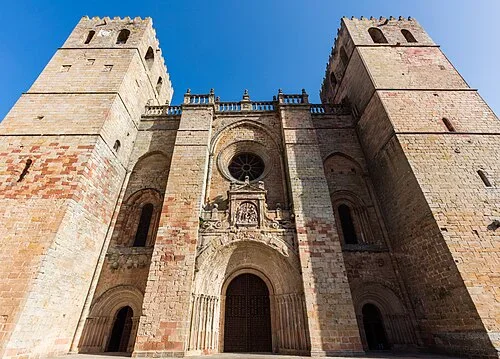 Western Facade and Fortress Exterior
The Twin Towers and Western Facade
Welcome to the cathedral of Santa María de Sigüenza, a church built to look like a fortress, because for a time it had to be one. The two sandstone towers flanking the main facade rise more than forty metres, crowned with stone merlons like a castle. That military look is no accident. In January 1124 Bishop Bernard of Agen took the city back from the Almoravids, in the reign of Queen Urraca of León. Bernard had been appointed bishop in 1121, while the town was still in Muslim hands. The church of the new bishopric doubled as a stronghold on the frontier, and people called it the fortis seguntina, the strong one of Sigüenza. The towers began as isolated defensive lookouts and were later joined to the town wall. The right-hand one, Las Campanas, has held the bells that mark the hours for the town since the Middle Ages. Its top section was added in the fourteenth century by Bishop Pedro Gómez Barroso, who set the shields of the bishop and of King Peter of Castile on its wall. Queen Urraca, for her part, granted the new bishopric the tithes of Atienza and Medinaceli in a letter of February 1124.
Diego Delso · CC BY-SA 4.0
02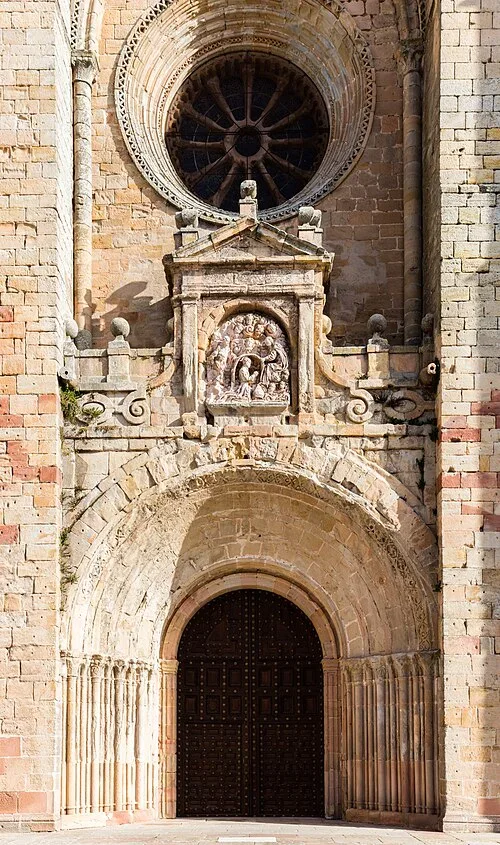 Western Facade and Fortress Exterior
The Main Portal and Rose Window
The doorway at the centre of the facade is the Puerta de los Perdones, the Door of Pardons, built with a semicircular arch whose archivolts rest on columns. Above it a Baroque pediment carries a relief of the chasuble being laid on Saint Ildefonsus. Higher still opens a Romanesque rose window of the thirteenth century, set to light the central nave. The church behind this front took shape in stages. A document of 1144 says Bishop Bernard of Agen rebuilt an earlier cathedral 'with a double wall and tower', possibly over the remains of an old Visigothic or Mozarabic church called Santa María Antiquíssima. The historian Múñoz Párraga argued that this rebuilding stood on the very spot of the present cathedral. Major work on the church as it stands began in 1154, under Bernard's successor. The Gothic central nave as it stands dates from the fourteenth century.
Diego Delso · CC BY-SA 4.0
03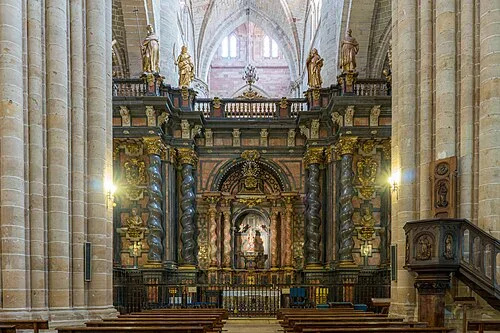 The Baroque Trascoro
The first thing that catches the eye inside is a wall of gilded Baroque, the trascoro, the screen behind the choir. Until the seventeenth century three plain altars stood against this wall. In 1666 Bishop Andrés Bravo de Salamanca swept them away and commissioned this great reredos from Juan de Lobera and Pedro Miranda. The bishop was deeply devoted to the Virgin, and the whole ensemble was made to house her image. In the central niche sits Santa María la Mayor, patron saint of Sigüenza, framed by dark twisted columns and gilded figures. The cathedral has been dedicated to the Virgin since its founding, so this altar carries that oldest devotion in its grandest dress.
Listen in the appPhoto: Fernando · CC BY-SA 4.0
04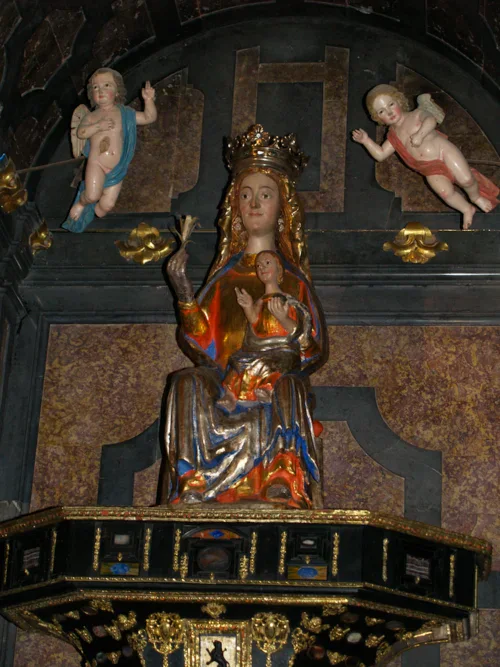 The Baroque Trascoro
Santa María la Mayor, the Patron's Image
The statue in that niche is far older than its golden setting. It is a Romanesque carving of the twelfth century, in polychrome cypress wood, with the Child on her left knee and a fleur-de-lis in her right hand. Tradition says Bishop Bernard of Agen offered the image, and that it travelled with him on his campaigns through the lands of the new bishopric. By the fourteenth century it was badly worn. Restorers gave it a fashionable Gothic air and covered the wood with plates of silver. For centuries it was venerated on the original high altar retablo, which is where the name Santa María de la Mayor comes from. When a new retablo was made for the main chapel, the statue moved to the church of Santa María de los Huertos. It returned in 1617, to the chapel of the Annunciation. In 1673 it took its permanent place at the trascoro altar. The Spanish Civil War left it damaged, and the restoration of 1974 removed the silver plates, uncovering the original polychrome wood beneath.
Listen in the appMiguel Hermoso Cuesta · CC BY-SA 3.0
05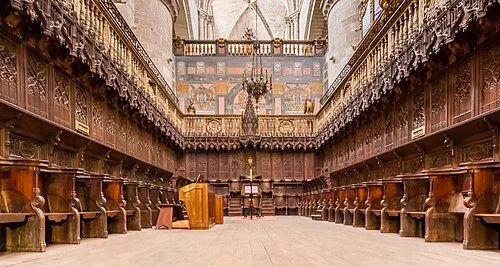 Gothic Choir and Central Nave
The Gothic Choir
The choir fills the centre of the main nave, two long faces of carved wood where the canons of the cathedral gathered for the sung offices, day after day. The present stalls were built on the initiative of Cardinal Pedro González de Mendoza, bishop of Sigüenza from 1467 to 1495. They replaced an earlier choir made of alabaster, which had first stood in the main chapel and later been moved into the nave. Mendoza's hand is still visible nearby: the back of the bishop's chair carries carved images and his shield.
Listen in the appDiego Delso · CC BY-SA 4.0
06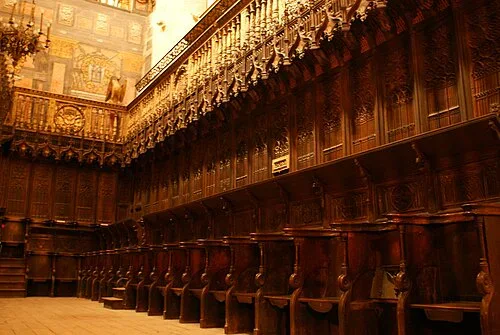 Gothic Choir and Central Nave
Choir Stalls and the Organ Galleries
At the sides of the choir rise two grandstands, and behind their Plateresque balustrade stands the Churrigueresque organ, exuberant Spanish Baroque in wood and gilt. The woodwork of the stalls is intricately carved, seat above seat. The balustrade carries the shields of the cathedral chapter and of Bishop Fadrique de Portugal. His arms also appear on the left tower of the facade, and his mausoleum stands in the north transept, later on this route.
Listen in the appPhoto: AdriPozuelo · CC BY-SA 3.0 es
07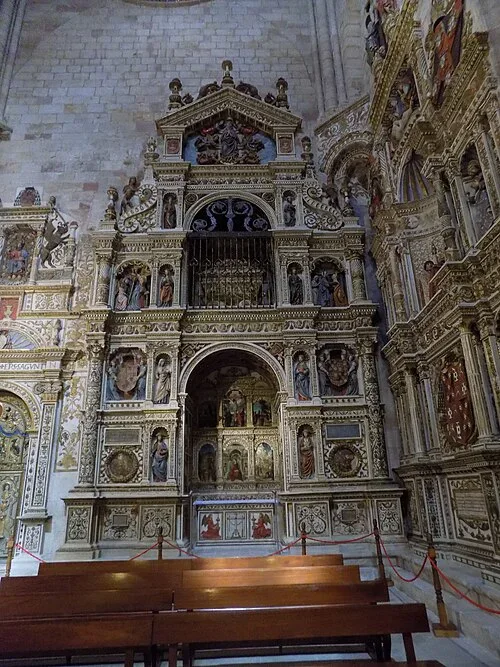 North Transept: Chapel of Santa Librada and Renaissance Mausoleum
The Retablo of Santa Librada
The retablo in the north transept holds six Renaissance paintings by Juan Soreda, made between 1525 and 1528. They are arranged in two bodies and three streets, the central street wider and taller than the rest. The upper central panel shows the Deesis, the old image of Christ flanked by the Virgin and Saint John. Five more panels tell the life of the martyr Santa Librada: she and her sisters before Catelio, their deliberations, one sister comforting another, the decapitation, and the saint enthroned at the end. The enthroned figure holds a book and the palm of martyrdom, and its pose borrows from a print by Marcantonio Raimondi after Raphael. Painted on the frieze above are four labours of Hercules, a Renaissance moral lesson: as Hercules fought beasts that stood for vices to win immortality, the martyr chose death rather than yield to earthly pleasures. The story goes that Librada grew a beard to preserve her virginity.
Listen in the appPhoto: Tiberioclaudio99 · CC BY-SA 4.0
08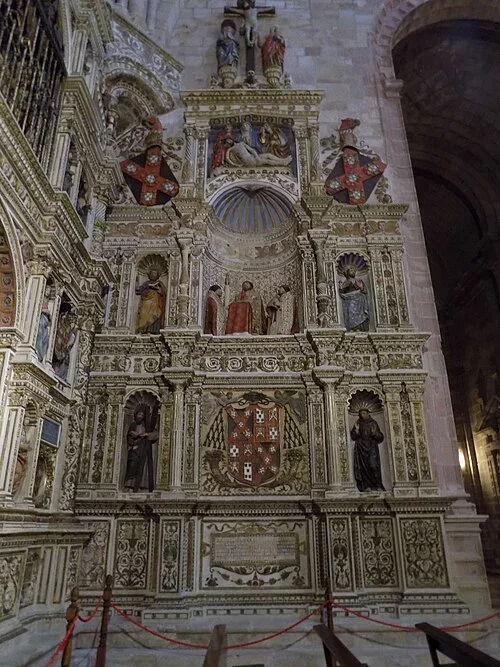 North Transept: Chapel of Santa Librada and Renaissance Mausoleum
The Mausoleum of Bishop Fadrique of Portugal
Beside the Librada retablo stands the mausoleum of Bishop Fadrique de Portugal, a Plateresque monument in limestone shaped like a triumphal arch. It was designed by Alonso de Covarrubias about 1520 and executed by Francisco de Baeza with Sebastián de Almonacid and Juan de Talavera. Work finished in 1539, the year the bishop died in Barcelona. From there his body was brought back and buried here. The monument shows him kneeling in a niche with two clerics beside him, his large coat of arms below, a Pietà above, and a polychrome Calvary crowning the whole. His name is carved into the cathedral's face as well: the left tower of the facade is called Don Fadrique, completed in the sixteenth century with the date 1533 and his coat of arms inscribed on it.
Listen in the appPhoto: Tiberioclaudio99 · CC BY-SA 4.0
09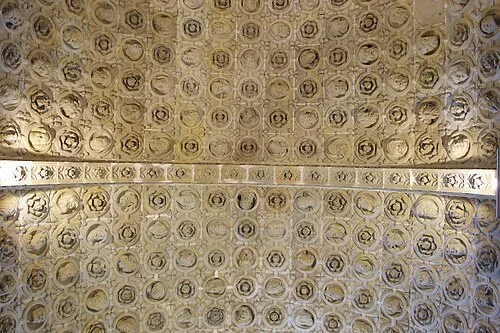 Sacristy of the Heads
The Sacristy of the Heads
The vault overhead is a stone barrel covered in carved coffers, each one framing a sculpted head. Getting this ceiling built took nearly half a century and three masters. In 1532 Alonso de Covarrubias drew the design, one of the leading Renaissance architects in Spain. Two years later Toledo called, and he left Sigüenza to be its cathedral master builder. Nicolás de Durango carried the work on until his death in 1554. The chapter then hired Martín de Vandoma, who lasted five years before being dismissed, for reasons nobody wrote down. Vandoma complained, loudly and often, until the chapter gave in. A chapter act of March 1560 readmitted him, and he worked on the cathedral for eighteen more years, until his death in 1578. The stone portal that leads into the sacristy was finished in 1573 by Juan Sánchez del Pozo, the cathedral's own master builder.
Listen in the appJosé Luis Filpo Cabana · CC BY 3.0
10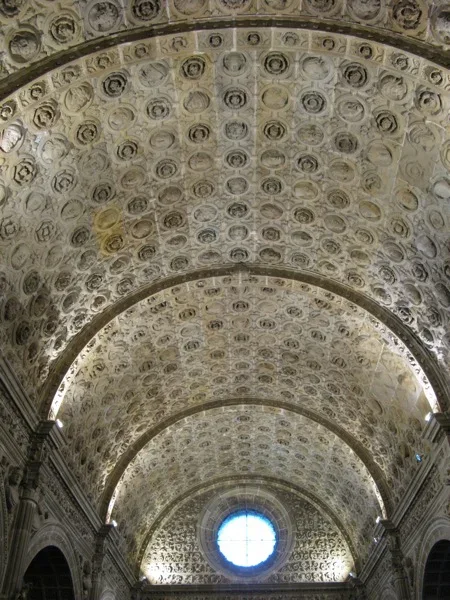 Sacristy of the Heads
The Stone Heads of the Vault
Every coffer in this vault holds a single head, and no two faces repeat. Bishops with their mitres, monks, warriors, kings, peasants and nobles, all carved in stone and looking down from the ceiling. In the angles between them sit smaller figures: cherubs, and roses alternating with the heads. The usual reading is that they show the whole society of sixteenth-century Sigüenza, great and humble side by side. Whatever the intent, the carving is intimate work. Some faces seem caught mid-thought, others wear the plain expression of a portrait done from life. It is one of the most curious ceilings in Spain, and it rewards a slow, upward look.
Listen in the appIgor González Martín from Madrid, Spain · CC BY-SA 2.0
- 11
The High Altar
How the east end of the cathedral grew, and why everything here points to the high altar.
- 12
The Pulpit of the Passion of Christ
Vandoma's Renaissance pulpit carved with the Passion, and its Gothic twin given by Cardinal Mendoza.
- 13
The Chapel of the Doncel
How one family bought a chapel and filled it with their dead — the story of the Arce pantheon.
- 14
The Tomb of the Doncel
The alabaster knight who reads a book held open in his hands — El Doncel de Sigüenza, and the flags taken from Drake's fleet.
- 15
The Face of the Doncel
A face carved from life, and the sculptor who repaired the cathedral's wounds after the Civil War.
- 16
The Gothic Cloister
The quiet Gothic cloister where the cathedral's daily life has carried on for five centuries.
Catedral de Santa María
Frequently asked questions
How much does the guide cost?
Free app download. Listed guide price: $0.99. Guide price shown in the app. Audio guide only. Venue admission is separate.
Can I listen without internet?
Yes. Download the guide’s audio, images, and maps in the app before your visit. Your downloaded content is then available offline.
Can I listen in my language?
This audio guide is available in 15 languages, including English.
Do I need to follow a schedule?
No. This is a self-guided experience. Choose your stops, pause whenever you like, and return to a story at your own pace.
At your own pace
Explore Catedral de Santa María.
Download Stanza, then search for “Catedral de Santa María”.
Free app download · Guide price shown in the app
Keep exploring
Nearby audio guides
Garray · 84 km
Numancia
Content & sources
Photo: Txo · Public domain
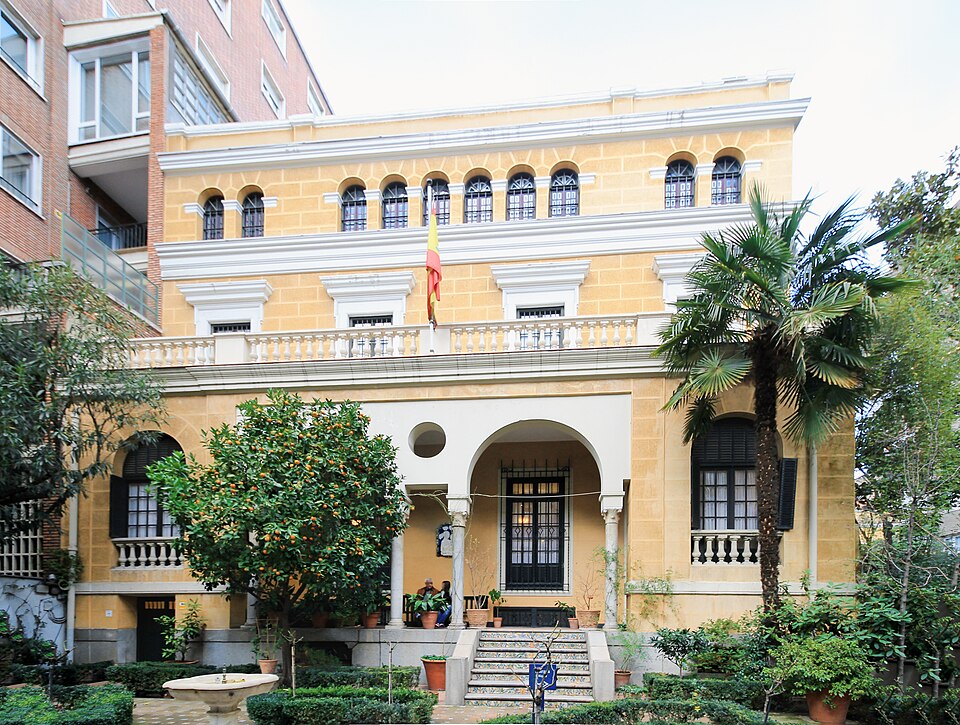
Madrid · 113 km
Sorolla Museum
Content & sources
Luis García (Zaqarbal) · CC BY-SA 3.0 es
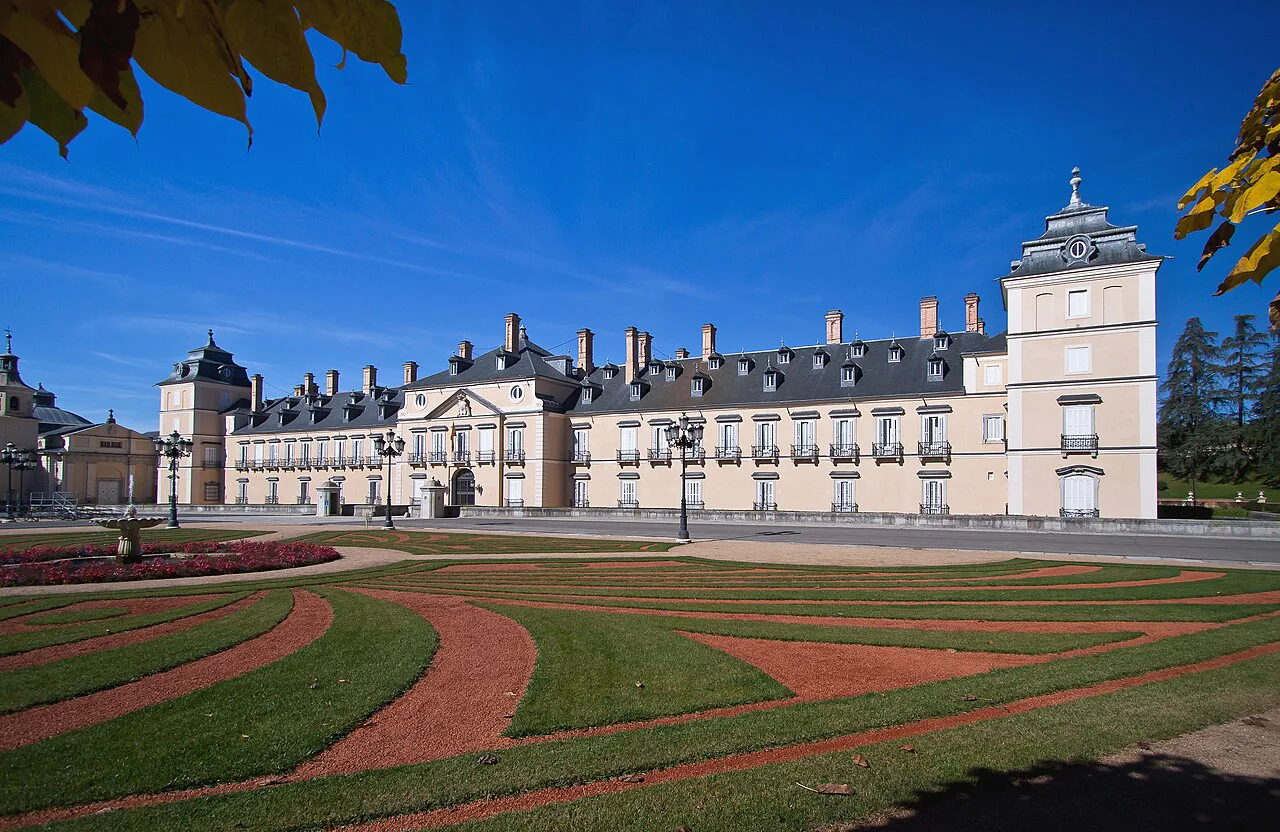
Madrid · 113 km
Palacio Real de El Pardo
Content & sources
Photo: Choniron · CC BY-SA 3.0 es
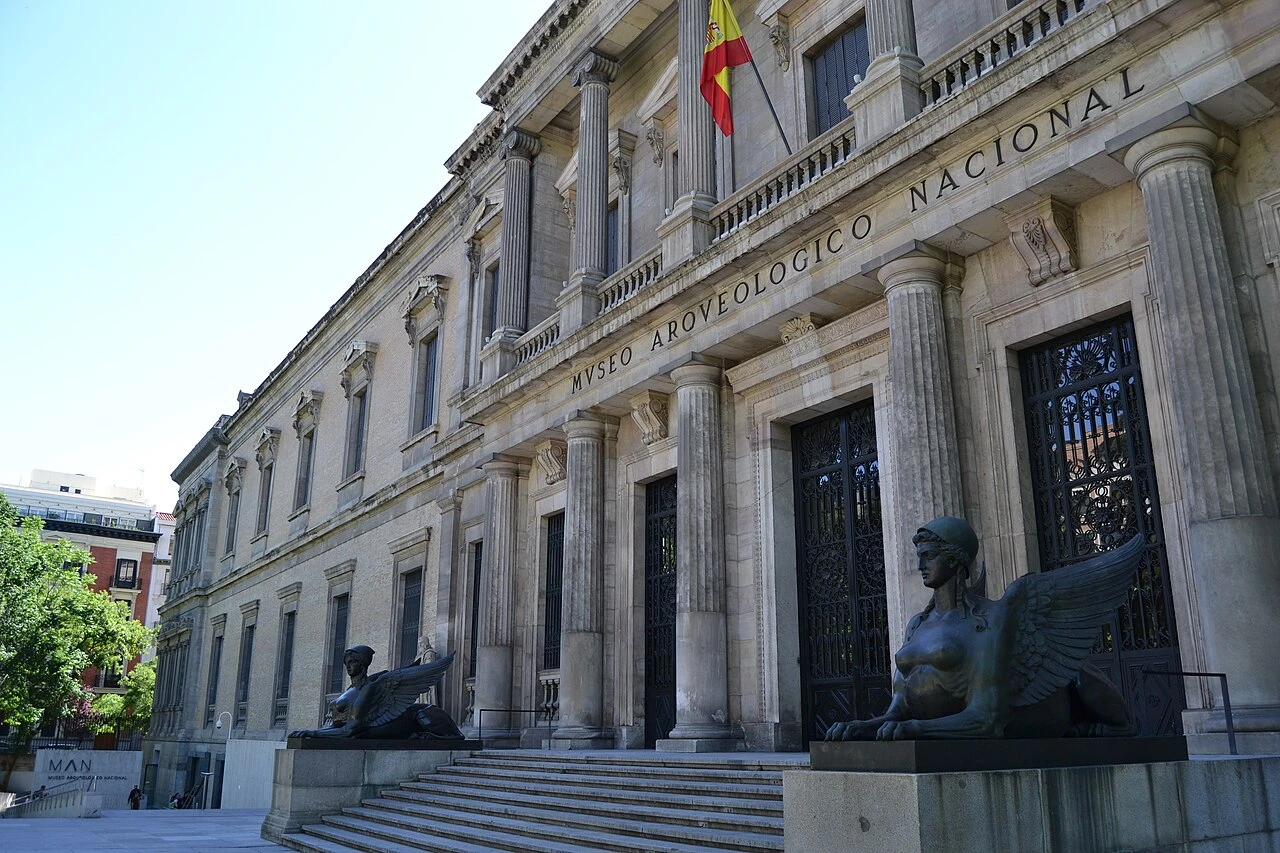
Madrid · 114 km
National Archaeological Museum of Spain
Content & sources
Emilio J. Rodríguez Posada · CC BY-SA 2.0