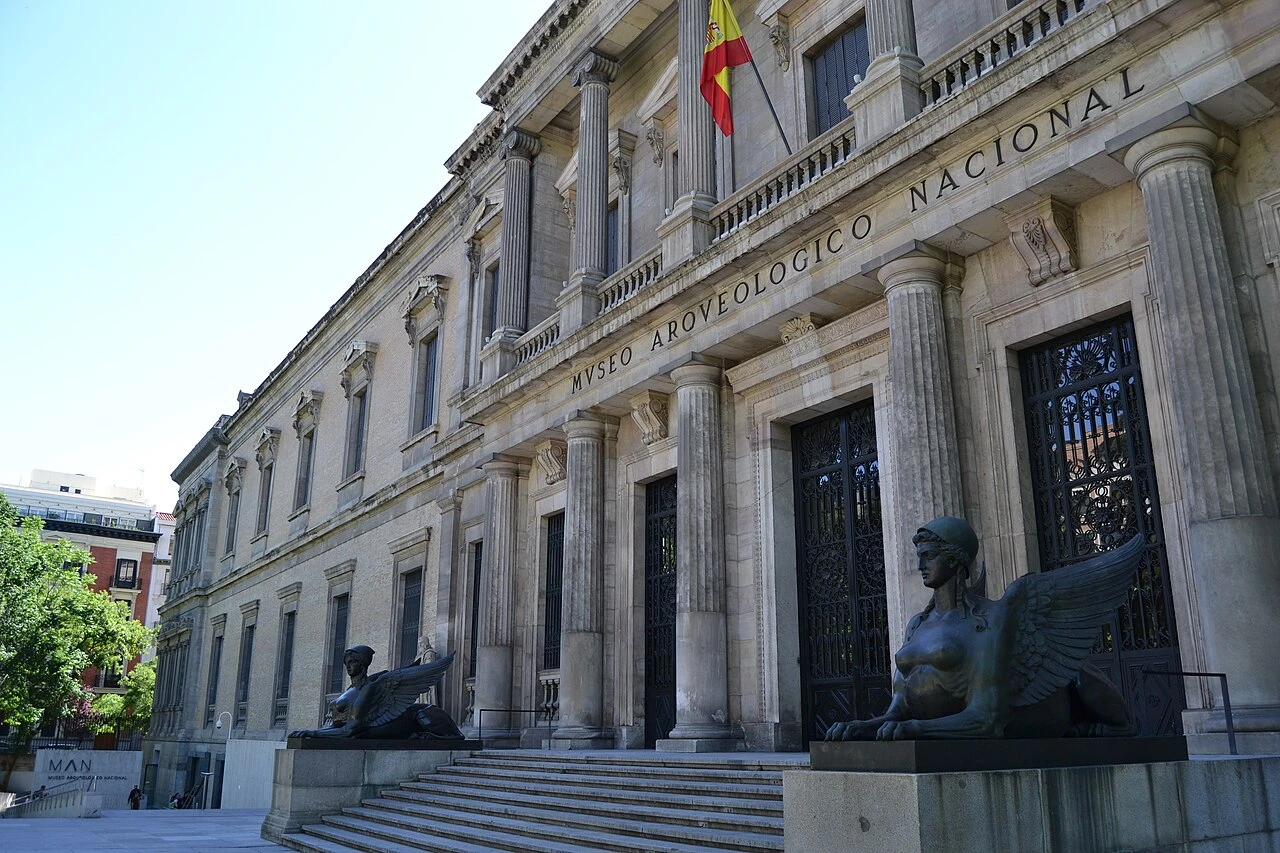
Stanza · Audio guide
National Archaeological Museum of Spain Audio Guide
A place to remember. A story to take with you.
An archaeological museum located in Madrid, Spain. It houses collections spanning from prehistory to the 19th century, with a strong focus on the Iberian Peninsula.
Download Stanza, then search for “National Archaeological Museum of Spain”.
About the tour
One guide. Your kind of visit.
An archaeological museum located in Madrid, Spain. It houses collections spanning from prehistory to the 19th century, with a strong focus on the Iberian Peninsula.
The National Archaeological Museum of Spain guide tells the stories of 96 artworks, including Lady of Elche (Unknown Artist), Biche of Balazote (Unknown Artist), Treasure of Guarrazar (Unknown Artist), Lady of Baza (Unknown Artist), Lady of Galera (Unknown Artist), Votive crown of Recceswinth (Unknown Artist), Lady of Ibiza (Unknown Artist), and Pyxis of Zamora (Unknown Artist). 1 of the most famous are longer stories that move across the picture detail by detail, set to music. Every artwork is free to hear in the Stanza app until 1 January.
Ready when you are.
- 01Get the free Stanza app.
iOS & Android
- 02Find your guide.
“National Archaeological Museum of Spain”
- 03Download before you go.
Works offline
Audio guide / 96 artworks
Inside the guide
Get to know a few of the stories before you go. Open a stop to read more.
01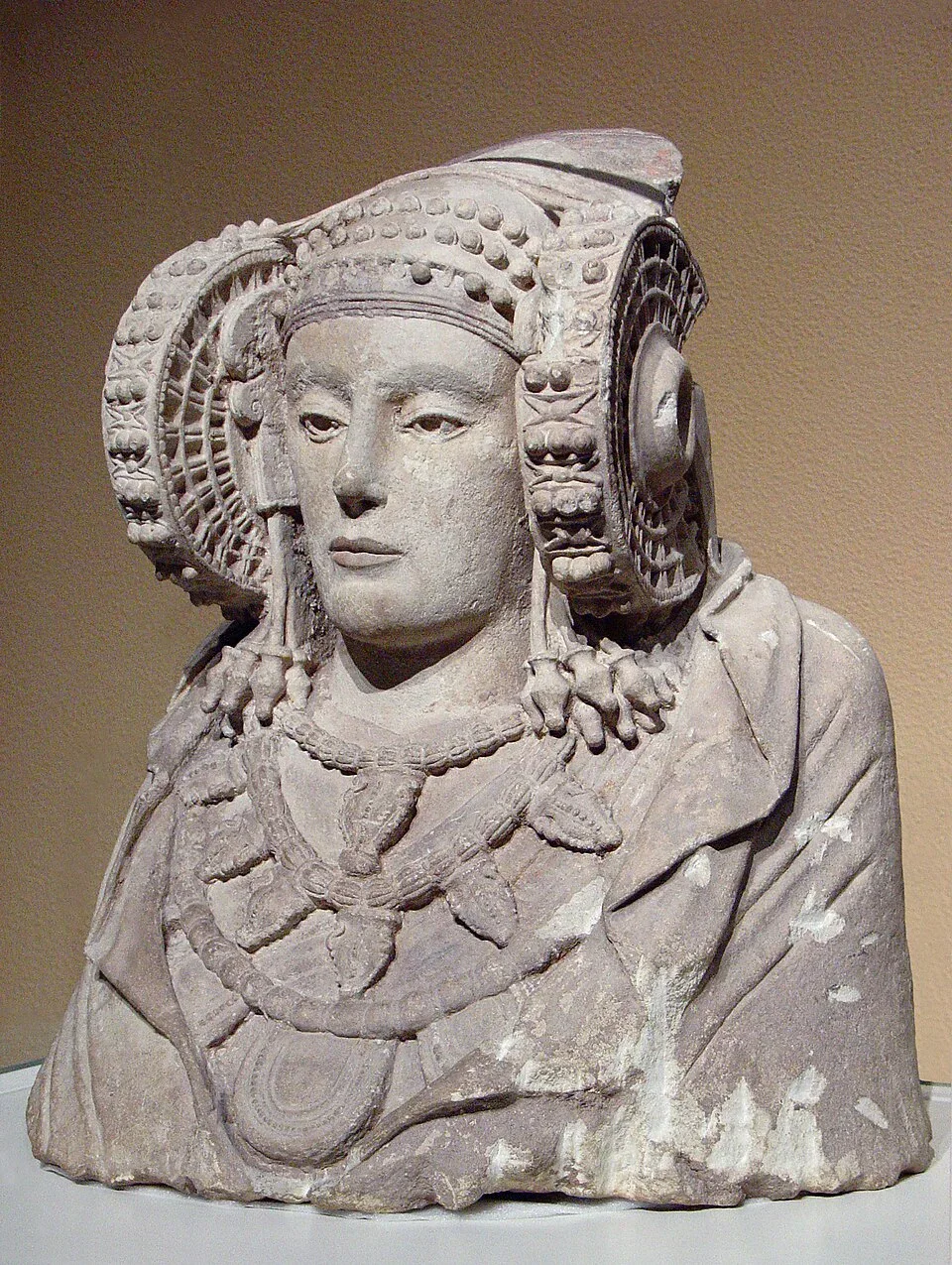
Lady of Elche
She looks calm. Almost distant. Grey stone. A straight nose, closed lips, eyes lowered and a little heavy. Nothing in that face gives her away. She is the Lady of Elche, made in Iberia in the fifth century BC. Nobody knows by whom. But look at what frames that quiet face. On each side of her cheeks, a huge wheel. Fine ribs fan out like spokes, and a coil sits at the middle. They are called rodetes. They make her head look huge, and her face small and still. Above the brow, a band, and over it rows of round beads. Every bead is cut from the same limestone as her face. Lower down, necklaces. Loop over loop, with leaf shaped pendants hanging from them. She is covered in jewels, and she does not move. Not a smile. Not a frown. Today she is the colour of ash. She was not. She was painted. A faint reddish tint still clings to the top of her headdress. Tests on traces of paint found nothing modern. At her back there is an opening. Inside, tiny particles were found, and they seem to be ashes of human bones. It seems she served as an urn. A face that held the dead. Painted, jewelled, and holding ash. She came out of the earth in 1897, found by a worker on a farm. Locals nicknamed her the Moorish Queen. Within weeks, she was sold to the Louvre. She only came back to Spain in 1941, in a swap of artworks between France and Spain. Calm, yes. But not distant, not now. She held ashes.
Listen in the appPhoto: Francis7~commonswiki · CC BY-SA 2.5
02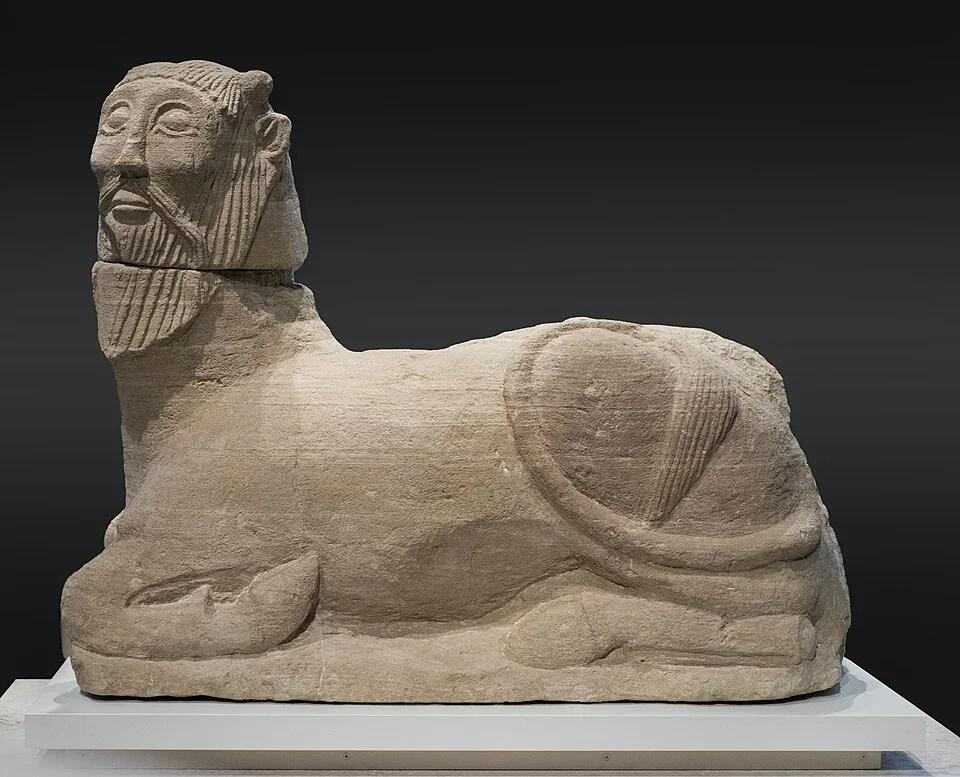
Biche of Balazote
You are looking at a bull lying down, with the head of a man. A bearded man, with small horns and bull's ears. The body is a bull at rest, forelegs folded under the chest, the tail curling over one thigh and ending in a tuft of hair. The hair and beard are cut in straight grooves, the way early Greek sculptors worked. And one side of the stone was never finished. It seems to have been made to be built in at a corner, fixed to something. No one knows who carved it, in the sixth century BC. It turned up near Balazote, and digs in the nineteen eighties found a burial mound close by, which it probably belonged to. The Greeks used man-headed bulls for river gods, whose waters made the fields fertile. This one may be Achelous, one of those gods, taken over here as a protector of the tomb, a guide for the souls of the dead.
Listen in the appProyectos DIASPORA y REMAN3D from España · CC BY 2.0
03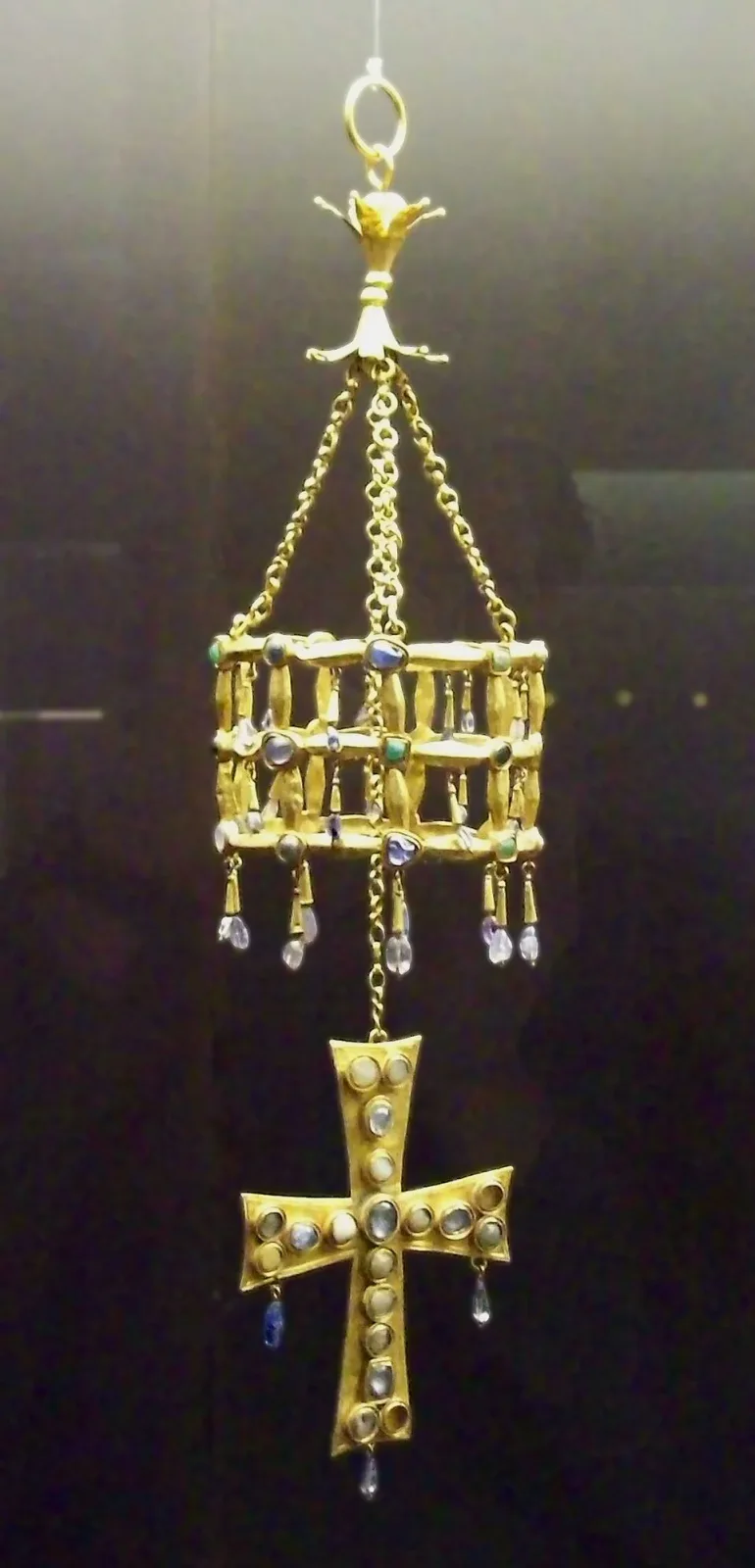
Treasure of Guarrazar
This crown never sat on a king's head. It hung above an altar in a church. The Visigoth kings of seventh century Spain gave crowns like this to the Church, as a public sign of their faith and their obedience to it. The blue sapphires came from Sri Lanka. From the rim hang letters of gold, each stone set into its own little cell, and together they spell out in Latin that King Recceswinth offered this. The crown names its own giver. It lay buried in an orchard near Toledo until heavy rains in 1858 broke open the ground above it. After the find, pieces were sold off and melted down. The other great crown, King Suinthila's, was stolen in 1921 and has never been seen since.
Listen in the appPhoto: Zaqarbal · CC BY-SA 3.0
04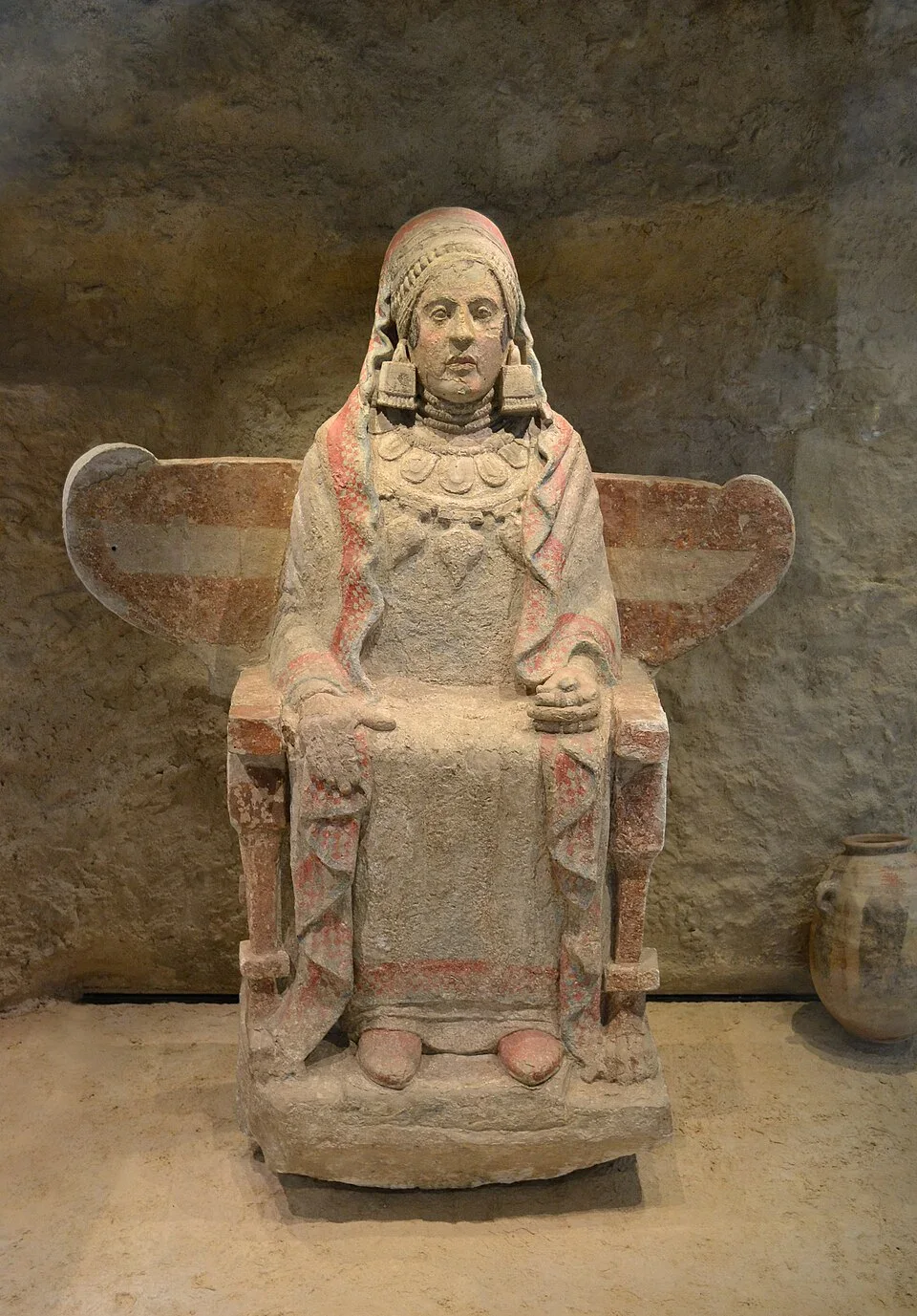
Lady of Baza
A woman sits on a throne with lion claws for front legs, and long wings rise behind her back. She is heavy with jewelry, big hollow earrings, collars at her throat, rings on her fingers. When she was dug up near Baza in 1971, she turned out to be more than a monument. There is an open space at her side, thought to have held the ashes of a cremation. This statue was her tomb. Burned weapons lay piled up in front of her, the full gear of a warrior, so her ashes were taken for those of a great fighter. But the remains inside told another story. They belonged to a woman, over twenty but probably not past thirty. A queen, maybe, or a priestess. The weapons may have been gifts of rank, not proof of battle. And below the ground, a Punic jar stood connected to the surface by a funnel, probably so the living could pour liquid offerings down to her from above.
Listen in the appUnknown · CC BY-SA 4.0
05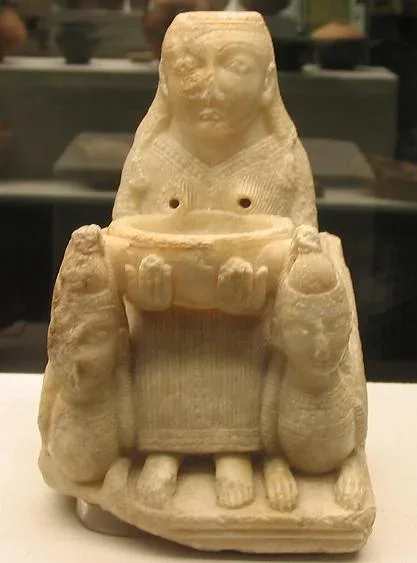
Lady of Galera
Start at her chest. Two small holes pierce her breasts, and liquid once poured from them into the bowl in her hands. That detail tells you who she is. She is a goddess, probably Astarte, carved in alabaster in the seventh century BC, most likely by Phoenician hands. She sits between two sphinxes. Her hair and dress follow Egyptian style, while her sturdy body recalls Mesopotamian statues. A figure like her turned up in Carthage, in north Africa. But this one was not buried when she was new. She was kept as a sacred object and passed through several generations. Then, in the fifth century BC, she was placed in a tomb at Galera, in southern Spain, among grave goods for the dead. A goddess laid to rest.
Listen in the appPhoto: Hispa · CC BY-SA 3.0
06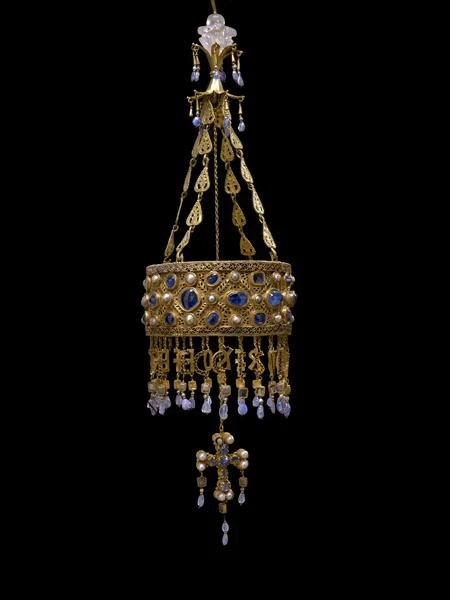
Votive crown of Recceswinth
This is a king's crown, and no king ever wore it. It was made in the seventh century for Recceswinth, king of the Visigoths, and it was never meant for a head. It hangs. Four chains of small leaf-shaped links hold it up, and from the center a cross hangs down. It was an offering, made to hang above the altar of a church. And the king wanted the gift to carry his name. From the lower edge hang twenty-three little chains, each one holding a letter made of gold, set with pearls, sapphires and garnets. Together they spell, in Latin, King Recceswinth offered this. Then the crown went into the ground outside Toledo, probably buried to keep it safe from the Caliphate that would later take Spain. It was found in 1858, and much of the treasure around it was sold off or melted down. This crown survived. Minus one letter. The R that begins the king's name hangs today in a museum in Paris.
Listen in the appRelanzón, Santiago (photo) · CC BY-SA 4.0
07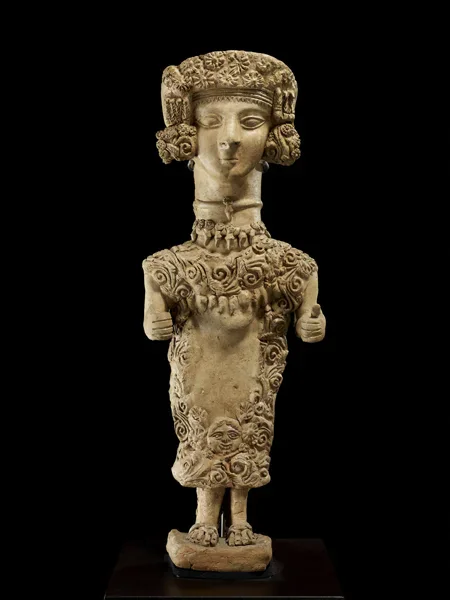
Lady of Ibiza
A woman covered in jewelry faces you, her dress and ornaments richly worked. She was made from a mold, in the third century BC, with her arms and decoration added afterwards. She came from a burial ground on Ibiza, the necropolis of Puig des Molins, where most of the figures found are goddesses. This one is probably Tanit, a Carthaginian goddess, her fine clothes and jewels fitting for a divine being. But there is a hollow space in her back. It may simply have been for hanging her up. Or it may have held relics, offerings, or the ashes of the dead. And that raises the other possibility. She may not be a goddess at all, but the woman who was buried there, shown as one. No one knows which she is.
Listen in the appRelanzón, Santiago (photo) · CC BY-SA 4.0
08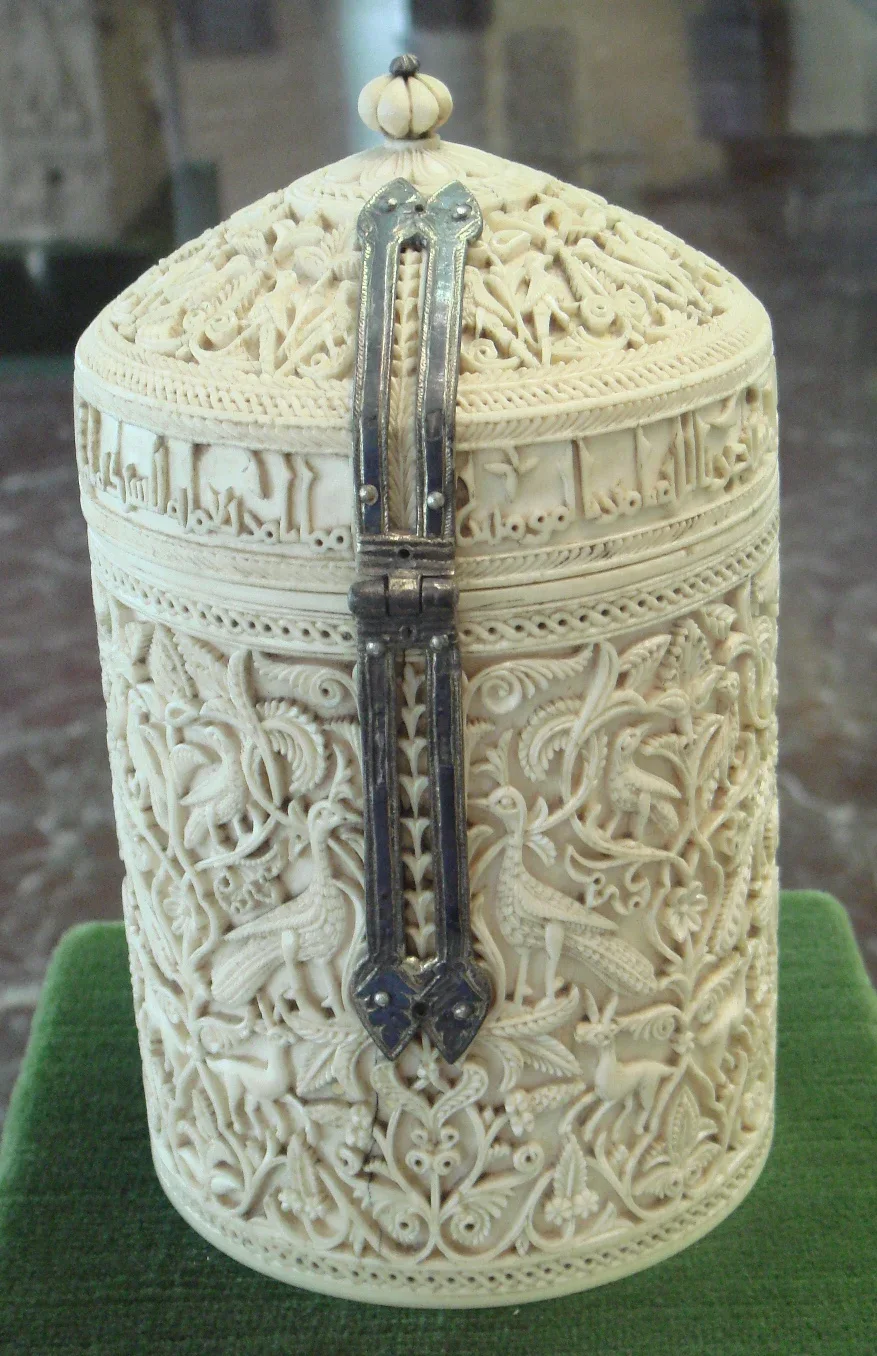
Pyxis of Zamora
Nobody knows who carved this little cylinder of ivory. The only name ever attached to it is a nickname, the Master of Zamora. What does carry a name is the inscription running around the lid, and it tells the whole beginning. In 964 the caliph al-Hakam the Second ordered this box made for the mother of his newborn son, Prince Abd al-Rahman, his chosen heir. The carving asks for hands. Peacocks and gazelles circle the ivory in a pattern with no beginning and no end, so the gift was made to be turned over and over as you held it. The peacocks kept evil away, and the gazelles stood for elegant women, a fitting theme for a present meant for the caliph's household. The boy died young and never took the throne. The box lasted longer. By the fifteenth century it sat in the cathedral of Zamora holding stones from the holy places. In 1911 the cathedral sold it to an antique dealer, and the Spanish state stepped in and bought it from him.
Listen in the appManuel Parada López de Corselas Manuel de Corselas ARS SUMMUM, Centro para el Estudio y Difusión Libres de la Historia del Arte · Public domain
09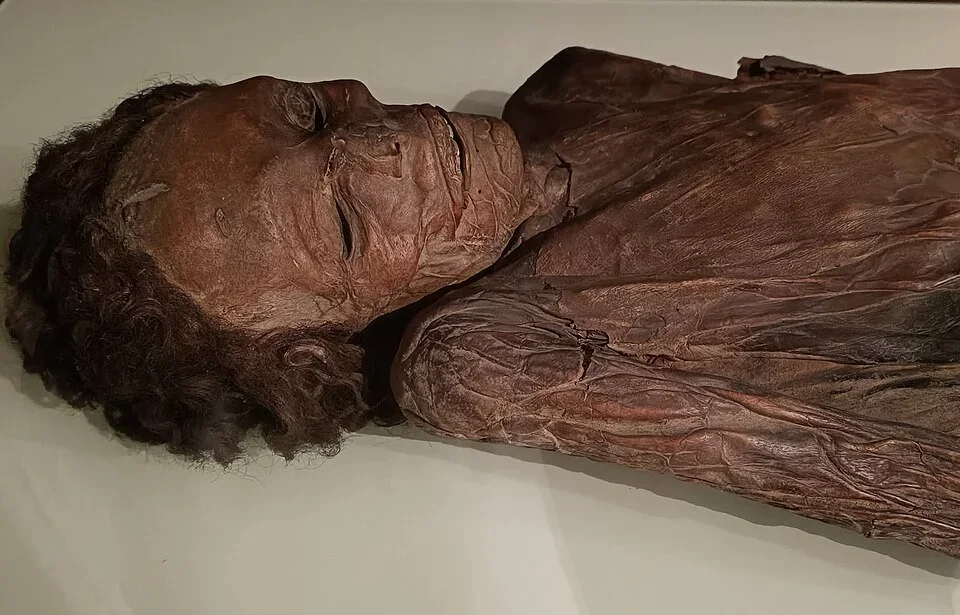
Guanche mummy of Madrid
For more than eight hundred years, this body has kept everything it was born with. Old Spanish chronicles claimed the Guanches, the first people of Tenerife, took out the insides of their dead to preserve them. When this man was scanned, researchers found parts of his brain still in place, and no sign that anything had ever been removed. He lived in the twelfth or thirteenth century and died between the ages of thirty-five and forty. He was buried in a cave on the southeast coast of Tenerife, in a ravine that was a vast Guanche burial ground. In July of 1764 he was carried about eighteen hundred kilometres to Madrid, as a gift to King Charles the Third. His hands show no trace of hard physical work.
Listen in the appPhoto: CARLOS TEIXIDOR CADENAS · CC BY 4.0
10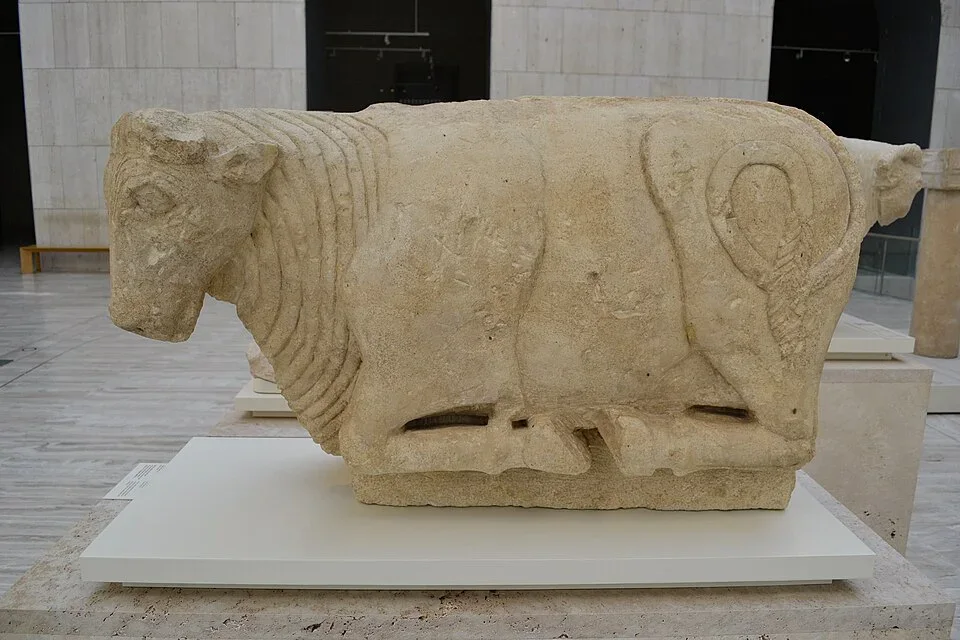
Bull of Osuna
A bull lies down, but it does not look asleep. Around its eyes the stone is cut with deep lines, and those lines run on over its nose. The mouth is half open too. This is a limestone bull, carved near the end of the fifth century before Christ by the Turdetani, an Iberian people in the south of Spain. It was found at Osuna, on the site of their old city of Urso. It stood as part of a tomb monument, and it was probably meant to protect whatever lay there. That may be why its eyes never close. The horns and the ear tips are broken now, and the legs are gone above the knee, but the tail still curls in a ring over its hind leg. It has been watching a very long time.
Listen in the appPhoto: Dorieo · CC BY-SA 4.0
- 11
Tomb of Pozo Moro
Unknown Artist · c. 6th century BC
- 12
Lex Ursonensis
Unknown Artist
- 13
Treasure of Gazteluberri
Unknown Artist · 1537
- 14
Sphinx of Agost
Unknown Artist · -600
- 15
Dama del Cerro de los Santos
Unknown Artist
- 16
Lex Malacitana
Unknown Artist
- 17
Priest of Cadiz
Unknown Artist · -700
- 18
Bacchus of Aldaia
Unknown Artist · 2
- 19
Sphinxes of El Salobral
Unknown Artist · late 6th century BC
- 20
Bear of Porcuna
Unknown Artist · 1st century BC
- 21
Leona de Baena
Unknown Artist · late 6th century BC
- 22
Stele of Magacela
Unknown Artist · -1099
- 23
Praying Sumerian figure
Unknown Artist · 2550–2520 BC
- 24
Crucifix of Ferdinand and Sancha
Unknown Artist · c. 1063
- 25
Red feather currency belt, Santa Cruz Islands, HAA
Unknown Artist
- 26
Villaricos Phoenician stele
Unknown Artist
- 27
Acrobat from Osuna
Unknown Artist
- 28
bowls of Axtroki
Unknown Artist
- 29
Livia from Paestum
Unknown Artist · early 1st century AD
- 30
Sundial of Baelo Claudia
Unknown Artist · 1st century AD
- 31
Eagle-shaped fibulae of Alovera
Unknown Artist
- 32
Krater of the madness of Heracles
Asteas · 350–320 BC
- 33
National Archaeological Museum - 2002-57-1 - Urn of the Mesta 01
Velasco Mora, Fernando · 1631
- 34
Astrolabe of al-Sahlî
Ibrāhīm ibn Saʿīd al-Sahlī · 1067
- 35
Capa de Daroca
Unknown Artist
- 36
Treasure of Aliseda
Unknown Artist · 7th century BC
- 37
Casket of the Beatitudes
Unknown Artist · 1063
- 38
Ídolo de Extremadura
Unknown Artist · -2499
- 39
Reredos of Cartagena
Unknown Artist · 14th century
- 40
National Archaeological Museum - 52173 - Equestrian Hector 02
Unknown Artist · 1456
- 41
Aison Cup
Aison · c. 520–420 BC
- 42
National Archaeological Museum - 1921 9 1 - Gold Medallion of Augustus 03
Unknown Artist · 27 BC
- 43
Puteal de la Moncloa in Madrid
Unknown Artist · 1st century AD
- 44
Arqueta de Palencia
Abd-ar-Rahman ibn Zeyyah · 1049–1050
- 45
National Archaeological Museum - 108085 - Segovian Centen of 1633 01
Unknown Artist · 1633
- 46
Mosaico de los Trabajos de Hércules (Madrid, M.A.N.)
Unknown Artist
- 47
Tesoro de Abengibre
Unknown Artist
- 48
Praying statue of Pedro I of Castilla
Unknown Artist · c. 15th century
- 49
Fibula of Lancia
Unknown Artist · 300–101 BC
- 50
Gran Dobla of Peter I
Unknown Artist · 1360
- 51
Crosier of Pope Benedict XIII
Unknown Artist · 1342–1352
- 52
Called Biface of San Isidro.
Unknown Artist
- 53
Statue of Harsomtus-em-hat
Unknown Artist · -637
- 54
Stele of Granja de Toniñuelo (29321420592)
Unknown Artist
- 55
Garrovillas de Alconétar - Sandstone Oculated Idol
Unknown Artist
- 56
Maqueta del Alcázar de Madrid
Unknown Artist · 1626
- 57
Idol of Ciudad Rodrigo. Early-Middle Bronze Age
Unknown Artist · 2000–1500 BC
- 58
Sepulcro de Constanza de Castilla (M.A.N.)
Unknown Artist
- 59
Toros de Costitx
Unknown Artist
- 60
Beatus Manuscript
Unknown Artist · 1180
- 61
Modius of Ponte Puñide
Unknown Artist · 4th century
- 62
Sword of Guadalajara
Unknown Artist · 1600–1300 BC
- 63
Caravaca de la Cruz Diadem
Unknown Artist · 1500–1300 BC
- 64
Pillar of Lust M.A.N.
Unknown Artist · 12th century
- 65
Retable of Saint Nicasius and Saint Sebastian
Unknown Artist · 1402
- 66
Bonanza Bronze - National Archaeological Museum (M.A.N)
Unknown Artist
- 67
Prehistoric Vase of Fabara (M.A.N. 33320) 01
Unknown Artist · 1000 BC
- 68
Candelabros de Lebrija
Unknown Artist · late 7th century BC
- 69
Ciervo de Madinat al Zahra
Unknown Artist
- 70
Called Necklace of the Priestess of Sun.
Unknown Artist · 4th century BC
- 71
Stele of Solana de Cabañas
Unknown Artist
- 72
Stele of Taesjeret. Third Intermediate Period
Unknown Artist · 950–900 BC
- 73
Patera de Santisteban
Iberians (Spain) · -2
- 74
National Archaeological Museum - 1940-27-AA-314 - Aguilar de Anguita Pectoral
Unknown Artist
- 75
Sarcophagus from Husillos
Unknown Artist · mid-2nd century AD
- 76
National Archaeological Museum - 32252 - Ciempozuelos Vase
Unknown Artist
- 77
National Archaeological Museum - 1951-37-100-2-9 - Shoulder Blades from the Cave of El Castillo 01
Unknown Artist
- 78
Banner of Pollentia
Unknown Artist · 176–225
- 79
National Archaeological Museum - 1999-99-4 - Stele of Nebsumenu 01
Unknown Artist
- 80
Mosaic of the Muses (Arellano)
Unknown Artist
- 81
Grifo de Redován
Unknown Artist
- 82
Lusitanian lunula from Chão de Lamas
Unknown Artist · late 2nd century BC
- 83
National Archaeological Museum - 15208 - Sarcophagus of Bak
Unknown Artist
- 84
National Archaeological Museum - 1978-71-3 - Head of Gudea 01
Unknown Artist
- 85
Mosaic of Ramalete - MAN - 20241220a
Unknown Artist · c. 350
- 86
Treasure of Torredonjimeno
Unknown Artist
- 87
Called Siren of Canosa.
Unknown Artist
- 88
National Archaeological Museum - 2001-89-2 - Dinos of Thetis and Peleus 01
Unknown Artist
- 89
Jug of Valdegamas
Unknown Artist · -5
- 90
Mosaic of the Triumph of Bacchus
Unknown Artist
- 91
Prótomo íbero de carnero de Osuna
Unknown Artist · -1
- 92
National Archaeological Museum of Spain - Sarcophagus
Unknown Artist
- 93
Thymiaterion of Calaceite
Unknown Artist · 675–526 BC
- 94
Moñes Diadem
Unknown Artist · -300
- 95
So-called Sarcophagus of San Justo de la Vega.
Unknown Artist · 305–312
- 96
Mnevis Canopic Jar (M.A.N. Madrid) 01
Unknown Artist
National Archaeological Museum of Spain
Frequently asked questions
How much does the guide cost?
Free app download. Free until 1 January. Listed guide price: $1.99. Audio guide only. Venue admission is separate.
Can I listen without internet?
Yes. Download the guide’s audio, images, and maps in the app before your visit. Your downloaded content is then available offline.
Can I listen in my language?
In English for now. More languages soon.
Do I need to follow a schedule?
No. This is a self-guided experience. Choose your stops, pause whenever you like, and return to a story at your own pace.
Which artworks are in the National Archaeological Museum of Spain audio guide?
96 artworks, including Lady of Elche (Unknown Artist), Biche of Balazote (Unknown Artist), Treasure of Guarrazar (Unknown Artist), Lady of Baza (Unknown Artist), Lady of Galera (Unknown Artist), Votive crown of Recceswinth (Unknown Artist), Lady of Ibiza (Unknown Artist), and Pyxis of Zamora (Unknown Artist). The full list is on this page.
Is this the museum’s official audio guide?
No. Stanza is an independent audio guide app and is not affiliated with National Archaeological Museum of Spain. Museum admission is separate.
At your own pace
Explore National Archaeological Museum of Spain.
Download Stanza, then search for “National Archaeological Museum of Spain”.
Free app download · Guide price shown in the app
Keep exploring
Nearby audio guides
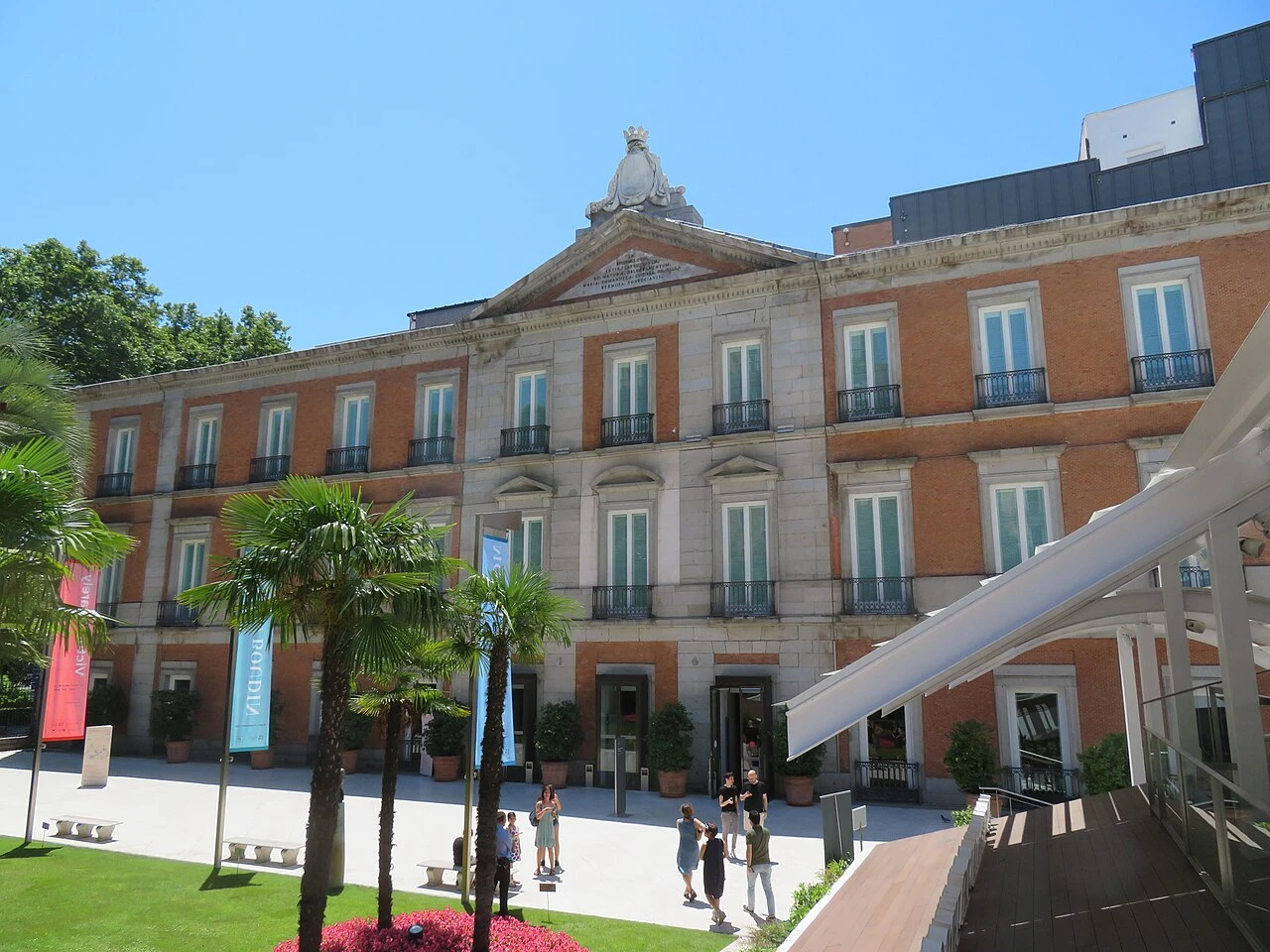
Madrid · 1 km
Thyssen-Bornemisza Museum
Content & sources
Kyle Magnuson from Los Angeles, United States · CC BY 2.0

Madrid · 1 km
Prado Museum
Content & sources
Emilio J. Rodríguez Posada · CC BY-SA 2.0
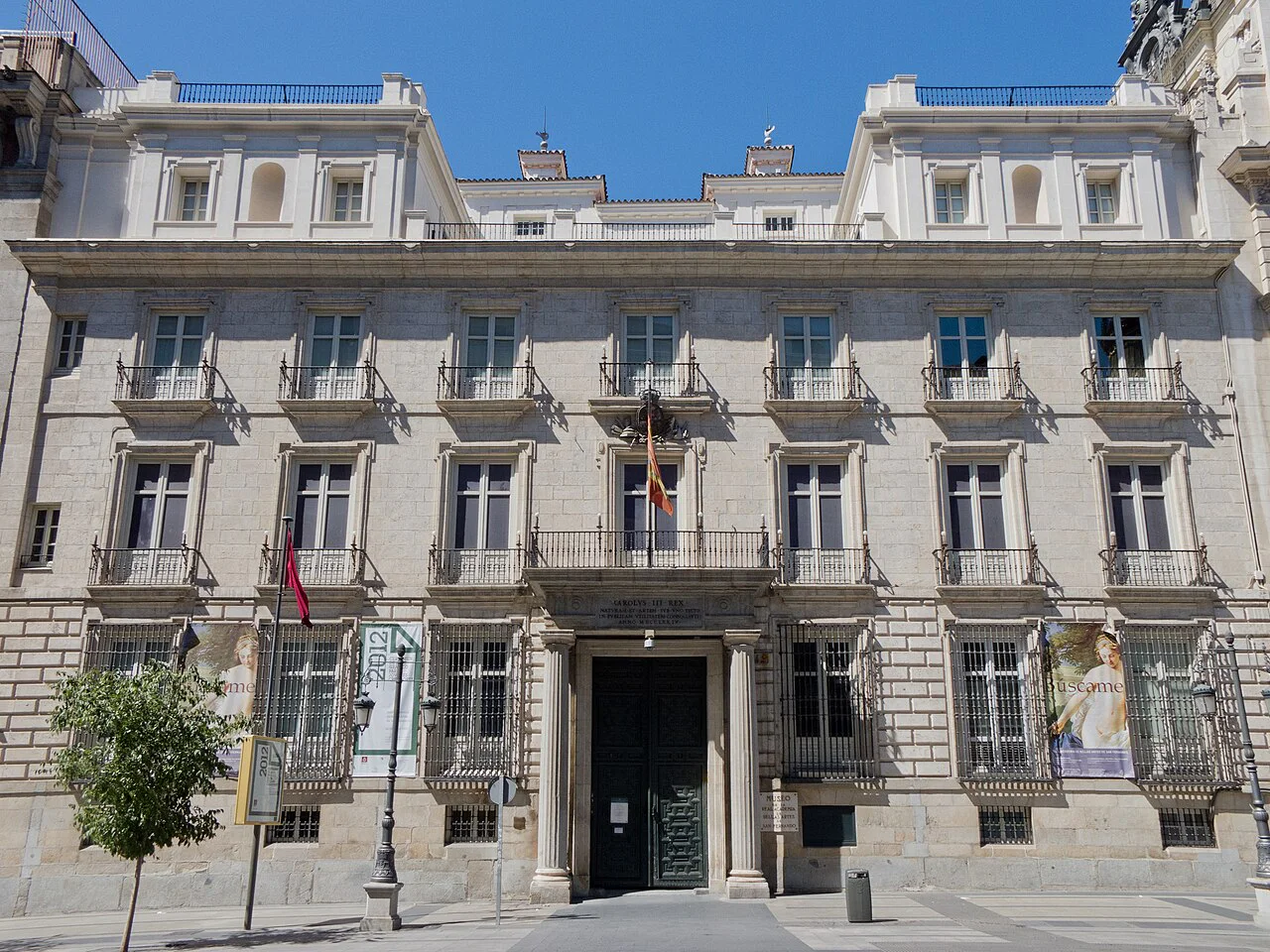
Madrid · 1 km
Real Academia de Bellas Artes de San Fernando
Content & sources
Carlos Delgado · CC BY-SA 3.0
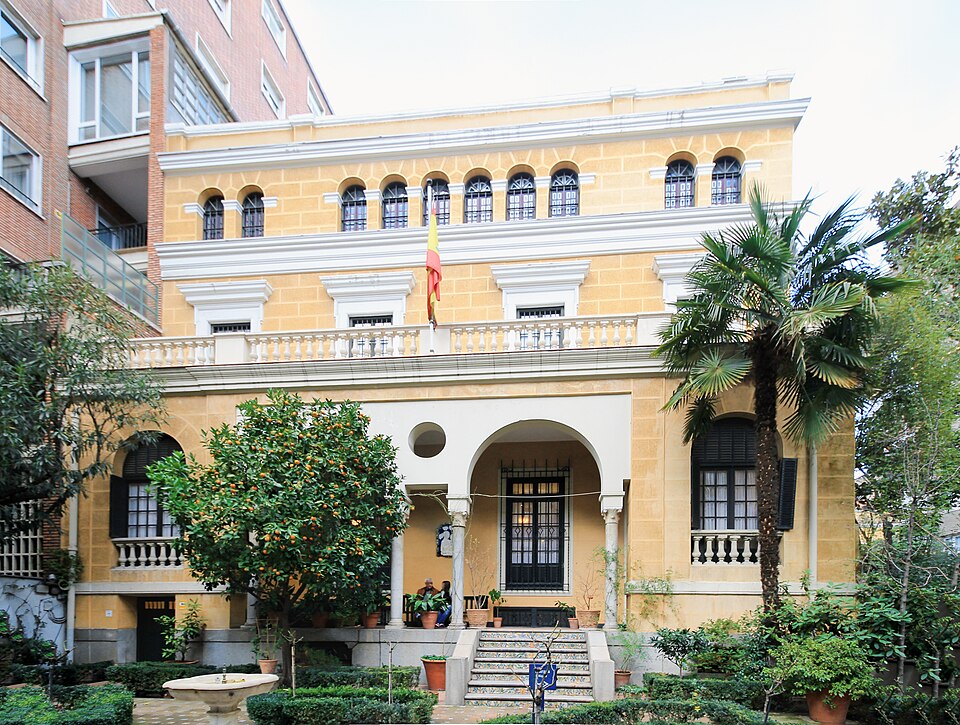
Madrid · 1 km
Sorolla Museum
Content & sources
Luis García (Zaqarbal) · CC BY-SA 3.0 es
Art museums
More art museum audio guides
Madrid · 69 artworks
Thyssen-Bornemisza Museum
Content & sources
Kyle Magnuson from Los Angeles, United States · CC BY 2.0
Madrid · 437 artworks
Prado Museum
Content & sources
Emilio J. Rodríguez Posada · CC BY-SA 2.0
Madrid · 23 artworks
Real Academia de Bellas Artes de San Fernando
Content & sources
Carlos Delgado · CC BY-SA 3.0
Madrid · 35 artworks
Sorolla Museum
Content & sources
Luis García (Zaqarbal) · CC BY-SA 3.0 es
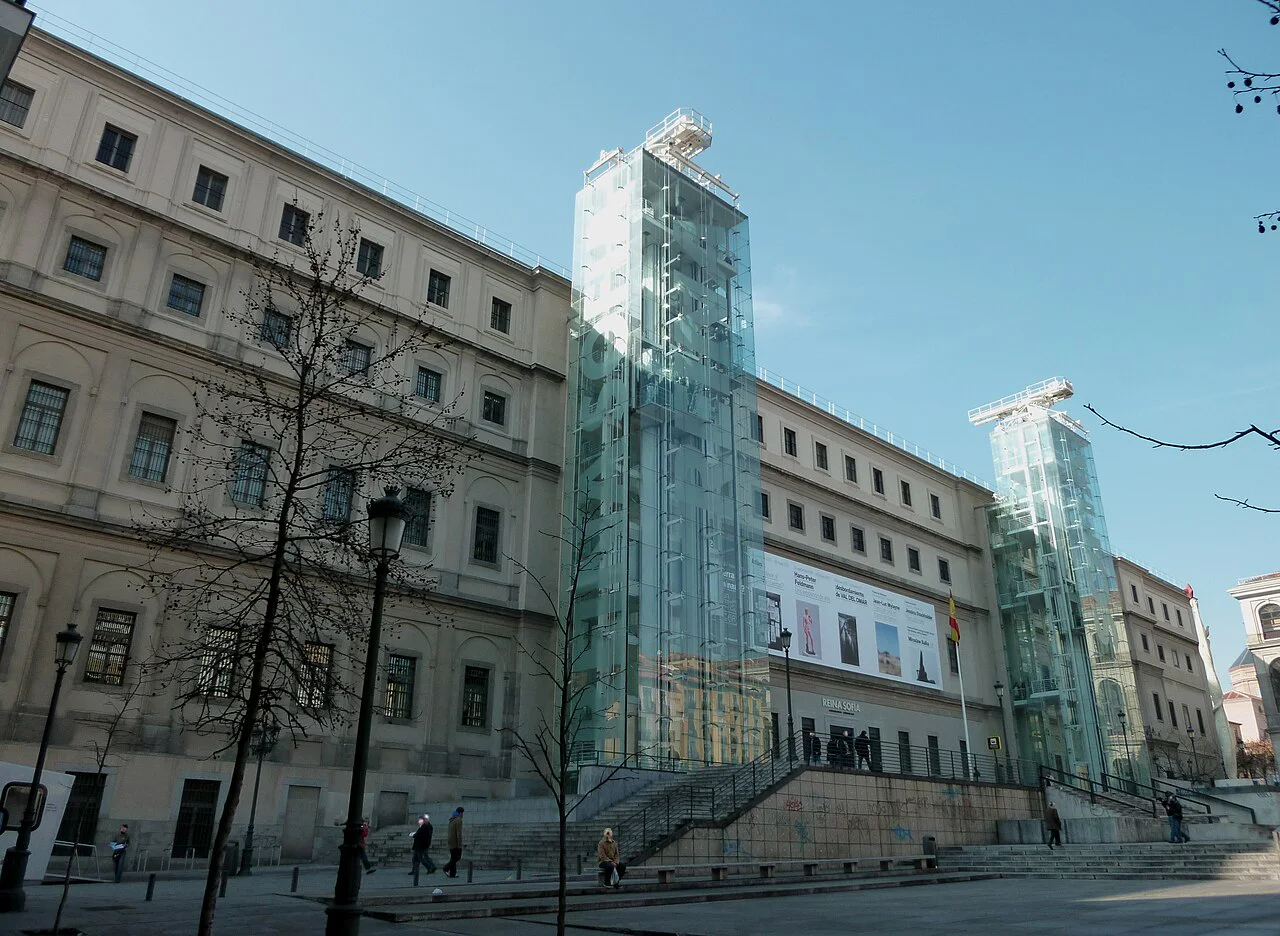
Madrid · 19 artworks
Museo Nacional Centro de Arte Reina Sofía
Content & sources
Luis García (Zaqarbal) · CC BY-SA 3.0
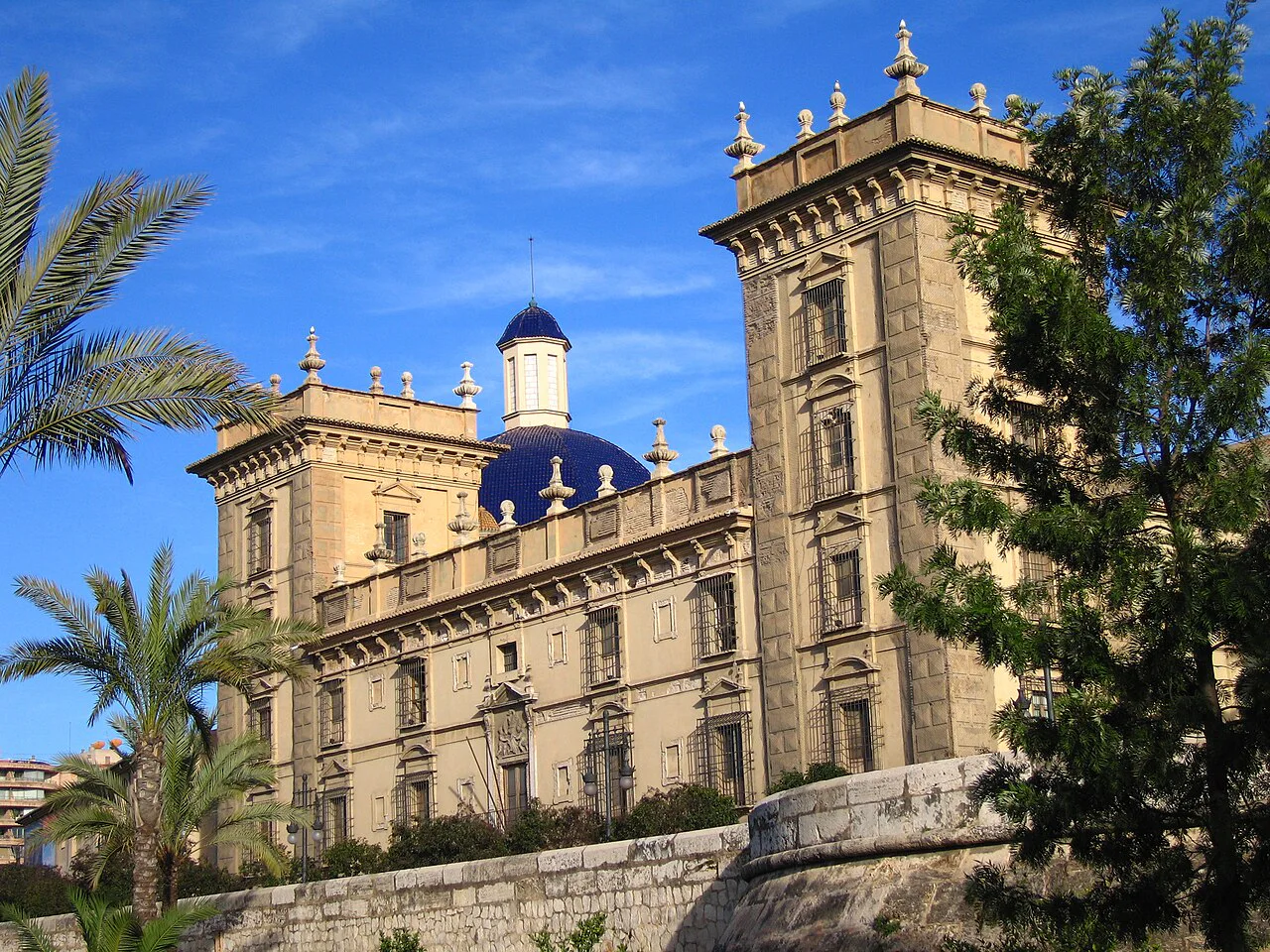
Valencia · 31 artworks
Museo de Bellas Artes de Valencia
Content & sources
Felivet · Public domain