Stanza · Audio guide
Real Academia de Bellas Artes de San Fernando Audio Guide
A place to remember. A story to take with you.
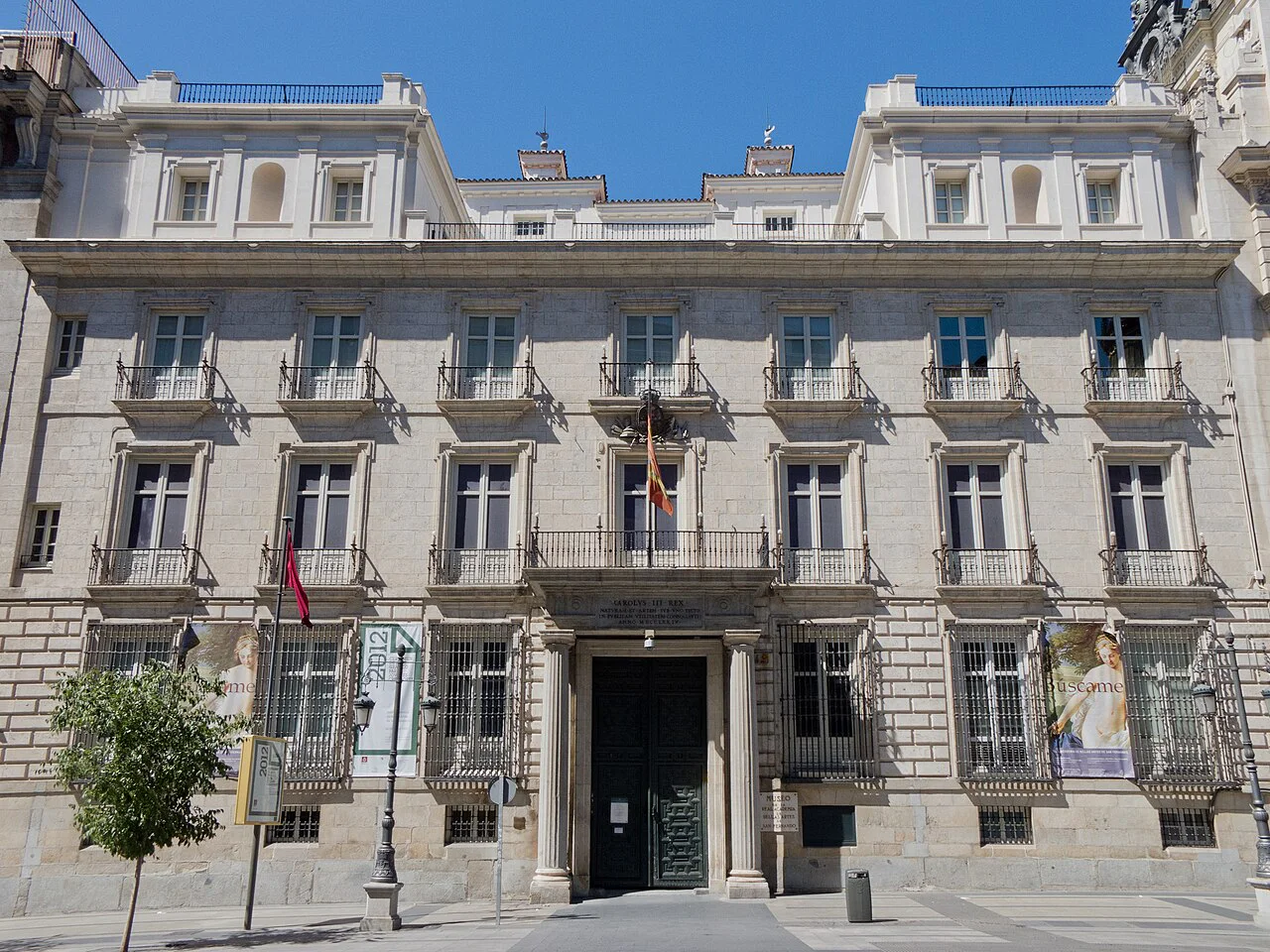
The Real Academia de Bellas Artes de San Fernando is a Spanish art school, museum, and gallery located on the Calle de Alcalá in Madrid. It is a public law corporation that functions as a museum and gallery…
Download Stanza, then search for “Real Academia de Bellas Artes de San Fernando”.
About the tour
One guide. Your kind of visit.
The Real Academia de Bellas Artes de San Fernando is a Spanish art school, museum, and gallery located on the Calle de Alcalá in Madrid. It is a public law corporation that functions as a museum and gallery and is integrated into the Instituto de España.
The Real Academia de Bellas Artes de San Fernando guide tells the stories of 23 artworks, including The Burial of the Sardine (Francisco Goya), Portrait of Pablo de Valladolid (Diego Velázquez), The Inquisition Tribunal (Francisco Goya), The Madhouse (Francisco Goya), Self-portrait in the Studio (Francisco Goya), Portrait of Manuel Godoy (Francisco Goya), A Procession of Flagellants (Francisco Goya), and La Tirana (Francisco Goya). Every artwork is free to hear in the Stanza app until 1 January.
Ready when you are.
- 01Get the free Stanza app.
iOS & Android
- 02Find your guide.
“Real Academia de Bellas Artes de San Fernando”
- 03Download before you go.
Works offline
Audio guide / 23 artworks
Inside the guide
Get to know a few of the stories before you go. Open a stop to read more.
01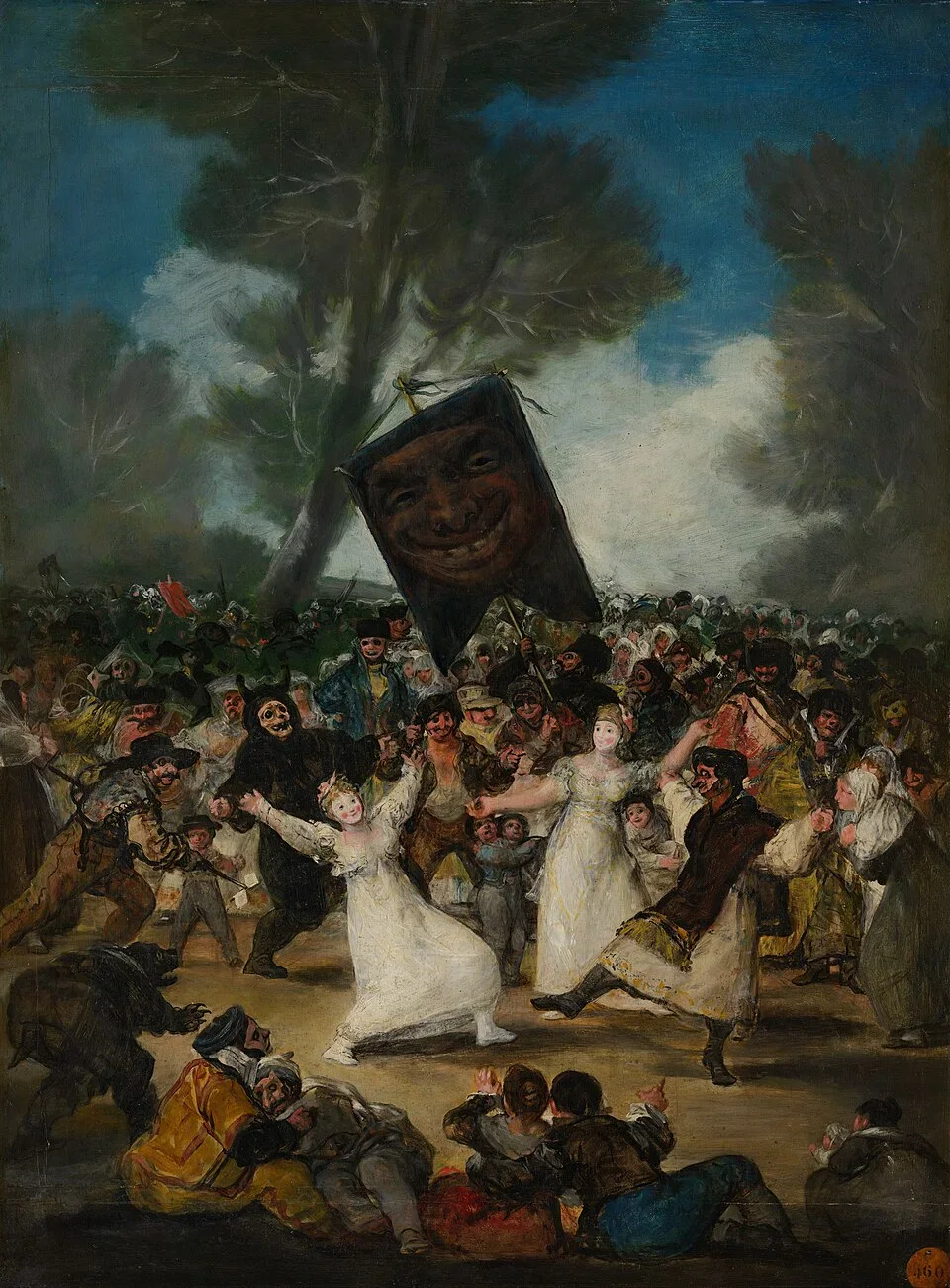
The Burial of the Sardine
Three days of carnival are nearly over, and the dancers are on their way to the banks of the Manzanares. This is the last day. They will bury a sardine, and then the feasting stops for Lent. Many wear masks. At the center, a black banner carries a darkly grinning figure, and the word for death, Mortus, is barely visible on it. That grin was not always there. Goya drew that banner first with the word standing large and clear. It mocked the banners carried in Good Friday processions, which announce Christ's death. Here it meant the death of fasting, of the fish the people give up for Lent. In that first drawing, the two women dancing at the center were nuns. He made them young women, with fantasy makeup turning their faces into masks, and replaced the stark word with the grin. The painting most likely dates from after Ferdinand the Seventh came back to absolute power, when mockery of the church and its authorities was forbidden. Carnival had been allowed while the French were in charge. Long before this, people wore masks like these to keep away the spirits of criminals and of those who had died violently.
Listen in the appFrancisco Goya · Public domain
02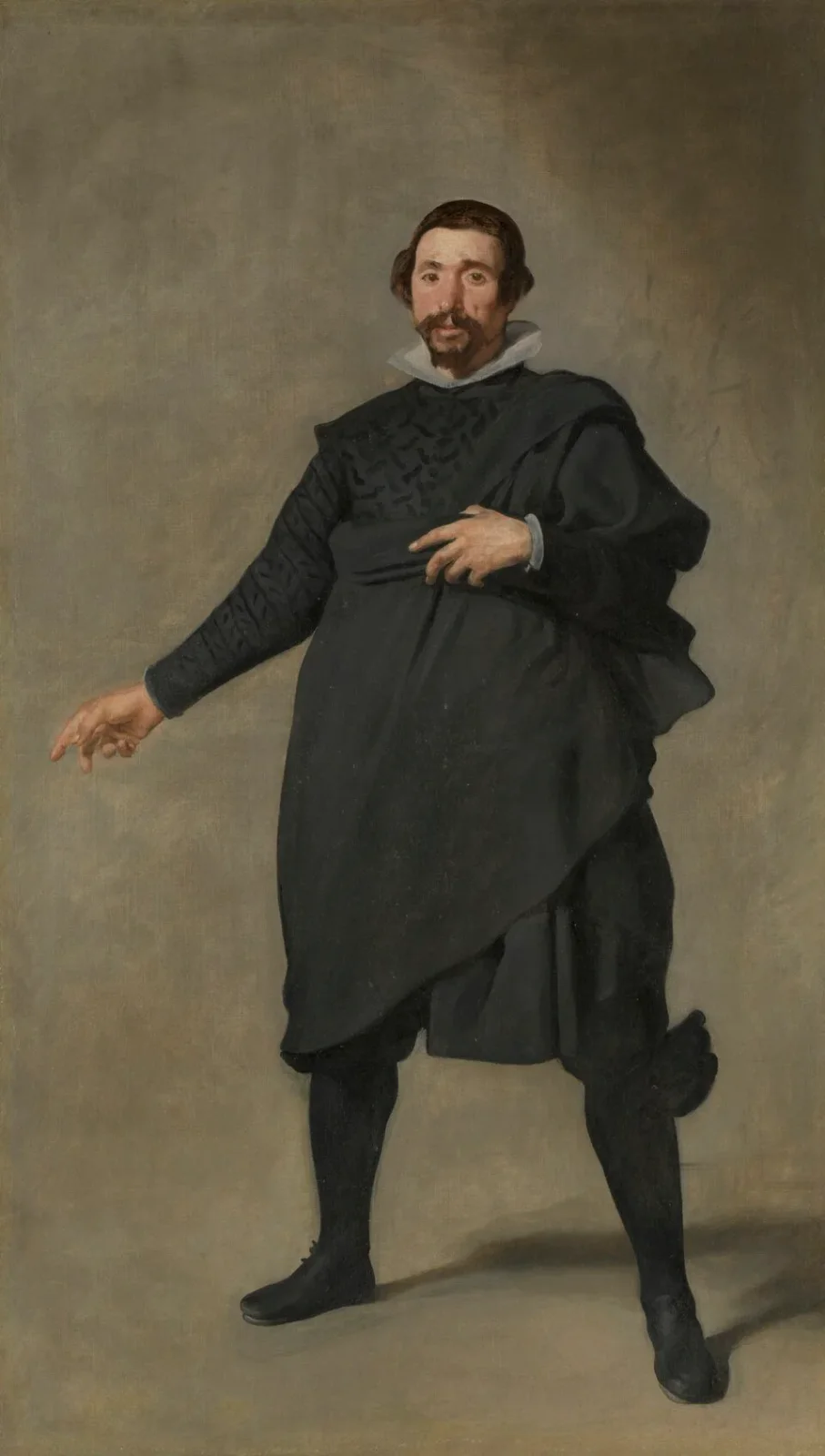
Portrait of Pablo de Valladolid
A man stands before you full length, legs spread wide, dressed in black. His left hand gathers the cape against his chest. His right arm reaches out, his hand raised in a speaker's gesture. There is no floor beneath him, no wall behind him, no line where the floor meets the wall. Only his shadow marks where his feet rest. That empty space is what Velázquez wanted. The man was a jester at Philip the Fourth's court, one of the men of pleasure who made the court laugh. The painter hung this portrait in the smaller rooms and passageways of the royal palaces, not among the formal pictures of the royal family. There he had more freedom to experiment. He set the figure sharp against a neutral background. He gave a jester the treatment of a saint in a heavenly vision, with nothing to tie him to a place. You can see where he changed his mind, in the left leg, which he first painted longer. The jester was called Pablillo, from Valladolid. In 1701 the palace inventory still named him, a jester with a ruff, by Velázquez. Later records left his name out. At the academy in 1816 he was called Portrait of a mayor. It went to the Prado in 1827, where the catalogue listed it as Unknown Portrait.
Listen in the appDiego Velázquez · Public domain
03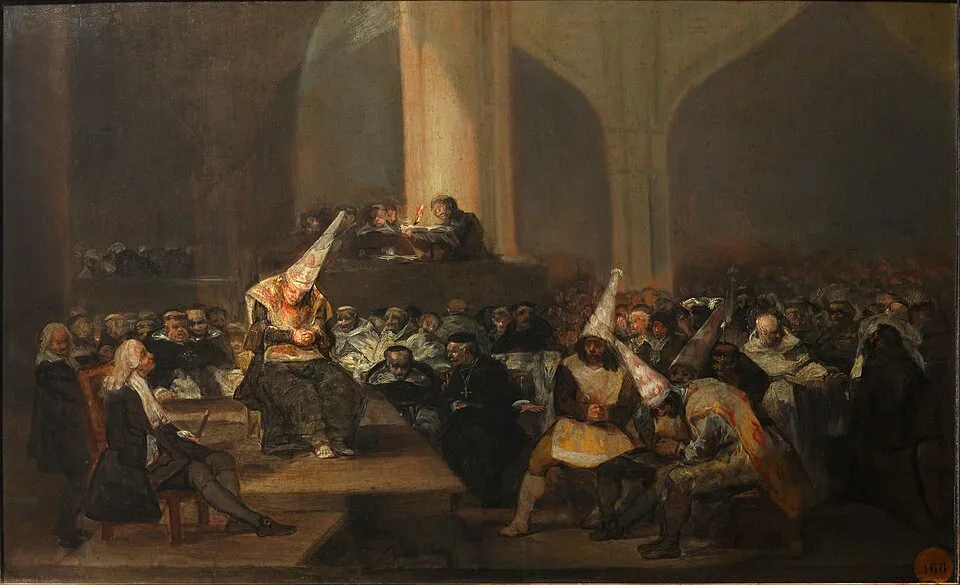
The Inquisition Tribunal
To paint the Inquisition holding court, in the years Ferdinand the Seventh ruled Spain, was a risky thing to do. Such a scene could be called an attack on the clergy, and might get its painter into trouble. Goya painted it anyway. He was one of the liberals who wanted such customs ended, and Ferdinand was set against any change. And he knew what the Inquisition could do. It had summoned him twice. The first time, in 1799, was over a series of prints. The second, in 1815, was over two paintings found among the seized property of Manuel Godoy. Both times he escaped serious punishment. Inside the church are four accused people, ringed by inquisitors, mostly monks, with a single secular judge. Each wears a sleeveless vest that names the supposed offence. The ceremony was a public ordeal meant to shame and break someone accused of heresy. Often the accused were tortured first, until they confessed. The accused and their judges are the only figures picked out in the light. Behind them the crowd that came to watch is one blurred mass, shut in by darkness and Gothic architecture. On the pointed hats, flames are painted. They could mean these four were to be burned at the stake.
Listen in the appFrancisco Goya · Public domain
04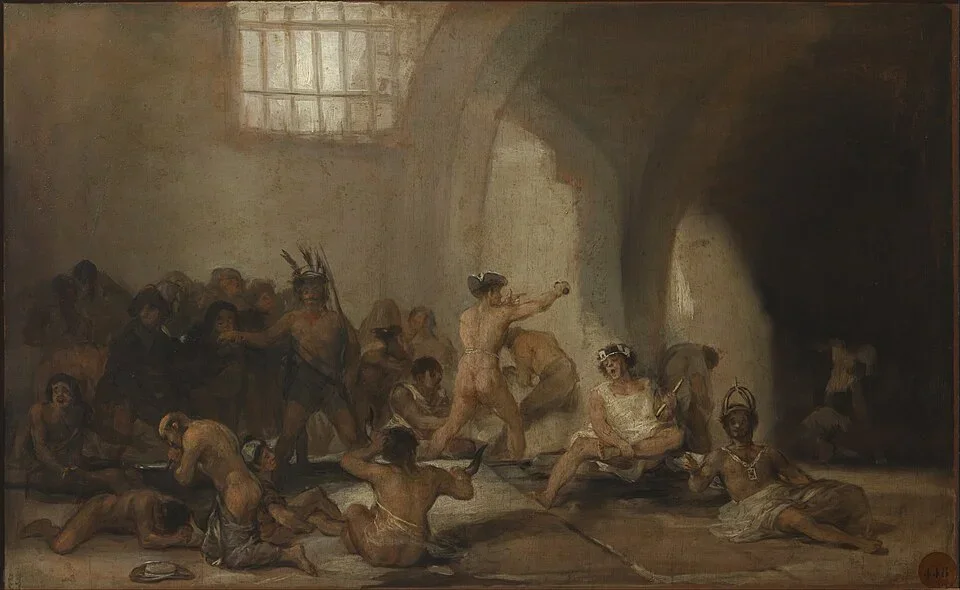
The Madhouse
What kind of place is this? One window, high on the wall, is the only light. Bars are set across it to press down on the people below, not to help them. Many are naked, and their postures and gestures show their pitiful state. One seems to wear a wild feathered headdress. One fights in a tricorne hat. Another makes a gesture of blessing toward you. The hat and the blessing could mock the army and the clergy, turning the social world upside down. But this room was not invented. Goya had seen such a place in Saragossa, and he knew madness from his own life. In 1792 he fell gravely ill. He struggled to keep his balance, went partly blind, lost his hearing, and stayed deaf for the rest of his life. Depression followed, and he wrote of raving with a mood he could not bear. An aunt and uncle of his had suffered madness. In an earlier painting he had put such patients out in a yard, with a guard trying to hold them down. Here he brings them inside and paints them as people who suffer, given more humanity and made more individual than that scene allowed. He said this one ended a set of paintings made outside his commissioned work, where he could observe freely and let his imagination go.
Listen in the appFrancisco Goya · Public domain
05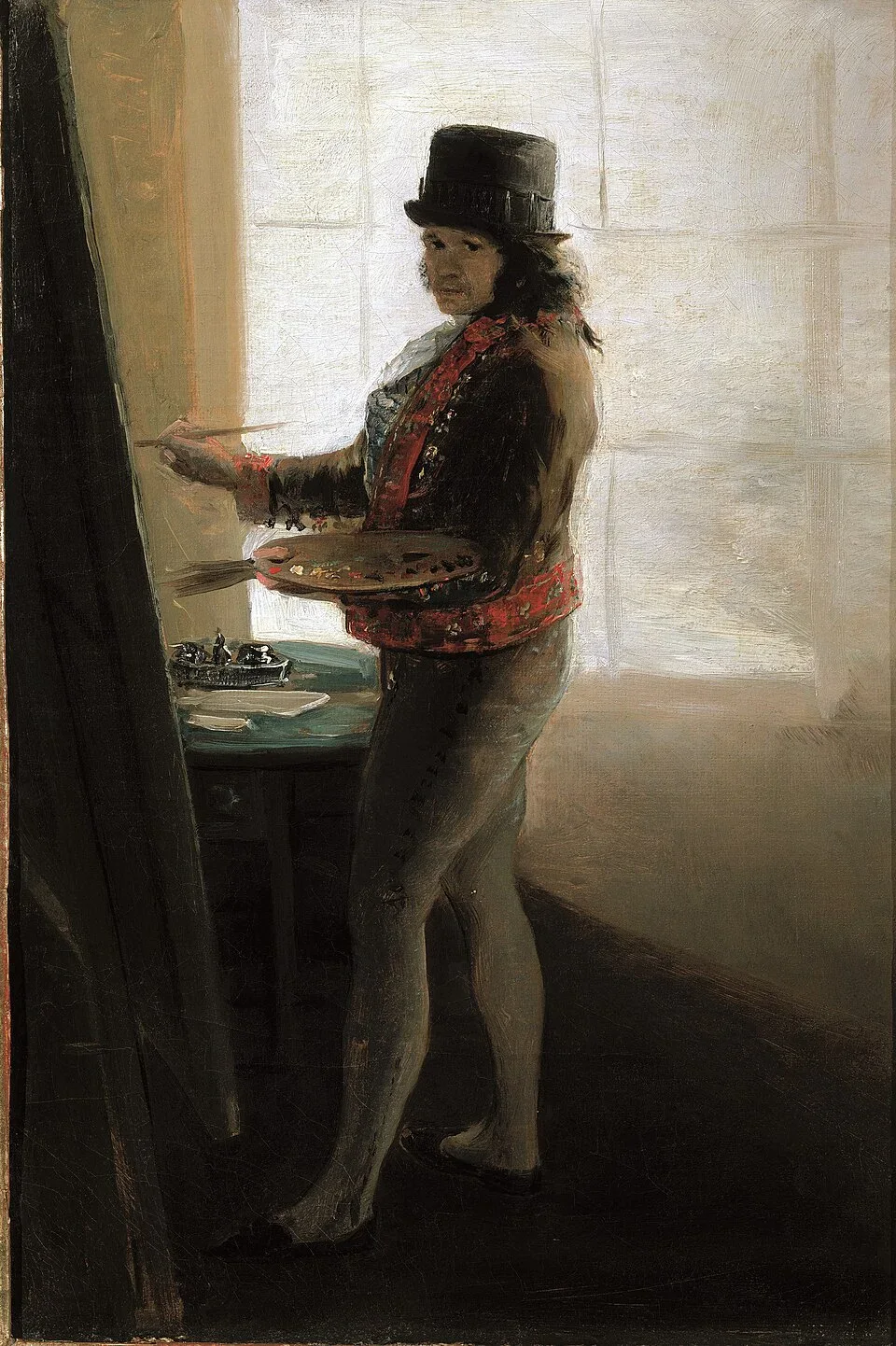
Self-portrait in the Studio
On the painter's head is a curious hat. Metal holders are fixed around the brim to carry candles. Goya liked to finish a picture at night, adding the last touches by candlelight. His son said he worked in a single session, sometimes ten hours long, and never in the late afternoon. That speed is what made his name. People were amazed how quickly he painted a portrait, and how lifelike it looked. And here he shows himself at work. He stands back from a large unfinished canvas, palette and brushes in hand. His eyes leave the canvas and turn toward the person in front of him. Bright light pours through a big window behind him and leaves him in shadow. He wears the fashionable clothes of his day, not the clothes he worked in. The picture is small, and it seems he made it for himself, not for a commission. We never learn who that person is.
Listen in the appFrancisco Goya · Public domain
06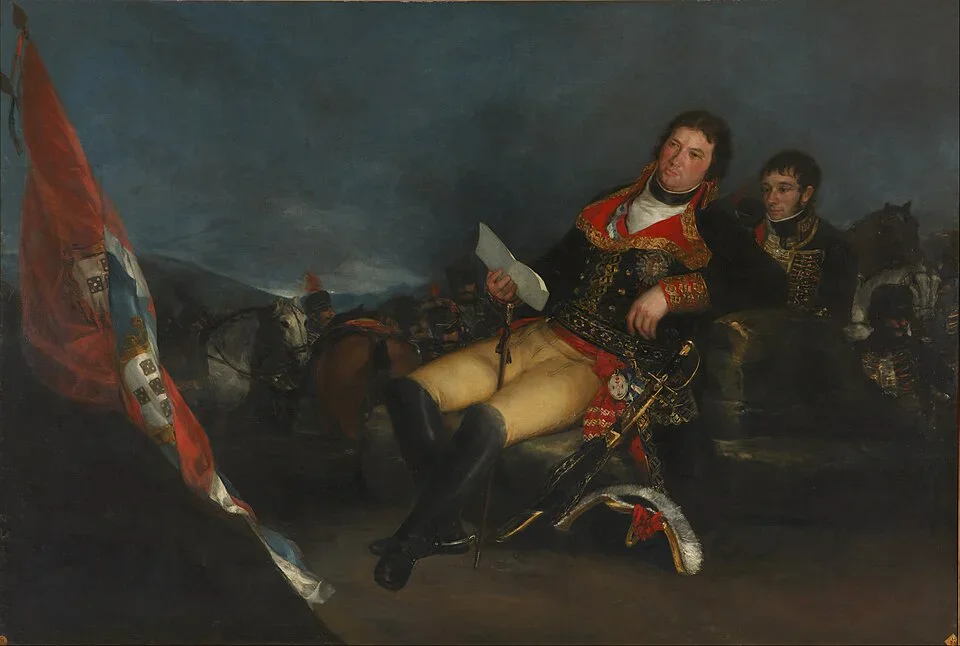
Portrait of Manuel Godoy
The man stretched out here wanted to be seen as a hero. In 1801 he had won the War of the Oranges against Portugal. He stood at the very top of power in Spain, just below the king. Manuel Godoy asked his friend Goya to paint the victory. Goya gave him everything that goes with command. Portuguese banners fill the foreground, taken from the enemy army and awarded to Godoy that July. Hussars and cavalry officers with their horses fill the background. A baton of command lies between his legs. But Godoy reclines, in the relaxed pose Goya used for women on couches. That is an unusual way to show a hero of a military victory, and there is a trace of mockery in it. Goya had already put Godoy into his satirical prints. Godoy never turned against the painter. He was one of Goya's most important patrons. Years later, in France, he wrote of Goya's satires with pride, as if he had published them himself.
Listen in the appFrancisco Goya · Public domain
07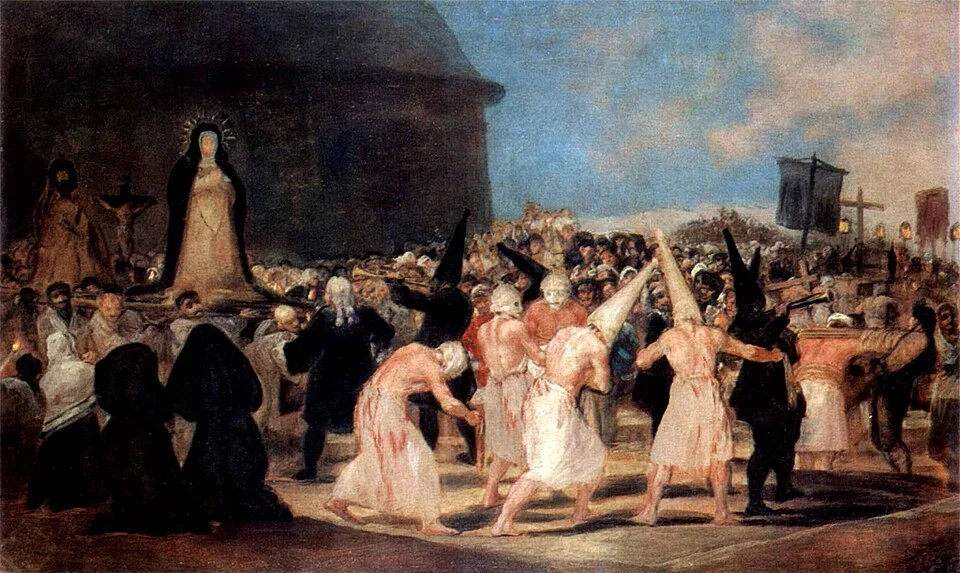
A Procession of Flagellants
Men in white walk in a procession, whipping their bared backs and pulling statues of the Virgin and of Christ. Devotees in black hoods kneel along the route. Goya hated fanaticism, and he probably chose this subject to attack this public penance, not to record a ceremony. The blood on the central figure's white garment gives it away. The men in white are lit and drawn as distinct people, and they dominate the scene. Behind them, the faithful fade into an anonymous crowd under a cloudy blue sky. A dark wall divides the two, and may stand for the weight of religion. On the right, a man is impaled. Such processions were banned in 1777, but the ban kept being repeated, in 1779 and again in 1802. Goya made it as one of a series on Spain's crueler customs, which he and other liberals wanted reformed against Ferdinand the Seventh's absolutism.
Listen in the appFrancisco Goya · Public domain
08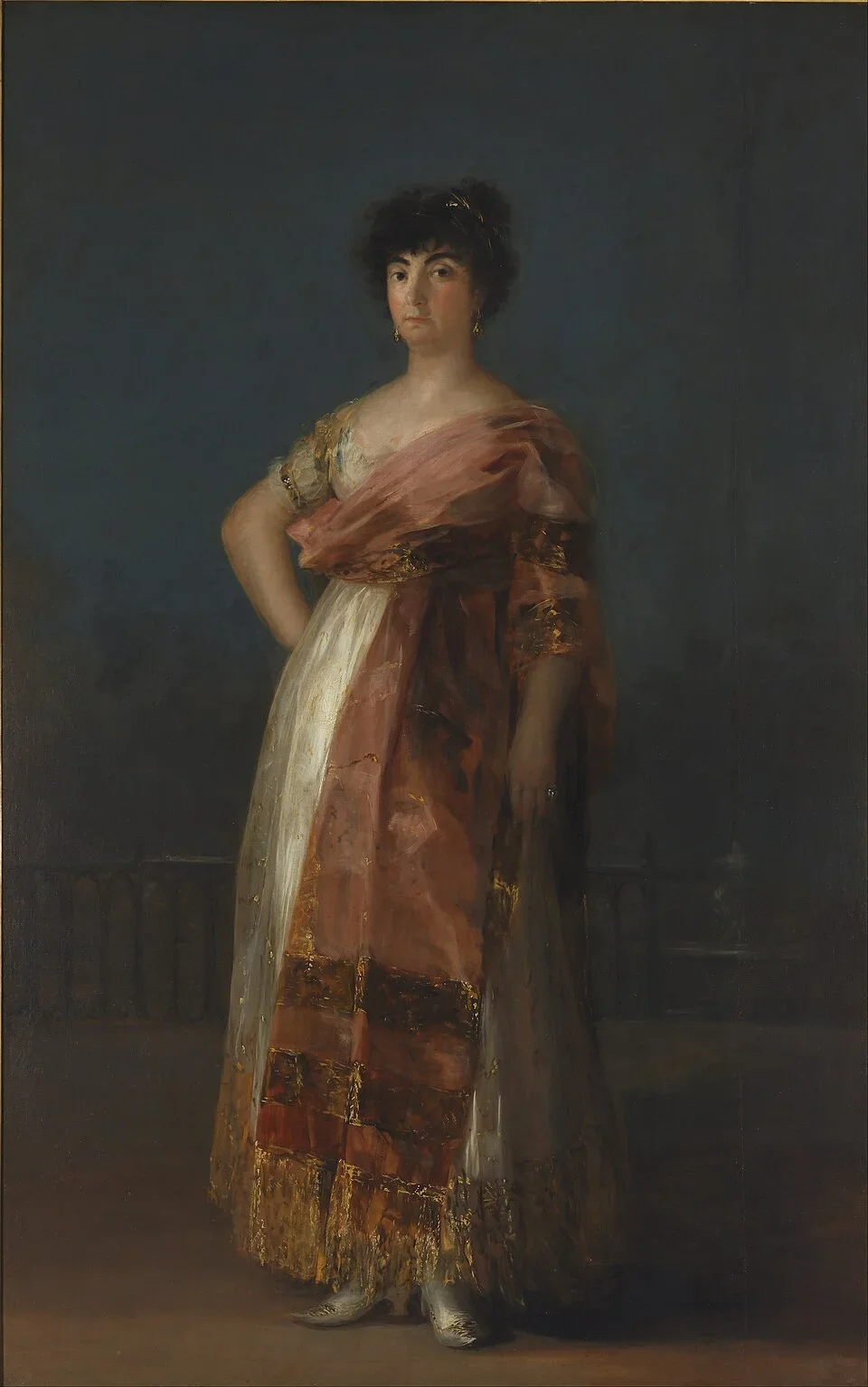
La Tirana
Here she stands, out in the open, in a white dress with a bright pink shawl crossed over it, edged in gold. Behind her are a black iron railing and a fountain, as though the gardens of a palace lay just beyond. She wears earrings and rings, and white shoes, the fashion of the day. She is María del Rosario Fernández, a famous stage actress whom the playwright Moratín praised in verse. Yet the name everyone knows her by, La Tirana, was never really hers. It came from her husband, the actor Francisco Castellanos, nicknamed El Tirano because he so often played tyrants on stage. His wife simply inherited the name. Goya loved the theater, and this was the first of two portraits he made of her. In 1816 a relative of hers, Teresa Ramos, gave it to the Academy, the second Goya painting to enter it. When exactly he painted it is still not known.
Listen in the appFrancisco Goya · Public domain
09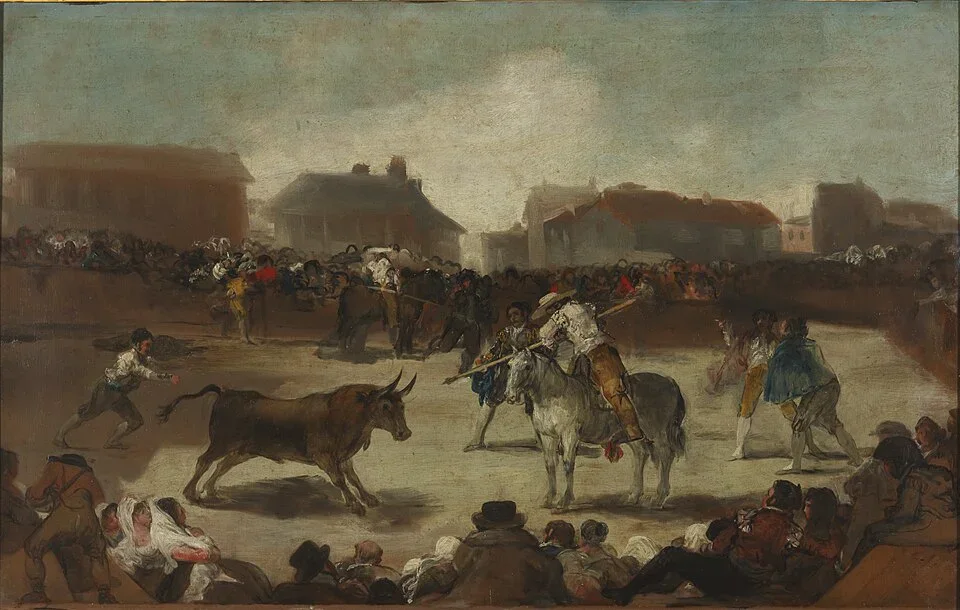
A Village Bullfight
No one knows just when this was painted. The clothes are the nearest clue, pointing somewhere between 1814 and 1816. Those were uneasy years in Spain. Ferdinand the Seventh was back on the throne, and the court hunted down anyone who had worked for the French. Goya had been a court painter under Joseph Bonaparte. From late 1814 into 1815, he could not know whether his friends' testimony would clear his name. In the end it did. A whole village has turned out for this bullfight. A fence of wooden beams rings the arena, and the crowd sits on steps in a semicircle. At the center, a mounted picador gets ready to thrust his lance into a tense bull. The point of the lance and the bull's horns lie in the middle of the scene. The audience further back is barely sketched, blurred into one anonymous mass. He loved bullfighting, yet he did not paint it as a pleasant pastime. This is one of four small pictures tied together by madness, most likely made with no one asking. On the right, one woman breaks the row of turned backs. Her eyes are wide, and she gazes straight out at you. Of all the people here, she alone is aware of the brutality of bullfighting and the madness that has taken over the crowd.
Listen in the appFrancisco Goya · Public domain
10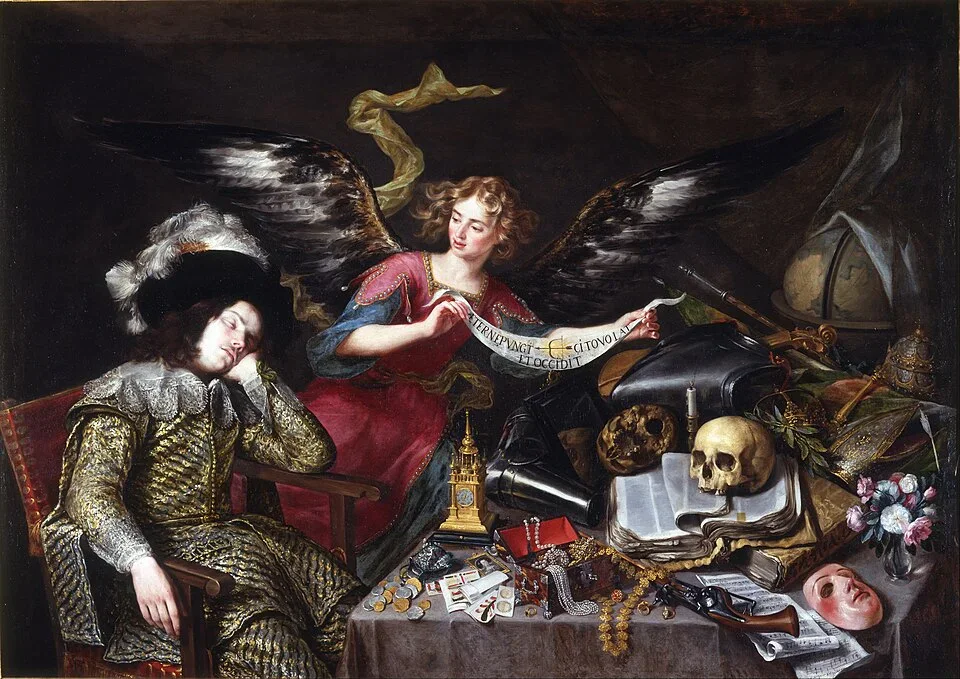
The Knight's Dream
A theatre mask lies on the table, and here it stands for hypocrisy. It is part of a dream. The table belongs to a young nobleman asleep in an armchair on the left, his head pale with sleep and resting on one hand. Everything on it, set against a pitch black background, makes up his dream of the world and all its vanity. Jewels and coins are set out, the kind of riches you cannot carry into the next world. A globe stands for the urge to conquer. A clock marks time running out. There are two skulls with a candle between them, a sign that life does not last. An angel flies in and opens a banner, showing him an arrow above the sun. The words on the banner say it wounds, flies swiftly and kills. The angel wants the sleeper to understand that pleasure, wealth, honour and glory all pass away. The painting goes by Pereda's name, though some believe Francisco Palacios painted it.
Listen in the appAntonio de Pereda · Public domain
- 11
Leandro Fernández de Moratín
Francisco Goya · 1799
- 12
Equestrian portrait of Ferdinand VII
Francisco Goya · 1808
- 13
Portrait of Juan de Villanueva
Francisco Goya · c. 1800–1805
- 14
José Luis Munárriz
Francisco Goya · 1815
- 15
The Vision of Saint Alphonsus Rodriguez
Francisco de Zurbarán · 1630
- 16
The Brazen Serpent
Jusepe Leonardo · 1630–1640
- 17
The Assumption of Mary Magdalene
Jusepe de Ribera · 1636
- 18
Saint Jerome
Antonio da Correggio · c. 1516–1517
- 19
portrait of George Washington
Giuseppe Perovani · 1796
- 20
View of Toledo
Ignacio Zuloaga · c. 1911
- 21
Self-portrait of Goya
Francisco Goya · 1815
- 22
The Family of El Greco
El Greco, Jorge Manuel Theocupulus · c. 1605
- 23
The Spring
Giuseppe Arcimboldo · 1563
Real Academia de Bellas Artes de San Fernando
Frequently asked questions
How much does the guide cost?
Free app download. Free until 1 January. Listed guide price: $0.99. Audio guide only. Venue admission is separate.
Can I listen without internet?
Yes. Download the guide’s audio, images, and maps in the app before your visit. Your downloaded content is then available offline.
Can I listen in my language?
In English for now. More languages soon.
Do I need to follow a schedule?
No. This is a self-guided experience. Choose your stops, pause whenever you like, and return to a story at your own pace.
Which artworks are in the Real Academia de Bellas Artes de San Fernando audio guide?
23 artworks, including The Burial of the Sardine (Francisco Goya), Portrait of Pablo de Valladolid (Diego Velázquez), The Inquisition Tribunal (Francisco Goya), The Madhouse (Francisco Goya), Self-portrait in the Studio (Francisco Goya), Portrait of Manuel Godoy (Francisco Goya), A Procession of Flagellants (Francisco Goya), and La Tirana (Francisco Goya). The full list is on this page.
Is this the museum’s official audio guide?
No. Stanza is an independent audio guide app and is not affiliated with Real Academia de Bellas Artes de San Fernando. Museum admission is separate.
At your own pace
Explore Real Academia de Bellas Artes de San Fernando.
Download Stanza, then search for “Real Academia de Bellas Artes de San Fernando”.
Free app download · Guide price shown in the app
Keep exploring
Nearby audio guides
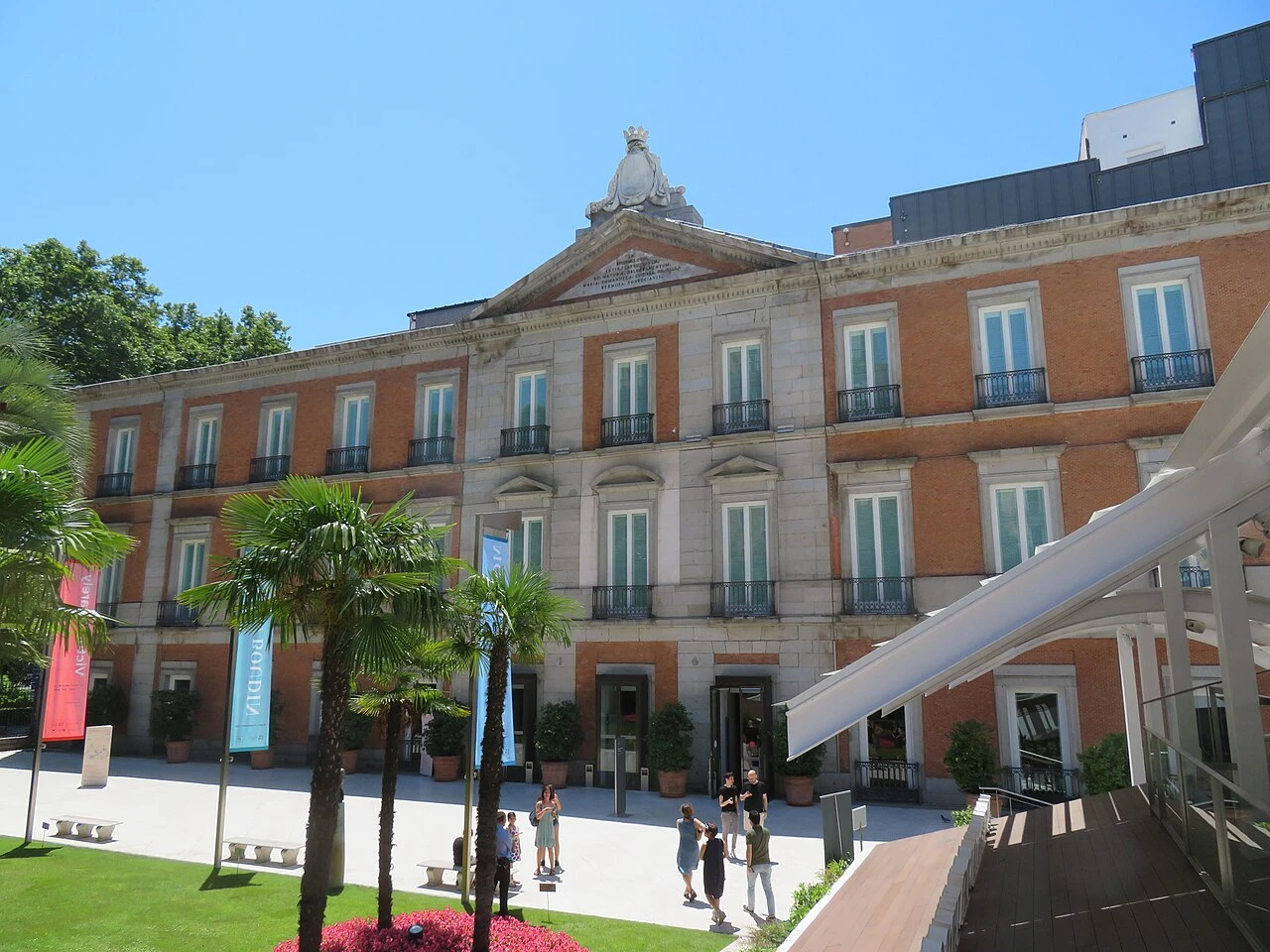
Madrid · 1 km
Thyssen-Bornemisza Museum
Content & sources
Kyle Magnuson from Los Angeles, United States · CC BY 2.0
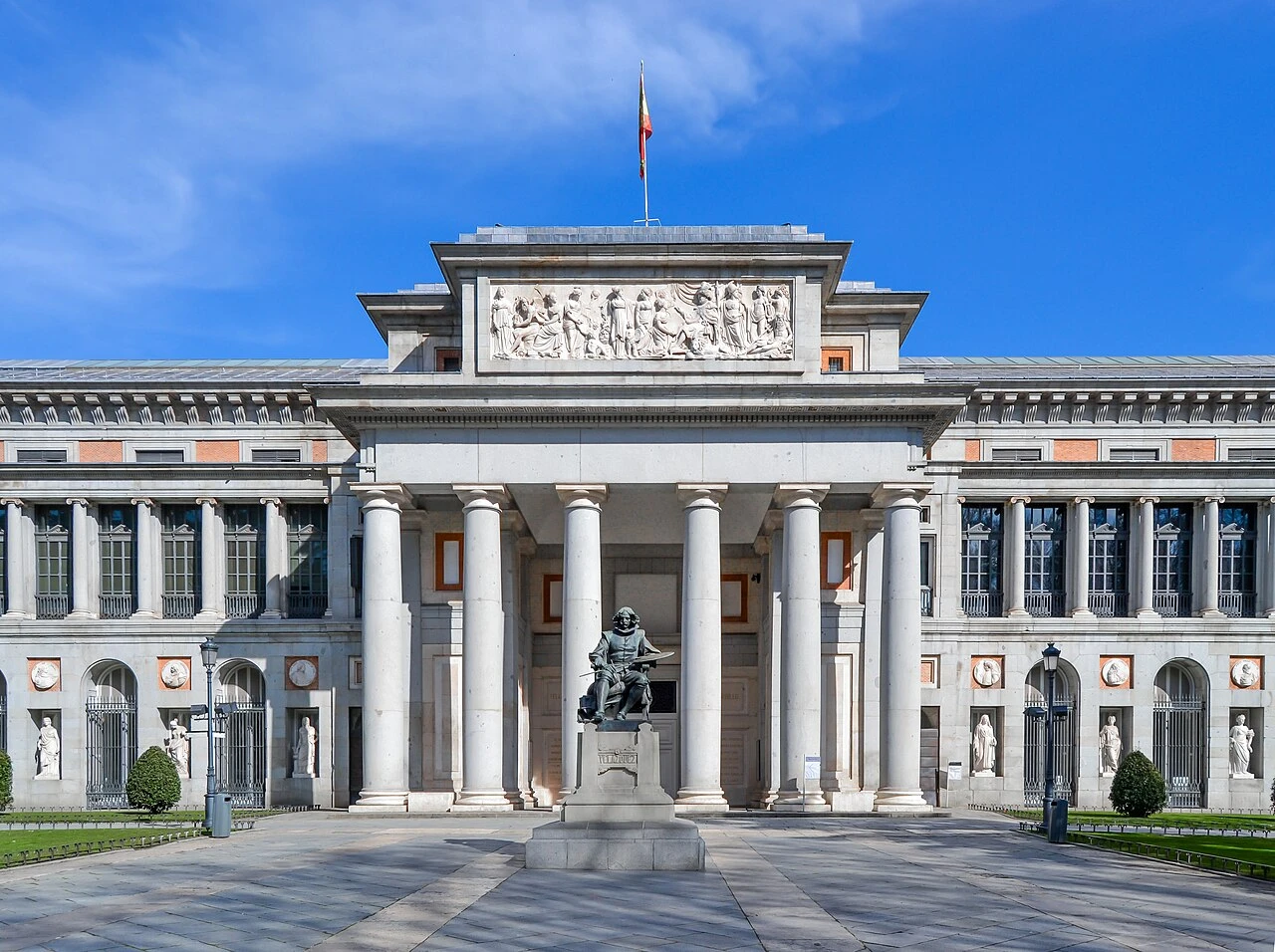
Madrid · 1 km
Prado Museum
Content & sources
Emilio J. Rodríguez Posada · CC BY-SA 2.0
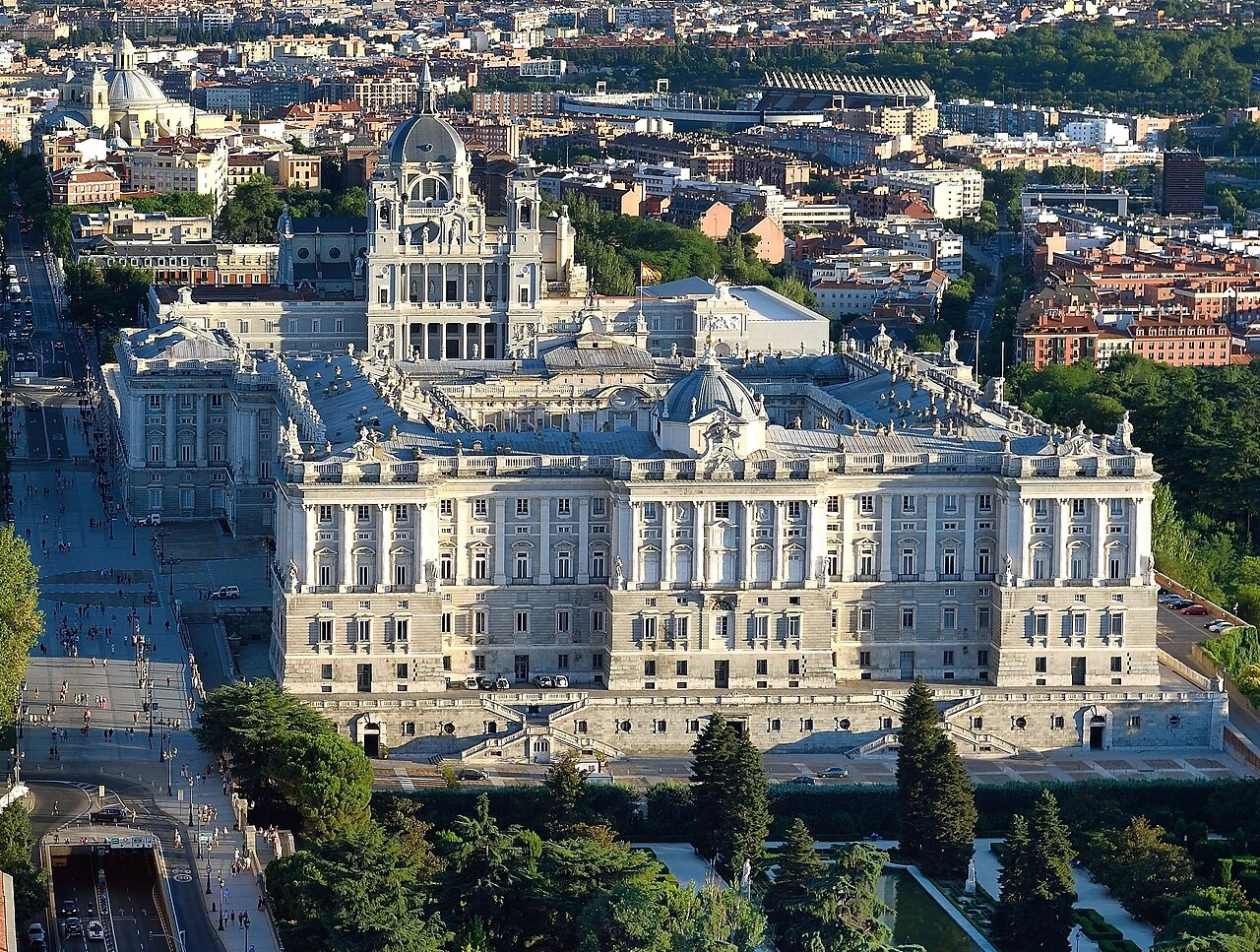
Madrid · 1 km
Royal Palace of Madrid
Content & sources
Tim Adams · CC BY-SA 4.0
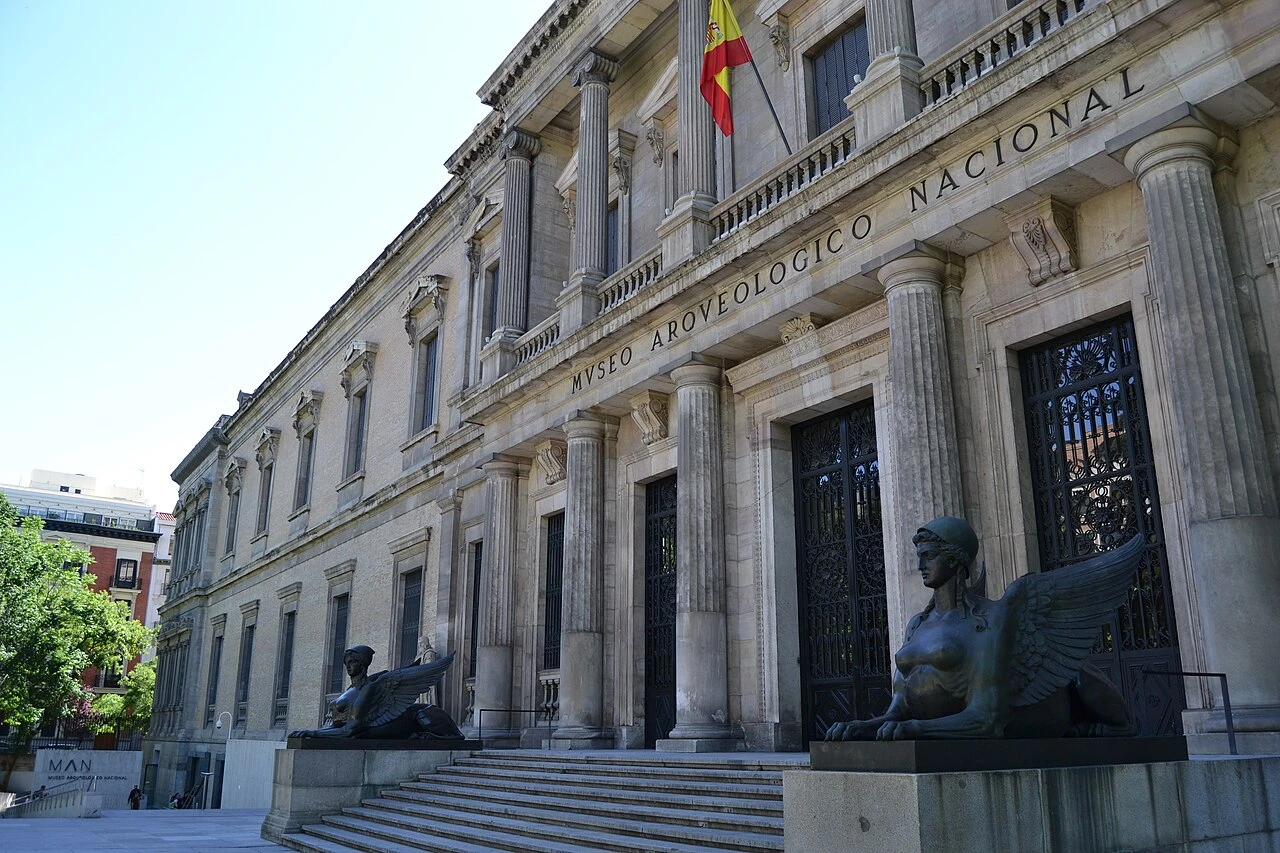
Madrid · 1 km
National Archaeological Museum of Spain
Content & sources
Emilio J. Rodríguez Posada · CC BY-SA 2.0
Art museums
More art museum audio guides
Madrid · 69 artworks
Thyssen-Bornemisza Museum
Content & sources
Kyle Magnuson from Los Angeles, United States · CC BY 2.0
Madrid · 437 artworks
Prado Museum
Content & sources
Emilio J. Rodríguez Posada · CC BY-SA 2.0
Madrid · 96 artworks
National Archaeological Museum of Spain
Content & sources
Emilio J. Rodríguez Posada · CC BY-SA 2.0
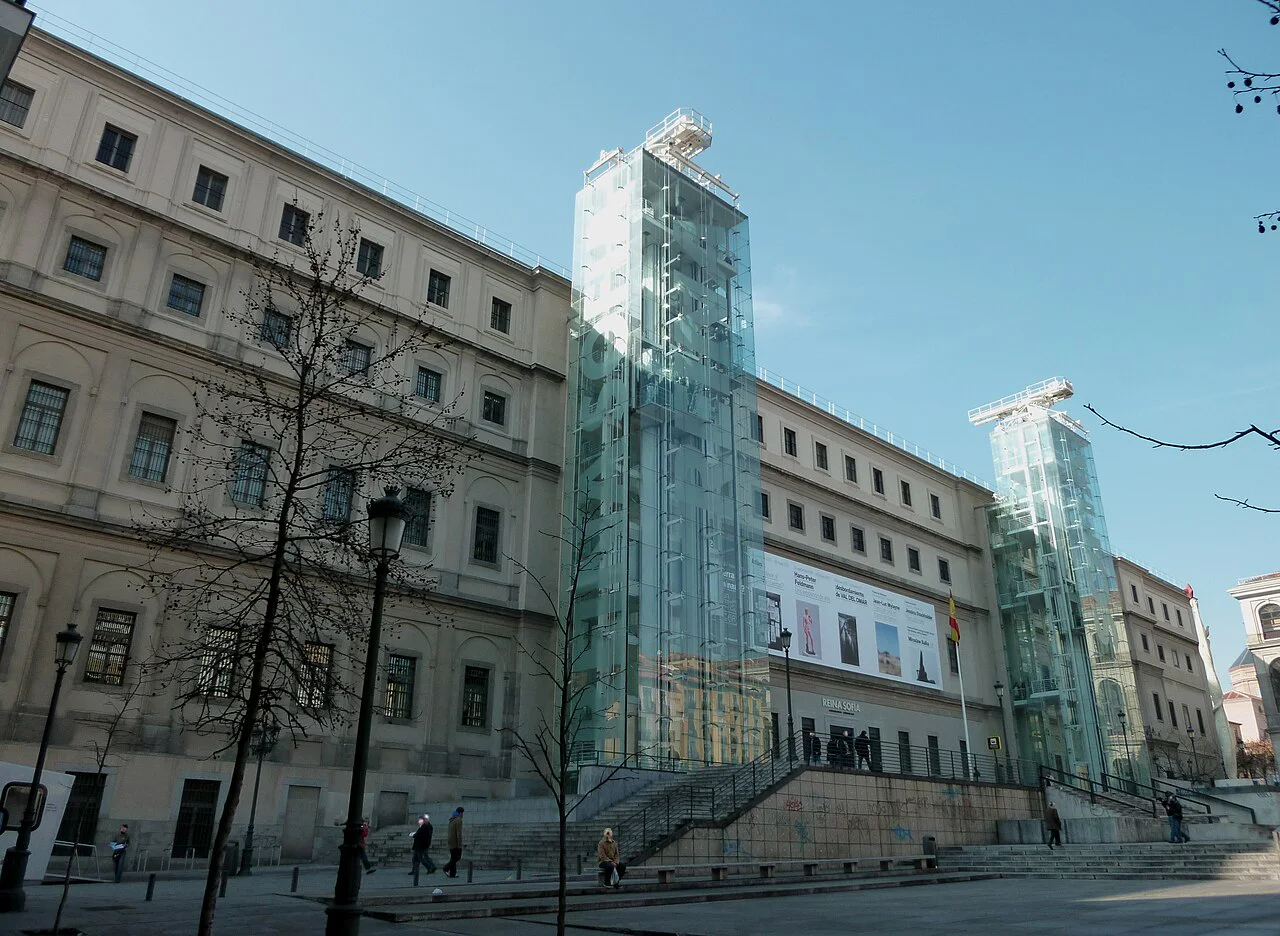
Madrid · 19 artworks
Museo Nacional Centro de Arte Reina Sofía
Content & sources
Luis García (Zaqarbal) · CC BY-SA 3.0
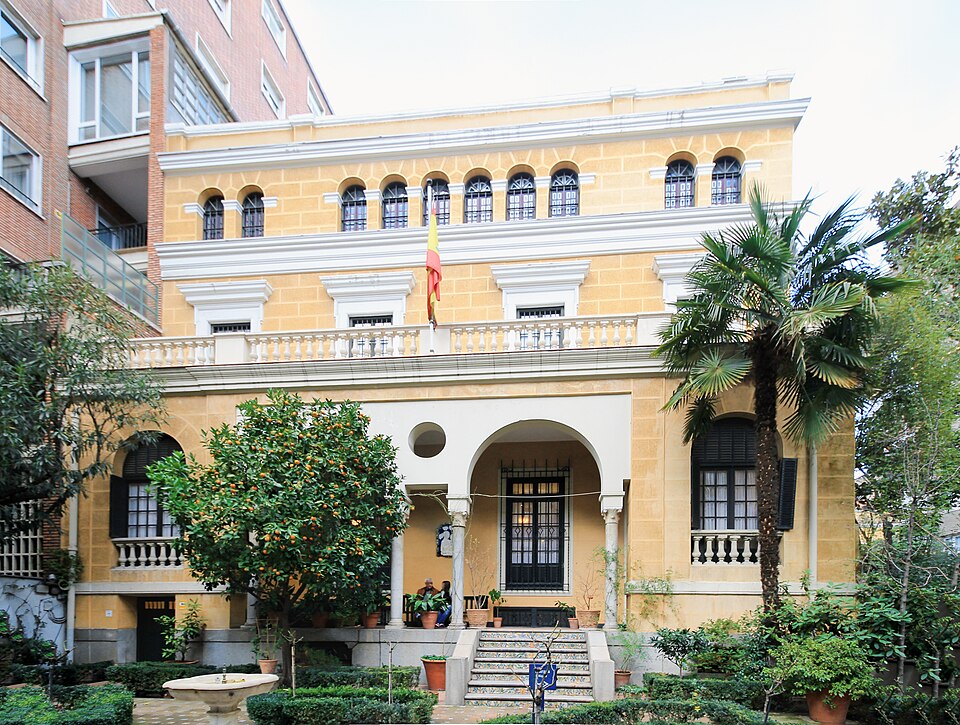
Madrid · 35 artworks
Sorolla Museum
Content & sources
Luis García (Zaqarbal) · CC BY-SA 3.0 es
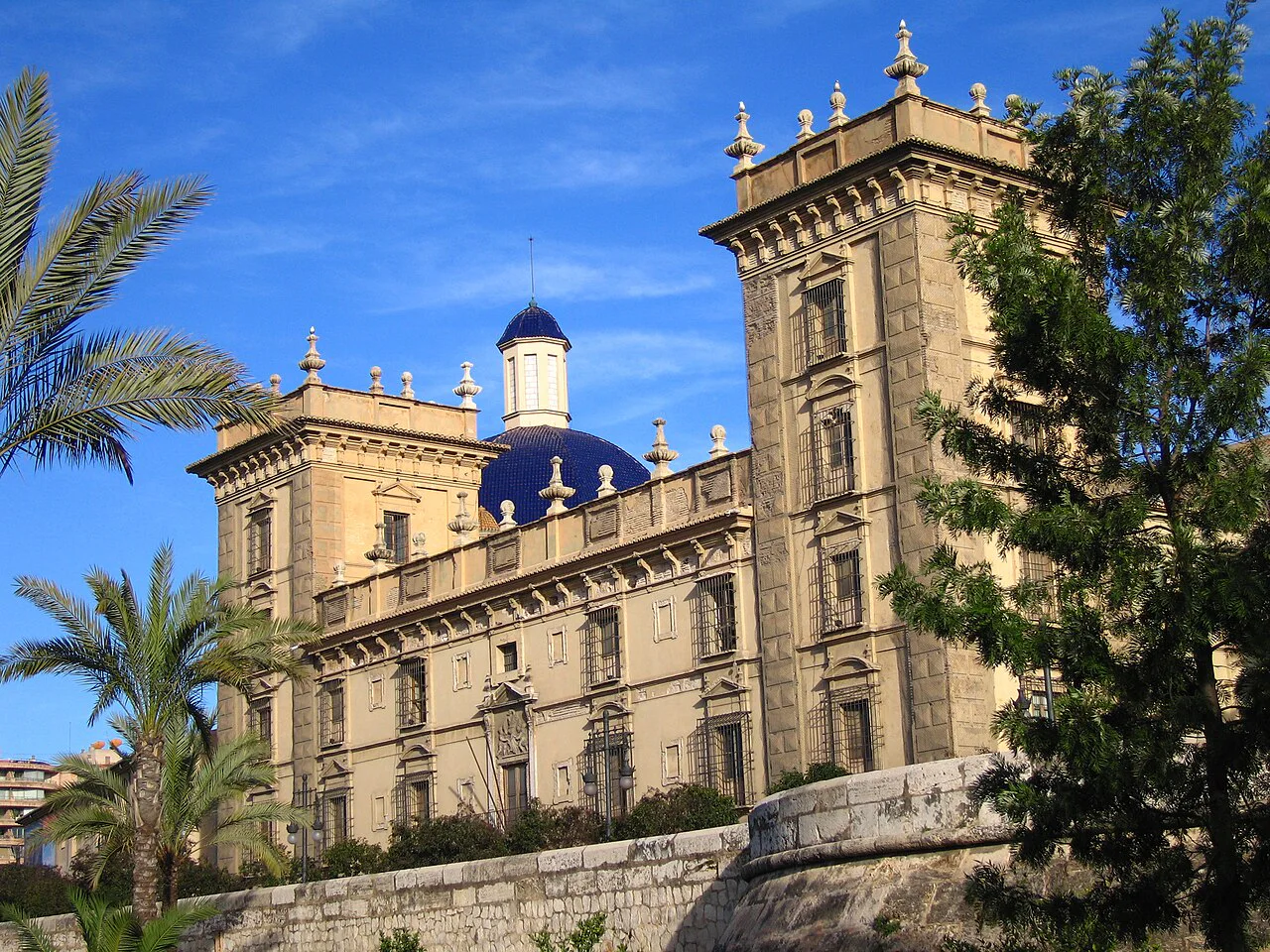
Valencia · 31 artworks
Museo de Bellas Artes de Valencia
Content & sources
Felivet · Public domain