Languages
15Palacio Real de Madrid Audio Guide
Palacio Real de Madrid is a landmark in Madrid, Spain. Explore it with Stanza's GPS-triggered offline audio guide — available in 15 languages.
Quick Facts
31
Stops
15
Languages
100%
Offline
📍 Madrid, Spain · 40.4180°N, -3.7143°E
About Palacio Real de Madrid
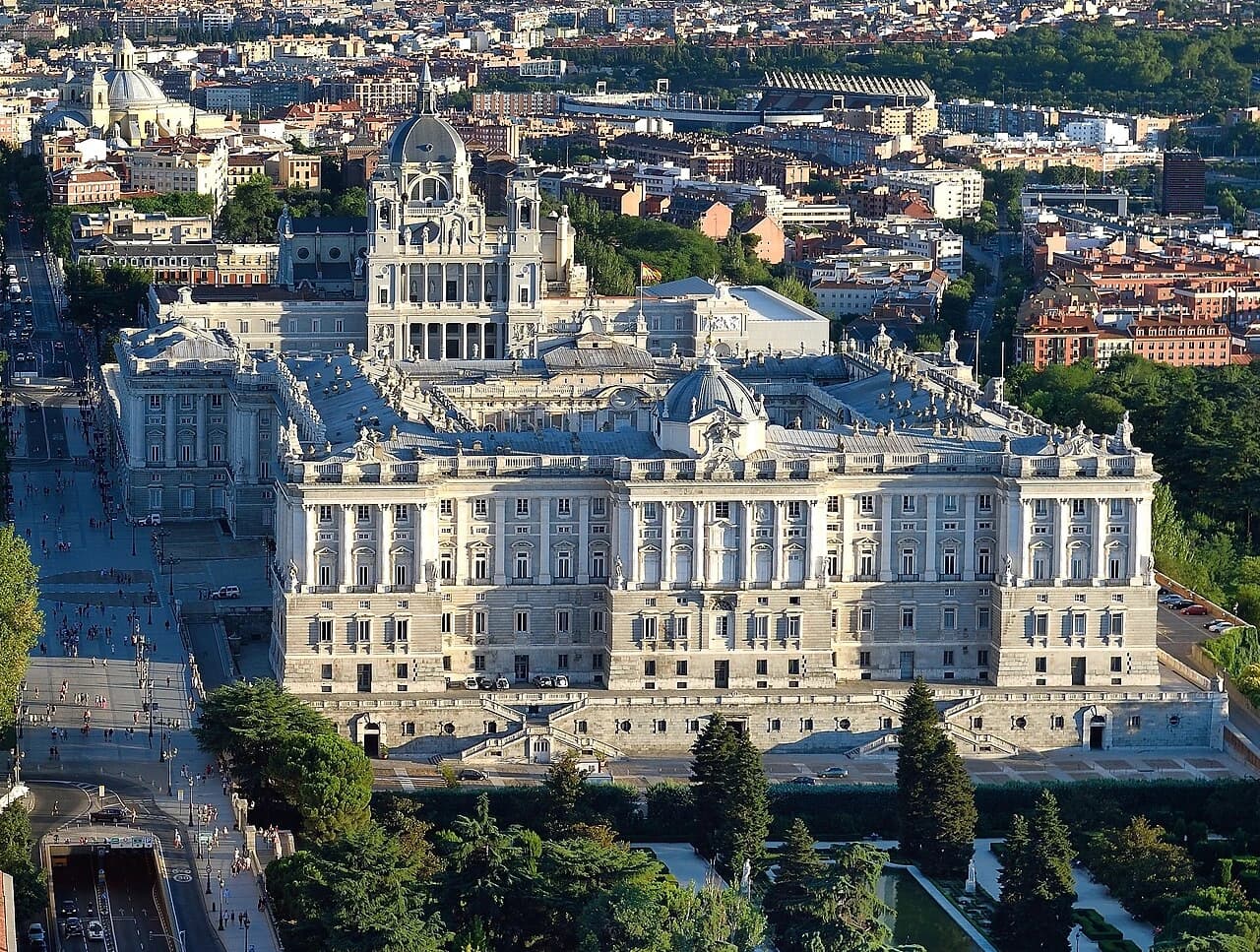
The Royal Palace of Madrid is the official residence of the Spanish Royal Family, though now primarily used for state ceremonies. It is a grand Baroque palace renowned for its opulent architecture and extensive art collections.
Palacio Real de Madrid is also known as Palacio Real de Madrid, Palacio Nueva, Palacio de Oriente, Palacio Real, and 1 other names in various languages.
This self-guided audio tour features 31 narrated stops organized across 7 sections. As a palace, Palacio Real de Madrid offers a unique cultural experience in the heart of Madrid, Spain.
The Stanza audio guide is available in 15 languages and works entirely offline — download the complete tour including audio narration, maps, and images before your visit. As you walk through Palacio Real de Madrid, GPS-triggered narration plays automatically at each point of interest.
Last updated:
What you will hear
Plaza de la Armería: The Royal Courtyard
The starting point of the visit, establishing the palace's massive scale and its relationship with the Almudena Cathedral. Includes the Changing of the Guard ceremony.
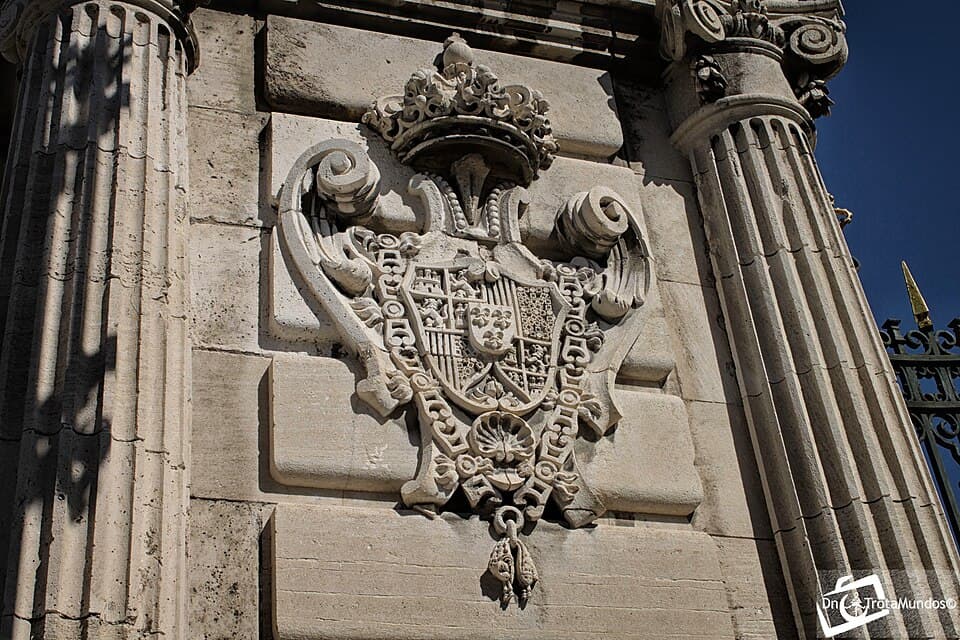
The Royal Coat of Arms
High above the entrance, you will find the Spanish Coat of Arms, a complex heraldic symbol carved into the stone facade. It tells the story of the unification of the various kingdoms that formed modern Spain, with symbols representing Castile, León, Aragon, and Navarre. Surrounding the central shield is the heavy collar of the Order of the Golden Fleece, which is the highest order of chivalry in Spain. Established in 1430, the order has been presided over by Spanish monarchs for centuries. Notice the small sheep figure hanging at the bottom—the 'fleece' itself. This carving serves as a permanent mark of royal authority, asserting the legitimacy and heritage of the reigning dynasty. Every detail in the crest, from the crown on top to the pillars of Hercules on either side, carries deep symbolic weight. It acts as a visual shorthand for the history, territory, and chivalric traditions that define the Spanish Crown and its historical reach across the globe.
The Grand Staircase
The monumental entrance to the state apartments, designed by Sabatini, featuring one of the palace's most significant frescoes.
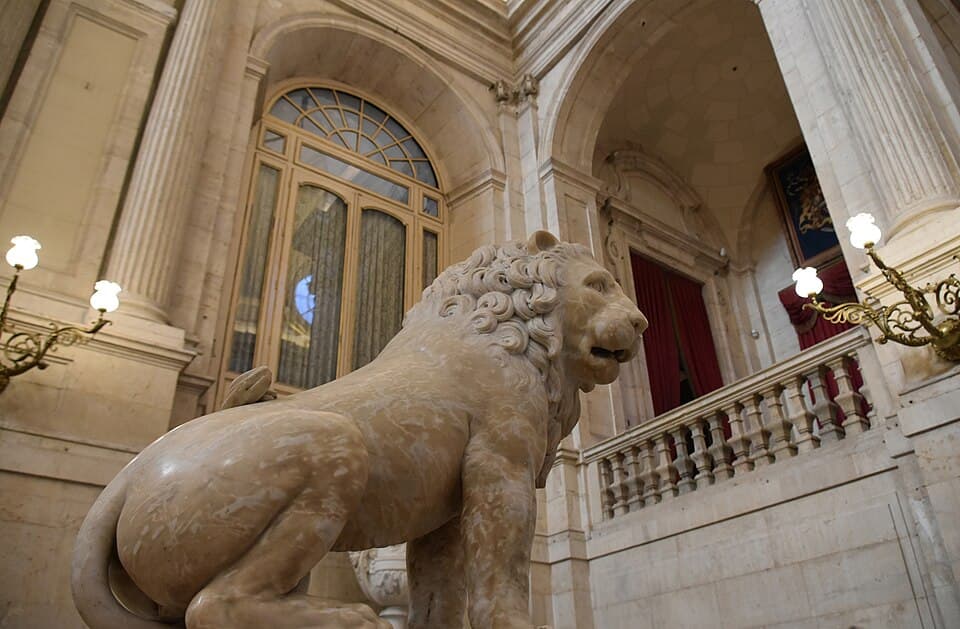
The Stone Lions
At the landing of the Grand Staircase, your path is watched over by two large stone lions. These figures are much more than mere decoration; in the language of royal symbolism, the lion represents power, sovereignty, and courage. For centuries, dignitaries and guests of the King have passed between these silent guardians as they moved toward the state rooms. Their presence at this threshold signifies that one is entering the seat of royal authority. Notice the detailed carving of their manes and the steady, watchful expressions on their faces. They are part of a long tradition of using predatory animals to guard the entrances of palaces and temples, serving as both a warning and a welcome to those who approach. In the context of the Spanish palace, they specifically evoke the lion of the Kingdom of León, one of the foundational parts of the Spanish monarchy, further rooting the palace in centuries of national history and tradition.
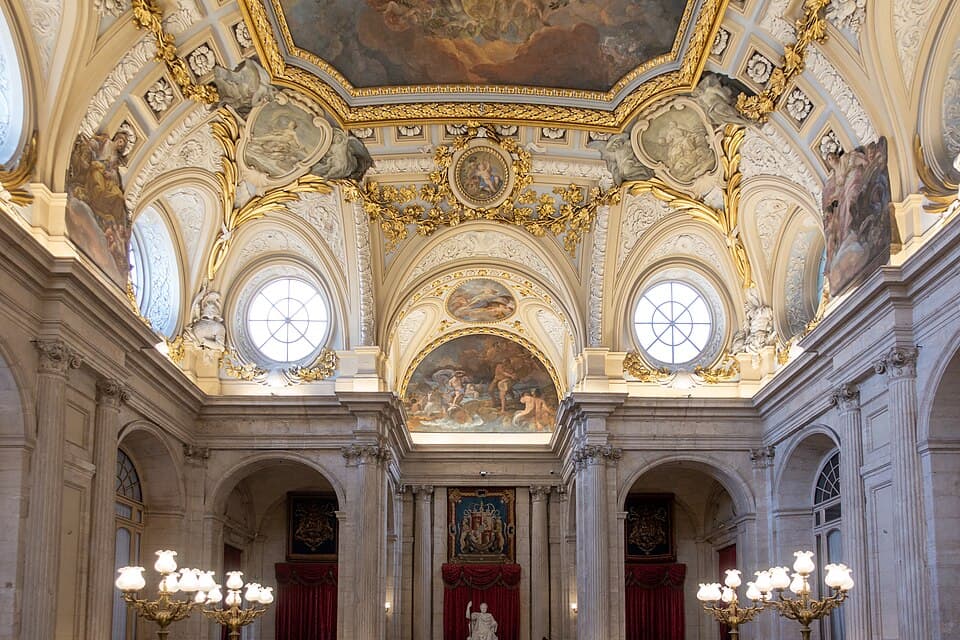
The Grand Staircase
Upon entering the palace, you are greeted by the sheer grandeur of the Grand Staircase. Architect Francesco Sabatini designed this monumental feature to impress visitors the moment they stepped inside. The steps themselves are made from single pieces of stone, a feat of engineering and craftsmanship that speaks to the palace's incredible opulence. This staircase is more than just a functional way to reach the upper floors; it is a carefully choreographed transition. It leads dignitaries from the open, public atmosphere of the courtyard into the hushed, exclusive world of the state apartments. The double-return design allows for a wide, sweeping ascent, intended to accommodate large groups of guests during court ceremonies. As you ascend, the space opens up into a vast, sun-drenched hall, preparing the visitor for the artistic wonders that lie ahead in the palace’s inner chambers. It remains one of the most impressive examples of neoclassical interior architecture in Europe, setting a tone of absolute majesty.
Hall of Columns and Halberdiers
Rooms used for major state ceremonies and housing the legendary Stradivarius instruments.
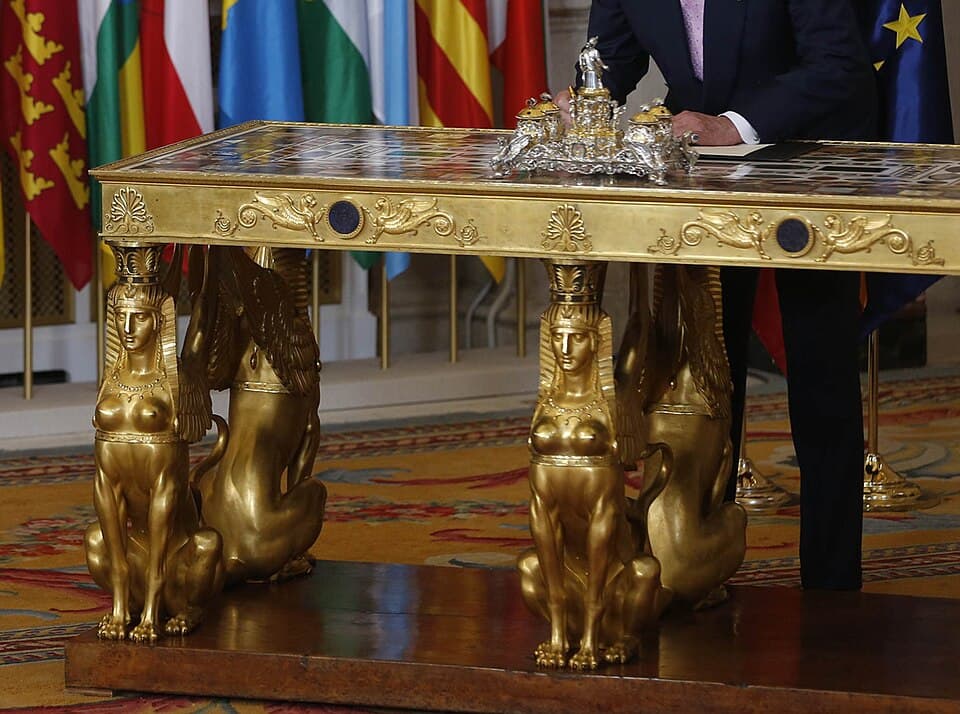
Mesa de las Esfinges
Pierre Philippe Thomire · mahogany wood, bronze
Among the palace's fine furniture collection is the striking 'Mesa de las Esfinges' or Table of the Sphinxes. This gold-finished piece is a quintessential example of the Empire Style, a neoclassical movement that became popular in the early 19th century. Notice the supports: four winged sphinxes with human heads and lion bodies. This Egyptian influence was sparked by archaeological discoveries and Napoleon’s campaigns in Egypt, which ignited a craze for 'Aegyptiaca' across European courts. The table showcases the royal family's sophisticated taste and their desire to stay at the forefront of international fashion. Every detail, from the delicate patterns on the sphinxes' wings to the polished surface of the table, was designed to convey wealth and worldliness. Pieces like this were not just functional furniture; they were conversation starters and status symbols, demonstrating the Spanish Crown's connection to the broader artistic currents of the Enlightenment and the fashionable tastes of the Napoleonic era.
The Throne Room
The summit of Spanish Rococo design, remaining virtually unchanged since the 18th century.
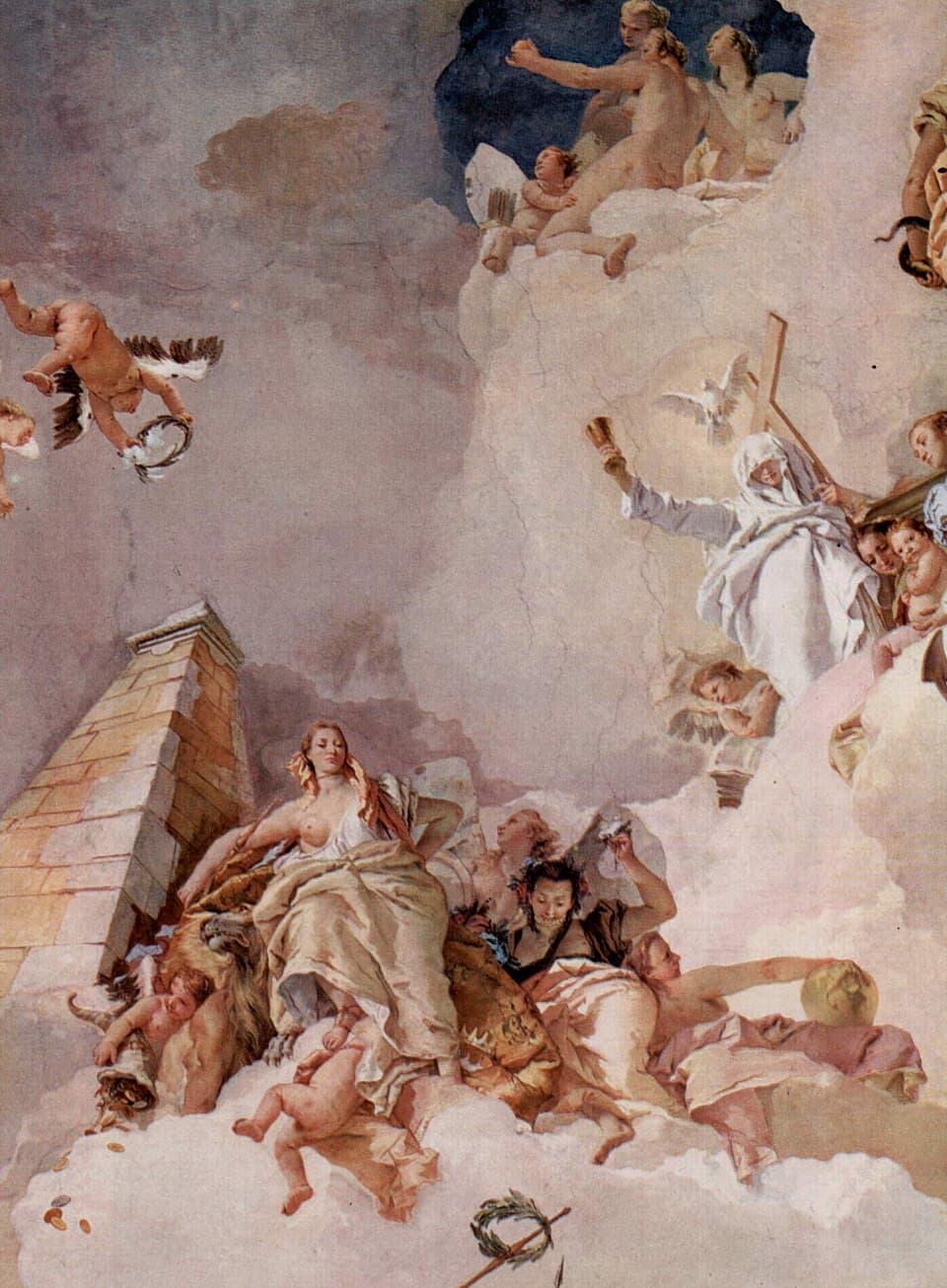
Fresken im königlichen Palast von Madrid, Szene: Lobpreisung Spaniens, Detail
Giovanni Battista Tiepolo · 1760s · fresco
High above the Throne Room is the final great masterpiece by the Venetian artist Giambattista Tiepolo. This massive fresco depicts the 'Apotheosis of the Spanish Monarchy' and is a masterclass in the Rococo style. Tiepolo used a technique called di sotto in su, or 'from below upwards,' which uses extreme foreshortening to make the figures appear as if they are floating high in the sky. As you look up, you can see various allegorical figures representing the different regions and provinces of the vast Spanish Empire, from the Americas to the Philippines. The composition is filled with light, clouds, and soaring movement, designed to draw the viewer’s eye toward the center where the glory of the Crown is celebrated. This was Tiepolo's last major work before his death, and it remains one of the most important examples of ceiling painting in the world. It serves as a visual testament to the global reach and divine mandate that the 18th-century Spanish monarchs claimed for themselves, creating an atmosphere of eternal grandeur.
The Porcelain Room
An immersive jewel-box room entirely covered in porcelain plaques from the Buen Retiro factory.
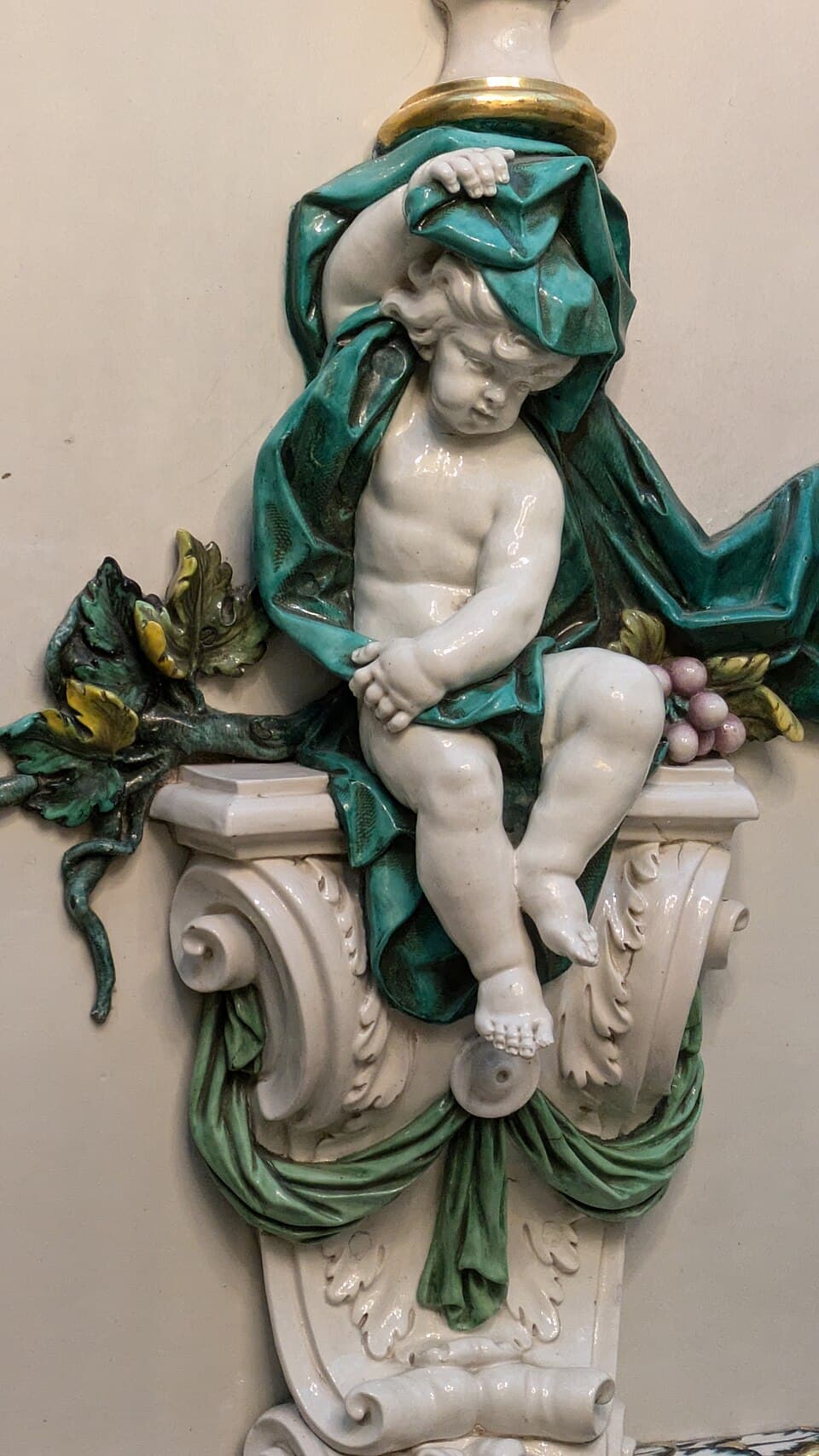
Porcelain Cherub Reliefs
Take a closer look at the intricate reliefs that decorate the Porcelain Room. You can see white and green figures of cherubs, intertwining vines, and various musical instruments, all rendered in fine porcelain. What makes this room truly remarkable from a technical standpoint is the scale and shape of these pieces. Firing large, curved sheets of porcelain without them cracking or warping in the kiln was an incredible challenge for the craftsmen of the Royal Buen Retiro factory. Furthermore, mounting these fragile pieces onto the palace walls required extreme precision to avoid any damage. The result is a seamless, three-dimensional world where the figures seem to emerge from the walls. The soft colors and the glossy finish of the porcelain catch the light, creating a bright, airy atmosphere that contrasts with the heavier, more traditional rooms of the palace. It is a testament to the innovation of the Spanish royal workshops and their ability to push the boundaries of artistic materials to create something truly magical and unique.
The Gala Dining Room
A massive hall still used for state banquets, seating up to 144 guests.
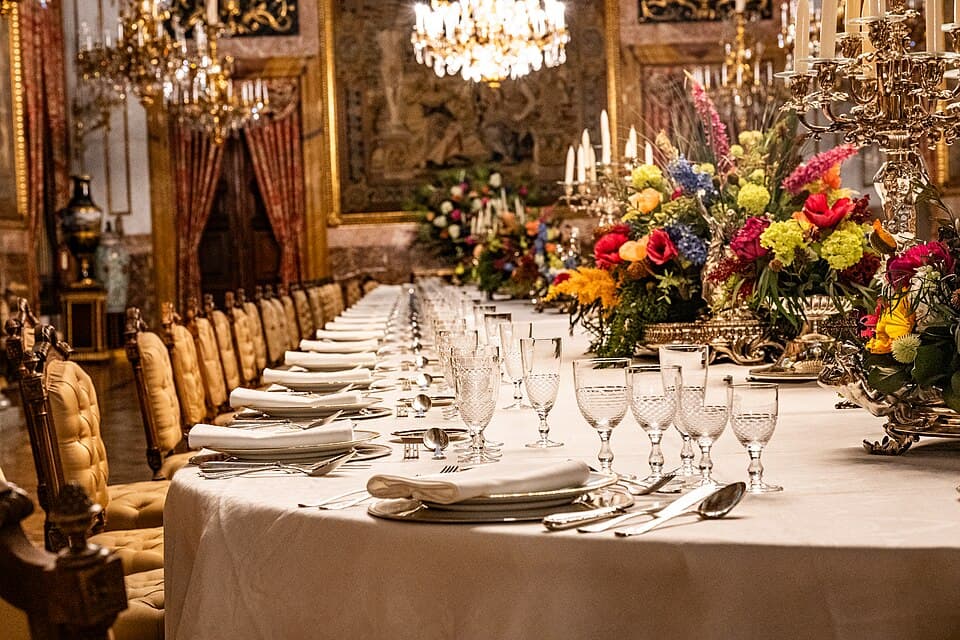
A Royal State Banquet
When a state visit occurs, the Gala Dining Room is transformed into a scene of incredible opulence. The preparation for a royal banquet takes days of meticulous work by the palace staff. The long table is set with precision, using the fine china of the Spanish Crown—often sets that have been in the royal collection for generations. Down the center of the table, you would see spectacular silver-gilt centerpieces, which are both beautiful works of art and symbols of national wealth. Every plate, glass, and piece of silverware must be perfectly aligned, following strict protocols of diplomatic etiquette. This setting is not just about eating; it is a carefully staged performance of power and prestige. For the guest of honor, dining in this room is a reminder of the deep history and cultural riches of Spain. It is one of the few places in the world where such high-level pageantry is still practiced with such tradition and attention to detail, maintaining the highest standards of royal service.
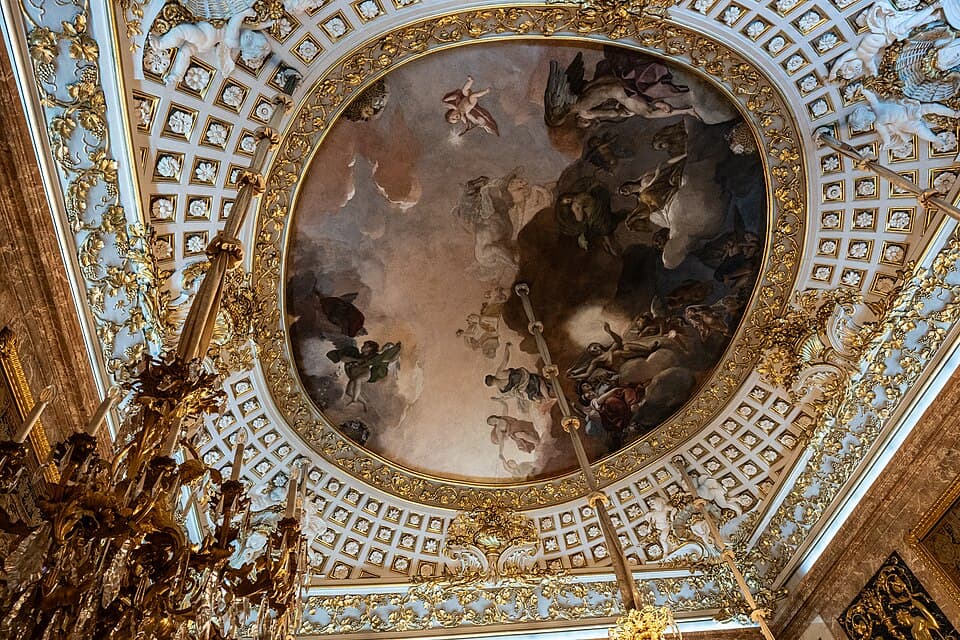
The Dining Room Chandeliers
Look up at the ceiling of the Gala Dining Room to see one of its most impressive features: fifteen massive crystal chandeliers. These spectacular lighting fixtures were designed to illuminate the vast space during nighttime banquets, their light reflecting off the countless facets of the glass. The effect is a brilliant, shimmering atmosphere that highlights the intricate details of the French tapestries on the walls and the colorful frescoes above. In the era before electric lighting, the thousands of candles required to fill these chandeliers would have created a warm, flickering glow that added a sense of magic to the proceedings. Today, they remain a symbol of the palace’s opulence and the heights of 19th-century luxury. Their sheer size and weight are a testament to the engineering required to support such grand decorative elements in a room of this scale. They are the crowning jewels of the dining hall, ensuring that every banquet is bathed in a light worthy of a King and his most honored guests.
The Royal Chapel
A triumph of classical architecture by Ventura Rodríguez, used for the most solemn royal ceremonies.
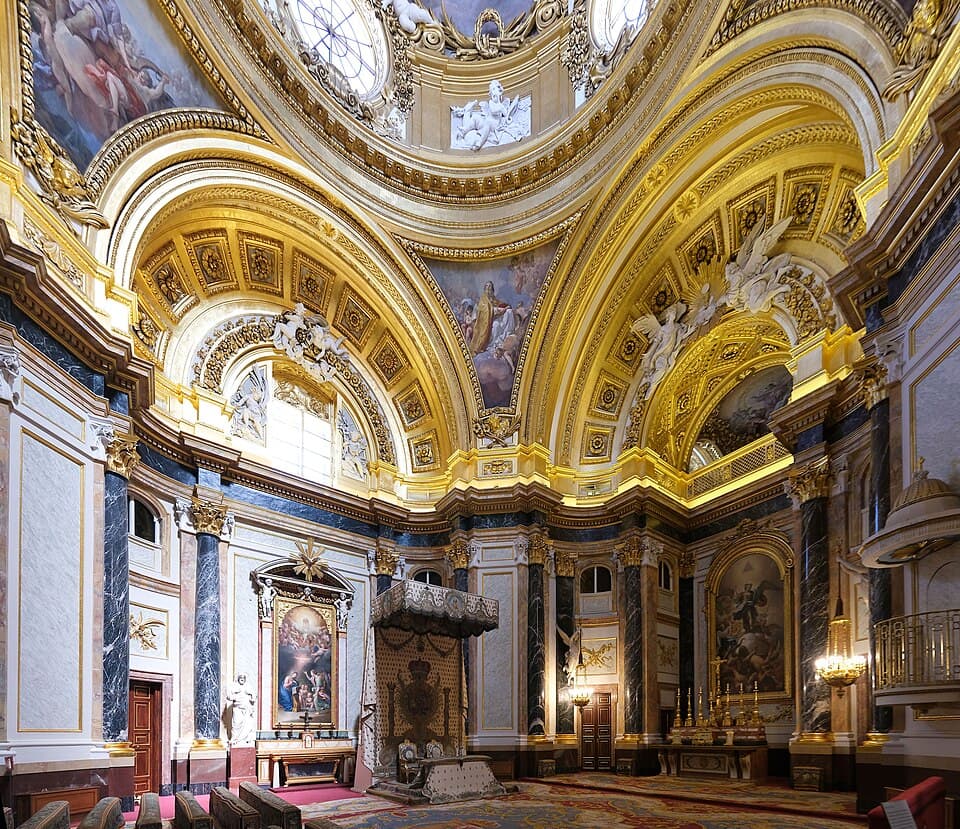
The Royal Chapel
The Royal Chapel is a masterpiece of Spanish Neoclassical architecture, designed by Ventura Rodríguez. One of its most striking and memorable features is the ring of sixteen massive columns made of polished black marble that support the central space. This chapel was the spiritual heart of the palace, serving as the venue for the most significant and solemn events in the lives of the Royal Family. It was here that royal births were celebrated with baptisms, and royal weddings were solemnized. The design is intended to create a sense of awe and reverence, with the dark marble contrasting with the golden light that filters down from the dome above. The chapel’s layout and decoration reflect the deep religious devotion of the Spanish Bourbons and the central role the Catholic Church played in court life. Even today, the space retains a sense of quiet majesty, standing as a reminder of the centuries of prayer and ceremony that have taken place within its walls, marking the milestones of the monarchy.
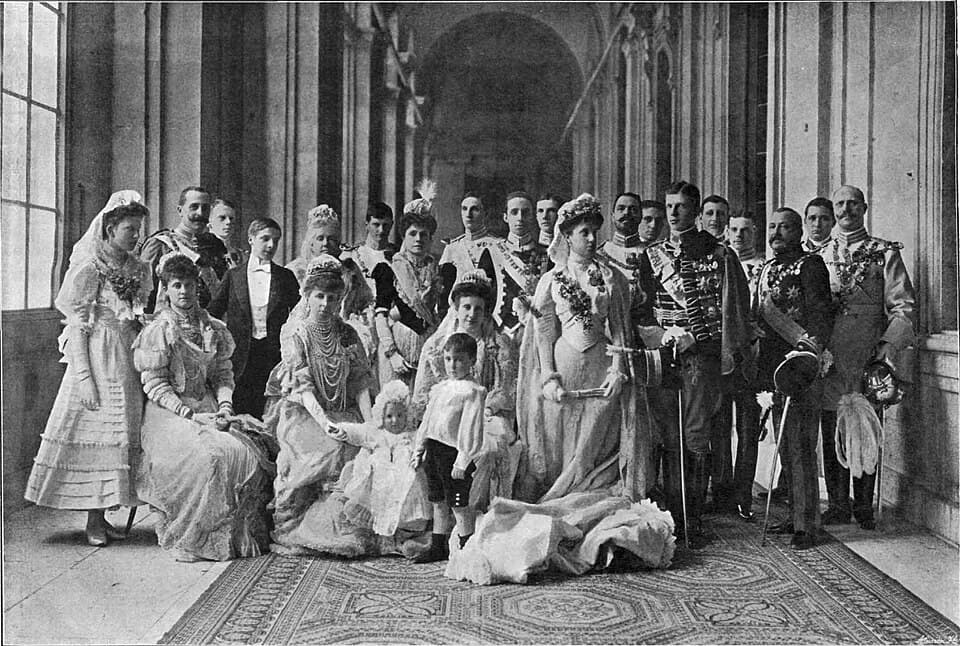
Capilla pública
While the palace often feels like a series of grand, empty museum rooms today, it was once a bustling home for hundreds. This historical photograph of a group in the public chapel, or Capilla pública, helps us see the human side of this massive building. For centuries, these halls were filled with the noise and activity of the royal family, their servants, and their permanent military guard. It was a self-contained world where people lived, worked, and celebrated life’s milestones. In this image, you can see the formal attire and the stiff poses of a bygone era, but you can also imagine the excitement and the personal stories that unfolded behind the scenes of official court life. The palace was not just a symbol of power; it was a residence where children grew up and families gathered. Photographs like this remind us that beneath the marble and gold, the palace’s history is ultimately a human one, made up of the lives of the diverse group of people who called it home for generations.
Want to hear the rest?
Download the Stanza app to unlock all 31 stops and full GPS-guided navigation.
Frequently Asked Questions
How long does the Palacio Real de Madrid audio tour take?
The Palacio Real de Madrid audio guide includes 31 narrated stops. Most visitors spend 45 minutes to 1.5 hours exploring the complete tour, though you can listen at your own pace and skip or revisit any stop.
Is the Palacio Real de Madrid audio guide available in my language?
Stanza supports 15 languages: English, Spanish, French, German, Italian, Portuguese, Russian, Japanese, Chinese, Korean, Arabic, Hindi, Polish, Dutch, Hebrew. Check the guide in the app to confirm the languages currently available for this tour.
Can I use the audio guide offline at Palacio Real de Madrid?
Yes! Download the complete Palacio Real de Madrid tour — including all audio, maps, and images — before your visit. The Stanza app works completely offline, so you don't need WiFi or mobile data at the venue.
How much does the Palacio Real de Madrid audio guide cost?
The Stanza app is free to download, and the Palacio Real de Madrid audio guide is currently listed as free.
How do I use the Stanza audio guide at Palacio Real de Madrid?
Download the free Stanza app, search for "Palacio Real de Madrid", and download the tour. When you arrive at the venue, the app uses GPS to detect your location and automatically plays the relevant narration as you move between points of interest — completely hands-free.
What makes the Stanza audio guide different from other Palacio Real de Madrid tours?
Stanza offers GPS-triggered narration that plays automatically as you walk through Palacio Real de Madrid — no need to manually select stops. The tour is available in 15 languages, works fully offline, and includes 31 expertly narrated stops with images and historical context.
What other audio guides are available near Palacio Real de Madrid?
Stanza offers multiple audio guides in Madrid, Spain and nearby areas. After downloading the app, browse the map to discover all available tours near Palacio Real de Madrid. Each guide can be downloaded for offline use.