Languages
15Alcázar de Toledo Audio Guide
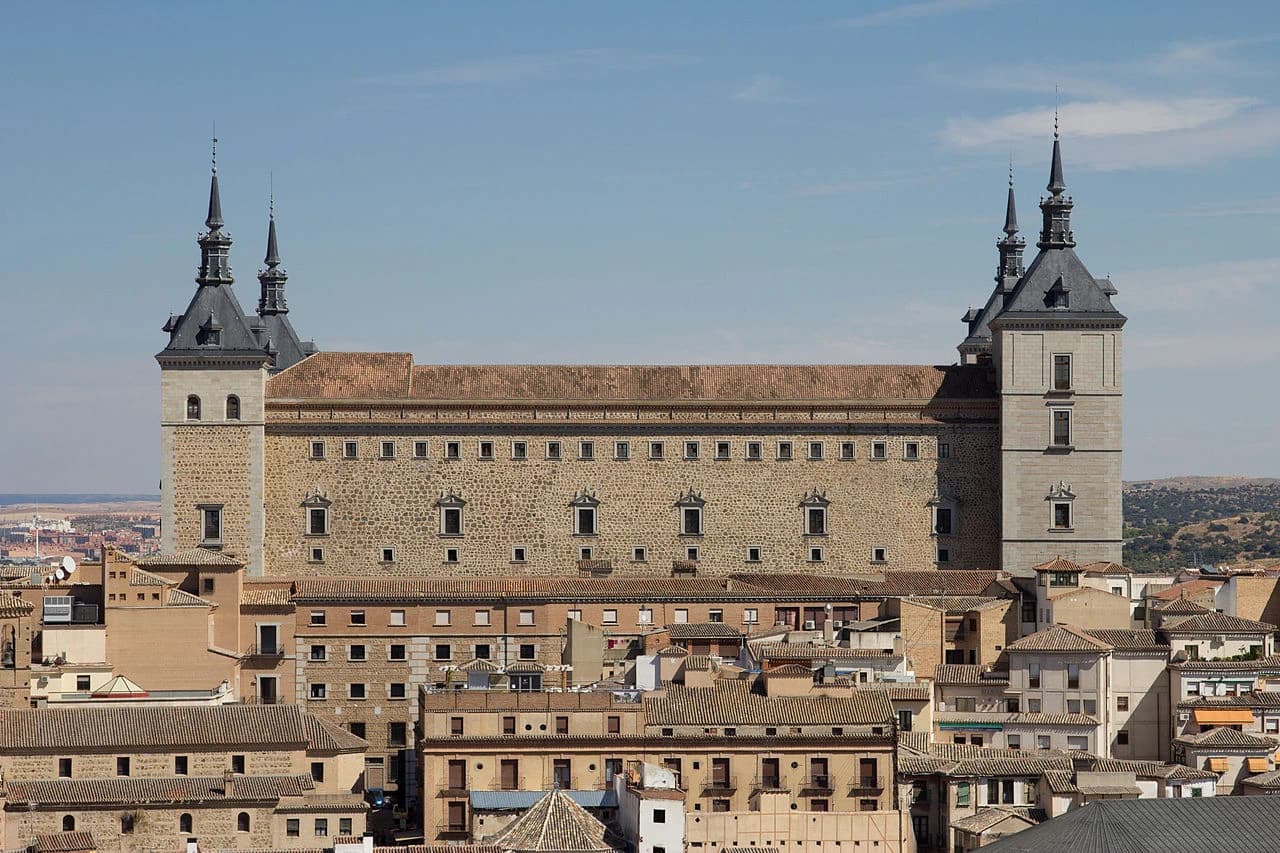
Alcázar de Toledo is a landmark in Toledo, Spain. Explore it with Stanza's GPS-triggered offline audio guide — available in 15 languages.
Quick Facts
27
Stops
15
Languages
100%
Offline
📍 Toledo, Spain · 39.8581°N, -4.0206°E
About Alcázar de Toledo
The Alcázar of Toledo is a historic stone fortification located at the highest point of Toledo, Spain. Rebuilt multiple times throughout history, it now houses the Army Museum.
Alcázar de Toledo is also known as Alcazar of Toledo, Alcazar de Toledo, Alcázar de Toledo.
This self-guided audio tour features 27 narrated stops organized across 7 sections. As a castle, Alcázar de Toledo offers a unique cultural experience in the heart of Toledo, Spain.
The Stanza audio guide is available in 15 languages and works entirely offline — download the complete tour including audio narration, maps, and images before your visit. As you walk through Alcázar de Toledo, GPS-triggered narration plays automatically at each point of interest.
Last updated:
What you will hear
The Ancient Foundations
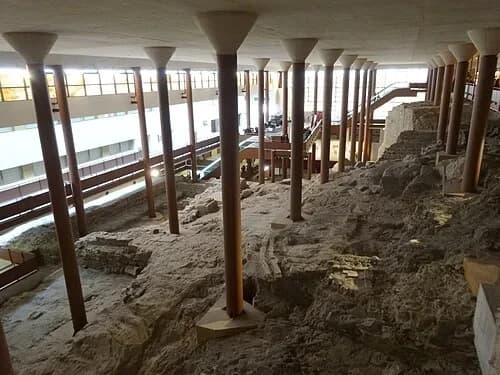
Explores the site's earliest history as a Roman praetorium and Visigothic palace through the archaeological ruins visible in the lower levels.
Roman and Visigothic Roots
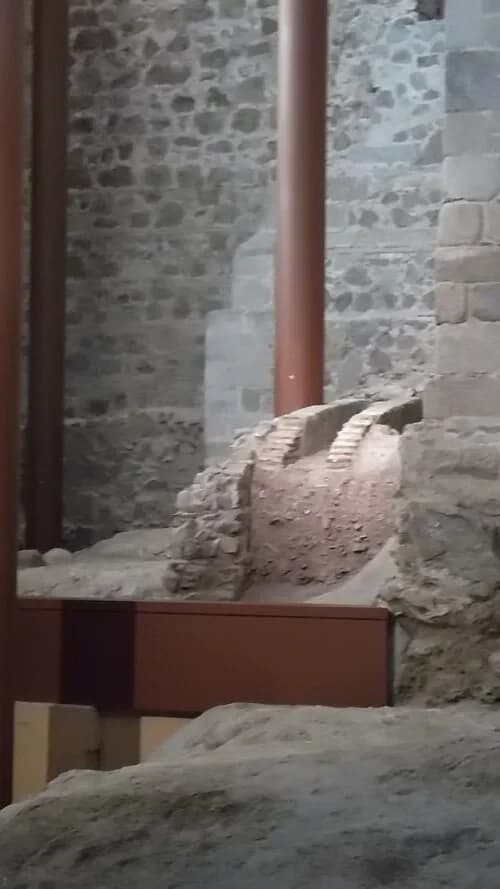
Deep within the lower levels of the building, you can see the archaeological remains that form the literal foundations of Toledo’s history. Long before the Renaissance palace was built, this site was home to a Roman praetorium, the fortified headquarters for the regional military governor. The strategic value of this hill remained high after the fall of Rome. In the year 568, the Visigothic King Leovigildo chose Toledo as his capital, establishing his royal seat on this very spot. As you observe the rough, irregular stone masonry, you are looking at the layering of centuries. The base layers contain the heavy, unadorned blocks typical of Roman construction, while the sections above show the adaptations made by Visigothic and later Muslim builders. These ruins provide a rare glimpse into the early architectural evolution of the city. They remind us that the current Alcázar is only the latest iteration of a site that has been the administrative and military heart of the region for nearly two millennia.
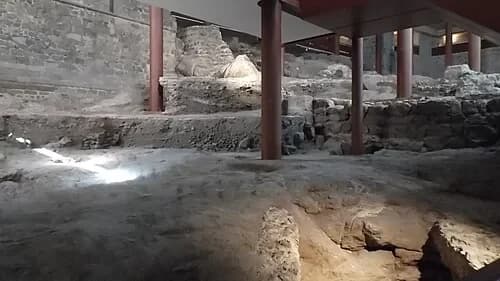
Layered Foundations
In this area, the physical history of the Alcázar is laid bare. You can see a sharp contrast between the ancient, irregular stone blocks and the modern steel supports that now stabilize the structure. These lower levels acted as both the physical and figurative foundation for every version of the fortress ever built on this hill. When the palace was reconstructed after various fires and sieges, the builders utilized these ancient, thick walls as a sturdy base rather than clearing them away. The masonry here tells a story of survival; the thickness of these lower walls was essential for defense, designed to withstand the weight of the massive towers above and the impact of siege engines. By examining the different styles of stonework, one can trace the building’s growth from a simple Roman outpost to a complex royal residence. This intersection of ancient stone and modern steel perfectly illustrates the museum's mission: preserving the distant past through contemporary engineering while honoring the building's enduring resilience.
The Courtyard of the Emperor
The heart of the Renaissance palace, featuring the double-level arcades and the central statue of Charles V. This area includes the verified POI for the sculpture.
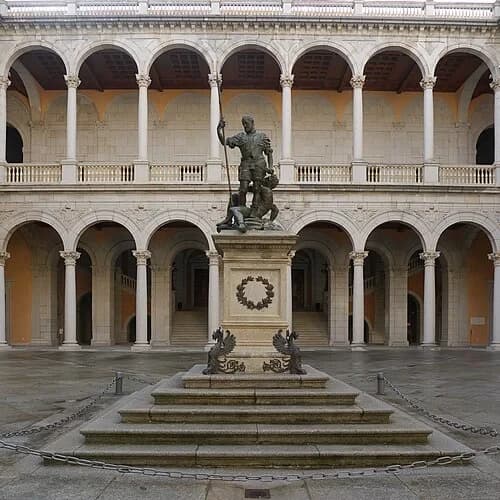
The Central Courtyard
The central courtyard is the architectural heart of the Alcázar. This expansive space is defined by its double level of classical arches, supported by elegant Corinthian columns that reflect the harmony and order of the Renaissance. While the exterior of the building was designed for defense, this interior space was designed for imperial ceremony and courtly life. This courtyard has hosted some of the most significant figures in world history. It was right here in 1528 and 1529 that Emperor Charles V received the conquistadors Hernán Cortés and Francisco Pizarro. They arrived at this very spot to report on their massive conquests of the Aztec and Inca Empires, presenting the Emperor with the spoils and maps of the New World. Imagine the courtyard filled with the royal court, explorers, and soldiers, as the wealth of the Americas began to transform Spain into a global superpower. This open space served as the literal meeting point between the traditions of Europe and the vast, newly discovered lands across the Atlantic.
Army Museum: Armor and Chivalry
Highlights the military collections, specifically the 16th-century armor that reflects the Alcázar's dual role as palace and fortress.
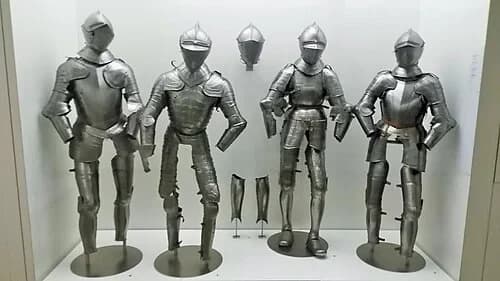
The Medinaceli Collection
These rows of 16th-century infantry armor provide a window into the evolution of warfare and the craftsmanship of Spanish metalworkers. This collection is part of the Army Museum's extensive archives, which preserve the long history of Spanish chivalry and military technology. The presence of these artifacts here marks an important shift in the life of the Alcázar. After the royal court moved to Madrid, the building eventually became the home of the Spanish Infantry Academy, shifting its role from a palace to a center for military education. These suits of armor represent the transition toward the professional, disciplined infantry units known as the Tercios, which were the dominant military force in Europe for over a century. Each suit was designed for a specific role on the battlefield, reflecting the tactical realities of an era where traditional armor had to compete with the increasing use of early firearms.
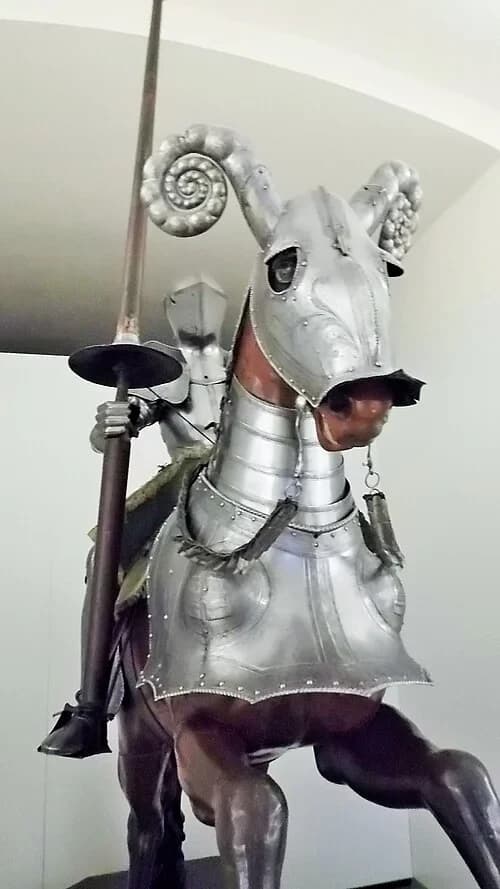
Armor of the Duke
This elaborate set of 16th-century armor shows a horse and rider fully outfitted for either the battlefield or a royal tournament. However, it is far more than simple protective gear; it is a sophisticated work of art and a major status symbol. Look closely at the intricate decorative elements etched into the metal. A particularly unique feature is the horse's headpiece, or chanfron, which is adorned with large, stylized ram's horns. Such decorations would have made the rider appear fearsome and legendary to observers. By the 16th century, armor had become a primary way for noblemen to display their wealth, lineage, and personal taste. The quality of the metalworking required the skills of master armorers, making such a suit an incredibly expensive investment. It represents the pinnacle of military fashion in the Renaissance, where the line between a functional tool of war and a luxury masterpiece was almost non-existent.
The Steel of Toledo
Showcases the famous sword collections, including the legendary Tizona, which represent Toledo's long history of metalworking excellence.
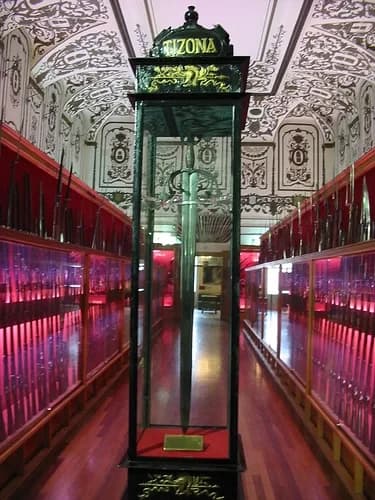
The Legendary Tizona
This display features one of the most iconic weapons in Spanish history: the sword known as 'Tizona.' Tradition strongly attributes this blade to the 11th-century hero Rodrigo Díaz de Vivar, better known as El Cid. While the ornate guard and hilts were added in later centuries, the blade itself remains a powerful symbol of national identity. This sword also highlights the world-renowned reputation of 'Toledo Steel.' For centuries, the blacksmiths of this city were famous throughout Europe for their unique metalworking techniques. Using the specific mineral content of the local water for tempering, they produced blades that were legendary for being both flexible and incredibly strong. A Toledo blade could be bent into a circle and spring back perfectly straight, while maintaining a razor-sharp edge that could cut through armor. Tizona represents the intersection of Spanish legend and the tangible excellence of the city's ancient metallurgical traditions.
The 70-Day Siege of 1936
Tells the story of the 1936 siege that left the building in ruins. Includes the verified POI image for the Siege.
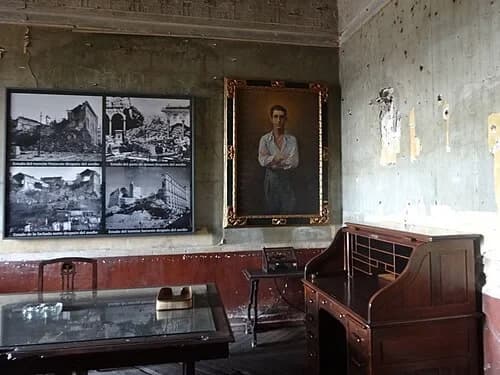
Moscardó’s Office
You are standing in the office of Colonel José Moscardó, the commander of the Alcázar during the 1936 siege. This room is a 'time capsule,' left exactly in the state it was found when the siege was finally lifted. Notice the peeling wallpaper, the simple furniture, and the damaged walls. On the walls, you can see black-and-white photographs that document the absolute destruction of the building at the time—a landscape of ruins where this single office somehow remained standing. The decision to preserve this room in its damaged state was a deliberate act of memory, intended to remind visitors of the intensity and the trauma of the conflict. It serves as a stark, somber contrast to the restored imperial galleries found in the rest of the palace. For many, this office is the most powerful part of the visit, offering a direct, unvarnished link to the history of the Spanish Civil War.
The Path to the Crypt
A transition stop focusing on the lower, more somber levels of the building leading toward the final resting place of the siege defenders.
The Path to the Crypt
This narrow, somber passage leads away from the museum displays and down toward the underground levels of the fortress. The quiet atmosphere here signals a transition into a place of reflection and mourning. Beneath the building lies a crypt, the final resting place for the defenders of the 1936 siege, including Colonel Moscardó himself. When the Alcázar was rebuilt after the war, the crypt was designed as a central part of the reconstruction, ensuring that the memory of those who held the fortress remained physically anchored to the site. The passage through these thick stone walls creates a sense of stepping back into the most intense moments of the building's history. It is a place of silence and respect, reminding every visitor that for many, the Alcázar is much more than a historical monument; it is a sacred site dedicated to the memory of a pivotal and tragic event in Spanish history.
The Monument to the Siege
An exterior memorial stop featuring the bronze statue of a woman with a broken sword, symbolizing the aftermath of the conflict.
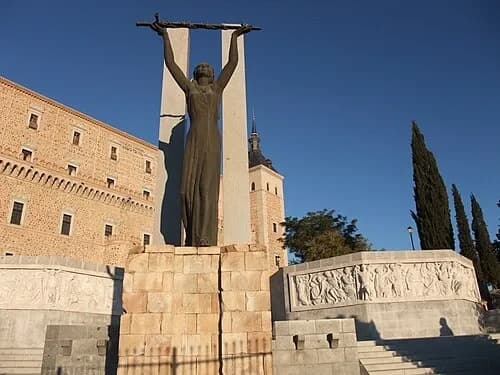
The Siege Monument
Standing outside the massive walls of the fortress is a monument dedicated to the siege and its victims. It features a bronze figure of a woman holding a sword high above her head in a gesture of defiance and commemoration. The base of the monument is decorated with bas-relief sculptures that depict various scenes from the 70-day conflict, showing the struggle and the eventual relief of those trapped inside. The dark bronze of the figure creates a striking visual contrast with the light-colored, massive stone blocks of the Alcázar towers behind it. This monument was added after the war as a public focal point for remembrance, bridging the gap between the Renaissance history of the palace and the 20th-century events that nearly destroyed it. It serves as a place for reflection, set against the very walls that witnessed the bombardment and the eventual reconstruction of this national icon.
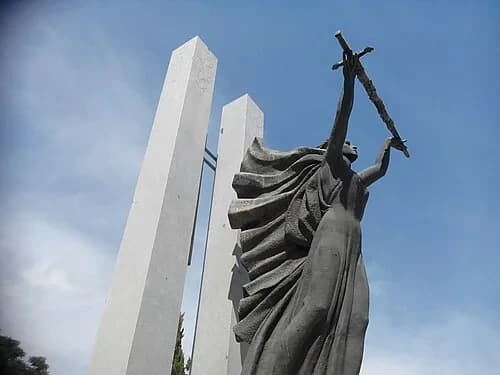
The Broken Sword
Look closely at the sword held by the figure on the siege monument, and you will see that the blade is intentionally broken. This detail is loaded with symbolism. On one hand, the broken sword represents the violence and the physical destruction of the war—the literal 'breaking' of the country and the fortress during the 1936 conflict. On the other hand, a broken sword is a weapon that can no longer be used for fighting, symbolizing the cessation of hostilities and a hope for a lasting peace. The figure’s upward-reaching posture, combined with the broken blade, suggests a move away from the tragedy of war toward a more heroic or spiritual aspiration. It is a subtle but powerful artistic choice that acknowledges the pain of the past while looking toward the future. The monument as a whole, with this specific detail, invites the visitor to reflect on the nature of sacrifice and the ultimate goal of moving beyond conflict.
Want to hear the rest?
Download the Stanza app to unlock all 27 stops and full GPS-guided navigation.
Frequently Asked Questions
How long does the Alcázar de Toledo audio tour take?
The Alcázar de Toledo audio guide includes 27 narrated stops. Most visitors spend 45 minutes to 1.5 hours exploring the complete tour, though you can listen at your own pace and skip or revisit any stop.
Is the Alcázar de Toledo audio guide available in my language?
Stanza supports 15 languages: English, Spanish, French, German, Italian, Portuguese, Russian, Japanese, Chinese, Korean, Arabic, Hindi, Polish, Dutch, Hebrew. Check the guide in the app to confirm the languages currently available for this tour.
Can I use the audio guide offline at Alcázar de Toledo?
Yes! Download the complete Alcázar de Toledo tour — including all audio, maps, and images — before your visit. The Stanza app works completely offline, so you don't need WiFi or mobile data at the venue.
How much does the Alcázar de Toledo audio guide cost?
The Stanza app is free to download. The current listed price for the Alcázar de Toledo audio guide is $1.99; app-store region and currency may affect the final price.
How do I use the Stanza audio guide at Alcázar de Toledo?
Download the free Stanza app, search for "Alcázar de Toledo", and download the tour. When you arrive at the venue, the app uses GPS to detect your location and automatically plays the relevant narration as you move between points of interest — completely hands-free.
What makes the Stanza audio guide different from other Alcázar de Toledo tours?
Stanza offers GPS-triggered narration that plays automatically as you walk through Alcázar de Toledo — no need to manually select stops. The tour is available in 15 languages, works fully offline, and includes 27 expertly narrated stops with images and historical context.
What other audio guides are available near Alcázar de Toledo?
Stanza offers multiple audio guides in Toledo, Spain and nearby areas. After downloading the app, browse the map to discover all available tours near Alcázar de Toledo. Each guide can be downloaded for offline use.